Motorola is well-known for its Edge series smartphones, which often offer excellent mid-range options under ₹25k. Last year, the company launched the Motorola Edge 40, which frequently retailed near the ₹25k mark. They also introduced the Motorola Edge 40 Neo, which was available for under ₹25k.
This year, Motorola has refreshed the 40 series with the launch of the Motorola Edge 50 Fusion, priced within the same range. Let’s dive into how the Motorola Edge 40 and the new Edge 50 Fusion stack up against each other in the under ₹25k segment and whether the older model is still worth considering.
1. Display
Both phones flaunt a near-identical display size – the Edge 50 Fusion sports a 6.7-inch FHD+ pOLED panel, while the Edge 40 comes in at 6.55 inches. However, the Edge 50 Fusion takes the lead with a 10-bit OLED display, offering richer colors and potentially better HDR performance compared to the Edge 40’s 8-bit panel.
Additionally, the Edge 50 Fusion boasts a slightly higher peak brightness of 1600 nits versus 1200 nits on the Edge 40. When it comes to refresh rate, both phones offer a smooth 144Hz experience, ensuring a buttery-smooth visual experience for everyday tasks and gaming.


Please Note: When you buy something using the links in our articles, we may earn a small commission at no cost to you.
2. Performance
The Edge 50 Fusion sports the Qualcomm Snapdragon 7s Gen 2 processor, built on a 4nm process. The Edge 40 equips the MediaTek Dimensity 8020 processor, built on a 6nm process. While the Edge 50 Fusion boasts a newer architecture, benchmark scores suggest the Dimensity 8020 might hold a slight edge in overall performance.
Both options are paired with 8GB of RAM, though the Edge 50 Fusion offers a higher-end 12GB option for those seeking additional multitasking capabilities. Storage-wise, the Edge 40 comes with a single 256GB variant, while the Edge 50 Fusion offers 128GB and 256GB options. However, the Edge 40 utilizes faster UFS 3.1 storage compared to the Edge 50 Fusion’s UFS 2.2.
3. Cameras
Both phones prioritize a 50MP main sensor on the rear, but the Edge 40 might have a slight edge for low-light photography thanks to its wider f/1.4 aperture compared to the f/1.88 aperture on the Edge 50 Fusion. Both phones offer OIS (Optical Image Stabilization) on the main sensor for sharper pictures in shaky conditions.
Both phones offer a 13MP ultrawide sensor with macro capabilities. The front camera on both phones is a 32MP shooter.
Ultimately, the camera systems seem quite evenly matched. Depending on your priorities, the wider aperture of the Edge 40 might be preferable for low light.
4. Software
The Edge 50 Fusion runs the newer Android 14, providing access to the latest features and security updates. The Edge 40 runs Android 13 out of the box but which is also upgradable to Android 14. Motorola promises 3 OS updates for the Edge 50 Fusion, potentially offering longer software support compared to the Edge 40’s update cycle.
5. Battery
The Edge 50 Fusion boasts a larger 5000mAh battery compared to the Edge 40’s 4600mAh battery. While both support 68W fast charging, the Edge 50 Fusion lacks the Edge 40’s 15W wireless charging capability. This might be a deciding factor for users who prefer the convenience of wireless charging.
6. Design and Build
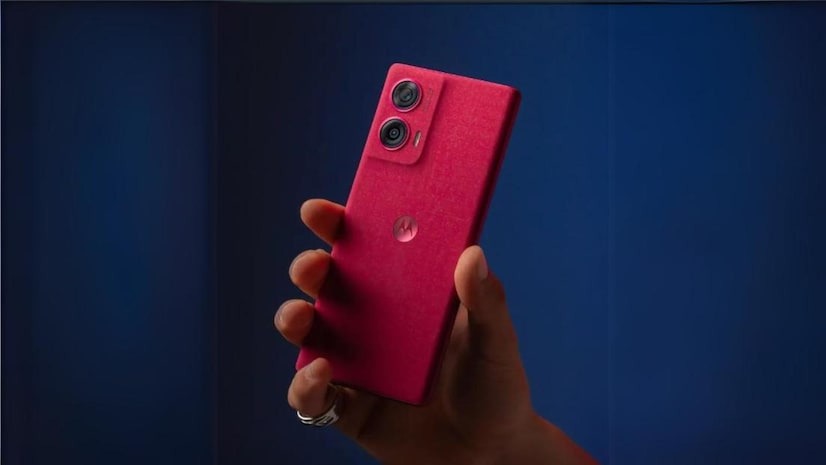
Both phones offer sleek designs with curved displays. The Edge 50 Fusion comes in Hot Pink, Marshmallow Blue, and Forest Blue vegan leather options, while the Edge 40 offers Eclipse Black (acrylic), Nebula Green (vegan leather), and Lunar Blue (vegan leather).
Both boast IP68 dust and water resistance and Corning Gorilla Glass protection. The Edge 40 has a slightly slimmer profile at 7.49mm compared to the Edge 50 Fusion’s 7.9mm.
7. Price
The Edge 50 Fusion starts at a lower price point of ₹22,999 for the 8GB + 128GB variant, while the Edge 40 comes in a single 8GB + 256GB configuration priced at ₹26,999 currently. However, during sales, the price of the Edge 40 can drop even further, making it an even more attractive option.
8. Conclusion
Both the Motorola Edge 50 Fusion and the Edge 40 are standout mid-range smartphones, delivering excellent value for under ₹25k. The Edge 50 Fusion impresses with its newer processor, varied RAM options, and competitive pricing.
On the other hand, the Edge 40 stands out with its premium build quality, wireless charging, and a slightly wider aperture that enhances low-light photography.
While the Edge 40 offers better overall performance, the Edge 50 Fusion could be the smarter choice for a daily driver, especially if you’re on a tight budget, saving you ₹3-4k. We would have recommended the Edge 40 if a 12GB variant were available for the same price it is available now.