
Add GIZMOCHINA as Preferred Source on Google
Huawei‘s grip on the Chinese tablet market is now stronger than ever. For the second straight quarter, the Chinese tech giant has outsold Apple in tablet shipments, according to a recent report by Canalys.
Huawei shipped more tablets than Apple in China
The report reveals that Huawei shipped a whopping 20.5 million tablets in Q2 2024 within China, translating to a dominant 26% market share. This not only secures them the top spot but also represents a significant 66% year-on-year growth.
The success can likely be attributed to Huawei’s aggressive launch strategy. Their diverse MatePad lineup, including the recently released dual-layer OLED MatePad Pro 12.2, seems to be resonating well with Chinese consumers.
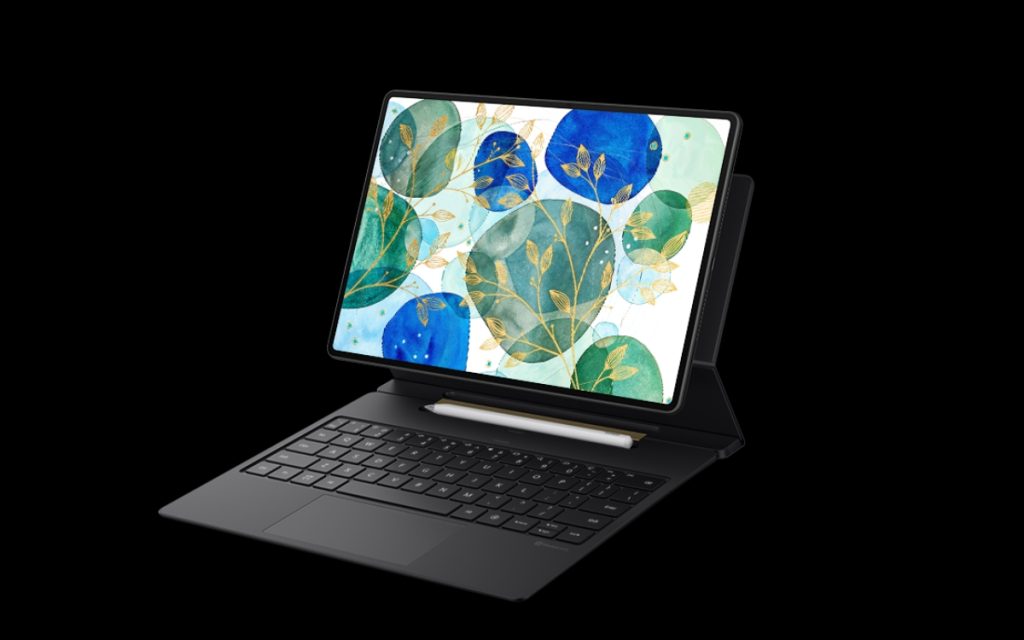
Apple, despite holding a similar market share to Huawei (around 20.1 million tablets shipped), finds itself in a less rosy situation. The Cupertino company is facing a 14% decline in annual growth, possibly indicating a struggle to keep pace with the evolving Chinese tablet market.
The competition gets even fiercer when you consider local players like Xiaomi and Honor. Xiaomi grabbed the third spot with 9.25 million tablets shipped, while Honor saw an impressive 63% YoY growth, securing fourth place with 6.5 million units.
The trend clearly shows the growing competitiveness within the Chinese tablet landscape, with local vendors offering attractive alternatives to traditional giants like Apple.
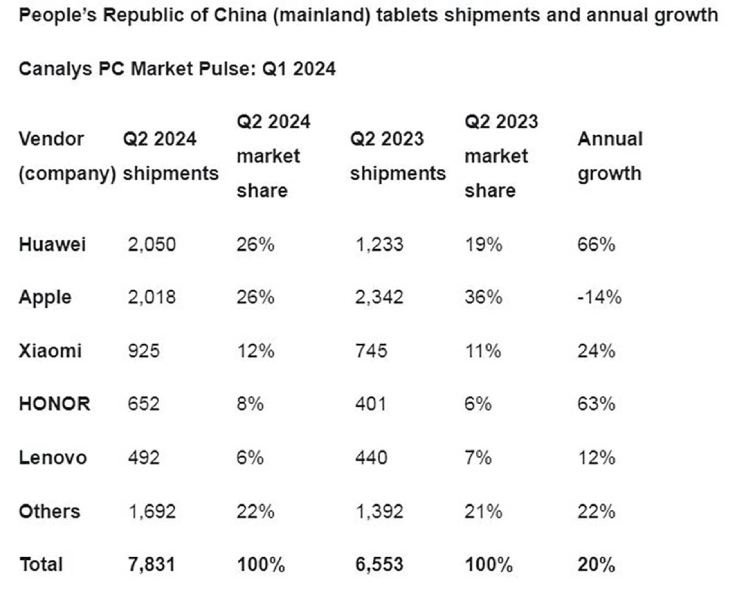
This surge in competition has also fueled overall tablet sales in China. According to Canalys report, the Chinese market saw a 20% increase in tablet shipments compared to last quarter, likely driven by aggressive online promotions. The market research firm further predicts a 9% increase in shipment for the entire year.
Looking ahead, the focus seems to be shifting towards AI features. Canalys expects tech vendors to leverage AI functionalities to differentiate their products and attract customers in a market increasingly saturated with capable devices.
(Source)




Comments