
Add GIZMOCHINA as Preferred Source on Google
Choosing between the iPhone 16 Pro and the Google Pixel 9 Pro can be tough for users who want the best in smartphone technology. These flagship devices are powerhouses in their own right, offering premium design, cutting-edge cameras, and top-tier performance.
In this detailed comparison, we will explore the phones across several parameters, including design, display, software, performance, battery life, and camera quality, to help you decide which is a better buy.
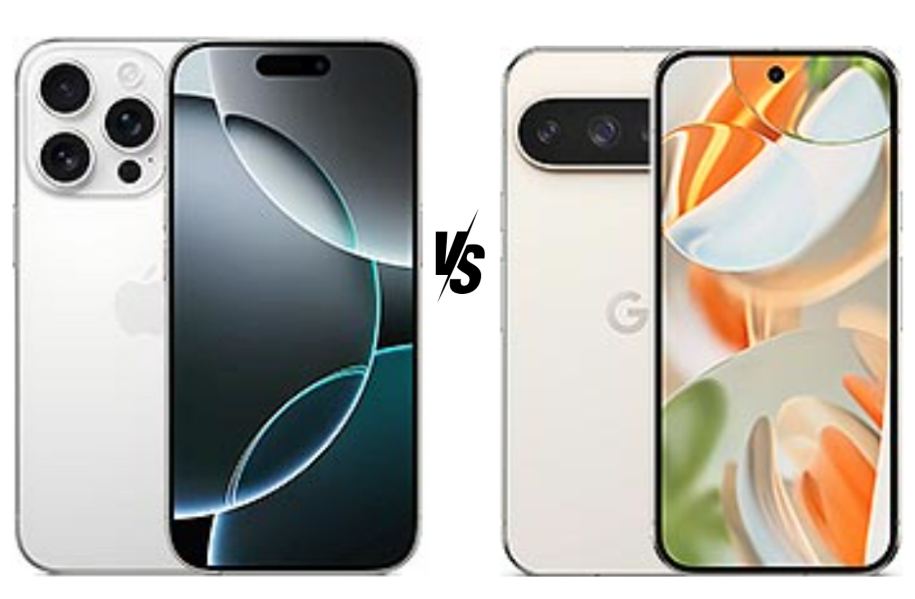
SPECS OVERVIEW
| Category | iPhone 16 Pro | Google Pixel 9 Pro | Best in Specs |
| Design | – Glass front/back (Corning glass)- Titanium frame (Grade 5)- IP68 water/dust resistant (6m for 30 min) | – Glass front/back (Gorilla Glass Victus 2)- Aluminum frame- IP68 water/dust resistant (1.5m for 30 min) | iPhone 16 Pro (Premium build with titanium frame and better water resistance) |
| Display | – 6.3″ LTPO Super Retina XDR OLED- 120Hz refresh rate- 2000 nits brightness (HBM)- Dolby Vision HDR | – 6.3″ LTPO OLED- 120Hz refresh rate- 3000 nits peak brightness- HDR10+ | Google Pixel 9 Pro (Brighter screen with HDR10+) |
| Performance | – Apple A18 Pro (3nm)- Hexa-core CPU- 8GB RAM- NVMe storage | – Google Tensor G4 (4nm)- Octa-core CPU- 16GB RAM- UFS 3.1 storage | iPhone 16 Pro (Superior chipset and iOS optimization) |
| Battery | – 3582 mAh- Wired: 50% in 30 min- 25W wireless (MagSafe)- 4.5W reverse wired | – 4700 mAh- Wired: 55% in 30 min- 21W wireless charging | Google Pixel 9 Pro (Larger battery and faster-wired charging) |
| Camera | – Triple Camera: 48 MP (wide) + 12 MP (periscope telephoto) + 48 MP (ultrawide)- 5x optical zoom- LiDAR scanner | – Triple Camera: 50 MP (wide) + 48 MP (periscope telephoto) + 48 MP (ultrawide)- 5x optical zoom | Google Pixel 9 Pro (Better computational photography and 8K video) |


Please Note: When you buy something using the links in our articles, we may earn a small commission at no cost to you.
Design:
Both the iPhone 16 Pro and Pixel 9 Pro feature premium designs, with a focus on durability and high-end materials.
Features
- iPhone 16 Pro: Apple has introduced a titanium frame, offering not only strength but also a lightweight build. The phone is protected by Ceramic Shield glass on both the front and back, ensuring durability. The device is IP68 certified, meaning it can withstand water up to 6 meters deep for 30 minutes.
- Google Pixel 9 Pro: The Pixel 9 Pro uses a robust aluminum frame with Gorilla Glass Victus 2 on both the front and back, which provides substantial scratch resistance and protection against drops. The IP68 certification here, however, only guarantees resistance up to 1.5 meters underwater for 30 minutes.
Similarities
Both phones have glass fronts and backs, with metal frames that enhance their premium look and feel. They also feature IP68 dust and water resistance, making them equally durable for everyday use.
Differences
The most significant difference lies in the materials used. The iPhone 16 Pro‘s titanium frame offers better strength while remaining lightweight, whereas the Pixel 9 Pro’s aluminum frame, while durable, isn’t quite as premium as titanium. Additionally, the iPhone offers deeper water resistance.
Advantage
The iPhone 16 Pro takes the lead in design due to its stronger, lighter titanium build and superior water resistance.
Display, Media, and Software:
When it comes to display technology, both phones offer stunning visuals, but with a few differences that impact the overall experience.
Features
- iPhone 16 Pro: It features a 6.3-inch LTPO Super Retina XDR OLED display with a 120Hz refresh rate and up to 2000 nits of peak brightness. It supports HDR10 and Dolby Vision, making it an ideal device for media consumption. Running on iOS 18, the iPhone 16 Pro ensures seamless software performance, especially for users within the Apple ecosystem.
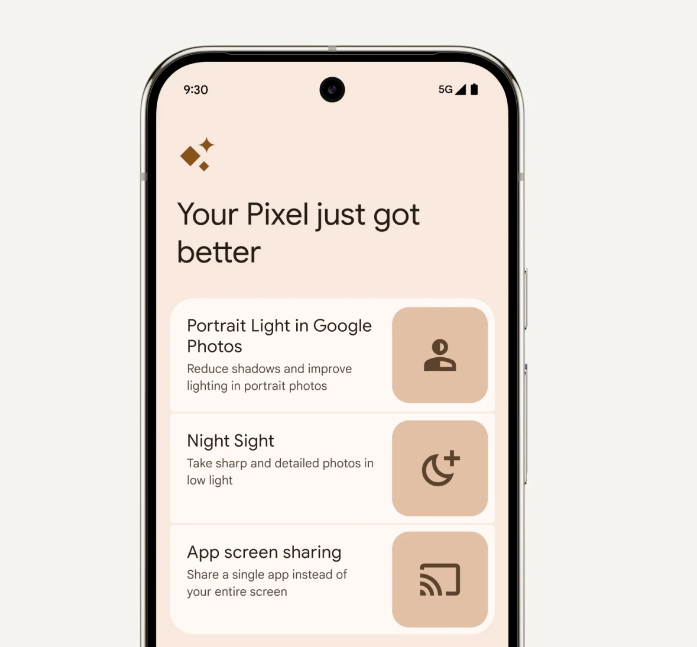
- Google Pixel 9 Pro: The Pixel 9 Pro also comes with a 6.3-inch LTPO OLED display but surpasses the iPhone in brightness, with 3000 nits of peak brightness. It supports HDR10+ and has a 120Hz refresh rate for smooth scrolling and gaming. It runs on Android 14 and comes with Google’s unique features such as Circle to Search and Best Take for photos.
Similarities
Both displays offer a high 120Hz refresh rate and premium OLED technology for vibrant colors, deep blacks, and smooth animations. They also support HDR, enhancing media consumption with richer visuals.
Differences
The Pixel 9 Pro has a higher peak brightness (3000 nits vs. iPhone’s 2000 nits), making it better suited for outdoor use in bright conditions. However, the iPhone 16 Pro’s support for Dolby Vision offers a superior HDR experience compared to the Pixel’s HDR10+.
Advantage
In terms of software, the iPhone 16 Pro excels for users embedded in the Apple ecosystem. However, for those who prefer more customizability, Pixel 9 Pro is the winner, especially with its brighter display and unique Android features.
Performance and Battery:
Performance is another critical area where these two flagship devices shine, but they cater to slightly different needs.
Features
- iPhone 16 Pro: Powered by the Apple A18 Pro chipset (3 nm), it features a hexa-core CPU and a 6-core GPU. Its performance is designed for power efficiency while handling demanding tasks like gaming, AI operations, and video editing. The iPhone 16 Pro offers a 3582 mAh battery with 50% charge in 30 minutes through wired PD2.0 charging, along with 25W wireless charging via MagSafe.
- Google Pixel 9 Pro: The Pixel 9 Pro is equipped with the Google Tensor G4 chipset (4 nm), which houses an octa-core CPU and the Mali-G715 MC7 GPU. It has a larger 4700 mAh battery with 27W wired charging and 21W wireless charging on the Pixel Stand. It supports reverse wireless charging, offering more flexibility when powering other devices.
Similarities
Both phones deliver flagship performance with high-end chipsets, 120Hz display refresh rates, and fast charging capabilities. They handle multitasking, gaming, and media consumption without any lag.
Differences
The iPhone 16 Pro is slightly more power-efficient, thanks to its smaller battery size and iOS optimizations, while the Pixel 9 Pro offers more RAM (up to 16GB) and a larger battery for extended use. The iPhone’s reverse charging is limited to wired, while Pixel’s reverse wireless charging offers more flexibility.
Advantage
For pure performance efficiency, the iPhone 16 Pro wins, but if you prioritize battery life and charging options, the Pixel 9 Pro has the upper hand with its larger battery and versatile charging capabilities.
Cameras:
Both phones have set the standard for mobile photography, with powerful camera systems designed to capture exceptional photos and videos.
Features
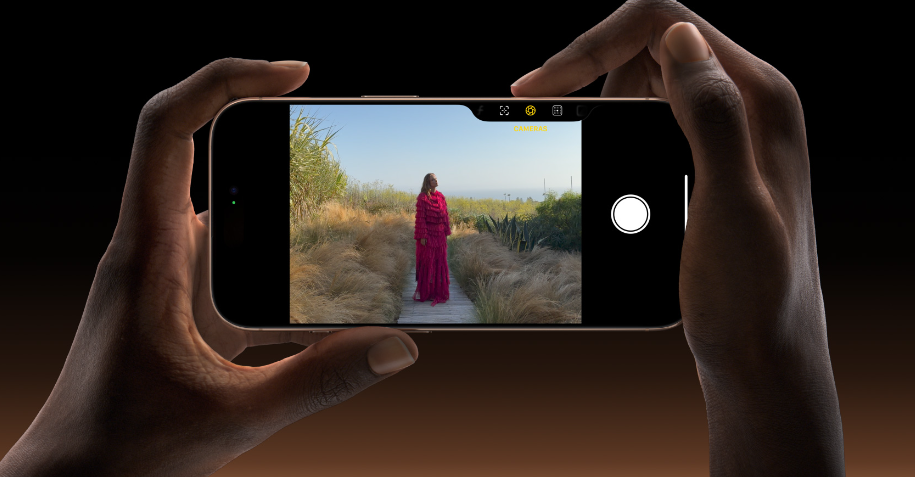
- iPhone 16 Pro: Its triple-camera system includes a 48 MP wide, 12 MP periscope telephoto (with 5x optical zoom), and a 48 MP ultrawide lens. The iPhone shines with its 3D spatial video/audio capabilities and Dolby Vision HDR, making it ideal for immersive video creation.
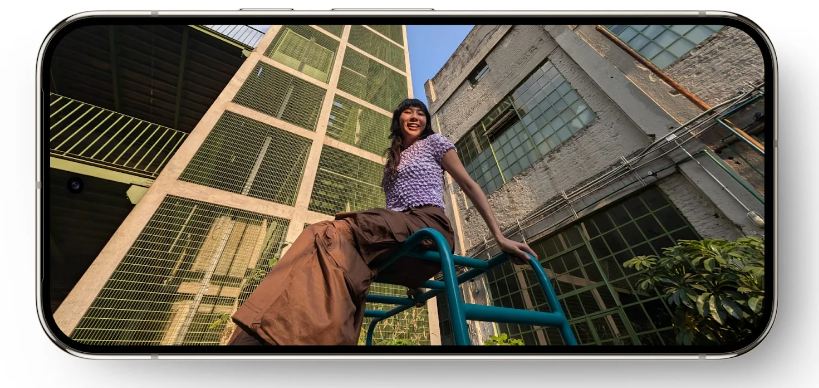
- Google Pixel 9 Pro: The Pixel 9 Pro is equipped with a 50 MP wide, 48 MP periscope telephoto (5x optical zoom), and 48 MP ultrawide camera. The Pixel also features cutting-edge tools like Pixel Shift, Ultra-HDR, and unique AI features like Best Take and Zoom Enhance, which boost the overall image quality.
Similarities
Both phones offer triple-camera systems with advanced telephoto and ultrawide lenses, supporting 5x optical zoom. They each have powerful video capabilities with 4K recording and enhanced stabilization.
Differences
While the iPhone excels in video, thanks to its ProRes recording and Dolby Vision HDR support, the Pixel 9 Pro offers an advantage in still photography, with its AI-powered tools and higher-resolution 42 MP selfie camera. The Pixel also supports 8K video recording, which is absent on the iPhone.
Advantage
For video creators, the iPhone 16 Pro is the superior choice, but if your priority is cutting-edge photography with AI-driven enhancements, the Pixel 9 Pro takes the crown.
Our Opinion: Which Is a Better Buy?
iPhone 16 Pro
The iPhone 16 Pro is a top choice for users already embedded in the Apple ecosystem or for those who prioritize video production, design, and efficiency. Its premium titanium build, ProRes video capabilities, and seamless integration with other Apple devices make it an excellent option for professionals and creatives.
- Ideal for video production and seamless Apple integration.
- Premium titanium design suited for professionals.
Google Pixel 9 Pro
On the other hand, the Google Pixel 9 Pro is the go-to smartphone for those who value photography and the customization options that Android offers. With its outstanding battery life, cutting-edge AI camera features, and a brighter display, the Pixel 9 Pro is perfect for users focused on still photography and a flexible software experience.
- Best for photography enthusiasts and Android customization.
- Exceptional battery life and AI-driven camera features.
In the end, your decision should depend on your needs: for video creators and Apple enthusiasts, the iPhone 16 Pro is the clear winner, but for those who prioritize photography and versatility, the Google Pixel 9 Pro offers better value.


Comments