
Add GIZMOCHINA as Preferred Source on Google
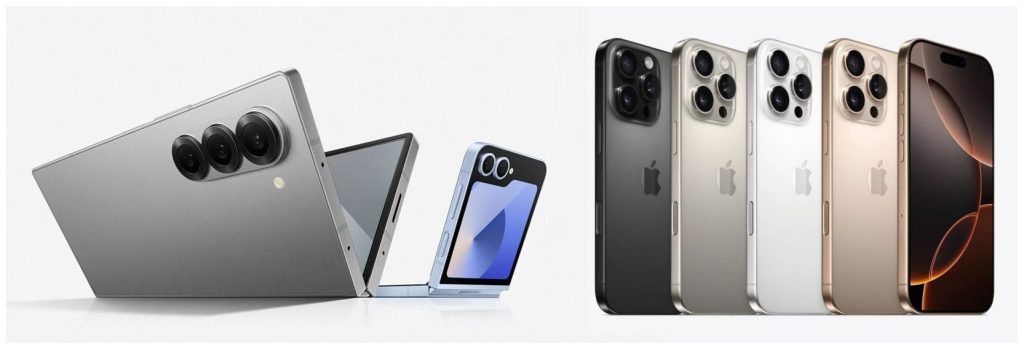
Foldable phones have gained attention as a practical and innovative alternative to traditional smartphones, particularly when compared to premium devices like the iPhone. With their unique form factor, multitasking capabilities, and affordability, foldables are offering a fresh approach to mobile technology. Here’s why they may be a better choice than an iPhone:
ALSO READ: The 5 best foldable phones to buy in 2024
ALSO READ: Top 5 foldable phones to watch in 2025
1. More Screen Space
One of the primary benefits of foldable phones is the ability to expand into a tablet-sized display while remaining compact. Models like the Samsung Galaxy Z Fold series and Vivo X Fold series provide users with a dual experience — a standard phone that can unfold into a larger screen, ideal for reading, gaming, and multitasking. iPhones, while having excellent display quality, offer only a single screen in a regular candy bar design, limiting the viewing experience.
2. Flip Phones: A Compact and Stylish Alternative
Apart from horizontally foldable devices like the Galaxy Z Fold 6 and OnePlus Open, smartphone companies also produce vertically foldable, such as the Motorola Razr 50 series, Honor Magic Flip, and Galaxy Z Flip 6. Their clamshell design provides a satisfying tactile experience and a pocket-friendly form factor that’s perfect for those who prioritize portability.
With the iPhone 16 and 16 Pro sporting a relatively compact 6.3-inch display, flip phones like the Razr 50 Ultra, with its 6.9-inch main screen and useful cover screen, offer comparable screen real estate with added portability when folded. If you’re drawn to the iPhone’s smaller size but crave a bit more flair and functionality, a flip phone might be the perfect compromise.
3. Next-level Multitasking
Foldables take multitasking to the next level. Many models, such as the Galaxy Z Fold series, allow for multiple apps to run side by side on the larger screen, creating a seamless experience for work and leisure. Users can check emails, take notes, and browse the web simultaneously, which is especially useful for professionals on the go. In contrast, iPhones are limited to single-screen functionality, making multitasking a bit more cumbersome.
4. Flexible Interaction and Viewing Options
Foldables bring an extra level of versatility that traditional smartphones can’t offer. “Flex Mode,” available on models like the Galaxy Z Flip, lets users set the phone at an angle for hands-free video calls or stable long-exposure shots. This hands-free functionality appeals to vloggers and content creators looking for flexible recording angles and modes that are not possible with a standard phone like the iPhone.
5. Productivity and Creativity Tools
Some foldables, like the Galaxy Z Fold 6 and Honor Magic V3, come with additional tools such as a stylus, enhancing productivity and creativity. These features allow users to sketch, take notes, or annotate documents with ease, making foldables ideal for artists, designers, and professionals. iPhones are excellent for everyday use but lack the creative tools and tablet-like experience that foldables can provide.
6. Enhanced Gaming and Entertainment Experience
For gaming enthusiasts and streaming fans, foldables offer an unmatched entertainment experience. Their larger displays provide a more immersive experience, and some models even have enhanced cooling and battery management features for uninterrupted gameplay. This expansive screen space and added functionality make foldables an ideal choice for those who prioritize entertainment, beyond what iPhones offer on a single screen.
7. Dual-Screen Camera Setup for Better Selfies
Foldables utilize their design for enhanced camera functionality. The folding mechanism allows users to use the high-quality main camera for selfies, providing a significant improvement over standard front cameras. Models like the Galaxy Z Flip offer a small cover screen that acts as a viewfinder, allowing you to capture high-quality selfies using the primary camera — a feature iPhones lack.
8. Cost Comparison: Affordable Premium Options
While the iPhone 16 Pro and Pro Max models come with top-tier features, they also come with a high price tag. The iPhone 16 Pro starts at Rs 1,19,000 for the base 128GB variant and goes up to Rs 1,69,000 for the 1TB variant. The iPhone 16 Pro Max, meanwhile, ranges from Rs 1,44,900 for the 256GB variant to Rs 1,84,900 for the 1TB variant.
In comparison, many foldable phones offer premium features at a relatively lower price point. The Samsung Galaxy Z Fold 6 starts at Rs 1,64,999 for 12GB RAM and 256GB storage, while the Vivo X Fold 3 Pro is available for Rs 1,59,999. Even more affordable is the OnePlus Open, which launched at Rs 1,39,999 for a single 16GB RAM and 256GB storage variant.
This shift in pricing makes foldables a more accessible and attractive option for those seeking cutting-edge technology without breaking the bank.


Comments