
Add GIZMOCHINA as Preferred Source on Google
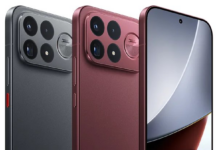
Chinese smartphone maker Redmi launched its latest flagship phone, the Turbo 4, yesterday afternoon. The phone went on sale immediately following the launch, with a starting price of 1,999 yuan ($302).
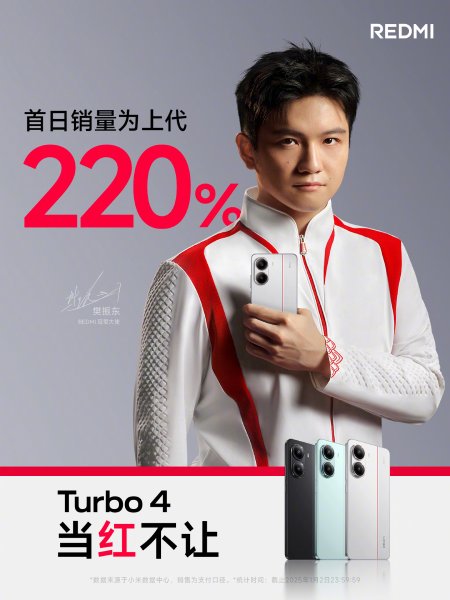
Now, according to official data from Redmi, first-day sales of the Turbo 4 were double those of the previous generation, with a 220% increase.
MediaTek Dimensity 8400-Ultra Delivers Powerful Performance
The centerpiece of the Redmi Turbo 4 is its performance. The phone is the world’s first to be powered by the MediaTek Dimensity 8400-Ultra processor, which is also the first in its class to adopt a full-big-core CPU architecture. As a result, the chip delivers an AnTuTu benchmark score exceeding 1.8 million.
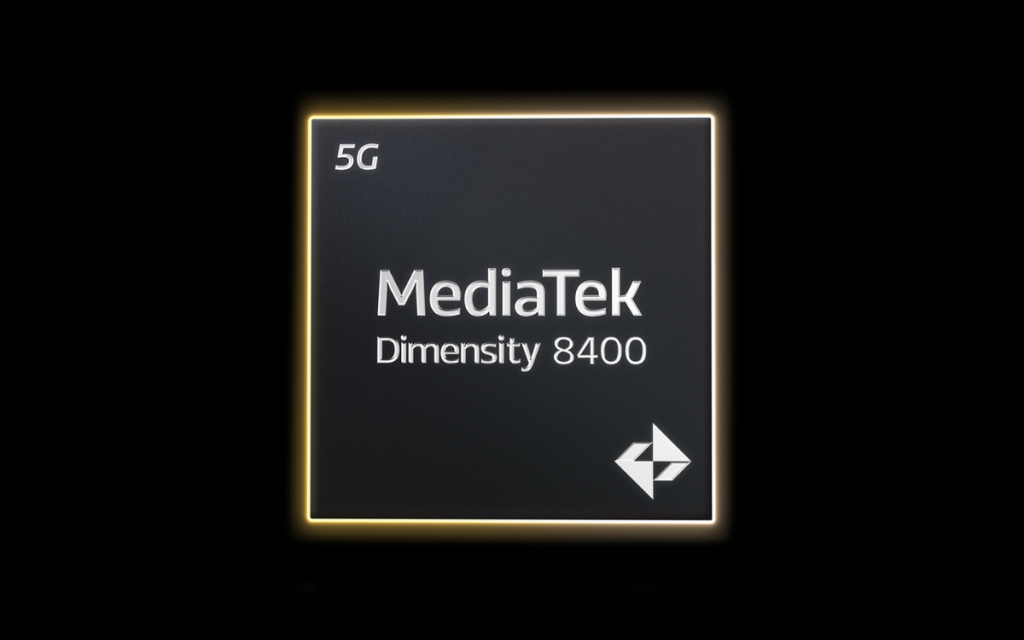
The revolutionary full-core architecture integrates an octa-core Arm Cortex-A725 CPU. This configuration includes one 3.25GHz Cortex-A725 large core, three 3.0GHz Cortex-A725 large cores, and four 2.1GHz A725 large cores.
The Dimensity 8400-Ultra is further complemented by a flagship-level Mali-G720 MC7 GPU. Compared to the previous generation chip, the GPU offers a 24% improvement in peak performance while reducing power consumption by 42%.
Other Key Specifications
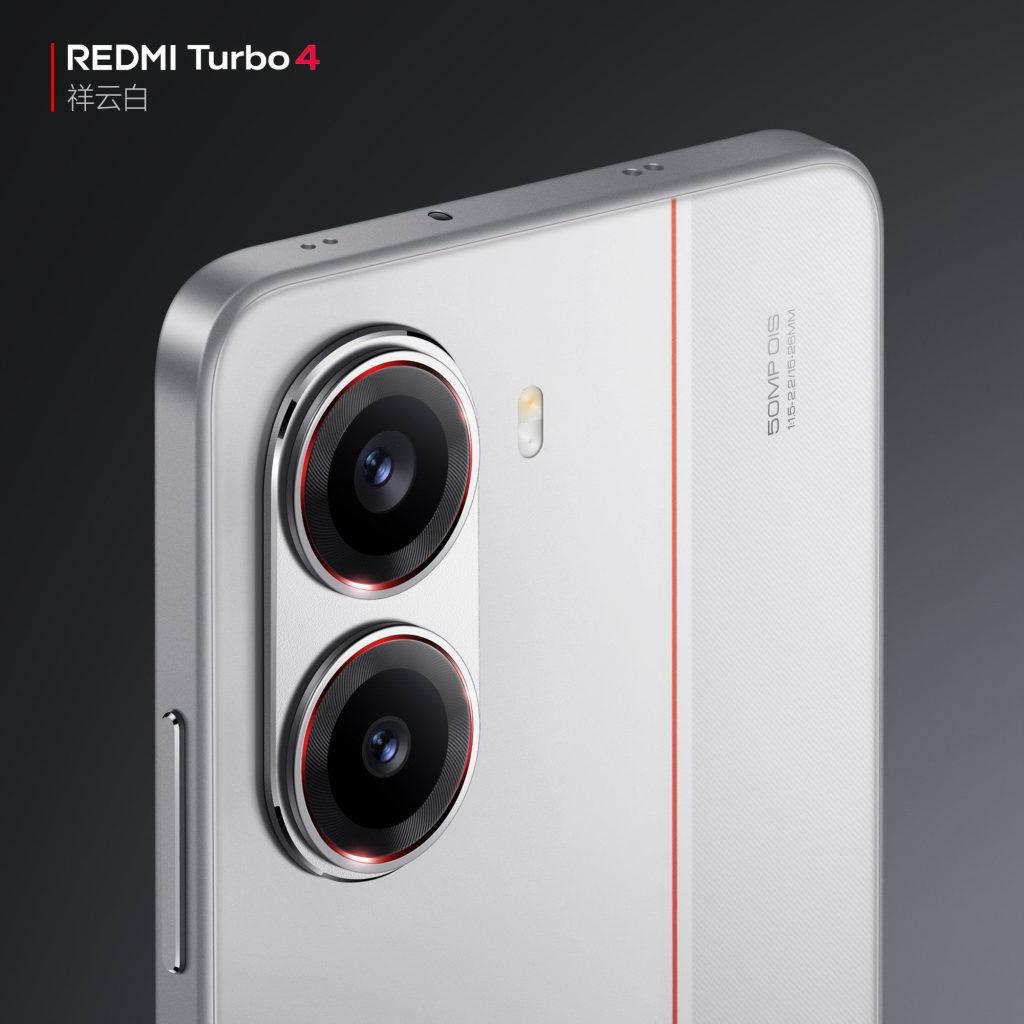
Beyond the impressive processor and GPU, the Redmi Turbo 4 boasts a range of other compelling features. The phone sports a 6.67-inch 1.5K resolution screen, a 20-megapixel front camera, and a rear camera system consisting of a 50-megapixel main sensor and an 8-megapixel ultra-wide-angle sensor.
Keeping the phone powered is a large 6550mAh Xiaomi Jinshajiang battery. This battery boasts a 6% silicon content and an energy density of 825Wh/L. Additionally, the Turbo 4 supports 90W fast charging that juices up the phone tp 100% in just 45 minutes.
The Redmi Turbo 4 is also built to withstand the elements as it comes with three IP certifications: IP66, IP68, and IP69. The phone also supports triple-band Beidou positioning and dual-frequency GPS for accurate navigation. The software side is covered by HyperOS 2, Xiaomi’s custom user interface based on the Android 15 operating system.


Comments