Add GIZMOCHINA as Preferred Source on Google
Oppo and OnePlus have recently unveiled their sub-premium smartphones in India. Oppo’s offering is the Reno 13 Pro, while OnePlus counters with the 13R as a direct competitor. Both companies present compelling devices, but each caters to slightly different user preferences. Here’s a detailed comparison to help you decide which smartphone suits your needs.
1. Design and Build Quality

While the phones have different visual designs, they use nearly identical materials on the front and back. The Reno 13 Pro is a slim and lightweight machine, measuring only 7.6 mm thick and weighing 195 grams.
It has a Gorilla Glass 7i shield on the front which connects with aluminum frames on the sides. The phone also has an IP68/IP69 rating for protection against water and dust.
The OnePlus 13R, on the other hand, weighs slightly more (206 grams) and features a similar Gorilla Glass 7i and aluminum frame design. However, it settles for an IP65 rating.
While that’s a step down in water resistance compared to the Reno 13 Pro, it should be more than capable of withstanding everyday splashes and dust exposure. However, Oppo’s lighter build and superior water resistance give it a slight edge in terms of design.
2. Display
The Reno 13 Pro features a 6.83-inch AMOLED display with a peak brightness of 1200 nits and a standard refresh rate of 120Hz. The display has a good screen-to-body ratio of 90.9% and an FHD+ resolution of 450 ppi.
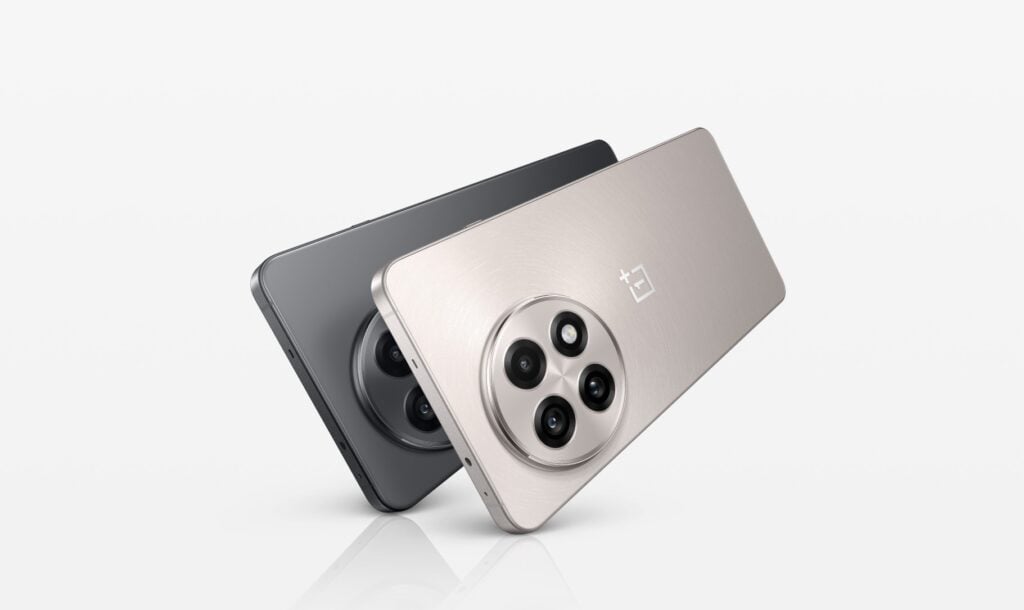
The OnePlus 13R features a 6.78-inch AMOLED display with 120Hz LTPO refresh rate. This means that the screen can refresh at a rate ranging from 1Hz to 120Hz depending on the content. OnePlus also has a higher peak brightness of 4500 nits and supports Ultra HDR.
3. Performance
Performance is where the differences start to widen. The Reno 13 Pro is powered by the MediaTek Dimensity 8350, a capable chipset built on a 4nm process. While its octa-core CPU and Mali G615 GPU are efficient for multitasking and casual gaming, it lacks the raw power seen in flagship devices.
The OnePlus 13R takes a leap ahead with the Snapdragon 8 Gen 3, Qualcomm’s last year’s high-performance chipset. It offers faster processing speeds, thanks to its advanced Cortex-X4 cores, and the Adreno 750 GPU on the SoC offers a much better gaming experience.
Moreover, OnePlus has committed to four major Android updates, compared to Oppo’s promise of three years of updates, giving the 13R a clear advantage in software longevity.
4. Cameras
Both devices feature impressive camera setups. The Oppo Reno 13 Pro houses a 50 MP wide-angle camera with OIS, a 50 MP telephoto lens that offers 3.5x optical zoom, and an 8 MP ultrawide camera.
The OnePlus 13R also includes a 50 MP primary camera with OIS, a 50 MP telephoto lens but with 2x optical zoom, and an 8 MP ultrawide camera. While its zoom range is limited compared to Reno 13 Pro, it should serve you well to capture distant objects.
Selfies on the Oppo Reno 13 Pro are handled by a 50 MP front camera with autofocus and 4K video support. The OnePlus 13R has a 16 MP front-facing camera that lacks autofocus and tops out at 1080p video, making it less competitive in this area.
5. Battery and Charging
As for the battery, Oppo ships the phone with a 5800mAh battery and 80W wired and 50W wireless charging supports. It also supports reverse wired charging, adding a layer of convenience for users who own multiple devices.
The OnePlus 13R offers a slightly larger 6000mAh Si/C battery that supports 80W wired charging capable of reaching 50% in 20 minutes. However, it lacks wireless charging, which may be a dealbreaker for some.
If wireless charging matters to you, the Reno 13 Pro is a clear choice, while the OnePlus 13R holds an advantage in pure capacity.
6. Storage and Connectivity
The Reno 13 Pro offers up to 1TB of storage paired with 16GB of RAM. The OnePlus 13R maxes out at 512GB with 16GB of RAM, which is still competitive but less expansive.
However, the real difference here is in the memory and storage technologies. The OnePlus 13R features LPDDR5x RAM and UFS 4.0 storage across all variants, In contrast, while the Reno 13 Pro also uses LPDDR5x RAM, it is paired with the older UFS 3.1 standard.
For connectivity, both phones feature Wi-Fi 6e, Bluetooth 5.4, NFC, and USB Type-C. The OnePlus 13R adds future-proofing with Wi-Fi 7 support (market-specific) and a superior GPS configuration.
7. Price and Value
The Reno 13 Pro starts at Rs 49,999 in India while the 13R is more affordable at Rs 42,999. Both phones come in a variety of colors, with Oppo leaning towards a softer aesthetic (Graphite Grey, Plume Purple, Pink) and OnePlus offering a bolder palette (Astral Trail, Nebula Noir).
8. Conclusion
Choosing between the Oppo Reno 13 Pro and the OnePlus 13R ultimately depends on your priorities:
- Pick the Oppo Reno 13 Pro if:
- You value a lighter, slimmer design.
- Telephoto zoom and selfie quality are crucial.
- Wireless charging is a must.
- Opt for the OnePlus 13R if:
- You want reliable performance and gaming capabilities.
- Future-proof connectivity is a priority.
- Longer software support is important.
- Price
Both phones offer tremendous value, but the OnePlus 13R edges out as the better all-rounder for most users, while the Reno 13 Pro caters more to niche preferences like cameras and wireless charging.
Tech enthusiast? Get the latest news first! Follow our Telegram channel and subscribe to our free newsletter for your daily tech fix!