
Add GIZMOCHINA as Preferred Source on Google
A new player, DeepSeek, a Chinese AI startup, has shaken up Silicon Valley with its cost-efficient language model, DeepSeek-R1, rivaling OpenAI’s ChatGPT. Despite US export controls on advanced AI chips, the company has achieved breakthroughs through innovative strategies, prioritizing efficiency and performance. This development is reshaping the AI landscape—read on to learn more.
1. DeepSeek’s V3 and R1 AI language models
Unlike many Western AI companies that focus on scaling up by acquiring vast amounts of computing power, DeepSeek has taken a different approach. Faced with US export controls on advanced chips, the company focused on optimizing software and algorithms to maximize efficiency.
DeepSeek offers two advanced AI models: DeepSeek-V3, designed for a wide range of applications, and DeepSeek-R1, a cost-effective alternative to ChatGPT.
DeepSeek-V3, an advanced AI language model, is designed for a broad spectrum of applications, including natural language processing, customer service, education, and healthcare. Optimized for understanding the Chinese language and its cultural context, DeepSeek-V3 also supports global use cases. The model is focused on delivering high performance while being cost-effective and efficient, making it a versatile tool for various industries, particularly within the Chinese market but adaptable for international markets as well.
DeepSeek-R1, another model from DeepSeek, offers performance comparable to OpenAI’s ChatGPT at a significantly lower cost. Despite facing challenges such as US export controls on advanced AI chips, the model maintains high-quality results through efficiency and innovative approaches. Its primary goal is to serve as a cost-effective alternative to other AI models like ChatGPT, positioning DeepSeek as a competitive player in the global AI market. With a focus on overcoming resource limitations, DeepSeek-R1 embodies the company’s commitment to innovation and performance at scale.
DeepSeek’s founder, Liang Wenfeng, a former quant hedge fund manager, has assembled a team of young, ambitious researchers from China’s top universities, providing them with ample resources and freedom to explore unconventional ideas. This approach has led to the development of groundbreaking techniques like Multi-head Latent Attention (MLA) and Mixture-of-Experts, which significantly reduce the computational resources required to train their models.
2. DeepSeek vs. ChatGPT: A short comparison
DeepSeek-V3 and ChatGPT are both advanced AI models, but they differ in key aspects. DeepSeek-V3 is optimized for Chinese language understanding and cultural context, while also supporting global applications. It is particularly tailored for industries like education, healthcare, and customer service, with a strong focus on the Chinese market. In contrast, ChatGPT, developed by OpenAI, is trained on a globally diverse dataset with a stronger emphasis on English and Western contexts, making it widely used for general-purpose tasks, creative writing, coding, and more.
Both models are highly capable, but their performance may vary depending on the task and language, with DeepSeek-V3 potentially excelling in Chinese-specific tasks and ChatGPT performing better in English-heavy or globally diverse scenarios. Additionally, while both models adhere to strict ethical guidelines, their alignment may differ slightly based on regional regulations and cultural norms.
3. DeepSeek’s Global Impact
DeepSeek’s commitment to open-source development has garnered praise from the international AI community. By making its models freely available, DeepSeek is fostering collaboration and accelerating AI research worldwide. This is particularly significant for researchers and developers in the Global South who may have limited access to expensive proprietary models.
DeepSeek’s open-source approach also challenges the current trend of closed-source models developed by major tech companies. This shift towards greater transparency and accessibility could democratize AI technology, allowing a wider range of individuals and organizations to contribute to its development and benefit from its potential.
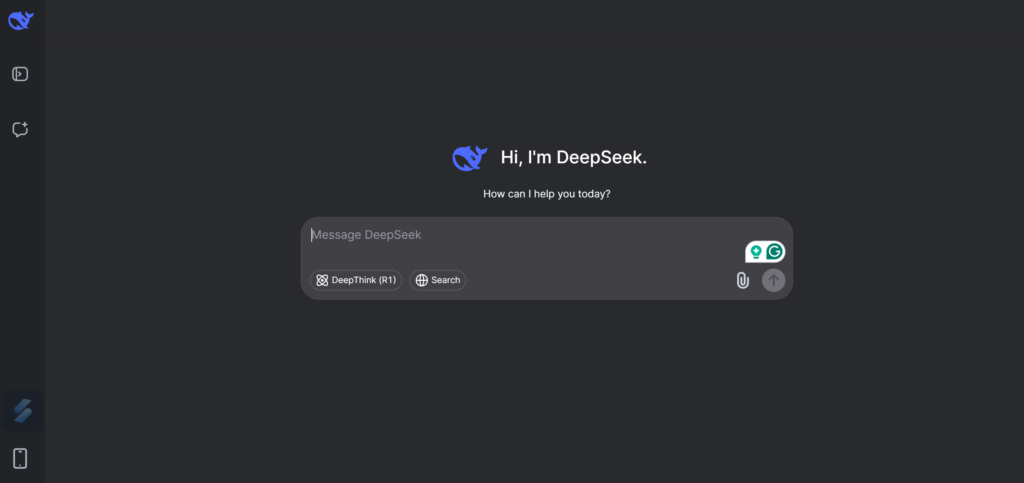
DeepSeek’s models, including the powerful DeepSeek-R1, are available globally using its URL: https://chat.deepseek.com/. While the company is based in China, its open-source approach allows anyone, regardless of location, to access and utilize its technology. This has significant implications for the future of AI development, as it allows for a more diverse range of contributors and accelerates the pace of innovation.
For more daily updates, please visit our News Section.
Stay ahead in tech! Join our Telegram community and sign up for our daily newsletter of top stories! 💡




Comments