Add GIZMOCHINA as Preferred Source on Google
Galaxy S25 and Pixel 9 are two of the most anticipated flagship phones of 2025, offering distinct experiences. Samsung focuses on power, premium design, and versatility, while Google leans into AI-driven enhancements, affordability, and camera software.
With both phones promising 7 years of updates, choosing the right one comes down to performance, features, and value. This comparison breaks down their design, specifications, camera capabilities, pricing, and standout features to help you decide which smartphone suits your needs best. Whether you prioritize raw power or AI smarts, there’s a clear winner for every user.
1. Design and Display
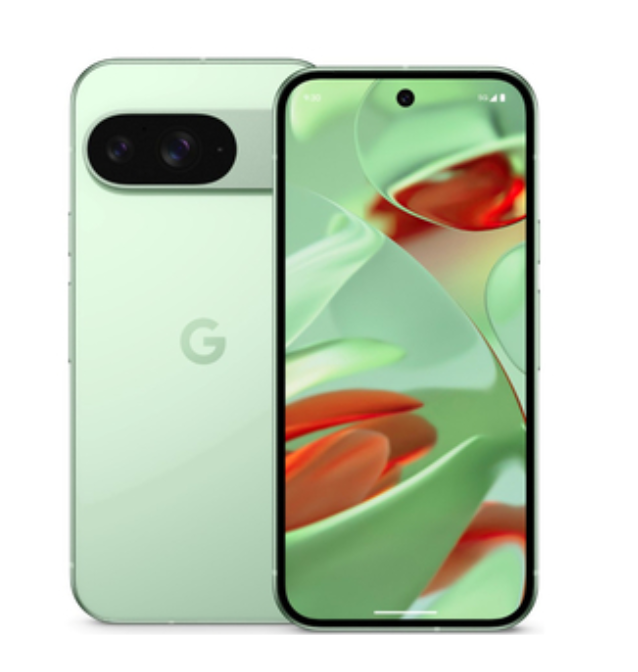
The Galaxy S25 and Pixel 9 both feature a premium build with Gorilla Glass Victus 2 on the front and back, along with an aluminum frame, ensuring durability. They also share IP68 water and dust resistance. However, Samsung edges ahead with its Armor Aluminum 2 frame, making it more resilient.
The display is where the differences become clearer as Samsung’s 6.2-inch Dynamic LTPO AMOLED 2X panel offers a 120Hz refresh rate and an incredible 2600 nits peak brightness, making it more visible in direct sunlight. In contrast, the 6.3-inch OLED panel on the Pixel 9 also supports 120Hz but peaks at 2700 nits, slightly surpassing Samsung in brightness. However, Samsung’s LTPO tech ensures better power efficiency when dynamically adjusting refresh rates.
Overall, the Galaxy S25’s display is more refined and more efficient, while the Pixel 9 focuses on peak brightness.
2. Specifications

The Galaxy S25 is powered by the Snapdragon 8 Elite (3nm), while the Pixel 9 runs on the Google Tensor G4 (4nm). Qualcomm’s chipset is known for better efficiency and raw power, making the S25 more reliable for demanding tasks like gaming. The Pixel 9’s Google Tensor G4, while optimized for AI-based functions, still lags in GPU performance compared to the Adreno 830 in the Galaxy S25.
Battery-wise, the Pixel 9 has a 4700mAh battery versus the S25’s 4000mAh, giving it a slight advantage in longevity. It also supports 27W wired and 15W wireless charging, whereas Samsung has 25W wired and the same 15W wireless charging. However, Pixel’s bypass charging (limiting to 80%) enhances battery lifespan, which is a neat feature.
If you want raw power, the S25 is better, but for battery efficiency and longevity, the Pixel 9 takes the lead.
3. Camera
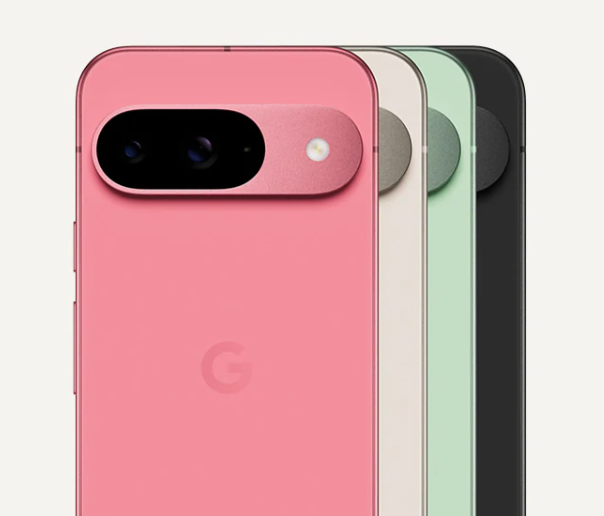
Samsung’s triple-camera setup includes a 50MP wide, 10MP telephoto (3x zoom), and 12MP ultrawide lens. The Pixel 9, on the other hand, has a dual-camera system with a 50MP wide and a 48MP ultrawide sensor. While Samsung offers optical zoom for better portrait shots and distant photography, Google’s Pixel processing and Ultra-HDR ensure top-tier AI enhancements. The Pixel 9 is also better in low-light scenarios, thanks to its larger 1/1.31-inch sensor versus Samsung’s 1/1.56-inch sensor.
Video-wise, Samsung supports 8K recording, which is useful for high-detail content, whereas Pixel maxes out at 4K but offers superior stabilization with its gyro-EIS and OIS combo.
Samsung wins in versatility, but Google’s computational photography makes it the better choice for effortless point-and-shoot performance.
4. Pricing
The Galaxy S25 is priced at $799, while the Pixel 9 starts at $524, making Google’s phone significantly more affordable. At this price, the Pixel 9 offers excellent AI-powered features, a great camera, and a solid battery. However, the S25 justifies its higher price with a more powerful chipset, superior display technology, and telephoto zoom.
If you want the best value, the Pixel 9 is the clear winner, but if you prefer performance and an overall premium experience, the S25 is worth the extra cost.
5. Conclusion

Samsung has a stronger processor, better GPU, and a telephoto lens, while Pixel 9 stands out in AI processing, battery features, and affordability. The Pixel 9 also introduces Satellite SOS for emergency communications, a feature missing on the S25.
On the other hand, Samsung supports DeX mode, turning the phone into a desktop-like experience, something Google does not offer. Additionally, the S25 uses UFS 4.0 storage for faster read/write speeds, while the Pixel 9 is still on UFS 3.1.
If gaming and performance matter, Samsung wins, but if AI smarts and long-term battery health are a priority, the Pixel 9 is more future-proof.
Read More:
- Comparing Samsung Galaxy S25 Ultra and Vivo X200 Pro: Which is better?
- Samsung Galaxy S25 Ultra vs. S22 Ultra: What’s New, What’s Better, and What’s Worth Your Money?
- Galaxy S25 Ultra vs Xiaomi 15 Pro: Which Flagship Delivers More?