Battery life has always been one of the biggest limitations in smartphones. As devices have become thinner, faster, and more capable, users have often been left juggling between performance and power. But 2025 marks a turning point.
We are now seeing a wave of smartphones pushing battery capacities well beyond the 6,000mAh mark, not just in rugged or budget devices, but across mainstream and even foldable segments. This is largely thanks to advancements in silicon-carbon battery technology, which is reshaping how battery capacity is approached.
Whether you’re a gamer, a creator, or just someone who relies on their phone throughout the day, chances are you’ve experienced battery anxiety. The rise of 5G, high refresh rate displays, AI-powered apps, and heavier multitasking has pushed power demands to new heights. Even with fast charging, it’s not always convenient to plug in during a busy schedule. This is why bigger batteries are no longer a niche feature, they’re becoming a practical necessity.
2. Realme’s 10,000mAh Concept Breaks New Ground
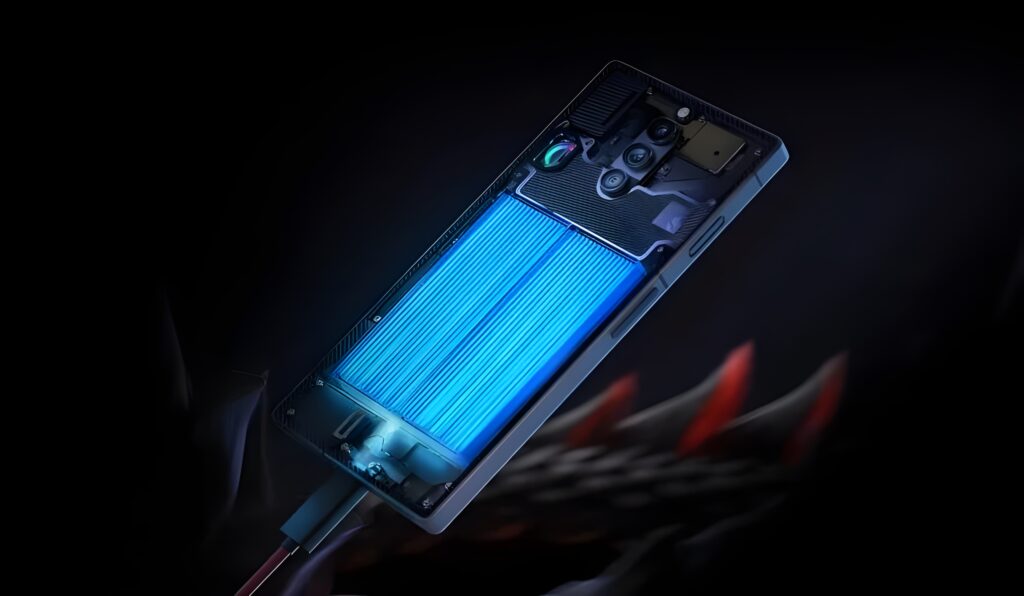
This week, Realme unveiled a concept smartphone featuring a 10,000mAh battery in a surprisingly slim 8.5mm body that weighs just 212 grams. It achieves this feat using silicon-anode battery tech, delivering an energy density of 887Wh/L.
That’s a huge leap over the traditional lithium-ion designs still used by most phones. Combined with Realme’s “Mini Diamond Architecture,” which houses the world’s narrowest Android motherboard (just 23.4mm wide), the phone supports 100W fast charging and improved safety via a triple cold press process to prevent battery swelling.
But this isn’t just a Realme moment, it’s part of a much broader shift across the industry.
3. The Silicon-Carbon Revolution
The move to silicon-carbon anodes represents one of the most significant battery upgrades in recent memory. This material offers much higher energy density, better thermal stability, and faster charging potential. Most importantly, it allows manufacturers to pack more power into slimmer bodies, enabling high-capacity batteries in devices that previously couldn’t handle them.
This has already translated into real-world products. Xiaomi, for instance, has aggressively adopted this tech. Its recent launch, the Redmi Turbo 4 Pro, comes with a 7,550mAh battery, a number once unthinkable for a sleek, performance-oriented phone. Several of Xiaomi’s upcoming devices are expected to cross the 6,500-7,000mAh range without compromising on thickness or weight.
Other Android manufacturers, including Vivo, iQOO, Oppo, Infinix, and Realme, are also ramping up their battery capacities in both midrange and flagship lines. This technology has even begun to transform the foldable market, especially flip phones.
Until 2023, most flip-style foldables struggled with sub-4,000mAh cells due to their compact internal layout. But in 2024 and 2025, we’ve seen new flip models launch with significantly larger batteries, thanks to silicon-carbon advancements.
4. Apple and Samsung: Still Catching Up
Interestingly, Apple and Samsung have yet to embrace silicon-carbon batteries in their flagship lines. While both brands have focused on software optimization and custom silicon to extend battery life, actual battery capacities have remained relatively modest.
With other manufacturers now pushing past 6,000mAh without bulk, the pressure is mounting. The hardware ceiling has shifted, and users are starting to expect more than software tricks to get them through the day.
5. Why It All Matters
Big battery phones aren’t just a checklist item anymore. They represent a real improvement in quality of life, especially for users who rely on their devices for content creation, gaming, or AI-driven tasks. With edge AI, on-device video editing, and larger displays becoming standard, the demands on battery life will only increase.
Thanks to silicon-carbon technology and smart internal design, we’re no longer forced to choose between battery life and form factor. The battery race is heating up and in 2025, it’s clear that bigger really is better.
For more daily updates, please visit our News Section.
We use cookies on our website to give you the most relevant experience by remembering your preferences and repeat visits. By clicking “Accept”, you consent to the use of ALL the cookies.
This website uses cookies to improve your experience while you navigate through the website. Out of these, the cookies that are categorized as necessary are stored on your browser as they are essential for the working of basic functionalities of the website. We also use third-party cookies that help us analyze and understand how you use this website. These cookies will be stored in your browser only with your consent. You also have the option to opt-out of these cookies. But opting out of some of these cookies may affect your browsing experience.
Necessary cookies are absolutely essential for the website to function properly. This category only includes cookies that ensures basic functionalities and security features of the website. These cookies do not store any personal information.
Any cookies that may not be particularly necessary for the website to function and is used specifically to collect user personal data via analytics, ads, other embedded contents are termed as non-necessary cookies. It is mandatory to procure user consent prior to running these cookies on your website.