Add GIZMOCHINA as Preferred Source on Google
Huawei is set to unveil its first foldable-screen laptop on May 19—that’s this Monday. Likely named the MateBook Fold Ultimate Design, the device marks Huawei’s entry into the niche, but steadily growing, category of foldable PCs.
Huawei has been in the foldable game since the early days of foldable smartphones, and it’s now bringing that expertise to a larger canvas. The company clearly sees foldable laptops as the next frontier — and it’s using years of R&D from its phone lineup to try and get a head start.
The MateBook Fold will go head-to-head with foldable devices from Lenovo and Asus. The two brands have been exploring unconventional laptop designs like foldables for a few years now.

According to early reports, Huawei’s foldable laptop will feature a foldable OLED display, run on the company’s own HarmonyOS, and be powered by the in-house Kirin X90 processor. It’s also rumored to ship with 32GB of RAM and a massive 2TB of storage.
Ahead of the launch, let’s take a quick look at some of the most interesting foldable PCs on the market right now.
1. Asus Zenbook Duo (2024)
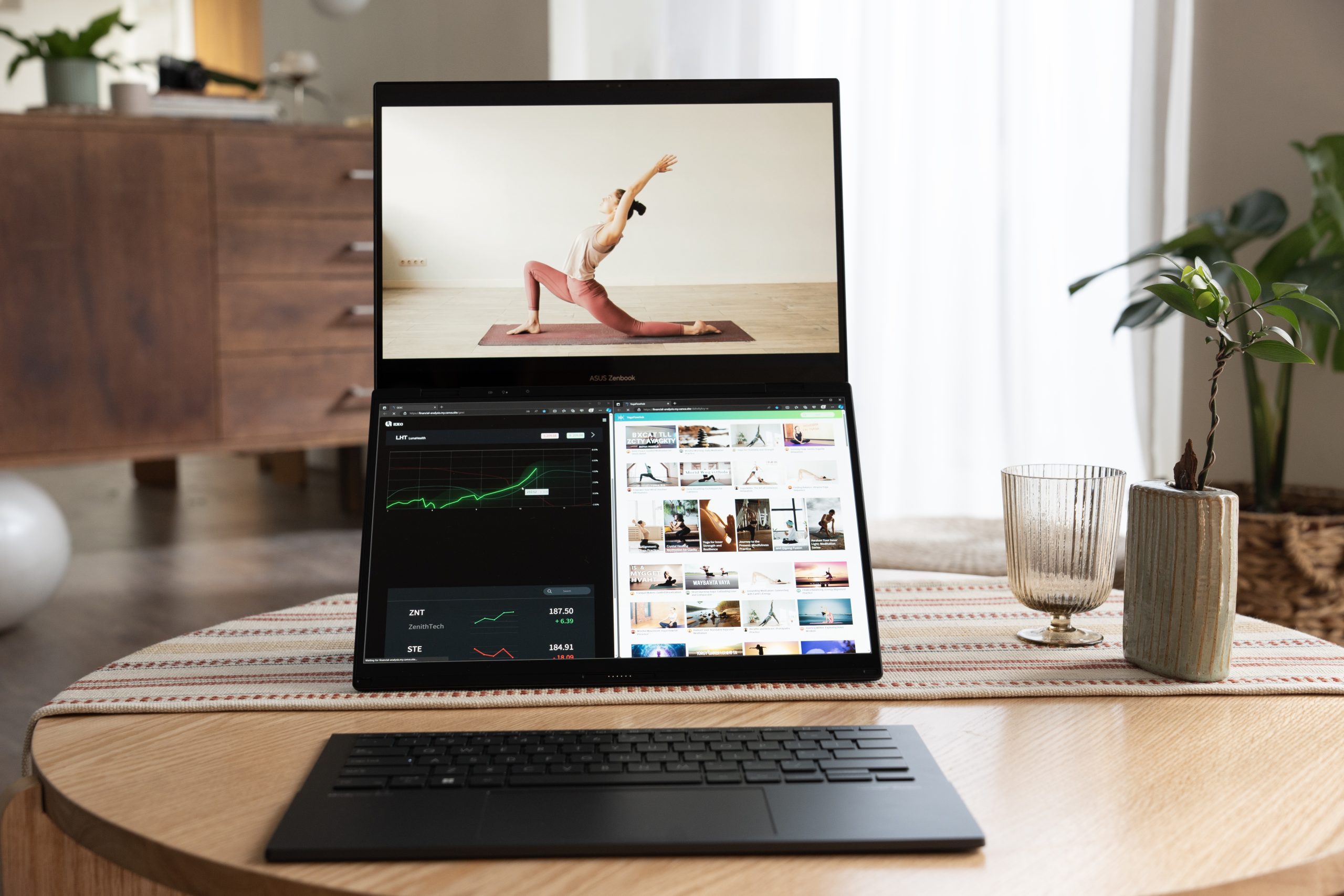
The 2024 Zenbook Duo is Asus’s most recent experiment in dual-screen productivity. It comes equipped with two 14-inch 3K OLED touch displays, a detachable Bluetooth keyboard, and enough flexibility to turn the laptop into a portable workstation when laid flat.
Combined, the two screens offer a nearly 20-inch workspace, allowing for extended vertical or side-by-side multitasking. It’s powered by Intel’s Core Ultra 9 processor and 32GB of LPDDR5x memory, placing it in high-performance territory on paper.
The laptop is fueled by a sizeable 75Wh 4-cell Li-ion battery with 65W charging support. Talking of the I/O options, this premium laptop consists of a USB 3.2 Gen 1 Type-A port, 2x Thunderbolt 4 ports, an HDMI 2.1 TMDS port, and a 3.5mm headphone jack. Wireless connectivity includes WiFi 6E and Bluetooth 5.3.
2. Lenovo Yoga Book 9i (2024)
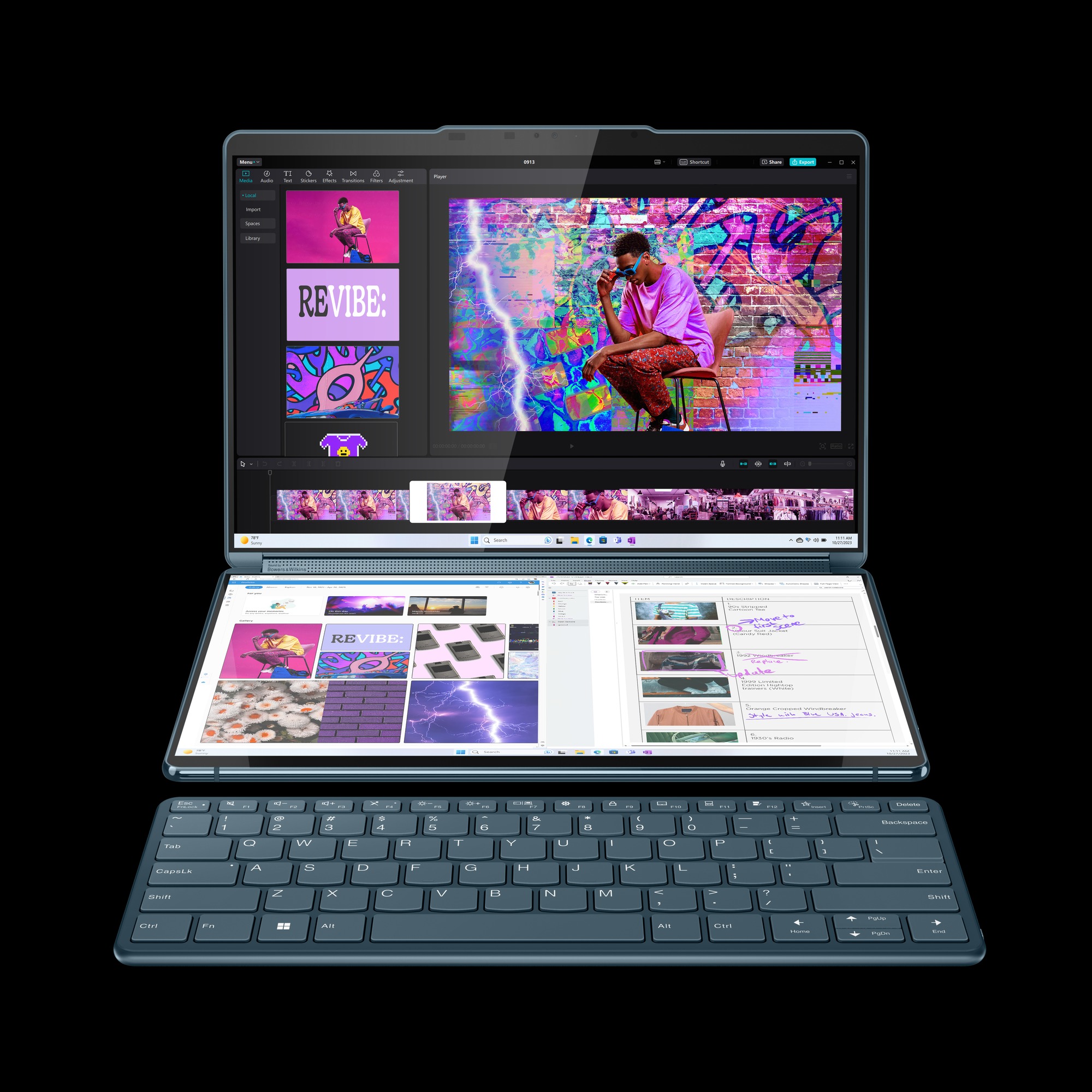
Lenovo’s Yoga Book 9i (2024) debuted around the same time as the ZenBook Duo. However, it features slightly smaller dual 13.3-inch OLED screens with a 3.2K resolution (3200 × 2000), a 165Hz refresh rate, and a 16:10 aspect ratio.
The device comes with a folio stand and magnetic keyboard, allowing it to switch between laptop, book, tent, and vertical dual-screen modes. It runs on Intel’s Meteor Lake Core Ultra chips (up to Ultra 9 H), and configurations can include an NVIDIA RTX 4070 GPU with 8GB of GDDR6X VRAM.
The Lenovo Yoga Pro 9i 16 (Gen 9) now packs a larger 84Wh battery, which is a 12% increase over the 75Wh unit in the Gen 8 model. Paired with the more efficient Meteor Lake chips, this should deliver comparatively better battery life.
In terms of connectivity, you get Wi-Fi 6E and Bluetooth 5.1 on the wireless side. Physical ports include two USB 3.2 Type-A ports, a single Thunderbolt 4 port, HDMI 2.0, a 3.5mm audio jack, and a full-sized SD card reader. The laptop also comes with Lenovo’s ‘Creator Zone’ application, which hosts features like AI image generator.
3. GPD Duo
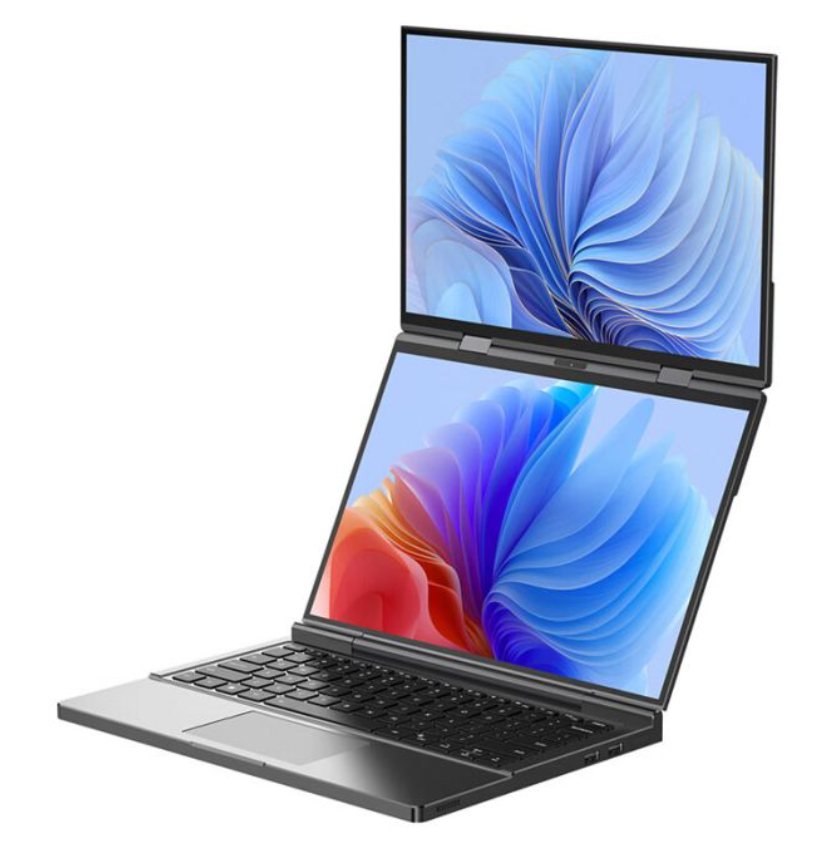
The GPD Duo is a different kind of multi-screen device, designed with gaming in mind. It’s less polished, more experimental, and targeted at an audience willing to embrace eccentricity.
It has a tri-fold form factor and dual hinges that reveal an 18-inch vertical display setup when fully extended. It’s a niche proposition, to be sure; more of a tool for coders, content editors, or mobile workstation users than general consumers.
At the heart of the GPD Duo is a choice between two impressive AMD Ryzen processors: the Ryzen 7 8840U and the Ryzen AI 9 HX 370.
The device is fueled by an 80Wh cell and comes with a USB 4.0 Type-C, HDMI 2.1, and USB 3.2 Gen 2, ensuring compatibility with external displays and accessories.
4. Challenges in the Foldable Laptop Market
While these innovative designs offer new ways to work and create, they also come with trade-offs. Battery life often suffers due to the power demands of multiple high-resolution displays. Durability is another concern, as foldable and dual-screen devices introduce more points of potential failure. It’s also difficult to optimize software for foldable screens, as this is such a niche market.
Huawei’s entry into this space with the MateBook Fold Ultimate Design could help grow the category. And the company is leveraging its own hardware and software ecosystem to do so. However, the success of this device will ultimately depend on real-world performance and user adoption.