
Add GIZMOCHINA as Preferred Source on Google
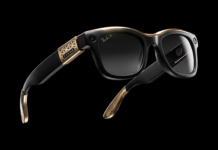
Meta has revealed full details of the Aria Gen 2 research glasses, the follow-up to the original Aria Gen 1 from 2020. The new version brings major improvements in cameras, sensors, wearability, and on-device processing. Aria Gen 2 is designed for researchers working in machine perception, robotics, and contextual AI.
Design and Fit
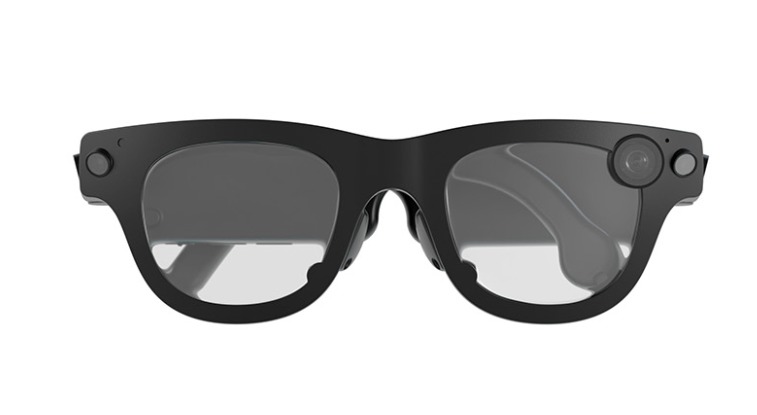
Aria Gen 2 is lightweight at 74 to 76 grams and now includes folding arms for easier storage. It comes in eight size options to fit different face shapes and head sizes.
Camera Upgrades
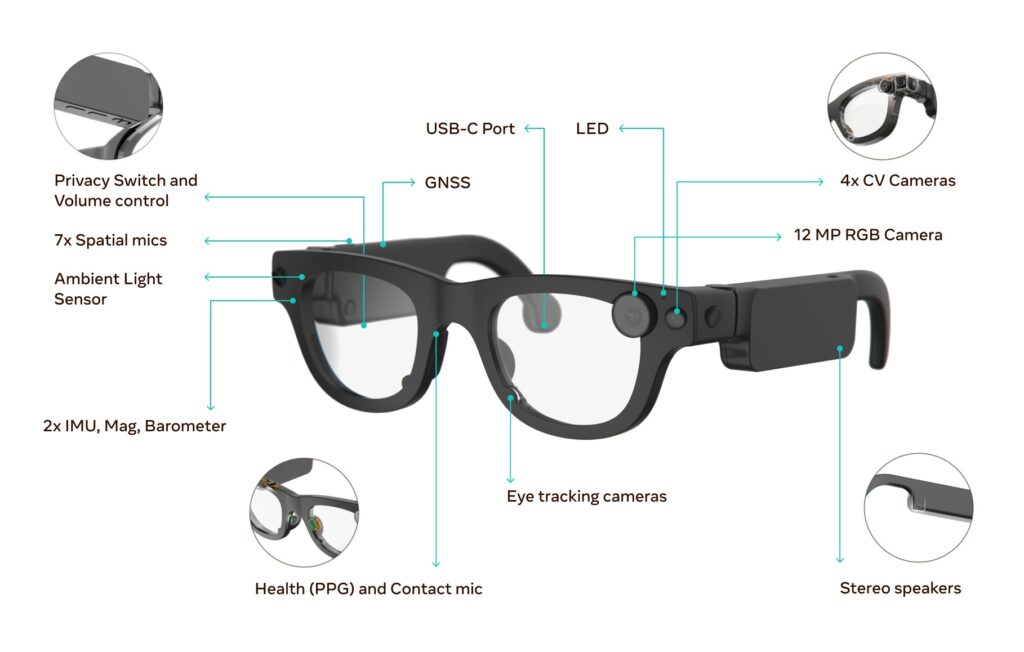
The glasses now have four computer vision cameras, up from two in Gen 1. These use a global shutter sensor with 120 dB HDR (compared to 70 dB in Gen 1), which improves performance in bright and low-light conditions. The stereo overlap has been increased from 35° to 80° to improve depth perception and 3D tracking.
Sensor Additions
A calibrated ambient light sensor (ALS) with ultraviolet detection improves exposure control. A contact microphone built into the nosepad captures clearer audio in noisy environments. A photoplethysmography (PPG) sensor also in the nosepad estimates the user’s heart rate.
Time Sync
Aria Gen 2 includes SubGHz radio for sub-millisecond time sync between devices, replacing the software-based method used in Gen 1.
On-Device Machine Perception
A custom Meta coprocessor runs machine perception algorithms directly on the device. Key features include:
- Visual Inertial Odometry (VIO): Tracks movement in six degrees of freedom
- Eye Tracking: Monitors gaze, blink, pupil diameter, and more
- Hand Tracking: Tracks full 3D hand movement and joint positions
Availability
Applications for Aria Gen 2 will open later this year. Aria Gen 1 kits are still available. Meta will demo Aria Gen 2 at CVPR 2025 in Nashville this June.
(Source)

Comments