
Add GIZMOCHINA as Preferred Source on Google
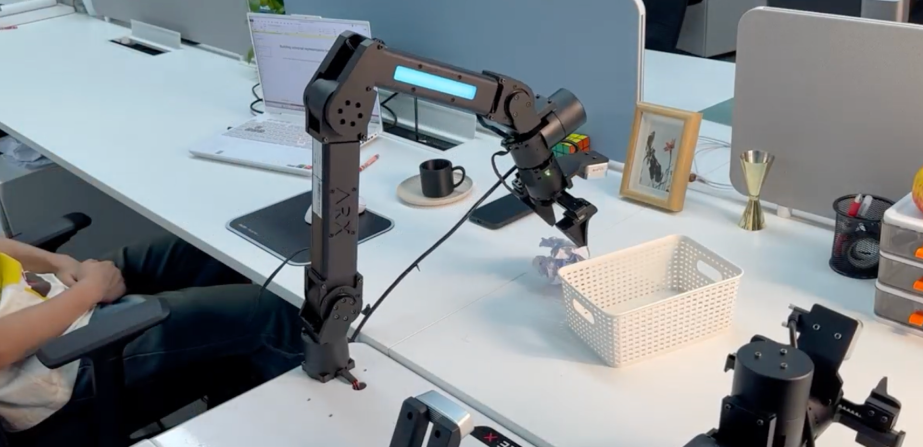
ShengShu Technology has introduced Vidar, an advanced embodied AI model created to transform the way consumer humanoid robots are trained. This system focuses on delivering faster, smarter, and more cost-effective training, moving away from the months of expensive real-world data collection that traditional robot development often requires. Instead, Vidar relies on a unique combination of minimal physical data and large-scale AI-generated simulations, resulting in quicker learning cycles and lower development expenses without sacrificing realism.
Core Approach and Technology Base
Vidar is powered by ShengShu’s proven Vidu generative video engine, a platform widely recognized for its success in creative and industrial fields. With this foundation, Vidar generates realistic multi-view simulations that capture the complexity of real-world environments. By learning from only a small set of real-world footage, the system can create highly accurate training scenarios at scale, making it far more efficient than purely physical methods.
Key Innovation: Hybrid Training
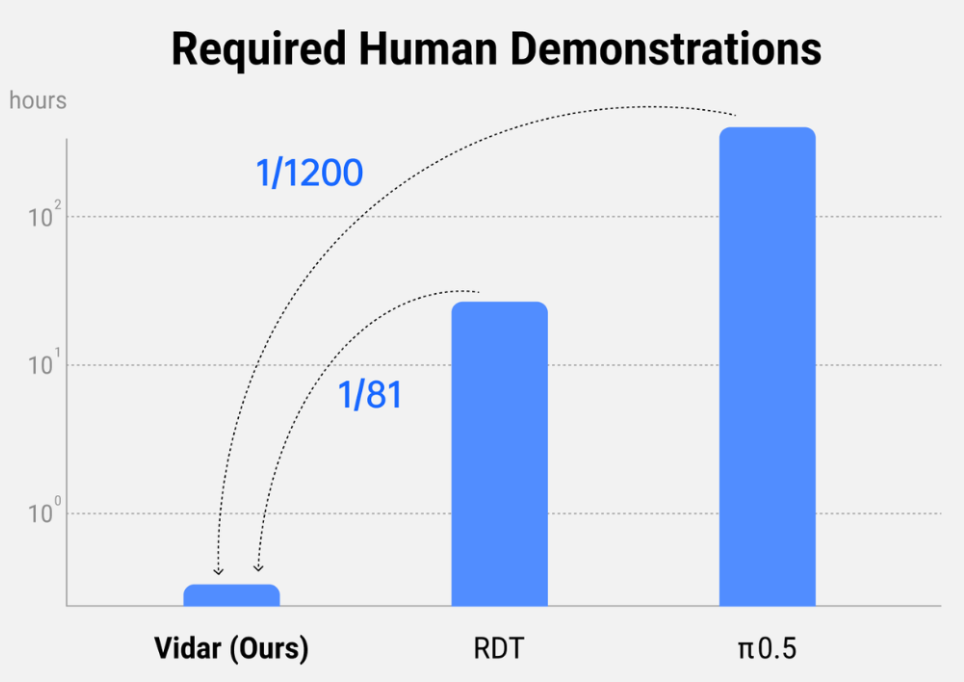
The most notable innovation in Vidar is its hybrid training approach. It blends just twenty minutes of physical-world data with vast amounts of AI-generated scenarios, making it up to one thousand two hundred times more data-efficient than comparable systems such as RDT or π0.5. This method preserves the unpredictability and realism found in everyday life while gaining the speed and flexibility of simulated environments. The result is a training system that allows robots to adapt more effectively to varied and unpredictable conditions.
Overcoming the Bottleneck in Physical AI
In robotics, training methods typically fall into two extremes. Full real-world training, like that used by Tesla Optimus or Boston Dynamics Atlas, offers unmatched realism but is slow, costly, and hardware-intensive. On the other hand, pure simulation is faster and cheaper but fails to capture the full complexity of physical-world scenarios. Vidar bridges this gap by offering a balanced method that combines real-world authenticity with the scalability and speed of AI-driven simulations.
Two-Stage Learning Pipeline
Vidar’s process is divided into two stages for maximum efficiency. In the perception stage, the system learns from large datasets of both general and embodied videos to build a strong understanding of objects, spaces, and environments. In the control stage, Vidar’s AnyPos model converts this scene understanding into precise motor commands, allowing it to guide various robot designs with minimal need for retraining. This flexibility makes the system adaptable to a wide range of robotic applications.
Real-World Applications and Benefits
Vidar’s hardware-agnostic design means it can train robots of different shapes, sizes, and purposes. Its potential uses span home assistance, eldercare, smart manufacturing, and even medical robotics. The system can adapt quickly to new environments, manage multiple tasks efficiently, and significantly cut both development time and costs. These benefits make it equally appealing to consumer, commercial, and industrial markets.
Vidu Legacy and Vidar’s Future
Vidar builds upon the success of the Vidu video foundation model, which attracted over ten million users in just three months and produced more than three hundred million videos. By extending Vidu’s deep visual understanding into the world of robotics, Vidar creates a direct link between AI perception and physical action.
Looking ahead, Vidar could enable humanoid robots to be trained in hours instead of weeks, marking a major step toward bringing capable consumer robots into everyday life. This advancement could become a defining force in making humanoid robots a practical reality for homes and industries alike.


Comments