
Add GIZMOCHINA as Preferred Source on Google
Apple‘s iPhone launches have long been a barometer for tech trends, but this year’s iPhone 17 lineup is rewriting the script with a reasonably good demand—except for one model that’s failing to take flight. While Pro variants dominate and the base edition surprises, whispers of production cuts swirl around the ultra-sleek iPhone Air. What’s fueling this uneven success story?
Fresh data from Counterpoint Research paints a rosy picture for Apple’s iPhone 17 series, which outsold the iPhone 16 lineup by 14% in the first 10 days across the US and China.
The Pro models are the undisputed stars, capturing 75% of total sales right out of the gate—a typical launch pattern driven by early adopters and enthusiasts. Sales of the iPhone 17 Pro and Pro Max are ramping faster than their iPhone 16 counterparts, thanks to enhanced carrier subsidies in the US and compelling upgrades like a brighter display and a refreshed design.
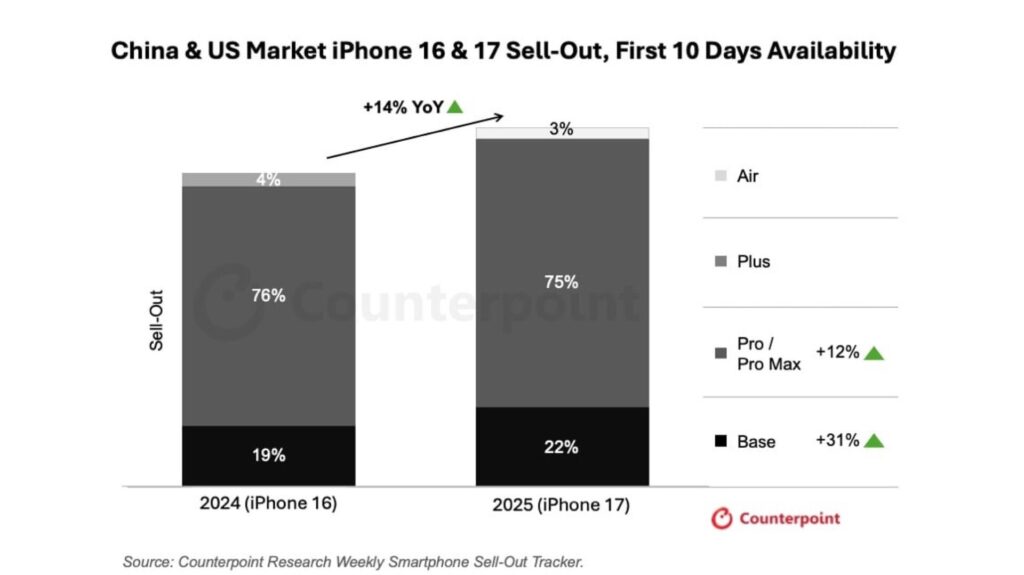
But the iPhone 17 base model is stealing the show among non-Pro buyers, with sales jumping nearly 33% thanks to several meaningful upgrades such as a 120Hz display, doubled base storage to 256GB at the unchanged $799 price point. Counterpoint analyst Mengmeng Zhang calls it “very compelling,” crediting discounts that amplify its value in retail and carrier channels.
In contrast, the iPhone Air—Apple’s thinnest-ever flagship at 5.6mm—is struggling, snagging just 3% of sales in the initial window, edging out the iPhone 16 Plus’s 4% but signaling weak demand. Priced at $999 (only $100 below the Pro), its 3,149mAh battery—26% smaller than the Pro’s 4,252mAh (eSIM only model)—raises endurance concerns.
For Apple, it’s a win overall—but a reminder that battery life remains a key priority for most users.
Don’t miss a thing! Join our Telegram community for instant updates and grab our free daily newsletter for the best tech stories!
For more daily updates, please visit our News Section.
(Source: Counterpoint Research)




Comments