Add GIZMOCHINA as Preferred Source on Google
The OnePlus 15 is not just another annual refresh. It’s a significant shift in OnePlus’s design philosophy, hardware execution, and display ambition. Compared to its predecessors, the OnePlus 11, 12, and 13, the new flagship moves beyond spec bumps and leans heavily into redefining the display experience, thermal engineering, and battery architecture, while carrying forward OnePlus’s hallmark camera and performance DNA. Here’s how it stacks up.
1. Display
The OnePlus 11 launched with a 6.7-inch 2K AMOLED display using Samsung’s LTPO 3.0 panel. It supported HDR10+ and Dolby Vision, with a 120Hz refresh rate and Gorilla Glass Victus protection. The OnePlus 12 and 13 followed with a 6.82-inch BOE 2K+ panel that reached up to 4,500 nits peak brightness and 2160Hz PWM dimming for reduced flicker. Both models received DisplayMate A++ ratings and featured Crystal Shield ceramic protection.
OnePlus 15 moves to a slightly smaller 6.78-inch 1.5K AMOLED display but adds several industry-first technologies. It debuts the third-generation Oriental screen with a 165Hz refresh rate, supports high-refresh-rate content on apps like WeChat and Weibo, and features the industry’s first “True Hardware 1nit Dark Night Display.” The display includes hardware-level low blue light, an SVM of less than 0.12, and the world’s first “Little Gold Label” eye protection certification. The bezels are now 1.15mm thick on all sides, with a slim chin and square corners.
2. Performance & Cooling
The OnePlus 11 used Snapdragon 8 Gen 2 and up to 16GB of LPDDR5X RAM, paired with UFS 4.0 storage. It had a redesigned heat dissipation system with improved graphite layers. OnePlus 12 adopted Snapdragon 8 Gen 3 and improved the vapor chamber area to 9140mm². The OnePlus 13 went further with the Snapdragon 8 Elite chip and a larger 9925mm² VC chamber.
OnePlus 15 steps up with the Snapdragon 8 Elite Gen 5, up to 16GB LPDDR5X RAM, and a new Glacier Cooling System. This system uses tearable steel material and aerospace-grade aerogel. OnePlus claims a 43% increase in vapor-liquid area and double the capillary absorption rate. The device features Android’s first “Touch Display Sync” for better touch accuracy and reduced gyro latency. The new G2 gaming network chip also reduces latency by 65.85% and improves update and video transmission speeds.
3. Design
The OnePlus 11 introduced a black hole-inspired design and silk glass. The OnePlus 12 adopted a luxury watch-inspired “Time Design” and shifted the alert slider to the left side for better antenna performance. The OnePlus 13 introduced new textures like ebony wood grain glass, and velvet leather.
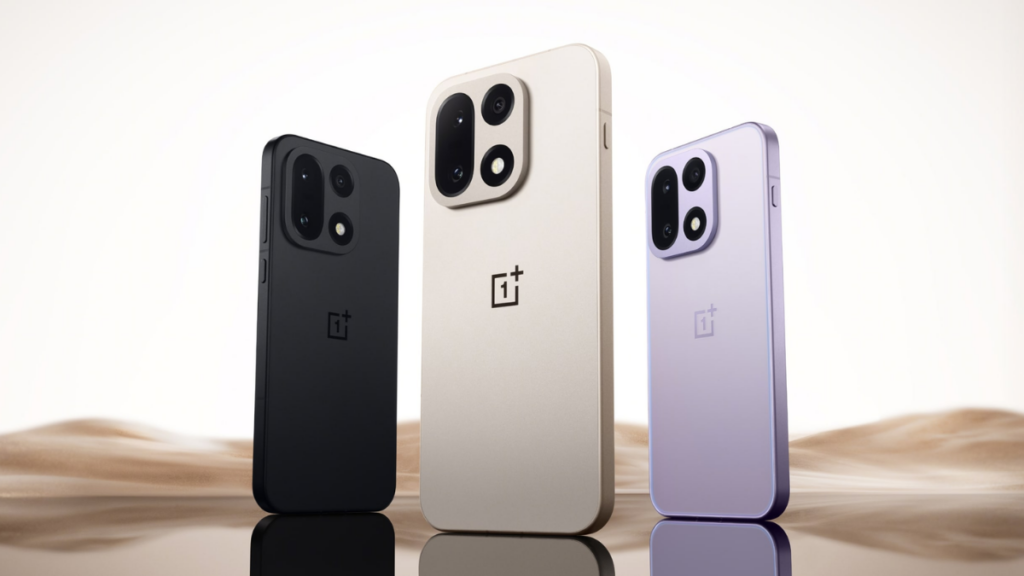
OnePlus 15 features a more structural design shift with its Dune Aesthetic. It uses a metal cube deco layout with precise weight distribution and 1.15mm equilateral bezels for a balanced look and feel.
The phone supports IP66, IP68, IP69, and IP69K ratings for durability and includes a high-performance X-axis motor and dual stereo speakers.
4. Camera
OnePlus 11 debuted with a 50MP Sony IMX890 sensor and 32MP 2x telephoto camera. The OnePlus 12 upgraded to the Sony LYT-808 and included a 64MP 3x periscope lens. The OnePlus 13 carried over the LYT-808 but used a new LYT600 periscope module and Hasselblad camera system.
OnePlus 15 switches to Oppo’s LUMO Condensed Light Imaging system. It features a triple 50MP setup with a Sony IMX906 sensor for the main camera, a 116° ultra-wide lens, and a 3.5x periscope telephoto lens. Features include 4K 120fps Dolby Vision video, up to 8K video recording, ultra-clear Live Photos, and AI-powered portrait lighting. The front camera remains 32MP with 4K 60fps support.
5. Battery & Charging
OnePlus 11 came with a 5000mAh battery and 100W fast charging. The OnePlus 12 raised capacity to 5400mAh and introduced 50W wireless charging. The OnePlus 13 improved energy density with a 6000mAh battery and added support for magnetic charging.
OnePlus 15 leads the series with a 7300mAh Glacier Battery. It supports 120W Super Flash Charge and 50W wireless charging. OnePlus claims that 5 minutes of charging can deliver 6 hours of streaming and 5000mAh can be charged in just 13 minutes. The phone also uses USB 3.2 Gen1 for faster data transfer and better thermal management during charging.
6. Conclusion
OnePlus 15 represents the biggest generational leap since the OnePlus 11. It introduces meaningful upgrades across display technology, thermal design, gaming features, and battery life.
While the OnePlus 12 and 13 focused on refining the premium formula with better cameras and brighter screens, the OnePlus 15 rebuilds the flagship identity with new materials, display science, and performance standards. It sets a new benchmark not only for OnePlus but also for the Android flagship space.
For more daily updates, please visit our News Section.
Stay ahead in tech! Join our Telegram community and sign up for our daily newsletter of top stories! 💡