
Add GIZMOCHINA as Preferred Source on Google
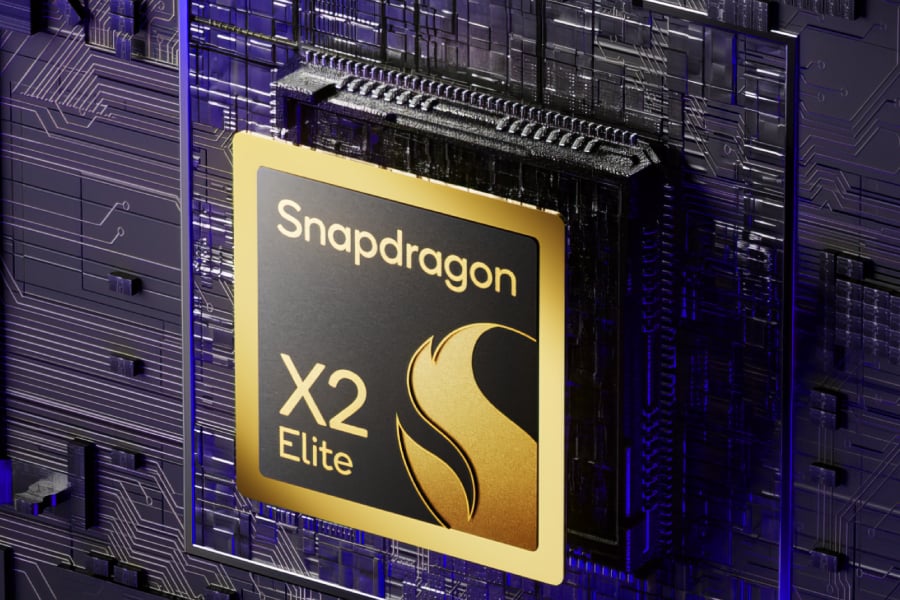
Qualcomm’s Snapdragon X2 is the company’s second-generation ARM chip designed to power Windows PCs. The main X2 SKUs include the X2 Plus, X2 Elite, and X2 Elite Extreme, each of which comes in its own different flavors.
According to Qualcomm, the X2 Plus delivers up to 35 percent faster single-core CPU performance than the previous Snapdragon X Plus while using 43 percent less power. The Elite models, on the other hand, are 31 percent faster CPU performance at the same power level, or 43 percent lower power consumption at the same performance, compared to last year’s Snapdragon X Elite chips.
Those are, of course, official claims. But now we have some early real-world numbers to look at.
Snapdragon X2 Elite real benchmarks
YouTuber Alex Ziskind was recently invited to tour a Qualcomm facility, where he was allowed to run Geekbench on the company’s Compute Reference Design (CRD) machines. That gave us our first look at benchmark results for the Snapdragon X2 Elite and X2 Elite Extreme.
Ziskind tested the Snapdragon X2 Elite in both 12-core and 18-core configurations, along with the 18-core X2 Elite Extreme.

The 12-core Snapdragon X2 Elite (X2E-80-100), paired with 32GB of memory and 1TB of storage, scored 3,850 in single-core and 16,171 in multi-core Geekbench tests. For comparison, Apple’s 10-core M4 MacBook Air scores around 3,839 single-core and 14,861 multi-core.
The 18-core Snapdragon X2 Elite (X2E-88-100) posted a 3,838 single-core score and a much higher 20,320 in multi-core. These figures put it in the same neighborhood as Apple’s M4 Pro chips.


The biggest numbers, of course, come from the Snapdragon X2 Elite Extreme (X2E-96-100). It hits 4,072 in single-core and 23,611 in multi-core. That’s squarely in M4 Max territory.
In fact, Ziskind’s testing shows the X2 Elite Extreme edging past the M4 Max in single-core performance (Apple scores around 3,913), while Apple still holds a clear lead in multi-core workloads, where the M4 Max reaches roughly 25,669 points.

As always, benchmarks don’t tell the full story. But Windows on ARM is no longer a science experiment. App compatibility has improved, performance is catching up fast, and with Snapdragon X2, Qualcomm is making it clear that it doesn’t want to be playing catch-up in the PC silicon race anymore.
For more daily updates, please visit our News Section.
Tech enthusiast? Get the latest news first! Follow our Telegram channel and subscribe to our free newsletter for your daily tech fix! ⚡
(Source)


Comments