
Add GIZMOCHINA on Google:
Since ChatGPT has become increasingly intelligent in offering clear and contextual advice, many people have started using it for medical suggestions and to better understand health-related information. This shift has shown how AI can support users even before they meet a doctor, especially with the arrival of a focused experience like ChatGPT Health.
How AI helps people prepare before seeing a doctor
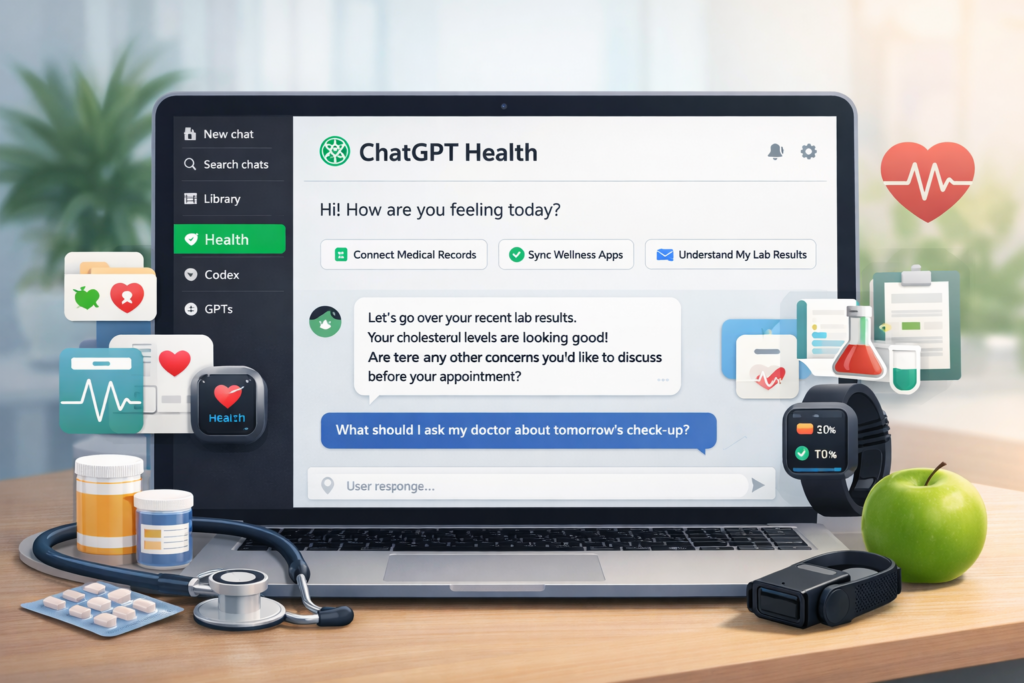
Preparing for a medical appointment is often more difficult than expected. Patients usually juggle scattered lab reports, partial symptom recall, and limited consultation time. AI can help reduce this friction by organising health information ahead of the visit. With ChatGPT Health, users can review medical records, wellness data, and uploaded reports in one place, making it easier to notice patterns or changes over time.
This kind of preparation is particularly useful for routine check-ups and follow-up visits, where trends often matter more than individual readings. AI can explain test results in simpler language, helping users understand what numbers or medical terms actually indicate. As a result, patients walk into appointments with a clearer picture of their health rather than trying to process information on the spot.
AI can also help users reflect on everyday symptoms that are easy to overlook. Changes in sleep, energy levels, digestion, or recovery after exercise often go unmentioned during appointments. Reviewing this information beforehand can prompt more meaningful discussions. It also helps users frame better questions, ensuring that limited appointment time is spent on relevant concerns instead of rushed explanations.
Where ChatGPT Health fits into real medical care
The newly introduced ChatGPT Health mode is designed to support medical conversations, not replace professional care. It does not diagnose conditions or recommend treatments. Instead, it acts as a preparation layer that helps users communicate more clearly with doctors. Medical decisions still depend on clinical examinations and professional judgement, which AI cannot replicate.
Privacy plays a central role in this experience. Health-related conversations and connected data remain within a dedicated space, separate from regular chats. This setup allows users to review sensitive information with greater confidence while staying in control of their data.
In practical terms, AI works best as a companion rather than a shortcut. When patients arrive informed and organised, doctors can focus more on guidance and next steps. ChatGPT Health fits into this process by helping people feel prepared, informed, and more engaged in conversations about their health.
For more daily updates, please visit our News Section.
Stay ahead in tech! Join our Telegram community and sign up for our daily newsletter of top stories.




Comments