In the $200 smartphone segment, small spec differences can completely change the day-to-day experience. The POCO M8 and Redmi 15 5G may look closely matched on paper, but they target very different users. One focuses on display quality, performance balance, and a more premium feel, while the other bets big on battery life and screen size. For buyers trying to decide between long endurance and a more refined all-around experience, this comparison highlights which phone actually fits better into real-world usage rather than just winning a spec sheet battle.
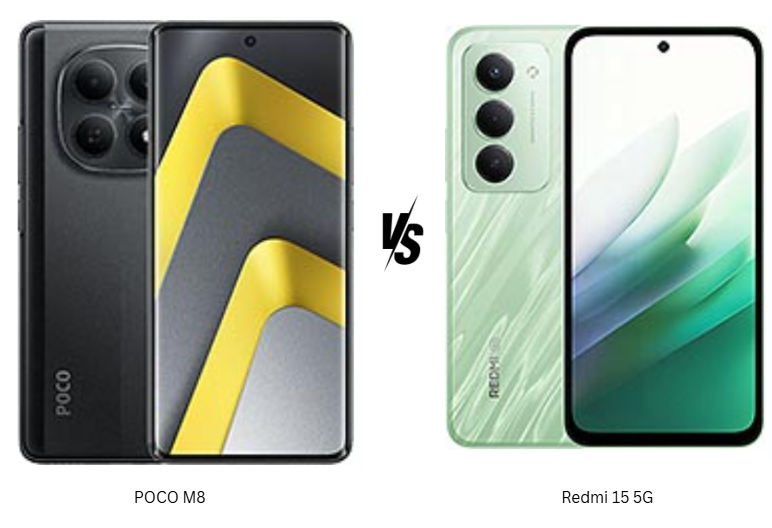
POCO M8 focuses on a cleaner, more premium everyday feel with stronger durability features like higher water resistance and drop protection. It feels built for users who want peace of mind without a bulky design. Redmi 15 5G, on the other hand, leans toward a bigger, more utilitarian approach with a glass front and plastic build. While solid, it feels more functional than refined. The POCO’s in-display fingerprint sensor adds to its modern appeal, while Redmi’s side-mounted scanner feels practical but less futuristic. Overall, POCO M8 feels more polished for daily handling, whereas Redmi 15 5G prioritizes size and robustness over finesse.
Display Quality
POCO M8’s AMOLED panel delivers deeper contrast, richer colors, and better HDR support, making content consumption feel more immersive. The high refresh rate paired with PWM dimming also helps with smoother visuals and eye comfort. Redmi 15 5G counters with a larger IPS LCD and a faster refresh rate, which works well for scrolling and gaming but lacks the punchy blacks and vibrancy of AMOLED. In direct comparison, POCO’s display simply feels more premium.
Verdict
POCO M8 wins this section for its superior display quality and more refined overall design.
2. Specifications
Performance
POCO M8 runs on the Snapdragon 6 Gen 3, built on a newer process, delivering stronger GPU performance and better long-term efficiency. Everyday tasks feel smoother, and gaming benefits from the more capable Adreno GPU. Redmi 15 5G’s Snapdragon 6s Gen 3 is reliable for daily use but feels slightly less future-ready, especially under sustained load. POCO also promises longer software support, which adds value beyond raw numbers.
Battery and Charging
Redmi 15 5G clearly dominates on battery capacity, making it ideal for users who prioritize multi-day usage. It’s built for endurance rather than speed. POCO M8 counters with significantly faster charging, which feels more convenient for modern usage patterns. While the battery is smaller, the efficiency of the chipset and quicker top-ups make it easier to live with. Both support reverse charging, adding versatility.
Verdict
Redmi 15 5G wins for battery life, but POCO M8 feels more balanced due to better performance and faster charging.
3. Camera
Main and Secondary Lenses
Both phones use a similar 50MP main sensor, but POCO M8 pulls ahead with better processing and 4K video recording. Photos tend to have better dynamic range and more consistent results across lighting conditions. Redmi 15 5G handles daylight shots well but feels more limited due to capped video resolution and fewer shooting features. The lack of advanced video options makes it feel more basic overall.
Selfie Camera
POCO M8’s higher-resolution selfie camera delivers sharper images and smoother video output, making it better suited for social media and video calls. Redmi 15 5G’s front camera is serviceable but clearly more entry-level, especially in low light and video clarity.
Verdict
POCO M8 is the clear winner in cameras, offering better video, stronger selfies, and more versatile imaging overall.
4. Pricing
Both POCO M8 and Redmi 15 5G are priced at approximately $200, placing them firmly in the same competitive segment. At this price, the value equation becomes more about priorities than affordability. POCO M8 delivers more premium features for the money, including an AMOLED display, faster charging, stronger camera performance, stereo speakers, and longer software support. These additions make it feel closer to an upper mid-range experience despite the aggressive pricing.
Redmi 15 5G justifies its price through sheer battery capacity and a large display, appealing to users who want maximum endurance and screen real estate. However, compromises in camera, display technology, and charging speed are more noticeable at this price point. When viewed purely on feature density per dollar, POCO M8 offers more tangible upgrades that are felt daily.
For buyers comparing purely on price-to-features ratio, POCO M8 feels like the smarter deal, while Redmi 15 5G suits a more specific usage pattern.
5. Conclusion
POCO M8 stands out with its AMOLED display, Dolby Atmos stereo speakers, faster charging, stronger durability ratings, and longer update promise. These features combine to create a phone that feels more refined and future-ready. Redmi 15 5G’s standout trait is its massive battery, making it ideal for users who value long screen-on time above all else. Its large display and reliable performance suit media consumption and basic gaming, but it doesn’t push boundaries elsewhere.
Verdict
If one clear choice has to be made, POCO M8 is the better all-around smartphone. It delivers a more premium experience across display, camera, performance, and charging without costing more. Redmi 15 5G remains a solid option for battery-focused users, but POCO M8 feels better suited for most buyers looking for balance, longevity, and everyday satisfaction in the $200 segment.
We use cookies on our website to give you the most relevant experience by remembering your preferences and repeat visits. By clicking “Accept”, you consent to the use of ALL the cookies.
This website uses cookies to improve your experience while you navigate through the website. Out of these, the cookies that are categorized as necessary are stored on your browser as they are essential for the working of basic functionalities of the website. We also use third-party cookies that help us analyze and understand how you use this website. These cookies will be stored in your browser only with your consent. You also have the option to opt-out of these cookies. But opting out of some of these cookies may affect your browsing experience.
Necessary cookies are absolutely essential for the website to function properly. This category only includes cookies that ensures basic functionalities and security features of the website. These cookies do not store any personal information.
Any cookies that may not be particularly necessary for the website to function and is used specifically to collect user personal data via analytics, ads, other embedded contents are termed as non-necessary cookies. It is mandatory to procure user consent prior to running these cookies on your website.



Comments