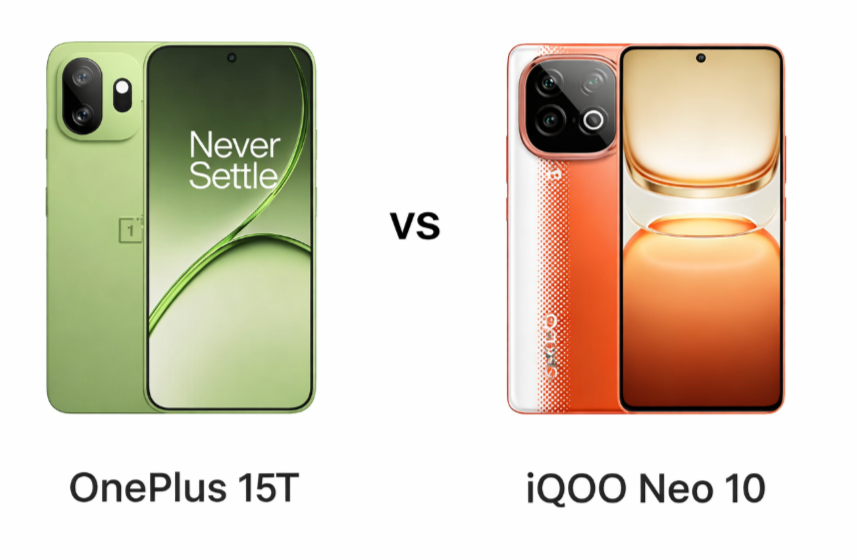
Flagship power is no longer reserved for flagship prices, and this comparison proves it. The OnePlus 15T brings cutting-edge performance, premium build, and advanced camera tech, while the iQOO Neo 10 pushes aggressive value with high-end specs at nearly half the price. One aims to deliver a refined flagship experience, the other focuses on raw performance and speed without breaking the bank. This isn’t just a spec battle, it’s a clash between premium polish and unbeatable value.
The OnePlus 15T clearly leans toward a more premium feel with its aluminum frame and stronger IP68/IP69K protection, making it more durable in real-world conditions. The iQOO Neo 10, while solid, uses a plastic frame and offers only IP65 protection, which feels less reassuring at this price tier. The OnePlus device also supports eSIM, adding a layer of flexibility that’s becoming increasingly useful. Overall, the OnePlus 15T feels like a flagship, whereas the iQOO feels more performance-focused than premium.
Display Quality
The iQOO Neo 10 offers a larger and brighter display with a higher peak brightness, making it more immersive for content consumption and outdoor visibility. However, the OnePlus 15T counters with a smoother 165Hz refresh rate and stronger HDR support including Dolby Vision, which enhances streaming quality. The slightly sharper panel also gives it a cleaner look in daily use. One feels cinematic, the other feels more refined.
Verdict
The iQOO wins on size and brightness, but the OnePlus 15T delivers a more premium build and balanced display experience.
2. Specifications Including Battery
Performance
The OnePlus 15T is powered by the newer Snapdragon 8 Elite Gen 5, delivering significantly better raw performance and efficiency compared to the Snapdragon 8s Gen 4 on the iQOO Neo 10. This translates into smoother multitasking, better sustained gaming, and more future-proof performance. The difference isn’t just on paper—it’s noticeable in heavy workloads where the OnePlus feels more stable and faster over time.
Battery and Charging
The OnePlus 15T packs a larger 7500mAh battery, which should easily last longer in real-world usage. It also supports wireless charging, something missing on the iQOO. However, the iQOO Neo 10 takes the lead in charging speed with 120W fast charging, making it extremely quick to top up. The inclusion of bypass charging is also a big plus for gamers. One prioritizes endurance, the other prioritizes speed.
Verdict
The OnePlus 15T wins for performance and battery longevity, while the iQOO Neo 10 appeals to users who value ultra-fast charging.
3. Camera
Main and Secondary Lenses
The OnePlus 15T clearly has the more versatile camera setup with a 50MP main sensor paired with a 50MP telephoto lens offering 3.5x optical zoom. This gives it a major advantage in portrait and zoom photography. The iQOO Neo 10, on the other hand, includes an 8MP ultrawide camera, which is useful but less impactful overall. Additionally, OnePlus supports 8K recording and Dolby Vision HDR, pushing it ahead for video capabilities.
Selfie Camera
The iQOO Neo 10 features a higher-resolution 32MP front camera with 4K video support, making it better suited for selfies and vlogging. The OnePlus 15T’s 16MP selfie camera is more basic and limited to 1080p video, which feels slightly outdated at this level.
Verdict
The OnePlus 15T dominates in rear camera versatility and video, while the iQOO Neo 10 is better for selfie-focused users.
4. Pricing
OnePlus 15T is priced at around ₹58,000, while the iQOO Neo 10 comes in significantly lower at around ₹33,000. This creates a massive price gap, positioning the iQOO as a value-driven performance phone and the OnePlus as a premium flagship alternative. The difference isn’t small; it fundamentally changes which audience each phone targets.
Value for Money
iQOO Neo 10 offers exceptional value, delivering strong performance, a great display, and ultra-fast charging at a much lower price. It feels like a performance bargain. However, the OnePlus 15T justifies its higher price with better build quality, superior chipset, wireless charging, and a more advanced camera system. It feels more complete and future-ready.
Verdict
The iQOO Neo 10 is the clear value winner, while the OnePlus 15T justifies its price for those wanting a flagship-level experience.
Disclaimer: Prices are approximate and may vary based on country, region, and applicable taxes.
5. Conclusion
The OnePlus 15T stands out with its flagship-grade chipset, premium build, wireless charging, and telephoto camera, making it a well-rounded high-end device. Meanwhile, the iQOO Neo 10 focuses on delivering top-tier performance, extremely fast charging, and a large immersive display at a much more accessible price. Each device targets a different kind of user, one aiming for refinement, the other for aggressive value.
Verdict
OnePlus 15T is the better overall phone with flagship features and long-term usability. However, the iQOO Neo 10 is hard to ignore for its price, offering incredible performance and features for the money. The smarter buy depends on priorities, premium experience or maximum value.
We use cookies on our website to give you the most relevant experience by remembering your preferences and repeat visits. By clicking “Accept”, you consent to the use of ALL the cookies.
This website uses cookies to improve your experience while you navigate through the website. Out of these, the cookies that are categorized as necessary are stored on your browser as they are essential for the working of basic functionalities of the website. We also use third-party cookies that help us analyze and understand how you use this website. These cookies will be stored in your browser only with your consent. You also have the option to opt-out of these cookies. But opting out of some of these cookies may affect your browsing experience.
Necessary cookies are absolutely essential for the website to function properly. This category only includes cookies that ensures basic functionalities and security features of the website. These cookies do not store any personal information.
Any cookies that may not be particularly necessary for the website to function and is used specifically to collect user personal data via analytics, ads, other embedded contents are termed as non-necessary cookies. It is mandatory to procure user consent prior to running these cookies on your website.



Comments