Add GIZMOCHINA as Preferred Source on Google
Oppo is set to make the Find X9 Ultra official on April 21 — tomorrow — and at this point, there isn’t much left to guess. Thanks to official teasers, certification listings, and a steady flow of leaks, we are already well aware of the Find X9 Ultra in full.
As you might know, it’s a photography-first phone, but it still comes with the usual checklist of flagship features: a large battery, a high-refresh-rate display, and a top-end chipset.
Still, most of the conversation around the device comes back to the camera system. So let’s go through a roundup of the Oppo Find X9 Ultra to understand what it will offer in terms of cameras and other specs.
1. Cameras
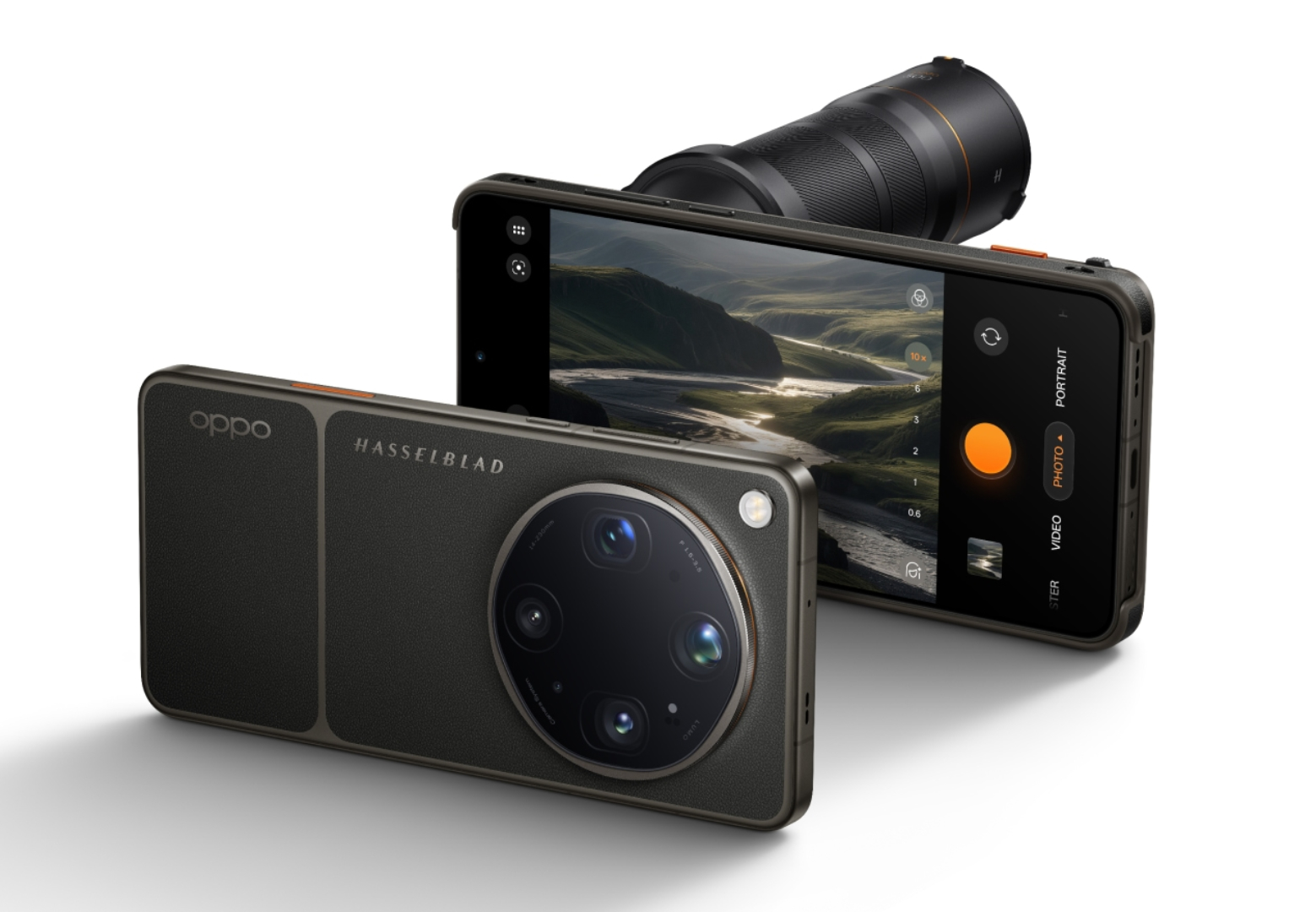
Oppo’s collaboration with Hasselblad isn’t new, but this time it feels more integrated into the actual shooting experience. The company is introducing something called Hasselblad Master Mode 2.0.
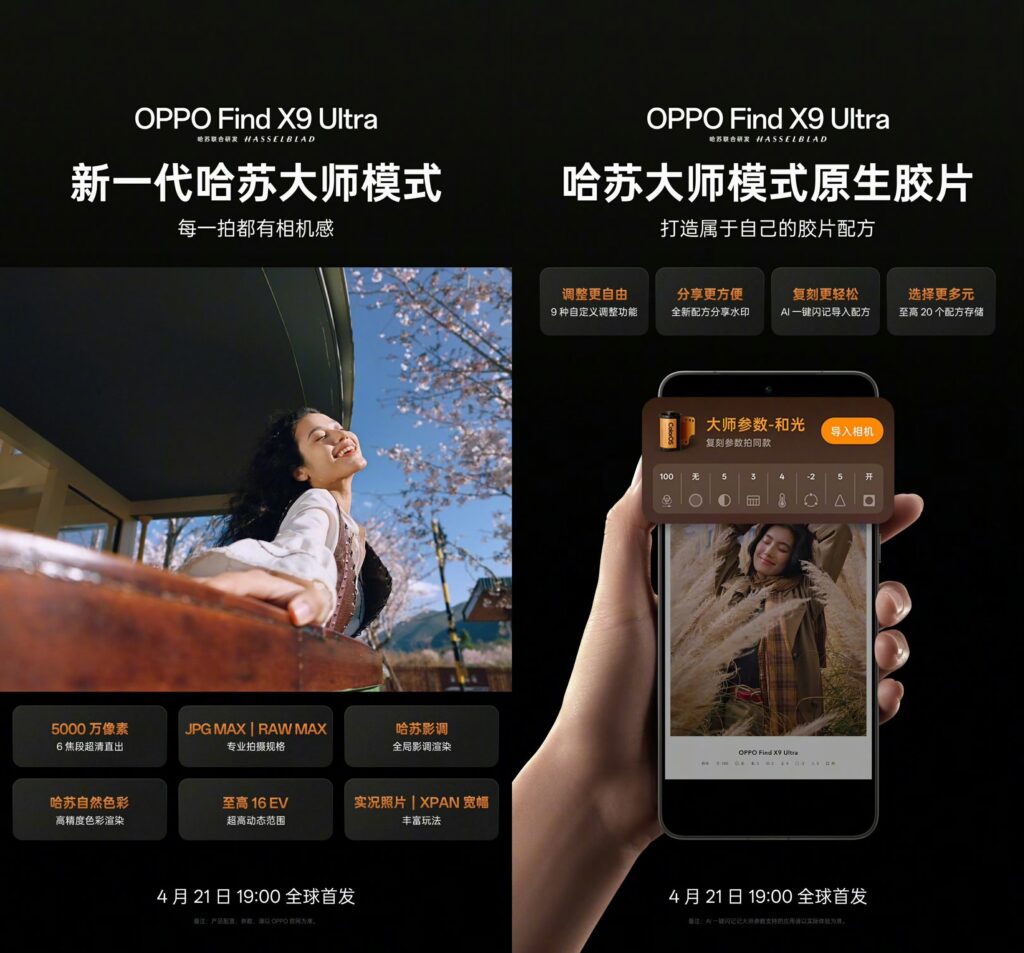
The new mode is designed to deliver professional-grade photography with enhanced creative flexibility. This system introduces native film styles (Portra, 800T, TX400, XPAN), supports 16EV high dynamic range, and allows users to save up to 20 custom AI-powered presets. Not to forget, the system also supports RAW MAX and JPEG MAX across multiple focal lengths (14mm, 23mm, 46mm, 70mm, 140mm, 230mm).
As for the hardware, the Find X9 Ultra is expected to feature a quad-camera setup that includes two 200-megapixel sensors — one for the main camera and another for a 3x zoom lens.
Alongside that, there’s a 50-megapixel ultra-wide camera and a separate 10x periscope telephoto lens. There’s also mention of a 3.2-megapixel multispectral sensor to help with color accuracy.
Here, the main sensor is said to be the Sony LYT-901, while the ultra-wide uses Sony’s LYT-600. The 3x zoom relies on an OmniVision OV52A sensor, and the 10x periscope uses a Samsung JN-series sensor.
On top of that, Oppo is reportedly working on an optional telephoto extender with 16 glass elements. For most people, the built-in 10x zoom can handle most scenarios, but those who need more reach can opt for the external kit. Oppo claims it can deliver up to 20x “optical-quality” zoom and a maximum of 120x digital zoom.
There’s also a redesigned prism structure in the telephoto system, which is said to improve long-distance shooting. Combined with optical calibration during manufacturing, Oppo seems to be focusing on consistency as much as raw zoom capability.
2. Design
The design of the Find X9 Ultra makes it clear what the phone is about. The back is dominated by a large circular camera module. Inside the circle are camera sensors arranged in a somewhat asymmetrical layout, sitting within a rounded rectangular island.
The rest of the back panel uses a leather-like texture with a dual-tone finish toward the bottom. It’s a small detail, but it likely helps with grip, especially on a device that weighs around 238 grams.

Color options are expected to include Velvet Sand Canyon (an orange finish), Earth Tundra (brown), and Polar Glacier (white). The top-tier 16GB + 1TB model may also come bundled with a special Hasselblad “Explorer Master Kit.”
There are also a couple of physical additions worth noting. The Find X9 Ultra has a “Quick Button” at the bottom right, which will be useful for shortcuts or quick camera access. Meanwhile, there’s a “Snap Key” at the top left for accessing AI features.
3. The rest of the flagship checklist

Beyond the camera, the Find X9 Ultra mostly follows the expected formula for a high-end Android phone. It’s likely to feature a 6.78-inch OLED display with a resolution of 3168 x 1440 pixels, along with a 144Hz refresh rate.
Powering the device is the Snapdragon 8 Elite Gen 5, paired with LPDDR5x RAM and UFS 4.1 storage. Configurations are expected to go up to 16GB of RAM and 1TB of storage, with satellite connectivity reserved for the top variant.
Keeping everything running is a 7,050mAh battery that is expected to support 100W wired and 50W wireless charging.
Other features include an ultrasonic in-display fingerprint sensor, dual speakers, an IR blaster, and a full set of durability ratings — IP68, IP69, and IP69K. The phone will run ColorOS 16, based on Android 16.
For more daily updates, please visit our News Section.
Stay ahead in tech! Join our Telegram community and sign up for our daily newsletter of top stories! 💡