Advertisement

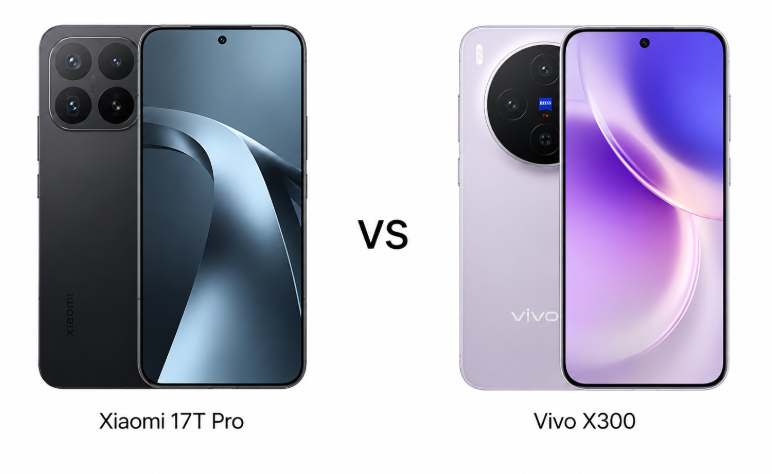
Both the Xiaomi 17T Pro and Vivo X300 target premium flagship buyers with top-tier hardware, flagship MediaTek processors, premium displays, and versatile camera systems. While both phones sit in the same price segment, they cater to different audiences. The Xiaomi 17T Pro focuses on battery life, multimedia, and long-range zoom photography, whereas the Vivo X300 emphasizes compact ergonomics, camera refinement, and long-term software support. Here’s how they compare across the features that matter most.
Major Features:

CategoryXiaomi 17T ProVivo X300Winner
Design & BuildGorilla Glass 7i, aluminum frame, IP68Glass build, aluminum frame, IP68/IP69, ultrasonic fingerprintVivo – Better durability and fingerprint sensor
Display6.83-inch AMOLED, 144Hz, Dolby Vision, HDR10+, 3,500 nits6.31-inch LTPO AMOLED, 120Hz, HDR10+, HDR Vivid, 4,500 nitsXiaomi – Larger and smoother display
ProcessorMediaTek Dimensity 9500 (3nm)MediaTek Dimensity 9500 (3nm)Tie – Identical flagship chipset
GPUMali-G1 Ultra MC12Arm G1-UltraTie – Comparable graphics performance
Memory & StorageUp to 16GB RAM, 1TB UFS 4.1Up to 16GB RAM, 1TB UFS 4.1Tie – Same memory options
Main Camera50MP + 50MP (5x) + 12MP, Leica optics200MP + 50MP (3x) + 50MP, Zeiss opticsVivo – More versatile camera system
Selfie Camera32MP, 4K50MP AF, 4K 60fpsVivo – Higher resolution with autofocus
Video RecordingUp to 8K, 4K 120fps, Log, HDR10+Up to 4K 120fps HDRXiaomi – Superior professional video features
Battery7,000mAh6,040mAh (Global)Xiaomi – Much larger battery
Charging100W wired, 50W wireless, 22.5W reverse wired90W wired, 40W wirelessXiaomi – Faster charging overall
ConnectivityWi-Fi 7, Bluetooth 6.0, USB 2.0, IR BlasterWi-Fi 7, Bluetooth 5.4, USB 3.2, IR BlasterVivo – Faster USB connectivity
SoftwareAndroid 16, HyperOS 3Android 16, OriginOS 6, 5 major Android upgradesVivo – Longer software support
Price/ValuePriced around $900 (₹75,000)Priced around $900 (₹76,000)Xiaomi – Better overall hardware value
Overall WinnerExcellent battery, charging, multimedia, and video recordingOutstanding cameras, compact design, software supportXiaomi – Better value; Vivo excels for photography
Disclaimer: Specs are based on available data. Actual performance may vary. Verify details from official sources before buying.

1. Design and Display

Build and Feel

The Xiaomi 17T Pro features Gorilla Glass 7i on both the front and back with an aluminum frame, delivering a sturdy and premium construction. It carries an IP68 rating and offers dual physical SIMs with eSIM support. The Vivo X300 also uses a glass-and-aluminum design but adds IP69 protection for improved resistance against high-pressure water. Its ultrasonic fingerprint scanner feels quicker and more reliable than Xiaomi’s optical solution, while Vivo also promises up to five major Android updates, adding long-term appeal. Buyers who prefer compact flagship phones may naturally gravitate toward Vivo, while Xiaomi feels built for users who prioritize durability and multimedia.

Display Quality

Xiaomi equips the 17T Pro with a large 6.83-inch AMOLED panel featuring a 144Hz refresh rate, Dolby Vision, HDR10+, 3840Hz PWM dimming, and an impressive 3,500-nit peak brightness. The Vivo X300 counters with a 6.31-inch LTPO AMOLED display supporting adaptive 120Hz refresh, Ultra HDR, HDR10+, HDR Vivid, and a higher claimed peak brightness of 4,500 nits. Xiaomi’s higher refresh rate makes animations feel slightly smoother, while Vivo’s LTPO technology improves power efficiency. Users who consume plenty of videos or play games may appreciate Xiaomi’s immersive display, whereas Vivo’s screen feels better optimized for everyday flagship usage.

Verdict

The Xiaomi 17T Pro wins for multimedia with its larger 144Hz Dolby Vision display, but the Vivo X300 offers a more balanced flagship experience through LTPO technology, brighter peak output, IP69 protection, and longer software support.

2. Specifications Including Battery

Performance

Performance is evenly matched since both smartphones are powered by the 3nm MediaTek Dimensity 9500 chipset paired with UFS 4.1 storage. Day-to-day usage, gaming, AI processing, and multitasking are excellent on both devices. Xiaomi combines the chipset with the Mali-G1 Ultra MC12 GPU, while Vivo uses the Arm G1-Ultra graphics processor. In practical usage, the difference is unlikely to be noticeable. Xiaomi supports RAM configurations up to 16GB with storage reaching 1TB, while Vivo also offers up to 16GB RAM and 1TB storage. Both devices comfortably handle demanding workloads and remain future-ready for several years.

Battery and Charging

Battery life is where Xiaomi creates a clear separation. Its massive 7,000mAh silicon-carbon battery significantly exceeds Vivo’s 6,040mAh global battery. Charging is equally impressive with 100W wired, 50W wireless, and 22.5W reverse wired charging, compared to Vivo’s 90W wired and 40W wireless charging. Heavy users are likely to appreciate Xiaomi’s endurance, especially during gaming, travel, or extensive camera use. Vivo still delivers dependable battery performance, but Xiaomi offers greater convenience with less frequent charging.

Verdict

Performance remains nearly identical, but Xiaomi takes the lead with its substantially larger battery and faster charging system, making it the stronger choice for power users and heavy multimedia consumption.

3. Camera

Main and Secondary Lenses

The Xiaomi 17T Pro uses a Leica-tuned triple camera consisting of a 50MP primary sensor, a 50MP periscope telephoto with 5x optical zoom, and a 12MP ultrawide camera. It also supports 8K video recording and professional recording features like HDR10+, Log, and 10-bit Rec. 2020. Vivo counters with a 200MP main sensor, a 50MP 3x periscope telephoto, and a 50MP autofocus ultrawide camera enhanced by Zeiss optics, Zeiss T* coating, Laser AF, and 3D LUT import support. Vivo produces a more versatile camera setup overall, while Xiaomi offers stronger long-range zoom capabilities and advanced video recording options.

Selfie Camera

Xiaomi includes a 32MP front camera capable of 4K recording with HDR10+ support. Vivo steps ahead with a 50MP autofocus selfie camera that records 4K at up to 60fps. Autofocus provides sharper portraits and better group selfies, making the Vivo more dependable across different shooting conditions. Content creators and video callers are likely to benefit from Vivo’s superior front camera hardware.

Verdict

Vivo delivers the most complete photography package thanks to its higher-resolution sensors, stronger ultrawide camera, autofocus selfie camera, and Zeiss imaging system. Xiaomi remains an excellent choice for users who value 5x optical zoom and advanced professional video features.

4. Pricing

The Xiaomi 17T Pro is priced around $900 (₹75,000), while the Vivo X300 is priced around $900 (₹76,000). Despite costing nearly the same, they emphasize different strengths. Xiaomi directs more value toward battery capacity, charging speeds, multimedia features, and Leica-powered imaging. Vivo focuses on premium camera hardware, compact flagship ergonomics, longer software support, and additional durability with IP69 certification. Neither phone feels overpriced considering the flagship hardware, but the overall value depends on individual priorities rather than specifications alone.

Is the Price Justified?

Both smartphones justify their premium pricing with flagship processors, premium materials, advanced displays, and versatile camera systems. Xiaomi offers outstanding value for buyers wanting maximum battery life and charging convenience. Vivo feels like the better long-term investment for users who prioritize photography, software longevity, and everyday flagship refinement.

Verdict

At nearly identical prices, Xiaomi offers stronger hardware value, while Vivo provides a more polished flagship experience. The better purchase depends on whether battery life or camera refinement matters more.

Disclaimer:
Prices are approximate and may vary based on country, region, launch timing, and applicable taxes. Always check whether the listed price is for a China unit or a global/international variant when purchasing.

5. Conclusion

The Xiaomi 17T Pro stands out with its enormous 7,000mAh battery, 100W wired charging, 50W wireless charging, Leica camera tuning, 5x optical periscope zoom, Dolby Vision 144Hz display, and professional-grade video recording features, including 8K capture and Log mode. The Vivo X300 differentiates itself with a 200MP primary camera, Zeiss optics, autofocus selfie camera, LTPO AMOLED display, IP69 durability, ultrasonic fingerprint sensor, USB 3.2 connectivity, and a commitment to five major Android upgrades. Both devices deliver flagship-grade experiences, but their strengths target different types of premium buyers.

Verdict

Choose the Xiaomi 17T Pro if battery life, charging speed, multimedia, and long-range zoom photography are the top priorities. Choose the Vivo X300 if camera versatility, compact design, premium software support, and refined everyday usability are more important. 

Overall, Xiaomi offers better hardware value, while Vivo delivers a more balanced flagship experience for long-term ownership.

Disclaimer: This comparison is based on the specifications provided and is intended for general informational purposes. Actual performance, camera results, battery life, and overall experience may vary depending on real-world usage, software updates, and individual preferences.

Read More:

Comments