Advertisement

Vivo X300 Ultra and Vivo X300 FE may share the same family name, but they are built for very different buyers. The X300 Ultra is Vivo’s ultimate flagship, packed with every premium feature the company offers, while the X300 FE aims to deliver the core flagship experience at a much more accessible price. 

Both feature premium builds, Zeiss cameras, LTPO AMOLED displays, and large silicon-carbon batteries. The real question isn’t which phone is better; it is whether the Ultra’s premium upgrades justify spending nearly twice as much or if the FE already delivers everything most users need.
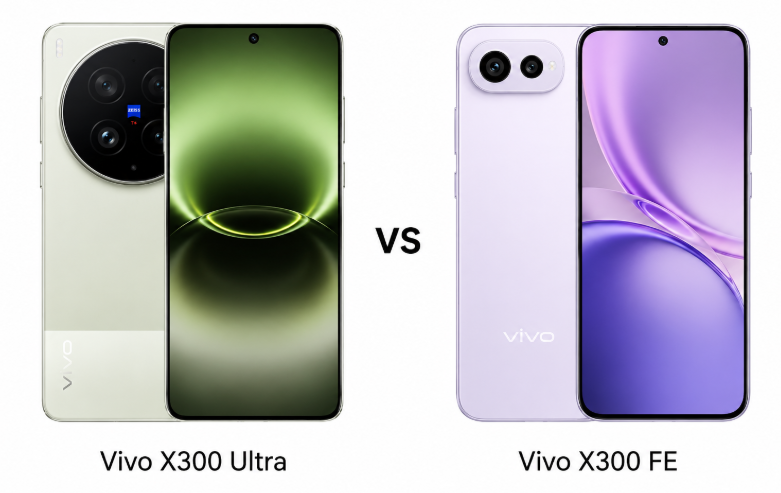
Major Features:

CategoryVivo X300 UltraVivo X300 FEKey Differences
PositioningUltimate flagshipAffordable flagshipUltra offers every premium feature, while the FE focuses on delivering the flagship essentials at a lower price.
Display6.82-inch LTPO AMOLED, 144Hz, QHD+, Dolby Vision, Ultra HDR6.31-inch LTPO AMOLED, 120Hz, HDR10+, 5000 nitsChoose the Ultra for immersive media and gaming, or the FE if you prefer a compact display without sacrificing quality.
ProcessorSnapdragon 8 Elite Gen 5Snapdragon 8 Gen 5The Ultra is built for enthusiasts and demanding workloads, while the FE easily handles everyday flagship performance.
Memory & StorageUp to 16GB RAM, 1TB UFS 4.1Up to 12GB RAM, 512GB UFS 4.1The Ultra offers more room for power users and creators, whereas the FE provides ample storage for most buyers.
Rear Cameras200MP Main + 200MP Periscope + 50MP Ultrawide50MP Main + 50MP Periscope + 8MP UltrawideThe Ultra targets professional-grade photography, while the FE delivers reliable flagship imaging for everyday use.
Camera FeaturesGimbal OIS, Zeiss T* coating, 3D LUT, optional Zeiss zoom lensesZeiss optics, 3x optical zoomThe Ultra offers far greater photographic flexibility, especially for zoom and video enthusiasts.
Selfie Camera50MP AF with HDR and advanced video features50MP AF with 4K recordingBoth deliver sharp selfies, but creators benefit more from the Ultra’s additional recording capabilities.
Battery & Charging6600mAh, 100W wired, 40W wireless6500mAh, 90W wired, 40W wireless, bypass chargingBattery life is excellent on both, with the Ultra charging faster and the FE adding bypass charging for gamers.
ConnectivityUSB 3.2, DisplayPort, Satellite SOS (1TB variant)USB 2.0The Ultra includes premium connectivity features aimed at advanced users.
SoftwareAndroid 16, OriginOS 6Android 16, OriginOS 6, up to 5 Android upgradesThe FE offers a stronger long-term software commitment.
PricePriced around $1,500 (₹1,60,000)Priced around $950 (₹80,000)The Ultra charges a premium for its advanced hardware, while the FE delivers the core flagship experience for substantially less.
Ideal BuyerMobile photographers, content creators, gamers, and power usersBuyers seeking flagship performance, premium design, and strong valueThe choice comes down to whether cutting-edge hardware or overall value is the higher priority.
Disclaimer: Specs are based on available data. Actual performance may vary. Verify details from official sources before buying.

1. Design and Display

Build and Feel

Both phones feature glass backs, aluminum frames, IP68/IP69 protection, and ultrasonic in-display fingerprint scanners, so neither feels like a compromise in terms of build quality. The biggest difference is the experience they aim to deliver. The Vivo X300 Ultra is designed around a large-screen flagship philosophy, offering a more immersive feel for gaming, productivity, and media consumption. The Vivo X300 FE takes the opposite approach, prioritizing comfort and one-handed usability without sacrificing premium materials. The FE also promises up to five Android upgrades, making it appealing for users planning to keep their phone for several years.

Display Quality

The Vivo X300 Ultra features a larger QHD+ LTPO AMOLED panel with a 144Hz adaptive refresh rate, Dolby Vision support, and Ultra HDR compatibility, making it ideal for immersive entertainment and high-end gaming. The Vivo X300 FE uses a smaller LTPO AMOLED display with a 120Hz refresh rate and an impressive 5000-nit peak brightness. While it lacks the Ultra’s sharper resolution and advanced HDR support, it still delivers flagship-level color reproduction and outdoor visibility. Unless display size and maximum visual quality are priorities, the FE offers a surprisingly premium viewing experience.

Verdict

The Ultra’s display upgrades mainly benefit users who consume lots of multimedia, play games frequently, or simply want the biggest and sharpest screen available. The FE is better suited for buyers who prefer a compact flagship and are unlikely to notice the difference during everyday use.

2. Specifications Including Battery

Performance

Both smartphones are powered by Qualcomm’s latest flagship chipsets, making everyday performance exceptionally fast. The Vivo X300 Ultra’s Snapdragon 8 Elite Gen 5 and Adreno 840 GPU provide additional power for demanding tasks such as professional video editing, intensive gaming, and AI-driven workloads. The Vivo X300 FE’s Snapdragon 8 Gen 5 remains a genuine flagship processor capable of handling virtually every modern app and game with ease. The performance gap certainly exists, but it becomes noticeable mainly during sustained heavy workloads rather than routine smartphone usage. For many users, the FE already delivers more power than they are likely to fully utilize.

Battery and Charging

Battery life should be excellent on both devices thanks to their large silicon-carbon batteries. The X300 Ultra offers a slightly larger capacity alongside faster 100W wired charging, while the FE provides 90W charging, 40W wireless charging, reverse charging, and bypass charging for gamers. In day-to-day use, both phones should comfortably last a full day, making charging speed the more noticeable difference than battery endurance itself.

Verdict

The Ultra is built for users who consistently push their hardware to its limits. The FE, meanwhile, delivers flagship performance and battery life that will comfortably satisfy the vast majority of users while consuming significantly less of the budget.

3. Camera

Main and Secondary Lenses

This is where the largest price difference becomes visible. The Vivo X300 Ultra is designed for photography enthusiasts, featuring dual 200MP cameras, including a massive primary sensor with gimbal stabilization, a high-end periscope telephoto lens, a 50MP ultrawide camera, and support for optional Zeiss external zoom lenses. It is a camera system intended to rival dedicated imaging devices. The Vivo X300 FE, by comparison, focuses on delivering dependable flagship photography with a 50MP main camera, a 50MP periscope telephoto lens offering 3x optical zoom, and an 8MP ultrawide sensor. Zeiss tuning ensures excellent image quality, but the emphasis is on balanced everyday photography rather than professional-level versatility.

Selfie Camera

Both phones feature autofocus 50MP selfie cameras capable of recording 4K video, ensuring detailed selfies and sharp video calls. The Ultra expands on this with advanced HDR recording and additional video features aimed at creators. For most users, however, the selfie experience remains consistently strong across both models.

Verdict

Photography is the primary reason to choose the X300 Ultra. Users who frequently shoot landscapes, wildlife, portraits, or professional-quality videos will appreciate its advanced hardware. Those who mainly capture everyday moments, travel photos, and social media content are unlikely to feel limited by the FE’s camera system.

4. Pricing

The Vivo X300 Ultra is priced around $1,500 (₹1,60,000), positioning it among the most premium Android smartphones on the market. That additional investment goes toward its advanced camera hardware, superior display, flagship processor, faster charging, USB 3.2 connectivity, and several premium extras that target enthusiasts.

The Vivo X300 FE is priced around $950 (₹80,000), making it nearly half the price while retaining many flagship features such as a Snapdragon flagship processor, LTPO AMOLED display, Zeiss cameras, wireless charging, premium build quality, and long software support. Rather than feeling like a stripped-down flagship, it focuses on keeping the features most users actually use every day.

Verdict

The Ultra justifies its price for buyers seeking the very best Vivo has to offer. However, the FE arguably offers the stronger value proposition, as it delivers much of the flagship experience while asking for a significantly smaller investment.

Disclaimer:
Prices are approximate and may vary based on country, region, launch timing, and applicable taxes. Always check whether the listed price is for a China unit or a global/international variant when purchasing.

5. Conclusion

The Vivo X300 Ultra is built for buyers who want every flagship innovation available. Its class-leading camera hardware, professional imaging tools, higher-resolution display, flagship processor, premium connectivity, and advanced multimedia features make it an uncompromising smartphone for enthusiasts and content creators. The Vivo X300 FE follows a different philosophy by focusing on the features that matter most to everyday users. It combines flagship performance, premium build quality, capable Zeiss cameras, long software support, and excellent battery life in a compact and considerably more affordable package.

Verdict

The choice between these two smartphones depends less on which one is better and more on how much of the Ultra’s premium hardware will actually be used. The Vivo X300 Ultra is the right option for users who view smartphone photography, performance, and display quality as top priorities and are willing to pay for the absolute best. The Vivo X300 FE is aimed at buyers who want a flagship experience without entering ultra-premium pricing. For many users, it delivers nearly everything that matters while leaving the expensive specialist features to the Ultra.

Disclaimer: This comparison is based on the specifications provided and is intended for general informational purposes. Actual performance, camera results, battery life, and overall experience may vary depending on real-world usage, software updates, and individual preferences.

Read More:

Comments