Add GIZMOCHINA as Preferred Source on Google
As an Amazon Associate, Gizmochina earns from qualifying purchases. Links on this page may earn us a commission at no extra cost to you.
Losing your keys used to mean checking every couch cushion, drawer, and jacket pocket in the house. Now, you can clip a small tracker to your keys, bag, or wallet and use your phone to find it.
Apple popularized this category with the AirTag, and we have since seen several makers — smartphone and not — launching their own tracking devices. That market now has a new big name. At the Made by Google event alongside the Pixel 11 series, Google launched its first item tracker, the Pixel Tag. It will go on sale on November 11.
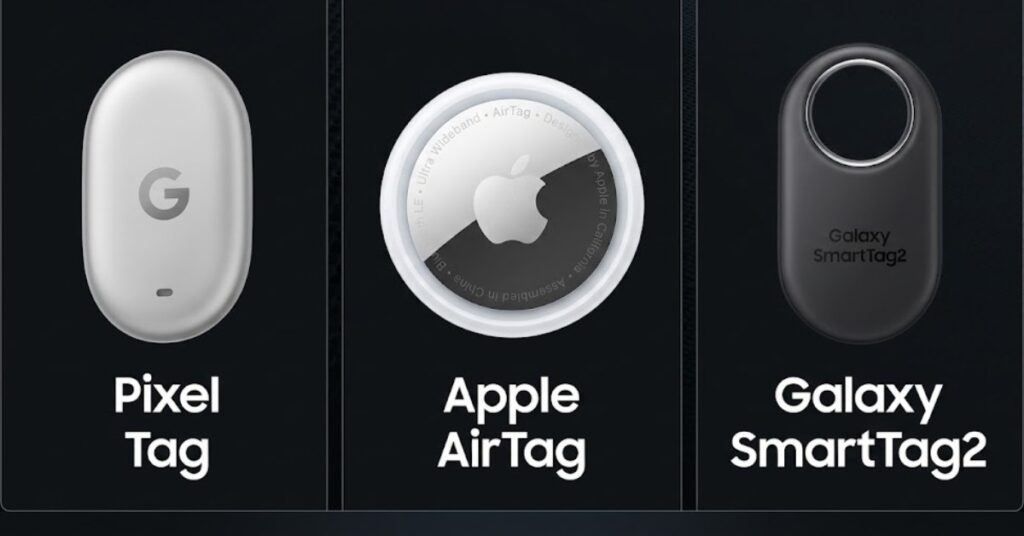
Apple has had the AirTag since 2021 and updated it earlier this year, while Samsung has offered the Galaxy SmartTag2 since 2023. All three do the same basic job, but they work very differently depending on which phone you use.
Here’s a comparison of the Google Pixel Tag, Apple AirTag, and Samsung Galaxy SmartTag2 to help you decide which one makes the most sense for you.
1. Price and design
The three trackers are priced almost the same. The Pixel Tag costs $29 for one or $99 for a four-pack, matching the AirTag. The Galaxy SmartTag2 costs $30 for one or $100 for four.
For a broader look at pricing across the category, see our roundup of Bluetooth tracker options for 2026.
Visually, they look different. AirTag is a small, flat, round disc, closer to the size of a large coin. The Galaxy SmartTag2 is pill-shaped with a large metal ring loop built into one end, so it clips onto keychains without needing a case. The Pixel Tag also uses a pill-shaped, pebble-like body, measuring about 46 x 28 x 5.4mm and weighing under 12 grams, but it has no built-in loop, so you’ll likely need a case or holder to attach it to keys. For now, it comes in just one color called Fog, which is a light gray.
All three use a replaceable CR2032 coin battery, so users can replace the battery when it runs out instead of buying a new tracker.
Google and Apple say their trackers can last more than a year on a single battery with normal use. Samsung claims up to 500 days of battery life in normal mode, or up to 700 days with power-saving mode enabled.
They are also similarly durable. All three have an IP67 rating, meaning they are protected from dust and can survive being submerged in up to about a meter of water for a short time. So a little rain or a wet backpack shouldn’t be a problem.
2. How they find your stuff
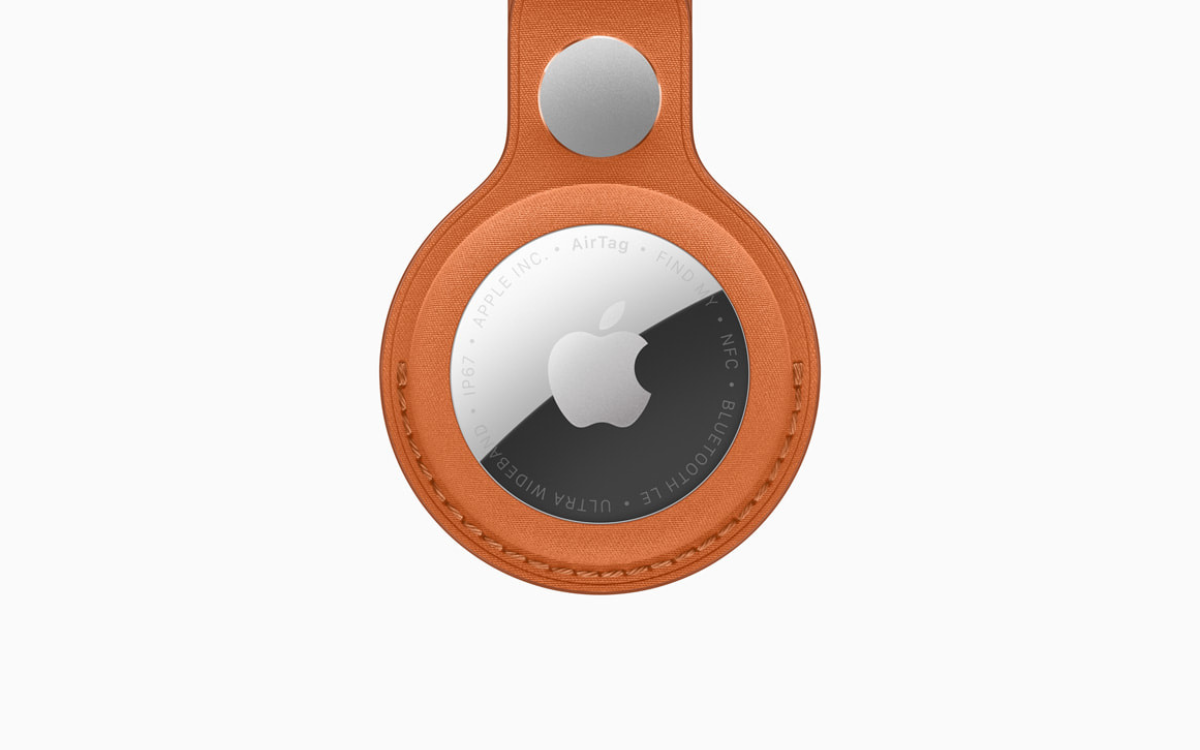
Each tracker has its own strength and/or weakness in how they work. All three use two main ways to find your belongings. They can connect directly to your phone when you’re nearby, or use a larger network of other phones to find the tracker when it’s far away.
AirTag
The latest AirTag uses Ultra Wideband (UWB) to help you find a lost item when you’re nearby. Your iPhone can show you which direction to walk and how far away the tracker is. Speaking of which, the Precision Finding on the new AirTag covers 50% more range than the previous generation, thanks to Apple’s second-generation UWB chip.
Apple also made the new AirTag’s speaker louder by 50%, which the company claims can be heard from up to twice as far away. And when you’re too far away for a direct connection, AirTag uses Apple’s Find My network, so that other nearby Apple devices can detect the lost AirTag and anonymously send its location to its owner.
Pixel Tag
The Pixel Tag works similarly, but uses Google’s Android ecosystem. It uses both UWB and Bluetooth Channel Sounding for precision finding, but the exact features you get depend on your phone’s hardware and software.
UWB uses a dedicated ultra-wideband chip to provide more precise distance and directional information, while Bluetooth Channel Sounding uses newer Bluetooth technology to measure distance without requiring UWB hardware. However, Channel Sounding requires a compatible phone running Android 16 or newer with Bluetooth 6.0 or later, while UWB also requires a phone with a UWB chip.
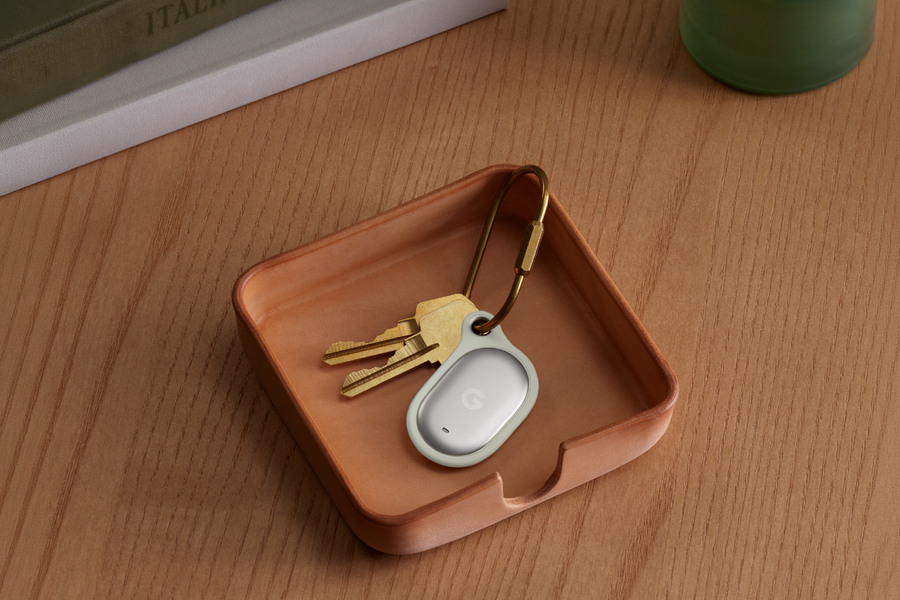
When the tracker is out of direct range, it switches to Google’s Find Hub network, which relies on participating Android devices to detect lost items. Android smartphone pool is much bigger compared to Apple, and such a large network could be a major advantage in crowded places like airports, shopping centers, and city streets. The more Android devices nearby, the better the chance that one of them will detect your lost tracker.
Galaxy SmartTag2
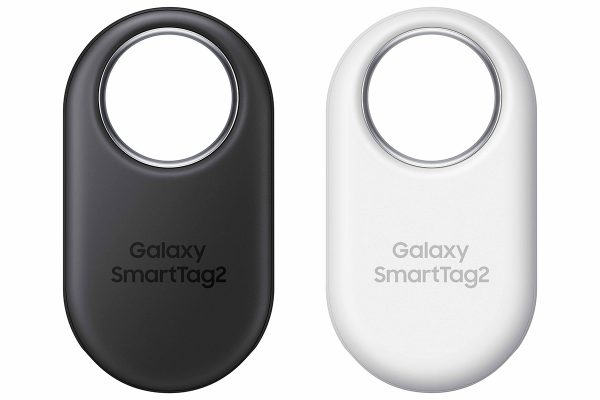
Samsung’s Galaxy SmartTag2 also combines Bluetooth and UWB. Samsung claims a Bluetooth range of up to 120 meters under ideal conditions. However, the most accurate UWB tracking only works if your Galaxy phone has a UWB chip. Not every Samsung phone has one, so some cheaper Galaxy A-series phones and certain other models won’t offer the full tracking experience.
For finding lost items from a distance, the SmartTag2 uses Samsung’s SmartThings Find network. Unlike Google’s network, this is limited to Samsung Galaxy devices.
3. The ecosystem problem
This is probably the most important thing to consider before buying any of these trackers. The three trackers don’t work together, and two of them are heavily tied to their own phone brands.
The Galaxy SmartTag2 is the most restrictive. It works with Samsung Galaxy phones and tablets through the SmartThings Find app. If you use a Pixel, OnePlus, or iPhone, you can’t use it as your everyday tracker.
AirTag has a similar limitation on the Apple side. You need an iPhone or iPad for setup and regular tracking. Android phones can scan a lost AirTag using NFC and see the owner’s contact information if Lost Mode is enabled, but Android users don’t get the full tracking experience.
The Pixel Tag is more flexible and works with Android phones running Android 9 or later, although some advanced finding features require newer hardware and software. This gives Google a much wider reach than Samsung. However, it still doesn’t work as a full-featured tracker with iPhones.
So the real choice is fairly simple. AirTag for Apple users, Pixel Tag for most Android users, and SmartTag2 for Samsung Galaxy users.
4. Which one should you buy?
If you use an iPhone, the AirTag is still the obvious choice. Apple’s Find My network is large and well established, while the new UWB chip and louder speaker make it easier to locate the tag when you’re nearby.
If you use a Samsung Galaxy phone, the Galaxy SmartTag2 is a good option. It has excellent battery life and works well within Samsung’s ecosystem. Just remember that the best tracking features depend on your specific Galaxy phone.
For other Android users, the Pixel Tag makes the most sense. It works across a much wider range of Android phones, costs about the same as an AirTag, has an IP67 rating, and uses Google’s Find Hub network, which the company says covers more than a billion devices. However, note that Pixel Tag doesn’t go on sale until November 11, so you will have to wait if you’re willing to get one.
If you want something thinner or designed specifically for wallets, third-party trackers such as the Ugreen FineTrack Slim Duo 2 are also worth considering. But for a simple first-party option, the Pixel Tag fills a gap Android users have had since the AirTag launched in 2021.
For more daily updates, please visit our News Section.
Stay ahead in tech! Join our Telegram community and sign up for our daily newsletter of top stories!