Advertisement

Add GIZMOCHINA as Preferred Source on Google

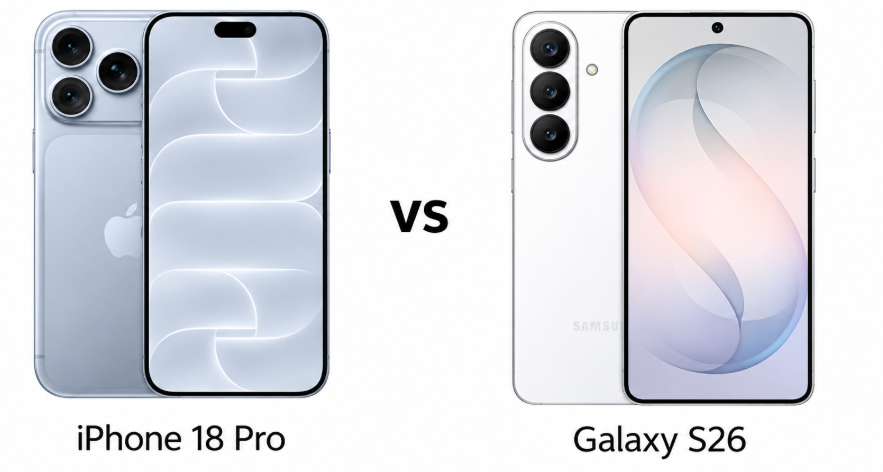
iPhone 18 Pro and Galaxy S26 take very different approaches to the compact flagship formula. Apple focuses on the A20 Pro chip, advanced video features and a high-end camera system, while Samsung combines a sharp AMOLED display, versatile cameras, DeX and a lighter everyday design. The comparison matters because both target premium buyers but prioritize different strengths.
Major Features:

CategoryiPhone 18 ProGalaxy S26Winner
BuildCeramic Shield 2, aluminum frame, glass rear, IP68Gorilla Glass Victus 2, aluminum frame, Armor Aluminum 2, IP68Apple – Stronger water resistance and premium protection
Display6.3-inch LTPO Super Retina XDR OLED, 120Hz, Dolby Vision, 3000 nits6.3-inch Dynamic LTPO AMOLED 2X, 120Hz, HDR10+, 2600 nitsApple – Higher peak brightness and Dolby Vision
ProcessorApple A20 Pro, 2nmSnapdragon 8 Elite Gen 5 or Exynos 2600Apple – Strong performance and hardware-software optimization
RAM12GB12GBTie – Both offer ample flagship memory
Storage256GB to 2TB128GB to 512GBApple – Offers substantially higher maximum storage
Main Camera48MP wide50MP wideApple – Larger sensor and advanced stabilization
Telephoto48MP periscope, 4x optical zoom10MP telephoto, 3x optical zoomApple – Higher-resolution sensor and longer optical reach
Ultrawide48MP12MPApple – Higher-resolution ultrawide camera
Selfie Camera18MP ultrawide, PDAF12MP, PDAFApple – Higher resolution and flexible framing
VideoUp to 4K 120fps, ProRes RAW, Apple Log 2, Dolby VisionUp to 8K 30fps, 4K 60fps, HDR10+Apple – More advanced professional video tools
Battery4056mAh/4288mAh, market dependent4300mAhSamsung – Larger rated capacity
Charging25W wired, 25W MagSafe/Qi2, 4.5W reverse wired25W wired, 15W wireless, 4.5W reverse wirelessApple – Faster wireless charging
SoftwareiOS 27Android 16, One UI 8.5Tie – Different ecosystems with distinct software strengths
Special FeaturesFace ID, LiDAR, UWB, satellite SOSDeX, Wireless DeX, ultrasonic fingerprint sensorSamsung – More desktop-oriented functionality
PriceApprox. $1,200 / ₹164,900Approx. $900 / ₹88,000Samsung – Significantly lower starting price
OverallMore powerful camera and video packageStrong flagship features at a lower priceApple – More advanced overall hardware package
Disclaimer: Specs are based on available data. Actual performance may vary. Verify details from official sources before buying.

1. Design and Display

Build and Feel

The iPhone 18 Pro uses Ceramic Shield 2 on the front with an aluminum frame and glass-based rear, plus IP68 protection rated for immersion up to 6 meters. The Galaxy S26 pairs Gorilla Glass Victus 2 with an aluminum frame and Armor Aluminum 2. Both feel suitably premium, but Apple’s materials and stronger water-resistance rating add extra reassurance.

Display Quality

Both phones feature 6.3-inch 120Hz LTPO-class OLED panels, delivering smooth scrolling and flagship-level contrast. Apple’s Super Retina XDR display adds Dolby Vision, HDR10 and up to 3000 nits peak brightness, while Samsung offers Dynamic AMOLED 2X, HDR10+ and 2600 nits peak brightness. The iPhone’s broader HDR format support gives it an edge for premium video consumption.

Verdict

Apple wins for display versatility and peak brightness, while Samsung remains highly competitive. The iPhone 18 Pro feels better suited to buyers prioritizing HDR video and outdoor visibility.

2. Specifications Including Battery

Performance

The iPhone 18 Pro runs Apple’s A20 Pro on a 2nm process with a six-core CPU and seven-core GPU, paired with 12GB RAM. Galaxy S26 uses Snapdragon 8 Elite Gen 5 in selected markets or Exynos 2600 elsewhere, also with 12GB RAM. Apple’s tighter hardware-software integration makes the iPhone particularly compelling for demanding apps and sustained creative workloads.

Battery and Charging

The Galaxy S26 packs a 4300mAh battery with 25W wired and 15W wireless charging, while the iPhone 18 Pro uses a market-dependent 4056mAh or 4288mAh battery. Apple’s MagSafe and Qi2 charging reach 25W, with 50% claimed in 30 minutes. Samsung adds reverse wireless charging, making it more flexible for accessories.

Verdict

Apple takes the performance edge with its A20 Pro, while Samsung offers more charging flexibility. For raw flagship performance and creative workloads, the iPhone 18 Pro feels more compelling.

3. Camera

Main and Secondary Lenses

The iPhone 18 Pro combines a 48MP main camera with 48MP periscope telephoto offering 4x optical zoom and a 48MP ultrawide. Galaxy S26 uses a 50MP main camera, 10MP 3x telephoto and 12MP ultrawide. Samsung supports 8K recording, but Apple’s ProRes RAW, Apple Log 2, Dolby Vision and spatial video make its camera system particularly strong for creators.

Selfie Camera

Apple equips the iPhone 18 Pro with an 18MP multi-aspect ultrawide selfie camera featuring PDAF and advanced 3D sensing. Samsung uses a 12MP autofocus selfie camera with 4K recording and HDR10+ support. The iPhone offers greater flexibility for framing and advanced video workflows, while Samsung’s selfie setup remains well equipped for everyday photography and calls.

Verdict

Apple wins the camera comparison through its higher-resolution secondary sensors, 4x telephoto and extensive professional video tools. Samsung remains versatile, especially with 8K recording.

4. Pricing

The iPhone 18 Pro is priced around $1,200 / ₹164,900, while the Galaxy S26 is priced around $900 / ₹88,000. That creates a substantial gap, particularly in the Indian market. Both phones target premium buyers, but the Galaxy S26 reaches flagship territory at a considerably lower entry price.

Is the price justified? 

The iPhone’s premium is easier to justify for users who specifically need its A20 Pro performance, advanced camera hardware, ProRes RAW, Apple Log 2, and the MagSafe ecosystem. Galaxy S26 offers a broader mainstream feature set, including DeX, 12GB RAM, 120Hz AMOLED technology and wireless charging at a much lower price.

Verdict

Samsung offers stronger value for money, while Apple targets buyers willing to pay more for advanced performance, imaging and video capabilities. The Galaxy S26 is the more practical premium purchase.

Disclaimer:
Prices are approximate and may vary based on country, region, launch timing, and applicable taxes. Always check whether the listed price is for a China unit or a global/international variant when purchasing.

5. Conclusion

The iPhone 18 Pro stands out with its A20 Pro 2nm chip, 48MP periscope camera, LiDAR scanner, ProRes RAW, Apple Log 2, Dolby Vision video and MagSafe charging. Galaxy S26 counters with Samsung DeX, Wireless DeX, an ultrasonic fingerprint sensor, 8K video, reverse wireless charging and up to seven major Android OS updates.

Verdict

iPhone 18 Pro is the overall winner for its stronger performance platform, more advanced camera hardware, and professional video capabilities. Galaxy S26 remains the better value-focused alternative with a broader practical feature set.


FAQs

1. Which phone has better camera zoom?
The iPhone 18 Pro offers a 4x optical periscope telephoto, compared with the Galaxy S26’s 3x optical zoom.

2. Which phone is better for gaming?
The iPhone 18 Pro’s A20 Pro provides powerful flagship performance, while Galaxy S26 performance varies by region and chipset.

3. Which phone charges faster?
Both support 25W wireless charging, while Samsung offers 25W wired charging and Apple supports 50% charging in 15 minutes.

4. Which phone offers more storage options?
The iPhone 18 Pro offers 256GB through 2TB, while Galaxy S26 ranges from 128GB to 512GB.

5. Which phone is better for long-term use?
Galaxy S26 promises up to seven major Android OS updates, while the iPhone benefits from Apple’s established long-term software support.

Disclaimer: Prices, specifications, and availability may vary by region and retailer. Recommendations in this article are based on editorial opinion, feature-based value, and market positioning at the time of writing. Readers are advised to do their own research before making a purchase.

Read More:

Comments