
Add GIZMOCHINA as Preferred Source on Google
Qualcomm just dropped two new high-end mobile platforms that are set to power a bunch of the most ambitious Android phones coming in the next few months. Meet the Snapdragon 8 Elite Gen 6 and its even more powerful sibling, the Snapdragon 8 Elite Extreme Gen 6.

Both put a heavier focus on on-device AI, gaming, and keeping performance steady under load. They’re set to power devices like the Motorola Signature 27, OnePlus 16, and iQOO 16.
Specifications and key differences:
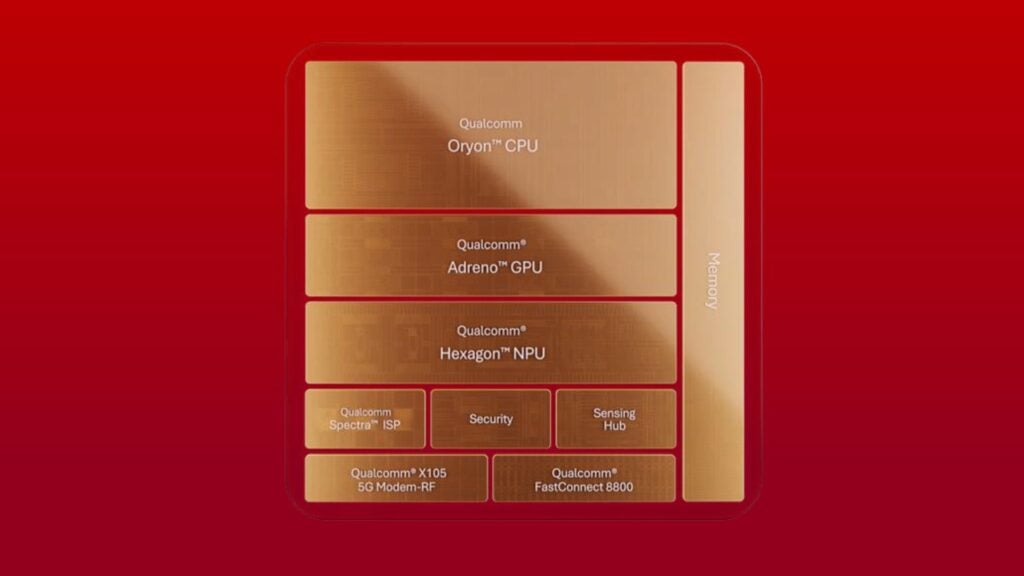
Both chips are built on a 2 nm process and use Qualcomm’s custom Oryon CPU architecture. Official numbers show two Prime cores that can hit up to 5.0 GHz, paired with six Performance cores that top out at 4.0 GHz. That makes them the first mobile CPUs to cross the 5 GHz mark.
The Extreme Gen 6 includes everything in the regular Gen 6, then adds faster AI processing, 50% more shared memory (FlexCache), and more advanced gaming features on top.
Camera upgrades are present on both chips. The Extreme model supports up to 8K at 60 FPS and ultra-smooth 4K 240 FPS recording, while the standard version tops out at 8K 30 FPS or 4K slow-motion at 120 FPS.
A big part of the pitch, of course, is what Qualcomm is calling agentic AI. Both platforms get an upgraded Hexagon NPU with a new Element Accelerator and support for context windows up to 32K. Qualcomm says the chips can run AI models with as many as 200M parameters.
The Extreme version goes further with a new Sensing Hub that uses dual Micro NPUs. Qualcomm claims that setup delivers up to 85% more performance and 20% better efficiency for things like understanding messages, emails, and conversations in context.
Gaming gets a solid boost too. Adreno Neural Fusion uses AI to improve frame generation, image quality, and overall visuals. The Extreme chip adds dedicated matrix cores and high-performance memory to push those gains even harder.
Both are expected to go head-to-head with Apple’s A20 Pro and MediaTek’s Dimensity 9600 Pro in benchmark tests. For regular users, the biggest differences should show up in gaming, on-device AI agents, and sustained heavy workloads rather than everyday tasks.
Don’t miss a thing! Join our Telegram community for instant updates and grab our free daily newsletter for the best tech stories!
For more daily updates, please visit our News Section.
(Source: Qualcomm Keynote)


Comments