Add GIZMOCHINA as Preferred Source on Google
China has had back-to-back flagship launches this week. Oppo introduced the Find X10 Pro Max on September 22 with three 200MP cameras, while Xiaomi followed less than 24 hours later with the 18 Pro Max. Instead of adding another telephoto camera, Xiaomi has put a second screen on the back of the phone.
Both phones come with new 2nm chips, batteries larger than 8,000mAh, and a long list of high-end features. Both are chasing the same buyer, but the experience of using each one ends up pretty different once you dig into the specifics.
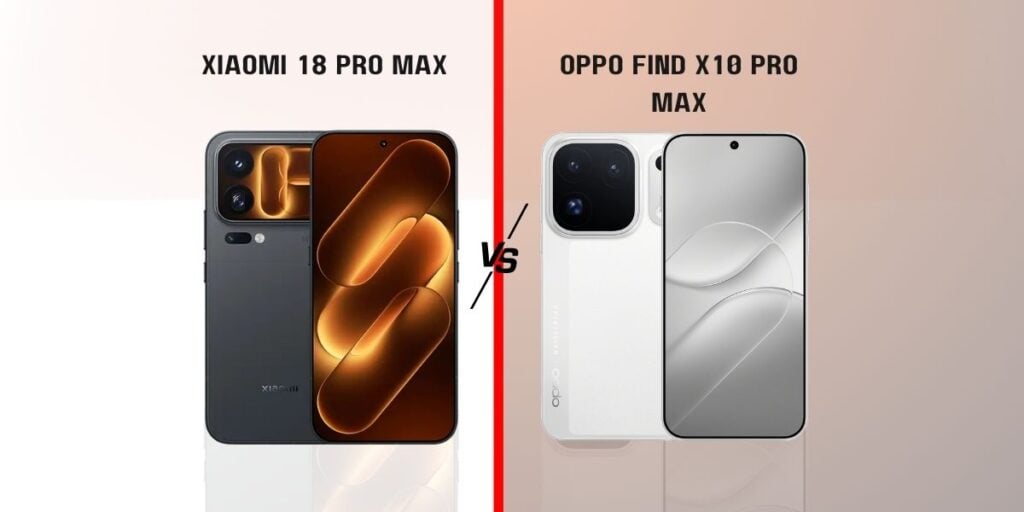
1. A rear display vs a familiar camera module
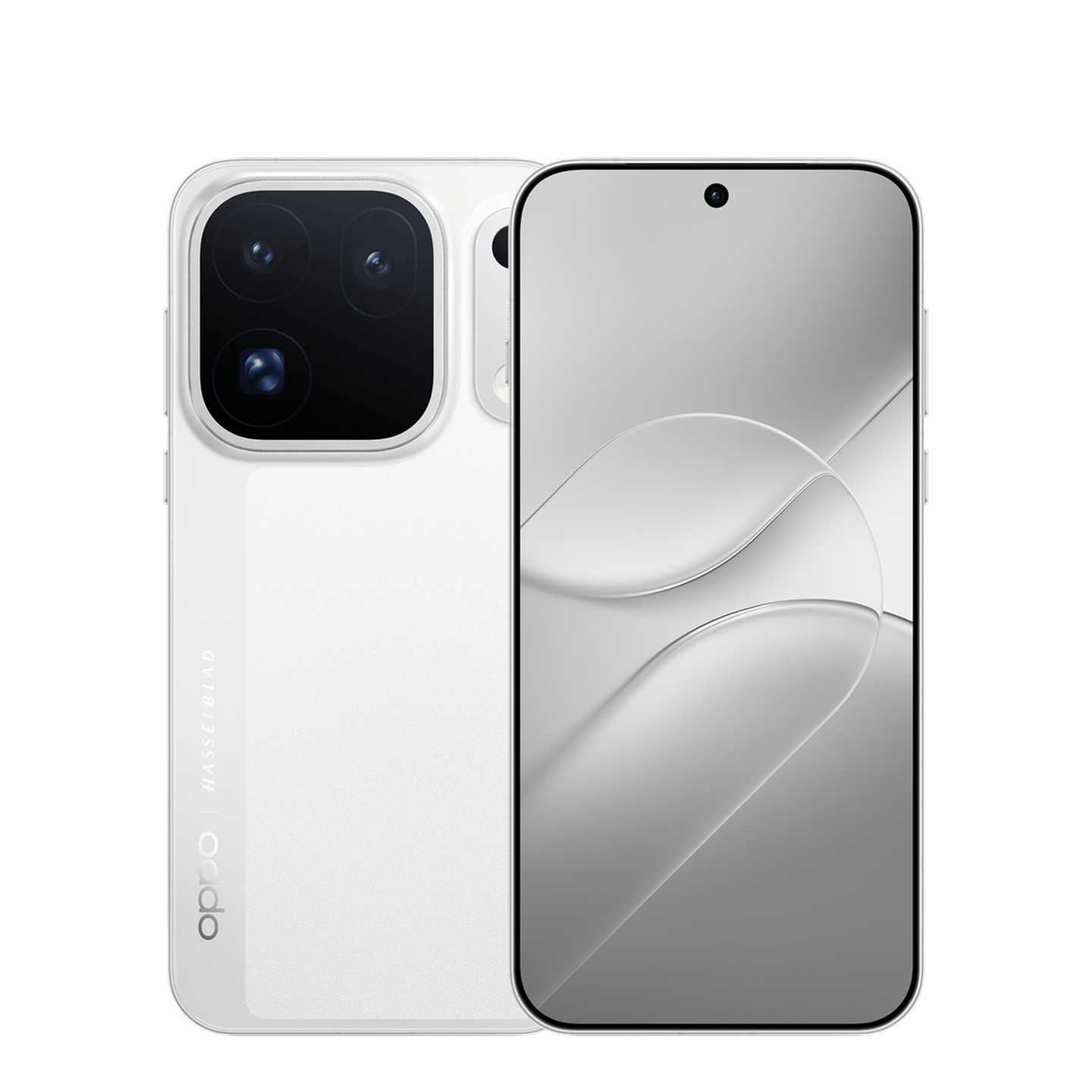
The Find X10 Pro Max keeps the squircle-shaped camera housing that Oppo introduced with the Find X9 series. The rear camera system is divided into a large square section for the three cameras and a separate vertical pill for the LED flash.
The Moon White version gets Oppo’s camera-splicing design, with a single piece of glass using two different textures. The Warm Orange and Light Titanium versions instead have a sanded finish. All three models also feature a Hasselblad logo inspired by the material sections found on classic film cameras.
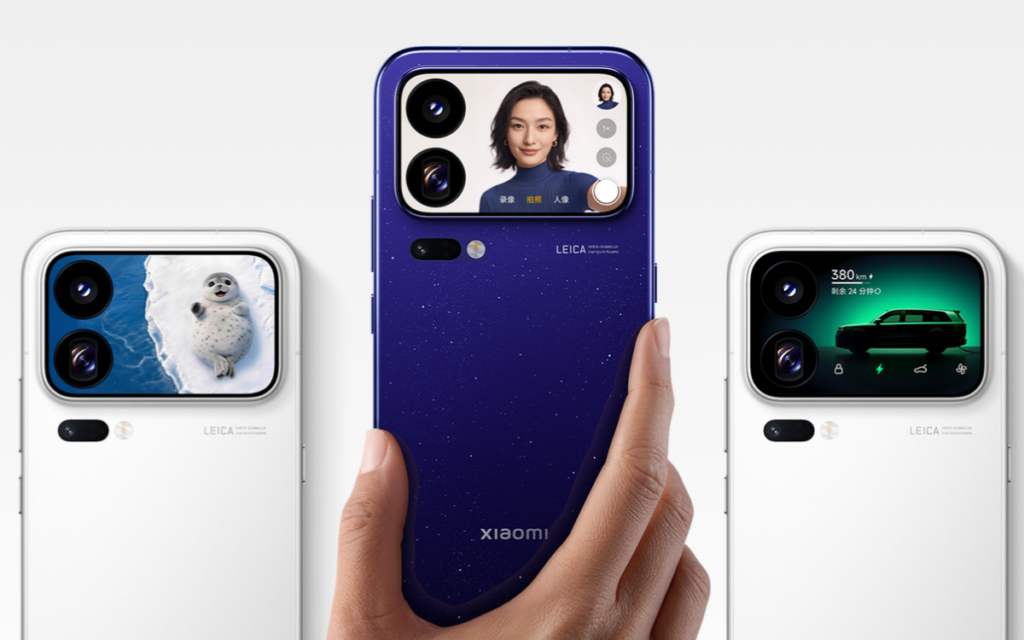
The Xiaomi 18 Pro Max takes a much more unusual approach. Its rear panel houses a 2.9-inch AMOLED display that supports up to a 120Hz refresh rate and reaches 4,000 nits of brightness. Instead of being just another decorative part of the phone, the screen can be used for different tasks.
Users can upload a photo of themselves, a pet, or a favorite character, and Xiaomi’s AI can create a custom avatar for the rear display. The screen also supports more than 100 app cards at launch, covering productivity, entertainment, and AI-generated cards created from a text description.
Xiaomi is also selling NFC-enabled plush toys that attach to the back of the phone and change the appearance of the rear display. There’s also a voice assistant that works through the rear screen. It can hold conversations, remember previous context, and control Mi Home devices without requiring you to turn the phone around.
The front display uses a 19.6:9 aspect ratio with a 1.9mm corner curvature radius. The phone is available with either a fiberglass or glass back. Fiberglass versions come in Black, White, and Iced Peach Pink and weigh 235 grams, while the glass versions, including Galaxy Blue, weigh 240 grams.
There’s also a transparent edition with a red-tinted see-through back. It’s limited to the 16GB RAM and 1TB storage configuration and marks the first transparent special edition from Xiaomi since the Mi 10 Ultra in 2020.
2. Three 200MP cameras vs a different optical setup
The Find X10 Pro Max’s biggest camera feature is its three 200MP sensors. They cover the ultra-wide, main, and telephoto cameras, making it the first phone to use 200MP sensors across all three focal lengths.
The main camera uses a 1/1.3-inch sensor with an f/1.5 aperture and a 24mm equivalent focal length. Oppo claims up to 17 stops of dynamic range, while CIPA 6.5 stabilization is used to keep shots steady.
The telephoto camera has a 1/1.56-inch sensor with an f/2.1 aperture and a 70mm equivalent focal length. It supports macro photography from as close as 10cm and has a CIPA 7.5 stabilization rating.
The 1/1.56-inch ultra-wide camera has an f/2.2 aperture and a 124-degree field of view. Oppo says it can capture 202% more light than the previous generation.
Oppo has also added a second-generation Danxia color lens that works separately from the main imaging sensors. It tracks 24 spectral sampling channels and is designed to help with color reproduction in both photos and videos.
Xiaomi uses a different camera setup. The main camera combines a 200MP Light Hunter 960L sensor, measuring 1/1.28 inches, with what Xiaomi calls a Leica Optics Summilux high-speed lens. The lens uses a 1G+6P glass-plastic construction designed to reduce internal reflections.
The lens also has several coating layers, including MgF₂ for curved-surface glare, LSC to reduce fogging, and ALD/PVD/SWC coatings intended to reduce ghosting.
The periscope telephoto camera also has a 200MP sensor, this time measuring 1/1.56 inches with an f/2.4 aperture. It offers 3.2x native optical zoom, up to 12.8x lossless zoom, a 75mm equivalent portrait mode, and 12cm macro focusing through a floating dual-lens focus system.
The ultra-wide camera is a 50MP unit with an f/2.4 aperture and a 102-degree field of view. It also supports autofocus from as close as 5cm.
Xiaomi’s camera software takes a different route as well. The company says its first end-to-end large-scale imaging model was trained using millions of real camera photos. The system processes raw sensor data in the cloud rather than handling the entire process on the phone.
The resulting “A Legendary Moment” system includes depth-of-field effects based on real 75mm and 2035mm lens optics. It also includes three shooting styles: Legendary CCD, which was trained using hundreds of thousands of CCD camera photos; a black-and-white film mode with film-spectrum calibration and a custom grain algorithm; and Contemporary Classic, which is designed for more neutral everyday photos.
Oppo is relying more heavily on its Hasselblad partnership and preset shooting profiles such as Master Mode and XPan Mode.
3. Two different 2nm chips
Both phones are among the first flagships to use 2nm processors, although they use chips from different companies.
The Find X10 Pro Max comes with MediaTek’s Dimensity 9600 Pro, built using TSMC’s 2nm process. It uses a 2+3+3 all-big-core CPU layout.
The Xiaomi 18 Pro Max uses Qualcomm’s Snapdragon 8 Elite Extreme Gen 6, also built on TSMC’s 2nm process. It has a 2+6 all-big-core design and uses Qualcomm’s fourth-generation Oryon CPU architecture, with clock speeds reaching up to 5GHz.
Xiaomi says the chip can maintain an average frame rate of 59.26fps for one hour at the highest graphics settings, with the phone reaching a maximum temperature of 43.6°C during the test.
The Pro Max also uses a ring-shaped cold-pump vapor chamber covering 5,513mm² to help manage heat during demanding workloads.
4. Battery and charging
Xiaomi has the larger battery of the two. The 18 Pro Max comes with an 8,500mAh silicon-carbon battery, compared with the 8,000mAh cell inside the Find X10 Pro Max.
Both companies use stacked silicon-anode battery technology and an irregular internal design to fit more capacity into the available space.
Xiaomi’s battery has up to 32% silicon content and an energy density of 946Wh/L. The company says it can retain more than 80% of its capacity after 2,000 full charge cycles. Oppo, meanwhile, has given the Find X10 Pro Max a five-year battery durability claim.
Charging speeds are relatively close. Xiaomi supports 100W wired charging and 50W wireless charging, while Oppo offers 80W wired and 50W wireless charging.
The Xiaomi phone also supports the 100W PPS universal fast-charging standard, which allows it to reach higher charging speeds with a wider range of compatible third-party chargers.
5. Software and AI assistants
The Find X10 Pro Max runs ColorOS 17 and includes several AI tools. Xiao Bu Space can bring together information such as flight bookings, while AI Notes can automatically summarize meetings. AI Tap can also use the camera to identify objects and provide information about them.
Xiaomi’s 18 Pro Max runs HyperOS 4 with Super Xiao AI 2.0. The assistant can handle more complex tasks across different apps.
For example, Xiaomi says you can tell it to find an activity for the children over the weekend, and it can search saved information for a suitable option before adding it to your calendar. Another example lets the assistant prepare your car when you tell it you’re about to leave.
Super Xiao Ai can also maintain shared context across devices. You can start a task on a Mac, move to the phone, and continue the same conversation with the previous context available. Some of these more advanced functions require the “Expert Mode” tier, which is accessed through a points system.
Both Oppo and Xiaomi have also added features designed to work with Apple’s ecosystem.
Oppo Connect can mirror iPhone calls and messages on the Find X10 Pro Max and sync activity data from an Apple Watch.
Xiaomi supports two-way notification syncing with an iPhone for apps such as WeChat and QQ. It can also mirror the phone’s desktop to an iPad, allowing files to be moved using drag and drop. The Xiaomi phone can even be unlocked through an iPad using Face ID or Touch ID.
6. Price and availability
In China, the Oppo Find X10 Pro Max starts at 6,799 yuan (around $1,006) for the 12GB/256GB version. The 16GB/1TB model costs 8,999 yuan (around $1,332). Sales began on September 24.
The Xiaomi 18 Pro Max starts at 6,999 yuan (around $1,045) for 12GB/256GB and goes up to 9,999 yuan (around $1,492) for 16GB/1TB.
The transparent special edition is only available with 16GB RAM and 1TB storage and costs 10,999 yuan (around $1,639). Sales began immediately after Xiaomi’s launch event.
Xiaomi has also officially confirmed that the 18 Pro series will launch globally later this year. That’s different from the Xiaomi 17 Pro and 17 Pro Max, which remained exclusive to China. Oppo has not yet made a similar global availability announcement for the Find X10 Pro Max.
7. Two flagships with very different priorities
The Find X10 Pro Max and Xiaomi 18 Pro Max share some major hardware trends, including 2nm processors, huge batteries, and high-resolution cameras. But the differences become much clearer once you look beyond the basic specifications.
Oppo has built the Find X10 Pro Max around three 200MP cameras, giving the main, telephoto, and ultra-wide cameras the same headline resolution. Its design also stays closer to the traditional flagship-phone layout.
Xiaomi has taken a different route with the 18 Pro Max. The rear display changes how the back of the phone can be used, while the camera system combines a 200MP main sensor and periscope camera with a 50MP ultra-wide. Its software also puts more emphasis on AI-assisted photography and an assistant that can carry out tasks across apps.
The two phones therefore offer different approaches to the same premium flagship market. The Find X10 Pro Max puts more hardware into its camera system, while the Xiaomi 18 Pro Max uses the rear display and software features to create a different phone experience.
For daily updates, please visit our News Section.
Stay ahead in tech! Join our Telegram community and sign up for our daily newsletter of top stories!