
Add GIZMOCHINA as Preferred Source on Google
Huawei has launched the Huawei Mate 90 Pro in China as the first phone powered by the new Kirin 9035 chip. The phone starts at CNY 6,999 (about $1,045) for the 12GB+256GB model. Huawei announced it alongside the Huawei Mate 90 Pro Max.
The Kirin 9035 sits below the Kirin 9050 (Pro) of the Mate 90 Pro Max. Compared with the Kirin 9030 in the Huawei Mate 80 Pro, Huawei says the new chip delivers an 11% CPU improvement, a 10% GPU improvement, and a 51% boost in NPU performance. Its own app testing on HarmonyOS 7 and HarmonyOS 6 shows a 10% overall performance gain.
The chip also supports hardware-level ray tracing, which can process up to 31 million rays per second, although the feature is limited to certain scenes.
Design, build, and durability
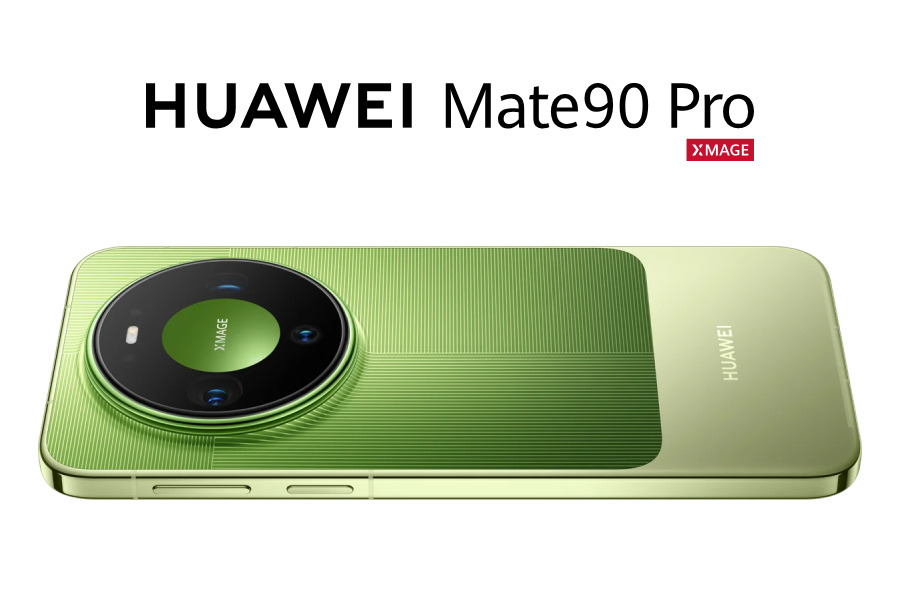
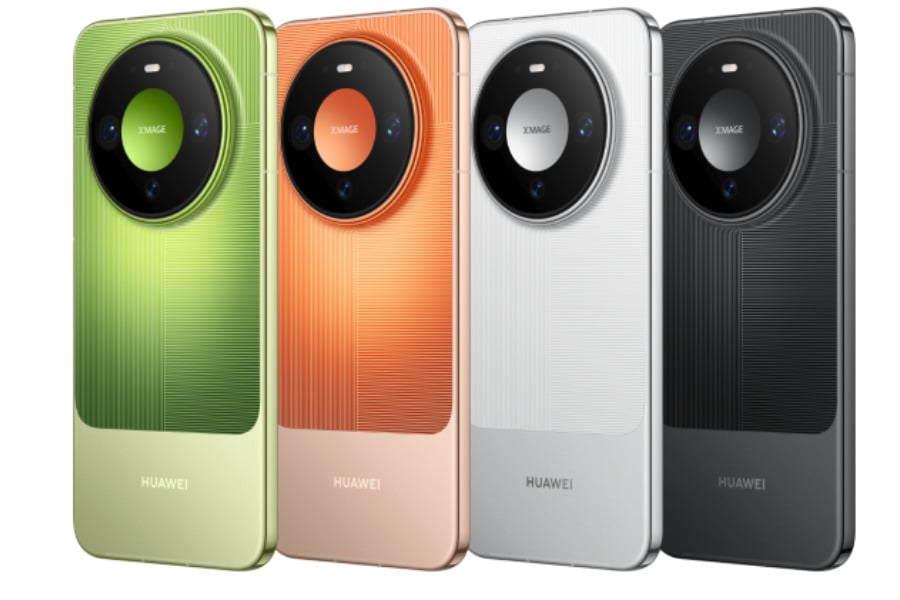
The Huawei Mate 90 Pro keeps the central-axis design used on previous Mate phones. Its back features a lattice pattern with a floating star ring around the camera module, while the body is made from a single machined piece. It comes in Emerald Green, Amber Orange, Crystal White, and Obsidian Black.
Like the other Mate 90 series models, the phone has a flat front and a 3D ToF system for face unlock. The setup includes a depth-sensing transmitter and receiver, a front camera, and an AI posture sensor.
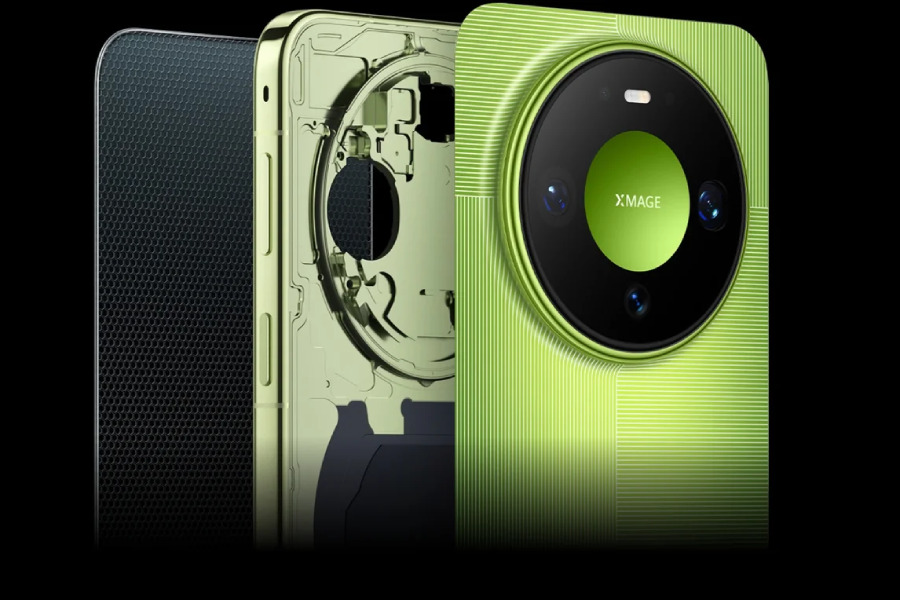
Huawei uses its “Kunlun Xuanwu” protection across the display, body, and camera lenses. The main protection features include:
- Third-generation Kunlun glass: Huawei says it offers more than 50% better drop resistance than the Huawei Mate 80 series.
- Kunlun optical glass: Used over the camera lenses, with Huawei claiming 20 times better drop resistance than the Huawei Mate 80 Pro.
- Nylon fiber material: Added inside the body for extra protection.
The phone has an IP68 rating for submersion at up to 6 meters and an IP69 rating for high-temperature, high-pressure water jets.
The Mate 90 Pro has a 6.75-inch display on the front. Huawei calls it the second-generation Linglong display and rates it for up to 12,000 nits of peak brightness at 1% APL, meaning a small bright area of the screen. The Mate 80 Pro was rated at 8,000 nits.
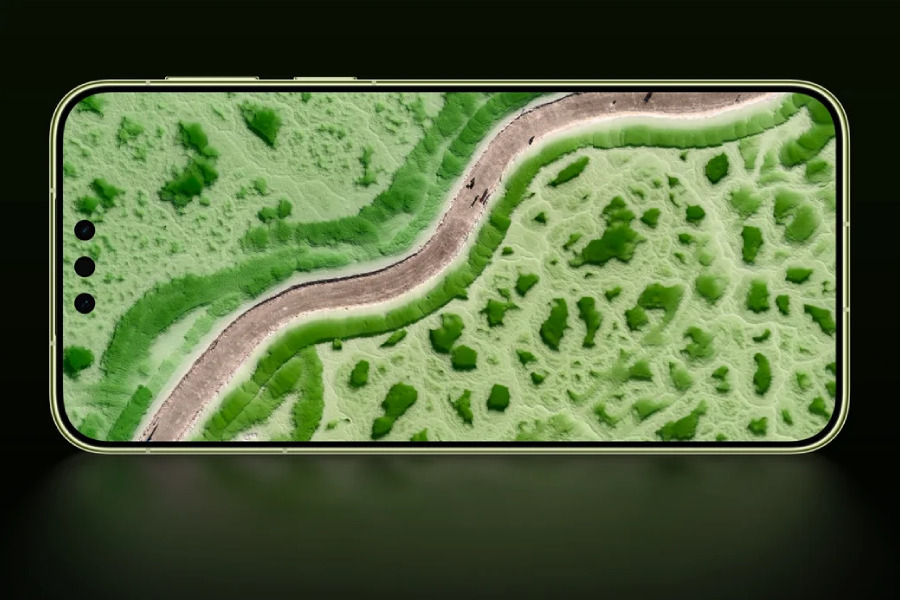
The panel uses a dual-layer OLED structure with Huawei’s custom Zhuque display chip and pixel-level AI tuning for brightness uniformity. Huawei claims a 100% increase in peak brightness, a 138% increase in screen lifespan, a 140% increase in the period of sustained high brightness, and a 30% improvement in uniformity.
However, the company doesn’t specify what each percentage is measured against, so we will hold off on treating the numbers as improvements just yet.
Cameras on the Huawei Mate 90 Pro
The Mate 90 Pro has three rear cameras:
- Main: 50MP RYYB sensor with optical stabilization and a variable aperture from F1.4 to F4.0.
- Telephoto: 50MP RYYB sensor with 4x optical zoom and 8x optical-quality zoom. It also works as a macro camera with a minimum focusing distance of 5cm.
- Ultrawide: 40MP RYYB sensor.
Huawei has also added its third-generation Red Maple primary-color camera, which the company says improves color accuracy by 37%.
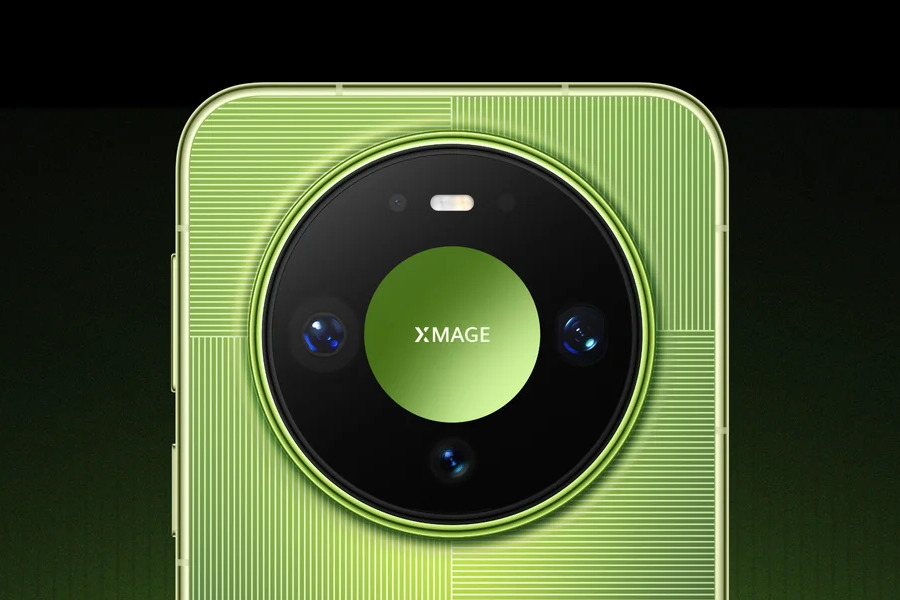
The variable aperture gives the main camera two different ways to handle shots. At F1.4, it can create more background blur for portraits, while F4.0 keeps more of a group in focus. Huawei also says the aperture can help maintain consistent video brightness when moving between bright and dark areas.
The camera software includes XMAGE features for shooting guidance. In photo and portrait modes, the phone can suggest one of 13 poses for group photos and one of 14 composition layouts within the 4x zoom range. The composition suggestions have to be enabled manually.
There are also food recommendations and a live-streaming mode that tracks products in focus while helping keep the user’s voice clear in noisy environments.
Battery and charging
The Mate 90 Pro packs a 6,600mAh battery that accepts 100W wired and 50W wireless charging. To note, the 50W wireless speed requires Huawei’s own wireless charger and a 66W or higher charging kit. The Mate 80 Pro supported 80W wireless charging, so the new model has a lower wireless charging rating.
Huawei rates the Mate 90 Pro for up to 41 hours of video playback. The test used a cached 2-hour-34-minute video played on a loop with auto-brightness turned off.
Its outdoor exploration mode can extend battery life to up to 15 days when satellite messaging and tracking are used. The phone can also provide up to 36 hours of screen-off route navigation through Petal Maps. The equivalent mode on the Mate 80 Pro was rated for up to 13 days.
Connectivity, satellite messaging, and outdoor tools
The Huawei Mate 90 Pro uses a combined Wi-Fi and cellular antenna design that can switch between antennas automatically. Its multi-device network sharing feature lets up to four HarmonyOS 7 devices share their connections. Huawei says this can improve file transfer speeds by up to 40% in crowded areas.
Satellite messaging is also supported through BeiDou. The feature now allows users to send pictures as well as text, although it is limited to mainland China. It requires an open view of the sky and must be activated through MeeTime or a carrier while the phone still has a mobile connection.
Pictures sent over satellite are heavily compressed to fit within the available bandwidth. Once the feature is activated, users can also access 12-hour and three-day satellite weather forecasts.
The outdoor mode can record routes and work with third-party apps such as TwoStep and Walker. If an accident occurs, a paired Huawei watch can start an emergency call through the phone and share location information. At launch, this emergency feature only works between Huawei Mate 90 series phones.
HarmonyOS 7 and AI features
The Huawei Mate 90 Pro ships with HarmonyOS 7, while several AI features will arrive through later HOTA updates. A few of them are:
- Xiaoyi Notes allows users to swipe down to save things shown on the screen, including social media posts and to-do items. The phone can then organize the saved content automatically.
- Xiaoyi call help can handle tasks such as booking restaurants, answering calls when the user is unavailable, translating conversations in real time, and creating call summaries.
- With Trigger-based AI, users can long-press the Xiaoyi navigation bar to have the phone read what’s on the screen and suggest the next action. For example, copying a password, address, or cloud drive link can prompt the phone to open the relevant app.

The phone also supports 3D dynamic photos, which turn still images into short 3D clips. Huawei says the feature works best with photos containing a single person or pet.
For security, the Mate 90 Pro has a dedicated Mobile Security Processor with support for post-quantum cryptography for unlocking and payments. A voice-changer detection feature can also warn users about potentially fake voices during calls.
The voice detection system works with carrier calls, MeeTime, and WeChat calls. Huawei says its warnings are only for reference and shouldn’t be treated as a guarantee.
The phone also includes child-safety controls under Settings in the Healthy Use of Mobile Phone menu.
Huawei Mate 90 Pro Price and Availability
Huawei is selling the Mate 90 Pro in four configurations in China:
- 12GB+256GB: CNY 6,999 (~$1,045)
- 12GB+512GB: CNY 7,999 (~$1,194)
- 16GB+512GB: CNY 8,499 (~$1,269)
- 16GB+1TB: CNY 9,999 (~$1,492)
The base model costs CNY 1,000 more than the Huawei Mate 80 Pro, which launched at CNY 5,999. The 512GB and 1TB versions are CNY 1,500 to CNY 2,000 more expensive than their Mate 80 Pro counterparts. These prices are for China, and Huawei’s launch announcement does not include international pricing.
For daily updates, please visit our News Section.
Stay ahead in tech! Join our Telegram community and sign up for our daily newsletter of top stories!



Comments