Add GIZMOCHINA as Preferred Source on Google
Shopping for a foldable phone in 2026 means looking beyond Samsung’s Galaxy Z Fold and Z Flip series. Apple has entered the market with the iPhone Duo, Google has updated its Pixel 11 Pro Fold, and Honor’s Magic V6 brings a 6,660mAh battery to its book-style design. Samsung has also split its Fold lineup, giving buyers a choice between the taller Z Fold 8 Ultra and the wider, shorter Galaxy Z Fold 8.
Each phone approaches the foldable experience a little differently. Some prioritize a large inner display and multitasking, while others put more emphasis on battery life, cameras, or a familiar software experience. There is also a considerable difference in what you’ll pay, particularly if you’re considering Apple’s first foldable or Samsung’s top-end model.
Here are the five foldable phones worth considering in 2026.
1. Samsung Galaxy Z Fold 8 Ultra
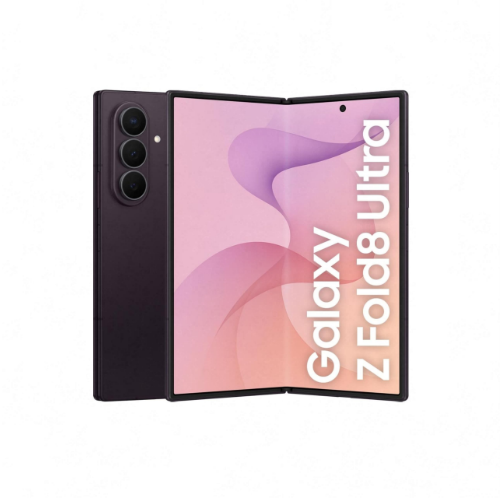
The Samsung Galaxy Z Fold 8 Ultra keeps the tall, narrow design Samsung introduced with last year’s Galaxy Z Fold 7, now under a new name. Its 8-inch inner display gives users plenty of room for multitasking, while the 6.5-inch cover screen handles everyday tasks without requiring the phone to be unfolded. Both displays support 120Hz refresh rates, and the inner panel reaches 3,000 nits of peak brightness. Samsung has also added an anti-reflective coating to the inner screen.
The phone runs on Qualcomm’s Snapdragon 8 Elite Gen 5 for Galaxy, with 12GB or 16GB of RAM and up to 1TB of storage. It ships with Android 17 and One UI 9, bringing Samsung’s software features to the larger folding display.
Camera hardware is another major part of the package. The rear setup includes a 200MP main camera with 2x optical-quality zoom, a 50MP ultra-wide camera that replaces last year’s 12MP sensor, and a 10MP telephoto camera with 3x zoom. Both displays also have their own 10MP selfie cameras.
Samsung has increased battery capacity to 5,000mAh, up from 4,400mAh on the Fold 7, although charging speeds remain at 45W wired and 20W wireless. The phone weighs 215g and measures 4.1mm thick when unfolded and 8.9mm when folded, keeping its weight close to that of its predecessor.
All of this comes at a high price. In the US, the 12GB RAM and 256GB storage version costs $2,099, while the 512GB model is priced at $2,299. Buyers who need more memory and storage can get the 16GB RAM and 1TB version for $2,699, making it the most expensive phone on this list.
The price also makes durability worth considering. The phone became the first large-screen Samsung foldable to fail JerryRigEverything’s durability test, and Samsung’s official screen replacement prices reach $639 if the inner display is damaged. The launch coverage has the remaining specifications.
Those who prefer a wider, shorter design can save some money with Samsung’s standard Galaxy Z Fold 8. It starts at $1,899.99, weighs 201g, and has a 7.6-inch inner display. Its rear camera system uses two 50MP sensors but lacks a dedicated telephoto lens.
2. Apple iPhone Duo
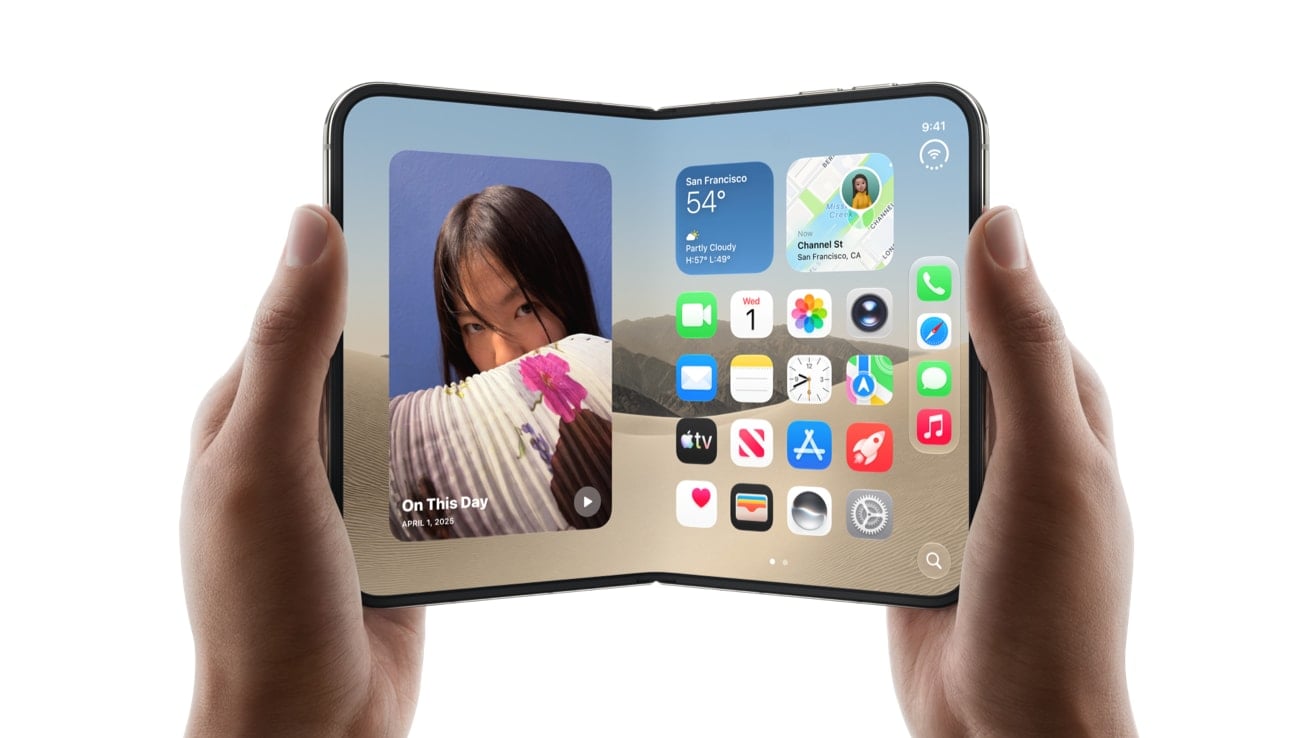
Apple’s first foldable gives iPhone users a way to move to a larger screen without leaving iOS. The company unveiled the iPhone Duo on September 9, with pre-orders opening on October 16. Sales begin on October 23 in more than 70 countries and regions, followed by another 28 markets on October 30.
Apple has priced the phone close to Samsung’s premium foldables. The 256GB model costs $1,999, the 512GB version costs $2,199, and the 1TB model comes in at $2,599. At the top of the range, the 2TB version costs $3,199. The starting price is $100 below the Galaxy Z Fold 8 Ultra and $100 above the standard Galaxy Z Fold 8.
The iPhone Duo has a 7.6-inch folding OLED display inside and a 5.4-inch OLED screen on the outside. Both support 120Hz ProMotion and reach 3,000 nits of peak brightness. Apple has also used a nano-texture finish on the inner display to reduce glare. Early hands-on reports suggest the matte finish makes the crease difficult to see, while the selfie camera beneath the display is barely noticeable when not in use.
The frame and hinge cover use grade 5 titanium, with Ceramic Shield glass on the front and back. The phone also has an IP68 rating. However, its build comes with a trade-off: at 254g, it is considerably heavier than Samsung’s standard Galaxy Z Fold 8, which weighs 201g. The iPhone Duo measures 11.3mm when closed and 5.2mm when open.
Apple has made a few other choices worth knowing about before buying. Touch ID is built into the side button, with no Face ID support, and the phone uses eSIM exclusively rather than offering a physical SIM tray. Apple Pencil support is also due later this year.
Powering the phone is Apple’s A20 Pro chip, with a six-core CPU, a seven-core GPU, and vapor chamber cooling. The iPhone Duo runs iOS 27 and has two 48MP rear cameras for main and ultra-wide photography. It supports up to 2x optical-quality zoom but does not include a dedicated telephoto camera. A 12MP front camera handles selfies.
Apple has split the battery between the phone’s two halves and rates it for up to 31 hours of video playback on the inner display or up to 44 hours on the outer display. Fast wired charging can bring the battery to around 50 percent in roughly 20 minutes, and MagSafe wireless charging is supported.
The larger screen also brings changes to iOS. Version 27 adds split-screen apps, drag-and-drop between applications, and saved app pairs, making it easier to use two apps together on the folding display.
3. Honor Magic V6
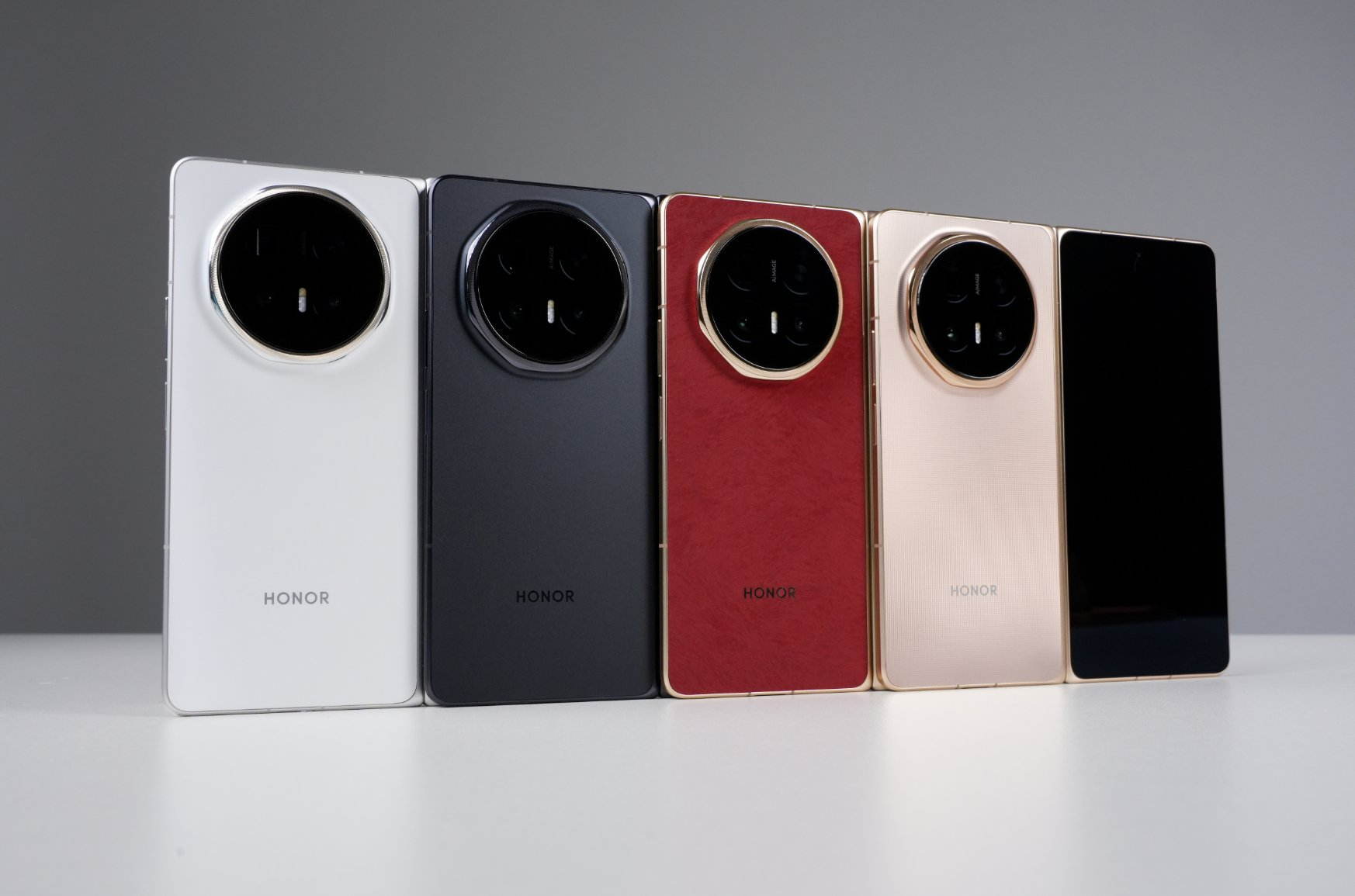
For anyone who would rather have a larger battery than a thinner spec sheet, the Honor Magic V6 is worth a look. Its global version packs a 6,660mAh silicon-carbon battery, the largest among the book-style foldables covered here. It supports 80W wired charging and 66W wireless charging, while Chinese versions come with even larger 6,850mAh and 7,150mAh batteries.
The phone also has a Snapdragon 8 Elite Gen 5 chip paired with 16GB of RAM. Its 7.95-inch inner display runs at 2172 x 2352 resolution, while the cover screen measures about 6.5 inches. On the software side, it uses MagicOS 10 based on Android 16.
Honor has made several claims about the phone’s durability, too. The Magic V6 carries IP68 and IP69 ratings, and its hinge uses steel rated at 2,800MPa. According to Honor, the hinge has been tested for 500,000 folds, while the crease is 44 percent shallower than on the previous Magic V5.
Despite the large battery, the phone remains relatively thin. It measures 4.1mm when unfolded and between 8.8mm and 9mm when folded, depending on the version, with weight ranging from 219g to 224g.
The camera setup includes a 50MP main sensor, a 50MP ultra-wide camera, and a 64MP periscope telephoto camera with 3x optical zoom and CIPA 6.5 stabilization. Both displays have 20MP selfie cameras.
Availability is the main hurdle for buyers outside China. Honor does not sell the Magic V6 in the US, and prices in other markets are considerably higher than its Chinese starting price of ¥8,999. In the Philippines, it costs ₱119,999, or roughly $2,140, while the price in South Africa is R40,000. Even at those prices, it can be considerably cheaper than Samsung’s top model. Our comparison with the Galaxy Z Fold 8 Ultra puts the price difference at about $800 in Honor’s favor.
4. Google Pixel 11 Pro Fold
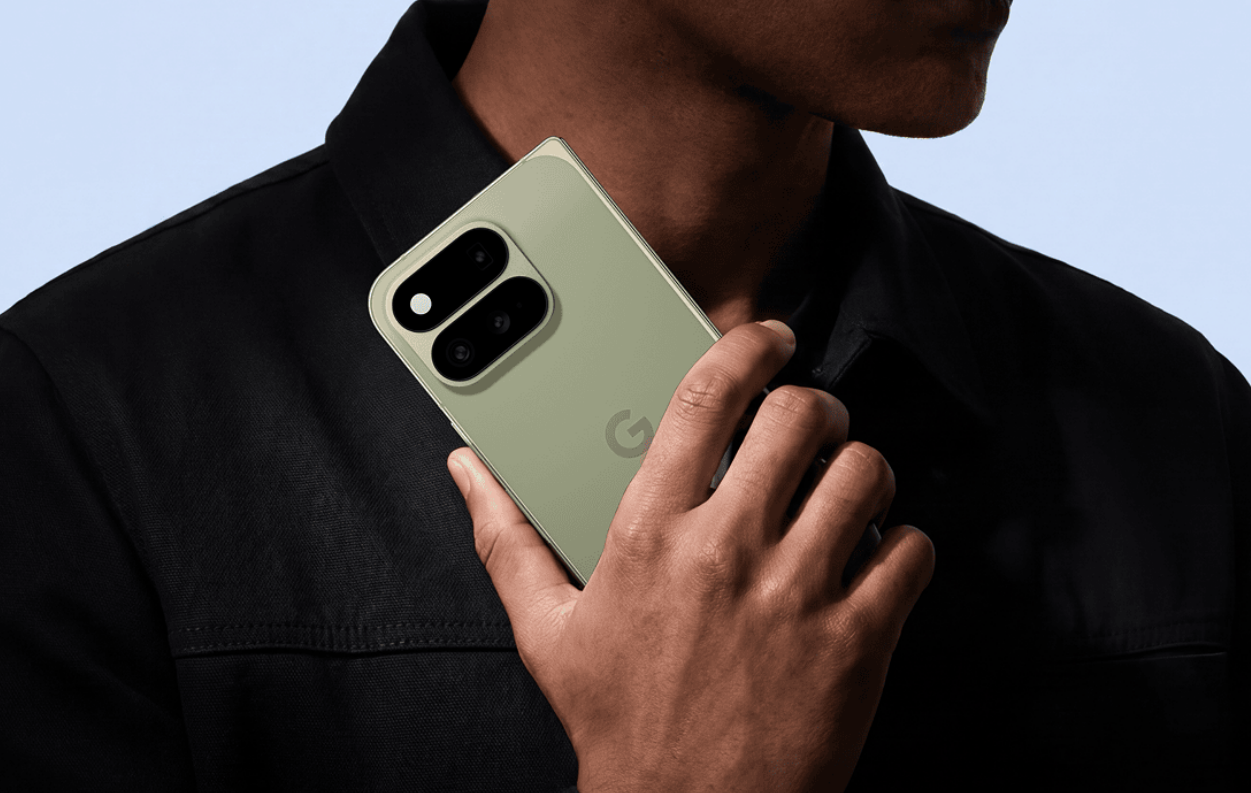
Google’s Pixel 11 Pro Fold takes a different approach from Samsung’s foldables, pairing a large folding display with Google’s version of Android and a long software support commitment. It starts at $1,899 for 256GB of storage, which is $100 more than the Pixel 10 Pro Fold’s starting price. The 512GB model costs $2,019, while the 1TB version is priced at $2,249.
Every configuration comes with 16GB of RAM and Google’s Tensor G6 chip. The phone ships with Android 17, and Google promises seven years of operating system updates, security updates, and Pixel Drops. Buyers can choose between Obsidian and Olive color options.
Google has also reduced the phone’s weight and thickness. At 239g, it is lighter than the previous model’s 258g, while its body measures 10.1mm when folded and 5mm when unfolded. The inner display measures 8 inches, and the cover screen is 6.5 inches. Both reach 3,600 nits of peak brightness, which Google says is about 20 percent higher than on the Pixel 10 Pro Fold.
The Pixel 11 Pro Fold retains an IP68 rating, and Google describes its new construction as three times stronger than the previous generation. Battery capacity has gone in the opposite direction, dropping from 5,015mAh to 4,806mAh. Google still quotes more than 24 hours of battery life, with 30W wired charging capable of reaching 50 percent in 30 minutes. Qi2.2 magnetic wireless charging is also supported at up to 25W.
For photography, the phone has a 48MP main camera, a 10.5MP ultra-wide camera and a 10.8MP telephoto camera with 5x optical zoom. Each display also gets a 10MP selfie camera. Google has added HiLight to the Pixel 11 Pro series, a customizable notification light on the back of the phone.
The Pixel 11 Pro Fold launch coverage covers the changes from last year’s model. If you’re deciding between Google’s foldable and Samsung’s wider Fold, the Pixel 11 Pro Fold vs Galaxy Z Fold 8 comparison compares their specifications, cameras, and prices.
5. Samsung Galaxy Z Flip 8
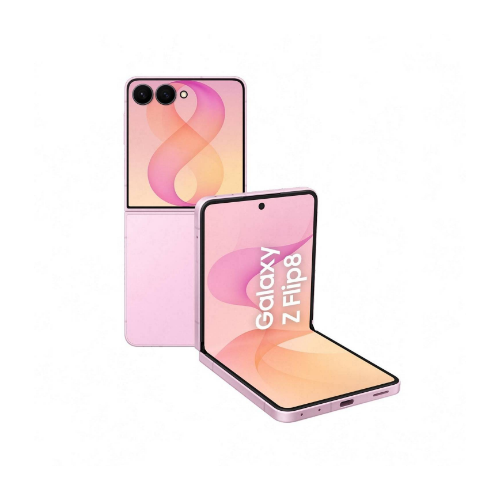
Not everyone needs a tablet-sized screen in their pocket. The Samsung Galaxy Z Flip 8 folds a regular-sized smartphone in half, making it a more compact alternative to the book-style models on this list. It starts at $1,199.99, which is $100 more than the Galaxy Z Flip 7.
Samsung has made the new model thinner and lighter than any previous Flip. It weighs 180g and measures 6.1mm thick when unfolded, compared with 6.5mm for the Flip 7. The phone has a 6.9-inch inner display with a 120Hz refresh rate and a 4.1-inch cover screen. Its frame uses Armor Aluminum, and it carries an IP48 rating.
The cover screen gets much of the attention in this generation. Gemini can launch supported tasks directly from the smaller display, while Now Brief shows personalized cards. Users can also create custom cards with text prompts, allowing them to tailor the information displayed without opening the phone.
The hardware changes are more modest. The battery remains at 4,300mAh, with 25W wired and 15W wireless charging. Samsung has also kept the same 50MP main camera and 12MP ultra-wide camera from last year’s model.
The processor depends on where you buy the phone. Some markets get the Snapdragon 8 Elite Gen 5 for Galaxy, while others receive Samsung’s Exynos 2600. The Galaxy Z Flip 8 runs Android 17 with One UI 9, and Samsung lists support for up to seven major OS updates. As with the other recent Samsung phones, there is no charger in the box, and the phone lacks an SD card slot.
The Galaxy Z Flip 8 went up for pre-order in July and began shipping on August 7. If you’re upgrading from a Flip 7, the Flip 8 vs Flip 7 upgrade piece explains what has changed, while the launch coverage has the full specifications. The Galaxy Z Flip 8 vs Motorola Razr Ultra 2026 comparison is also worth checking if you’re considering a rival flip with a bigger battery and faster charging.
For more daily updates, please visit our News Section.
Stay ahead in tech! Join our Telegram community and sign up for our daily newsletter of top stories!