
Add GIZMOCHINA as Preferred Source on Google
Samsung has unveiled its next-generation UFS 5.0 storage technology, marking a major step forward for mobile memory. The new solution is designed with future AI-powered devices in mind and aims to improve how smartphones, wearables and other connected products handle large amounts of data locally.
UFS 5.0 pushes storage performance to a new level
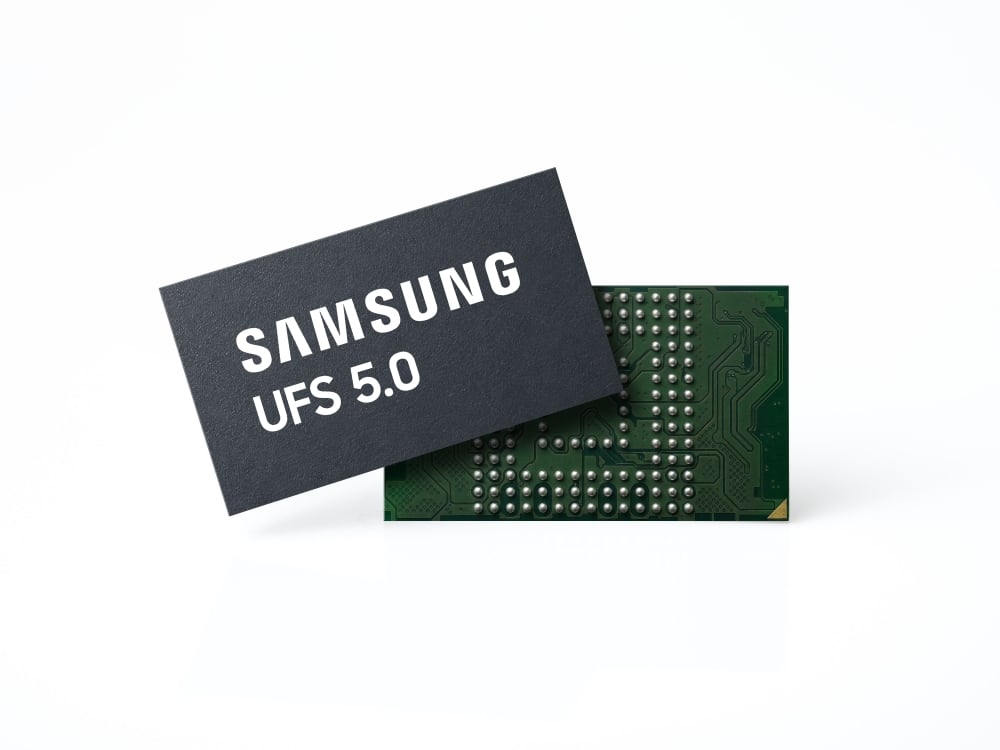
According to Samsung, the new UFS 5.0 standard delivers significantly higher performance than the current generation. The company claims sequential read speeds of up to 10.8GB/s and write speeds of up to 9.5GB/s, making it the fastest UFS solution announced so far. These figures are more than twice as fast as those offered by Samsung’s UFS 4.1 technology.
The faster storage speeds are expected to benefit on-device AI tasks, particularly those involving large language models and generative AI features. As more AI processing shifts from cloud servers to smartphones and other devices, storage performance is becoming increasingly important for reducing delays and improving responsiveness.
Samsung says the new solution is based on the latest embedded memory interface specifications defined by JEDEC. The higher bandwidth allows devices to move and process large datasets much faster, which could translate into quicker AI responses and smoother multitasking experiences.
Beyond performance gains, Samsung has also focused on efficiency. The company says UFS 5.0 improves power efficiency by over 40 percent compared to its UFS 4.1 solution. This has been achieved through technologies such as clock gating and multi-voltage operation, helping devices transfer data while consuming less power.
The storage package itself measures 7.5mm x 13mm x 0.9mm, making it around 16.7 percent smaller than the previous generation. The compact footprint can free up internal space for other components and could prove useful in products such as smartphones, XR headsets and AI-focused wearables.
Samsung plans to begin mass production of UFS 5.0 in the fourth quarter of 2026, with capacities reaching up to 1TB. The company expects the technology to be adopted across a range of next-generation devices as demand for advanced on-device AI capabilities continues to grow.
For more daily updates, please visit our News Section.
Stay ahead in tech! Join our Telegram community and sign up for our daily newsletter of top stories!




Comments