
Add GIZMOCHINA as Preferred Source on Google
As an Amazon Associate, Gizmochina earns from qualifying purchases. Links on this page may earn us a commission at no extra cost to you.
Xiaomi announced the Pad 9 Pro Max at a big launch event last week, but its smaller siblings are getting a quieter debut. The company has now launched the Xiaomi Pad 9 and Pad 9 Pro in China with large batteries, high-refresh-rate displays, and Snapdragon chips. Unlike the Pad 9 Pro Max, neither tablet uses Xiaomi’s XRING O3 chipset.
Start with what you get on both. Each tablet uses a 3.2K LCD panel (3200 x 2136) with a 3:2 aspect ratio, a 144Hz refresh rate, and 12-bit color depth with DCI-P3 coverage, HDR10, HDR Vivid, and Dolby Vision support. Xiaomi has also carried over its eye-comfort certifications on both — Circadian Friendly, Flicker-Free, and hardware-level low blue light — plus wet-touch support, so the screen still responds when your hands are damp.
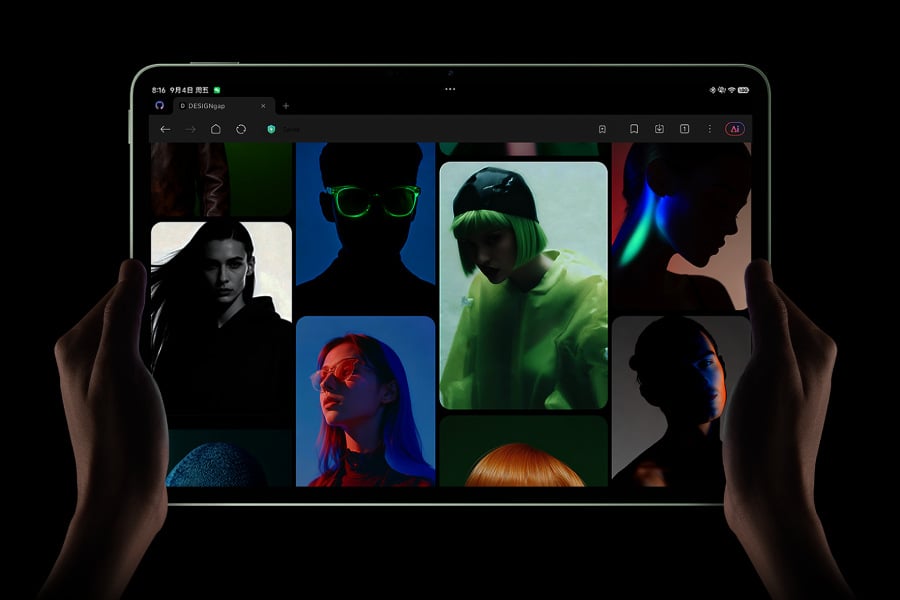
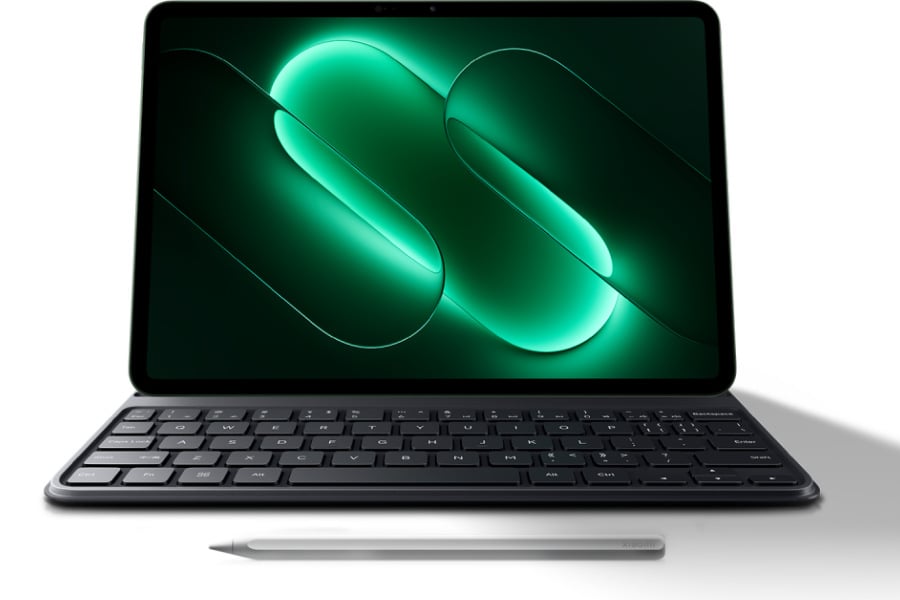
You also get the same software suite across the board: WPS for Pad handles office work, CapCut Pro is built in for video editing, and both tablets support Xiaomi’s magnetic pen and a PC-style floating keyboard for when you want to work rather than just browse.
How the Xiaomi Pad 9 and Pad 9 Pro are different
Where the two split is size and power. The Pad 9 Pro gets a 12.5-inch display, while the standard Pad 9 has an 11.2-inch panel. Both are 12-bit LCD screens with a refresh rate of 144Hz, DCI-P3 coverage, and a 3:2 aspect ratio. The Pro’s screen also has a brighter 1000 nits peak versus 800 nits on the smaller model.
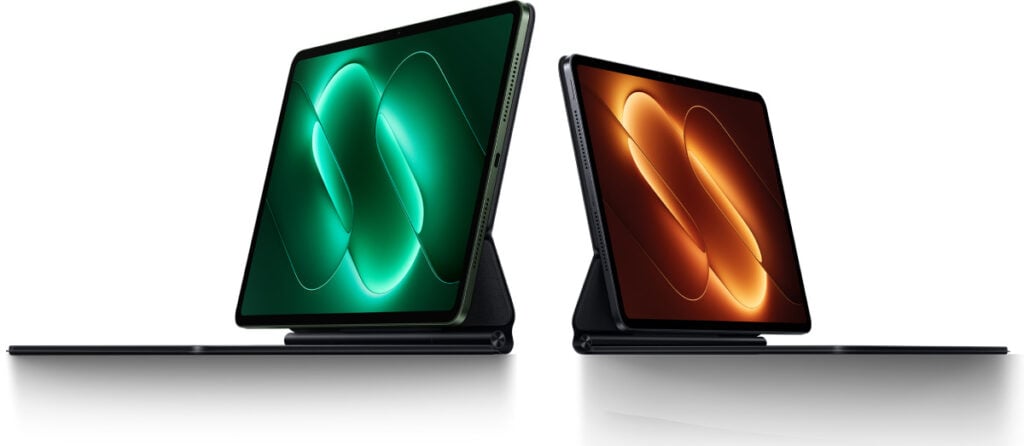
Chip-wise, the Pad 9 Pro runs the Qualcomm Snapdragon 8 Gen 5 platform, an octa-core chip built on a 3nm process and clocked up to 3.8GHz, paired with an Adreno GPU. The Pad 9 uses the Snapdragon 8s Gen 4, the same processor Xiaomi already used on the Pad 8, so the standard model isn’t a huge leap in raw performance.
Moreover, the Pad 9 Pro packs an 11,000mAh battery with 67W wired charging and 22.5W reverse charging, while the Pad 9 gets a smaller 9,720mAh cell with 45W charging support.
The Pad 9 Pro is also the heavier and thicker of the two at 580g and 5.8mm, while the Pad 9 stays notably light at 485g and 5.75mm thin, with a soft-light display option adding a few grams to both.
As for cameras, the Pad 9 Pro has a 50MP main camera capable of 4K video, along with a 32MP front camera for video calls. The Pad 9 trims this down to a 13MP main camera and an 8MP front lens, both capped at 1080p video, though it keeps most of the same shooting modes minus a few of the Pro’s extras, such as the teleprompter’s higher-res feed.
Both tablets also have keyboard and stylus support. The Pad 9 Pro tops out at 16GB of RAM with 256GB of UFS 4.1 storage, while the Pad 9’s ceiling is 12GB of RAM paired with the same 256GB UFS 4.1 option. Both start from an 8GB/128GB base configuration.
Pricing and Availability
The Xiaomi Pad 9 starts at 2,999 yuan (around $450) for the 8GB+128GB model. The 8GB+256GB version costs 3,299 yuan (around $495), while the 8GB+256GB soft-light version costs 3,499 yuan (around $525). The top-end 12GB+256GB model is priced at 3,799 yuan (around $570).
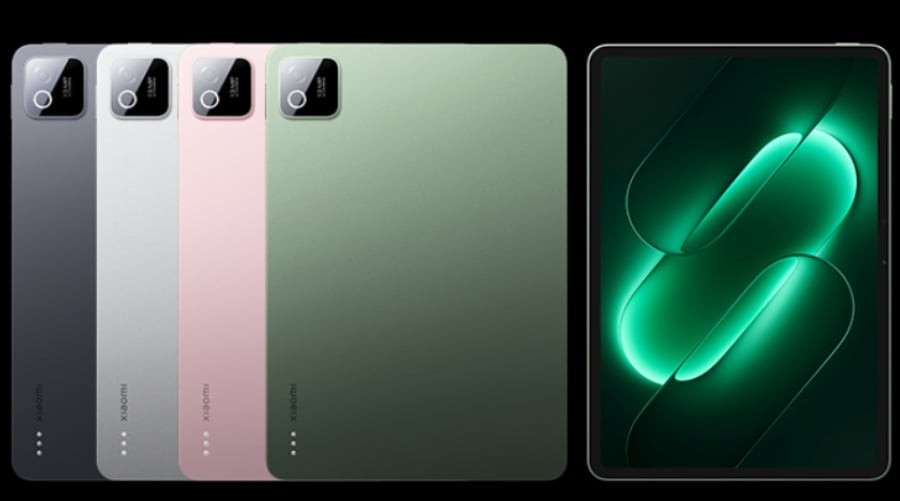
The Pad 9 comes in Silver, Spruce Green, Black, and Ice Peach Pink.
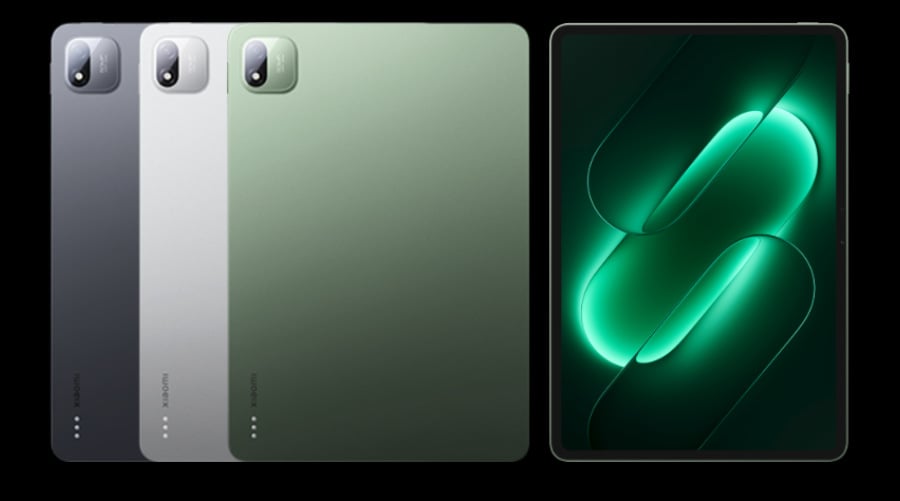
The Xiaomi Pad 9 Pro starts at 3,799 yuan (around $570) for 8GB+128GB. The 8GB+256GB model costs 4,099 yuan (around $615), while the 12GB+256GB version is priced at 4,599 yuan (around $690). The 12GB+256GB soft-light version costs 4,799 yuan (around $720), and the 16GB+256GB model tops out at 4,999 yuan (around $750).
The Pad 9 Pro is available in Silver, Spruce Green, and Black.
Don’t miss a thing! Join our Telegram community for instant updates and grab our free daily newsletter for the best tech stories!
For more daily updates, please visit our News Section.


Comments