Add GIZMOCHINA as Preferred Source on Google
As an Amazon Associate, Gizmochina earns from qualifying purchases. Links on this page may earn us a commission at no extra cost to you.
Projectors have spent the past few years trying to replace televisions, but the best models of 2026 are becoming something more versatile: high-performance display systems that can transform a living room, backyard, studio, or conference space into a massive screen without requiring a dedicated theater.
The latest generation brings higher brightness, laser light sources, automatic image correction, Google TV, gaming features, and, in some cases, advanced optical systems. But choosing between them can be complicated. ISO lumens, contrast ratios, lens shift, optical zoom, RGB triple lasers, and AI processing can quickly become overwhelming, especially when manufacturers present these technologies differently.
After comparing some of the most capable options currently available, these are the projectors that stand out in 2026.
1. Xgimi Titan
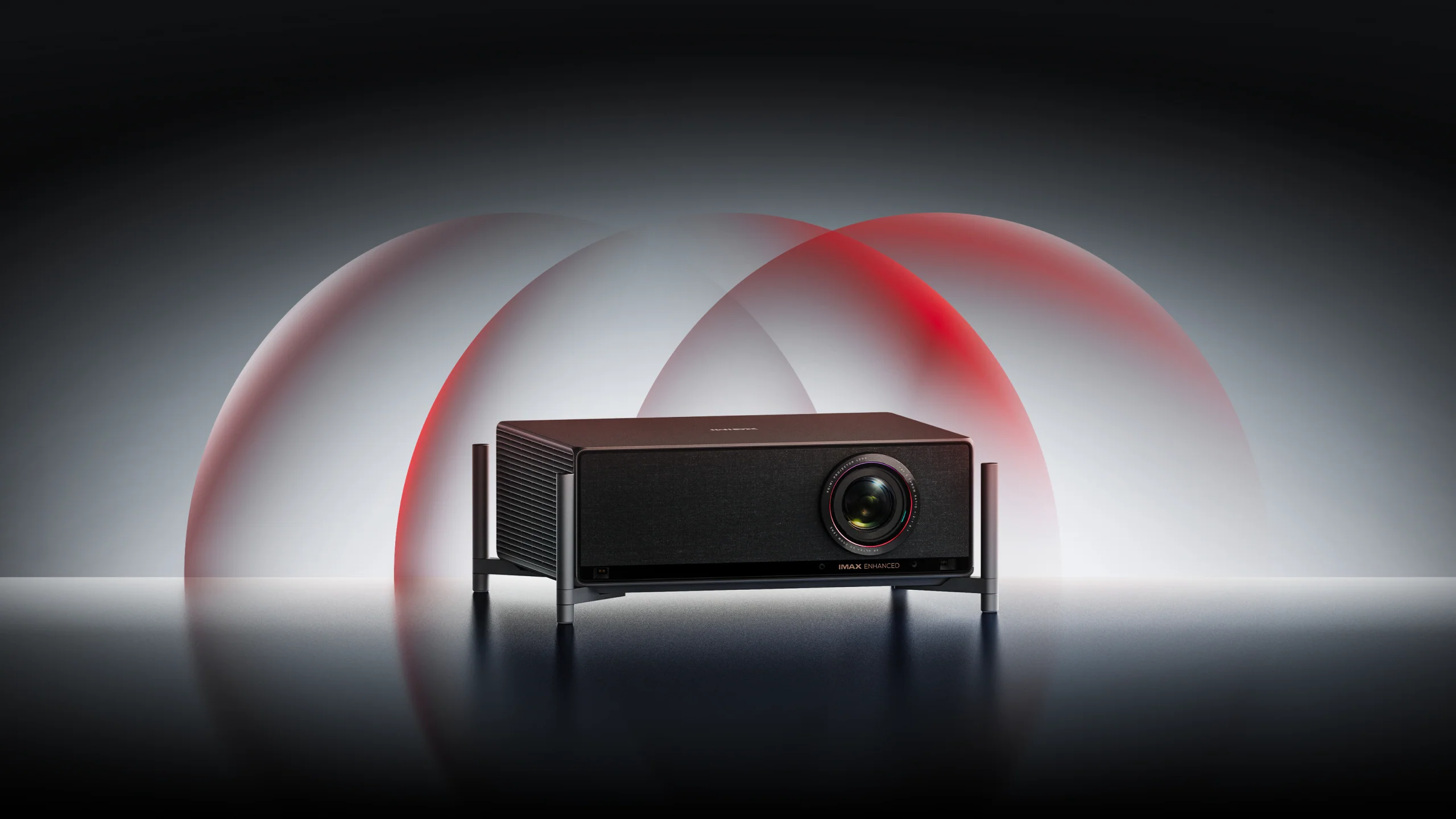
The Xgimi Titan is built for people who need a projector that can overpower ambient light. It produces 5,000 ISO lumens, which puts it well above most home-focused models. That brightness gives it a major advantage in living rooms with windows, storefront displays, studios, gyms, and conference spaces. You do not need to treat every daytime viewing session like a blackout-curtain project.
Xgimi uses a large 0.78-inch DMD imaging chip in the Titan. Most compact 4K DLP projectors use a smaller 0.47-inch chip. The larger chip gives Titan more room to maintain image detail and brightness at larger sizes. This matters if you want a projection that feels more like a true theater screen than an oversized television.
The Titan also includes a dual-laser light engine, Dolby Vision, HDR10+, IMAX Enhanced, Filmmaker Mode, and 3D support. Its claimed 150% DCI-P3 color gamut and 5,000,000:1 dynamic contrast ratio aim to deliver saturated color and deeper shadow detail, even when the room is not fully dark.
Its lens system is one of its strongest features. The projector supports motorized lens shift up to ±100% vertically and ±40% horizontally, along with optical zoom. These controls let you move the image without using digital keystone correction. That is important because optical adjustment preserves sharpness, while aggressive keystone correction can reduce image quality.
The Titan is not a small portable projector. It weighs more than 25 pounds and uses up to 500W of power. It works best as a permanent or semi-permanent installation. If you want a projector that can live on a shelf or ceiling mount and handle almost any lighting condition, it is one of the strongest choices in this category.
Pricing: It costs $3,999.
2. Jmgo IRIS Ultra Max
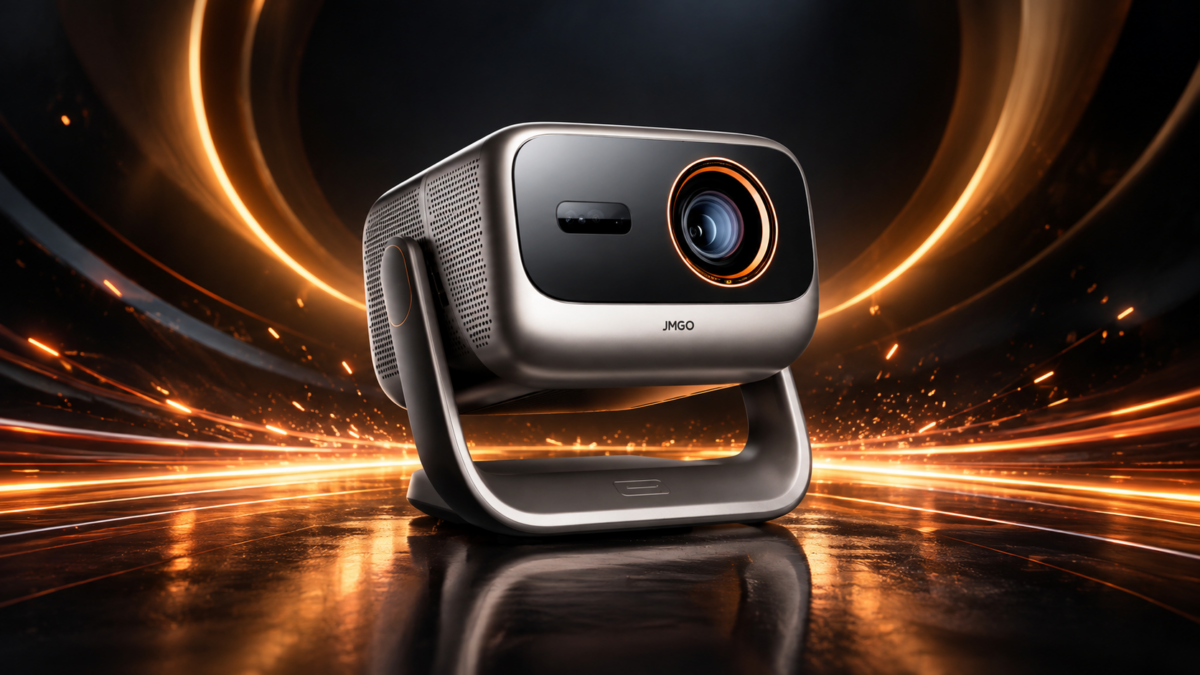
The Jmgo IRIS Ultra Max is designed with high-refresh-rate gaming in mind. It is the world’s first consumer single-chip DLP projector capable of outputting true 4K resolution at 120Hz. Many projectors can accept a 4K signal but require the resolution to drop to 1080p for higher refresh rates. The IRIS Ultra Max achieves full-path 4K at 120Hz using its dual TI DLPC chip architecture.
That specification makes a real difference if you use a gaming PC, PlayStation 5, or Xbox Series X. The projector also supports VRR and ALLM, which help reduce screen tearing and automatically switch compatible consoles into low-latency mode. Jmgo rates input lag at 1ms under certain conditions, although real-world performance can vary by resolution and picture settings.
The projector uses a triple-laser MALC 6.0 light engine with a claimed 6,500 ISO lumens. It also claims 110% BT.2020 color coverage and a 10,000:1 native contrast ratio. Those figures put it near the top of the consumer projector market for raw image specifications.
Jmgo has also focused heavily on black levels. The IRIS Ultra Max uses a dual-iris system with 6- and 9-blade iris components, along with AI Dynamic Black Level processing. The system adjusts light output scene by scene to preserve detail in dark content. That should help games, sci-fi movies, and HDR shows avoid the grayish blacks that often affect bright projectors.
The IRIS Ultra Max also gives you unusual freedom during installation. Its optical system includes four-way lens shift, a motorized gimbal, and a 0.88-1.7:1 optical zoom range. That is a wide range for a projector in this class. You can place it closer to or farther from the screen without sacrificing resolution through digital scaling.
Pricing: The Jmgo IRIS Ultra Max costs $2,999 during its launch promotion, down from $3,499.
3. Xgimi Horizon 20 Max
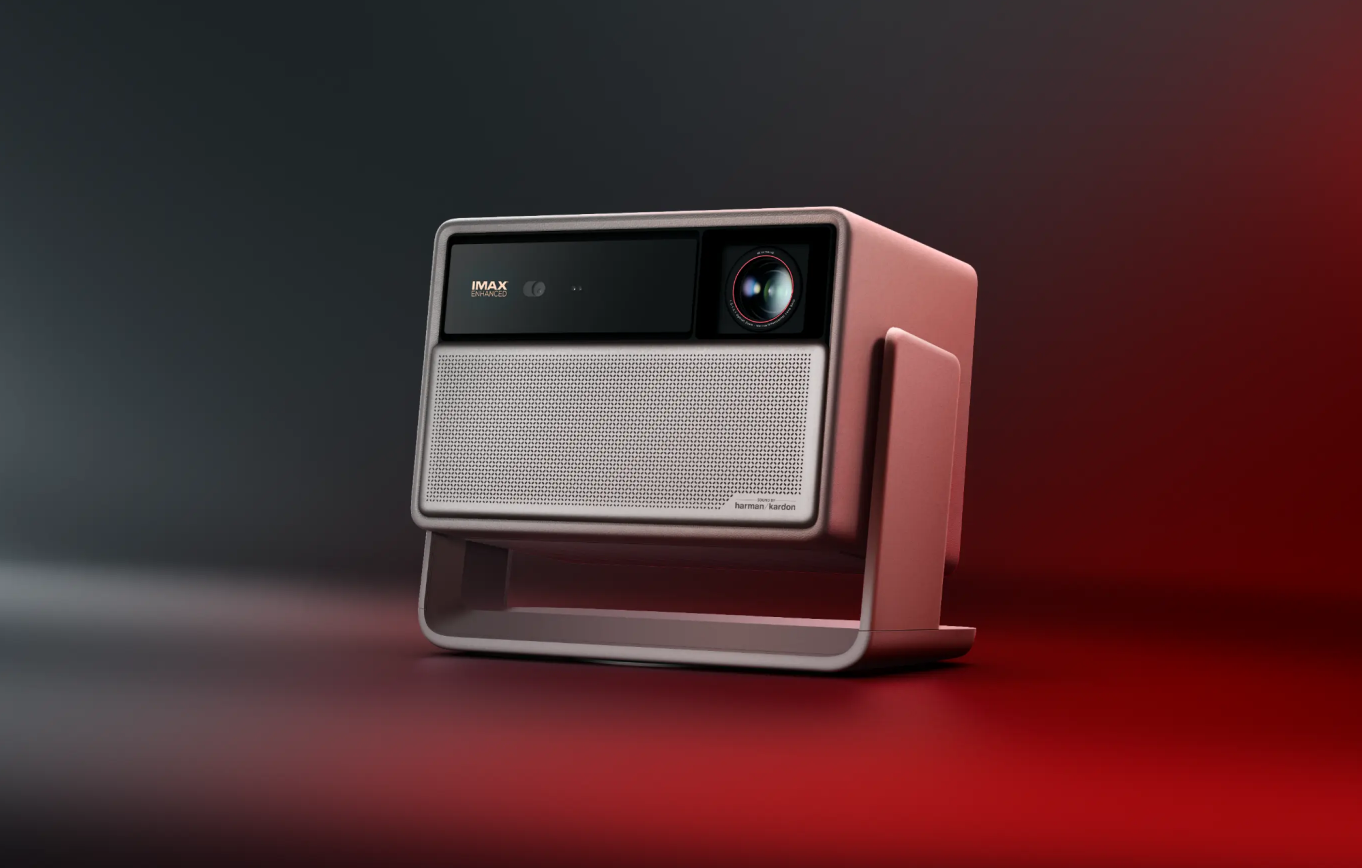
The Xgimi Horizon 20 Max is the most balanced home projector on this list. It combines high brightness, advanced HDR support, strong gaming features, and a compact design. You can place it in a living room without needing a dedicated projection space.
Its RGB triple-laser engine produces 5,700 ISO lumens. That output makes the Horizon 20 Max suitable for daytime sports, casual gaming, and movie nights with some lights on. The projector also supports 110% BT.2020 color coverage, Dolby Vision, HDR10+, IMAX Enhanced, and Filmmaker Mode.
It features Xgimi’s X-Master Red Ring Lens, which uses high-transmission optics and laser-grade glass to maintain image clarity from the center of the screen to the edges. The projector also supports optical zoom and motorized lens shift, with up to 120% vertical and 45% horizontal adjustment.
These features make the Horizon 20 Max easier to install than a typical lifestyle projector. Its 1.2-1.5:1 throw ratio supports screen sizes from 40 to 300 inches. The projector weighs 11.9 pounds, which gives you a middle ground between a portable projector and permanent-installation hardware.
The Horizon 20 Max also includes several gaming features. It supports VRR, ALLM, and 1080p at up to 240Hz. Xgimi rates the projector at 1ms input lag when it runs at 1080p and 240Hz. At 4K resolution, the projector supports a 60Hz refresh rate.
You should not buy this model if 4K at 120Hz is your main priority. It remains a strong choice if you want one projector for streaming, movies, sports, and gaming.
Pricing: The Xgimi Horizon 20 Max costs $2,249, down from $2,999.
4. Soundcore Nebula X1 Pro
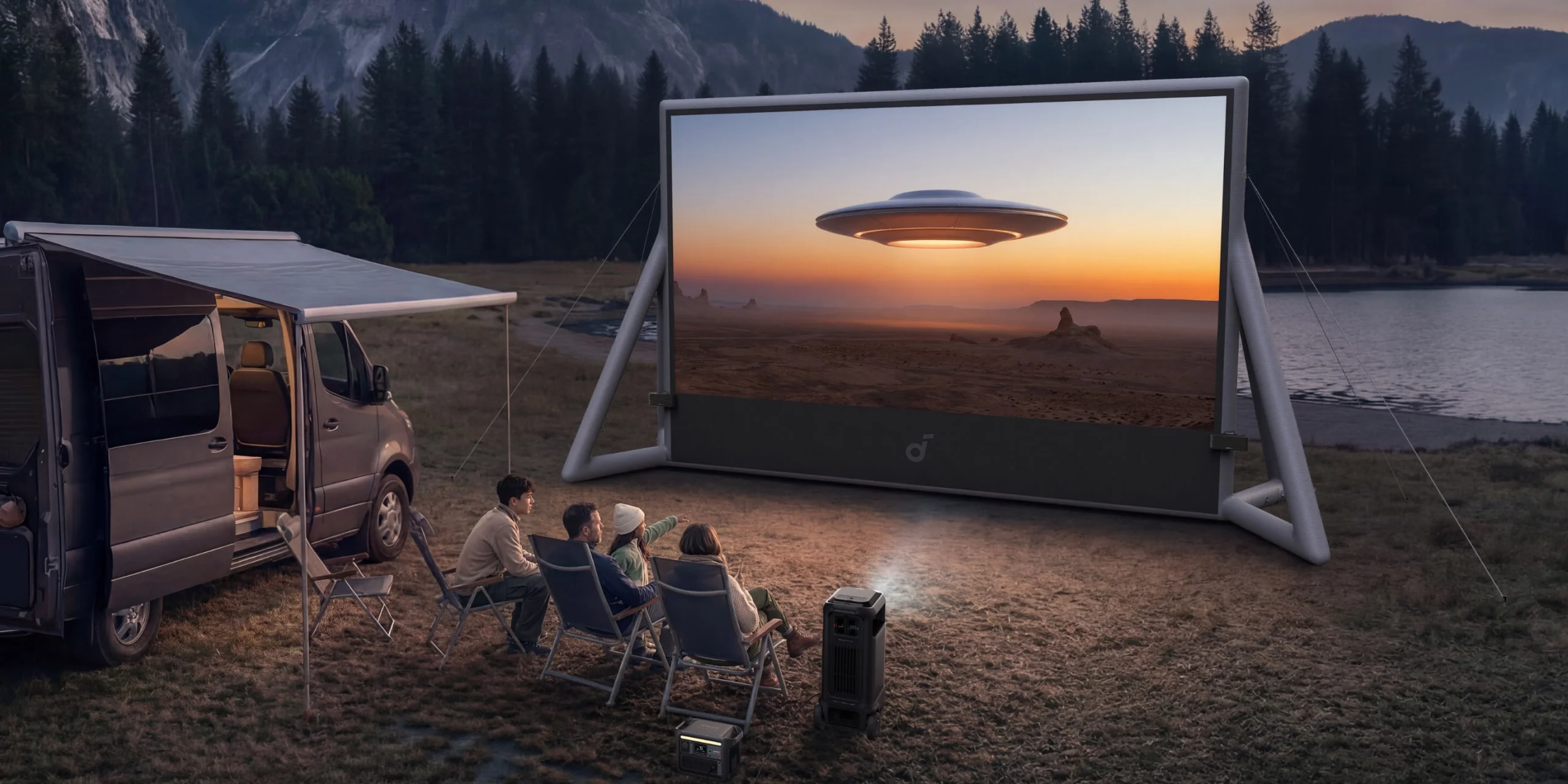
The Nebula X1 Pro solves a problem that most projectors ignore: sound. Projector speakers often feel like an afterthought, and even good projector speakers cannot replace a real surround system. It includes a wireless 7.1.4 Dolby Atmos speaker system with 400W of total power.
The system includes front speakers, rear speakers, height channels, and a subwoofer. This setup makes it especially attractive for backyard movie nights, parties, outdoor events, and rooms where you do not want to run speaker wire. The projector also includes dual wireless microphones, so it can double as a karaoke system.
The projector uses a 4K triple-laser light source rated at 3,500 ANSI lumens. It supports Dolby Vision and 3D, covers 110% of the Rec.2020 color gamut, and delivers up to a 5,000:1 native contrast ratio. Its 14-element all-glass lens and 0.9-1.5:1 optical zoom help maintain image sharpness while providing greater flexibility with projector placement.
The Nebula X1 Pro includes a built-in handle and wheels. That design makes its size more practical than it first appears. You can move the whole system from a living room to a patio without treating it like a full AV installation.
Its setup tools include autofocus, keystone correction, screen fit, obstacle avoidance, wall-color adaptation, and a 25-degree micro gimbal. Those features make the X1 Pro easier to set up quickly, even when the projection surface changes.
Pricing: The Soundcore Nebula X1 Pro costs $4,299, reduced from $4,999.
5. Dangbei MP1 Max
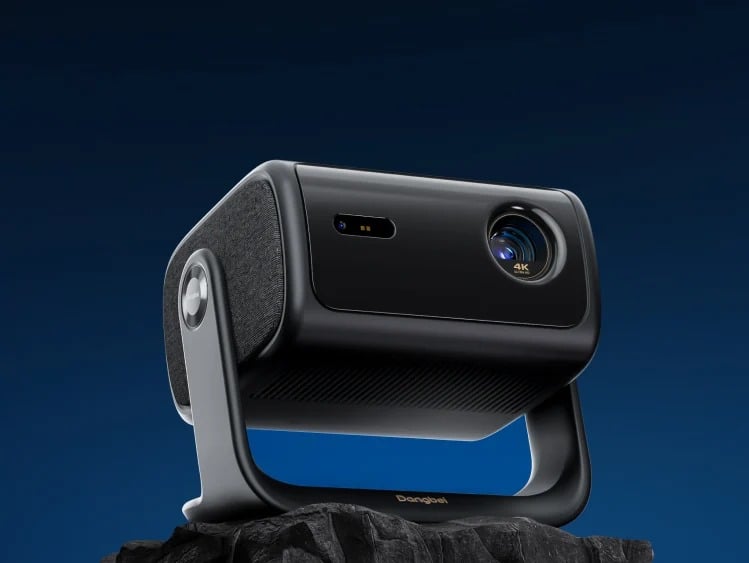
The Dangbei MP1 Max offers many flagship features at a more accessible price. It uses a hybrid Triple Laser + LED light engine that aims to combine laser brightness and wide color with lower speckle and reduced color fringing. That approach makes it an appealing alternative for buyers who want a premium image without stepping into the $3,000-and-up category.
The MP1 Max delivers 4K resolution, 3,100 ISO lumens, 110% BT.2020 color coverage, HDR10+, Google TV, licensed Netflix, and Blu-ray 3D support. It also claims Delta E color accuracy below 1, which means it should provide accurate color out of the box without demanding immediate calibration.
Dangbei also includes a 360-degree rotating and 135-degree tilting stand. The design makes it easy to project onto a wall, screen, or ceiling. The projector uses a fixed 1.2:1 throw ratio, so it does not offer the optical zoom flexibility of the Xgimi and Jmgo models. Still, its integrated stand makes it much easier to position than a conventional projector.
The MP1 Max includes autofocus, real-time keystone correction, screen fit, obstacle avoidance, eye protection, and ambient-light adjustment. Its dual 12W speakers use a 750cc acoustic chamber, which should provide fuller sound than many compact projector systems.
Pricing: The Dangbei MP1 Max costs $1,599, reduced from $1,999.
For more daily updates, please visit our News Section.
Stay ahead in tech! Join our Telegram community and sign up for our daily newsletter of top stories!