Advertisement

Add GIZMOCHINA as Preferred Source on Google

As an Amazon Associate, Gizmochina earns from qualifying purchases. Links on this page may earn us a commission at no extra cost to you.

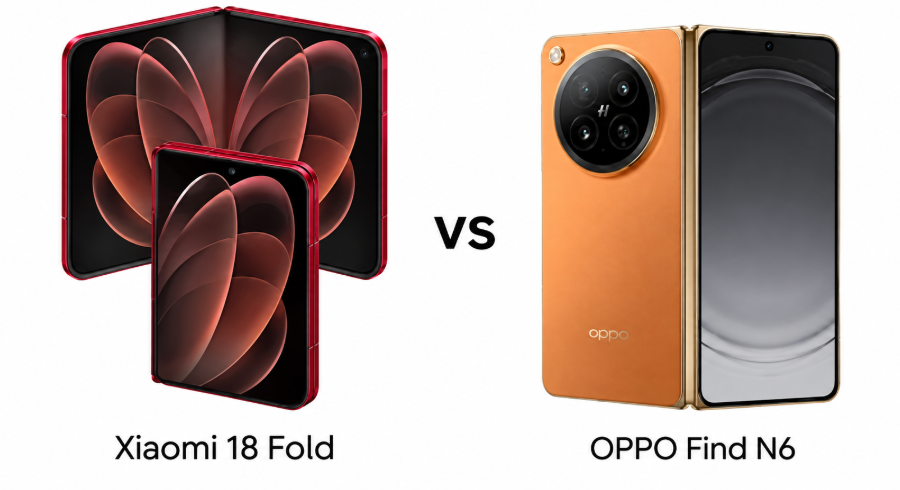
Xiaomi 18 Fold and OPPO Find N6 take different approaches to the premium foldable formula. Xiaomi focuses on a compact, highly protected design, a huge 6,000mAh battery and a Leica-backed 200MP camera system. OPPO counters with a larger foldable display, stylus support, a zero-feel crease and Snapdragon 8 Elite Gen 5 performance. The choice comes down to whether compact usability or a more expansive foldable experience matters more.
Major Features:

CategoryXiaomi 18 FoldOPPO Find N6Winner
Design & BuildDragon Crystal Glass 3, glass back, aluminum frame, IP58/IP59Nanocrystal Glass, titanium alloy hinge, aluminum frame, IP58/IP59OPPO – Titanium hinge and premium construction
Main Display7.58-inch LTPO AMOLED, 120Hz, 4000 nits8.12-inch LTPO OLED, 120Hz, 2500 nitsOPPO – Larger foldable canvas
Cover Display5.38-inch LTPO AMOLED, 120Hz, 4000 nits6.62-inch LTPO OLED, 120Hz, 3600 nitsOPPO – Larger cover screen
ProcessorXRing O3, 3nmSnapdragon 8 Elite Gen 5, 3nmOPPO – Stronger flagship performance platform
RAM & StorageUp to 16GB RAM, 1TB, UFS 4.1Up to 16GB RAM, 1TB, UFS 4.1Tie – Matching maximum memory and storage
Rear Cameras200MP + 50MP 3x telephoto + 50MP ultrawide, Leica200MP + 50MP 3x periscope + 50MP ultrawide, HasselbladOPPO – More versatile periscope setup
Selfie Cameras16MP front and cover cameras20MP front and cover camerasOPPO – Higher-resolution selfie cameras
VideoUp to 8K@24fps, 4K Dolby VisionUp to 4K@120fps, Dolby VisionXiaomi – Higher maximum resolution
Battery6000mAh6000mAhTie – Same battery capacity
Wired Charging67W80WOPPO – Faster wired charging
Wireless Charging50W50WTie – Same wireless charging speed
Unique FeaturesLeica optics, 4000-nit displays, UWB, IR blasterStylus support, zero-feel crease, titanium hinge, satellite connectivity on 1TBOPPO – More productivity-focused features
PricePriced around $1,600 / ₹155,000Priced around $1,800 / ₹170,000Xiaomi – Lower price and stronger value
OverallStrong displays, Leica cameras, large battery and lower priceLarger displays, stronger chipset, stylus support and faster chargingOPPO – More complete premium foldable package
Disclaimer: Specs are based on available data. Actual performance may vary. Verify details from official sources before buying.

1. Design and Display

Build and Feel

Xiaomi 18 Fold combines Dragon Crystal Glass 3, a glass rear panel and an aluminum frame, with IP58/IP59 protection. Its foldable construction is notably compact, while the side-mounted fingerprint sensor keeps unlocking practical. OPPO Find N6 adds Nanocrystal Glass, a titanium alloy hinge and aircraft-grade aluminum, giving it a more premium hardware package.

Display Quality

OPPO takes the lead in screen size with an 8.12-inch internal LTPO OLED supporting 120Hz, Dolby Vision, HDR10+ and stylus input. Its cover display reaches 3600 nits. Xiaomi counters with a 7.58-inch 120Hz LTPO AMOLED reaching 4000 nits, plus Dolby Vision and HDR Vivid. Xiaomi feels better suited to bright outdoor viewing, while OPPO offers more workspace.

Verdict

OPPO wins for its larger canvas, stylus support and zero-feel crease. Xiaomi remains highly compelling for users prioritizing compact foldable usability, strong durability and higher peak display brightness.

2. Specifications Including Battery

Performance

Xiaomi 18 Fold uses the 3nm XRing O3 with a 10-core CPU and Arm G2-Ultra NX MC16 GPU, paired with up to 16GB RAM and UFS 4.1 storage. OPPO uses Snapdragon 8 Elite Gen 5, with up to 16GB RAM and UFS 4.1. OPPO’s newer flagship Snapdragon platform gives it a stronger performance proposition for demanding workloads and gaming.

Battery and Charging

Both foldables pack a substantial 6,000mAh silicon-carbon battery. Xiaomi supports 67W wired and 50W wireless charging, while OPPO increases wired charging to 80W and retains 50W wireless charging. OPPO also adds reverse wireless charging. Xiaomi’s battery setup is already strong, but OPPO offers the more versatile charging package.

Verdict

OPPO gets the performance edge through Snapdragon 8 Elite Gen 5 and faster wired charging. Xiaomi remains competitive with the same battery capacity and efficient silicon-carbon technology.

3. Camera

Main and Secondary Lenses

Both phones feature a 200MP main camera with OIS, but their supporting cameras differ. Xiaomi adds a 50MP telephoto with 3x-class optical zoom and a 50MP ultrawide, alongside Leica lenses and a color spectrum sensor. OPPO uses a 50MP 3x periscope telephoto and 50MP ultrawide with autofocus, supported by Hasselblad color calibration. OPPO’s periscope implementation looks particularly versatile for zoom photography.

Selfie Camera

Xiaomi uses 16MP selfie cameras on both the inner and cover screens, with 1080p video recording. OPPO upgrades both cameras to 20MP sensors and supports 4K video on the selfie camera. That gives OPPO a clear advantage for creators, video calls and front-facing recording. Xiaomi still offers consistent camera hardware across both screens.

Verdict

OPPO takes the camera advantage with 20MP selfie cameras, 4K front-camera video and a periscope telephoto. Xiaomi remains attractive for Leica-assisted photography and 8K rear-camera recording.

4. Pricing

The Xiaomi 18 Fold is priced around $1,600 or ₹155,000, while the OPPO Find N6 is priced around $1,800 or ₹170,000. That creates a meaningful premium for OPPO, despite both offering 6,000mAh batteries, 200MP main cameras, 16GB RAM options and premium foldable construction.

Is the price justified? 

OPPO’s higher price is supported by its larger internal display, Snapdragon 8 Elite Gen 5 processor, stylus support, titanium hinge, 20MP selfie cameras and faster 80W charging. Xiaomi offers stronger value for buyers who want flagship foldable hardware without moving as high up the price ladder. Its 4000-nit displays and Leica camera system strengthen that proposition.

Verdict

Xiaomi offers better value at its lower price, especially for buyers prioritizing battery life, display brightness and flagship cameras. OPPO justifies its premium through performance, productivity and display advantages.

Disclaimer:
Prices are approximate and may vary based on country, region, launch timing, and applicable taxes. Always check whether the listed price is for a China unit or a global/international variant when purchasing.

5. Conclusion

Xiaomi 18 Fold stands out with Leica optics, 4000-nit displays, IP58/IP59 protection, a 6,000mAh battery and its XRing O3 platform. OPPO Find N6 counters with an 8.12-inch foldable display, zero-feel crease, stylus support on both screens, a titanium alloy hinge and Snapdragon 8 Elite Gen 5. Both bring unusually strong hardware to the foldable category.

Verdict

OPPO Find N6 is the overall winner for its larger display, stronger flagship processor, stylus support, more capable selfie cameras and faster charging. Xiaomi 18 Fold remains the better-value alternative with excellent displays, battery capacity and Leica camera hardware.


FAQs

1. Which phone has the better camera system?
OPPO Find N6 offers more versatile zoom and stronger selfie-video capabilities, while Xiaomi benefits from Leica-tuned photography and 8K recording.

2. Which phone is better for gaming?
OPPO Find N6 is better suited to demanding gaming thanks to its Snapdragon 8 Elite Gen 5 chipset.

3. Which foldable has better battery life?
Both feature 6,000mAh batteries, so battery endurance should be broadly competitive between the two.

4. Is Xiaomi 18 Fold cheaper than OPPO Find N6?
Yes. Xiaomi 18 Fold costs less, making it the more affordable entry into this premium foldable category.

5. Which foldable offers more productivity features?
OPPO Find N6 offers greater productivity flexibility with stylus support on both its internal and cover displays.

Disclaimer: Prices, specifications, and availability may vary by region and retailer. Recommendations in this article are based on editorial opinion, feature-based value, and market positioning at the time of writing. Readers are advised to do their own research before making a purchase.

Read More:

Comments