Advertisement

Honor X8d debuts as the first device running Qualcomm’s new Snapdragon 6s 4G Gen 2

If you’ve noticed a pattern with Honor’s budget lineup lately, you’re not wrong. The company has been rolling out both its X7 and X8 series phones with simple alphabetical suffixes. 

Today, we’re looking at the Honor X8 line, which began with the original model back in 2022 and has since continued with predictable additions: the X8a, X8b, and X8c.

The latest entry in that sequence is the Honor X8d, which has quietly surfaced on a retailer’s website in Kyrgyzstan. Even with a low-key debut, it’s enough to give us a good look at what the phone brings.

Honor X8d Specifications

The Honor X8d features a 6.77-inch AMOLED display with a resolution of 1080 × 2392. It’s powered by the Snapdragon 6s 4G Gen 2 chipset, which is making its debut next week. And yes, that’s the real name of the silicon. 

Memory option includes 8GB of RAM and 128GB of internal storage. The listing shows no higher-capacity variant, so storage expansion or additional models remain unknown.

Honor has included a 7,000 mAh battery, which is larger than what’s typical in this segment. The phone supports 45W wired charging. The X8d also carries an IP65 rating, offering basic dust and splash resistance.

On the back, the phone includes a 108MP main camera along with a secondary 5MP sensor. On the front, there’s a 16MP selfie camera. The device weighs 188 grams and measures 162.9 × 76.3 × 7.5 mm.

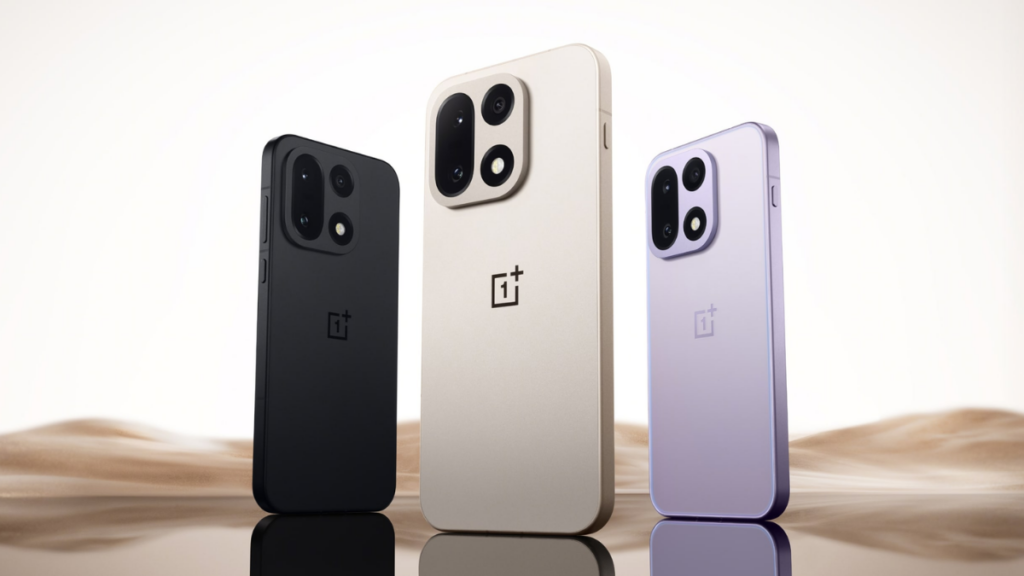
As for software, the phone is likely based on Android 16 with MagicOS 10 on top. The device comes in Black, Blue, and Silver shades.

The X8d hasn’t been formally announced yet, so there’s no pricing or availability information at the moment. However, the quiet listing suggests a launch may not be far off.

Don’t miss a thing! Join our Telegram community for instant updates and grab our free daily newsletter for the best tech stories!

For more daily updates, please visit our News Section.

(Via | Source)

Realme Narzo 90, Narzo 90x major leak reveals specs, renders, price before launch

Realme is all set to unveil the Realme Narzo 90 and Narzo 90x on Dec. 16 in India. Like previous Narzo models, the 90 series will be available through Amazon in India. With only a few days left for the event, a new leak by tipster Paras Guglani has outlined the design, colour variants, hardware and tentative pricing of both phones, giving a clear idea of what to expect from the upcoming lineup.

Realme Narzo 90, Narzo 90x specifications (rumored)

According to the leak, the Realme Narzo 90 would feature a 6.8-inch AMOLED display with a 120Hz refresh rate and 1400 nits HBM. It is tipped to run on the Dimensity 6400 Max chipset and offer the same RAM and storage options as the 90x.

The rear camera setup reportedly includes a 50-megapixel main sensor paired with a 2-megapixel secondary lens, while the front camera is expected to be 50-megapixel. It may also offer a 7000mAh battery with 60W charging, UFS 2.2 storage and Realme UI 6.0.

The leak states that the Realme Narzo 90x may arrive as the more affordable option, featuring a 6.8-inch HD+ display with a 144Hz refresh rate and 1200nits high brightness mode. The device is said to run the Dimensity 6300 chipset and ship with 6GB or 8GB of RAM paired with 128GB of storage.

The Narzo 90x could include a 50-megapixel + 2-megapixel rear setup and an 8-megapixel selfie camera. A 7000mAh battery with 60W charging support and Realme UI 6.0 is also expected.

Realme Narzo 90, Narzo 90x price (rumored)

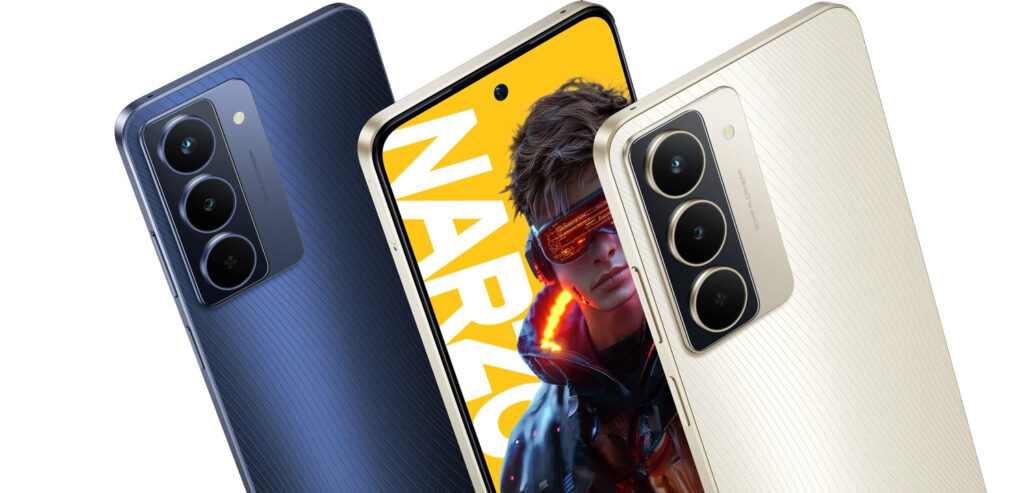
The leak further reveals that the Realme Narzo 90x may launch in Flash Blue and Nitro Blue, with pricing likely starting at Rs 14,999 including offers.

The Narzo 90 is said to arrive in Victory Gold and Carbon Black, with a starting price of around Rs 17,999 including offers.

For more daily updates, please visit our News Section.

Stay ahead in tech! Join our Telegram community and sign up for our daily newsletter of top stories.

(source 1, 2)

Top 5 Chinese EV brands you should definitely know about

EVs are driving the next generation of mobility globally, and the momentum behind electric vehicles has never been stronger. According to the IEA, EVs reduced oil demand by more than 1.3 million barrels per day in 2024, with that displacement increasing by ~30% year-on-year. And no group has contributed more to that surge than Chinese EV makers.

In just a few years, several Chinese brands have leapfrogged long-established Western automakers due to their aggressive innovation cycles and affordability. Take BYD, for example. It has surpassed Tesla in global pure electric vehicle (BEV) sales for much of 2025.

BYD

But it’s not just BYD. China has more than a dozen prominent EV brands that are competing fiercely in the global EV market. So if you’re trying to get a sense of which Chinese EV brands actually matter right now, here are the top five you should know.

1. BYD

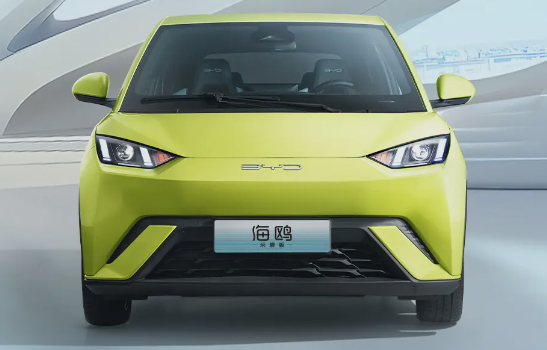
BYD Seagull
BYD Seagull

Let’s start with BYD, because there’s really no way around it. The company started its business in 1995 as a manufacturer of rechargeable batteries, but is now among the world’s top EV makers that rivals Tesla in sheer volume.

But what makes BYD interesting isn’t the sales figures. Plenty of companies can chase that number. It’s how BYD got to the point where it is now. 

The company builds almost everything in-house, from its now-famous Blade Battery to its own chips and even large parts of its software stack. It’s one of the few automakers that can legitimately claim control over most of its supply chain.

That level of vertical integration allows BYD to produce EVs at prices that often feel almost impossible by Western standards, while still maintaining healthy margins.

Its lineup is also massive, spanning tiny city cars, sleek electric sedans, and premium SUVs. Apart from China, the company is rapidly expanding across Europe, Asia, South America, and even Australia.

2. Geely

Geely EX5

Geely is another Chinese brand that’s making rounds in the EV space. And unlike BYD, it uses a more segmented strategy to sell its cars.

Geely manufactures and sells its vehicles under different sub-brands: Zeekr for premium and tech-focused buyers, Geometry for affordable EVs, and several others that sit in between. This approach lets Geely target almost every pricing tier without confusing buyers about what each badge stands for.

And because Geely owns stakes in Volvo, Polestar, and even parts of Mercedes-Benz’s parent company, it benefits from deep experience in global markets. 

In 2024, Geely achieved a 2.7% market share in the global market, ranking 6th overall, ahead of Volkswagen.

3. NIO

Nio

NIO is one of the more interesting car manufacturers to come from China. It technically sells electric SUVs and sedans, but for NIO, the real selling point is the experience it offers.

For instance,  all NIO cars are designed with battery swapping (Power Swap) technology as a core feature. And if you guessed it, yes, a driver can simply exchange a depleted battery for a fully charged one in minutes. 

As of late 2025, NIO’s battery swap infrastructure boasts over 3,400 stations in China, 59 stations in Europe, and 1 in the UAE. 

NIO cars also come with NOMI, the world’s first in-vehicle AI assistant. NOMI can learn driver habits, engage in natural conversation, and execute multiple commands simultaneously.

And it’s not just EVs; NIO creates “lock-in” through services that go well beyond transportation. It operates NIO Houses, which are essentially luxurious clubhouses for owners, featuring cafés, libraries, meeting rooms, and children’s play areas.

Likewise, NIO Life is a lifestyle brand offering over 1,000 products, from sustainable fashion to home goods, used by over 50% of its customer base. Not to forget, NIO also has a smartphone line with its second model (NIO Phone 2) launched in 2024.

NIO crossed over 30,000 deliveries in a single month for the first time in late 2024. In 2025, it expanded its EV offerings with sub-brands like ONVO (family-friendly SUVs) and Firefly (small city EVs).

4. XPeng

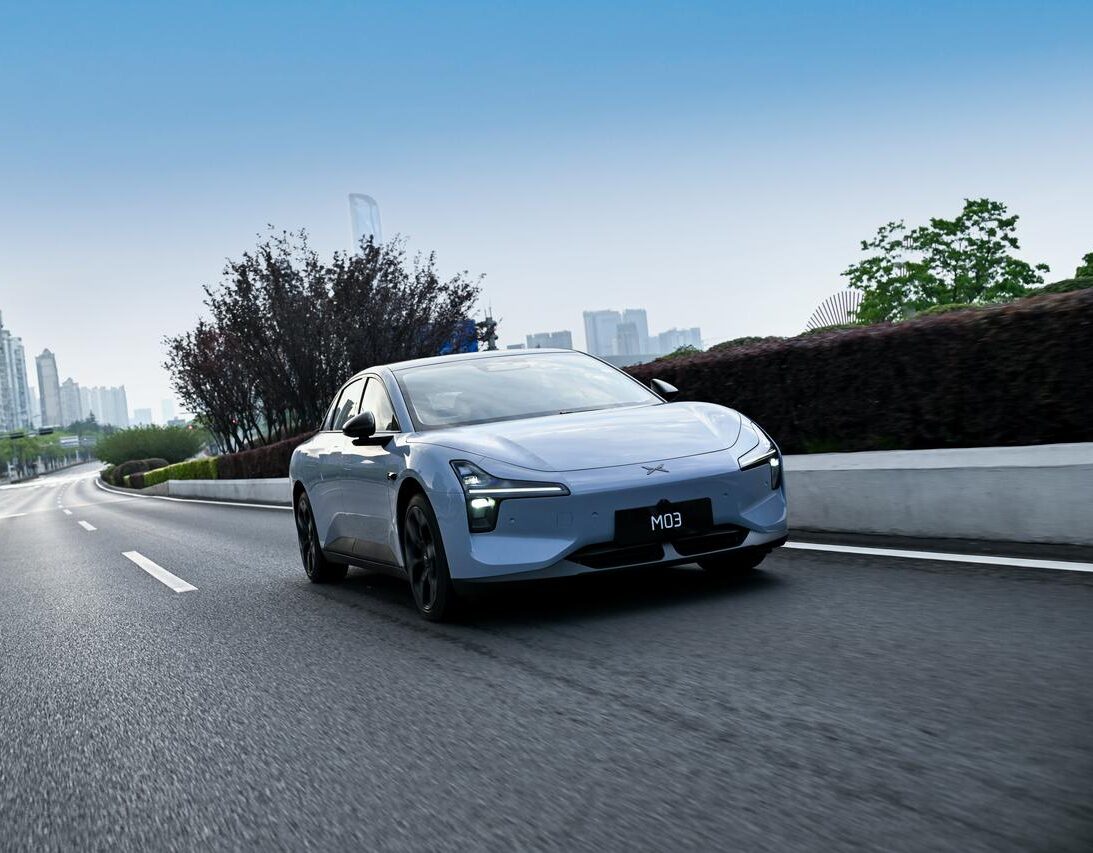
XPENG MONA M03 Max

Like NIO, XPeng is one of the newer players in China’s EV scene, doing business since 2014. Its first product was the G3 SUV in 2018, which was soon followed by the P7 electric sedan in 2019. 

What sets XPeng apart is the company’s fixation on pushing AI deeper into mobility. Alongside its growing lineup of cars, XPeng has been building out an entire tech ecosystem, including what it calls the first AI-integrated operating system for vehicles, the AI Tianji System (XOS 5.1.0).

The company has also rolled out a full suite of AI-driven intelligent driving models — XNet, XPlanner, and XBrain — plus the world’s first 40-core chip designed for AI-defined cars, robots, and even flying vehicles, known as XPeng Turing.

One of XPeng’s recent breakout hits is the Mona M03, an electric sedan packed with smart-driving tech that starts at just $17,000 in China. 

5. Li Auto 

Li Auto China

Li Auto is a bit of an odd one on this list, but in a good way. While most of the others here lean heavily into pure battery EVs, Li Auto is better known for its range-extender EVs. These are essentially electric cars with a small gasoline engine that charges the battery when needed.

Purists might roll their eyes, but buyers love them, especially in areas where charging infrastructure still isn’t great. And the sales numbers speak for themselves.

Li Auto delivered over 500,000 vehicles in 2024, a jump from 376,030 in 2023. But the growth is more significant this year as its cumulative deliveries reached 1.4 million units by September 2025. 

Not everyone is ready to jump fully into EV life, and plenty of places still don’t have the charging infrastructure to make it practical. And Li Auto is targeting that demographic. 

Instead of pushing buyers into something that doesn’t suit their daily needs, it offers a middle ground. Once charging becomes as easy as filling a tank, Li Auto will likely pivot harder into pure EVs, but for now, it’s playing a smart, practical game.

Don’t miss a thing! Join our Telegram community for instant updates and grab our free daily newsletter for the best tech stories!

For more daily updates, please visit our News Section.

ChatGPT Integrates Adobe Photoshop, Acrobat, and Express

OpenAI is taking a big swing at creative workflows. ChatGPT can now hook directly into Adobe Photoshop, Acrobat, and Adobe Express — letting you edit photos, tweak PDFs, or build quick graphics without ever leaving the chat window.

The feature is already live. Anyone with an Adobe account can log in through the OpenAI website and start using the tools right away. Once connected, these tools stay available in your chats. You can use the tools just by naming them in your prompts or by picking them from the plus menu.

The most surprising addition is Photoshop’s on-the-fly interface generation. Ask ChatGPT to brighten an image and it’ll pop up sliders for exposure, shadows, and highlights. Ask it for a stylized look and you might get options for grain, tone, or dithering. These aren’t mockups — ChatGPT is actually calling real Photoshop operations through Adobe’s MCP backend.

Adobe’s VP of Developer Platform, Aubrey Cattell, explained it with a nice metaphor: Adobe supplies the LEGO bricks and instructions through MCP, and ChatGPT figures out which pieces to snap together based on whatever you ask it to do. Because large language models can sometimes misinterpret intent, Adobe says it’s still fine-tuning how these UI elements get generated so that the controls feel intuitive.

If you need advanced tools, precise brushwork, or complex layouts, you can still jump into the full web versions of Photoshop, Acrobat, or Express. But for quick edits, fixes, or lightweight creative tasks, having these capabilities directly inside ChatGPT feels like a major convenience upgrade.

However, it’s worth noting that the feature is still in beta and may be a bit rough around the edges. In my own testing, Photoshop actions did trigger inside ChatGPT (using the prompt “Adobe Photoshop, help me blur the background of this image”), but the edited images never actually appeared.

Once these issues get ironed out, ChatGPT won’t just answer questions or generate images anymore — it will edge into the territory of real, professional creative software for the masses.

Don’t miss a thing! Join our Telegram community for instant updates and grab our free daily newsletter for the best tech stories!

For more daily updates, please visit our News Section.

(Via)

iQOO 15 review: A performance powerhouse that finally delivers on cameras too

I spent three to four weeks with the iQOO 15, using it as my main phone for daily communication, gaming, media and photography. The iQOO 15 arrives with an aggressive spec sheet, pairing the Snapdragon 8 Elite Gen 5 with iQOO’s self-developed Q3 e-sports chip, a 7,000mAh Blue Ocean battery, and a new 2K 144Hz Samsung LEAD OLED panel. But on top of the hardware, iQOO is clearly positioning this device as a performance flagship that also aims for a well-rounded everyday experience. After extended use, here is how it held up.

6Verdict

iQOO 15
iQOO 15 in Legend and Alpha shades

After three to four weeks with the iQOO 15, it is clear that iQOO has moved beyond building only performance-focused phones. The iQOO 15 is a performance flagship that also delivers in display quality, battery life, charging speed, camera consistency, and overall day-to-day usability.

Yes, it warms up under long gaming loads. Yes, the Halo Light is not as visible as on the iQOO 13, particularly with a case. But these drawbacks pale in comparison to what you gain.

Please Note: When you buy something using the links in our articles, we may earn a small commission at no cost to you.

If you want a phone that excels in gaming but still behaves like a complete flagship with no glaring weaknesses, the iQOO 15 stands out as one of the most balanced and powerful choices available today in India. It is not merely a gaming beast; it is a polished, all-round flagship that handles everything with confidence.

Next

NVIDIA celebrates Cyberpunk 2077’s fifth anniversary with an ultra-rare giveaway

Cyberpunk 2077 just hit its five-year anniversary — hard to believe, considering how rocky its launch was and how far it’s come since. Despite everything, it’s still one of the most visually striking games on PC, thanks in no small part to NVIDIA’s early push for ray tracing. To mark the milestone, NVIDIA is dusting off something fans probably thought would never see daylight again: an original GeForce RTX 2080 Ti Cyberpunk 2077 Edition, and yes, it’s signed by Jensen Huang himself.

These cards were already rare when they were new. NVIDIA only made 200 of them back in 2020, and none ever hit retail shelves. Seventy-seven were given away during the original Cyberpunk promotion, and the rest essentially vanished into storage. Now, NVIDIA is offering up two more units — and at least one reportedly carries Jensen’s signature, which pretty much turns it into a collector’s grail piece rather than a GPU anyone would actually install.

The card itself is impossible to mistake: a custom AL5052 aluminum shroud in that unmistakable yellow-and-black Cyberpunk scheme, turquoise accents, and a matching backplate. Under all that flair, though, it’s still a standard RTX 2080 Ti Founders Edition. It launched with support for the game’s original ray-traced effects and DLSS 2.0, but modern features like RT Overdrive, DLSS 3.5 Ray Reconstruction, and DLSS 4 are out of reach for Turing. Not that it matters — whoever wins one of these isn’t going to be gaming on it. This is the kind of hardware you put behind glass.

If you don’t win but really want the look, there are third-party reproduction shroud kits floating around on eBay for people who happen to own a regular RTX 2080 Ti FE PCB. It’s not quite the same, but it’s a way to get close.

As for entering the giveaway, it’s straightforward: just head to NVIDIA’s X post embedded above and comment “GeForce Season.”

That’s it. Two winners will be picked, and they’ll walk away with one of the rarest pieces of GeForce history ever made — a signed relic from the Turing era and a neat little slice of Cyberpunk memorabilia.

Don’t miss a thing! Join our Telegram community for instant updates and grab our free daily newsletter for the best tech stories!

For more daily updates, please visit our News Section.

(Source)

World’s first fully AI-created game hits Steam with a free demo

Most studios either quietly use generative AI or avoid the topic altogether, but one small team has decided to do the exact opposite. The developers behind Codex Mortis say their new bullet hell game was built entirely with AI — no human-drawn art, no hand-written code, no traditional music production. And now there’s a free Steam demo so anyone can check it out.

According to the Steam listing, “all code is AI vibe codes, also arts, sounds, music, texts.” It’s a rare case where a developer is not only open about using AI but is essentially making it the whole pitch. Even the character faces shown in the trailer appear to be AI-modified selfies of the team members, dropped onto undead wizard bodies.

The gameplay is pretty familiar, but with necromancy. The full game is supposed to support solo and co-op play. The early impressions are mixed but curious. The graphics in the actual build look a bit rough compared to the slicker YouTube trailer, and some players say the UI feels clumsy on a controller. But the basic loop — combining spells, surviving the onslaught, raising minions — works well enough to show that a fully machine-generated game can at least run and be played.

Whether it’s fun is another matter entirely. The studio seems to know this and is leaning harder into the 100% AI-made angle than anything else, hoping the transparency will draw interest instead of backlash. Some players are treating it like an experimental art project; others see it as another example of AI creeping into game development in ways that replace human artists.

Codex Mortis isn’t shying away from the debate. With a planned low price for the final release, the team is banking on curiosity and affordability winning people over.

If nothing else, the free demo gives everyone a chance to decide for themselves whether a game built wholly from AI tools can still have personality — or if it ends up feeling exactly like you’d expect from something made entirely by algorithms.

Don’t miss a thing! Join our Telegram community for instant updates and grab our free daily newsletter for the best tech stories!

For more daily updates, please visit our News Section.

(Source)

Anker’s new Prime Charging Base (150W) is now on sale in the US

Anker has launched its new Prime Charging Base in the US, giving users of the company’s latest high-capacity power banks a much faster way to top them up. The accessory has been available in the UK for a while, but this is the first time it’s officially showing up stateside.

The base is mainly meant for Anker’s newer Prime power banks — the 26K 300W and the 20K 220W models — which sit on top of the dock using pogo pins. When connected, the base can push up to 150W thanks to Anker’s own fast-charging protocol, letting you refill the big 26K model in under an hour. It’s basically a drop-and-charge setup aimed at people who are tired of juggling cables.

You also get three regular ports on the back: two USB-C (140W and 100W) and one USB-A (22.5W). The whole thing tops out at 150W combined, and Anker says it automatically divides power depending on what you plug in. If you pair it with the Anker app over Bluetooth, you can check charging stats, tweak settings, and get OTA firmware updates — a bit overkill for a charger, but helpful if you’re deep into the ecosystem.

The base itself is fairly compact at 4.1 × 4.1 × 0.9 inches and weighs around 350 grams, so it’s small enough to live on a desk without getting in the way. Like most of Anker’s recent gear, it also includes its ActiveShield 4.0 temperature monitoring, which constantly checks for overheating.

Pricing:

Anker is selling the Prime Charging Base in the US for $99.99 through its website and Amazon.

Don’t miss a thing! Join our Telegram community for instant updates and grab our free daily newsletter for the best tech stories!

For more daily updates, please visit our News Section.
(Source)

Huawei’s Gorgeous New Router with a Snowcapped Mountain Hits the Global Market

Back in October, Huawei released a new router that appeared more like a home decor than a piece of tech. The company managed to build a WiFi mesh router with a unique design that caught attention and seamlessly blended into your household. Now, the Huawei WiFi Mesh Router X3 Pro is getting a global release. So here’s what you need to know.

Huawei Router X3 Pro: What makes it special?

When thinking about a router, one would immediately assume a boring, uninspiring rectangular box that is designed for function over form. Save a few routers, most of them are quite generic and bland. But the Chinese tech giant managed to perfect a design that makes sense in your living room. Despite having WiFi 7 standards, supporting gigabit+ fiber networks, and offering up to 3.6Gbps speeds, the mesh router doubled as a gorgeous lamp.

Huawei Router X3 Pro

It has a cylindrical body with a transparent upper section that houses a structure that is built to resemble a mountain. This features a subtle glow effect that gives the illusion of a the sunlight hitting a snowcapped mountain. So it looks and feels like a modern piece of decor rather than a router at home.

Huawei built this unique gadget with AI functions to boost performance and offer a reliable connection. You even get a range extender with the WiFi Mesh Router X3 Pro, which helps improve the connectivity overall. This range extender works wirelessly and doesn’t need a dedicated cable either. Users can configure this router via the Huawei AI Life app. It is releasing globally today and will be available in regions like Latin America, Europe, the Middle East, Asia-Pacific, and Africa for 169 Euros. Meanwhile, the range extender is sold separately for 99 Euros.

For more daily updates, please visit our News Section.

Tech enthusiast? Get the latest news first! Follow our Telegram channel and subscribe to our free newsletter for your daily tech fix! ⚡

New Vivo Pad 5 Pro Soft Light Edition To Debut Alongside Vivo S50 Series

Vivo is gearing up to release the Vivo S50 series in China soon. But ahead of the official launch event, the company has confirmed that a new special variant of its existing premium tablet will also be launched with these new devices. This model is dubbed the Vivo Pad 5 Pro Soft Light Edition, so here’s what we know.

Vivo Pad 5 Pro Relaunching with a Better Display

Based on the official teaser posters, the Chinese tech giant will unveil the Vivo Pad 5 Pro Soft Light Edition in its home market on 15th December 2025. The key difference of this new version is in its display. As the name suggests, the tablet brings an ultra clear display with a new eye protecting “soft light”. But the rest of the display specs appear to be identical to the original Vivo Pad 5 Pro.

Vivo Pad 5 Pro Soft Light Edition
Vivo Pad 5 Soft Light Edition

So we still get a tall 13-inch 3.1K display with HDR10 support, a 144Hz refresh rate, and 1200 nits of peak brightness. Vivo has also confirmed that the new tablet will be equipped with the MediaTek Dimensity 9400, similar to the regular variant. Another aspect of the teaser confirms that the Vivo Pad 5 Pro Soft Light Edition brings PC-level WPS for improved productivity.

Meanwhile, the upgraded display offers a more comfortable experience when working or studying on this tablet. In another set of teasers, Vivo confirmed a new Vivo S50 x Top Toy Limited Edition Nommi IP Gift Box as well. This basically brings a plush toy, a phone case, and other goodies. The news arrives shortly after the Vivo S50 series Tian Xiwei Limited Edition gift box was confirmed.

For more daily updates, please visit our News Section.

Don’t miss a thing! Join our Telegram community for instant updates and grab our free daily newsletter for the best tech stories!

HONOR Magic 8 Pro Launches in UAE with 200MP Telephoto Camera and 7100mAh Battery

HONOR has launched the Magic 8 Pro in the GCC market after its global debut in October. The announcement took place at an event in Dubai, where the company highlighted the phone’s focus on AI imaging, battery life, performance and next-generation connectivity.

Hardware and Performance

The Magic 8 Pro is the first smartphone in the UAE to run on the Snapdragon 8 Elite Gen 5 Mobile Platform. HONOR said the chipset brings better processing efficiency and better thermal control compared to earlier models.

HONOR-Magic8-Pro

The device runs on a 7,100mAh silicon carbon battery. It supports 100W wired SuperCharge and 80W wireless charging. HONOR confirmed that the Magic8 Pro is the first 5.5G ready smartphone in the UAE. It is supported through partnerships with telecom operators such as Etisalat by e and others. Connectivity also includes Wi-Fi 7, Bluetooth 6.0, NFC, USB Type C USB 3.2 GEN1 and dual SIM support. Navigation standards include eidou, GPS dual band, GLONASS, Galileo triple band, QZSS dual band, NavIC dual band and A GNSS.

The phone includes AI tools such as an AI Button, AI Search and AI Documents to improve daily productivity.

Camera System

The Magic 8 Pro features a 200MP AI Ultra Night Telephoto camera that is designed to improve clarity for long distance and low light shots. The rear camera setup includes a 50MP wide camera with an f/1.6 aperture, a 50MP ultra wide camera with a 122 degree field of view and 2.5 cm macro support, and a 200MP telephoto camera with a 1/1.49 inch sensor, an f/2.6 aperture, 3.7x optical zoom, 100x digital zoom and OIS. The rear cameras support 4K video recording at 60fps and use a single LED flash.

HONOR Magic 8 Pro

The phone features upgraded AI Ultra Night Portrait algorithms that manage exposure and color accuracy. AI Magic Color and the new AI Editor allow users to enhance colors and edit images directly on the device.

Photographer Riadh Maghni demonstrated the camera’s low light performance during the event. The front camera uses a 50MP sensor with an f/2.0 aperture, a 3D depth camera and supports 4K 60fps video.

Display and Build

The Magic 8 Pro has a 6.71 inch quad curved OLED screen with a 1.5K resolution of 1256 x 2808 pixels. The display supports a 1 to 120Hz LTPO refresh rate, HDR10 plus, up to 1800 nits global peak brightness, up to 6000 nits HDR peak brightness and 4320Hz high frequency PWM dimming. It is protected by Rhino Glass.

The phone has an ultrasonic fingerprint sensor, an infrared sensor, dual stereo speakers with DTS:X Ultra, and IP68, IP69 and IP69K ratings for dust and water resistance. The device measures 161.15 x 75 x 8.32 mm and weighs 219 grams.

Pricing and Availability

Pre orders for the Magic 8 Pro in the UAE start on 11 December 2025. Color options include Sunrise Gold, Sky Cyan and Black.

The pricing is as follows:

  • 12GB RAM and 512GB storage for AED 3,999 ($1,089).
  • 16GB RAM and 1TB storage for AED 4,699 ($1,279).

Pre order customers receive a package worth AED 2,299. It includes the HONOR Watch5 Ultra, HONOR VIP Care Plus with 12 month damage protection and a three month Google AI Pro trial.

Don’t miss a thing! Join our Telegram community for instant updates and grab our free daily newsletter for the best tech stories!

For more daily updates, please visit our News Section.

OnePlus 15 Receives December 2025 OxygenOS Update with Neon Camera Filter and System Fixes

OnePlus has started rolling out the OxygenOS 16.0.2.401 update for the OnePlus 15 in India and Europe. The update is being released in batches, with wider availability expected in the next few days. The build numbers are CPH2745_16.0.2.401(EX01) for India and CPH2747_16.0.2.401(EX01) for Europe.

OnePlus 15

The update brings improvements across AI features, the camera, system performance, and charging. The AI summary and subtitle feature now ends automatically when there is no sound input for a certain period. This aims to make speech-related tools more accurate and easier to use.

The update also adds more control over app icons. After resizing an app icon and adding commonly used shortcut icons, users can now drag and drop these shortcut icons to rearrange them. App clone icons can also be dragged to resize and customized with shortcuts.

In the Camera app, a new Neon filter is now available. It is designed to recreate the CineStill 800T film effect and improve atmospheric night portrait shots. In the Photos app, new filter options have been added, including Motion Photo, Screenshots and screen recordings, and Edited items. The Photos app also loads thumbnails faster due to an improved parsing method.

Bypass charging is now supported. When the phone is used for gaming, live streaming, video playback, navigation, or other high-load activities, users can connect the charger for power without stressing the battery. This reduces heat and helps protect long-term battery health.

The update fixes an issue where a car display could disconnect when the phone switches data networks. It also integrates the December 2025 Android security patch to improve system security. Since this OTA is incremental, only a small percentage of users will receive it today. A broader rollout will follow. Update content may vary by region.

For more daily updates, please visit our News Section.

Stay ahead in tech! Join our Telegram community and sign up for our daily newsletter of top stories.

Nothing Phone (4a) Series Specs, Price, and Colors Leak; Nothing Headphone (a) Also Surfaces

The Nothing Phone (3a) Community Edition just debuted as the brand’s latest mid-range offering with a unique design. But it appears that the company is already working on the successor to the 3a series. A surprising leak has just offered some key details regarding the upcoming Nothing Phone (4a), Nothing Phone (4a) Pro, and even a new budget headphones. So here are all the details.

Nothing Phone (4a) Series: What to expect?

With the new Nothing Phone (4a) lineup, the brand might equips its mid range smartphones with newer Qualcomm chipsets. According to a leak from developer MlgmXyysd on Telegram (Via PhoneArena), the Nothing Phone (4a) could be powered by a Snapdragon 7s series chip, while the Nothing Phone (4a) Pro may pack a higher end Snapdragon 7 series processor. to recall, the Phone (3a) and Phone (3a Pro) featured the Snapdragon 7s Gen 3. So we might see the next gen Snapdragon 7s Gen 4 and Snapdragon 7 Gen 4 on the newer models.

Nothing Phone 3a and Phone 3a Pro OS 4.0
Nothing Phone (3a) and Nothing Phone (3a) Pro

Furthermore, the leak claims that only the Pro model will get eSIM support. The standard Phone (4a) is expected to cost around 475 US Dollars, while the Phone (4a) Pro could have a higher 540 US Dollars price tag. These prices are apparently for the 12GB + 256GB storage configuration. The developer also adds that the devices will come in four color options, namely Pink, White, Black, and Blue.

Nothing Headphone (a) in the works

Nothing is reportedly working on new budget headphones as well. These hearables could be dubbed the Nothing Headphone (a) and could arrive with a plastic body. The leak claims that the brand will be experimenting with bright colors with these headphones, including a new Pink and Yellow option alongside the standard White and Black hues.

For more daily updates, please visit our News Section.

Tech enthusiast? Get the latest news first! Follow our Telegram channel and subscribe to our free newsletter for your daily tech fix! ⚡

Xiaomi’s Flagship Tablet with Snapdragon 8 Elite Nears Global Launch

The global market might be seeing the launch of one of Xiaomi’s latest flagship tablets soon. A fresh certification sighting has revealed that the Xiaomi Pad 8 Pro is heading for a release outside of China, so here’s everything we know so far.

Xiaomi Pad 8 Pro visits FCC database

The Chinese tech giant’s premium tablet was just spotted on the FCC database carrying the 25091RP04G model number. To recall, the Chinese variant carried the 25091RP04C, so the G at the end signifies a global version. Unfortunately, the certification does not reveal any finer details of this global variant, except for a few specs. The Xiaomi Pad 8 Pro, arriving overseas, will have a slightly smaller 9000mAh cell, along with WiFi 6E and Bluetooth 6.0.

Xiaomi Pad 8 Pro
Xiaomi Pad 8 Pro

To recall, the brand had first unveiled the Xiaomi Pad 8 Pro in China back in September with cutting edge specs and features. It sports a tall 11.2-inch LCD panel with a 3.2K resolution, a 144Hz refresh rate, a 3:2 aspect ratio, 800 nits of peak brightness, Dolby Vision, and HDR10 support. Under the hood, the tablet is equipped with Qualcomm’s Snapdragon 8 Elite SoC, making it a great device for gaming as well.

For optics, the rear has a 50MP camera while the front houses a 32MP selfie shooter. A massive 9,200mAh battery pack powers the Xiaomi Pad 8 Pro, which supports 67W wired fast charging and even 22.5W reverse wired charging. We can expect the global variant to retain the fast charging rates. This tablet runs on the brand’s latest Android 16 OS based HyperOS 3 custom skin out of the box.

For more daily updates, please visit our News Section.

Don’t miss a thing! Join our Telegram community for instant updates and grab our free daily newsletter for the best tech stories!

(Via)

Tiiny AI unveils a pocket-sized Mini PC that runs 120B LLMs locally

Tiiny AI, a US-based startup, has announced the Tiiny AI Pocket Lab, which it claims is the world’s smallest personal AI supercomputer. The device weighs just 300 grams, fits in one hand, and delivers up to 190 TOPS of AI compute performance. It has been officially certified by Guinness World Records as the ‘Smallest MiniPC (100B LLM Locally)’ and can run up to 120-billion-parameter large language models (LLMs) entirely on-device.

Tiiny AI Pocket Lab AI supercomputer

The Pocket Lab features a 12-core ARMv9.2 CPU paired with a custom-designed NPU, achieving an AI compute performance of approximately 190 TOPS. It includes 80GB of LPDDR5X memory and a 1TB SSD to support large-scale inference workloads. Tiiny AI has built the device to operate within a 30W TDP and a typical 65W system power envelope, offering high performance with reduced energy consumption.

Tiiny AI says the Pocket Lab addresses the growing concerns around cloud dependency, data privacy, and rising energy costs. The company believes local AI processing offers a more sustainable and secure alternative to cloud-based systems. The device stores all user data and model interactions locally with bank-level encryption, eliminating the need for internet access or external servers.

Tiiny AI Pocket Lab AI supercomputer

The Pocket Lab supports one-click deployment of several open-source LLMs and agent frameworks. These include GPT-OSS, Llama, Mistral, DeepSeek, Qwen, and Phi, along with automation tools like ComfyUI, SillyTavern, and Flowise. The system runs entirely offline and enables use cases like multi-step reasoning, content generation, deep context understanding, and secure personal memory.

The company plans to showcase the Tiiny AI Pocket Lab at CES 2026. It has positioned the product for developers, researchers, professionals, and students who require portable and private AI capabilities. The device aims to serve real-world use cases in the 10B to 100B parameter range, which the company says accounts for over 80% of practical AI demands.

In related news, Xiaomi is reportedly developing a new AI assistant called Mi Chat, and reports indicate that GPUs are no longer the main barrier to AI progress, with other system-level constraints now becoming the limiting factor.

For more daily updates, please visit our News Section.

Stay ahead in tech! Join our Telegram community and sign up for our daily newsletter of top stories! 💡

(Source, Via)

Realme NARZO 80x 5G Price Drops to ₹11,499 on Amazon

Amazon India just unveiled a limited-time deal on the realme NARZO N65 80x 5G 6/128GB variant in Midnight Blue finish. Originally carrying an MRP of ₹15,999, you can now grab this feature-rich device for a price of just ₹11,499, representing around 28% outright discount.

The NARZO N65 80x is a decent device in terms of both performance and endurance, packing features typically reserved for a higher price segment. It is powered by the capable Dimensity 6400 5G SoC, ensuring smooth multitasking and swift 5G connectivity. Battery life is a major highlight, thanks to the massive 6000mAh Battery that promises extended usage without repeated recharging in a day or two.

Users will appreciate the visual experience on the immersive 120Hz Eye Comfort Display, which offers fluid scrolling and vibrant media consumption. Furthermore, in a truly standout feature for this price category, the device boasts an IP69 Waterproof rating. Yes, you heard that right, the highest ingress protection rating, which should provide superior protection against dust and high-pressure water jets.

Save More with Bank Offers!

Potential buyers can unlock even greater value beyond the initial discount. While the listing price is ₹11,499, using eligible bank offers, such as the Axis Bank EMI option, can bring the effective price down further to approximately ₹10,921. Amazon also provides a generous exchange offer, allowing you to save up to ₹10,900 by trading in your old phone. Flexible payment options include No Cost EMI, with standard EMI plans starting as low as ₹557 per month.

Please Note: When you buy something using the links in our articles, we may earn a small commission at no cost to you.

That being said, head over to Amazon India now to claim this amazing offer before stocks run out!

Xiaomi Smart Camera C500 Price Revealed for UK and Spain; Feaures 3.5K UHD Resolution, Night Vision, AI Detection and Wi-Fi 6

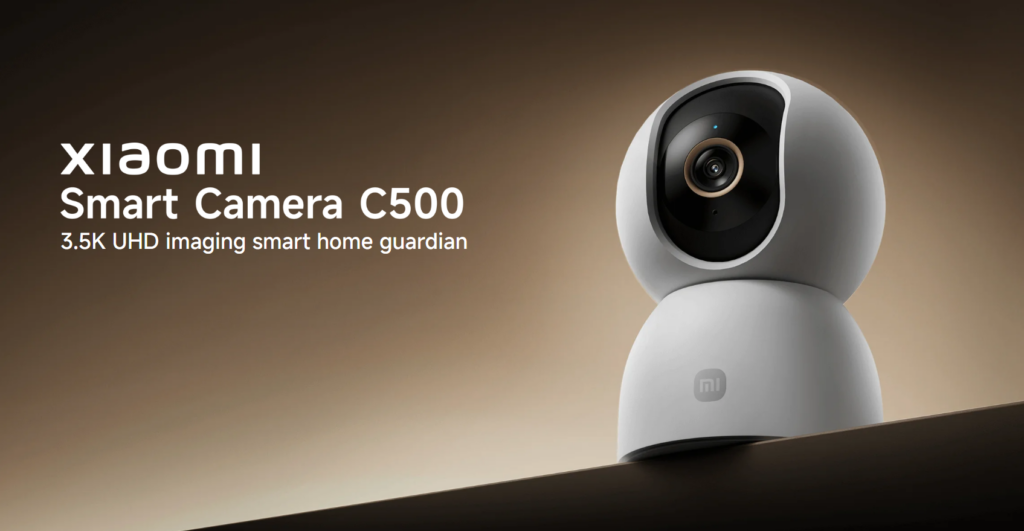
The Xiaomi Smart Camera C500 is now on sale in select European markets. The device first appeared on Xiaomi’s global website earlier this year, signalling that an international launch was coming. It is currently available in the UK for £38.99 and in Spain for €49.99. Xiaomi has not shared when it will reach more countries.

Xiaomi Smart Camera C500

The Smart Camera C500 records at 3,200 x 1,800 pixels. It uses a 6MP professional-grade lens with an f/1.6 aperture and a 1/2.45-inch image sensor that improves low-light performance. The camera offers 360 degree horizontal coverage and a 116 degree vertical viewing angle. For night recordings, it uses eight 940 nm infrared lights that work without any visible red glow.

AI detection allows the C500 to identify and track people and pets. Its bidirectional gimbal mount follows movement and then returns to the original angle when tracking stops. Users receive motion alerts on their devices. The camera also supports two-way voice calls. A physical privacy shutter can be turned on manually or set to activate automatically.

The device runs on Xiaomi’s MJA1 security chipset, which provides financial-grade encryption and secure cloud transfers. It supports Wi-Fi 6 on both 2.4 GHz and 5 GHz bands and includes Bluetooth 5.0 for stable connections. Storage options include microSD cards up to 256 GB, encrypted cloud storage, and NAS. Video compression uses H.265 to reduce file size while keeping quality intact.

The camera works with Xiaomi’s HyperOS Connect system. This allows users to link it with other Xiaomi smart home devices. It can trigger actions such as turning on lights when motion is detected. It also supports Amazon Alexa and Google Assistant for voice control and live video viewing. The C500 measures 79 x 79 x 119 mm and comes in white. It can sit on a surface or be mounted on a ceiling.

Don’t miss a thing! Join our Telegram community for instant updates and grab our free daily newsletter for the best tech stories!

For more daily updates, please visit our News Section.

(via: Notebookcheck)

Huawei Unveils Mate X7, FreeClip 2, Ultimate Watch, and More at Global Launch

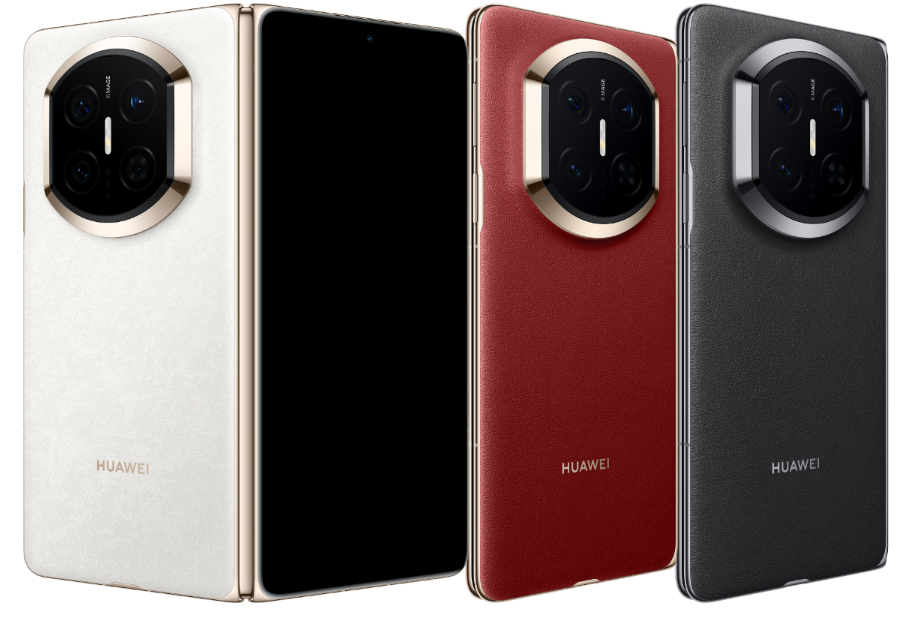
Huawei introduced four major flagship products at its global launch event themed “Unfold the Moment.” The new lineup includes the Mate X7 foldable phone, FreeClip 2 earphones, WATCH ULTIMATE DESIGN Royal Gold Edition, and the MatePad 11.5 S tablet. The company said the launch reflects its continued focus on user needs and meaningful innovation.

Huawei Mate X7

Mate X7: Slim Foldable with Flagship Imaging

Huawei’s new Mate X7 takes inspiration from the “Time-Space Gate” concept and a 1,600-year-old light-woven brocade tradition. It comes in Brocade White (nano fiber finish) and Nebula Red or Black vegan leather options.

The Mate X7 is Huawei’s first slim foldable to match the imaging standards of a regular flagship phone. It includes a second-generation True-to-Color Camera with 43% better color accuracy, an Ultra Lighting HDR Camera, an Ultra-Wide Camera, and a Telephoto Macro Camera. It supports 17.5 EV Ultra Lighting HDR Video, helping it capture detailed shots in bright and low-light scenes.

To improve durability, Huawei uses its Ultra-Reliable Foldable Architecture, featuring Ultra Durable Crystal Armor Kunlun Glass, Advanced Precision Hinges, and a 3-Layer Composite Ultra-Tough Structure. For performance, it includes a 3,550 mm² SuperCool VC + Graphene cooling system and a 5,600 mAh battery for all-day use.

Huawei FreeClip 2

FreeClip 2: Open-Ear Earphones (Upgraded AI Audio)

The Huawei FreeClip 2 earphones feature an ear-clip design meant to provide open-ear comfort while doubling as a stylish accessory. Each earbud weighs only 5.1 g, making it easy to wear for long hours. Color options include Blue, White, Black, and a new Rose Gold finish for global markets.

The earbuds use dual-driver units for clearer, more dynamic sound and an NPU AI processor that offers 10× better computing performance than the previous version. They are rated IP57 for dust and water resistance and deliver up to 38 hours of total battery life, including the charging case.

Huawei Watch Ultimate Design – Royal Gold

WATCH ULTIMATE DESIGN: Royal Gold Edition

Huawei also introduced the WATCH ULTIMATE DESIGN Royal Gold Edition, which blends luxury materials with rugged performance. The watch features a rare-earth purple ceramic bezel, 18K gold details, a zirconium-based liquid metal case, and a purple-gold titanium alloy strap.

The watch includes features for deep-sea divers, such as an advanced waterproof system and sonar-based underwater communication. It offers stronger connectivity with an upgraded antenna, AI noise cancellation, and precise navigation thanks to the HUAWEI Sunflower Positioning System. It also supports eSIM communication and includes the TruSense system with X-TAP technology for more accurate health tracking.

Huawei MatePad 11.5 S

MatePad 11.5 S: Tablet With a Paper-Like Display

The new MatePad 11.5 S is designed for creators who need both clarity and comfort. Its PaperMatte Display improves on traditional matte screens by keeping visuals sharp while reducing glare and eye strain.

The tablet comes with an M-Pencil Pro stylus and a magnetic keyboard for writing, sketching, and productivity. Huawei Notes provides templates, brushes, and creative tools, while GoPaint now includes new animation features for bringing drawings to life. For video editing, Wondershare Filmora adds shortcut key support, and WPS Office delivers PC-level document, presentation, and spreadsheet capabilities.

A User-First Approach

Huawei said this new portfolio highlights its goal of building warm, human-centered connections with users worldwide. Under the theme “Now Is Yours,” the company aims to help people embrace meaningful moments through technology.

Tangzu launches Xue Tao Gaming IEM in India via Headphone Zone

Tangzu has launched its first gaming-focused in-ear monitor, the Xue Tao, in collaboration with Headphone Zone. The new IEM is now available in India and targets gamers looking for high-precision audio, ergonomic design, and strong value for money.

Tangzu Xue Tao

Tangzu Xue Tao Specifications

The Xue Tao features a custom 10mm glass dynamic driver with a PET edge that delivers a sound signature tuned for immersive gameplay. The driver is designed to produce crisp highs, smooth mids, and strong lows while maintaining accurate imaging to help players distinguish directional sounds and spatial cues.

Tangzu developed the Xue Tao using its established acoustic engineering practices and feedback from the gaming community. The tuning reflects the brand’s philosophy of combining clarity with warmth and accuracy with emotional depth.

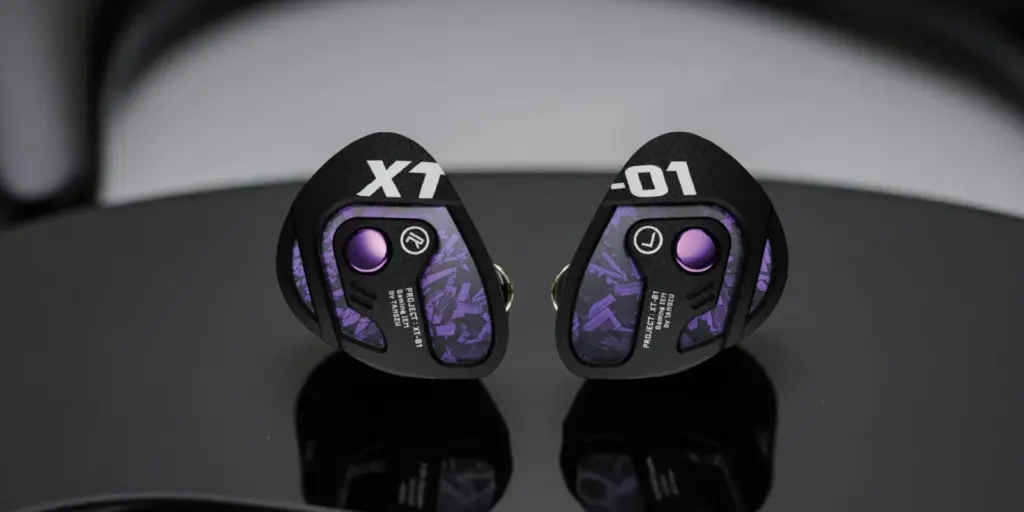
The IEM’s name and design take inspiration from the Tang Dynasty poet Xue Tao. The housing is made from aerospace-grade carbon fibre and CNC-machined aluminium alloy, accented with purple detailing that reflects Tangzu’s focus on aesthetics and durability. The ergonomic structure supports extended gaming sessions.

For connectivity and communication, the Xue Tao includes a detachable silver-plated OFC cable with 100 cores and a 0.78mm 2-pin interface. The electret capacitor microphone is designed to ensure clear in-game communication.

The IEM is available in both 3.5mm and USB Type-C variants, making it compatible with a wide range of devices, including smartphones, handheld consoles, and PCs.

The package includes the earphone body, custom cable, Tang Sancai ear tips, and a cleaning cloth.

Pricing and Availability

The Tangzu Xue Tao is priced at ₹4,999 ($55) for the 3.5mm version and ₹5,299 ($58) for the Type-C variant. It is available exclusively through Headphone Zone.

In related news, Razer has recently launched its Hammerhead V3 White earphones with a USB-C DAC and 11mm drivers, and Nubia has introduced its Alien-themed CyberBuds gaming earbuds with 50ms low latency and a 48-hour battery life.

For more daily updates, please visit our News Section.

Stay ahead in tech! Join our Telegram community and sign up for our daily newsletter of top stories! 💡

Xiaomi Starts New Beta Program for Xiaomi AI Glasses With Voice Parking Payments & System Upgrades

Xiaomi has opened registrations for a new beta version of its Xiaomi AI Glasses, announcing the launch of its “Pioneer Experience Program” on December 11. The company will recruit 200 users to test upcoming features and firmware changes before the public release.

Xiaomi AI Glasses

The new beta adds voice-based parking fee payments. After users activate the feature and link their vehicle plate number, saying “Xiao Ai, pay parking fee” will process the payment directly. This allows drivers to pay before reaching the exit gate and leave faster. Xiaomi is also adding an option to disable the inner indicator light while charging and has included several stability fixes.

Participation requires applying through the Xiaomi Community App under the internal testing section. Approved users will be added automatically to the dedicated beta group.

Registration is open from December 11, 16:00 to December 12, 16:00. The testing period runs from December 13, 15:00 to December 19, 24:00. Xiaomi expects to push the new beta version before 15:00 on December 13.

Xiaomi’s first AI Glasses were introduced in June at a starting price of 1999 yuan. The device weighs 40g, supports prescription lenses, and is available in multiple frame designs. It includes a 12MP first-person camera for photos and video recording, with support for video calls and live streaming through third-party apps. The glasses also feature open-ear stereo speakers and a five-microphone system for voice pickup.

The product is designed as a portable AI device with real-time assistance, translation across 10 languages, on-device encyclopedia access, and smart control for Xiaomi phones and smart home devices. Users can trigger voice commands, set reminders, or control appliances without using their phone.

Other features include 2K 30fps video recording with EIS stabilization, 0.8-second quick capture, integration with Xiaomi phones for seamless camera switching during calls or streaming, and support for 14 major apps. The electrochromic lenses can switch tint levels in 0.2 seconds with four adjustable stages.

The glasses use the Qualcomm AR1 chip paired with a low-power audio processor, offering up to 21 hours of standby time and typical usage of 8.6 hours. The device supports Type-C charging and includes dedicated camera and touch controls.

Don’t miss a thing! Join our Telegram community for instant updates and grab our free daily newsletter for the best tech stories!

For more daily updates, please visit our News Section.
(via: ITHome)