Advertisement

Buy the Galaxy Z Flip 7 or Galaxy S25+: Here’s the Tough Call

In 2025, Samsung‘s flagship lineup offers compelling options from both its traditional and foldable phone series. But when choosing your next premium Samsung purchase, picking the right one can be a tough choice. Two great picks that people might struggle to pick between are the foldable Samsung Galaxy Z Flip 7 and the traditional powerhouse Samsung Galaxy S25+. Both of these deliver a flagship Android experience, but have distinct philosophies. So here’s a breakdown to help you decide.

1. Design & Portability: Foldable Charm vs Classic Flagship Feel

Samsung Galaxy Z Flip 7

Foldables like the Z Flip 7 stand out because of their compactness. When folded, the Flip 7 becomes easier to slip into pockets, and its 4.1-inch outer display + 6.9-inch inner screen give unique flexibility: glance at notifications, take quick selfies, or control media without unfolding. The hinge uses a new “Armour FlexHinge”, and the phone carries an IP48 rating for dust and water resistance.

On the other hand, the Galaxy S25+ adopts a more traditional form factor: a solid, flat-slab build with a 6.7-inch Dynamic AMOLED 2X panel, 1440×3120 QHD+ resolution and 120 Hz refresh rate. So while you miss out on the novelty and flexibility of the flip phone, the higher resolution and more conventional design (with a higher IP68 rating) might feel more comfortable, reliable, and durable to others.

2. Performance, Battery & Everyday Reliability

Galaxy S25+ 5G
Samsung Galaxy S25+

Under the hood, the S25+ is powered by Qualcomm’s Snapdragon 8 Elite, delivering flagship-class performance, smooth multitasking, gaming and faster CPU/GPU workloads. This is still one of the fastest processors in the market despite launching in 2024, bringing great power efficiency as well. On the other hand, the Galaxy Z Flip 7 ships with Samsung’s in-house Exynos 2500. It is also based on the advanced 3nm process, but the 8 Elite pulls ahead in gaming and other intense tasks.

But while performance is nearly neck-in-neck, the differences become more apparent in terms of battery life. The Galaxy S25+ has an advantage here with a larger 4,900mAh battery pack, which supports 45W wired fast charging and 15W wireless charging. Meanwhile, the Galaxy Z Flip 7 has a smaller 4,300mAh cell and mediocre 25W wired fast charging support. It also gets 15W wireless charging. In other words, we can expect the Galaxy S25+ to outlast the brand’s latest flagship flip phone easily.

3. Cameras & Multimedia

Galaxy Z Flip7 5G

Camera configurations further highlight their different philosophies. S25+ includes a triple rear setup that consists of a 50MP main shooter along with a 12MP ultra wide angle lens, and a 10MP telephoto camera with 3x optical zoom. This gives it more versatility over the 50MP (Primary) + 12MP (Ultra Wide) camera setup on the Galaxy Z Flip 7. However, the Z Flip 7 has one big advantage, which is the folded selfie mode.

When the device is folded, one can basically use the dual rear cameras as the selfie shooter since the cover display acts as a camera viewfinder. This is much better than any tiny selfie camera found on most phones. Some also prefer the camcorder like experience offered by clamshell folding devices.

4. Which Should You Buy?

If you value portability, novelty, and a foldable design that’s fun and useful, the Galaxy Z Flip 7 is still one of the best of its kind. You get Samsung’s top tier One UI custom skin along with a pocket friendly design. But if you want a more balanced flagship experience that promises high end performance, better battery life, and a more tougher build, the Galaxy S25+ is the smarter choice. This model is also better suited towards power users, gamers, and those who love using a telephoto camera.

For more daily updates, please visit our News Section.

Tech enthusiast? Get the latest news first! Follow our Telegram channel and subscribe to our free newsletter for your daily tech fix! ⚡

Vivo V70 and Vivo T5x grab green light for launch in India

As we get closer to launch season, the Vivo V70 keeps popping up across certification platforms. The phone recently showed up in the IMEI database, essentially confirming the model as Vivo preps for a global release.

Now, its India launch looks all but confirmed, thanks to a new listing on the BIS certification site. The device appears under the model number V2538, matching what we saw in the IMEI record. 

Vivo V70 and Vivo T5x BIS listing. Image: Gadgetsdata / X

It’s not alone, either. Another device with model code V2545 also made an appearance on BIS, and it’s suspected to be the Vivo T5x.

As usual, the certification doesn’t spell out any hardware details. It mostly serves as a green light that both phones are cleared for an eventual debut in India.

Here’s what you can expect

Much of Vivo V70’s confirmed details come from Geekbench. The benchmark run reveals the phone carries a Qualcomm Snapdragon 7 Gen 4 processor with Adreno 722 GPU, Android 16-based OriginOS 6, and 8GB of RAM. It scored 1235 in the single-core and 3920 in the multi-core test with this setup. 

Vivo S50 - Space Black
Vivo S50 – Space Black

The device is expected to be a global rebrand of the Vivo S50. If true, you can also expect to see a flat OLED panel with a 1.5K resolution and a 120Hz refresh rate. The back might feature a triple-camera setup, including a 50MP main sensor, an ultra-wide, and a 50MP telephoto camera with 3x optical zoom. A 50MP selfie camera is reportedly on board as well. 

Rounding out the list are a 6,500mAh battery, 90W wired charging, and an IP69 rating. 

As for the Vivo T5x, this is its first appearance, so there’s nothing concrete on the hardware front yet. Still, a BIS listing usually means the device is cleared for launch, so more details should start surfacing soon.

Don’t miss a thing! Join our Telegram community for instant updates and grab our free daily newsletter for the best tech stories!

For more daily updates, please visit our News Section.

Get OPPO Find X9 Pro with Up to $100 Off at Giztop: Limited-Time Deal

OPPO Find X9 Pro stands out with its powerful 200MP periscope telephoto camera and an unusually large 7500mAh battery, a rare combination. It also packs a bright LTPO AMOLED display and the latest Dimensity 9500 chip, making it a strong choice for users who want top-tier performance, excellent battery life, and industry-leading zoom photography in one device.

Deal and Availability:

OPPO Find X9 Pro is now available on Giztop with a discount of up to $100. The store ships worldwide and offers express shipping, so buyers from across the globe can order easily and receive the phone fast.

Display & Design

The OPPO Find X9 Pro features a 6.78-inch AMOLED LTPO screen that delivers smooth visuals with its 120Hz refresh rate. Its 1.5K resolution (2772×1272) and 10-bit color output offer vivid colors, deep contrast, and excellent brightness. With 100% DCI-P3 coverage and LTPO 2.0 technology, the display adjusts refresh rates to balance clarity and power efficiency.

Performance

Powered by the MediaTek Dimensity 9500 processor, the Find X9 Pro ensures fast, reliable performance for daily use and heavy multitasking. Paired with 12GB or 16GB of LPDDR5X RAM and up to 1TB of UFS 4.1 storage, it handles apps, gaming, and productivity tasks with ease. ColorOS 16 based on Android 16 adds a clean, fluid software experience.

Cameras

The phone includes a powerful quad-camera setup: a 50MP main lens, 50MP ultra-wide sensor, and a 200MP periscope telephoto camera for long-distance clarity. A 2MP multispectral lens improves color accuracy, while the 50MP front camera supports high-quality selfies and video calls.

Battery & Charging

The large 7500mAh battery supports 80W SuperVOOC fast charging and 50W wireless charging, keeping the device powered for long hours with quick top-ups.


Everything We Know About OpenAI’s First Hardware Device

OpenAI is moving beyond software and stepping directly into consumer hardware through a partnership between CEO Sam Altman and legendary designer Jony Ive. The company has already completed its first prototypes, marking a significant milestone in a project that has remained one of Silicon Valley’s most closely guarded secrets.

Here’s what the project looks like so far.

Sam Altman

1. Rethinking Personal Tech

The new AI hardware concept is not meant to replace a phone or laptop. It is being developed as a ‘third device’ that sits alongside them. OpenAI CEO Sam Altman described the product as something that delivers a calmer experience, unlike the notification-heavy environment of modern smartphones. He compared current devices to walking through Times Square, while this new product aims to feel more like sitting in a peaceful cabin by a lake.

The device is expected to stay passive until needed and only interrupt when it has something useful or important to share. It is being built as an ambient assistant that remains aware of context and responds when appropriate. Altman said the goal is to give users a sense of peace and trust over time, without constantly demanding attention.

2. Screenless Device With Ambient Awareness

The hardware is screenless and likely pocket-sized. Early prototypes have been described as simple and tactile. Some reports say the form factor resembles an iPod Shuffle, with a clip-on design that may be worn around the neck or placed on a desk. It is not expected to look like a phone, smart glasses, or smartwatch.

Interaction will happen through microphones and possibly cameras or sensors. The device will rely on OpenAI’s latest models to understand spoken queries and real-world context. It will listen, observe, and remember.

Altman said it should be able to recall things like where the user last placed their keys or what book they looked at in a store. The goal is to create a device that feels intuitive, aware, and helpful across long stretches of time.

3. The $6.4 Billion Acquisition That Started It

OpenAI moved into hardware seriously after acquiring Jony Ive’s startup ‘io’ in May 2025. The $6.4 billion equity deal gave OpenAI access to a team focused on AI-specific hardware design. Ive, best known for designing the iPhone and iMac at Apple, took on the responsibility of shaping this new device. He now leads design work for both OpenAI and the former io team under his creative firm LoveFrom.

However, the ‘io’ branding became a legal issue. In June, Google Ventures-backed startup iyO sued OpenAI, claiming that the names ‘io’ and ‘iyO’ were phonetically similar and could confuse consumers. The Ninth Circuit Court agreed and barred OpenAI from using the name for any product similar to iyO’s. OpenAI removed all io branding from its website and public material.

4. Why Hardware Matters to OpenAI’s Future

OpenAI’s push into hardware has three main goals. First, it wants to collect real-world data through microphones and sensors, data that cannot be scraped from the internet.

Second, it wants more control over how its models reach users, without relying on Apple, Microsoft, or Google devices. Third, Altman wants to build a product that fulfills the long-term vision of an AI companion, similar to what was shown in the movie Her.

The company has described the device as a natural extension of its software. It will work with existing phones and computers, but operate in a separate category of its own. Altman said this is not about adding a screen or another app but creating a fundamentally new type of computing device.

5. What the Timeline Looks Like

The device is currently in prototype form. Altman and Ive confirmed in November 2025 that they have a working version, which they described as ‘jaw-droppingly good.’ Earlier versions did not meet their standards, but the latest iteration reportedly impressed both leaders.

Ive said the device could launch in under two years. Internally, OpenAI has targeted a release timeline of late 2026 or 2027. The company hopes to scale production quickly and ship 100 million units faster than any company has done before.

However, delays related to technical design, privacy concerns, and the ongoing trademark dispute could push the timeline further.

For more daily updates, please visit our News Section.

Stay ahead in tech! Join our Telegram community and sign up for our daily newsletter of top stories! 💡

Motorola Edge 70 Ultra may join a rare club with stylus support — as a productivity-focused flagship

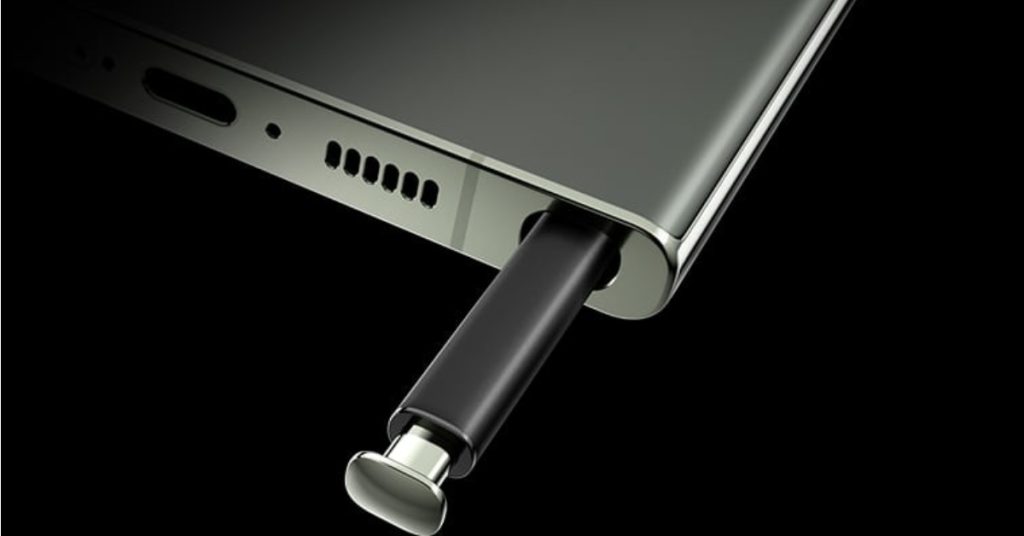
Motorola might be getting ready to add a stylus support to its upcoming flagship — something only Samsung has bothered with lately. If true and implemented well, it would position the Edge 70 Ultra as a rare productivity-focused flagship and, of course, a competitor to Samsung’s Galaxy S26 Ultra.

Motorola Edge 70 Ultra promo leak

Android Headlines claims the Edge 70 Ultra will directly take on the Galaxy S25 Ultra and the upcoming Galaxy S26 Ultra by adding native stylus features. The site says Motorola plans to pull in the stylus experience from its Moto G Stylus series and adapt it for its next flagship, which is expected to ship with Qualcomm’s Snapdragon 8 Gen 5. This is slightly less capable than the 8 Elite Gen 5 that the S26 Ultra is confirmed to use.

What remains unclear is how Motorola plans to implement the feature. Both Samsung’s S Ultra phones and Motorola’s own Moto G Stylus models use a built-in pen silo, so the Edge 70 Ultra could follow the same approach. But that’s just educated guesswork for now. It’s also possible that Motorola goes with a separate, more capable stylus that’s sold on its own.

Motorola launched the 6mm thick base Edge 70 towards the end of October, and as you can expect, that phone does not support a stylus. Still, leaks around the higher-end Ultra model are picking up fast. A Geekbench listing that surfaced last month already pointed to Snapdragon 8 Gen 5.

The Edge 70 Ultra is expected to land in early 2026, likely not long after Samsung introduces the Galaxy S26 Ultra in February. If the stylus rumor pans out, Motorola could end up offering the only real pen-friendly alternative to Samsung’s Ultra lineup next year.

Don’t miss a thing! Join our Telegram community for instant updates and grab our free daily newsletter for the best tech stories!

For more daily updates, please visit our News Section.

(Source)

Galaxy S26 delays might lead Samsung to release A-series phones ahead of time in 2026

Samsung’s usual launch cycle might look a little different heading into early 2026. The company typically announces its Galaxy S-series phones in January or early February, followed by A-series smartphones in March. However, this schedule has been affected due to the internal changes in the Galaxy S lineup. 

As you might know, Samsung was previously expected to introduce an S26 Edge to replace the S26 Plus. But after the S25 Edge underperformed in sales, the company has reportedly scrapped the S26 Edge altogether and brought the S26 Plus back into the roster — just much later in the process. 

This late pivot pushed back R&D timelines, which is why the Galaxy S26 lineup is now rumored to land in late February instead of the usual early-year window.

So while the Galaxy S26 series may arrive later than usual, Samsung seems to be filling the gap by moving its budget and mid-range launches forward. 

Galaxy A07, A37 and A57 all coming early next year

A new leak now suggests that the Galaxy A07 5G could launch later this month or in early January 2026. This would place it earlier than past entry-level Galaxy A0-series releases.

Galaxy A07 4G

More interestingly, Samsung is also planning to launch the Galaxy A37 and Galaxy A57 ahead of their normal schedule. These two models usually appear around March or April, but this time they are expected as early as February 2026. This change implies that Samsung may be trying to keep its product momentum steady while the flagship timeline adjusts.

The Galaxy A37 and A57 will bring incremental upgrades with new chipsets and the latest software. Both phones will ship with Android 16 out of the box. The Galaxy A57 is said to run on Samsung’s new Exynos 1680 processor, paired with the Xclipse 550 GPU. The Galaxy A37, meanwhile, will feature the Exynos 1480 chipset along with the Xclipse 530 GPU.

Don’t miss a thing! Join our Telegram community for instant updates and grab our free daily newsletter for the best tech stories!

For more daily updates, please visit our News Section.

(via)

Galaxy S26 Ultra FCC approval puts an end to the chipset rumors

Samsung’s Galaxy S26 Ultra has been bouncing around the rumor mill for months, but one question kept coming up more than anything else: will it be powered exclusively with the latest Snapdragon flagship, or return to a split Snapdragon–Exynos strategy? We finally have a clear answer, thanks to a new FCC listing.

Samsung Galaxy S26 Ultra CAD render by OnLeaks & AndroidHeadlines

Two models—SM-S948B and SM-S948U—have just appeared in the FCC database, and both are tied to the Galaxy S26 Ultra. The documents go a step further and outright name the chipset: SM8850, which is Qualcomm’s internal codename for the Snapdragon 8 Elite Gen 5. In other words, Samsung is signaling to anyone eyeing the S26 Ultra that they can expect a clear step up in performance and efficiency compared to the S25 Ultra.

The model numbers themselves line up with Samsung’s usual pattern. The “B” variant is the global/unlocked version, while the “U” model is the carrier-specific version for the US. Seeing the same Snapdragon chip listed for both finally confirms the rumors: Samsung is going all-in on Qualcomm for its 2026 Ultra model—no Exynos alternative for any region.

It’s a continuation of a trend we’ve seen with Samsung’s top-end phones. The Ultra has leaned Snapdragon-only for the past couple of generations, while the standard and Plus models have swapped between Exynos and Snapdragon whenever possible. That split isn’t disappearing entirely, though. Several leaks and benchmark listings still point to the Galaxy S26 and S26+ using the Snapdragon 8 Elite Gen 5 almost everywhere except South Korea, where Samsung is expected to ship them with its in-house Exynos 2600 instead.

But for the Ultra, the FCC filing removes any remaining doubt. The top-of-the-line flagship of the 2026 lineup will run Qualcomm’s latest chip in every market.

Don’t miss a thing! Join our Telegram community for instant updates and grab our free daily newsletter for the best tech stories!

For more daily updates, please visit our News Section.

(Source)

UGREEN’s new eGPU dock offers Oculink, USB4, and an 850W PSU for less than $350

External GPUs have always been niche yet clever accessories that turn an ordinary laptop into something closer to a desktop gaming rig. Now UGREEN, better known for its chargers and power banks, is taking a swing at the category with its new LinkStation Graphics Card Expansion Dock.

It’s a chunky, semi-open aluminum enclosure that comes with a built-in 850W ATX 3.1 gold-rated power supply and can fit in just about any modern GPU you’d want to use. 

UGREEN LinkStation Graphics Card Expansion Dock Overview

The LinkStation stands out because it supports both Oculink (64Gbps) and USB4 (40Gbps). Oculink has been gaining traction among performance-focused users thanks to its much faster, more stable bandwidth compared to Thunderbolt-based solutions. 

SB4 compatibility, however, makes the dock easier to use with a wider range of modern laptops. UGREEN states that the dock is compatible with graphics cards from NVIDIA, AMD, and Intel, and can deliver power to laptops via 100W reverse charging when connected via USB4.

The enclosure itself is big, and because it needs to be. It supports full-size GPUs up to 370mm, and the top cover can be removed if you need even more room. Inside is a PCIe 4.0 x16 slot, and the included ATX 3.1 PSU means it can power even high-end cards, including NVIDIA’s latest 40- and 50-series GPUs.

UGREEN includes both a 0.8m USB4 cable and a 0.5m Oculink cable in the box. The device weighs 5.08kg, comes in a stylish retail package, and carries a one-year warranty.

UGREEN also shared benchmark data comparing direct PCIe performance to dock-connected performance. Unsurprisingly, desktop GPUs connected directly to the motherboard still perform best. 

An RTX 5090, for example, scored 34,508 in Port Royal on a desktop PC, while the same GPU through Oculink on a laptop dropped to 30,164. But that’s still extremely impressive for an external GPU setup, and shows how far Oculink-based docks have come.

It’s priced at 2,299 yuan (~$325) in China, and it’s clearly targeting laptop users, handheld consoles, and Mini PC owners who want full desktop GPU performance.

Don’t miss a thing! Join our Telegram community for instant updates and grab our free daily newsletter for the best tech stories!

For more daily updates, please visit our News Section.

(Via)

Honor’s wild “Robot Phone” is reportedly headed for mass production in H1 2026

Honor has decided to take smartphone design in a direction nobody asked for — but now that we’ve seen it, it’s hard not to be intrigued. During the Magic 8 launch event, the company briefly showed off something it’s calling the Robot Phone. And no, that’s not just a flashy marketing name. There is an actual robotic arm built into the back of the device.

Instead of a typical camera bump, this phone hides a folded mechanical arm that pops out when needed. It can move around to frame shots from angles that you’d normally need a tripod — or a pretty awkward wrist bend — to achieve. When you’re done, it retracts cleanly into the device as if nothing ever happened. It’s part camera system, part sci-fi gadget.

Honor is pitching this as the next stage of AI-enhanced hardware. The phone will be powered by a more advanced version of its YOYO AI, which the company claims can understand its surroundings and even sense the user’s emotional state. Whether that means it will tilt the camera to cheer you up or hide itself when you’re in a bad mood — we’ll have to wait and see.

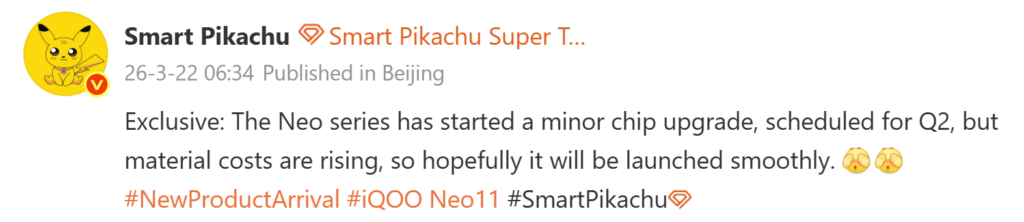
According to well-known leaker SmartPikachu, the Robot Phone is already being prepped for mass production in the first half of 2026, with a likely launch window sometime around August. Honor says more details will come at MWC 2026, so we’re still missing all the usual specs like processor, battery, and price.

Still, in a market where almost every phone feels like a familiar rectangle from the front, Honor is clearly swinging for something big — or at least something different. It might end up being revolutionary… or hilariously overengineered. Either way, it’s easily one of the most bizarre and exciting concepts we’ve seen in a long while.

Don’t miss a thing! Join our Telegram community for instant updates and grab our free daily newsletter for the best tech stories!

For more daily updates, please visit our News Section.

Xiaomi Tag: a budget-friendly Apple AirTag rival could arrive this month

Xiaomi is reportedly gearing up to launch a new tracking tag—simply called the Xiaomi Tag—and it could land at a price that puts pressure on both Apple and Motorola.

The info comes from reliable Weibo leaker Repeater 002, who suggests Xiaomi is finalizing the device and is preparing to launch it alongside the Xiaomi Watch 5 and Buds 6. These accessories could be introduced during the Xiaomi 17 Ultra launch event in China, which is reportedly scheduled for December 26, 2025.

Nothing too detailed has surfaced yet, but the basics are fairly clear. The product name appears locked in as “Xiaomi Tag,” and most early signs point toward support for Ultra-Wideband (UWB). That would enable more precise, short-range locating—similar to the “Precision Finding” feature that helps AirTags stand out. The bigger deal, though, is that Xiaomi’s tracker is expected to work with Google’s Find My Device network, which relies on nearby Android phones to anonymously relay a tag’s location even when it’s offline.

That setup isn’t unique anymore; Chipolo, Pebblebee, and Motorola’s Moto Tag already offer UWB and tie-ins with Google’s network. But where Xiaomi could shake things up is, unsurprisingly, pricing. Both the Moto Tag and Pebblebee Clip currently cost above $25 on Amazon, and most well-known alternatives land in the same ballpark. If Xiaomi can undercut its alternatives on specs for a similar price, it’ll have a real shot at winning over Android users who’ve been waiting for a cheap-but-capable finder tag.

If Xiaomi sticks to its usual playbook, the AirTag may soon have some long-overdue competition.

Don’t miss a thing! Join our Telegram community for instant updates and grab our free daily newsletter for the best tech stories!

For more daily updates, please visit our News Section.

(Source)

Xiaomi is reportedly developing a new AI assistant called Mi Chat

Xiaomi is reportedly developing a new intelligent Q&A assistant named “Mi Chat,” as detailed in a recent post by the WeChat public account “Du Jia.” The leak suggests that the initial version of the product has already been completed.

This consumer-facing application is expected to demonstrate Xiaomi’s increasing proficiency in artificial intelligence and is anticipated to be powered by the company’s proprietary large language model, MiMo-7B-RL, which was launched earlier this year as part of its AI expansion strategy.

Xiaomi

Despite having only 7 billion parameters, the MiMo model previously surpassed larger competitors like OpenAI’s o1-mini and Alibaba’s Qwen QwQ-32B-Preview in key benchmarks, including AIME 24/25 and LiveCodeBench v5.

Xiaomi is expected to scale the model further, and Mi Chat will likely act as its front-end interface, allowing the company to bring advanced reasoning features into everyday consumer scenarios. This initiative supports the company’s wider strategy to merge AI with its ‘Human x Car x Home’ ecosystem.

Xiaomi Partner and President Lu Weibing confirmed that the company has been making substantial investments in AI for several quarters, noting that large-model development progress has surpassed expectations. He stated that Xiaomi’s next strategic objective is the deep integration of AI with the physical world.

Furthermore, Xiaomi founder Lei Jun is reportedly taking a direct role in strengthening the AI team. Luo Fuli, a significant recruit from DeepSeek who joined the MiMo division this year, is listed as a corresponding author on a recent paper published in collaboration with Peking University.

More details about Mi Chat are expected to be unveiled by Lu Weibing and Luo Fuli at Xiaomi’s 2025 Human Car Home Ecosystem Partner Conference on December 17 in Beijing.

You can also read our story on how GPUs are no longer holding back AI and why a new bottleneck is taking their place.

For more daily updates, please visit our News Section.

Stay ahead in tech! Join our Telegram community and sign up for our daily newsletter of top stories! 💡
(Via)

Vivo X300 Series Teams Up With National Geographic for “Go Into The Wild” Photography Project

Vivo has announced a new collaboration with National Geographic Creative Works for “Go Into The Wild”, a photography and storytelling initiative shot entirely on the newly launched Vivo X300 Series. The project brings a National Geographic Explorer along with selected photographers and creators to some of India’s most remote natural regions to document wildlife, landscapes, and natural moments using only smartphones.

vivo X300 Series and National Geographic Creative Works

The initiative is built around the vivo X300 and vivo X300 Pro, both launched recently as flagship imaging focused smartphones. The X300 Series combines ZEISS optics, OriginOS 6, upgraded AI features, and flagship performance powered by the MediaTek Dimensity 9500 chipset. vivo says the goal of the collaboration is to show how modern smartphone cameras perform in real world outdoor conditions.

The vivo X300 features a compact flagship design and is equipped with a 200MP ZEISS main camera. It includes the vivo Portrait Engine for detailed portraits and AI Landscape Master for wide angle scenes with improved clarity and balance. The phone is designed for users who want high end imaging in a smaller form factor while handling low light and complex lighting conditions.

The Vivo X300 Pro focuses strongly on telephoto performance. It comes with a 200MP ZEISS APO telephoto camera and supports India’s first Telephoto Bird Shots feature. The device also works with the ZEISS 2.35x Telephoto Extender Kit, which enables up to 8.5x optical zoom. This setup is aimed at capturing fast moving wildlife and distant subjects without major loss of detail.

As part of “Go Into The Wild”, creators travelled across forests, mountains, deserts, and coastal ecosystems in India. They used the X300 Series to capture high resolution images and videos, relying on features such as professional grade stabilization, ultra high resolution sensors, and ZEISS optics to document nature accurately.

National Geographic Creative Works said photography remains central to its storytelling approach. The collaboration continues its earlier work with vivo and focuses on showing wildlife and nature through authentic visual stories. The project encourages audiences to look beyond familiar spaces and explore nature through mobile photography.


For more daily updates, please visit our News Section.

Stay ahead in tech! Join our Telegram community and sign up for our daily newsletter of top stories!

Xiaomi 17 Going Global Soon after New Certification & Benchmark Sighting

After debuting in China this September, the Xiaomi 17 is getting ready for a global debut soon. While recent rumors have hinted at an earlier than expected release, a fresh certification sighting and benchmark listing have also hinted at an imminent launch outside of China. So here are all the details.

Xiaomi 17 Certified in Thailand

The Chinese tech giant’s latest flagship was just spotted on the NBTC (National Broadcasting and Telecommunications Commission) database, carrying the 25113PN0EG model number. This listing doesn’t reveal any details about the announcement, but it does confirm the “Xiaomi 17” moniker and the device’s availability in Thailand.

Xiaomi 17 color options
Xiaomi 17

On the other hand, the GeekBench listing also confirms that the premium compact phone is equipped with Qualcomm’s latest and greatest Snapdragon 8 Elite Gen 5 SoC, which is paired with 12GB of RAM. This is the same entry level RAM as the Chinese version. Xiaomi’s latest flagships will also run on the Android 16 OS based HyperOS 3 custom skin out of the box. These tests are measuring the AI performance of the smartphone.

In related news, the Xiaomi 17 Pro series are testing the HyperOS 3.0.34.0 build that brings a new interactive Sugar Cube wallpaper for the secondary display. Meanwhile, the upcoming Xiaomi 17 Ultra is expected to debut soon, with pre-orders rumored to kick off on 15th December 2025. Just recently, the Xiaomi 17 Leica Lietzphone Edition was also rumored to launch in Europe soon. This is all the information we have at the moment, so stick around for more.

For more daily updates, please visit our News Section.

Don’t miss a thing! Join our Telegram community for instant updates and grab our free daily newsletter for the best tech stories!

Pixel 9 Pro and Pro XL Get Free Display Repairs Under New Google Program

Google has rolled out extended service programs for selected Pixel 9 series phones after finding hardware problems in a small number of units. The move affects the Pixel 9 Pro, Pixel 9 Pro XL, and Pixel 9 Pro Fold, with free repairs or full replacements offered based on model and eligibility.

Google Pixel 9 Pro XL

For the Pixel 9 Pro and Pixel 9 Pro XL, Google has introduced an Extended Repair Program that focuses on display defects. The coverage lasts for three years from the original retail purchase date. Devices qualify if they show a vertical line running from the bottom to the top of the display. Pixel 9 Pro units may also qualify if the display flickers at times. If a service center confirms the issue after inspection, users can get a free display replacement. Repairs can be done at Google walk in centers, authorized service partners, or through online repair options, depending on location.

The Pixel 9 Pro Fold falls under a separate Extended Warranty Program. Instead of a screen repair, eligible users may receive a full device replacement at no cost. This program applies to hardware issues that affect core device functionality, including the same vertical line display defect seen on other Pixel 9 Pro models. Depending on where the user lives, replacements may be handled online, at participating Google Stores, or through walk in centers that can approve a remote replacement.

Google says only a limited number of devices are affected. All phones submitted under these programs will go through an eligibility inspection. Devices with cracked displays, cover glass damage, or liquid damage may be disqualified. Fees may apply if the issue is outside the program scope. Proof of ownership may be requested during the process. Users must be 18 years or older, or have a parent or guardian complete the request.

Both programs start on December 8, 2025, and run through authorized online and in store channels. Pixel 9 Pro and 9 Pro XL users are eligible for free display repairs, while Pixel 9 Pro Fold users can receive one free replacement per device. Users who already paid for eligible repairs will be contacted by email with next steps. All repairs and replacements come with a 90 day warranty, in line with local consumer laws.

For more daily updates, please visit our News Section.

Don’t miss a thing! Join our Telegram community for instant updates and grab our free daily newsletter for the best tech stories!

(Source)

Xiaomi Introduces Two Mi Home Air Conditioners With AI-Powered Efficiency

Xiaomi is expanding its smart home appliance lineup with two new AI powered air conditioners. The company just released the Mi Home Super Energy 1.5HP Air Conditioner, and now, the brand has released the Mi Home Super Energy Air Conditioner 2HP and 3HP models in China. So let’s check it out.

Xiaomi’s Latest Air Conditioners Leverage AI

Unlike the 1.5HP variant that is wall mounted, the Chinese tech giant built the 2HP and 3HP as floor standing air conditioners that are positioned vertically. As per official notes, the two new models have a 115 degree airflow angle, providing both heating and cooling air. Xiaomi claims that it can begin cooling in just 30 seconds, while heating a room only needs around a minute.

Xiaomi Mi Home Air Conditioner Super Energy Saving 2HP and 3HP

The differentiating factor between these two models is the airflow rate. The Mi Home Super Energy 3HP Air Conditioner has a higher 1,755m³/h airflow rate, while the 2HP model has a slower 1,520m³/h rate. As the name suggests, the highlighting aspect of the two air conditioners is built with energy efficiency in mind. The official notes claim that the AI algorithm on the Mi Home Air Conditioner helps deliver an energy saving rate of 30 percent.

Both models are also rated as Level 1 efficiency in China. Users can control these air conditioners via Xiaomi’s app, which also brings access to the finer settings and OTA updates. Thanks to HyperConnect, the new air conditioners integrate seamlessly with the Xiaomi smart home ecosystem. The Xiaomi Mi Home 2HP Super Energy Air Conditioner is priced at 4,599 Yuan (roughly 650 US Dollars), while the 3HP model costs 5,299 Yuan (roughly 750 US Dollars).

For more daily updates, please visit our News Section.

Tech enthusiast? Get the latest news first! Follow our Telegram channel and subscribe to our free newsletter for your daily tech fix! ⚡

Black Shark launches magnetic Bluetooth speaker for iPhones with RGB lighting & 16h battery life

Black Shark has announced a new magnetic Bluetooth speaker in the Chinese market. The speaker is priced at 129 yuan ($18) and is now available on JD.com for reservation.

Black Shark Magnetic Speaker

Black Shark Magnetic Speaker Specs

The speaker uses a 1.45-inch full-range driver with a rated power output of 4W. It can reach a peak loudness of up to 90dB. Black Shark has paired the speaker with a Red Red Shark-branded driver unit and equipped it with a DSP Pro 2.0 algorithm. This audio engine helps reduce distortion and enhances bass response, which improves clarity during music and gaming playback.

The speaker has a metal and ABS build and supports magnetic attachment using an N52-grade magnet. It can stick directly to smartphones that support magnetic accessories, including iPhones. When placed horizontally, it can also act as a phone stand.

Black Shark Magnetic Speaker

The top of the speaker features RGB lighting designed to create a soft, candle-like glow in dim environments. The speaker supports multiple usage scenarios, including work desks, bedside tables, outdoor use, and travel. It supports TWS pairing, allowing two units to connect wirelessly for stereo sound output.

Connectivity is handled via Bluetooth 6.0, which offers faster pairing and more stable performance. The speaker also carries an IPX4 water-resistance rating, making it suitable for daily use and protection against light splashes.

Black Shark Magnetic Speaker

The device is powered by a 750mAh battery, which supports between 6 to 16 hours of playback depending on usage and volume. The battery charges through a USB Type-C port and requires about 2.5 hours for a full charge. The standby time is rated at up to 90 days.

In related news, Black Shark has recently introduced the GS3 Ultra rugged smartwatch built to withstand heavy use, and the company has also launched a 25W magnetic cooling accessory designed to keep iPhones chilled during gaming sessions.

For more daily updates, please visit our News Section.

Stay ahead in tech! Join our Telegram community and sign up for our daily newsletter of top stories! 💡
(JD)

These Xiaomi, Redmi, & POCO Phones Are Receiving the HyperOS 3 Update (Android 15)

Over the last couple of weeks, Xiaomi has been busy slowly rolling out the major HyperOS 3 update for smartphones across the globe, starting in China and now rolling out in various markets. The company has already released the Android 16 OS based HyperOS 3 update for various smartphone models. But now, it is rolling out a special version of the HyperOS 3, which is still based on the older Android 15. So here’s what you need to know and which devices are eligible for the update.

Android 15 based HyperOS 3 Update

Following the Android 16 based HyperOS iteration rolling out across the globe. The Chinese tech giant is bringing the HyperOS 3 with Android 15 to a bunch of models across Xiaomi, Redmi, and POCO branded devices. Just recently, the Xiaomi 15 and Xiaomi 15 Ultra just received the major software upgrade in India, while POCO previously confirmed the HyperOS 3 release schedule.

Xiaomi 12T Pro
Xiaomi 12T Pro

The internal test builds were spotted by XiaomiTime recently confirmed that there are stable internal test builds of the HyperOS 3 running on around 16 models. Just like the regular Android 16 based build, the Android 15 HyperOS 3 update brings the same new UI changes, new features, improved cross device integration, and a fresh new look.

HyperOS 3 (Android 15) Eligible Devices

  • Xiaomi Pad 6 Max: OS3.0.0.2
  • Xiaomi Pad 6 Pro: OS3.0.0.2
  • Xiaomi MIX Fold 2: OS3.0.0.1
  • Xiaomi 13 Lite: EEA OS3.0.0.2, Other regions OS3.0.0.1
  • Xiaomi Civi 3: OS3.0.0.1
  • Xiaomi 12 Pro: OS3.0.0.2
  • Xiaomi 12 Pro: OS3.0.0.1
  • Xiaomi 12S Pro: Internal Alpha
  • Xiaomi 12S: Internal Alpha
  • REDMI K60 Pro: OS3.0.0.3
  • REDMI Note 13 5G: All regions under stable internal test, Global OS3.0.0.5
  • REDMI Note 12T Pro: OS3.0.0.2
  • POCO F5: OS3.0.0.1
  • POCO F5 Pro: OS3.0.0.1

For more daily updates, please visit our News Section.

Don’t miss a thing! Join our Telegram community for instant updates and grab our free daily newsletter for the best tech stories!

New Fairbuds XL Over-Ear Headphones Launched With Modular Build and 30 Hours Playback

Fairphone has officially launched the Fairbuds XL, its latest over-ear headphones focused on long-term use, repairability, and improved audio performance. The new model builds on the original Fairbuds XL with changes to sound quality, comfort, materials, and overall durability.

Fairbuds XL

The Fairbuds XL is equipped with newly developed 40 mm dynamic drivers and refined audio tuning to deliver clearer and more balanced sound. The headphones support aptX HD over Bluetooth for high-resolution wireless audio and offer dual-point connectivity, allowing users to stay connected to two devices at the same time. Fairphone claims a battery life of up to 30 hours of continuous listening.

Fairbuds XL

Design updates focus on everyday comfort and usability. The headband uses a breathable net fabric, while the ear cushions feature a soft birdseye mesh intended for extended wear. The headphones are foldable for easier storage and transport. Fairphone is offering the Fairbuds XL in two colors, Forest Green and Horizon Black.

Repairability remains central to the product. The Fairbuds XL features a modular design with nine user-replaceable parts, including the battery, ear cushions, headband, and speaker drivers. The battery can be removed and replaced easily, addressing common battery-related failures. The headphones carry an IP54 rating for dust and water resistance and come with up to a three-year warranty. They are also the only consumer headphones certified with the LONGTIME label for durability and repairability.

Existing Fairbuds XL owners can upgrade their headphones by replacing only the speaker drivers instead of buying a new unit. Fairphone is offering a discounted bundle with new drivers, ear cushions, and speaker covers. This upgrade option will be available in Europe toward the end of Q1 2026.

On the sustainability side, the Fairbuds XL is made using about 50 percent fair and recycled materials by total weight. This includes 100 percent recycled rare earth materials in the speaker magnets, more than 90 percent recycled aluminum, over 80 percent recycled plastics, and fair-mined copper, cobalt, and silver through credits. Assembly is done using solar energy, and the product is fully e-waste neutral.

Pricing & availability

The Fairbuds XL will be available from December 9, 2025. Pricing is set at €249 in the EU, £219 in the UK, and $229 in the US.

Don’t miss a thing! Join our Telegram community for instant updates and grab our free daily newsletter for the best tech stories!

For more daily updates, please visit our News Section.

Nothing launches Phone (3a) Community Edition in India

Nothing has officially launched the Phone (3a) Community Edition in India under its Community Edition Project. The limited-run model was developed with four fan creators from different regions. The project unfolded over nine months and drew more than 700 submissions, setting the tone for a device shaped directly by Nothing’s global community.

What’s New

The device is based on the standard 12GB+256GB model but introduces several custom elements created by the winners. The hardware design leans into a nostalgic late 90s and early 2000s aesthetic with transparent accents inspired by retro gaming gear.

Nothing Phone (3a) Community Edition

The new accessory category debuts with custom Dice that use Nothing’s Ndot 55 font, designed to merge playful design with the company’s clean visual identity. The software layer adds a redesigned lock screen clock that reduces visual clutter through varied font weights, paired with wallpapers that tie the exterior look to the internal interface.

Specifications

The device retains the same 6.77-inch flexible AMOLED display as the standard version, with a 1080 x 2392 resolution, HDR10+ support, 10-bit color, and a 3000 nit peak brightness. It runs at 30 to 120Hz with adaptive refresh support, offers a 480Hz touch sampling rate, uses 2160Hz PWM dimming, and includes Panda Glass protection.

Nothing Phone (3a) Community Edition

Under the hood, the device is powered by the Snapdragon 7s Gen 3 processor paired with an Adreno 720 GPU. It comes preloaded with Android 15 and Nothing OS 3.2 and has already received an OTA update that upgrades it to Android 16 with Nothing OS 4.

The Phone (3a) Community Edition carries a versatile triple camera setup. It includes a 50MP main sensor with OIS, an 8MP ultra-wide sensor with a 114° field of view, and a 50MP 2x telephoto sensor. On the front, there’s a 32MP selfie camera capable of 1080p video. The rear camera can shoot 4K at up to 30fps and features Action Mode for stabilized video capture.

The device features a 5000mAh battery with 50W wired fast charging. It includes stereo speakers, an in-display fingerprint sensor, and IP64-rated splash resistance.

Pricing & Availability

Nothing will produce only 1,000 units of the Phone (3a) Community Edition globally. In India, the phone is priced at ₹28,999 and comes in a single 12GB+256GB variant.

It will be sold exclusively at a one-day offline drop event scheduled for December 13, 2025, at 33&Brew, Prestige Technostar, Brookefield, Bengaluru, between 2 PM and 6 PM IST.

For more daily updates, please visit our News Section.

Stay ahead in tech! Join our Telegram community and sign up for our daily newsletter of top stories! 💡

LG’s New UltraGear OLED Gaming Monitor Has an Insane 720Hz panel

LG has just pulled the curtains on a new UltraGear monitor for gamers. But this model stands out with its ludicrously fast refresh rate. The new LG UltraGear 27GX790B gaming monitor has an absurd max refresh rate of 720Hz, making it one of the smoothest gaming monitors in the market.

Meet LG’s UltraGear 27GX790B: The World’s Fastest Gaming Monitor Yet?

While tech companies are already working on prototype monitors that hit an insane 1,000Hz refresh rate, some of the best gaming monitors currently available in the market only hit around 540Hz. So what sets the new UltraGear 27GX790B apart? a whopping 720Hz refresh rate. But there’s a catch: the monitor can only hit this figure when the resolution set is 720p, which is basically HD resolution.

LG UltraGear 27GX790B Gaming Monitor

However, if you don’t wish to compromise on the image quality, the 27GX790B supports 1440p resolution at 540Hz refresh rate. LG’s latest gaming monitor has a 27-inch Primary RGB Tandem WOLED panel. Such a high refresh rate basically benefits competitive esports titles, especially first person shooters like Counter-Strike 2. The LG UltraGear 27GX790B also offers 0.02ms response time, 335 nits of peak brightness in SDR and 1500 nits in HDR.

It also arrives with DisplayHDR True Black 500 certification and 99.5 percent DCI P3 color gamut. The monitor has an adjustable stand along with RGB lighting on the rear. Connectivity options include HDMI 2.1, DisplayPort 2.1, 1x USB-C port, 2x USB-A ports, and a 3.5mm audio jack.

For more daily updates, please visit our News Section.

Tech enthusiast? Get the latest news first! Follow our Telegram channel and subscribe to our free newsletter for your daily tech fix! ⚡