Caviar has introduced a new Valentine’s-themed customization series for the iPhone 17 Pro. The collection, called Garden of Eden, includes three limited-edition designs inspired by traditional symbols of love and loyalty. Prices start at $10,000, and each model is limited to 14 units worldwide.
Design Details
The Garden of Eden lineup includes Charming Lotus, Goldfish, and Wings of Love. Caviar uses 24K gold, jewelry enamel, engraving, diamonds, and sapphires across the designs. The models are available for both the iPhone 17 Pro and iPhone 17 Pro Max, including configurations with up to 1TB of storage.
Charming Lotus draws inspiration from the lotus flower, which holds cultural meaning in India, China, and Ancient Egypt. In Indian tradition, the lotus represents spiritual refinement and inner clarity. In Chinese culture, it symbolizes faithful love and harmony in marriage. The design features gold elements and detailed enamel work influenced by floral patterns. This variant starts at $19,630, making it the most expensive in the series.
Charming LotusGoldfishWings of Love
Goldfish centers on a pair of golden fish arranged in a circular motion. In Buddhist symbolism, two fish represent unity and harmony between partners. In Chinese tradition, goldfish also reflect prosperity and fertility. The design includes gold-plated sculptural elements accented with sapphires. Pricing for this model starts at $10,490.
Wings of Love features swallow birds in flight. The swallow has long symbolized loyalty and safe return in European and Asian cultures. In Ancient Greece, it was associated with Aphrodite, the goddess of love. The design highlights the idea of devotion across distance. This model starts at $10,340.
Caviar will also include a Valentine’s-themed gold coin with each purchase. Each unit ships in premium packaging.
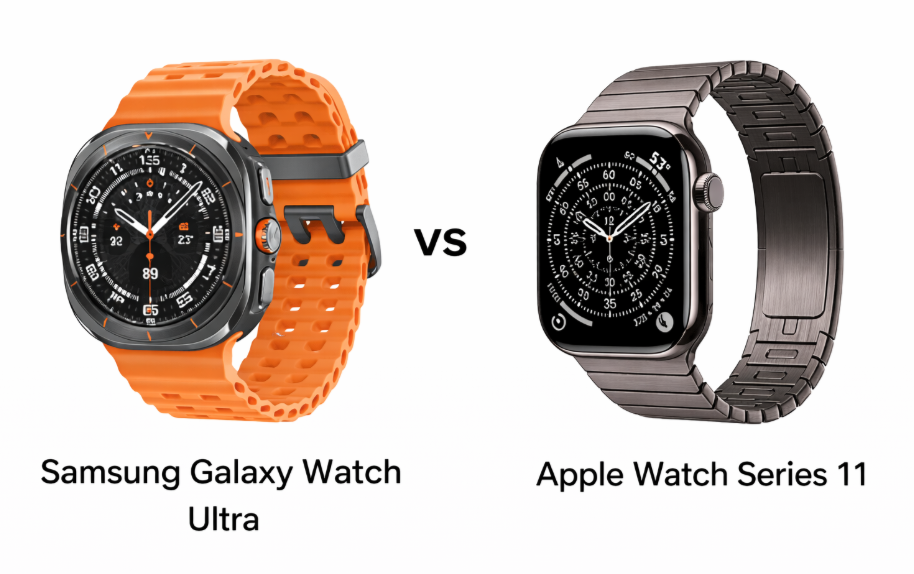
Choosing between the Samsung Galaxy Watch Ultra and the Apple Watch Series 11 isn’t just about specs; it’s about lifestyle. One is built like a survival tool for the outdoors, designed to handle extreme workouts and long adventures. The other feels like a refined digital companion, blending premium design with seamless everyday intelligence. While official pricing positions them differently, it’s worth noting that Amazon often lists both at discounted rates, which can shift the value equation. If you’re stuck between rugged endurance and polished performance, this decision deserves a closer look.
The Galaxy Watch Ultra embraces a rugged, adventure-focused design with sapphire crystal protection and a titanium frame that feels engineered for durability. It is clearly positioned for outdoor enthusiasts and athletes who demand resilience. The Apple Watch Series 11, while also premium in materials, presents a more refined and versatile aesthetic. It blends into professional and casual settings with ease, offering a smoother visual identity. One feels purpose-built for endurance and harsh conditions, while the other feels thoughtfully designed for daily wear and style-conscious users.
Display Quality
Samsung’s Super AMOLED panel offers vibrant contrast and strong outdoor readability, making fitness stats easy to view in bright conditions. Apple’s LTPO3 OLED display pushes higher peak brightness and delivers exceptionally fluid animations, giving the interface a polished and responsive feel. The Apple screen often feels more immersive due to tighter software optimization, though Samsung’s display remains sharp and bold.
Verdict
For rugged durability and bold presence, Galaxy Watch Ultra stands out. For display brightness and refined everyday usability, Apple Watch Series 11 feels more balanced.
2. Specifications Including Battery
Performance
The Galaxy Watch Ultra runs on Samsung’s advanced chipset paired with Wear OS, delivering strong multitasking capability and smooth Android integration. It feels powerful and responsive, particularly within Samsung’s ecosystem. The Apple Watch Series 11, powered by Apple’s latest silicon and watchOS, prioritizes efficiency and seamless animation. The experience feels cohesive and highly optimized, with transitions that appear effortless. While both are fast, Apple’s software harmony often creates a slightly more fluid daily interaction.
Battery and Charging
Samsung equips the Galaxy Watch Ultra with a larger battery designed for extended endurance. It is better suited for long tracking sessions, outdoor trips, and users who prefer fewer charging interruptions. Apple focuses on efficient power management and fast charging, making it convenient for daily routines. While it may not last as long on a single charge as Samsung’s model, quick top-ups reduce downtime significantly.
Verdict
Galaxy Watch Ultra leads in battery longevity and endurance. Apple Watch Series 11 excels in efficiency and fast recharge convenience.
3. Camera
Main and Secondary Lenses
Neither smartwatch includes a built-in camera, choosing instead to dedicate internal space to health tracking sensors and smart functionality.
Selfie Camera
There is no selfie camera on either device. This absence allows both watches to prioritize battery capacity, structural durability, and advanced biometric sensors rather than rarely used imaging hardware.
Verdict
This category remains a tie. Both smartwatches appropriately focus on health, connectivity, and performance instead of camera features.
4. Pricing
Galaxy Watch Ultra is officially positioned at a significantly higher price tier compared to the Apple Watch Series 11 in both the US and Indian markets. Apple’s model enters the market at a notably lower starting point, making it more accessible to a wider audience.
Is the Price Justified?
The Galaxy Watch Ultra’s higher pricing aligns with its rugged build, titanium construction, enhanced durability certifications, and larger battery capacity. It targets users who prioritize toughness and extended endurance. The Apple Watch Series 11, despite being priced lower, delivers premium materials, excellent display brightness, and highly optimized performance. This makes it feel like a strong value proposition for everyday users within Apple’s ecosystem.
Verdict
For overall affordability and value balance, Apple Watch Series 11 feels more approachable. Galaxy Watch Ultra justifies its higher positioning primarily through durability and battery advantages.
5. Conclusion
The Galaxy Watch Ultra distinguishes itself with durability-focused engineering, advanced GPS support, and extended battery endurance tailored for outdoor lifestyles. It is clearly designed for users who demand resilience in demanding conditions. The Apple Watch Series 11 shines with exceptional display brightness, seamless ecosystem integration, and refined health tracking features such as highly accurate temperature sensing and Ultra Wideband support. One emphasizes toughness and stamina, while the other prioritizes polish and daily usability.
Verdict
For Android users and adventure-driven buyers, the Galaxy Watch Ultra offers rugged confidence and longer endurance. For iPhone users seeking refined performance at a lower entry cost, the Apple Watch Series 11 delivers stronger overall value. The best choice ultimately depends on ecosystem preference and whether durability or affordability carries more weight.
New data tracking CPU sales on Amazon US shows a sharp year-over-year decline in January 2026. According to figures compiled by analyst TechEpiphany, just 26,100 processors were sold during the month. That might not sound terrible on its own, but it represents a steep 51% drop compared to January 2025.
That’s a significant contraction for one of the largest online retailers, and it adds to a broader downward trend that’s been visible in recent months.
At the same time, prices are moving in the opposite direction. The average selling price of CPUs rose from $227 in January 2025 to $305 in January 2026, a jump of roughly 34%. That suggests buyers who are still upgrading may be choosing higher-end chips, or simply paying more across the board.
Despite the slowdown, AMD continues to lead by a wide margin. The company reportedly sold 23,050 Ryzen CPUs in January, accounting for more than 88% of total units. Revenue share was nearly identical. Intel, by comparison, moved just 3,050 units.
What’s interesting is where demand seems concentrated. AMD’s newer Zen 5-based Ryzen 9000 series performed well, but older Zen 4 (Ryzen 7000) and even Zen 3 (Ryzen 5000) chips continue to sell in meaningful numbers.
Building or upgrading a PC right now means paying more for nearly every major component. Memory prices have climbed noticeably in recent months, affecting both DDR4 and DDR5 kits. SSD pricing has also increased. Graphics cards haven’t helped the situation either. Even mid-range options have seen pricing pressure.
When RAM, storage, and GPUs all cost more, the appeal of upgrading “just the CPU” weakens. Most enthusiasts don’t upgrade in isolation; it’s usually part of a broader platform refresh. And right now, that refresh isn’t cheap.
Between higher component costs, platform transition expenses, and general economic caution, many consumers seem comfortable holding onto existing systems a little longer.
Snapdragon 7 Gen 3 has been a popular choice among mid-range phones for offering excellent performance, power efficiency, and a reliable gaming experience. Its successor, the Snapdragon 7 Gen 4, takes everything a step ahead with notable advancements to CPU, GPU, and connectivity.
The Snapdragon 7 Gen 4 will offer better performance, but the real question is: how big an upgrade is it? Is it just a new name with minor changes, or are there some serious upgrades? Let’s look at the benchmark scores and key differences to find out.
Here’s the spec sheet to begin with:
Snapdragon 7 Gen 4
Snapdragon 7 Gen 3
Announced
May 2025
November 2023
Process node
4nm (TSMC)
4nm (TSMC)
CPU
1 x 2.8GHz — Cortex-A720 4 x 2.4GHz — Cortex-A720 3 x 1.84GHz — Cortex-A520
1 x 2.63GHz — Cortex-A715 3 x 2.4GHz — Cortex-A715 4 x 1.8GHz — Cortex-A510
GPU
Adreno 722 Snapdragon Elite Gaming features
Adreno 720 Snapdragon Elite Gaming features
NPU
Qualcomm Hexagon NPU
Qualcomm Hexagon NPU
Memory
LPDDR5x, up to 4.2GHz
LPDDR5, up to 3.2GHz
Storage
UFS 4.0
UFS 3.1
Camera
Qualcomm Spectra ISP (Triple AI-ISPs, 12-bit) up to 200MP single camera up to 64MP single camera with zero shutter lag up to 32+21MP dual cameras with zero shutter lag up to 21MP triple cameras with zero shutter lag up to 4K/60fps video recording
Qualcomm Spectra ISP (Triple CV-ISPs, 12-bit) up to 200MP single camera up to 64MP single camera with zero shutter lag up to 32+21MP dual cameras with zero shutter lag up to 21MP triple cameras with zero shutter lag up to 4K video recording
Snapdragon X63 5G modem (sub‑6GHz) download speed: 5Gbps (peak speed) Wi-Fi 6E (peak speed: 2.9Gbps) Bluetooth 5.4
Snapdragon 7 Gen 4 vs 7 Gen 3: Benchmark scores
[Note: For the benchmark results, the tests were performed on the Vivo T4 Pro (powered by Snapdragon 7 Gen 4) and OnePlus Nord CE 4 5G (powered by Snapdragon 7 Gen 3).]
Geekbench score
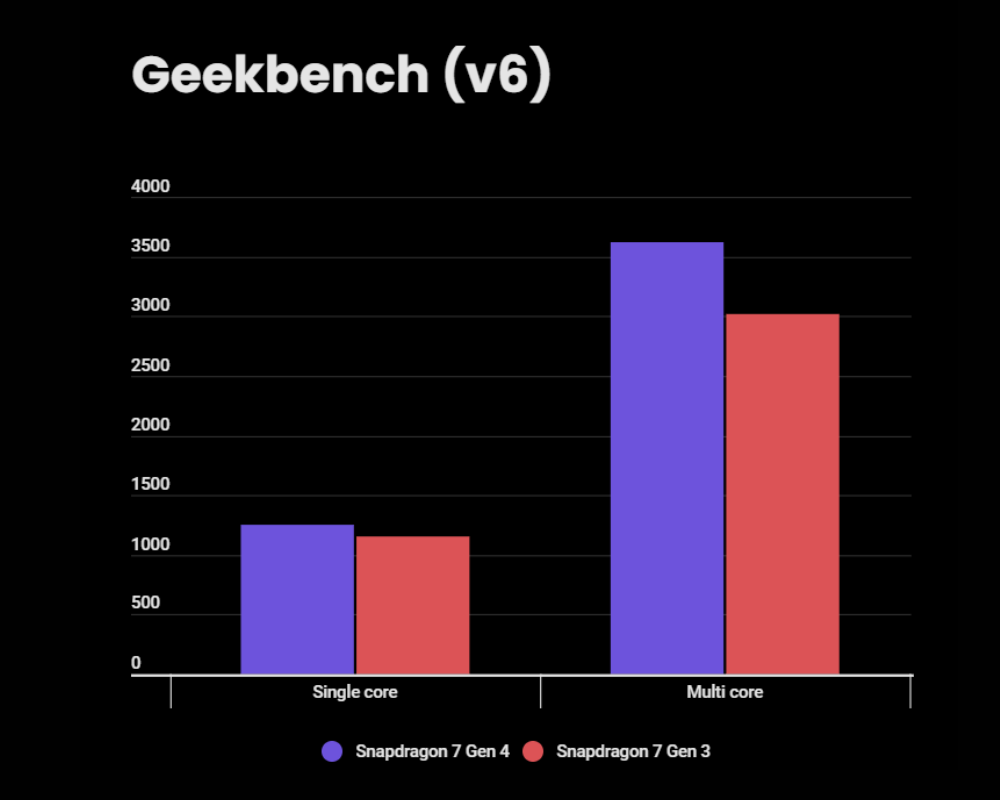
The Vivo T4 Pro, powered by the Snapdragon 7 Gen 4, has achieved 1,252 points in the single-core performance, which is about 8% higher than the 7 Gen 3. The gap widens in the multi-core performance, where the 7 Gen 4 leads with 20% higher score (3620 vs 3018).
Snapdragon 7 Gen 4
Snapdragon 7 Gen 3
Single core
1,252
1,154
Multi core
3,620
3,018
Geekbench v6
Geekbench results suggest devices powered by Snapdragon 7 Gen 4 will perform better than those powered by 7 Gen 3, especially in tasks that require multiple cores to work together.
AnTuTu score
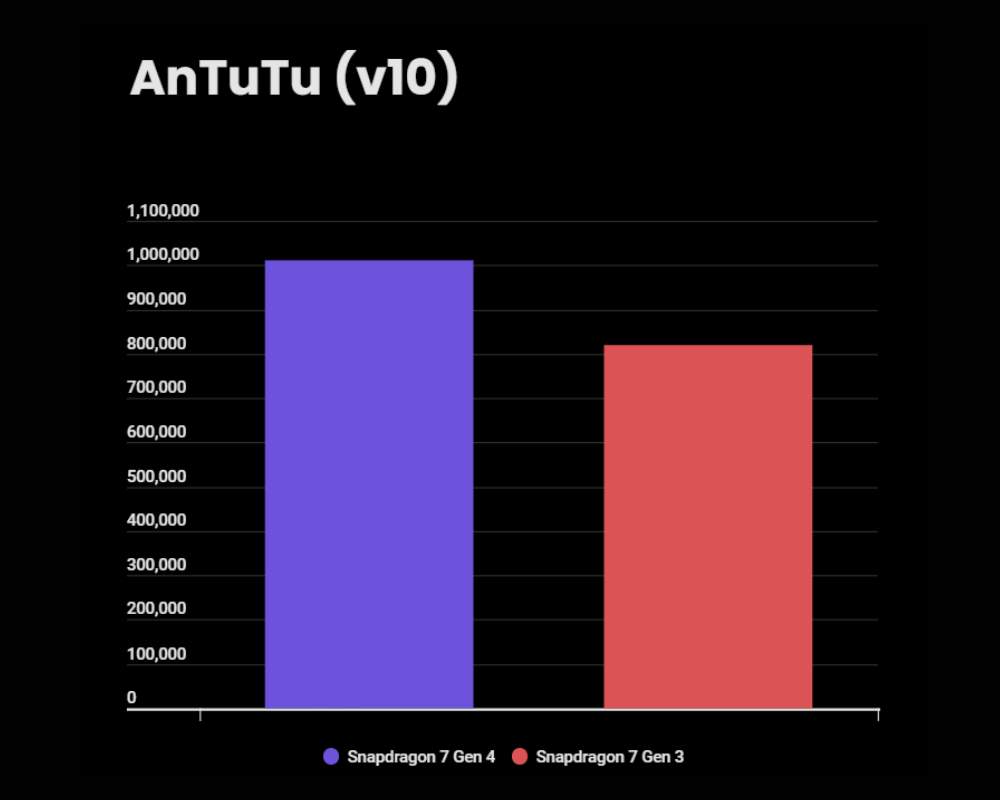
In the AnTuTu benchmark, the Snapdragon 7 Gen 4 scores over 1 million, while the 7 Gen 3 scores 819K. That’s a 23% higher score for the newer chip, which also reflects in every single test on the platform.
The Snapdragon 7 Gen 4 delivers 14% higher CPU and 26% higher GPU scores than the Snapdragon 7 Gen 3. The memory and UX scores also favor the newer chip.
Snapdragon 7 Gen 4
Snapdragon 7 Gen 3
AnTuTu score
1,010,864
819,655
CPU
309,273
269,334
GPU
323,797
256,584
Memory
182,776
129,961
UX
195,019
163,776
AnTuTu v10
Benchmark scores suggest a notable performance boost for the Snapdragon 7 Gen 4, but they don’t reveal improvements to the camera, connectivity, or other key areas. So, let’s discuss them in the following section.
Snapdragon 7 Gen 4 vs 7 Gen 3: What are the upgrades?
CPU, GPU, and NPU
The Snapdragon 7 Gen 4 features an upgraded (1+4+3) core configuration, which replaces an efficiency core with a performance core. On top of this, the CPU uses a newer instruction set and newer cores, which offer better performance and power efficiency than the Snapdragon 7 Gen 3.
Additionally, the prime core in the Snapdragon 7 Gen 4 runs at a higher frequency, further improving the chip’s performance. Qualcomm claims a 27% performance uplift in CPU over the 7 Gen 3.
For graphics rendering, the Snapdragon 7 Gen 4 relies on the Adreno 722 GPU, which brings higher capabilities than the 7 Gen 3’s Adreno 720 GPU. The newer chip also benefits from some additional gaming optimizations, such as Qualcomm Adaptive Performance Engine 4.0 and Snapdragon Adaptive Game Configuration. Qualcomm says the newer GPU does 30% faster rendering.
The Snapdragon 7 Gen 4 also features an upgraded Hexagon NPU, which delivers 65% better AI performance. It’s also the first in the lineup to support Stable Diffusion 1.5, enabling real-time image generation in seconds.
Camera and imaging
The camera specs are largely unchanged, but there are a few upgrades worth paying attention to. The Snapdragon 7 Gen 4 is an AI ISP that enables AI-powered autofocus, auto white balance, and auto exposure.
The Snapdragon 7 Gen 4 is the first in the series to feature hardware-enabled electronic image stabilization (EIS) and adds real-time Video Super Resolution. Additionally, it significantly improves multi-frame noise reduction, resulting in clearer, crisper capture.
Connectivity
The Snapdragon 7 Gen 4 features more robust connectivity, thanks to an upgraded 5G modem that implements the latest 3GPP Release 17 standard. Unfortunately, though, the 7 Gen 4 features a lower peak download speed over 5G. On the plus side, it features twice the download speed over Wi-Fi as the 7 Gen 3.
The Snapdragon 7 Gen 4 also benefits from Wi-Fi 7 and Bluetooth 6.0 implementation. It’s the first chip in the series to feature Qualcomm Expanded Personal Area Network (XPAN) technology, which keeps earbuds connected over Wi-Fi ultra-clear, untethered audio.
Snapdragon 7 Gen 4 vs 7 Gen 3: Which is a better choice?
The Snapdragon 7 Gen 4 is a real upgrade rather than a new name slapped to minor improvements. It has a performance-focused CPU and a newer GPU with faster rendering and additional gaming-centric features. The upgraded NPU is faster and more capable.
The newer Snapdragon chip also features an AI-ISP with advanced camera capabilities like hardware-enabled electronic image stabilization (EIS) and real-time Video Super Resolution. It also offers more modern, robust connectivity features, such as Wi-Fi 7, Bluetooth 6.0, and Qualcomm’s XPAN technology.
The Snapdragon 7 Gen 4 is clearly the better choice here. But it will come with a higher price tag than 7 Gen 3-powered devices. In short, the Snapdragon 7 Gen 3 gives you an excellent value for money, whereas the newer 7 Gen 4 pushes for higher performance and modern features for a slightly higher price.
Xiaomi Redmi Note 15 Pro+ and Redmi Note 15 Pro may look almost identical on paper, but the real story lies in the upgrades. A faster Snapdragon chip, dramatically quicker 100W charging, upgraded connectivity, and a sharper selfie camera separate the Pro+ from the already impressive Pro.
For buyers trying to decide whether the extra $100 (₹8,000) is truly worth it, this comparison breaks down exactly how those upgrades affect gaming performance, daily charging convenience, long-term durability, and overall value. If choosing between smart savings and smarter speed feels confusing, this is the comparison that makes the decision clear.
Major Upgrades:
Feature
Redmi Note 15 Pro+
Redmi Note 15 Pro
Upgrades
Processor
Snapdragon 7s Gen 4 (Adreno 810)
Dimensity 7400 Ultra (Mali-G615 MC2)
Pro+ – Better GPU efficiency and more stable gaming performance long term
Charging Speed
100W wired (0–100% ~40 min)
45W wired
Major Upgrade – Dramatically less charging time; more convenient daily use
Selfie Camera
32MP
20MP
Pro+ – Sharper selfies and better detail for social media/video calls
Wi-Fi Support
Wi-Fi 6E
Wi-Fi 6
Pro+ – Faster and more future-ready connectivity (region dependent)
Build Materials
Fiber-reinforced structure options
Plastic frame
Pro+ Feels More Premium – Slightly better durability and premium in-hand feel
Both phones feature Gorilla Glass Victus 2 protection and IP68/IP69K durability, making them equally resistant to dust and water. However, the Redmi Note 15 Pro+ steps ahead with a more premium structural finish using fiber-reinforced materials alongside eco-leather options. The standard Pro uses a plastic frame, which is solid but slightly less refined.
That upgrade in material subtly improves long-term durability and gives the Pro+ a sturdier, more flagship-like feel. For buyers planning to use their device for several years, that added structural strength can make a real difference in day-to-day confidence.
Display Quality
Both devices share the exact same 6.83-inch AMOLED panel with 120Hz refresh rate, HDR10+, Dolby Vision, and 3200 nits peak brightness. Visual experience is identical, ultra-bright outdoors, smooth scrolling, and rich contrast.
There is no display upgrade on the Pro+, meaning buyers get the same flagship-grade viewing experience regardless of which model they choose.
Verdict
Design durability slightly improves with the Pro+, but display quality remains equal. The upgrade here is subtle, not transformative.
2. Specifications
Performance
The biggest upgrade comes in performance. The Redmi Note 15 Pro+ uses the Snapdragon 7s Gen 4, while the Pro runs on the Dimensity 7400 Ultra. The Snapdragon chip typically delivers better GPU efficiency and more stable gaming performance.
For buyers, this means smoother high-frame-rate gaming, better long-term optimization, and potentially stronger resale value. Casual users may not notice a massive difference today, but heavy gamers and power users will benefit from the Pro+ over time.
Battery and Charging
Battery size is nearly identical, but charging speed is not. The Pro+ supports 100W fast charging, compared to 45W on the Pro. This is a major lifestyle upgrade.
In real life, this means dramatically shorter charging sessions. A quick top-up before heading out becomes practical with the Pro+. That convenience adds up daily.
Verdict
Performance tuning and 100W charging are meaningful upgrades that directly improve long-term usage and daily convenience.
3. Camera
Main and Secondary Lenses
Both phones feature the same 200MP OIS main sensor and 8MP ultrawide camera. Photo quality in daylight and 4K video performance will be very similar. There’s no hardware upgrade here for rear photography.
Buyers won’t miss out on imaging quality by choosing the standard Pro.
Selfie Camera
The Pro+ upgrades the front camera from 20MP to 32MP. This brings sharper detail in selfies and better clarity for video calls and content creation.
For social media users or vloggers, this is a practical upgrade. For occasional selfie users, the difference may feel minor.
Verdict
Rear cameras are equal, but the upgraded 32MP selfie sensor gives the Pro+ a noticeable advantage for content-focused buyers.
4. Pricing
Redmi Note 15 Pro+ costs around $450 (₹38,000), while the Redmi Note 15 Pro is priced at $350 (₹30,000). That $100 (₹8,000) gap pays for a faster Snapdragon processor, 100W charging, Wi-Fi 6E support, upgraded GPS precision, and a better selfie camera.
For many buyers, the Pro already offers a flagship-level display, a 200MP OIS camera, an IP rating, and a massive battery at a lower cost. It delivers most of the experience without the premium.
The Pro+ justifies its price if performance and charging speed are daily priorities.
Verdict
The Pro is stronger on value; the Pro+ is stronger on performance-driven upgrades.
Disclaimer: Prices are approximate and may vary based on country, region, and applicable taxes.
5. Conclusion
Both devices share standout features like IP68/IP69K protection, 120Hz Dolby Vision AMOLED displays, 200MP OIS cameras, and large silicon-carbon batteries. The Pro+ introduces meaningful upgrades: Snapdragon 7s Gen 4 performance, 100W charging, Wi-Fi 6E, and a 32MP selfie camera.
These upgrades directly impact gaming smoothness, charging convenience, and front-camera quality. The Pro, however, retains nearly the same flagship core experience at a lower price, making it highly competitive.
Final Verdict
The Redmi Note 15 Pro is the smart buyer’s choice, it delivers almost everything at a lower price.
The Redmi Note 15 Pro+ is for those who hate waiting, game more seriously, and want their phone to feel a little more future-proof. The upgrades aren’t cosmetic, they improve speed, charging time, and front-camera clarity in ways that everyday users can actually feel.
Magnetic power banks have become essential for anyone who needs portable charging solutions. In 2026, the market offers a wide range of options with advanced features like Qi2 wireless charging, high-capacity batteries, and compact designs.
These power banks are ideal for keeping devices like iPhones, AirPods, and even tablets charged throughout the day. Here are the top magnetic power banks available this year, along with their standout features.
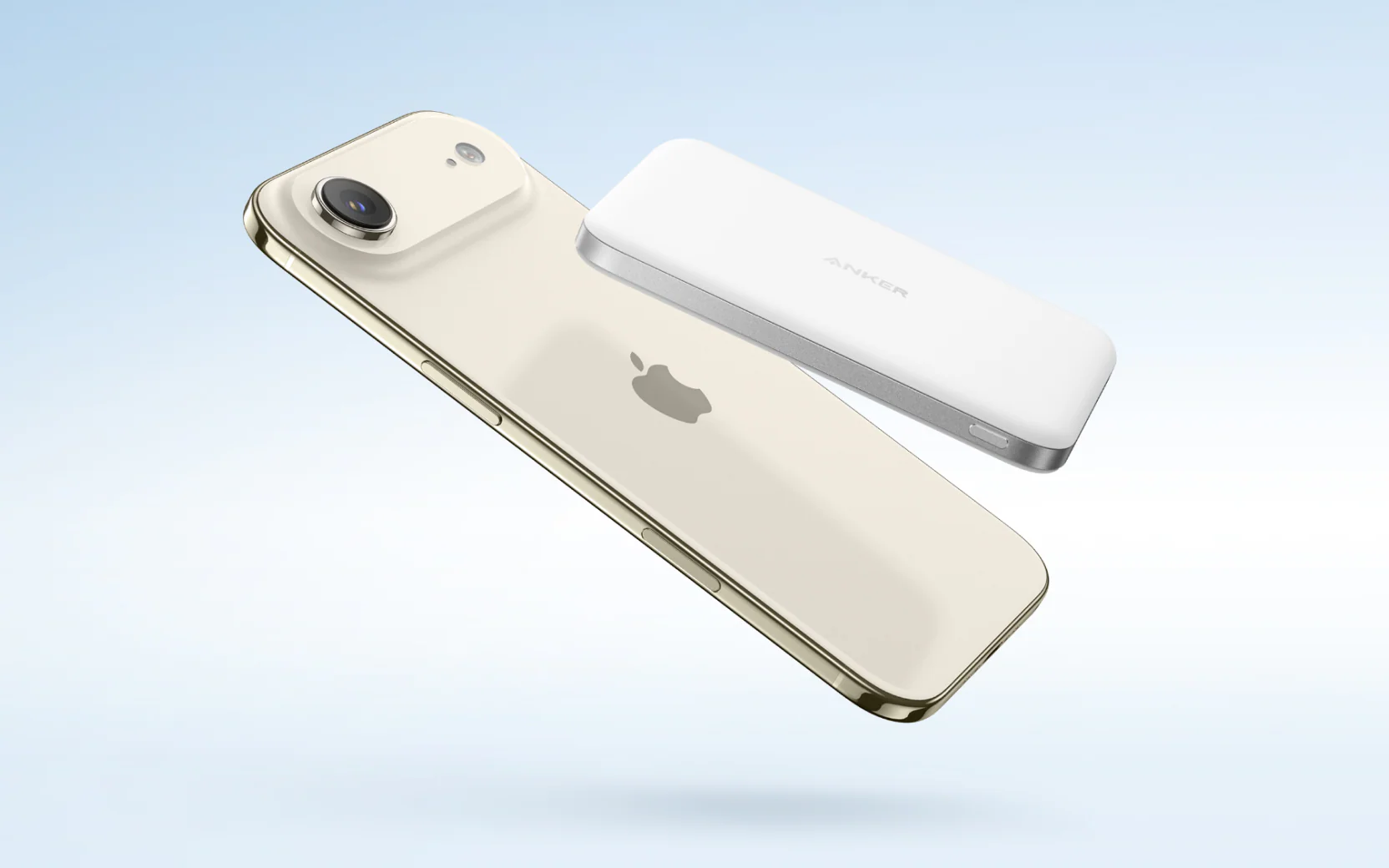
Anker designed the Nano Power Bank to prioritize portability and convenience. At just 0.34 inches thick and weighing 4.3 ounces, this power bank fits easily into a pocket or bag. It charges iPhones with 15W MagSafe-compatible wireless charging and supports 20W USB-C wired charging.
The device recharges itself in under two hours and can charge an iPhone 16 Pro to 25% in 42 minutes. Its skin-friendly back panel and curved edges make it comfortable for daily handling.
This power bank is best for users who need a slim and lightweight option for quick top-ups. However, its 5,000mAh capacity may not be enough for multiple charges or extended use.
2. Anker MagGo Power Bank
Price: $79.86
Capacity: 10,000mAh
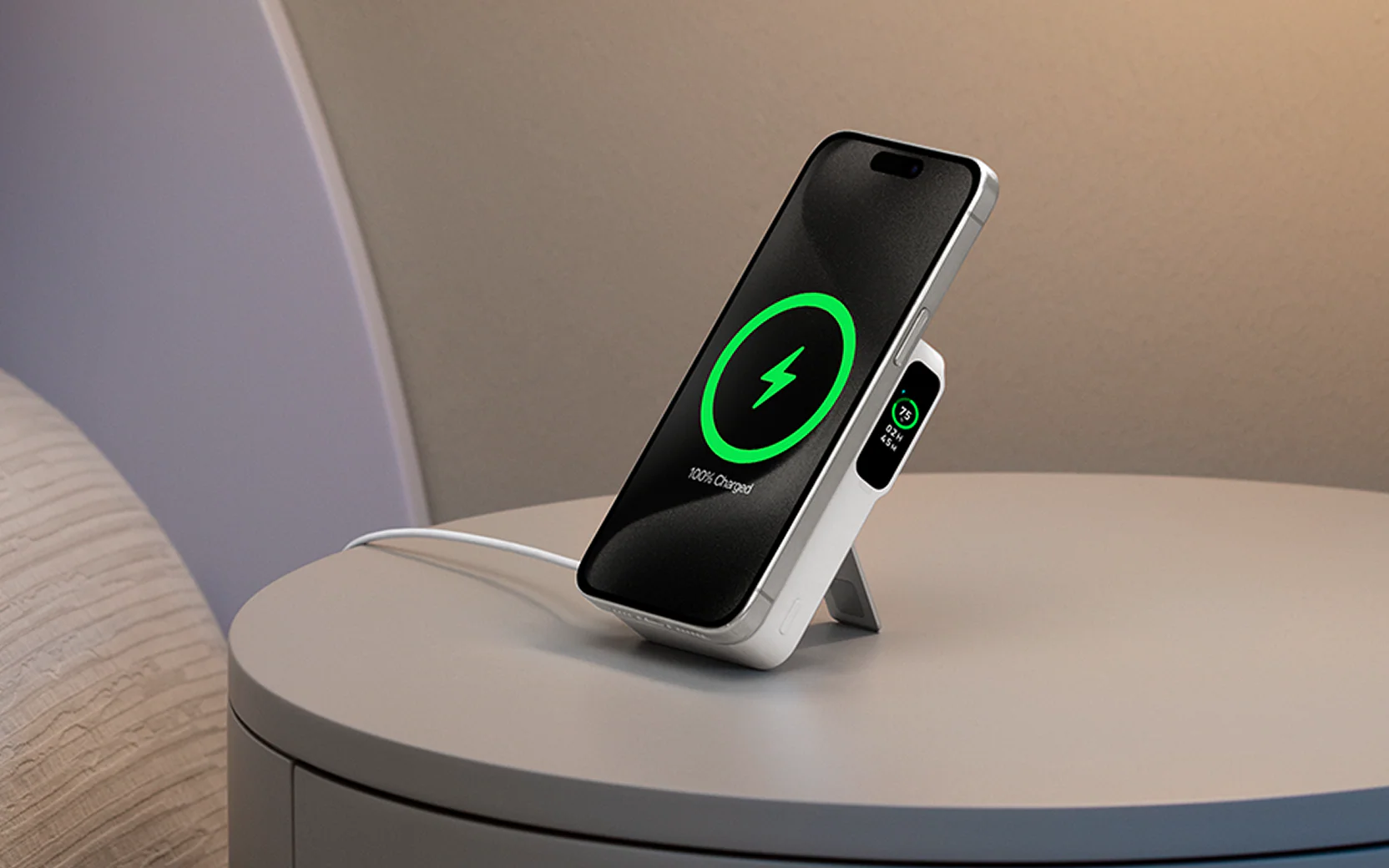
Anker built the MagGo Power Bank to offer both power and functionality. It features 15W Qi2-certified wireless charging and a USB-C port capable of 20W output.
The built-in foldable stand allows users to prop up their phones while charging, making it convenient for video calls or media viewing. The smart display provides real-time information about battery levels and charging times.
This power bank works well for users who need a higher capacity for multiple devices or longer trips. Its weight of 8.82 ounces makes it less portable compared to slimmer models, but the added features justify its size.
3. Baseus PicoGo AM61
Price: $64.99
Capacity: 10,000mAh
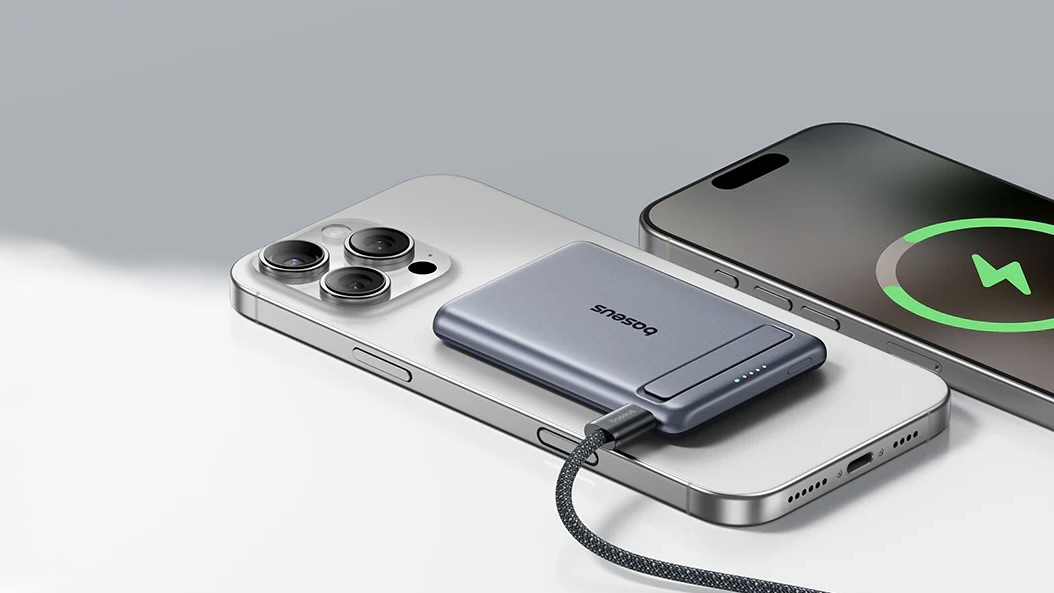
Baseus focused on speed and versatility with the PicoGo AM61. It delivers 25W Qi2.2-certified wireless charging and 45W USB-C wired charging.
The built-in USB-C cable and additional charging port allow users to charge up to three devices at once. Strong magnetic alignment ensures stable wireless charging, while the graphene cooling system prevents overheating.
This power bank is ideal for users who need fast and efficient charging for multiple devices. Its compact design and powerful performance make it a great choice for travelers and heavy users.
4. Sharge Icemag 3
Price: $67.90
Capacity: 10,000mAh
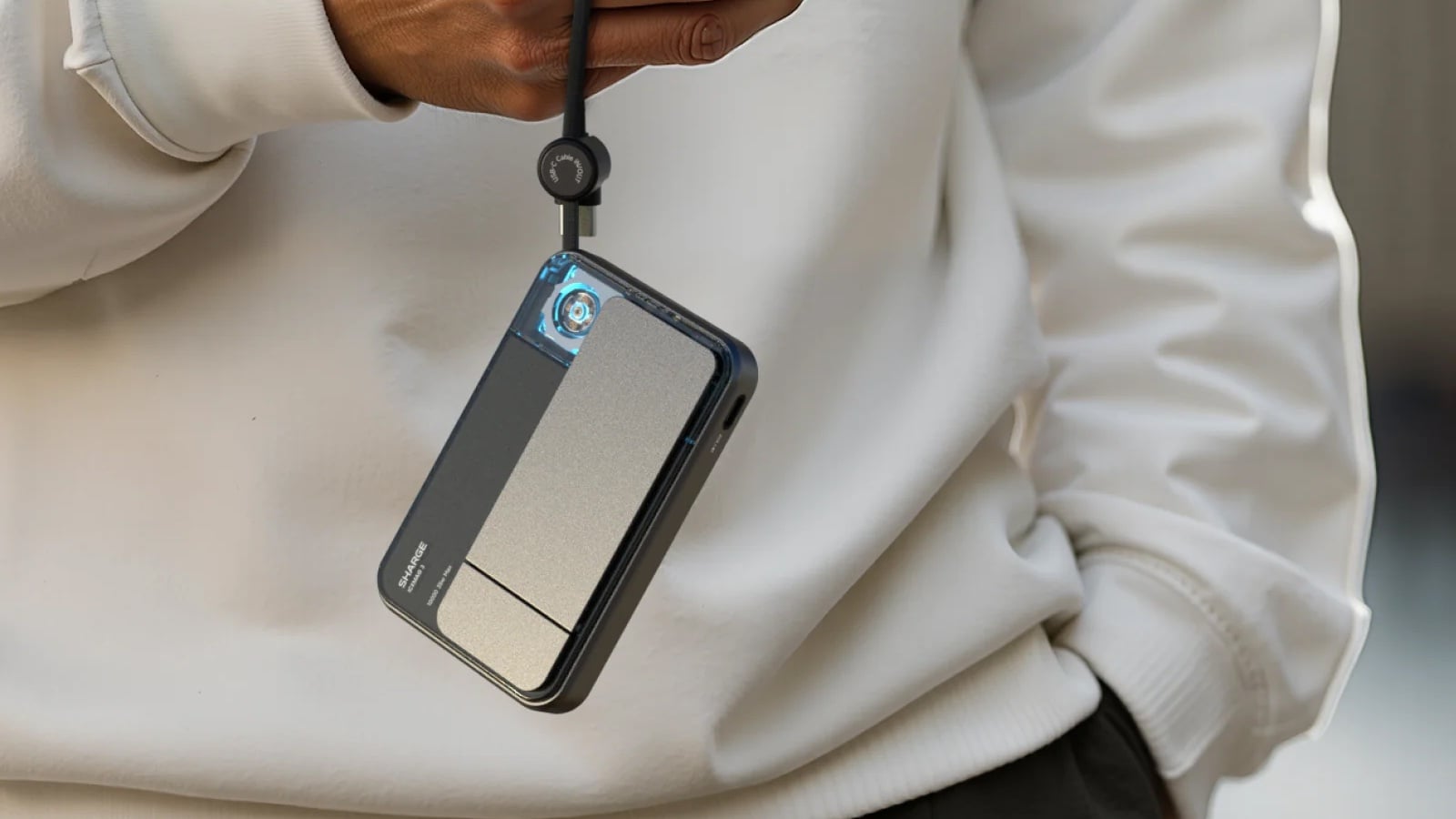
Sharge designed the 3rd generation of its Icemag power bank with a transparent case and dynamic RGB lighting. It supports 25W Qi2 wireless charging and features a side-mounted USB-C cable for 35W wired charging.
It also features a built-in micro-fan that actively cools the device, ensuring consistent wireless charging performance. The integrated kickstand allows for hands-free use while charging.
This power bank targets users who want a stylish and high-tech charging solution. The active cooling system and RGB lighting set it apart from traditional designs.
5. Ugreen MagFlow
Price: $89.99
Capacity: 10,000mAh
Ugreen created the MagFlow to provide reliable power with advanced safety features. It delivers 25W Qi2 wireless charging and 30W USB-C output through a built-in cable. The real-time LED display shows battery levels, and the 13-layer safety system protects against overheating and overcharging.
This power bank works well for users who prioritize safety and high performance. Its built-in cable doubles as a strap, making it easy to carry during travel or daily commutes.
6. Baseus PicoGo AM31 Mini
Price: $59.99
Capacity: 5,000mAh
Baseus designed the PicoGo AM31 as a compact option for users who need a lightweight power bank. It measures just 3.4 x 2.3 inches and weighs 4.8 ounces. The device supports 15W Qi2 wireless charging and 20W wired output. It also features a built-in kickstand that provides hands-free viewing while charging.
This power bank is best for users who need an ultra-portable solution for short trips or quick top-ups throughout the day. Its smaller capacity limits its usefulness for extended charging needs.
7. Belkin BoostCharge Pro
Price: $59.95
Capacity: 5,000mAh
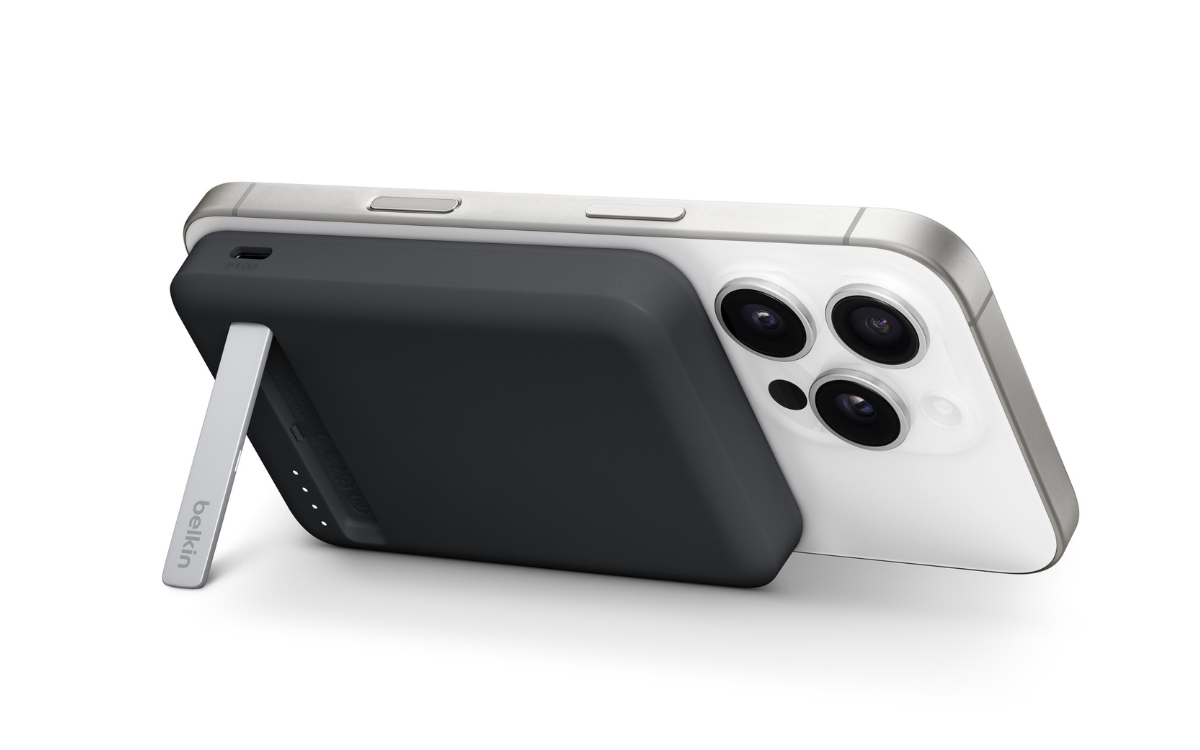
Belkin created the BoostCharge Pro as a versatile and user-friendly charging solution. This power bank supports fast wireless charging up to 15W and is Qi2-certified for MagSafe compatibility. The built-in foldable kickstand lets users switch between pad and stand modes, making it convenient for FaceTime calls, streaming, or multitasking while charging.
Weighing 5.3 ounces, the BoostCharge Pro is compact and travel-friendly. It provides up to 16 hours of extra battery life and includes a USB-C to USB-C cable for fast wired charging. Belkin offers the device in multiple colors, such as Deep Purple, Teal, Pink, and Black, to suit different tastes.
This power bank works well for iPhone users who value convenience and style. Its foldable design and reliable performance make it a great choice for on-the-go use.
8. Xiaomi UltraThin Magnetic Power Bank
Price: $50
Capacity: 5,000mAh
Xiaomi has recently introduced the UltraThin Magnetic Power Bank, which measures only 6 mm thick, making it one of the slimmest magnetic power banks available. It supports 15W wireless charging for Xiaomi 17 devices and 7.5W for iPhones. For faster charging, it offers 22.5W wired charging through its USB-C port.
The power bank features a high-density silicon-carbon battery housed in an aluminum alloy shell with a fire-resistant fiberglass phone-facing side. Four LED indicators display the remaining battery, and a power button lets users control charging. Xiaomi has introduced the device in select global markets, with additional countries expected to follow soon.
This power bank is perfect for users seeking an ultra-slim and lightweight option for daily use.
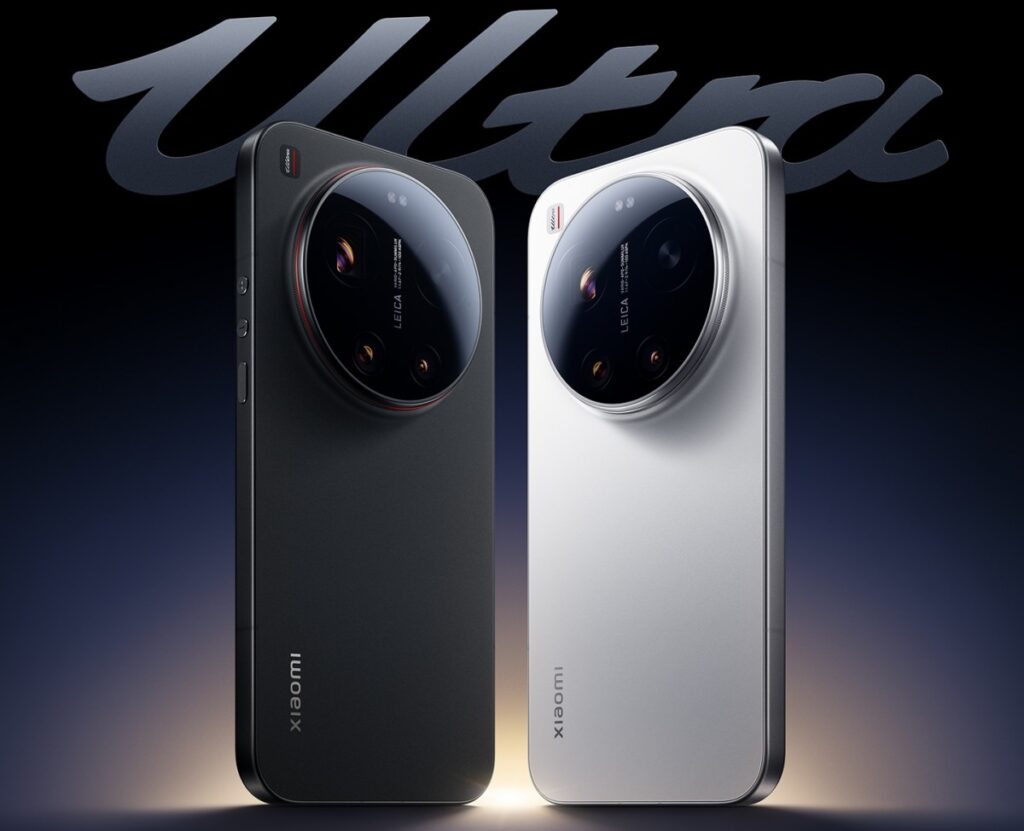
The Xiaomi 17 Ultra has finally entered the DxOMark rankings, and unsurprisingly, it’s among the top camera phones on the market right now. However, Xiaomi still has some work to do to reach the top of the leaderboard.
According to DxOMark, the Xiaomi 17 Ultra scored 166 points for its camera, placing it in 6th position overall.
DxOMark says the device delivers well-balanced photography across all focal lengths. From ultra-wide shots to telephoto zoom, performance is consistent.
The lab also highlights natural subject exposure, rich detail, and stable white balance in most scenes. Color reproduction is described as accurate, too, along with controlled noise, even in low light.
Xiaomi 17 Ultra ranks among the best camera phones per DxOMark
The hardware, of course, plays a big role here. The phone features a 50MP main camera with an f/1.7 aperture, 23mm focal length, dual-pixel phase detection autofocus, and optical image stabilization.
There’s also a 50MP ultra-wide camera at f/2.2 and 14mm. The standout on paper is the 200MP telephoto lens, offering a variable f/2.4–3.0 aperture, 75–100mm focal length, PDAF, OIS, and 3.2x to 4.3x optical zoom.
DxOMark gave the device 170 points for overall photo performance. Breaking that down further, the main camera earned 171 points, bokeh scored 175 points, the ultra-wide scored 160 points, and zoom scored 169 points.
The telephoto performance, in particular, is said to be high-level, which delivers strong detail at longer focal lengths and natural-looking background separation in portrait shots.
Video, however, is where the Xiaomi 17 Ultra shows some limitations. The overall video score stands at 157 points. The main camera’s video performance scored 164 points, while the ultra-wide and telephoto video results were lower at 144 and 132 points, respectively.
DxOMark notes that while brightness and exposure are generally good indoors and outdoors, low-light video still struggles more than the best devices in its class. Zoom transitions during video recording can also appear noticeable.
There are a few other trade-offs, like group photos can sometimes result in foreground subjects appearing slightly out of focus. And although texture and noise are well balanced in photos, low-light video doesn’t maintain the same consistency.
In terms of competition, the Xiaomi 17 Ultra didn’t overtake the Huawei Pura 80 Ultra at the top of the rankings. Still, it managed to outperform several high-profile devices, including the Magic 8 Pro, Pixel 10 Pro XL, and iPhone 16 Pro Max.
For more daily updates, please visit our News Section.
Lenovo has just teased its 5th Gen Legion Y700 once again. The fresh teaser posters have confirmed that the gaming tablet will arrive with various AI powered tools that help improve the network connectivity and offer better eye protection. So here’s what we know.
Lenovo Legion Y700 2026 Teased
Lenovo Legion Y700 (2026)
The Chinese brand announced that the Legion Y700 2026 will arrive with multiple eye protection modes and adaptive ambient light adjustment. Lenovo has backed this with a TÜV Rheinland certifications for low light emission and flicker-free performance. Based on the previous teasers, the Legion Y700 5th Generation sports a relatively compact 8.8-inch display with a 3040 x 1904 resolution, a 165Hz refresh rate, a 2640Hz instant touch sampling rate, a 480Hz multi-finger sampling rate, and 800 nits of peak brightness.
Alongside the screen enhancement, Lenovo is also teasing “Super Internet 3.0” connectivity features for the Legion Y700. This suite of tools includes cross-ecosystem functions like iOS drag-and-drop game asset uploads, immersive game notification sharing, and the ability to convert a PC into a secondary gaming screen with minimal setup. For multiplayer titles and competitive play, AI Network Acceleration promises to cut lag and smoothing out connections in complex network environments.
Lenovo Legion Y700 (2026) display-
Other rumored features include a 50MP main camera on the rear, RGB lighting, a massive 9,000mAh battery pack with 68W wired fast charging support, dual USB-C ports, and Qualcomm’s latest and greatest Snapdragon 8 Elite Gen 5 SoC with up to 24GB of RAM and 1TB of internal storage.
For more daily updates, please visit our News Section.
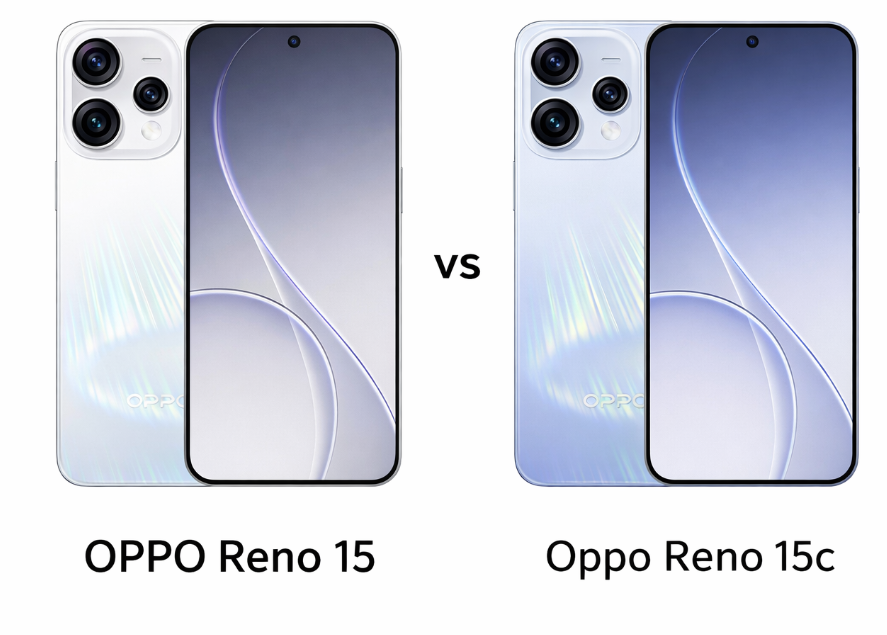
Choosing between two nearly identical smartphones can be harder than picking between completely different models. The OPPO Reno 15 5G and Reno 15c 5G share the same chipset, cameras, battery size, and display specs, yet there’s a noticeable price gap between them. That raises an important question: are the premium touches on the Reno 15 worth the extra money, or does the Reno 15c quietly deliver the better deal?
This comparison breaks down where the real differences lie and which one truly makes more sense for your budget in 2026.
Major Features:
Feature
OPPO Reno 15 5G
Oppo Reno 15c 5G
Winner
Build Quality
Gorilla Glass 7i + aluminum frame
Scratch-resistant glass
Reno 15 – Premium materials feel more refined and durable.
Both phones share a premium, symmetrical design language with IP68/IP69 protection and a sleek profile. The Reno 15 5G stands out with Gorilla Glass 7i protection and an aluminum frame, giving it a slightly more refined, flagship-leaning feel. The Reno 15c 5G keeps things sturdy with scratch-resistant glass and the same durability ratings, but without the added premium materials. In hand, the Reno 15 feels a touch more polished, while the 15c focuses on practicality without losing visual appeal.
Display Quality
Each device features a 6.59-inch AMOLED panel with 1B colors, 120Hz refresh rate, and strong brightness levels. Resolution and color reproduction are identical, delivering sharp visuals and smooth scrolling. The Reno 15 supports HDR10+, adding a slight edge in streaming quality, while the Reno 15c includes 3840Hz PWM dimming for better eye comfort. The difference is subtle, but HDR support makes the Reno 15 feel more premium for media lovers.
Verdict
Reno 15 5G offers a more flagship-style build and HDR support, while Reno 15c delivers similar visuals at a lower cost.
2. Specifications
Performance
Both smartphones are powered by the Snapdragon 7 Gen 4 paired with UFS 3.1 storage and run Android 16 with ColorOS 16. Performance is virtually identical, smooth multitasking, stable gaming, and efficient thermal management. The Reno 15 offers more RAM variants, including 8GB options, while the Reno 15c starts at 12GB RAM. Day-to-day performance will feel equally fast, and most users won’t notice a difference in real-world speed.
Battery and Charging
Each device packs a 6500mAh battery with 80W wired charging support. Charging standards and speeds are nearly identical, promising a full charge in under an hour. The Reno 15 confirms 100% in 50 minutes, offering clearer expectations. Endurance on both models is excellent, easily lasting a full heavy-use day. The Reno 15c uses a silicon-carbon battery, which may offer long-term efficiency benefits.
Verdict
Performance and battery are evenly matched, with the Reno 15 having a slight edge in charging clarity and variant flexibility.
3. Camera
Main and Secondary Lenses
Both phones feature identical triple-camera setups: 50MP main with OIS, 50MP telephoto with 3.5x optical zoom and OIS, plus an 8MP ultrawide. Image processing, video capabilities (4K up to 60fps), and stabilization features are the same. Daylight shots should be detailed and vibrant, while the telephoto zoom adds genuine versatility. With no hardware difference, photography performance will feel nearly identical across both devices.
Selfie Camera
Each model includes a 50MP ultrawide front camera with autofocus and 4K recording. Selfies are expected to be sharp with good dynamic range, making both suitable for content creators and video calls. Autofocus on the front camera is a notable strength in this segment.
Verdict
Camera performance is essentially identical. Neither device has a real advantage here.
4. Pricing
The Reno 15 5G is priced around $500 / ₹46,000, while the Reno 15c 5G comes in at approximately $400 / ₹35,000. That ₹11,000 gap is significant considering the hardware similarities. Both devices share the same chipset, cameras, display specs, and battery capacity. The Reno 15 justifies its higher price with Gorilla Glass 7i, HDR10+, and confirmed fast-charge timing. However, the Reno 15c delivers nearly the same experience for substantially less money.
For buyers focused on performance and camera value, the Reno 15c feels like the smarter purchase. The Reno 15 positions itself slightly closer to flagship territory, but the gap in real-world experience is minimal.
Verdict
Reno 15c 5G offers stronger value for money, while Reno 15 5G appeals to those wanting premium build refinement.
Disclaimer: Prices are approximate and may vary based on country, region, and applicable taxes.
5. Conclusion
The Reno 15 5G differentiates itself with Gorilla Glass 7i, HDR10+ support, eSIM capability, and broader RAM configurations. It targets users seeking a more premium finish and added flexibility. The Reno 15c 5G counters with Wi-Fi 6 support, silicon-carbon battery tech, and a noticeably lower price while keeping the same performance and camera hardware.
The real-world user experience between the two remains extremely close. Everyday tasks, gaming, streaming, and photography performance should feel nearly identical.
Verdict
If premium materials and HDR streaming matter, Reno 15 5G makes sense. For most buyers, Reno 15c 5G delivers nearly the same flagship-like experience at a far better price, making it the more balanced choice overall.
TECNO has officially introduced the POVA Curve 2 5G, expanding its popular POVA lineup. The phone was announced on February 13, 2026, in Hong Kong and will be available in India later this month. The device is also being showcased at Mobile World Congress 2026 (MWC 2026).
The company confirmed that the smartphone will receive two major Android OS upgrades, ensuring longer software support.
Slim Yet Powerful Design
One of the biggest highlights of the POVA Curve 2 5G is its slim profile. The device measures just 7.42mm thick and weighs 195g, despite packing a massive 8000mAh battery, the largest ever in a TECNO phone. It is claimed to be among the slimmest smartphones in its segment with such a large battery.
The phone features a curved AMOLED display and a futuristic design inspired by interstellar spacecraft. It comes in three color options: Melting Silver, Storm Titanium, and Mystic Purple.
For durability, the device carries IP64 dust and water resistance, SGS-certified 1.5m drop protection, and Corning Gorilla Glass 7i. It is also designed to operate in extreme temperatures ranging from -20°C to 60°C.
Massive Battery with Fast Charging
The POVA Curve 2 5G houses an 8000mAh high-density battery, which is 2500mAh larger than its predecessor. It supports 45W fast charging and includes bypass charging technology to reduce heat during gaming or while plugged in.
The battery is TÜV SÜD certified and is engineered to maintain performance for up to six years, according to the company.
Smooth Performance and Display
Powering the device is the MediaTek Dimensity 7100 processor, offering 5G connectivity and stable performance. The phone sports a 144Hz curved AMOLED display for smoother scrolling and enhanced gaming visuals.
Connectivity is improved with dual-signal enhancement chipsets, helping users get stronger cellular and Wi-Fi signals in weak or crowded network areas. The device also supports offline voice, text, and image communication up to 1.5km.
AI Features and Smart Tools
Running on HiOS 16, the smartphone introduces several AI-powered tools. These include AI content summarization, writing assistance, call noise reduction, and automatic photo enhancement.
It also offers productivity features like FlashMemo for capturing on-screen content instantly and Mind Hub to organize saved insights. Region-specific features such as AI-powered Muslim prayer reminders are included as well.
The Ella assistant provides personalized support and natural voice interaction across various tasks.
With its large battery, slim design, and gaming-focused features, the POVA Curve 2 5G continues the POVA series’ identity of delivering power with comfort.
Lava has introduced a new entry-level smartphone in India, the Lava Yuva Star 3, and it’s clearly aimed at buyers who just want a simple, reliable phone without spending much.
Priced at ₹7,499 for the single 4GB + 64GB variant, the device will be available in Indus Black and Siachen White. Sales are expected to begin in March 2026 through offline retail stores.
The Yuva Star 3 features a 6.75-inch HD+ LCD panel with a 90Hz refresh rate. In daily use, the higher refresh rate should make scrolling and basic navigation feel smoother. There’s a waterdrop notch at the top housing a 5MP front camera.
Powering the device is the Unisoc SC9863A processor. It’s designed to handle basic tasks like calling, WhatsApp, YouTube, and light apps.
The phone runs Android 15 Go Edition, Google’s lightweight version of Android designed specifically for entry-level hardware. If Lava keeps it close to stock, that could actually improve long-term usability.
The Yuva Star 3 packs a 5,000mAh battery with 10W charging via USB-C. The charger is included in the box.
On the back, there’s a 13MP main camera along with a secondary depth sensor. For selfies, you get a 5MP front shooter. This setup is basic and clearly meant for casual photography rather than anything serious. Interestingly, Lava claims an IP64 rating for dust protection and resistance to water splashes. For security, there is a side-mounted fingerprint sensor
At ₹7,499, the Yuva Star 3 isn’t trying to compete with mid-range devices. Instead, it focuses on essentials: a smooth display, clean software, solid battery life, and service support. For anyone looking for a secondary phone, this could be a practical option.
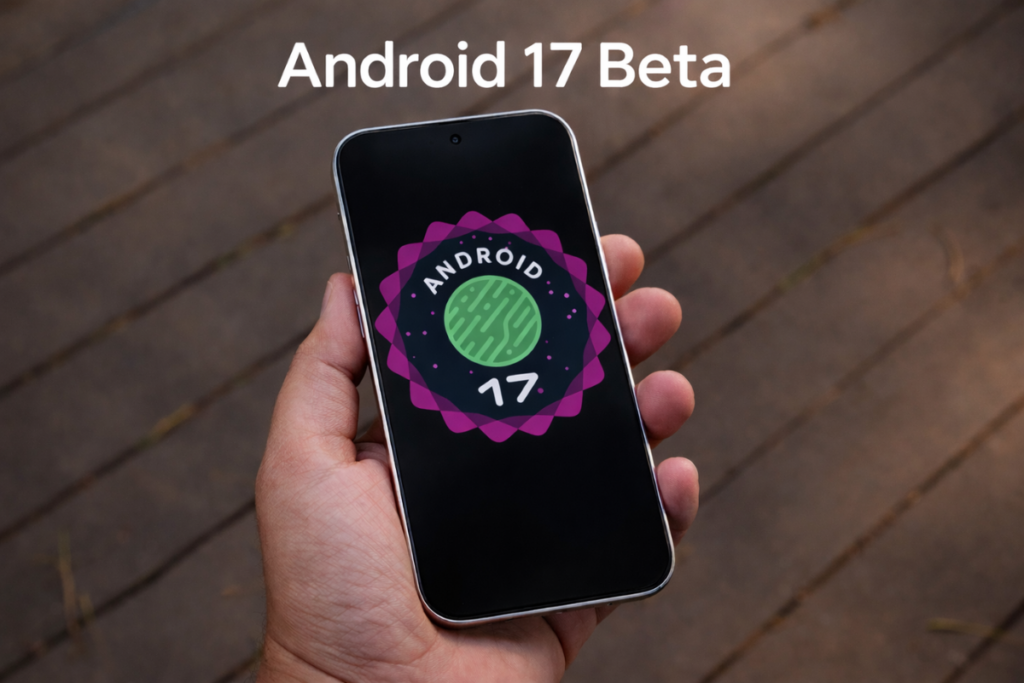
Just three days ago, Google confirmed that Android 17 Beta 1 is coming, and now it’s here. We weren’t expecting the first beta to be released so quickly, but it’s here with improvements to privacy, security, and performance. There are some significant changes as well, which we’ll discuss in the article, along with the eligible devices list and installation steps.
Which devices are eligible for Android 17 beta?
Google Pixels are the first in line to receive the latest beta update, and this year is no different. For now, Android 17 Beta 1 is available for Google Pixels, and it will soon be available on devices from other brands.
So, here’s a list of Google Pixel devices eligible for Android 17 beta:
Pixel 6
Pixel 6 Pro
Pixel 6a
Pixel 7
Pixel 7 Pro
Pixel 7a
Pixel Tablet
Pixel Fold
Pixel 8
Pixel 8 Pro
Pixel 8a
Pixel 9
Pixel 9 Pro
Pixel 9 Pro XL
Pixel 9 Pro Fold
Pixel 9a
Pixel 10
Pixel 10 Pro
Pixel 10 Pro XL
Pixel 10 Pro Fold
In short, if you have a Pixel 6 or older, you can install the Android 17 Beta 1 build and get a taste of the latest features and all the upgrades without waiting months for the stable rollout.
How to install Android 17 Beta 1 on Google Pixels?
If your Google Pixel is running Android 16 QPR3 Beta 2.1 and you haven’t exited the beta program, you should automatically receive the Android 17 Beta 1 update. The update should be available at Settings > System > Software Updates > System Updates. Other users should follow the process as mentioned below.
If you’re not already part of the beta program, visit google.com/android/beta and “Opt in” on your selected device. Make sure you’re logged into the website with the same Google account. After opting in, you should be able to install the latest beta update on your Google Pixel from the Software Updates section in the Settings app.
Before installing any beta update, it’s advised to back up important data to another device or a cloud storage for added safety.
Android 17 Beta 1: What’s new and what’s improved?
The first beta of Android 17 is mostly developer-focused and marks the transition from the traditional “Developer Preview” model to a continuous “Android Canary” program. The Canary channel offers faster access to features and APIs, quicker stability, and eliminates the need for manual flashing.
As for the changes, the first beta enforces stricter requirements for app behaviour on large-screen devices (smallest width ≥ 600dp), preventing apps from opting out of resizability and orientation changes. These changes do not affect smaller devices (sw < 600dp).
Furthermore, apps running on larger screens, such as tablets, foldables, or desktop windowing environments, must now support landscape and portrait layouts and adapt to resizable windows.
Android 17 introduces several low-level changes to improve app efficiency and system health, including a Lock-free MessageQueue to reduce missed frames, Generational Garbage Collection to reduce the CPU cost and duration of full-heap collections, and Strict “Static Final” Fields to allow the runtime to apply more aggressive performance optimizations.
The update also includes important camera upgrades, including Dynamic Camera Sessions to enable seamless transitions between modes, Constant Quality Recording for extended control, and Versatile Video Coding (VVC) on devices with supported hardware.
Additionally, the latest beta build includes an improved audio framework, enhanced VoIP call history (supporting avatars and privacy controls), and Wi-Fi Ranging updates (Proximity Detection and 11az secure ranging). The CompanionDeviceManager now features two new profiles, Medical Devices and Fitness Trackers, for streamlined permission handling and device identification.
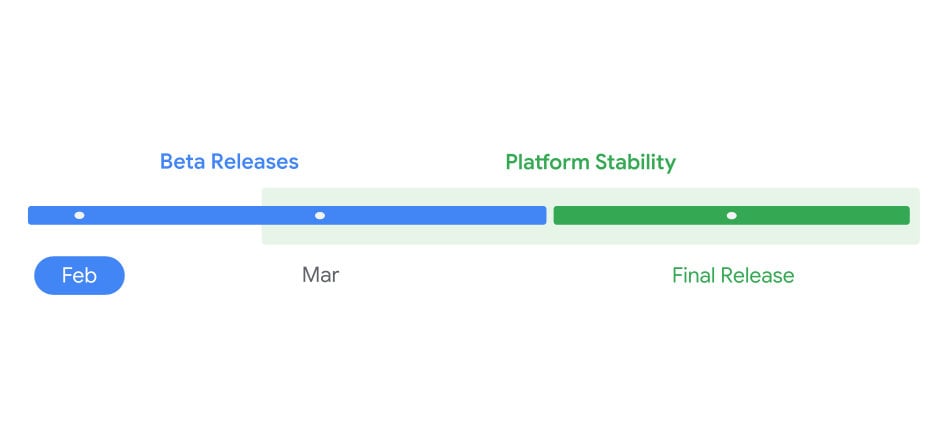
According to the official timeline, the “Platform Stability” phase begins next month. At this point, SDK/NDK APIs and app-facing behaviors will be finalized. The stable release could arrive sometime in Q3 2026.
We’ll continue to update you with fresh developmenets in our Android 17 section. You can visit it regularly for the latest updates. Or, join our Telegram channel to get instant notifications about the latest happenings in tech.
LG has expanded its xboom audio range in partnership with nine-time Grammy winner will.i.am. The company has introduced two new true wireless models, the LG xboom Buds Plus and the LG xboom Buds Lite. These earbuds were initially released in South Korea in September 2025 and are now rolling out more widely. Both models are part of the “xboom by will.i.am” lineup, with will.i.am closely involved in tuning and shaping the sound profile.
According to LG, the earbuds are tuned to deliver balanced warm tones that reflect will.i.am’s sound preferences. The new models were presented at the FYI Visionaries event, where the expanded xboom lineup was showcased.
LG xboom Buds Plus
The Buds Plus are designed as the most advanced model in the lineup. They feature a UVnano+ charging case that uses UV-C light to reduce bacteria on the earbud speaker mesh. Independent testing shows that the UVnano system eliminates 99.9 percent of Escherichia coli, Staphylococcus aureus, and Klebsiella pneumoniae within ten minutes of charging when the case is connected to a power cable. Users can also set the UV function to activate automatically whenever the earbuds are placed inside the case and the lid is closed.
Active Noise Cancellation is supported through a three-microphone system that improves noise detection and reduction. With ANC turned off, the earbuds provide up to 10 hours of continuous playback. The charging case adds up to 20 more hours, bringing total playback to up to 30 hours. Actual battery life depends on usage and settings.
The Buds Plus also support 3D Spatial Audio for a wider soundstage and multi-point connection for switching between devices without disconnecting. Users can adjust sound through customizable EQ settings. The earbuds carry an IPX4 rating under IEC 60529 standards, meaning they are resistant to splashes of water. They should be dried before use and must not be charged while wet. The charging case is not IPX4 rated.
A built-in Bluetooth transmitter allows the Buds Plus to connect wirelessly to devices that have a headphone jack, such as in-flight entertainment systems or treadmills. Compatibility may vary depending on the device.
LG xboom Buds Lite
The Buds Lite focus on portability with a compact and lightweight design. They deliver up to 11.5 hours of continuous playback from the earbuds. With the charging case, total playback reaches up to 35 hours when ANC is turned off. Actual performance varies based on usage.
The Buds Lite use a single microphone to monitor ambient noise, which results in a different ANC experience compared to the three-microphone system on the Buds and Buds Plus. They also include customizable EQ settings and carry an IPX4 water resistance rating for protection against splashes.
The LG xboom Buds Plus are priced at $179.99 and are available now on LG.com and through LG authorized retailers across the United States. The LG xboom Buds Lite are priced at $69.99 and are also available online and at authorized retailers nationwide.
Sharge, a brand known for bold power solutions and eye-catching tech accessories, has just announced a new power bank that brings impressive specs packed in a futuristic design. The Shargeek 300 Power Bank just debuted as a next-gen portable charger that pairs serious output with a transparent body. So here are all the details.
Shargeek 300 Power Bank Specifications
Under the hood, the Shargeek 300 packs a massive 24,000mAh capacity, which sits right at the upper limit for airline-safe power banks. That kind of muscle means it can keep smartphones, tablets, laptops and more powered up without needing a wall socket for a long stretch, making it ideal for travel, work setups, and outdoor use. Sharge’s new power bank doesn’t just store a lot of juice, it moves it fast too. The unit delivers a combined maximum output of 300W, which is spread across two USB-C ports, a USB-A port, and a DC output.
Shargeek 300 Power Bank
Each of the USB-C ports can push up to 140W, which is enough to charge some power-hungry laptops as well. Meanwhile, the DC output can be tuned between 25W and 140W for flexible use with gear like monitors, routers, or even small home electronics. A standout feature is the Shargeek 300’s semi-transparent body and RGB accent lighting, giving it a look more aligned with futuristic hardware than traditional power banks.
This also gives you aglimpse into the internal components and a built-in smart display that shows key data like remaining battery capacity, input/output wattage, and temperature. You also get support for up to 140W fast charging for fast top-ups. The Shargeek 300 has just launched on Kickstarter, with early-bird pricing starting at about $149. After the initial discount, the estimated backing price during the crowdfunding period is around $159 before its expected delivery around May 2026.
For more daily updates, please visit our News Section.
OnePlus has commenced the global rollout of OxygenOS 16 (based on Android 16) for the OnePlus Pad Lite, beginning with Indian users. The update (versions OPD2481_16.0.3.500 and OPD2480_16.0.3.500) introduces substantial performance improvements and AI-powered features across the operating system.
OnePlus Pad Lite
Performance Updates
The Trinity Engine optimizes workload distribution in real-time, improving storage read/write operations and RAM compression. Background resource management has been updated to reduce power drain during intensive tasks, and power-saving modes now adjust performance based on battery levels. Apps launch faster from the home screen, with improved scrolling and touch responsiveness.
Parallel processing updates include animations for text selection magnifiers, status bar transitions, and audio playback controls. Swipe-back gestures now show previews of previous pages with motion tracking, and the Luminous Rendering Engine adds light field motion effects.
AI Features
The Photos app has updated navigation with clearer categories and personalized sorting. Video editing now includes splitting, merging, speed adjustment, transitions, and background music. Users can swipe up to view photo details.
Notes include block editing mode for formatting and repositioning text, images, tables, and documents. Text highlighting, font switching, and quick formatting access via “/” command are now available. Notes can be shared as single links containing all media types.
Interface Changes
The Flux Home screen uses light field styling for icons and has optimized grid layouts and customizable folder configurations. Users can remove icon labels, add more dock apps, and access drawer organization with category sorting and app suggestions.
Lock screen customization includes custom text and configurable corner shortcuts. Flux themes adjust icon styles to match wallpaper colors, with dark mode options available.
Connectivity and Additional Changes
OnePlus Connect groups device settings by type. My Devices appears in Quick Settings and home screen widgets for device management. AI LinkBoost updates kernel scheduling for app connectivity.
Other changes include earbuds-only ringtones, redesigned Smart Sidebar, faster iOS data migration, and updated notification management with Quick Settings customization.
Casio has added a sleek new model to its classic digital lineup in the United States, blending retro styling with everyday features and a genuine leather strap for a more refined look. It is the Casio Vintage LA680WEL-1, which was previously announced in Japan.
Casio’s Vintage Digital Watch Goes Global
The Casio Vintage LA680WEL-1 US release follows its recent debut in Japan and brings a vintage-inspired design to a fresh generation of watch buyers. This model pairs a streamlined digital face with a silver-colored chrome-plated resin bezel and a black genuine leather band that has an embossed pattern for added character. The design nods to Casio’s heritage while giving it a slightly more upscale finish suitable for everyday wear.
Casio Vintage LA680WEL-1 Watch Launch with Leather Straps
The watch measures just 15 grams, making it a compact and lightweight wearable piece. So it’s perfect for wrists that find many modern smartwatches too bulky. Under the polished exterior, Casio hasn’t skimped on useful features. The LA680WEL-1 includes a digital display offering 12/24-hour time formats, an automatic calendar to stay accurate, a daily alarm, 1/100th second stopwatch, an amber LED backlight, and water resistance.
What makes this release stand out from other Casio digital classics is its genuine leather strap. It is a notable departure from the usual resin or metal bands for many digital models. That leather band gives the LA680WEL-1 a slightly dressier edge, making it easier to wear with both casual and business outfits. This contrasts with Casio’s longstanding tradition of resin-strapped digital watches, but fans of retro designs with a modern twist should appreciate the aesthetic here. Casio has listed the Vintage digital watch at its official US online store for 54.95 US Dollars.
For more daily updates, please visit our News Section.
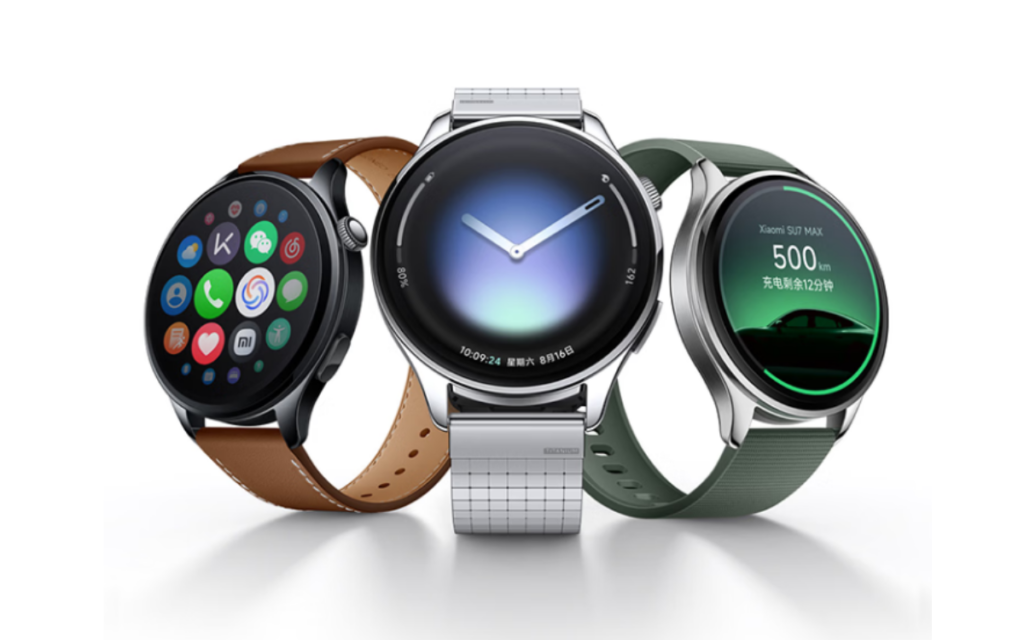
Xiaomi‘s latest flagship smartwatch could finally be getting a release outside of China. A fresh leak has suggested that the Xiaomi Watch 5 is rolling out in the global market. The wearable first debuted in the brand’s home market back in December 2025, so here’s what we know about its wider launch.
Xiaomi Watch 5 Global Launch
After the initial announcement alongside the Xiaomi 17 Ultra, recent leaks suggest that the premium smartwatch could launch beyond its home market with premium specs, robust health tracking, and Google Play support. Unlike the China-only version that currently runs Xiaomi’s local software layer and HyperOS integration, the global Watch 5 is tipped to switch to WearOS. This would mark Xiaomi’s return to a broader smartwatch ecosystem with direct access to Google’s app store, Tiles, assistants and more.
Xiaomi Watch 5
In other words, the smartwatch would likely compete directly with the likes of the Google Pixel Watch and Samsung Galaxy Watch series that also run on WearOS. Early details from European price leaks point to the Watch 5 being listed in Czechia for around 7,990 CZK (roughly 390 US Dollars). The earlier listing also reveals the smartwatch in two color options, Black and Juniper Green. This is for the 47mm case, and hints at an imminent launch.
While specs for the global model are expected to mirror what’s already on offer in China, here’s what buyers are likely to get:
1.54-inch AMOLED display
Dual-chip architecture with Snapdragon W5
Advanced health sensors (ECG, SpO2, and more)
Stainless steel body
5ATM water resistance
Battery life details suggest multi-day endurance, offering around six days in smart mode and over 18 days in the power saving mode.
For more daily updates, please visit our News Section.
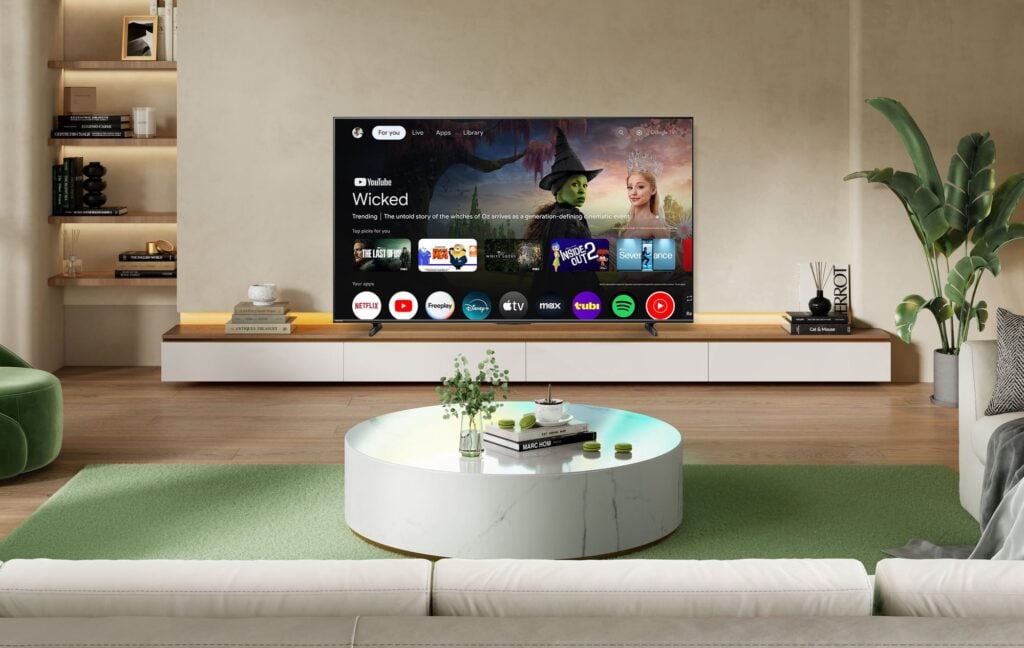
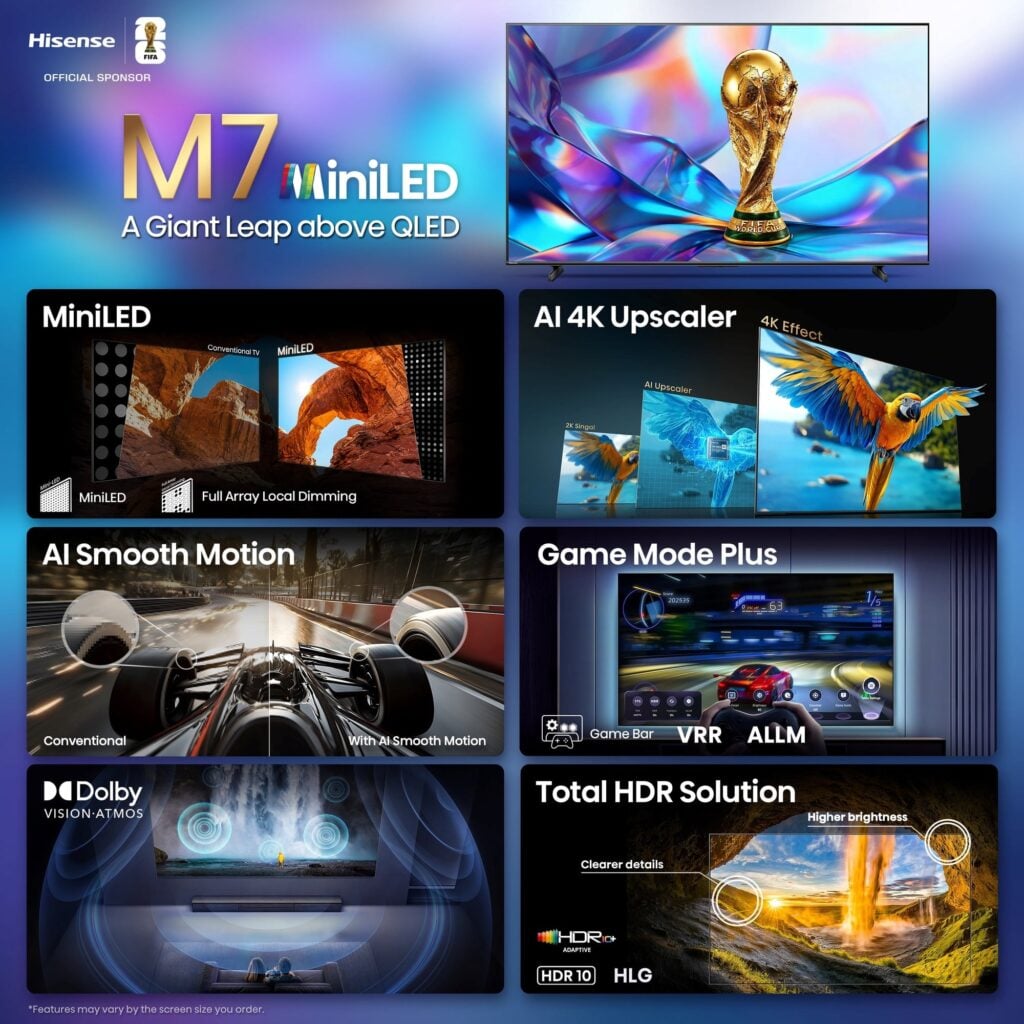
Hisense has released its M7 Mini-LED TV series in the United States, targeting budget-conscious buyers seeking premium display technology. The lineup includes 50-inch, 55-inch, and 65-inch models, with the smaller two sizes already available at Walmart for $278 and $298, respectively.
The M7 Series delivers 4K UHD resolution at 3,840 × 2,160 pixels with a 60Hz refresh rate. Mini-LED backlighting enhances contrast by producing deeper blacks and brighter highlights than traditional LED displays. Hisense’s Hi-QLED Color technology aims to improve color accuracy and maintain visibility in well-lit environments.
The TV supports Dolby Vision, HDR10+, and HLG formats. An AI-powered 4K upscaler analyzes textures and edges in lower-resolution content to reconstruct detail for improved sharpness. AI Smooth Motion reduces blur in fast-moving scenes, which can benefit sports and action content.
For gaming, the M7 includes Game Mode Plus with Variable Refresh Rate and Auto Low Latency Mode on the 60Hz panel. These features are designed to reduce input lag and screen tearing. A built-in Game Bar provides access to real-time performance settings.
The M7 runs Google TV, providing access to major streaming platforms including Netflix, YouTube, and Disney+. Google Assistant enables voice control, while Google Cast supports wireless screen mirroring from compatible devices.
Connectivity options include Wi-Fi, Bluetooth, and multiple physical ports: four HDMI 2.0 inputs, USB 2.0 Type-A, Ethernet, optical audio output, cable/antenna input, and a 3.5mm AV composite jack.
For more daily updates, please visit our News Section.
Xiaomi is preparing to launch the new TV S Mini LED 2026 lineup globally soon, bringing its next generation Mini LED TV to markets outside of China. The new smart TV is set to debut with ultra high resolution, Google TV support, and much more. So here’s what we know.
Xiaomi TV S Mini LED 2026 Global Launch
The upcoming 2026 TV S Mini LED was just spotted on the Chinese tech giant’s international website. Xiaomi’s new series spans a wide range of screen sizes and packs smart TV features/ The 2026 TV S Mini LED family will be available in multiple screen sizes, namely 55-inch, 65-inch, 75-inch, 85-inch and even a massive 98-inch option. Every size delivers 4K UHD resolution (3,840 × 2,160), and the platforms run Google TV, giving users access to top streaming apps and smart assistants such as Google Assistant, Google Cast and Apple AirPlay.
Xiaomi TV S Mini LED 2026
All models also come with dual 15 W built-in speakers, connectivity options like Wi-Fi and Bluetooth, and broad port support for HDMI and USB. The TV S Mini LED 2026 lineup steps up picture quality with Mini LED backlighting. All four size options arrive with a peak brightness of around 1,200 nits, 94% coverage of the DCI-P3 color gamut, and support for popular HDR formats such as HDR10+ and HLG.
When it comes to fluid motion and gaming, the 85-inch and 98-inch variants stand out with a native 144Hz refresh rate. This makes it ideal for action sports, movies, and video games. Meanwhile, the smaller sizes (55″, 65″, 75″) feature 60Hz refresh rates with robust HDR support. Other notable features include MEMC support, WiFi 5, Bluetooth 5, HDMI, and HDMI 2.1 ports on the three smaller options. Meanwhile, the 85 inches and 98 inches models get WiFi 6, Bluetooth 5.2, and more HDMI 2.1 ports.
For more daily updates, please visit our News Section.
As the Year of the Dragon festivities kick off in China, Xiaomi has given its camera app a festive twist with three new limited-time camera watermarks for devices running HyperOS 3. These themed overlays add a holiday vibe to your photos. So let’s check it out.
Xiaomi HyperOS 3 Update Brings Chinese New Year Watermarks
As the Year of the Dragon festivities kick off in China, Xiaomi has given its camera app a festive twist with three new limited-time camera watermarks for devices running HyperOS 3. These themed overlays add a holiday vibe to your photos. But keep in mind, this new addition isn’t permanent. The Chinese tech giant is only offering these special watermarks for a limited time.
Xiaomi HyperOS 3 Chinese New Year Watermark
These are currently region-exclusive and available in devices running on the latest HyperOS 3 build. The new watermarks lean into traditional Chinese New Year symbolism and are designed to give your snapshots an auspicious feel. There are three new options available, which include:
Red Koi Fish: A vibrant red koi motif that represents luck, perseverance, and prosperity, with its tail elegantly arched in motion.
Traditional Lion Dance: A stylized lion dance figure that reflects classic folk customs, embodying celebration and joyful energy.
Horse + Ruyi Pattern: A horse motif intertwined with the auspicious ruyi pattern, symbolizing good fortune and balance.
Notably, these designs aren’t just static overlays. Xiaomi’s camera product manager notes that they can be customized and tweaked within the camera settings to fit your shots and personal aesthetic. Xiaomi is only making them available from February 10 through March 9. Unfortunately, the Chinese New Year watermarks aren’t currently available on global HyperOS builds and are specific to devices in China.
For more daily updates, please visit our News Section.
We use cookies on our website to give you the most relevant experience by remembering your preferences and repeat visits. By clicking “Accept”, you consent to the use of ALL the cookies.
This website uses cookies to improve your experience while you navigate through the website. Out of these, the cookies that are categorized as necessary are stored on your browser as they are essential for the working of basic functionalities of the website. We also use third-party cookies that help us analyze and understand how you use this website. These cookies will be stored in your browser only with your consent. You also have the option to opt-out of these cookies. But opting out of some of these cookies may affect your browsing experience.
Necessary cookies are absolutely essential for the website to function properly. This category only includes cookies that ensures basic functionalities and security features of the website. These cookies do not store any personal information.
Any cookies that may not be particularly necessary for the website to function and is used specifically to collect user personal data via analytics, ads, other embedded contents are termed as non-necessary cookies. It is mandatory to procure user consent prior to running these cookies on your website.



![(PRICE DROP )Apple Watch Series 11 [GPS 42mm] Smartwatch with Jet Black Aluminum Case with Black Sport Band - S/M. Sleep Score, Fitness Tracker, Health Monitoring, Always-On Display, Water Resistant](https://www.gizmochina.com/wp-content/plugins/aawp/public/image.php?url=YUhSMGNITTZMeTl0TG0xbFpHbGhMV0Z0WVhwdmJpNWpiMjB2YVcxaFoyVnpMMGt2TlRGVFJYTkljM2x3ZGt3dVgxTk1NVFl3WHk1cWNHYz18MTc5MzIzMzQwMA=)
![Samsung Galaxy Watch Ultra (2024) 47mm LTE AI Smartwatch w/Energy Score, Wellness Tips, Heart Rate Tracking, Sleep Monitor, Fitness Tracker, GPS, Titanium White [US Version, 1Yr Manufacturer Warranty]](https://www.gizmochina.com/wp-content/plugins/aawp/public/image.php?url=YUhSMGNITTZMeTl0TG0xbFpHbGhMV0Z0WVhwdmJpNWpiMjB2YVcxaFoyVnpMMGt2TlRFeE1IQlFha0pSYTB3dVgxTk1NVFl3WHk1cWNHYz18MTc5MzIzMzQwMA=)