Advertisement

Coros Apex 4 outdoor smartwatch launched with titanium build, dual-band GNSS & up to 24-day battery

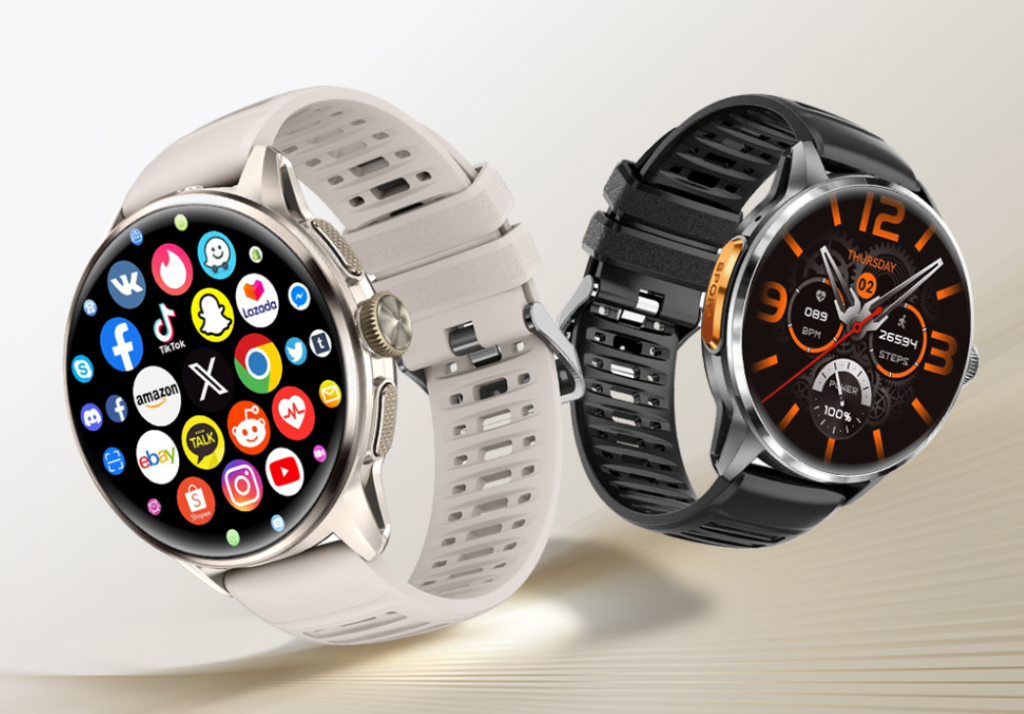
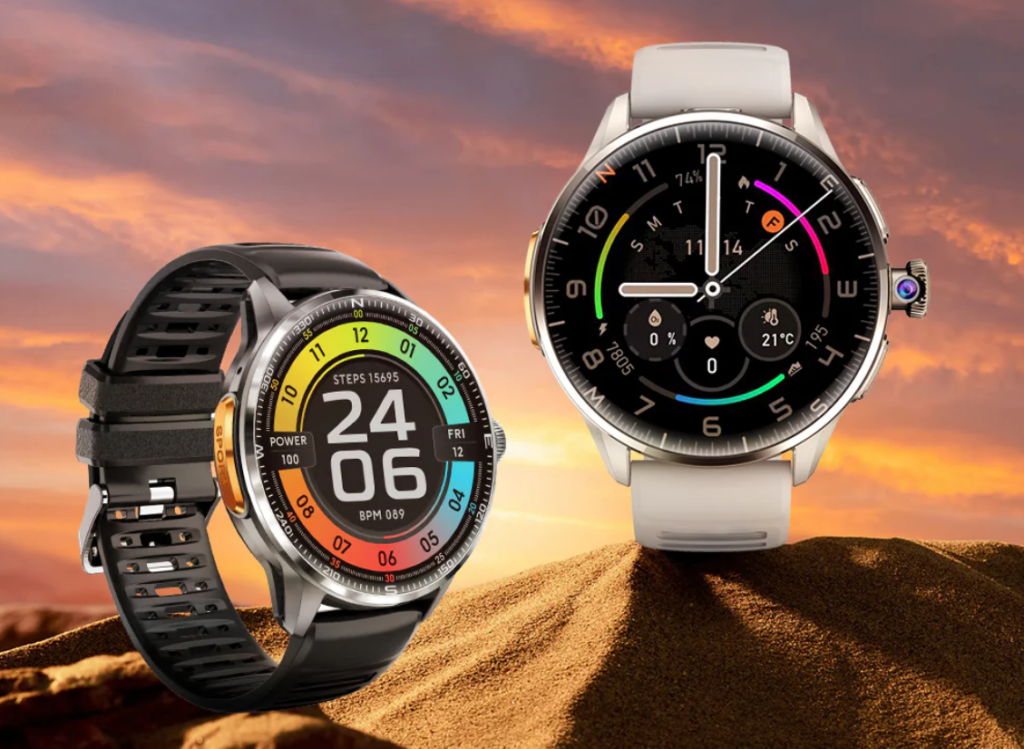
Coros has officially launched the Apex 4 outdoor sports smartwatch series in China. The lineup is now available in two sizes: 42mm and 46mm. The 42mm variant is priced at 2,699 yuan, while the 46mm version costs 2,969 yuan. In global markets, the watches are priced at $429 and $479, respectively.

Coros Apex 4 outdoor smartwatch

Coros Apex 4 Specifications

The Apex 4 features a rugged build that targets athletes, hikers, and climbers. Coros has equipped both versions with a Grade 5 titanium alloy bezel and sapphire glass protection. The display uses a third-generation memory-in-pixel (MIP) panel, optimized for outdoor visibility. The 42mm version includes a 1.2-inch display with a 240×240 resolution and weighs 56g with the silicone strap. The 46mm model features a 1.3-inch display with a 260×260 resolution and weighs 64g.

Coros Apex 4 outdoor smartwatch

The smartwatch supports dual-frequency positioning (L1+L5) and connects to GPS, GLONASS, Galileo, Beidou, and QZSS satellite systems. This setup helps deliver accurate tracking even in dense forests or mountainous areas. Coros has added a high-precision barometer, heart rate sensor, SpO₂ sensor, gyroscope, compass, and thermometer. It also supports offline topographic, satellite, and street maps with full touchscreen control.

Coros claims the 46mm model can last up to 65 hours in GPS mode, 41 hours in dual-frequency high-precision mode, and 24 days with daily use. The 42mm version offers 41 hours in standard GPS, 26 hours in dual-frequency, and up to 15 days of daily operation. Both watches charge fully in under two hours and support Bluetooth connectivity for syncing data and playing music. The watch includes 32GB of storage.

Coros Apex 4 outdoor smartwatch

The Apex 4 lineup supports more than 20 activity modes, covering disciplines like trail running, cycling, swimming, and mountaineering. It features advanced tools such as EvoLab performance analytics, altitude acclimation tracking, 3D climbing recording, checkpoint marking, and turn-by-turn navigation. The watch can also control action cameras from GoPro, DJI, and Insta360 directly from its interface.

In related news, Amazfit has recently introduced the T-Rex 3 Pro smartwatch, featuring a 44mm AMOLED display and 10ATM water resistance.

For more daily updates, please visit our News Section.

Stay ahead in tech! Join our Telegram community and sign up for our daily newsletter of top stories! 💡

(JD, Coros)

Oppo Find X9 series Europe prices leak ahead of launch

Oppo’s Find X9 series is heading to Europe after its launch in China, with new leaks revealing prices and battery details ahead of the October 28 global debut in Barcelona. The brand’s latest flagships promise flagship-grade cameras, massive batteries, and competitive pricing against Samsung and Google.

According to YTechB, the standard Find X9 will be priced at €999, while the Find X9 Pro will land at €1,299, both offering 12GB RAM and 512GB storage. The European models will feature more subtle finishes — Titanium Charcoal and Grey for the X9, and Space Black, Silk White, and Titanium Charcoal for the Pro — dropping the red option sold in China.

Regulatory filings on the EU Energy Labelling (EPREL) database confirm that the global versions retain the same massive batteries seen in China. The Find X9 packs a 7,025mAh silicon-carbon cell with 80W wired and 50W wireless charging, while the Find X9 Pro upgrades to 7,500mAh and 90W wired speeds. Oppo claims up to 69 hours and 80 hours of mixed use respectively — far beyond most rivals.

Both phones run on MediaTek’s 3nm Dimensity 9500 chip with Android 16 and ColorOS 16, bringing up to 32% faster single-core performance over last year’s lineup. The X9 sports a 6.59-inch 120Hz AMOLED, while the Pro uses a 6.78-inch LTPO AMOLED peaking at 3,600 nits of brightness.

The Find X9 Pro leads with a 50MP Sony LYT-828 main, 50MP ultrawide, and a 200MP 3x periscope telephoto, alongside a 50MP selfie. The standard X9 swaps the periscope for a 50MP telephoto. For those interested, here’s a telephoto camera comparison between the Find X9 Pro and Samsung’s Galaxy S25 Ultra.

With IP69 protection, Hasselblad-tuned cameras, and a return to the EU market, Oppo’s Find X9 series looks ready to take on the Galaxy S25 Ultra and Pixel 10 Pro head-on when it lands later this month.

Don’t miss a thing! Join our Telegram community for instant updates and grab our free daily newsletter for the best tech stories!

For more daily updates, please visit our News Section.

(Source)

Oppo Find X9 Pro crushes Galaxy S25 Ultra’s 3x telephoto in side-by-side camera test

Oppo recently launched the Find X9 Pro in China and is set to bring it to global markets on October 28. One of the highlights of this phone — at least in terms of numbers — is its 200MP 3x periscope telephoto camera. The module uses Samsung’s ISOCELL HP5 sensor, which measures 1/1.56″ in size.

In comparison, Samsung’s Galaxy S25 Ultra still relies on a 10MP sensor for its 3x telephoto camera, measuring just 1/3.52″. The upcoming Galaxy S26 Ultra is also rumored to retain most of the same camera hardware as its predecessor. Ice Universe even claimed a downgrade for the 3x telephoto — from 1/3.52″ on the current flagship to 1/3.94″ on the upcoming model, most likely the one used on the base S25. So, it’s worth checking out how the S25 Ultra fares against its Chinese rival — this time, the Find X9 Pro.

Well-known tipster Ice Universe recently posted a side-by-side comparison of 3x telephoto samples from the two phones, showing how those specs translate into real-world results.

At first glance, the images don’t look dramatically different — except for the variation in bokeh. But upon closer inspection, there’s a clear, night-and-day difference in detail — which is exactly the point of having a telephoto camera in the first place. The textures on the leaf and the insect’s body are almost unrecognizable in the S Ultra’s sample.

Samsung Galaxy S25 Ultra (left), Oppo Find X9 Pro (right)

The results stand in stark contrast to Samsung’s own claims about the imaging prowess of its flagships. “Samsung has always been one step ahead, pushing mobile photography to new heights and ushering in a new era of Galaxy camera technology,” the company noted in its newsroom. It will be interesting to see how much the S26 Ultra can close the gap when it goes up against the next wave of Chinese ultra-flagships — including the Find X9 Ultra and Vivo X300 Ultra — which rely on both cutting-edge hardware and smarter image processing.

Until then, interested readers can also check out the main camera comparison with Vivo’s X300 and the previous telephoto showdown with the X300 Pro.

(Source)

Redmi Gaming Monitor G34WQ 2026 launched with 34-inch 180Hz WQHD curved display

Xiaomi has launched the Redmi Gaming Monitor G34WQ (2026) in China. The new model was unveiled last month and is now available for purchase on JD.com with a retail price of 1,399 yuan ($196).

Redmi Gaming Monitor G34WQ 2026

Redmi Gaming Monitor G34WQ 2026 Specifications

The monitor features a 34-inch curved ultrawide display with a 3440×1440 resolution and a 180Hz refresh rate. It adopts a 21:9 aspect ratio, which provides 30% more horizontal screen space than traditional 16:9 displays.

Xiaomi uses a 1500R curvature to match the natural field of view, aiming to create a more immersive experience for gamers and multitaskers. The display uses a VA panel with a 3500:1 contrast ratio and a typical brightness of 400 nits.

Redmi G34WQ supports AMD FreeSync Premium, which synchronizes the display refresh rate with the GPU to prevent screen tearing. It also achieves a 1ms GTG response time, which helps reduce motion blur during fast-paced gaming sessions.

Redmi Gaming Monitor G34WQ 2026

In terms of color reproduction, the display supports 10-bit color (8-bit + FRC) and covers 95% of the DCI-P3 color gamut along with 100% sRGB. Xiaomi claims a factory-calibrated ΔE<2 color accuracy, making the monitor suitable for light creative tasks in addition to gaming. The monitor also meets VESA DisplayHDR 400 certification.

Xiaomi has included TÜV Rheinland Low Blue Light certification and its own eye care technology to reduce eye strain. The panel supports DC dimming to lower flicker and improve comfort during long hours of use.

The stand supports tilt, lift, and swivel adjustments. The monitor also supports 100×100mm VESA wall mounting. For connectivity, it includes two HDMI 2.0 ports and two DisplayPort 1.4 ports.

The design uses a narrow bezel on three sides for a more immersive look. Xiaomi also includes RGB ambient lighting on the rear and a joystick controller for quick on-screen menu adjustments. The monitor consumes up to 65W of power and comes with a 3-year warranty in China.

In related Xiaomi news, the company launched the Redmi Monitor A24 (2026) Multi-Function Stand Edition featuring a 144Hz IPS display for just $70. The company also introduced the Redmi A27Q Type-C Monitor (2026) with a 2K 120Hz screen and support for 90W reverse charging.

For more daily updates, please visit our News Section.

Stay ahead in tech! Join our Telegram community and sign up for our daily newsletter of top stories! 💡

(Xiaomi JD)
Vivo X300, X300 Pro to Launch Globally in Four Colors Each – Full Details Inside

Vivo will launch the X300 and X300 Pro globally on October 30 after introducing them earlier this month in China. Both smartphones are powered by the new MediaTek Dimensity 9500 processor, marking the company’s first use of this chipset.

While Vivo has not confirmed full global release details, tipster Paras Guglani has shared information on color and storage variants ahead of launch. According to his post on X, the standard Vivo X300 will be available in Halo Pink, Iris Purple, Mist Blue, and Phantom Black. Global variants will come with up to 16 GB of RAM and 512 GB of storage. The 1 TB model sold in China will not be offered internationally.

The Vivo X300 Pro will come in four finishes too: Mist Blue, Phantom Black, Cloud White, and Dune Brown. Like the X300, the Pro version will feature up to 16 GB RAM and 512 GB storage.

The tipster has also revealed that the these phones will be available in different colors across regions. In Australia, the X300 Pro will only be available in Phantom Black and Dune Brown only, whereas, the X300 will get an exclusive Red color variant.

Vivo X300 series features

The Chinese Vivo X300 model features a 6.31-inch BOE Q10 Plus LTPO AMOLED display with ultra-thin 1.05mm bezels and TÜV-certified eye protection. It houses a 200MP Zeiss Super Main Camera (Samsung ISOCELL HPB), a 50MP ultra-wide lens, and a 50MP Zeiss APO telephoto lens for 3x optical zoom. On the front, there’s a 50MP autofocus selfie camera tuned for Zeiss Natural Color. Backed by the V3+ NPU, the device supports 4K 60FPS portrait video, motion tracking, and “Zero-Additive” portraits. Despite its slim 7.95mm frame and 190g weight, it packs a robust 6,040mAh Blue Ocean battery with LPDDR5X RAM and UFS 4.0 storage up to 1TB.

The X300 Pro offers several upgrades, including a larger 6.78-inch LTPO AMOLED display with a 1–120Hz refresh rate and 1,260 × 2,800 resolution. It’s equipped with a 50MP Sony LYT-828 main sensor, a 200MP telephoto lens, a 50MP ultra-wide lens, and a 50MP front camera. The phone carries a 6,510mAh battery with 90W wired and 40W wireless charging, measuring 7.99mm thick and weighing 226g.

Don’t miss a thing! Join our Telegram community for instant updates and grab our free daily newsletter for the best tech stories!

For more daily updates, please visit our News Section.

(Source: 1, 2)

These are the best smartphone camera brand

You’re probably here to figure out which brand makes the best smartphone cameras. It’s an easy call if you’re in the West. It’s either Apple or Samsung. Their latest flagships are often considered the gold standard.

But if you’re willing to look beyond the usual two, there’s a whole world of brands pushing smartphone photography to new heights. Vivo, Oppo, Xiaomi, and Honor are all building cameras that don’t just rival Apple and Samsung; in some cases, they outperform them.

Many of these brands now even offer dedicated photography kits with detachable lenses and pro-grade zoom options that let you capture crisp shots at 30x or more. In short, the best smartphone cameras aren’t just coming from the brands you already know, and it’s time to give credit where it’s due.

1. What actually makes a “best” smartphone camera?

Before diving in, let’s clear up what “the best camera” actually means. It’s not just about megapixels or how big the lens looks on the back. Great smartphone photography comes from a balance of hardware and software, and the image signal processor (ISP) inside the chip plays just as big a role as the camera sensor itself.

Here’s what I look for in a camera phone:

  • A dedicated telephoto lens for crisp portrait shots and lossless zoom.
  • A large main sensor because size matters when it comes to low-light performance.
  • Optical image stabilization (OIS) to keep handheld shots sharp and videos smooth.                                    
  • Smart computational photography is the software magic that fine-tunes color, detail, and dynamic range.

Of course, that’s not the full checklist. But it’s enough for me to know whether a phone is worth considering before digging into the finer details.

2. Vivo

Vivo X300 Pro telephoto converter

Vivo has quietly upped its camera game in a way that deserves attention. The recent X300 series, for example, shows that the company isn’t simply following others; they are doing it in their own way.

The new X300 and X300 Pro use a triple-camera setup with standout specs. The base X300 packs a 200 MP main camera (Samsung HPB sensor) paired with a 50 MP telephoto and 50 MP ultrawide. 

The X300 Pro ups the game with a 50 MP Sony LYT-828 sensor for the main camera and a 200 MP 1/1.4″ Samsung HPB telephoto sensor. They also bundle Zeiss optics and coatings to reduce flare and boost clarity. 

But it doesn’t end there. Both the X300 phone supports a dedicated telephoto extender, a 2.35x lens that sits on top of the existing telephoto and increases the focal length from 80mm to 200mm. Vivo’s X-series is also popular among users for the range of image filters it comes with.

3. Oppo

Oppo-Find-X9-Pro-Camera-Kit-2

Oppo’s approach is also very interesting for camera-first buyers. Their recently launched Oppo Find X9 Pro features a 200 MP Samsung HP5 telephoto sensor (70 mm equivalent) with 3x optical zoom and four-axis OIS. 

Moreover, it uses a Danxia Color Reproduction Lens across all imaging modules to improve color accuracy. Oppo has also introduced a Hasselblad-branded photography kit accessory for this series that includes a telephoto extender, just like Vivo.

After Vivo, Oppo is another brand that is making a strong push into “camera system” territory. However, as with many niche leaders, Oppo Find X series phones aren’t available as widely as, say, Apple or Samsung.

4. Xiaomi

Then there’s Xiaomi, which has made a name for itself with camera-centric flagships. The Xiaomi 15 Ultra, in particular, has earned praise for its photography hardware: a massive 1-inch main sensor, a 200MP periscope telephoto lens, a 50MP telephoto, and a 50MP ultrawide lens.

The 50MP telephoto is a floating lens, a 70mm-equivalent portrait lens that can also handle macro shots. This “floating” design allows for a minimum focusing distance of just 10cm, enabling detailed macro photography with a natural background blur, without relying heavily on software-generated bokeh.

On top of that, the 15 Ultra also comes with a dedicated photography kit with a telephoto extender in it. In fact, it was Xiaomi that really started the trend of camera-focused accessories for smartphones with the Xiaomi 13 Ultra.

5. Apple

iPhone 17 Pro
iPhone 17 Pro

When you buy an iPhone, you’re buying into a photography platform that is consistent, mature, and globally supported. The iPhones may not always lead with the most exotic sensors or sizes or biggest zooms, but they deliver reliable, predictable results across lighting conditions and tend to age well in terms of software support.

Because of that reliability and availability (in nearly every market), Apple is a safe choice for users around the world. 

That said, we have to point out that innovation in the telephoto/zoom space has been slower for Apple compared to some rivals. If you prioritize extreme zoom or specialized photography accessories, Apple may lag a bit behind the more photography-centric brands.

6. Samsung

Samsung similarly has the global reach and polish to make it a go-to for camera-focused buyers. Their sensors and optics are strong, and the ecosystem (accessories, service) is robust as well.

However, third-party tests suggest Samsung’s camera ranking is not always at the top. For example, DxOMark’s aggregated ranking places Samsung’s recent flagship at 21st position among top camera phones. 

What that indicates is that Samsung is still a good choice, but it may no longer be the uncontested “best” in all categories when other brands are clearly pushing harder.

For more daily updates, please visit our News Section.

Stay ahead in tech! Join our Telegram community and sign up for our daily newsletter of top stories.

Moto X70 Air price confirmed as pre-orders begin

The Moto X70 Air is scheduled to debut on Oct. 31 in China. Ahead of the launch, the phone is now available for pre-orders, revealing the variants and pricing of the device. For those who don’t know, the X70 Air is said to be a rebranded version of the Motorola Edge 70, which is slated for a global debut on Nov. 5. Here’s a look at the variants, price, and specifications of the X70 Air.

Moto X70 Air variants, price

Mtoto X70 Air
Mtoto X70 Air

The Moto X70 Air is now available for pre-orders on platforms such as Lenovo Mall and JD.com. The smartphone comes in two configurations: 12GB+256GB priced at 2,599 Yuan (~$365), and 12GB+512GB priced at 2,899 Yuan (~$410). Buyers can choose from Gadget Grey, Lily Pad, and Bronze Green color options, all of which are Pantone-validated to ensure accurate colour representation.

Moto X70 Air specifications

The Moto X70 Air features a 6.7-inch pOLED display with a 1.5K (1,220 x 2,712 pixels) resolution, 120Hz refresh rate, and 4,500 nits peak brightness. The Pantone-certified panel offers SGS eye-care protection and an in-display fingerprint sensor for seamless unlocking.

The X70 Air runs on Android 16 and is powered by the Snapdragon 7 Gen 4 chipset, coupled with LPDDR5x RAM and UFS 3.1 storage. To handle heat efficiently, it includes a 3D vapour chamber. The handset is backed by a 4,800mAh battery supporting 68W wired and 15W wireless charging.

On the camera front, it features a 50-megapixel Samsung S5KGNJ main sensor, a 50-megapixel ultra-wide lens, and a 50-megapixel front camera for selfies. Additional highlights include 5G connectivity, Wi-Fi, Bluetooth, NFC, GPS, OTG, and USB Type-C support.

The X70 Air is also IP68 and IP69 certified for water and dust resistance. Finally, as it is an ultra-thin phone, it measures 5.99mm in thickness and weigh around 159 grams.

As far as the Motorola Edge 70 is concerned, it is expected to cost between 710 euros and 810 euros in Europe.

For more daily updates, please visit our News Section.

Stay ahead in tech! Join our Telegram community and sign up for our daily newsletter of top stories.

The Best Camera Phones Under Rs. 30,000 You Can Buy Right Now

In 2025, you don’t need to shell out flagship-level cash for a phone that can shoot beautiful photos or record crisp 4K video. The sub-₹30,000 segment in India has exploded with options that bring optical image stabilization, telephoto zoom, high-resolution sensors, and even AI photography tools into the mainstream.

Whether you shoot for Instagram, vlog on the move, or just want reliable photos in every light, here are the best camera phones under ₹30,000 that punch way above their price tag.

1. Vivo V60e

Vivo V60e

Vivo V60e comes with a 200MP main camera featuring Samsung’s HP9 sensor and optical image stabilization. The rear setup also includes an 8MP ultra-wide camera, while the front houses a 50MP autofocus camera. The phone supports Aura Light and introduces India’s first AI Festival Portrait mode, which enhances low-light portraits.

The V60e features a 6.77-inch FHD+ curved AMOLED display with 120Hz refresh rate and up to 1900 nits peak brightness. It runs on the MediaTek Dimensity 7360 Turbo chipset and ships with Android 15 and Funtouch OS 15. Vivo promises three major OS updates and five years of security support.

Price: ₹29,999 for 8GB + 128GB

2. Motorola Edge 60 Pro

Motorola Edge 60 Pro camera

Motorola Edge 60 Pro comes with a triple camera system that includes a 50MP main sensor, a 50MP ultra-wide sensor with autofocus and macro support, and a 10MP 3x telephoto camera. The phone also offers a 50MP front camera and supports 4K video recording.

The Edge 60 Pro features a 6.7-inch 1.5K pOLED display with 120Hz refresh rate and peak brightness of up to 4500 nits. It runs Android 15 out of the box with Motorola’s AI tools and four years of security updates. The device uses the Dimensity 8350 Extreme SoC and includes MIL-STD-810H durability, IP68/IP69 water and dust resistance, and 90W fast charging.

Price: ₹29,999 for 8GB + 256GB

3. Nothing Phone (3a) Pro

Nothing Phone (3a) Pro

Nothing has introduced the Phone (3a) Pro as its most affordable model with a 3x periscope telephoto camera. The rear setup also includes a 50MP main camera and an 8MP ultra-wide camera. The 50MP periscope lens offers up to 6x in-sensor zoom and 60x digital zoom. On the front, the phone includes a 50MP camera with 4K video support.

The Phone (3a) Pro features a 6.77-inch FHD+ AMOLED display with 120Hz refresh rate and up to 3000 nits peak brightness. It runs on the Snapdragon 7s Gen 3 SoC and includes Nothing OS 3.1 based on Android 15. The phone supports 50W PD charging and includes the brand’s Glyph interface and Essential Key for AI-powered productivity features.

Price: ₹29,999 for 8GB + 128GB

4. Vivo T4 Pro

Vivo T4 Pro

Vivo T4 Pro sports a dual 50MP rear camera system. It includes a main Sony IMX882 sensor with OIS and a 50MP 3x periscope telephoto camera with OIS. There is also a 2MP depth sensor and a 32MP front camera that supports 4K video recording.

The T4 Pro uses the Snapdragon 7 Gen 4 SoC and features a 6.77-inch curved AMOLED display with up to 5000 nits brightness and 120Hz refresh rate. The phone runs Android 15 and includes Funtouch OS 15. It offers four major Android updates and six years of security patches. The 6500mAh battery supports 90W fast charging.

Price: ₹27,999 for 8GB + 128GB

5. Realme 15 Pro 5G

Realme 15 Pro 5G

Realme 15 Pro 5G comes with a dual 50MP rear camera setup. The main camera uses the Sony IMX896 sensor with OIS, and the ultra-wide lens features the OV50D sensor. The phone also includes a 50MP front camera, and all three support 4K video recording at up to 60fps.

The 15 Pro features a 6.8-inch 1.5K 144Hz AMOLED display with up to 6500 nits peak brightness. It runs Android 15 with realme UI 6.0 and uses the Snapdragon 7 Gen 4 processor. The phone includes a 7000mAh battery with 80W SuperVOOC charging and ships with Edit Genie voice-based editing features.

Price: ₹28,999 for 8GB + 128GB

For more daily updates, please visit our News Section.

Stay ahead in tech! Join our Telegram community and sign up for our daily newsletter of top stories! 💡

Find X9 Ultra may feature the largest battery among “Ultra” phones, Oppo’s ultra-thin phone in works

Xiaomi, Vivo, and Oppo have launched their flagship phones in China and are now gearing up to launch them in other markets. In the coming months, these brands are expected to shift their focus to “Ultra”-branded flagships, which are expected to pack more premium specs along with top-notch cameras. In a new leak, tipster Smart Pikachu shared key details about the Oppo Find X9 Ultra.

Oppo Find X9 Ultra key details tipped

Oppo Find X9 Ultra’s key details tipped

According to the tipster, the Find X9 Ultra will have the largest battery compared to other Ultra phones. The exact battery size is not known yet, but Oppo has already said that “no 7,000mAh, no flagship,” meaning the X9 Ultra could pack at least a 7,000mAh battery.

To recall, the Find X8 Pro and X8 Ultra pack 5,910mAh and 6,100mAh batteries, respectively. It remains to be seen whether the Find X9 Ultra will arrive with a larger battery than the Find X9 Pro, which houses a 7,500mAh unit. Whatever the size may be, it could be larger than what will be seen on the Xiaomi 17 Ultra and Vivo X300 Ultra.

At Find X9 series launch, Oppo said "In 2025, no 7000, no flagship"
At Find X9 series launch, Oppo said, “In 2025, no 7000, no flagship”

Furthermore, the tipster claimed that the Find X9 Ultra will arrive with a 6.8-inch screen with 2K resolution and eye protection support. Reports have revealed that it will have a quad-camera setup equipped with a pair of periscope telephoto cameras.

The tipster claimed that both periscope cameras of the Find X9 Ultra have been upgraded with larger sensors. He added that photography across macro, portrait, and zoom modes has been improved to the next level. As far as launch is concerned, reports have revealed the X9 Ultra may with Find X9s in Q2 2026.

Another important detail the tipster revealed is that Oppo is working on an ultra-thin phone. While the exact moniker is not known yet, it is unclear whether it will be a part of the Find or Reno series. Nevertheless, the Oppo Find Air sounds like a cool name. The same tipster recently revealed that Xiaomi is working on the alleged Xiaomi 17 Air. Readers can visit this post to know its early details.

For more daily updates, please visit our News Section.

Stay ahead in tech! Join our Telegram community and sign up for our daily newsletter of top stories.

Huawei finally gives 3D face recognition to the entire Mate 80 family

Huawei has officially confirmed the first details about its upcoming Mate 80 phones. The company recently announced HarmonyOS 6, which will come pre-installed on the Mate 80 series.

Now, new HarmonyOS development documentation confirms that every model in the Huawei Mate 80 lineup will support 3D facial recognition.

“Currently, only the entire Mate 80 series and other Mate Pro and above devices support 3D face recognition (foldable screens and the P series are not currently supported).”

Until now, this feature has been exclusive to the Pro and RS variants. So this would be the first time Huawei is extending its advanced face-unlock technology to the base model.

Four models on the way

The Huawei Mate 80 series is expected to arrive in November, with four versions reportedly on the way. The standard Mate 80, Mate 80 Pro, Mate 80 Pro+, and the top-tier Mate 80 RS.

Design-wise, early engineering units reveal a familiar look of the Mate 80 Po. The phone features a large circular camera module centered on the back panel.

The layout reportedly includes a dual-color temperature flash on the top left, a symmetrical strip sensor on the right, and a multi-spectral lens beneath the main axis.

Huawei-Mate-80-Back-COver-Design

Under the hood, the lineup is expected to debut Huawei’s new Kirin 9030 chip. According to reports, the chip focuses on architectural optimization rather than raw power gains. But it should still deliver smoother performance when paired with HarmonyOS 6.

At the top of the range, the Mate 80 RS could feature a 6.9-inch dual-layer OLED display with higher brightness, lower power consumption, and improved longevity.

Not to forget, there’s talk that the Mate 80 series could exclusively use eSIM technology, completely ditching the physical SIM card slot for the first time.

For more daily updates, please visit our News Section.

Tech enthusiast? Get the latest news first! Follow our Telegram channel and subscribe to our free newsletter for your daily tech fix! ⚡

Alleged Honor 500, Honor 500 Pro bag important certification, November launch expected

A recent leak by tipster Digital Chat Station revealed that Honor will announce the Honor 500 and GT 2 series before the end of this year in China. In a new development, two new Honor phones have surfaced in the database of China’s 3C certification platform. These appear to be the upcoming Honor 500 and 500 Pro.

Honor 500 series 3C certified

Honor 500 series 3C certified

The above screenshot reportedly shows that two upcoming Honor phones with model numbers MEP-AN00 and MEY-AN00 have received approval from China’s 3C certification platform. The MEP-AN00 and MEY-AN00, which are said to carry the codenames “Merry” and “MerryP”, have been spotted with an 80W charger.

Chinese tech bloggers have speculated that these could be the forthcoming Honor 500 and 500 Pro smartphones. Now that they are 3C certified, the series is likely to break cover in November in China.

According to tipster Digital Chat Station, the Honor 500 series prototypes that he has come across were in shades like black, silver, pink, and blue. A recent leak revealed that the Honor 500 Pro will feature a 6.5-inch 1.5K OLED display, a Snapdragon 8 Elite chipset, and a triple camera setup featuring a 200-megapixel main camera, an ultra-wide lens, and a OV64 64-megapixel periscope telephoto camera.

On the other hand, the Honor 500 may feature a 6.5-inch 1.5K OLED screen and a 200-megapixel dual-camera system. There is no information about the chipset that will power the standard edition.

The Honor 500 series is expected to face competition from the Vivo S50 lineup and the Oppo Reno 15 series. DCS recently revealed the key specifications of the Reno 15 and 15 Pro, but the rumour mill is yet to leak concrete details about the Vivo S50 lineup.

For more daily updates, please visit our News Section.

Stay ahead in tech! Join our Telegram community and sign up for our daily newsletter of top stories.

Vivo X300 series India launch timeframe leaked

The Vivo X300 and X300 Pro have gradually been certified in different countries. The latest development is that the Vivo X300 and X300 Pro have received approval from India’s BIS authority, indicating that the series could be heading to the country soon. Now, a new report by SmartPrix, citing tipster Yogesh Brar as the source, has revealed the Vivo X300 series’ launch timeframe for India.

Vivo X300 series launch timeframe

Vivo X300 series BIS certifiedd
Vivo X300 series BIS certified

According to the report, the Vivo X300 series will launch in the first week of December. This seems possible as both X300 (model number: V2515) and X300 Pro (V2514) have been approved in India. The photography-focused lineup will arrive as a major rival to the Oppo Find X9 series, which is expected to debut in November in the country.

The X300 and X300 Pro will be Vivo’s first phones to come preloaded with OriginOS 6 in India. The new UI promises to be cleaner and offer a better user experience than the existing Funtouch OS. As far as the global launch is concerned, the X300 series is scheduled to debut on Oct. 30 for the European markets.

Vivo X300 Pro
Vivo X300 Pro

At present, there is no information about the Vivo X300 series’ pricing for the Indian market. For reference, the X200 and X200 Pro were priced at Rs 65,999 and Rs 94,999 at launch. There’s a possibility that the X300 and X300 Pro may arrive in the Indian market with similar pricing. With a first-week-of-December launch tipped, the X300 series’ official teasers are expected to surface sometime in the next few weeks in India.

The Vivo X300 series also includes the Vivo X300 Ultra, which is expected to launch in China in Q2 2026. There’s no clarity on whether the Ultra edition will be released in markets outside of China.

Coming back to the Indian market, November is expected to see the launch of as many as three new flagship phones apart from the Find X9 series. These include the OnePlus 15 and iQOO 15, whose landing pages have already gone live on Amazon and official websites, and the Realme GT 8 Pro.

For more daily updates, please visit our News Section.

Stay ahead in tech! Join our Telegram community and sign up for our daily newsletter of top stories.

(source)

Honor and BYD partner to advance AI-driven phone-to-car integration

Honor and BYD have entered into a strategic partnership aimed at redefining the future of connected mobility. The collaboration brings together Honor’s AI-powered connectivity solutions and BYD’s DiLink intelligent ecosystem to create seamless integration between smartphones and vehicles. By combining their expertise in smart devices and new-energy vehicles, the two companies plan to develop human-centric, AI-enabled mobility experiences that enhance how users interact with technology on the move.

Honor-BYD partnership: What to expect?

Honor-BYD partnership

The Honor-BYD partnership is structured around three main areas of development. The first focuses on technology and innovation, including cross-device ecosystem integration, AI agent development, and a high-precision Bluetooth car key system.

The second pillar revolves around building a shared channel ecosystem that maximises compatibility between Honor’s connected technology and BYD’s vehicle platform, enabling smooth interoperability.

The final aspect involves collaborative marketing, launches, and user engagement activities that will highlight the results of this joint effort.

The agreement was formalized at a ceremony attended by Honor CEO James Li and BYD Chairman Wang Chuanfu, along with executives Fang Fei and Yang Dongsheng. Both companies described the partnership as a long-term commitment to advancing intelligent mobility.

This partnership builds upon earlier collaborations between the two brands. In 2023, they introduced smartphone-based NFC car keys for BYD owners, followed by in-vehicle fast charging support for Honor devices in 2024. Most recently, BYD’s Denza brand adopted the Honor Car Connect platform, allowing users to experience continuous connectivity between phones and vehicles.

The results of the Honor-BYD collaboration will be showcased at the upcoming Honor Global Developers Conference and AI Device Ecosystem Conference, where the Honor AI Connect platform will take centre stage.

For more daily updates, please visit our News Section.

Stay ahead in tech! Join our Telegram community and sign up for our daily newsletter of top stories.

This smart ring brings vibration alerts, elegant design together

As the Double 11 shopping season approaches, Rollme has unveiled the Rollme Vibe Smart Ring, a vibration-enabled wearable with minimalist. Designed for seamless daily interaction, it brings together discreet notifications, accurate health monitoring, and touch-based controls in a refined ceramic body. Here is all that you need to know about its specifications, features, and price.

Rollme Vibe specifications and features

Rollme Vibe smart ring

The Rollme Vibe Smart Ring features a precision haptic motor that delivers subtle vibration alerts for calls, messages, reminders, and activity notifications. It also includes hydration and medication alerts, ensuring users maintain their wellness routine.

The integrated touch-sensitive surface allows easy gesture-based control of music, camera functions, and e-book navigation without compromising the ring’s smooth, minimalist appearance. Powered by advanced sensors and AI-driven algorithms, the ring offers detailed, real-time health monitoring. It tracks heart rate, SpO₂, HRV, sleep patterns, skin temperature, and mood balance with accuracy. It also provides menstrual cycle reminders, workout recovery insights, and an SOS emergency feature for added safety.

Made from durable microcrystalline nano-ceramic, the Vibe Smart Ring is resistant to scratches and corrosion. Its 5ATM water resistance makes it suitable for swimming, showers, or rain. The battery lasts up to seven days per charge, while the portable charging case extends standby time to 60 days.

Rollme Vibe price and availability

The Rollme Vibe Smart Ring is available in two sophisticated colours, Mineral Gray and Moonlight White, and comes in seven sizes ranging from 7 to 13. It is priced at $79.99 and available for purchase through the official Rollme online store. The first 100 customers will receive special Christmas gift packaging, adding an exclusive festive touch to this elegant wearable.

For more daily updates, please visit our News Section.

Stay ahead in tech! Join our Telegram community and sign up for our daily newsletter of top stories.

OPPO Enco X3s Announced with 55dB Active Noise Cancellation and 45-Hour Playback

OPPO has confirmed that its next wireless earbuds, the Enco X3s, will be launched globally on October 28, 2025. The announcement was made by Pete Lau, OPPO’s Chief Product Officer and OnePlus Co-Founder, on his X account. The earbuds are co-tuned with Dynaudio and promoted as True Wireless Noise Cancelling Earbuds.

The Enco X3s focus on clear voice and natural sound with strong noise cancellation. As listed on OPPO’s Singapore website, the earbuds feature 55dB active noise cancellation, touch controls, IP55 dust and water resistance, and up to 45 hours of playback time. They will be available in White and priced at SGD 189. Pre-orders are now open, and deliveries will begin on October 28.

The design is similar to recent OPPO and OnePlus models, with a pill-shaped charging case that has “OPPO” and “Co-created with Dynaudio” branding. According to tipster @heyitsyogesh, the OPPO Enco X3s are also expected to launch in India around November 2025. The earbuds will serve as OPPO’s latest premium true wireless stereo (TWS) model for global markets. This launch comes a year after the Enco X3 was introduced in October 2024.

Oppo Enco X3 features

The Enco X3 is powered by the BES2700 chipset and uses a dual-driver setup with an 11mm bass driver and a 6mm tweeter. This delivers strong bass, clear mids, and crisp highs for a balanced audio experience.

The earbuds can reduce outside noise by up to 50dB. They also include AI Call Noise Reduction, VPU Bone Voiceprint Recognition, and an improved anti-wind noise algorithm for clearer calls. Real-time human voice detection improves noise reduction by 200%.

The Enco X3 supports a dual DAC, a three-microphone system, Bluetooth 5.4, and LHDC 5.0 for 192kHz/24-bit playback. It also supports wireless lossless audio at 1 Mbps and spatial audio. Each earbud has a 58mAh battery, and the charging case has a 566mAh capacity. Both wired and 10W wireless charging are supported.

Don’t miss a thing! Join our Telegram community for instant updates and grab our free daily newsletter for the best tech stories!

For more daily updates, please visit our News Section.

(Source 1, 2)

Xiaomi 15 Ultra and 14 Ultra Get System Security Boost With September 2025 Patch

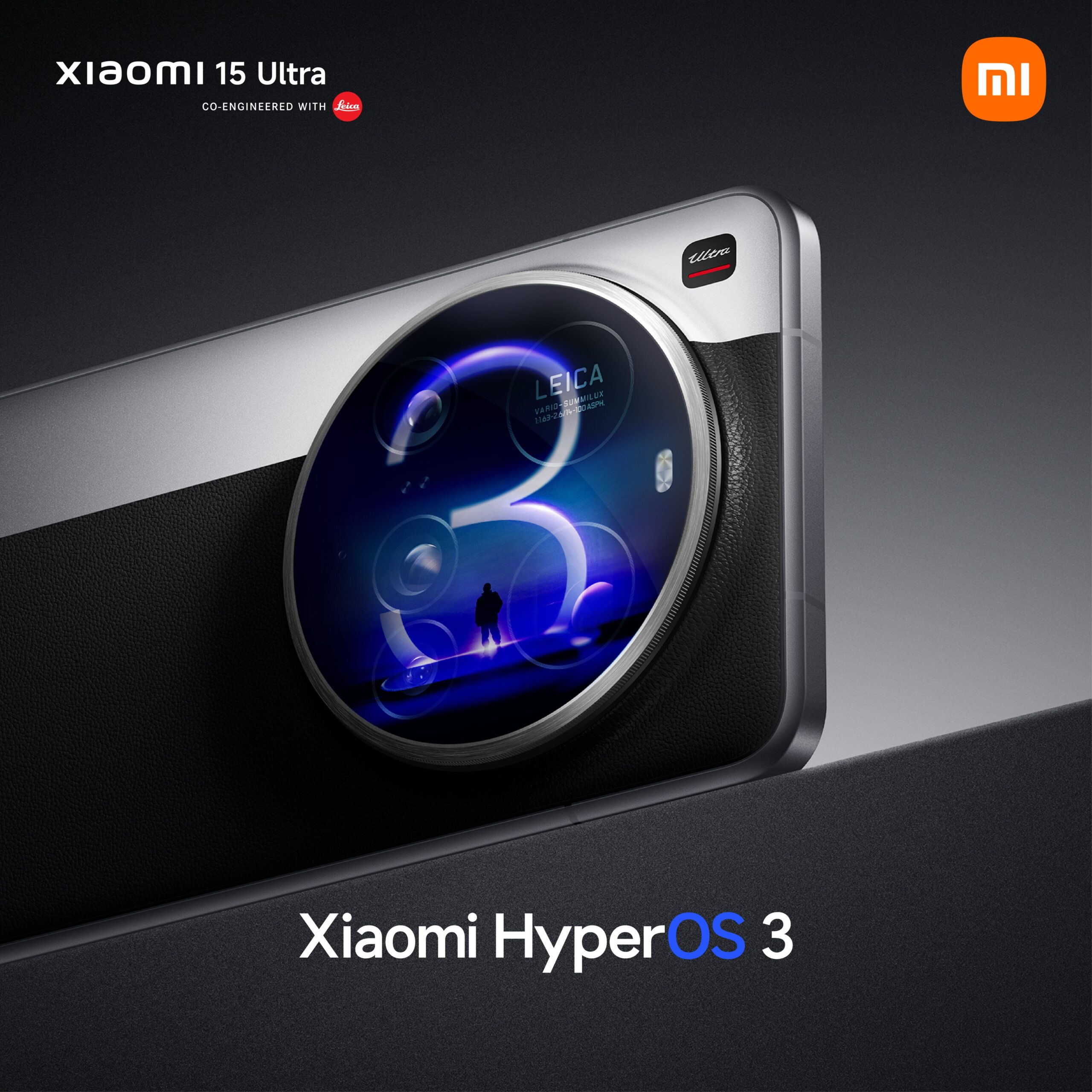
Xiaomi has released the September 2025 security update for the Xiaomi 15 Ultra and Xiaomi 14 Ultra smartphones in India. The new update focuses on improving system security and stability and is likely the last one before the HyperOS 3 rollout.

The Xiaomi 15 Ultra is getting the update with version 2.0.206.0VOAINXM, sized 1.0GB, while the Xiaomi 14 Ultra is receiving version 2.0.204.0.VNAINXM, sized 113MB. Both include the latest Android security patch for September 2025.

For the Xiaomi 15 Ultra, this update appears to lay the groundwork for the upcoming Android 16-based HyperOS 3 upgrade. According to Xiaomi’s official rollout timeline, the global Xiaomi 15 lineup is set to receive HyperOS 3 between October and November, followed by the Xiaomi 14 Ultra between November and December 2025.

HyperOS 3 Details

The upcoming HyperOS 3 brings several performance and visual upgrades. It reduces CPU load by 4 percent, improves energy efficiency by 10 percent, and lowers the frame loss rate by 18.9 percent. App launch speed is 21 percent faster, video playback is 10 percent smoother, and touch response latency has been reduced by 9 percent.

HyperOS 3 also adds a hot-swappable scheduling mechanism and a new graphics scheduling link that enhances gaming performance. More than 100 system animations have been optimized for smoother operation.

Visual and AI Changes

The update introduces Xiaomi Super Island, a live activity and notification hub that supports over 70 integrated services. There are AI-based dynamic wallpapers with depth effects, redesigned icons, and adjustable desktop grids. Users can also use cinematic lock screens with a single interface to edit wallpapers and lock screens. The Photo Album now supports intelligent search and can automatically create Pet Albums.

AI features have been upgraded too. The Super XiaoAi Assistant can understand on-screen content and give relevant answers. Users can circle any content on the screen to trigger actions like search, translation, or sharing, similar to Google’s Circle to Search.

For more daily updates, please visit our News Section.

Stay ahead in tech! Join our Telegram community and sign up for our daily newsletter of top stories!

(via: 1,2)

Standard iPhone 18 could pack 50% more RAM than iPhone 17

According to a report from Korea’s The Bell, the upcoming iPhone 18 will receive a 50% memory upgrade—jumping from 8GB to 12GB of RAM. That puts it on par with the higher-end models, which already made the leap to 12GB with the iPhone 17 lineup. The move appears to be driven by Apple’s growing focus on Apple Intelligence, which relies heavily on local processing to ensure user privately.

Samsung is reportedly supplying Apple with next-generation LPDDR5X RAM modules, while SK Hynix and Micron are expected to help meet demand. These new chips are faster and more power-efficient than the LPDDR5 of the iPhone 17.

The iPhone 18 family will reportedly debut in two phases. The iPhone 18 Pro, 18 Pro Max, iPhone Air 2, and Apple’s first foldable iPhone are said to be planned for fall 2026, powered by the upcoming 2nm A20 chip. The standard iPhone 18 and a rumored iPhone 18e could follow in early 2027.

The jump to 12GB may sound incremental, but it’s a meaningful upgrade for Apple’s AI strategy. With more (and likely more complex) Apple Intelligence features expected to debut on the next-gen iPhones, the added memory should help handle demanding tasks smoothly while keeping other activities uninterrupted.

However, higher specs could come at a price. With TSMC’s 2nm chip production expected to raise costs, analysts predict that base prices could climb by $50–$100 over the iPhone 17 lineup. Even so, many Apple fans on X (formerly Twitter) seem more excited than concerned, seeing the RAM boost as a long-overdue step toward keeping pace with Android rivals like Samsung’s Galaxy S26 and Vivo’s X300 series.

Don’t miss a thing! Join our Telegram community for instant updates and grab our free daily newsletter for the best tech stories!

For more daily updates, please visit our News Section.

(Via)

Dreame launches V3000 Aura 4K Mini LED TVs with 2800 nits, Dolby Atmos & AI features

Dreame has had a busy six months, expanding into categories like washing machines, refrigerators, smartphones, and air conditioners. The company has now entered the smart TV market with its first lineup, the V3000 Aura 4K Mini LED series. The new series includes five screen sizes: 55, 65, 75, 85, and 100 inches, and starts at 3,999 yuan ($562).

Dreame V3000 Aura 4K TV

Dreame V3000 Aura 4K TV Specifications

The TVs use a 4K Ultra HD Mini LED panel with QLED technology. The 100-inch model delivers up to 2800 nits peak brightness, while the other variants offer 2200 nits. All models support 98% DCI-P3 color gamut and 3840×2160 resolution. The displays feature an anti-glare coating and local dimming zones that range from 520 on the 55-inch to 1248 on the 100-inch model. Contrast ratio reaches up to 20,000:1.

The refresh rate on the 55-inch version reaches 144Hz, while the larger variants go up to 150Hz. Dreame claims a response time of 5.3ms and support for HDMI 2.1 features such as VRR and ALLM. The TVs run on a quad-core ARM Cortex-A73 processor with 4GB RAM and up to 128GB storage, depending on the model. The 100-inch version comes with 128GB storage, while the rest include 64GB.

For connectivity, these include dual-band Wi-Fi 6, Bluetooth 5.4, Ethernet port, and four HDMI ports (two HDMI 2.1, including one with eARC). These also offer one USB 3.0 port, one USB 2.0 port, an SPDIF output, and a coaxial input. The TVs run on an Android-based operating system featuring Dreame’s custom smart desktop and AI-driven scene recognition.

Dreame V3000 Aura 4K TV

The V3000 Aura series integrates a 2.1.2-channel Dreame Master Acoustic System with dual horn surround speakers and a dedicated subwoofer, delivering 49W to 91W of output depending on size, with Dolby Atmos support across all models.

Each unit features a metallic unibody with an 8mm profile and golden trim. Dreame includes TÜV Rheinland certification for low blue light, high-frequency PWM dimming at 20,000Hz, and an AI ambient light sensor for comfort.

Pricing and Availability

The Dreame V3000 Aura Mini LED TV series is now available in China on JD.com. The 55-inch model is priced at 3,999 yuan (approximately $560), with a limited-time launch offer of 3,849 yuan (around $540).

The 65-inch variant is available for 5,499 yuan (about $770), followed by the 75-inch model at 7,399 yuan (roughly $1,040). The 85-inch version costs 9,999 yuan (around $1,400), while the top-end 100-inch model is priced at 14,499 yuan (approximately $2,030).

In related Dreame news, the company recently introduced the 501L cross-door refrigerator featuring -32°C deep freezing and VITA humidity control, alongside the T60 Ultra floor scrubber equipped with 25,000Pa suction power, dual AI arms, and an ultra-slim design.

For more daily updates, please visit our News Section.

Stay ahead in tech! Join our Telegram community and sign up for our daily newsletter of top stories! 💡

(Dreame JD)

Sony’s LYT-910 leak: near 1-inch 200MP sensor to power 2026 flagships

The smartphone camera race has been dominated by Samsung’s 200MP ISOCELL sensors for years, but Sony might be ready to shake things up. A new leak has revealed details of the company’s upcoming LYT-910 — a massive 200MP sensor that could mark Sony’s most ambitious step yet in mobile imaging.

According to tipster @fenibook, the LYT-910 will be Sony’s first 200MP mobile sensor, and it’s shaping up to be a beast on paper. The sensor reportedly measures 1/1.11 inches, which is significantly larger than the 1/1.3-inch ISOCELL HP2 found in Samsung’s Galaxy S25 Ultra. It uses 0.7µm pixels, up from 0.6µm of Samsung’s HP2.

Under the hood, the sensor employs dual-level Remosaic technology — QBC for 50MP and QQBC for 200MP — which should improve both capture speed and processing efficiency. Leaks also point to 4K video recording at up to 120fps and 8K at 30fps, both with HDR support.

Beyond resolution, Sony seems focused on dynamic range and efficiency. The LYT-910 reportedly achieves a dynamic range exceeding 100dB, giving it stronger HDR performance in challenging lighting — think neon-lit streets or sun-soaked landscapes. It also supports lossless 2x and 4x digital zoom, cropping directly from native pixels without losing sharpness.

As per the tipster, this near 1-inch high-resolution sensor could power flagships starting next year. Expect flagships from Oppo, Vivo, and Xiaomi to be among this sensor in their next “Ultra” phones.

If the leaks pan out, Sony’s LYT-910 might be the company’s most serious challenge yet to Samsung’s ISOCELL line — not just by throwing more pixels at the problem, but by refining how those pixels perform.

After years of seeing Samsung dominate the ultra-high-megapixel space, Sony’s new contender could mark a turning point. And for smartphone photography fans, that’s great news — competition almost always leads to better cameras for everyone.

Don’t miss a thing! Join our Telegram community for instant updates and grab our free daily newsletter for the best tech stories!

For more daily updates, please visit our News Section.

(Source)

iQOO says: don’t peel off that screen protector on the iQOO 15

iQOO recently launched the iQOO 15 in China, featuring Qualcomm’s top-tier chip, a large battery, and a flagship Samsung display. If you’re planning to buy the device, or maybe if you already have, the company’s Product Manager has a message for you: do not remove the factory-applied screen protector.

According to iQOO Product Manager GalantV on Weibo, the protective film on the iQOO 15 is not just a standard plastic layer. It is an AR anti-reflection film that costs several times more to produce than typical factory protectors.

IQOO 15 display
IQOO 15 display

He recommends keeping the protector on unless absolutely necessary. iQOO says it invested heavily in this special layer to improve screen visibility and reduce glare.

A new kind of screen experience

If the film does get damaged somehow, you can actually visit an official service center to have it replaced for free. The manager says you can do so up to four times a year, and you will get the same AR protector every time. 

The company is also planning to sell these screen protectors separately through its official store, though availability hasn’t been confirmed yet.

All versions of the iQOO 15 come with this AR film pre-installed. It’s designed to minimize light reflection and refraction, which helps to improve clarity and make the screen easier on the eyes in bright conditions.

Beneath this advanced film sits an equally impressive display. The iQOO 15 is the first phone to feature Samsung’s 2K “Everest” screen, built with M14 luminous materials and a suite of new eye-protection technologies. iQOO claims the panel leads the industry in seven major areas: clarity, brightness, color, eye comfort, power efficiency, lifespan, and touch responsiveness.

The iQOO 15 is set to launch in India in November. Ahead of the release, the company has also started teasing the phone’s features.

For more daily updates, please visit our News Section.

Tech enthusiast? Get the latest news first! Follow our Telegram channel and subscribe to our free newsletter for your daily tech fix! ⚡

(Source)