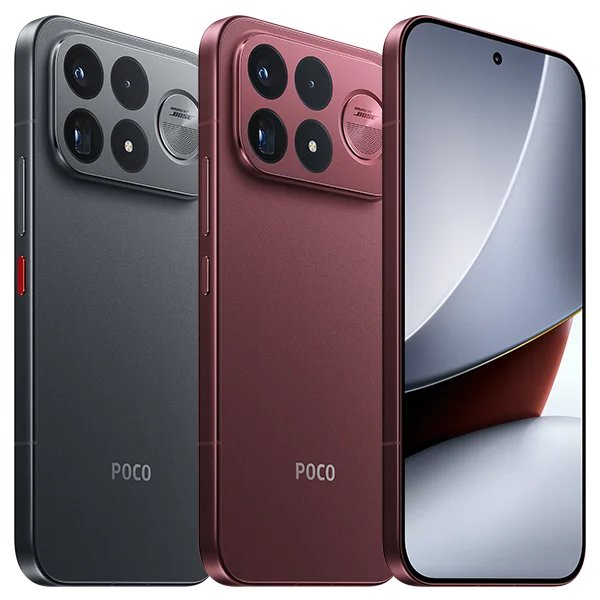
The Poco F9 Ultra has now launched globally alongside the Poco F9 Pro, giving buyers another performance-focused flagship option with a large battery and high-end hardware. The F9 Ultra is aimed primarily at users who prioritize raw performance, gaming and battery endurance rather than camera capabilities alone.
Poco F9 Ultra
It comes with top-notch specs, such as a 6.9-inch OLED 1.5K 185Hz screen, a Snapdragon 8 Elite Gen 5 chip, and an 8,050mAh battery with 100W wired and 50W wireless charging. For photography, it has a 200-megapixel + 8-megapixel (ultrawide) + 50-megapixel (3x periscope) setup and a 50-megapixel front camera. While it runs on HyperOS based on Android 16, its users are entitled to receive four years of OS upgrades and six years of security updates.
That focus makes some conventional flagship phones less relevant as alternatives. Samsung’s Galaxy S26 series and Apple’s iPhone lineup, for example, offer excellent cameras and polished software but generally come with smaller batteries. With that in mind, we have focused this list on performance-oriented phones that combine powerful chipsets, large batteries, fast charging and gaming-friendly displays.
The closest hardware alternative to the Poco F9 Ultra.
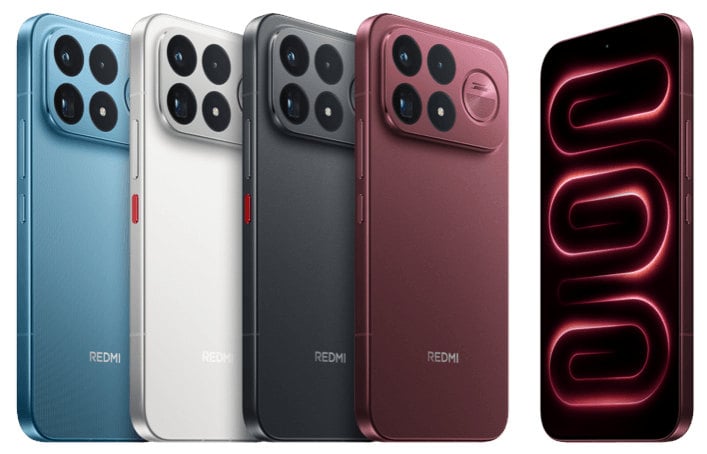
The Redmi K100 Pro Max is a China-exclusive flagship that can still be purchased internationally through import retailers such as Giztop. It is particularly interesting here because it shares essentially the same core hardware as the Poco F9 Ultra.
Its 9,070mAh battery is actually larger than the Poco F9 Ultra’s 8,050mAh unit, giving the Redmi model an edge in raw battery capacity. The rest of the specs are the same on both devices.
The K100 Pro Max runs Xiaomi’s HyperOS based on Android. However, buyers importing it should consider software localization, network compatibility and after-sales support. For those who want similar hardware to the Poco F9 Ultra, it remains one of the most obvious alternatives.
Beyond these five, the Realme GT 8 Pro and Oppo Find X9 5G are also worth considering in the same broad category. Neither is as widely available in every market, but both offer a strong combination of flagship performance and capable cameras. They may therefore be better choices for users who want a more balanced flagship experience rather than prioritizing battery life and gaming above everything else.
For a long time, the action camera market felt fairly predictable. Year after year, new models would arrive with slight bumps in resolution or frame rates, but the core experience remained largely the same. Now that we are in 2026, the industry has shifted its focus. Instead of just chasing higher numbers on a spec sheet, manufacturers are addressing the actual pain points of recording video on the go. We are seeing the introduction of variable apertures, better computational processing, and more practical mounting systems.
Whether you are recording a cycling route, documenting a family trip, or just want a hands-free way to capture your daily routine, the current lineup of cameras offers distinct approaches to solving these problems. Here is a look at the best action cameras available in 2026.
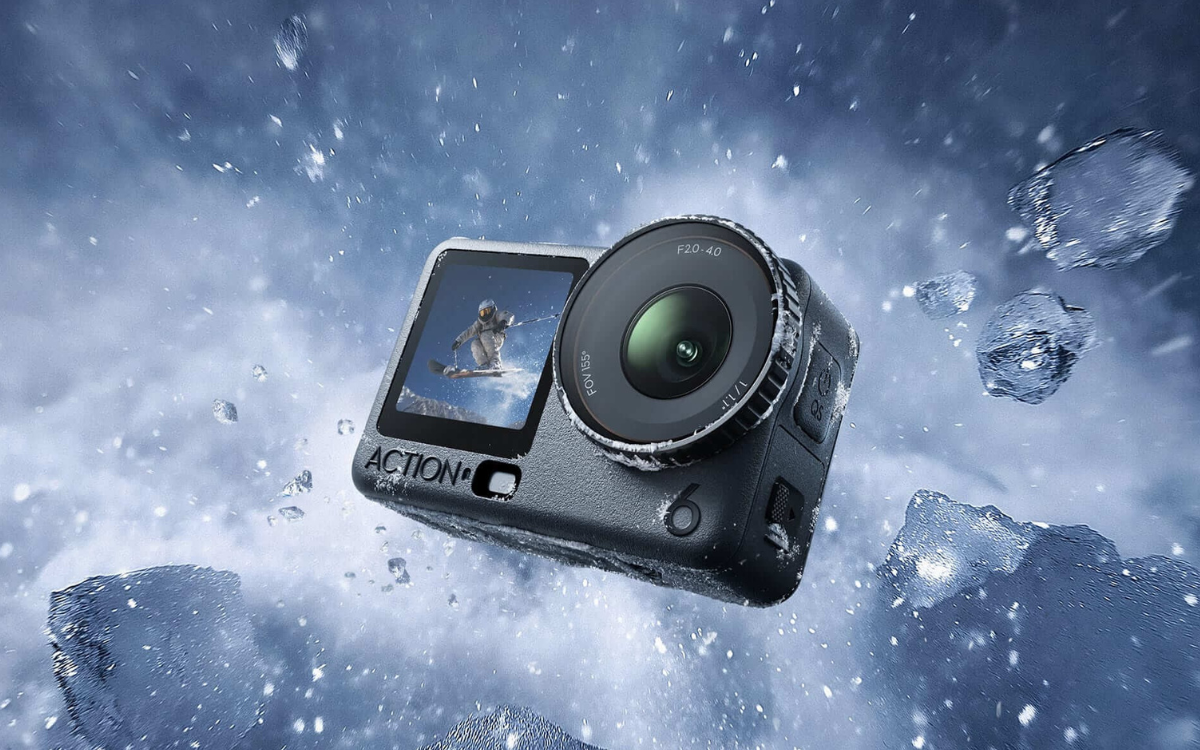
DJI has been steadily iterating on its action camera line, and the Osmo Action 6 brings a significant hardware change: a variable aperture. Ranging from f/2.0 to f/4.0, this allows the camera to physically adjust to different lighting conditions. In practical terms, this means you can get better light intake in dim environments at f/2.0, or stop down to f/4.0 in bright sunlight to retain detail without overexposing the shot.
The camera is built around a new 1/1.1-inch square sensor. The square format is particularly useful for creators who need to export video for both traditional widescreen platforms (like YouTube) and vertical platforms (like TikTok or Instagram Reels). You can shoot once in the 4K Custom mode and crop your preferred aspect ratio later.
DJI also included 50GB of built-in storage, which serves as a helpful safety net if you forget your microSD card, along with a battery rated for up to four hours of use in standard conditions.
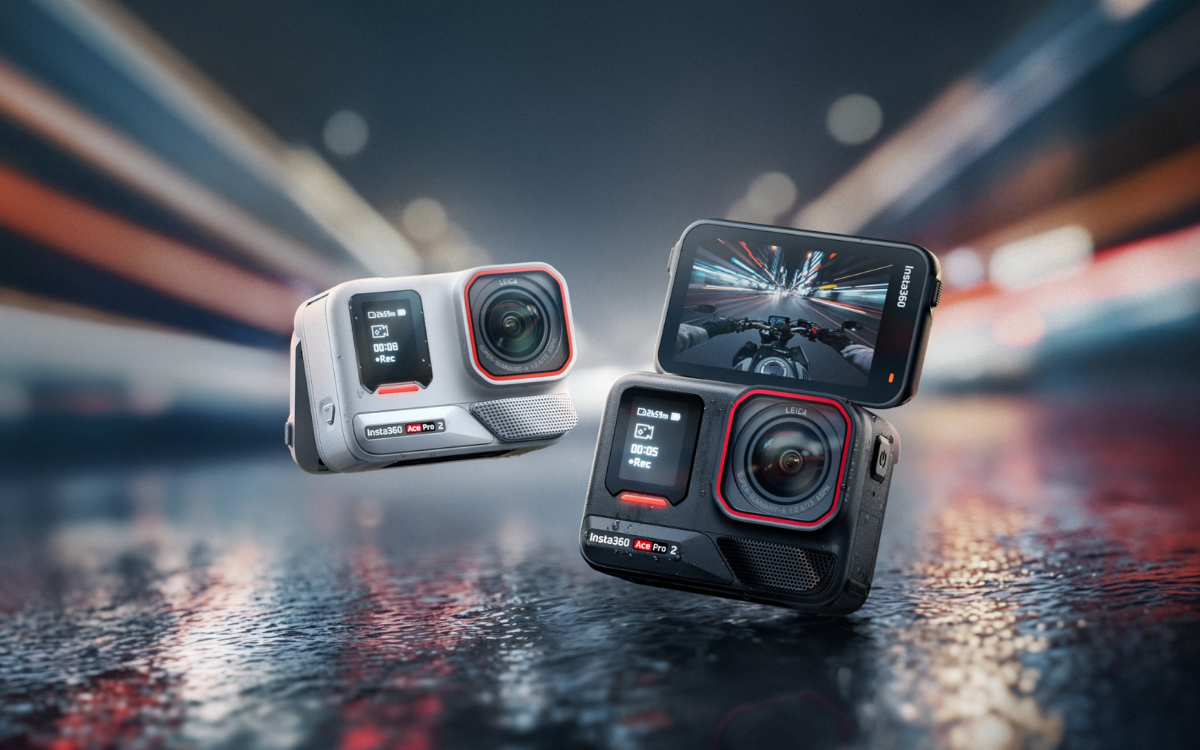
Insta360 has taken a different route with the Ace Pro 2, focusing heavily on processing power and sensor resolution. Co-engineered with Leica, the camera features a 1/1.3-inch sensor capable of recording 8K video at 30 frames per second. While 8K might be more resolution than most people currently need, it offers a lot of flexibility for cropping and reframing in post-production.
What makes the Ace Pro 2 stand out is its dual-chip architecture. It uses a dedicated imaging chip alongside a 5nm AI chip to handle noise reduction and image processing. This setup is especially noticeable in the PureVideo low-light mode, which cleans up grainy footage quite effectively.
The hardware design also includes a 2.5-inch flip touchscreen and an integrated wind guard, which helps reduce audio clipping when you are moving at higher speeds.
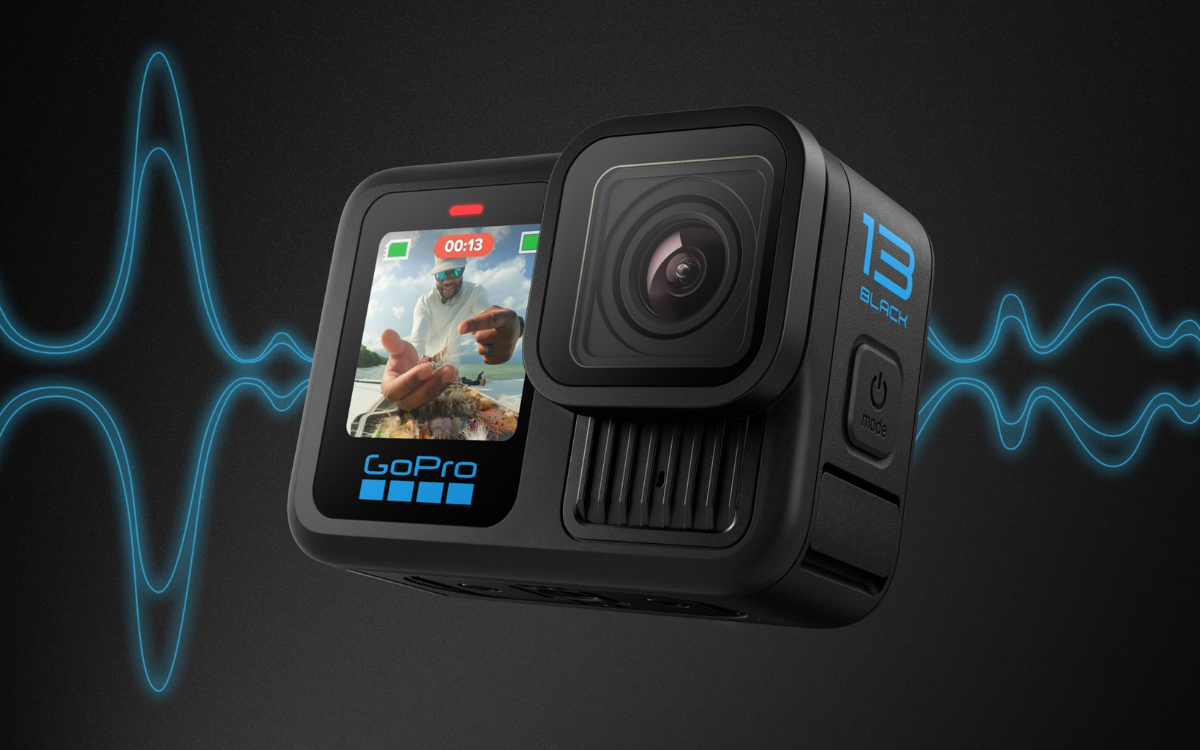
GoPro has maintained its familiar form factor with the Hero 13 Black, but it has heavily expanded its lens ecosystem. The camera introduces the HB-Series lenses, which the camera automatically detects when attached, adjusting its settings accordingly.
You can swap between a Macro Lens Mod for close-ups, an Ultra Wide Lens Mod for a broader field of view, or an Anamorphic Lens Mod if you prefer a cinematic 21:9 aspect ratio with traditional lens flares.
Internally, it uses a 27-megapixel 1/1.9-inch CMOS sensor that shoots 5.3K video at 60fps. GoPro has also added a Burst Slo-Mo feature, allowing you to capture 400fps at 720p for short 15-second bursts.
To support these features, the Hero 13 Black uses a 1900mAh Enduro battery for improved efficiency, and the company has also integrated a magnetic mounting system, making it much easier to move the camera between different mounts without dealing with thumbscrews.
Not everyone needs a flagship camera, especially if it is going to be subjected to rough conditions where it might get damaged. The Akaso Brave 8 fills the gap for users who want reliable performance without the premium price tag.
It is equipped with a 1/2-inch CMOS sensor that records 4K video at 60fps and takes 48-megapixel still photos. The camera includes dual color screens, which makes framing shots easier if you are recording yourself.
It also features Akaso’s SuperSmooth in-app stabilization and AI Face Metering to help keep subjects properly exposed. While it may lack the advanced computational features of the more expensive models, it provides a very solid baseline experience for everyday use.
If traditional action cameras feel too bulky, the Insta360 Go Ultra is designed to be as unobtrusive as possible. Weighing just 53 grams, the standalone camera unit is small enough to clip to a hat or wear on a magnetic pendant under your shirt. Despite its size, it houses a 1/1.28-inch sensor and shoots 4K video at 60fps.
The Go Ultra relies on an Ambient Light Sensor to help calibrate colors and reduce flickering in artificial light. Because the camera itself is so small, battery life is limited to about 70 minutes.
However, it comes with the Action Pod, a housing with a 2.5-inch flip screen that charges the camera and extends the total runtime to roughly 200 minutes. It is an excellent choice for point-of-view recording where a standard camera would be too heavy.
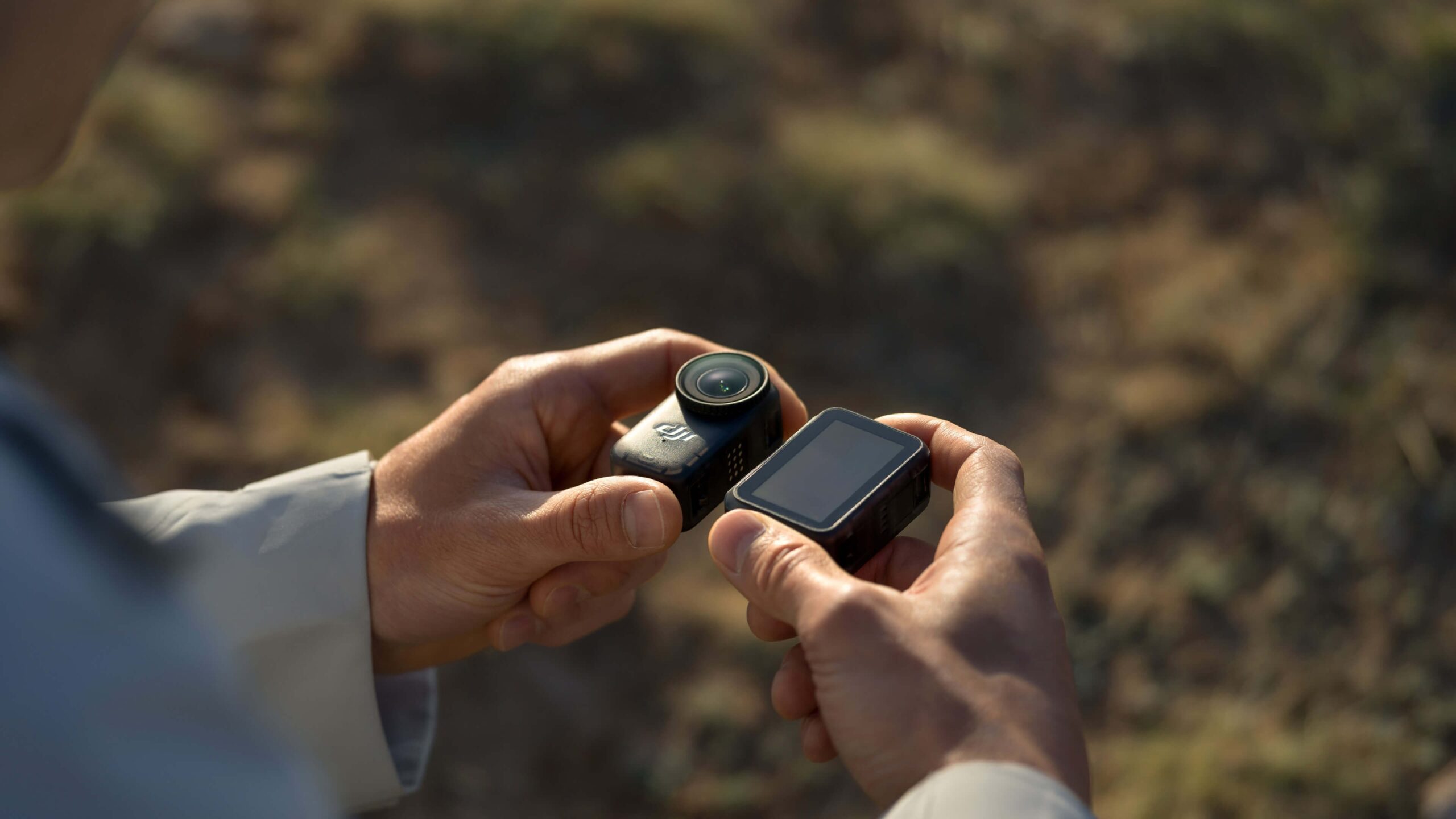
DJI’s answer to the ultra-compact market is the Osmo Nano. It shares a similar philosophy with the Go Ultra, weighing in at 52 grams and designed for wearable, hands-free recording. It features a 1/1.3-inch sensor, 4K/60fps recording, and a wide 143-degree field of view.
The Osmo Nano differentiates itself with its color science, supporting 10-bit D-Log M, which gives video editors more room to color grade their footage. It also features a dual-sided magnetic design, allowing you to mount it facing forward or backward easily.
The camera pairs with a Multifunctional Vision Dock that provides a screen for live viewing, remote control, and fast charging. Furthermore, it supports direct connection to DJI’s wireless microphones, which is a significant advantage if you want clear audio without carrying a separate receiver.
Huawei hosted a big event in Munich today where it unveiled the Watch 6, Watch D3, and FreeBuds Neo. Tagging along are the new Huawei Watch GT 7 and GT 7 Pro smartwatches, which went official in China last month.
The standard Watch GT 7 comes in two sizes, 46mm and 41mm, with eight color options, including Yellow, Blue, and Pink. The GT 7 Pro is available in three colors: Yellow, Green, and Black.
Huawei Watch GT 7
The Pro model also gets a more premium build. It features a scratch-resistant nano-tech ceramic bezel, a titanium alloy middle frame, plus a fluoroelastomer strap using Huawei’s EasyCross design for a snugger fit during workouts.
Built for snow and cycling
One of the big new features is indoor snow sports tracking. The Watch GT 7 series uses multiple sensors to detect skiing and snowboarding and track active time by monitoring changes in posture and elevation. This works even without a GPS signal.
The watch can also tell the difference between actual runs and time spent on ski lifts. For outdoor skiing, the Huawei Health app provides maps for more than 3,000 ski resorts. There’s also a new Turn Detection feature that counts your turns, and G-Force tracking shows the centrifugal force generated when taking sharp corners. Team-Up is another new feature that lets members of a group see each other’s locations in real time while on the mountain.
Cyclists get their own set of features. You have Climb Planning for revealing upcoming climbs before a ride; Climb Broadcast provides information such as gradient and remaining distance during an ascent; and Sharp Turn Alerts use haptic and voice warnings when you’re approaching a corner too quickly.
After a workout, Huawei’s AI Workout Analysis reviews your training data to give you a better idea of how hard you pushed yourself.
On the health side, Health Insights now includes a morning briefing built around a Physical Readiness score, pulling from sleep quality, HRV, emotion, and active calories to tell you how recovered you are before you start the day.
The 46mm Watch GT 7 and GT 7 Pro can last up to 21 days with light use. Huawei says it’s using high-silicon stacked batteries to achieve the longer runtime.
The watches also support Curve Pay for contactless payments. Huawei MultiPass is included as well, providing three months of Health+ and up to 90 days of access to partner apps. Buyers also get two years of Worry-Free Care covering the display, battery, and back cover.
The Huawei Watch GT 7 is available in the UK from September 2 at £279.99, with the GT 7 Pro starting at £379.99, both through the Huawei Store, Amazon, Currys, Argos, and select retailers. Buy between September 2 and October 13, and you’ll get a £50 discount coupon.
Huawei has officially launched the Watch 6 series globally. The new lineup comes in two sizes, along with a ceramic Pro model, and brings several health and fitness upgrades over last year’s Watch 5.
The design is one of the main changes. The 42mm Watch 6 weighs just 38g and measures 10.2mm thick, making it the lightest smartWatch Huawei has ever made. The 46mm version uses a stainless-steel case for a more durable build. You get four finishes across the standard line, plus a new Arcglow look and a flexible lug-to-strap connection that Huawei says makes the EasyCross strap sit more naturally against your wrist.
Huawei Watch 6
The Watch 6 Pro is even better; the 46mm Space Edition features a black ceramic bezel with gold accents, while the 43mm model uses Nano-Tech Ceramic for the entire Watch. Huawei says it is the first fully ceramic Watch in its lineup.
As for health and wellness features, the Watch 6 series utilizes an upgraded X-TAP sensor. Building on the system used in the Watch 5, the new sensor can track 11 health metrics instead of 10. These cover areas including basic health, endocrine, cardiovascular, and respiratory health.
You still get Health Glance for a quick read on all of it, and Huawei’s added a Diet clover to the existing exercise, sleep, and mood tracking, rounding out its four-leaf-clover health model into something closer to a full daily routine tracker.
The Watch 6 series also introduces a wrist-rotation gesture for easier one-handed navigation. It supports eSIM for phone-free connectivity, and has a Safety Check feature that shares your location with family members in real time.
Fitness tracking includes more than 100 workout modes, with features from Huawei’s flagship GT series. The Pro models also get access to the Expedition app. Huawei is including MultiPass with every Watch 6 Series model. It comes with three months of Huawei Health+ and up to 90 days of free access to apps such as Headspace and komoot. Buyers also get two years of Worry-Free Care covering the display, battery, back cover, and crown.
The Huawei Watch 6 launches in the UK from September 23 at £399.99, with the Watch 6 Pro starting at £599.99, both through the Huawei Store and Amazon. If you buy between September 23 and October 26, you can save £50 on the MSRP.
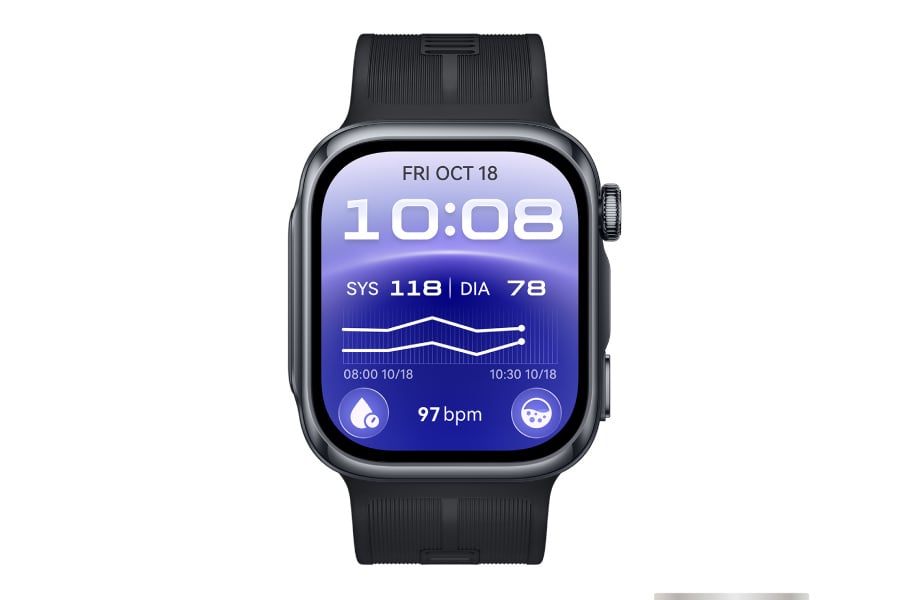
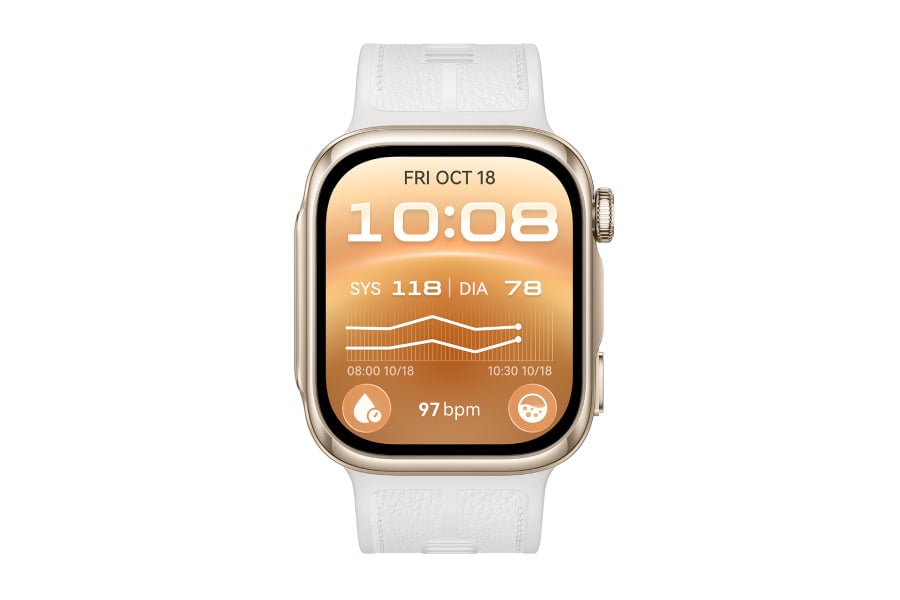
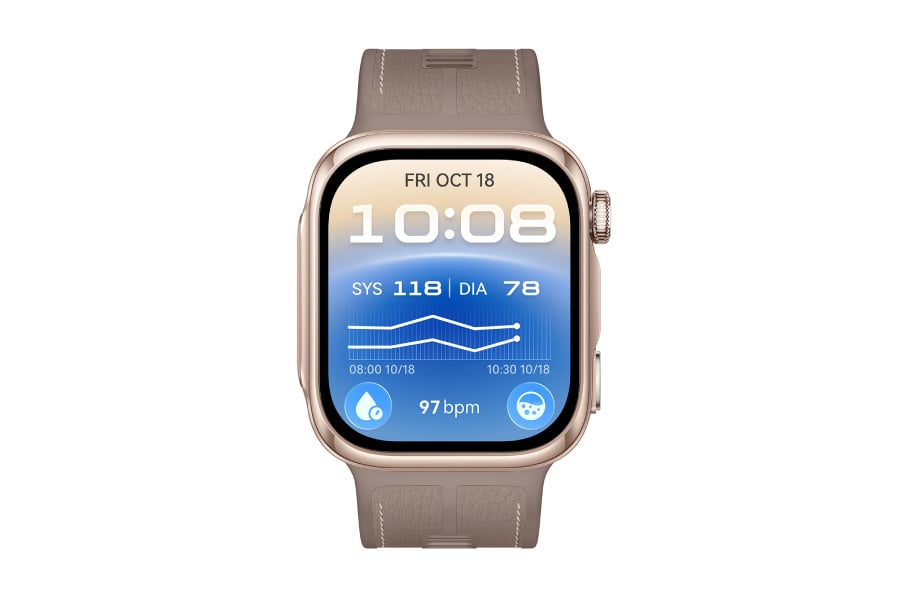
Huawei just announced the Huawei Watch D3, its latest smartwatch designed for blood pressure monitoring. Like the Watch D2, the Watch D3 can take blood pressure readings using an inflatable airbag built into the strap, so you don’t need a separate cuff. This time, though, you get a noticeably slimmer case and a handful of tracking upgrades on existing features.
The Watch D3 measures 11.3mm thick and weighs 40g. Its 25.5mm airbag strap is also slightly narrower than the 26.5mm cuff used on the Watch D2. The watch comes in three finishes: Black, White, and Mocha Gold.
The blood pressure system uses an inflatable airbag and a high-precision sensor rather than relying solely on optical sensors. Huawei has also kept 24-hour Ambulatory Blood Pressure Monitoring from the previous model. The system follows ESH guidelines for measurement intervals and the minimum number of readings. At night, the airbag inflates more quietly to reduce disruptions while you sleep.
What’s new here is a dedicated pre- and post-exercise blood pressure check, so you can see whether your numbers are in a safe range before a workout and track how they shift once you’re done. The watch also holds onto its CE marking under the EU Medical Device Regulation, so the readings carry the same clinical backing as before.
Beyond blood pressure, the Watch D3 includes Health Glance, which can check up to 11 health indicators and provide a report in around a minute. Health Insights now combines blood pressure data with information from your sleep and daily activity.
There’s also a new Health Community feature for families. It lets you check the health readings of family members and receive alerts when something appears unusual.
Every WATCH D3 comes bundled with Huawei MultiPass, which includes Huawei Health+ and up to 90 days of free access to apps like Headspace and komoot. You also get two years of coverage across the display, battery, back cover, and airbag under Huawei’s Worry-Free Care package.
In the UK, the Huawei Watch D3 will go on sale from September 23 for £399.99 through the Huawei Store, Amazon, and select retailers. Buyers who purchase the watch between September 23, 2026, and September 22, 2027, will also receive 10 months of Bupa Well+ health services worth £200.
Early buyers who purchase through the Huawei Store will get a free Huawei Scale 3 along with reward points. The offer runs until November 3.
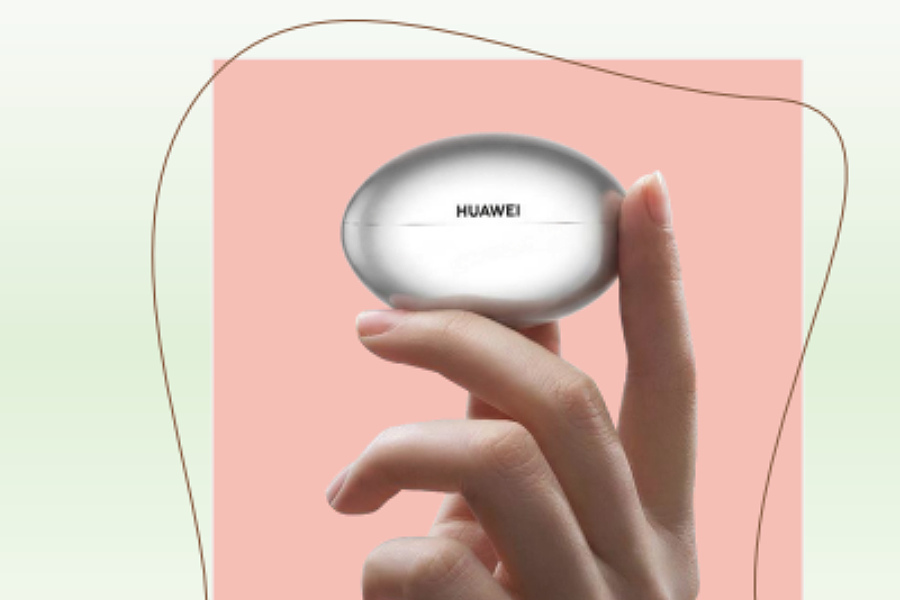
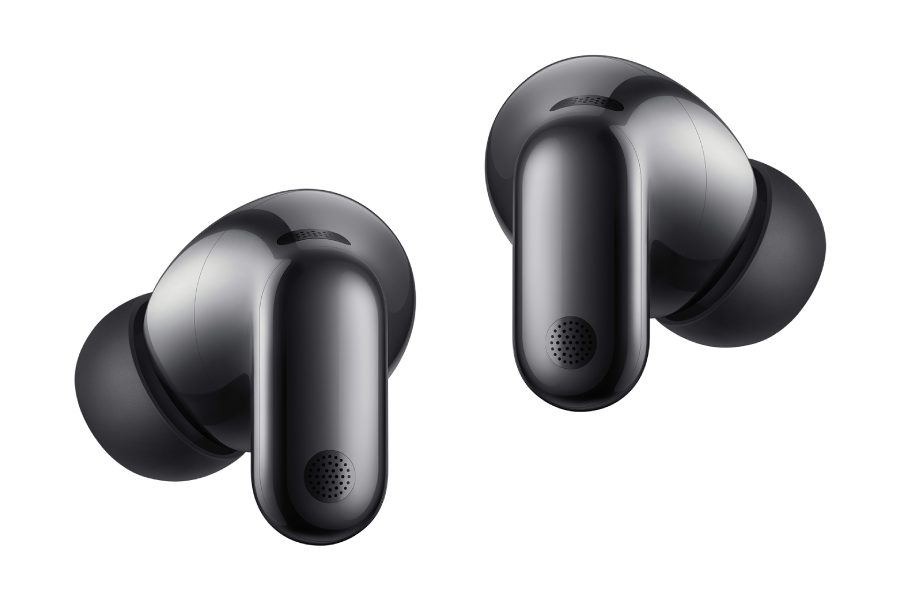
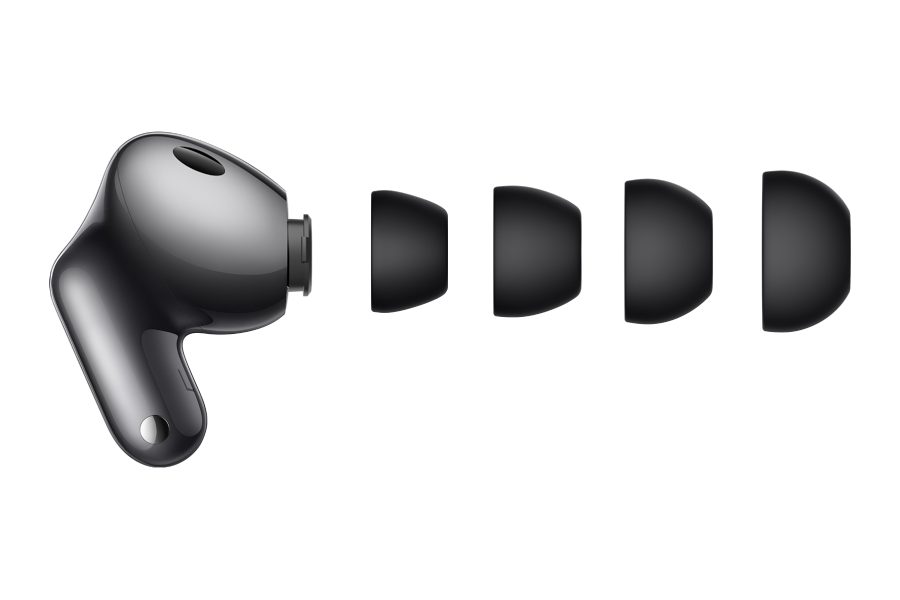
Huawei has now officially launched the FreeBuds Neo globally, following the design teasers it shared a few days ago. The new earbuds have a stylish design and offer features like active noise cancellation, high-quality audio, and multi-device support.
The FreeBuds Neo use a dual-channel system designed to reduce medium- and high-frequency sounds, including wind and background chatter. Huawei says the earbuds can provide up to 55 dB of noise cancellation across the frequency range.
The earbuds also use a third-generation audio chip that can adjust the noise cancellation in milliseconds as your surroundings change. Huawei says this helps reduce the sudden pressure some ANC earbuds can cause when the level of ambient noise changes.
A smaller, more comfortable design
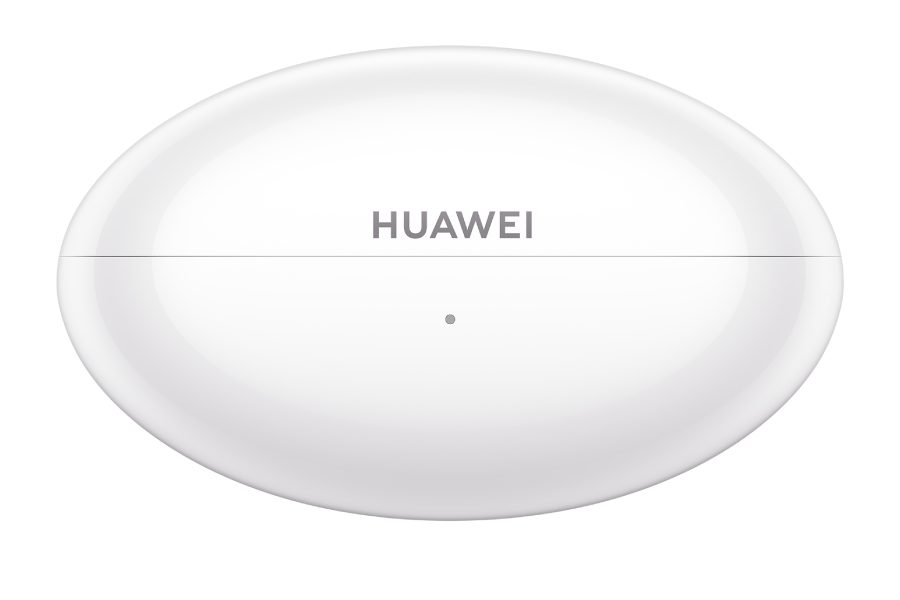
The FreeBuds Neo are designed a bit differently from recent Huawei earbuds, like the FreeBuds 7i. They come in four colors: Stellar Silver, Nebula Pink, Ice White, and Starry Black.
The earbuds sit inside a fully curved Mini Shuttle case and feature a compact Light Mini Stem designed to sit closer to the ear. Each earbud weighs around 4.8 grams. Huawei also says it used data from a large number of different ear shapes to help spread pressure more evenly.
For audio, the FreeBuds Neo feature a new Turbo driver with a frequency range of 10 Hz to 48 kHz. When paired with a Huawei device, they support lossless audio transmission at up to 2.3 Mbps. On other platforms, the maximum transmission rate is 990 kbps.
You also get spatial audio support, which fortunately isn’t limited to a specific device ecosystem. The FreeBuds Neo work with Android, iOS, and Windows devices. They also support dual-device switching, so you can move between two connected devices without manually reconnecting them.
If you own a Huawei smartwatch, you can also control features such as noise cancellation, sound effects, and battery status from the watch through the Huawei Audio Connect app. Speaking of which, each bud offers 6.5 hours of listening time with ANC, and up to 40 hours with the charging case.
In the UK, the Huawei FreeBuds Neo will go on sale on September 23 for £119.99 through the Huawei Store, Amazon, Argos, Very, and select retailers. Huawei is also offering a £20 discount for purchases made between September 23 and October 26.
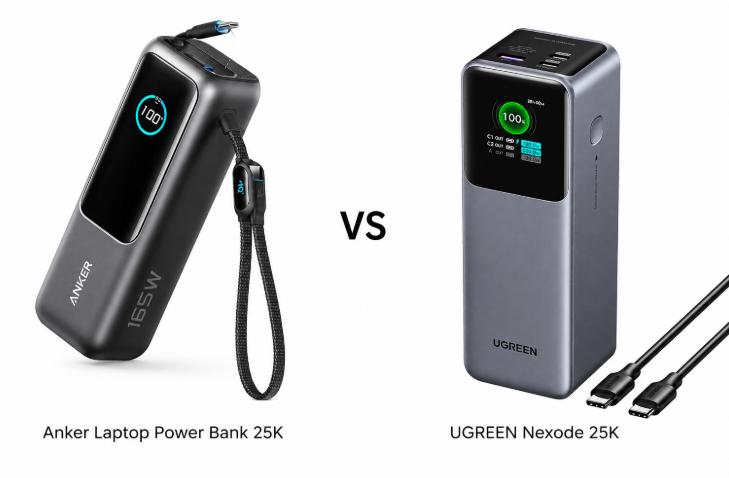
High-capacity power banks have become increasingly useful for users who need to charge laptops, tablets, smartphones, and gaming handhelds away from a wall socket. The Anker Laptop Power Bank (25K, 165W) and the UGREEN Nexode 25,000mAh 200W are two premium options that offer the same battery capacity but take very different approaches.
UGREEN focuses on delivering maximum power, while Anker prioritizes convenience with more charging options, built-in cables, and faster recharging. Here is how the two power banks compare across the specifications and features that matter most.
Disclaimer: Specs are based on available data. Actual performance may vary. Verify details from official sources before buying.
2. Charging Performance
Maximum Total Output
The UGREEN Nexode offers a significantly higher maximum output of 200W, compared to 165W on the Anker. This gives it more power when charging multiple demanding devices and makes it the stronger option for users who prioritize maximum charging performance.
UGREEN also takes the lead in single-port charging, with its primary USB-C port capable of delivering up to 140W. The Anker is limited to 100W from a single port, although that is still sufficient for most laptops and other USB-C devices.
Winner: UGREEN
3. Ports and Multi-Device Charging
Port Selection
The Anker offers a more flexible port configuration with three USB-C ports and one USB-A port. The UGREEN includes two USB-C ports and one USB-A port.
This means the Anker can support up to four devices simultaneously, while the UGREEN can charge up to three devices at once.
Winner: Anker
Built-In USB-C Cables
One of the biggest advantages of the Anker is its two built-in USB-C cables. These make it far more convenient for travel and everyday use because users do not always need to carry additional cables.
The UGREEN does not include integrated cables, so you will need to carry your own.
Winner: Anker
4. Recharge Speed
Maximum Input Power
The Anker supports up to 100W input, while the UGREEN is limited to 65W input. This gives the Anker a major advantage when it comes to recharging the power bank itself.
Anker states that the power bank can be fully recharged in approximately two hours with a sufficiently powerful charger, making it the more practical option for frequent travellers and heavy users.
Winner: Anker
5. Design and Portability
Size and Dimensions
The UGREEN Nexode is noticeably shorter, measuring 131mm in length, compared to nearly 157mm for the Anker. This makes it the more compact option for users who want to save space in a backpack or travel bag.
Winner: UGREEN
Weight
The difference in weight is almost negligible. The UGREEN weighs 592g, while the Anker weighs 595g.
Both are relatively heavy because of their large battery capacity and high-output charging capabilities.
Winner: Tie
6. Display and Features
Smart Display
Both power banks include a digital display, but the UGREEN provides more detailed real-time information. Its TFT display can show battery percentage, voltage, current, input power and output power.
The Anker also offers a smart display, but the UGREEN is better suited for users who want detailed charging data.
Winner: UGREEN
7. Battery Capacity and Travel
Battery Capacity
Both power banks offer the same 25,000mAh capacity, making this category an even comparison. They are designed to charge smartphones multiple times and provide substantial backup power for laptops and tablets.
Winner: Tie
Airline Travel
Both power banks fall within the typical 100Wh carry-on battery limit and can be carried on flights, subject to individual airline regulations.
The Anker has a convenience advantage for frequent travellers because its two built-in USB-C cables reduce the number of accessories you need to carry.
Winner: Anker
8. Price and Value for Money
Best Value for Maximum Power
The UGREEN provides up to 200W of total output and 140W from a single USB-C port, giving it a clear advantage in raw charging performance. If its lower approximate price applies in your market, it also offers excellent value on paper.
Winner: UGREEN
Best Value for Convenience
The Anker offers two built-in USB-C cables, an additional charging connection, four-device support and faster 100W recharging. These features make it potentially better value for users who prioritize convenience over maximum output.
Winner: Anker
Disclaimer: Prices are approximate and may vary based on country, region, launch timing, and applicable taxes. Always check whether the listed price is for a China unit or a global/international variant when purchasing.
9. Anker 165W vs UGREEN 200W: Category Winners
Category
Winner
Reason
Maximum Total Output
UGREEN
200W vs 165W
Maximum Single-Port Output
UGREEN
140W vs 100W
Number of Ports
Anker
Four charging connections
Built-In Cables
Anker
Two integrated USB-C cables
Multi-Device Charging
Anker
Supports up to four devices
Recharge Speed
Anker
Up to 100W input
Compact Design
UGREEN
Shorter dimensions
Weight
Tie
Almost identical
Display Information
UGREEN
More detailed real-time data
Raw Performance Value
UGREEN
Higher charging output
Everyday Convenience
Anker
Built-in cables and more connections
Final Verdict
The UGREEN Nexode 25,000mAh 200W is the better choice if maximum charging performance is your priority. Its 200W total output and 140W single-port capability make it more suitable for demanding laptops and other power-hungry devices.
However, the Anker Laptop Power Bank 25K 165W is the more convenient everyday option. With two built-in USB-C cables, four-device support and faster 100W input, it is particularly well suited for travel and users carrying multiple devices.
10. FAQs
Which is better, the Anker 165W or UGREEN 200W power bank?
The UGREEN is better for maximum power and high-wattage laptop charging. The Anker is better for convenience, multi-device charging and travel.
Which power bank is better for charging laptops?
The UGREEN is the stronger option for laptops that support charging above 100W because it can deliver up to 140W from its primary USB-C port. For most laptops, however, the Anker’s 100W output will be more than enough.
The Anker wins because it can support up to four devices simultaneously. The UGREEN is limited to charging three devices at once.
Which one recharges faster?
The Anker supports up to 100W input, compared to 65W on the UGREEN. This makes the Anker significantly faster to recharge.
Which power bank is better for travel?
Both are suitable for airline carry-on travel, but the Anker is more convenient because it includes two built-in USB-C cables. This reduces the number of accessories you need to carry.
Which one offers better value for money?
The UGREEN offers better value for buyers focused on maximum charging power. The Anker offers better value for users who prioritize built-in cables, faster recharging and everyday convenience.
Honor appears to be preparing an interesting update to its Magic series with the upcoming Magic 9. The standard model is expected to combine a relatively compact display with specifications usually associated with larger flagship phones. New details have now surfaced that reveal more about what Honor could be planning.
According to tipster Digital Chat Station, the Honor Magic 9 standard version could feature a 6.36-inch flat OLED display and an 8,000mAh-class battery. The battery is said to be based on Honor’s third-generation Qinghai Lake silicon-carbon technology, potentially making it the largest battery in its segment.
The combination is particularly notable because compact flagship phones generally make compromises on battery capacity due to their smaller internal space. An 8,000mAh battery inside a phone with a 6.36-inch display would therefore give the Magic 9 a significant endurance advantage if the reported specifications materialize.
DCS claims the phone’s rear camera setup will include a pair of 200-megapixel cameras. The primary one will use a 1/1.4-inch sensor. The other 200-megapixel camera will be a periscope telephoto camera, which was previously said to feature a 64-megapixel sensor. As reported previously, the camera setup will also include a 50-megapixel ultra-wide lens.
Honor Magic 9 camera module
Other reported features include wireless charging and an ultrasonic fingerprint sensor. This standard edition is expected to feature the Snapdragon 8 Elite Gen 5 chip from last year, but the Pro models launching alongside it could arrive with the all-new Snapdragon 8 Elite Gen 6-series chipset. For the unversed, the Magic 9 series has already been confirmed to launch on Sept. 28.
Google’s September Android Drop is bringing a handful of new features designed to make everyday smartphone use a little more convenient. The latest additions cover misplaced belongings, motion sickness, accessibility, and messaging, giving users more ways to get things done without relying on separate apps.
The update includes five notable features across Gemini, Find Hub, Google Messages, and Android itself. Some are already rolling out, while others require newer Android versions or will arrive soon, so here’s a closer look at what Google is bringing to compatible devices.
5Chat themes make conversations more personal
Google Messages also gets Chat themes, letting users give individual conversations different backgrounds and colors. You can use Google’s wallpapers or your own photos, with message bubbles adapting to the chosen design. Chat themes are available now.
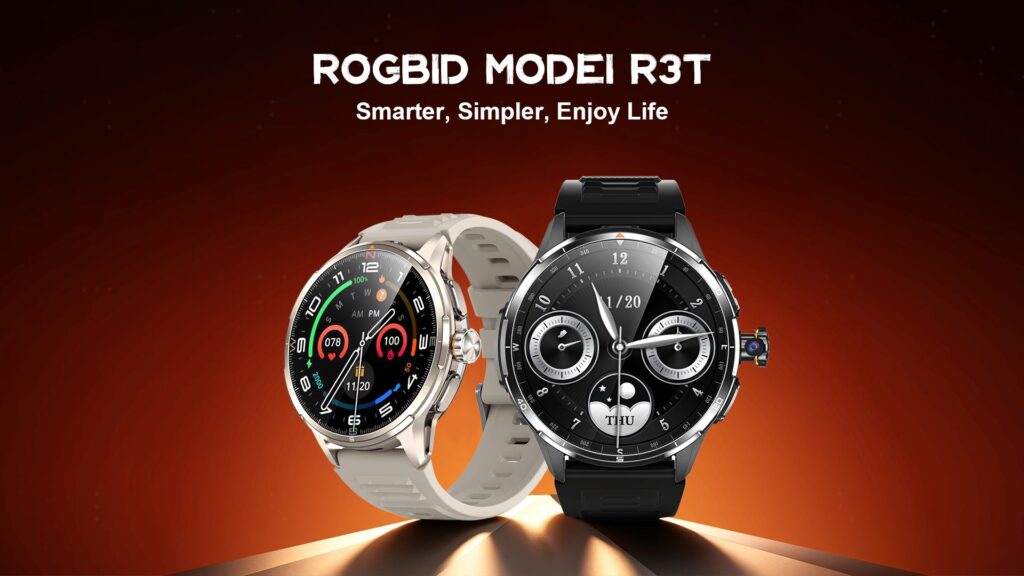
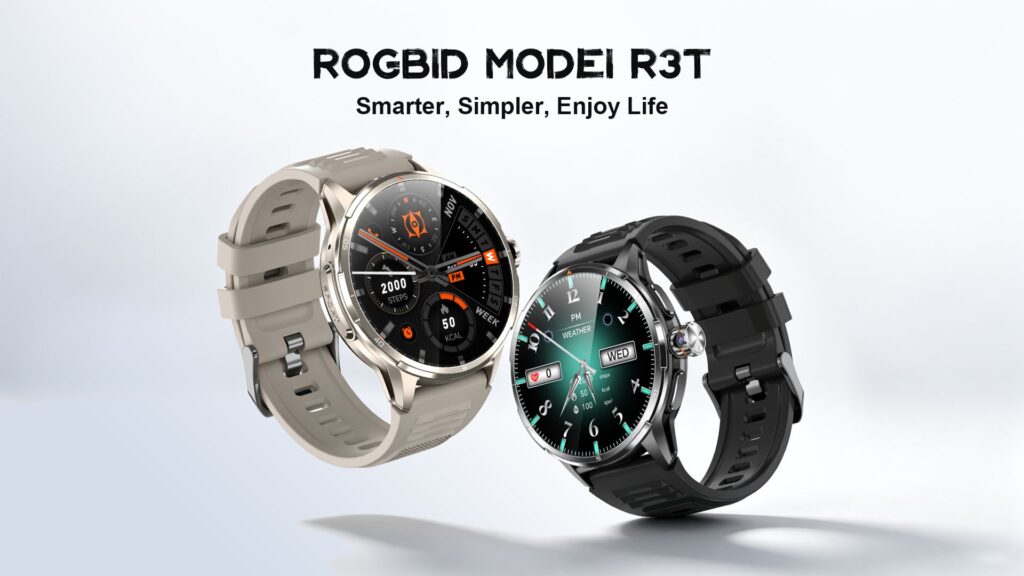
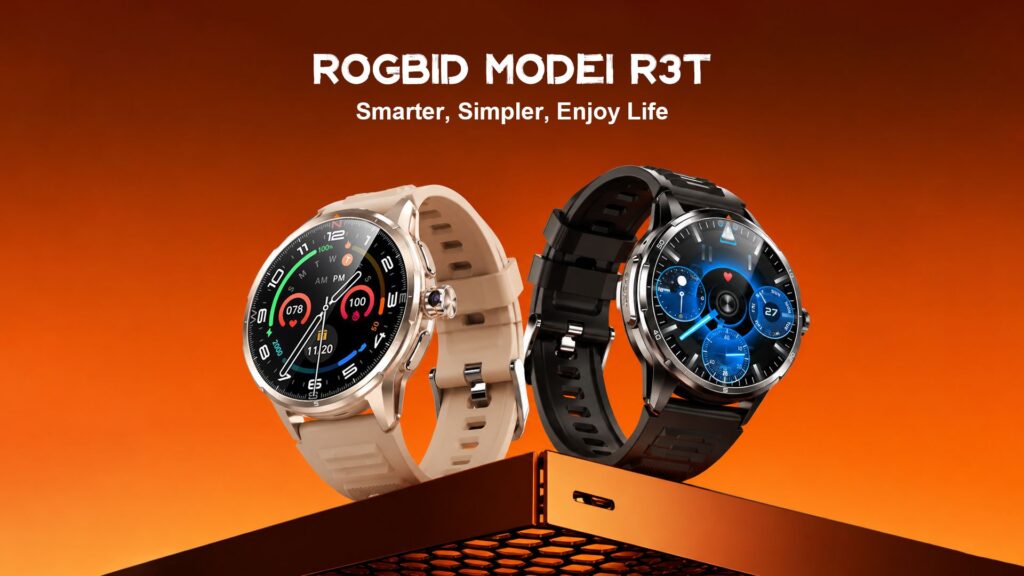
Rogbid has released its latest wearable, the Model R3T. Rather than acting as a standard smartphone accessory that simply mirrors your notifications, the R3T is built to operate entirely on its own. The device runs a full Android operating system and includes a SIM card slot for 4G LTE connectivity, allowing it to handle calls, texts, and mobile data without a phone nearby.
On the hardware side, the R3T features a circular 1.6-inch AMOLED display with a 480 x 480 resolution. The screen is covered by scratch-resistant Panda Glass, and the chassis is made from 316 stainless steel, giving it a heavier, more utilitarian build. It also carries an IP67 rating for basic water and dust resistance.
Internally, the watch runs on an SL8541E processor, backed by 3GB of RAM and 32GB of internal storage. Because it uses a standard Android OS instead of a lightweight wearable platform like Wear OS or RTOS, you can download regular mobile applications directly to the watch. This includes video and music streaming apps like Netflix and TikTok.
Running full apps and cellular data on a wrist-worn device requires a lot of power, so the company has included a sizable 1100mAh battery. To help manage battery life, the watch features a dual-mode system: you can run it in full Android mode for standalone use, or switch to a standard Bluetooth mode, which limits functionality but extends standby time up to 10 days.
The device also includes a few unconventional hardware features. The most noticeable is a mechanical pop-up camera hidden at the top of the casing. It rotates up to 190 degrees and can be used for video calls, facial recognition, or taking basic photos. Additionally, there is a built-in infrared (IR) blaster, which lets the watch function as a remote control for household appliances like TVs and air conditioners within a five-meter range.
For standard fitness tracking, the R3T includes multi-system GPS for outdoor navigation, along with sensors for continuous heart rate and blood oxygen (SpO2) monitoring. It does have an NFC chip, though it is strictly limited to passive access control, like unlocking compatible smart doors, and does not support contactless payments.
Pricing and Availability
The Rogbid Model R3T is available now through the company’s online store. It comes in two finishes, Midnight Black and Nova Gold, and is currently priced at $99.99 as part of a launch promotion.
In related news, Rogbid has recently launched the VisionW smart glasses with open-ear audio, interchangeable frames, and AI features, alongside the Breeze handheld fan with a metal unibody, cooling plate, and LED light.
For more daily updates, please visit our News Section.
The Infinix Hot 70 Pro 5G is set to make its debut in India on September 4, bringing several features that are unusual for its segment. The company has already revealed much of what buyers can expect from the upcoming smartphone. Here is everything known about the Hot 70 Pro ahead of its launch.
An eye-catching design with an unusual rear display
The Hot 70 Pro 5G will be available in Thermo Orange, Mirage Green, Silk Glow Purple, and Dive Blue finishes. Thermo Orange changes its appearance with temperature, while Mirage Green can glow under UV light.
The phone measures as little as 7.85mm thick and also introduces the Active Matrix Cube, an interactive rear display that can show calls, messages, charging information, weather, camera alerts, and countdowns. It can also display personalised patterns and emojis, while its lighting effects can sync with music and games.
The phone features a 6.76-inch FHD+ punch-hole display with a 144Hz refresh rate, 240Hz touch sampling rate, and up to 950 nits of HBM brightness. For photography, it has a flagship-grade 50-megapixel Sony IMX882 main camera, with Live Photo Mode and an AI Eraser feature for removing unwanted objects. An 8-megapixel front camera handles selfies and video calls.
The Hot 70 Pro also uses the MediaTek Dimensity 7100 5G chipset paired with UFS 2.2 storage. Infinix says supported games can run at up to 90fps. Its 6,000mAh battery supports 45W fast charging, with Infinix claiming around 25 minutes to reach 50% and approximately 63 minutes for a full charge. The phone also gets IP68 dust and water resistance, speaker self-cleaning technology, Android 16, three major OS updates, and five years of security patches.
The Infinix Hot 70 Pro will officially launch in India on September 4. The company is yet to confirm the final pricing, but it has indicated that the phone could be positioned below Rs 25,000 (~$265)
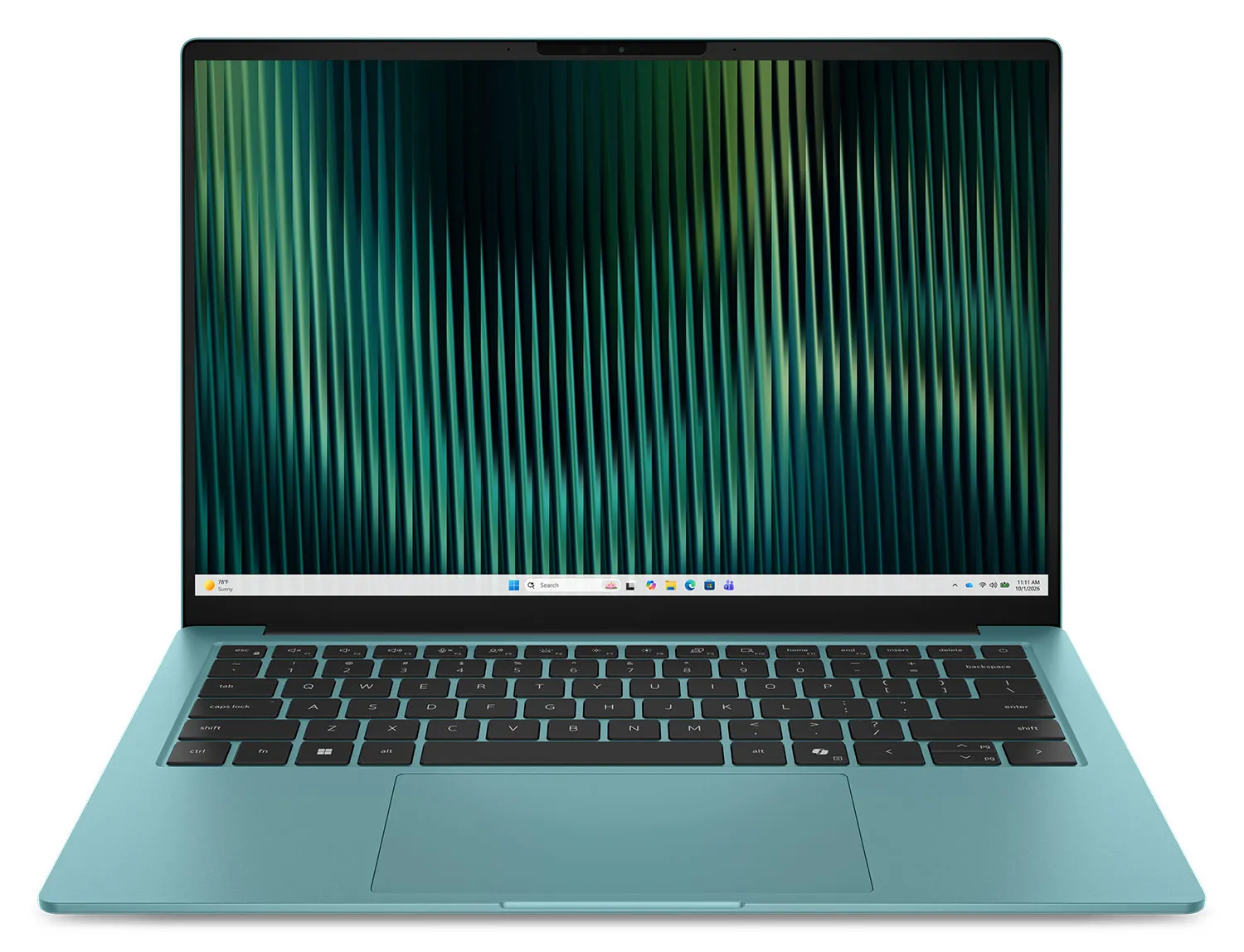
Dell’s new 14S is aimed at users who want a lightweight laptop without paying XPS-level prices. It brings a colorful aluminum design, a high-resolution display option, and a large battery to the mainstream segment. The new MacBook Neo killer from Dell is positioned as an affordable option for students and everyday users, although pricing remains under wraps for now.
Dell 14S: A lightweight laptop with a premium-looking design
Dell 14S
The Dell 14S weighs around 2.5 pounds and measures 13.5mm thick, making it easy to carry around for school, work, or travel. Its aluminum chassis comes in four finishes: Linen, Dusty Rose, Washed Denim, and Velvet Green. The laptop also has a 61.2Wh battery, with Dell claiming up to 21 hours of Netflix streaming and up to 27 hours of local video playback under specific testing conditions.
The display options are particularly interesting. The base model gets a 14-inch 1920×1200 panel with a 60Hz refresh rate and 300 nits of brightness. Buyers can step up to a 2880×1800 display with a 120Hz refresh rate, 450 nits of brightness, and full sRGB coverage. Both panels use a 16:10 aspect ratio, giving users more vertical space for documents, websites, and other everyday tasks.
Dell 14S – Washed DenimDell 14S – Velvet Green
For performance, the Dell 14S comes with Intel Core 5 Series 3 or Core 7 Series 3 processors with integrated graphics. Storage configurations range from 256GB to 1TB of PCIe NVMe SSD storage, while memory options include 8GB and 16GB of LPDDR5x RAM. The memory is onboard, so it cannot be upgraded later, making the 16GB version the more sensible choice for long-term use.
Connectivity includes two USB-C ports with Power Delivery, HDMI, a 3.5mm headphone jack, and Wi-Fi 6E. There is no USB-A port. The laptop also includes a 1080p webcam, dual far-field microphones, stereo speakers, and Windows Hello support for biometric sign-in.
Pricing and availability
Dell says the 14S will arrive in North America this fall, with pricing to be announced closer to launch. The company has not yet revealed the complete configuration lineup either, so the final value proposition will depend heavily on how much the higher-resolution model costs.
Several upcoming Vivo and iQOO smartphones have surfaced in the GSMA IMEI database, hinting that the companies are preparing more devices for different markets. The listings reveal model numbers for four Vivo phones and two iQOO models. While most specifications remain unknown, some details about the iQOO 16R have already surfaced.
Vivo X500 FE, Y32 5G and T6 Lite 5G spotted
Vivo is preparing the X500 series for China later this month, with the X500, X500 Pro, and X500 Pro Max expected to debut alongside the lineup. Global versions of these models are also in development, and the X500e, X500, X500 Pro, and X500 Pro Max have previously appeared in the IMEI database with model numbers V2632, V2619, V2621, and V2610, respectively.
The Vivo X500 FE has now joined the list with model numbers V2653 and V2654, likely representing different markets. The V2653 has also appeared in Europe’s EEC database. At present, there is no information about the X500 FE’s specifications. The X500, X500 Pro, and X500 Pro Max global variants are expected to retain the specifications of their Chinese counterparts, although this has not been confirmed.
The same database has also revealed the Vivo Y32 5G with model number V2639 and the Vivo T6 Lite 5G with model number V2647. No specifications or launch details have surfaced for either smartphone so far.
iQOO 16R and Z12 Lite also in development
iQOO is also preparing new models, with the iQOO Z12 Lite and iQOO16R appearing in the GSMA IMEI database under model numbers I2603 and I2606. The Z12 Lite had previously received EEC certification in July, while the 16R has now been spotted for the first time.
The iQOO 16R could be based on the China-bound iQOO 16T, just as the iQOO 15T was a tweaked version of the China-bound iQOO 15T. It is reportedly being tested with a 2K Samsung OLED display and a Snapdragon 8 Elite Gen 6 series chipset. The phone could also feature a 200-megapixel main camera and a 50-megapixel ultra-wide lens, while skipping a periscope camera. A built-in fan and liquid cooling system are also expected, though these specifications remain unconfirmed.
Oppo Find X10 series is all set to launch in China in September, with the lineup reportedly including the Find X10E, Find X10, and Find X10 Pro Max. Ahead of the launch, new leaked renders have surfaced online, offering an early look at the Pro Max. The images also give us a better idea of how Oppo could differentiate its top-end model.
Oppo Find X10 Pro Max leaked images reveal renewed design
Oppo Find X10 Pro Max leaked images
Chinese tipster Dingjiao Shuma has shared renders of the Oppo Find X10 Pro Max, showing a large horizontal camera island across the upper portion of the rear panel. A square camera module sits within the larger rectangular section, housing three large camera lenses, while a separate sensor and circular LED flash unit are positioned alongside it. The renders also show a new white finish with Hasselblad branding, alongside a blue variant with a cleaner appearance.
According to the tipster, the three cameras inside the square module could all use 200-megapixel sensors for the main, ultra-wide, and periscope telephoto cameras.
Oppo Find X10 Pro Max specifications (rumored)
Earlier leaks suggest the Find X10 Pro Max could feature a 6.78-inch LTPO OLED display with 2K resolution and a 144Hz refresh rate. The phone is also expected to use MediaTek’s upcoming 2nm Dimensity 9600 Pro chipset, run ColorOS 17 based on Android 17, and include a 50-megapixel autofocus selfie camera.
The triple rear camera system could consist of three 200-megapixel sensors, with the main camera reportedly using Samsung’s 1/1.3-inch ISOCELL HPC sensor, while a 3-megapixel multispectral sensor could assist with color accuracy.
Oppo has not officially confirmed the device or these details, so the renders and reported specifications should be viewed with a pinch of salt until more concrete information emerges.
HyperOS 4 will be a substantial upgrade for Xiaomi devices, offering a major visual upgrade, performance boost, and intelligent AI features. The beta program has been live for over a dozen phones in China, and the stable release should go live soon. Unfortunately, the list of eligible Xiaomi models may be smaller than we expected, as the company may skip the HyperOS 4 rollout to Android 16 devices.
Folks at Ximitime have found that, of the 112 devices expected to receive Android 17, 108 have entered HyperOS 4’s internal testing phases. Surprisingly, there’s not even a single Android 16 device on the list, which indicates Xiaomi isn’t preparing a HyperOS 4 build for an older OS.
Historically, Xiaomi has offered its latest HyperOS skin to a handful of devices stuck on an older OS. The last major upgrade, HyperOS 3, was also released to many Xiaomi devices running Android 15, although with a limited set of upgrades. That’s been true with most of the recent major HyperOS releases, and so, HyperOS 4 was also expected to follow the same pattern, but Xiaomi may have different plans.
Xiaomi may be rethinking its software rollout strategy
Unlike other brands, Xiaomi has long offered the latest HyperOS software to its devices running older Android OS versions. But things appear to be changing now. The latest information suggests that the brand will ship HyperOS 4 with Android 17 only, and that this trend may continue going further.
While there’s no official confirmation on this, this shouldn’t come as much of a surprise, considering recent efforts by other Chinese brands to reduce R&D costs. Xiaomi may also be looking to reduce costs and time, so this move makes sense for the brand.
Xiaomi is updating its night light lineup with the new Mijia Night Light 4. It follows the Mijia Night Light 3 from 2024, which has dual sensing and up to eight months of battery life. The new model keeps the long battery life but upgrades the motion detection system with a more precise radar sensor.
The Mijia Night Light 4 is now available for pre-order as a single pack, with crowdfunding set to begin on September 9. It will have a regular price of 79 yuan (around $12), while the crowdfunding price will be 59 yuan (around $9).
Xiaomi Mijia Night Light 4 uses 24GHz radar for better detection
The main upgrade is the new 24GHz radar sensor. It has a 120-degree wide-angle detection range and can detect small movements from up to 3 meters in front and 2.5 meters from the sides.
The light can automatically turn on when you enter a dark room and switches off 10 seconds after you leave. Xiaomi uses a similar 24GHz radar system in the Mijia Smart Bathroom Heater P1 to detect whether someone is in the room.
For lighting, the Night Light 4 uses a backlit design that reflects light off the wall rather than shining it directly toward you. It offers four brightness levels: 1lm, 3lm, 5lm, and 15lm. The lower settings work well for hallways and bedrooms, while the brighter modes can be useful in places such as bathrooms and closets.
Xiaomi says the light is flicker-free and meets RG0 standards for blue-light safety. It also uses a warm light tone designed to be comfortable in dark rooms.
The night light has an 800mAh lithium battery. Xiaomi claims it can last up to eight months on a single charge when using its low-power settings. At the highest brightness level, battery life drops to around three months. Charging is handled via a USB Type-C port.
Xiaomi has set September 7 for its autumn flagship event, where it will officially unveil the Xiaomi 18 Fold. The company has now shared a first look at the foldable after several leaked photos surfaced last week. Xiaomi is also giving its design a name: “mid-fold.”
The company’s video confirms that the Xiaomi 18 Fold will have a 5.38-inch cover display and a 7.58-inch main display. Xiaomi showed the phone in red, with a horizontal camera strip on the back that houses three cameras and an LED flash.
The company has also shared a look at the phone’s internal design on its website and confirmed that Leica was involved in developing the camera system.
Lu Weibing, who heads Xiaomi’s smartphone business, says the 18 Fold is more than just another foldable. He describes it as the most advanced flagship in Xiaomi’s lineup, designed to compete with the company’s regular numbered flagships. He also believes the mid-fold design could become a common direction for future foldable phones.
Xiaomi’s idea behind the mid-fold design
Xiaomi says its mid-fold design addresses a problem that has existed since large-screen foldables first appeared. Large foldables offer a big display when opened, but users often spend most of their time on the smaller outer screen. Smaller foldables are easier to carry, but usually make more compromises on the overall experience.
The Xiaomi 18 Fold is designed to sit just between them. When folded, Xiaomi says it is roughly the size of a passport and light enough to use with one hand. Open it up, and the 7.58-inch display uses a new aspect ratio designed for multitasking and watching videos.
Inside, the phone will run on Xiaomi’s Xring O3 chip, which recently appeared on Geekbench ahead of the launch. It will also ship with Surge OS 4 and Xiaomi’s MiMo on-device AI model.
Xiaomi has also introduced a new “dragon bone” hinge and a new simulation-based testing system for the foldable. The company previously confirmed that the 18 Fold will be one of the first phones to use CXMT’s new LPDDR6 memory.
The Xiaomi 18 Fold will launch alongside the Xiaomi N70 Pro, N70 Max, N90 Max, and the Xiaomi Pad 9 Pro Max at the September 7 event. The tablet also uses the Xring O3 chip.
Buying a new Smart TV today can get a lot more confusing. While there are more Smart TVs to choose from than ever, finding the right one isn’t easy. Because a 55-inch TV can cost considerably more than another 55-inch model despite having the same 4K resolution, simply because of differences in panel technology, processing, brightness, and features.
That said, to help you make your TV purchase easier, we have curated some of the best TV options you can buy across budgets and screen sizes. But before jumping into the models, there are a couple of things you need to considering before choosing a Smart TV in 2026.
The first thing to consider when buying a new TV is screen size. A 32-inch TV is a good fit for bedrooms and smaller spaces, while 43-inch and 55-inch models work well in most living rooms. If you have a large room and sit farther away from the TV, a 65-inch or 75-inch model can give you a much more immersive viewing experience.
Next, look at the display technology. Basic LED TVs are affordable and work well for everyday viewing, while QLED TVs use quantum dots to deliver richer colours and higher brightness. Mini LED TVs take things a step further with much finer backlight control, resulting in better contrast and HDR performance.
Then comes the resolution. Full HD is still fine on smaller 32-inch and 43-inch TVs, but 4K is the better choice for larger screens. It gives you sharper images and is now common across the mid-range and premium segments.
Finally, check the smart TV platform and connectivity. Google TV offers a familiar interface with access to a wide range of apps, while Samsung’s Tizen and LG’s webOS offer their own ecosystems. If you plan to connect a gaming console, look for HDMI 2.1, VRR and a high refresh rate. For movies and shows, Dolby Vision, HDR10+, and Dolby Atmos can make a bigger difference to the experience.
If you are tight on budget but still want something to fill your entertainment void, the Xiaomi F Series TV is a good option. It features an HD Ready 1366 x 768 display with a 60Hz refresh rate and Xiaomi’s Vivid Picture Engine 2 for basic picture enhancement. The TV runs on Fire TV, which gives you access to popular streaming apps, Alexa voice controls, and a familiar interface. It gets a 20W speakers support Dolby Audio, DTS-HD, and DTS Virtual, so the built-in audio should be enough for casual viewing.
If you can spend more, you can get a 32-inch QLED TV from TCL. This one comes with a Full HD resolution and has HDR support. It runs Google TV, features Dolby Atmos for rich audio, and supports voice controls. You also get added features like AI Clarity and OTT app support.
Going up the budget, you can get a 43-inch Samsung Smart LED TV that supports HDR and Hyper Real picture engine that offers accurate colours. This one runs on Samsung’s Tizen OS, which gives you access to popular streaming services along with Samsung TV Plus and smart features. Its gets a 20W two-channel speaker system, Bluetooth support, and Q-Symphony compatibility.
The Lumio Vision 7 comes with a 43-inch display, but unlike the Samsung TV, this one is a QLED panel, with a crisp 4K resolution. It supports 93% DCI-P3 coverage, along with Dolby Vision, HDR10 and HLG support. The TV also features MEMC, ALLM and 4K AI upscaling. It comes 3GB RAM and 64GB storage, which means you get give plenty of room for apps and content. Itt runs Google TV and packs 24W quad-driver speaker system.
If you want a 55-inch TV that can handle everything from daily soaps and sports to movies and streaming, the LG NANO 4K is a great option. It gets a NanoCell display delivers punchier colours than a regular LED TV. It is powered by the α7 Processor Gen9 that helps clean up and sharpen lower-resolution content. It runs webOS 26, and features Google Cast, AirPlay, and LG Channels making it easy to access content from different devices. It also has ALLM, VRR, and Game Optimiser.
If you want a TV that does a bit of everything, Samsung’s 55-inch Mini LED TV is a strong pick. Its Mini LED panel offers better contrast and brightness control than a regular LED TV, while the 120Hz refresh rate keeps sports, movies and games looking smooth. You also get HDR10+, Filmmaker Mode and 4K AI upscaling, along with VRR and ALLM for gaming. The 30W speakers with Q-Symphony and Object Tracking Sound Lite are a nice bonus if you don’t want to add a soundbar right away.
Sony’s BRAVIA lineup has some pretty TVs, and the BRAVIA 2 II is a great 50-inch TV to consider. Its supports 4K LED panel that benefits from Sony’s image processing, which does a good job of making low resolution content look cleaner and crisper. It runs Google TV, supports OTT apps, and comes with a dedicated HDMI eARC port for a better audio experience.
If you want a big-screen TV that can also keep up with gaming, the Xiaomi TV X Pro 75-inch is a great pick. Its gets a 4K QLED panel for movies and sports and a 120Hz DLG mode that makes gameplay smoother than a standard 60Hz TV. You also get Dolby Vision, HDR10+, and Filmmaker Mode, along with Google TV OS and 34W speakers. It is a good choice if you have the space for a 75-inch screen and want a more immersive gaming setup.
The Xiaomi F Series 32-inch TV is the best budget Smart TV you can buy right now. It comes with an HD display, Fire TV, Alexa, 20W speakers, and OTT app support, all at an affordable price.
What’s the best Smart TV overall in 2026?
The Samsung 55-inch Mini LED TV is our best overall Smart TV pick. Its Mini LED display, 120Hz refresh rate support, HDR10+, VRR, ALLM, and Tizen platform make it versatile enough for movies, sports, gaming and everyday TV viewing.
What’s the best premium-value Smart TV?
The Lumio Vision 9 is a strong premium-value option, particularly if gaming is important, as it gets a QD-Mini LED panel, 144Hz refresh rate, VRR, and Dolby Vision support.
What’s the best premium Smart TV in 2026?
The Xiaomi TV X Pro is our pick for the best premium Smart TV, as it features a large 75-inch 4K QLED display, a 120Hz refresh rate, Dolby Vision, HDR10+, and 34W speakers that deliver room-filling sound.
These are some of the best Smart TVs you can buy for under a lakh. Which of these TVs is your pick? Let us know in the comments below.
Vivo recently unveiled the Vivo V80 Lite 5G in some markets like Pakistan and Bangladesh. This phone is nothing but a rebranded version of the Vivo S2, which is available in India. The brand is also gearing up to unveil a new version of the Vivo V80 Lite 5G for Malaysia and probably for other markets. Ahead of the Sept. 3 Malaysian launch, the device is listed for pre-orders. The listing has confirmed the RAM, storage, and color variants of the device.
Vivo V80 Lite 5G’s configurations, color options revealed
As can be seen above, the Vivo V80 Lite 5G will be available in three variants, such as 6GB+128GB, 6GB+256GB, and 8GB+256GB. It will arrive in three colors, such as Pink, Green, and Black.
The Vivo V80 Lite 5G’s Malaysian variant has the model number V2626, and this device has already been spotted with the Dimensity 7300e chip and Android 16 on Geekbench. It has also appeared on TUV certification, which revealed that it may support 44W fast charging.
It goes without saying that the V80 Lite’s major highlight is that it will pack a massive 10,000mAh battery. Unfortunately, the rest of the specs are under wraps.
The wait for Xiaomi’s next major flagship products is almost over. The company has confirmed the launch date for the Xiaomi 18 Fold and Xiaomi Pad 9 Pro Max. Both devices will arrive with Xiaomi’s latest Xring O3 AI flagship processor.
Xiaomi 18 Fold and Pad 9 Pro Max launch date confirmed
Xiaomi confirms Sept.7 launch event
Xiaomi has scheduled its autumn flagship product launch event for Sept 7 at 7pm local time in China. Alongside the two devices, the company will also launch its N70 Pro, N70 Max and N90 Max electric vehicles under the Xiaomi Pengcheng brand.
The Xiaomi 18 Fold will be the company’s first inward-folding foldable with a wide aspect ratio. It will also be the first smartphone to feature the Xring O3 processor. The foldable will pair Xiaomi’s in-house SoC with ChangXin Memory Technologies’ LPDDR6 memory, creating a combination of two Chinese-developed core components.
Xring O3 is built on a 3nm process and features a 10-core all-large-core CPU configuration with six super-large cores and four large cores. The processor reaches a maximum clock speed of 4.35GHz and features a 16-core G2-Ultra NX GPU. Xiaomi says the GPU delivers an 85% improvement in graphics performance while reducing power consumption by 64% compared with its predecessor.
The Xiaomi Pad 9 Pro Max will also use the Xring O3 and has already appeared on Geekbench under model number M367FC. The tablet recorded 3,710 points in the single-core test and 14,319 points in the multi-core test.
The tablet is expected to feature a battery exceeding 10,000mAh alongside 120W wired charging. Its large display and flagship processor are aimed at demanding workloads such as video editing, drawing and multitasking.
We use cookies on our website to give you the most relevant experience by remembering your preferences and repeat visits. By clicking “Accept”, you consent to the use of ALL the cookies.
This website uses cookies to improve your experience while you navigate through the website. Out of these, the cookies that are categorized as necessary are stored on your browser as they are essential for the working of basic functionalities of the website. We also use third-party cookies that help us analyze and understand how you use this website. These cookies will be stored in your browser only with your consent. You also have the option to opt-out of these cookies. But opting out of some of these cookies may affect your browsing experience.
Necessary cookies are absolutely essential for the website to function properly. This category only includes cookies that ensures basic functionalities and security features of the website. These cookies do not store any personal information.
Any cookies that may not be particularly necessary for the website to function and is used specifically to collect user personal data via analytics, ads, other embedded contents are termed as non-necessary cookies. It is mandatory to procure user consent prior to running these cookies on your website.