Google’s hardware events rarely come with surprises these days. The company has a well-documented history of its upcoming devices appearing online months before they are officially announced, and the Pixel Watch 5 is following that same pattern.
With the Made by Google event scheduled for August 12, 2026, a bit earlier than the company’s usual fall timeline, Google is preparing to introduce the Pixel 11 smartphone lineup alongside its newest smartwatch. Thanks to a series of supply chain reports, regulatory filings, and one unusual real-world discovery, we already have a clear idea of what the Pixel Watch 5 will offer.
Based on the leaks, the upcoming watch looks very similar to last year’s Pixel Watch 4, but it will come with a few new hardware updates and a higher price tag. Here is a breakdown of what to expect.
If you were expecting a major redesign for the Pixel Watch 5, the current evidence suggests otherwise. In an unusual turn of events, a prototype of the device was recently found underwater. Randy Pitchford, the co-founder of Gearbox Software, was scuba diving near the Caribbean island of St. Martin when he discovered the unreleased smartwatch.
Pitchford posted photos of the device online, which confirmed a few basic details. First, Google is sticking with the familiar circular, domed glass design that has defined the Pixel Watch line since its introduction. Second, the device’s water resistance appears to be quite effective. Despite being submerged in the ocean, the watch was still functioning in low-power mode and displaying the correct time.
The markings on the back of the recovered prototype also confirmed a few specifications, including a 45mm size option, IP68 water and dust resistance, an ultra-wideband (UWB) chip, and the standard array of health sensors for tracking heart rate, SpO2, and skin temperature.
2. Sizing and new color options
Google introduced a larger size option with the Pixel Watch 4, and it looks like that strategy is continuing. The Pixel Watch 5 will reportedly be available in both 41mm and 45mm variants, giving users an option depending on their wrist size and screen preference.
While the overall shape remains the same, Google is updating the color options. According to leaks from Dealabs, the company is introducing a new color called “Pyrite.” It is described as a pale, brassy-yellow hue with a matte finish, and it will be available on both watch sizes.
For the 41mm model, buyers will reportedly have four finishes to choose from: Dark Anthracite (matte), Natural Silver (polished), Pyrite (matte), and Warm Gold (polished). The larger 45mm model will have a slightly smaller selection, dropping the Warm Gold option but keeping Dark Anthracite, Natural Silver, and Pyrite.
3. Processors and ultra-wideband
The internal hardware is where things are a bit less clear. The previous generation used the Qualcomm Snapdragon W5 Gen 2 chip, which provided a much-needed improvement to battery life and everyday performance. For the Pixel Watch 5, the rumors are currently divided.
Some reports indicate Google will use Qualcomm’s newer Snapdragon Wear Elite chipset, which would likely bring standard improvements to battery efficiency and app loading times. Other rumors suggest Google might introduce a custom Tensor chip for its wearables, aligning the watch with the processors used in its Pixel phones.
Regardless of the processor, the addition of an ultra-wideband (UWB) chip is a practical upgrade. UWB technology allows for precise spatial tracking. In everyday use, this means the Find My Device network will be much more accurate if you misplace your watch, and it could also allow the Pixel Watch 5 to function as a digital car key for supported vehicles.
4. Pricing
The Pixel Watch 5 is expected to see a price increase across all models, marking the first time Google has raised the base price of the lineup since the original watch launched in 2022.
According to leaked pricing data for the US and Europe, the base 41mm Wi-Fi model will start at $399. That is a $50 increase over the Pixel Watch 4. The larger 45mm Wi-Fi model is expected to start at $429, representing a $30 increase.
The models with cellular connectivity will also cost more. The 41mm LTE version is rumored to be priced at $499, while the 45mm LTE model will likely cost $529.
This price adjustment is likely tied to broader trends in the tech industry. Manufacturers are currently dealing with higher component costs, particularly for memory and storage chips, due to increased demand in other tech sectors.
Rather than absorbing these higher manufacturing costs, it appears Google is adjusting the retail price accordingly. At $399, the Pixel Watch 5 will sit in the same price bracket as the base Apple Watch Series 11.
5. Release date
Google’s hardware event will take place in New York City on August 12, 2026. Pre-orders for the Pixel Watch 5 and the Pixel 11 series are expected to open on the same day. The devices are expected to begin shipping to customers and arrive in retail stores a week later, on August 20.
We will know the full details soon enough, but for now, it looks like the Pixel Watch 5 will be a straightforward refinement of last year’s model, focused on internal upgrades rather than a visual overhaul.
For more daily updates, please visit our News Section.
Motorola is set to launch the Edge 70 Max smartphone on July 15 in India. Ahead of the reveal, the company has shared the core specifications of the phone through a listing on Flipkart. It confirms the phone will use a Qualcomm Snapdragon 8 Gen 5 chipset and support magnetic wireless charging, a feature we’ve been tracking since its certification listing surfaced.
Motorola Edge 70 Max Specifications
The Edge 70 Max will run on the Snapdragon 8 Gen 5, built on a 3nm process. It will be paired with up to 12GB of LPDDR5X RAM. Motorola is using a 5500 mm² vapor chamber cooling system to keep the thermals in check, and the phone is expected to score over 3 million points on AnTuTu.
On the front, you get a QHD+ LTPO panel with a 144Hz refresh rate and a peak brightness of 7000 nits. It supports 10-bit color depth, DCI-P3 wide color coverage, and is protected by Corning Gorilla Glass 7i. The screen-to-body ratio is listed at 95.12 percent.
The Edge 70 Max will have a 7100mAh battery. It supports 90W wired charging and 25W magnetic wireless charging.
The phone will have an aluminum alloy frame and a glass back cover. The camera module layout looks similar to the one on the Lenovo Legion Y70, and is expected to house a 50-megapixel Sony LYT-710 primary camera with a 1/1.56-inch sensor, along with a flat display and premium design. The handset is expected to be available in Green, Light Blue and Black colour options.
With Samsung’s Galaxy Unpacked event just a few days away on July 22 in London, fresh leaks are giving us a clearer picture of what to expect from the next-generation foldables.
The standard Galaxy Z Fold 8 (256GB) is expected to start at around $1,899 in the US, while the higher-end Galaxy Z Fold 8 Ultra (same storage) could begin at $2,099. That’s roughly a $100 increase for the Ultra compared to last year’s Z Fold 7. Prices are still being finalized, so they could shift a bit before the official reveal.
European pricing leaks give us a better look at the storage tiers. The regular Fold 8 is reportedly set at €1,999 (256GB), €2,199 (512GB), and €2,599 (1TB). The Ultra version jumps to €2,199, €2,399, and €2,799 respectively.
The clamshell Galaxy Z Flip 8 is expected to start at €1,299 (256GB) and €1,499 (512GB). On the wearables side, the Galaxy Watch Ultra 2 LTE could begin around €749, with the regular Watch9 models at €409 (40mm) and €459 (44mm).
The standard Galaxy Z Fold 8 packs a 7.6-inch inner screen that has a more square 4:3 aspect ratio and a 5.5-inch outer screen (16:10 ratio). It’s impressively thin at just 4.5mm when unfolded and 9.7mm to 9.8mm when folded, weighing around 201 grams. The Ultra model, on the other hand, is sticking with the more traditional narrow, elongated shape and will serve as the true premium option.
Both phones are expected to be powered by the Snapdragon 8 Elite Gen 5 for Galaxy chipset. Camera setups will differ: the standard Fold 8 gets a dual 50MP rear system, while the Ultra is expected to retain the Z Fold 7’s triple-camera array, including the 200MP main sensor. The base model is said to include a 4,800mAh battery, while the Ultra is expected to get a slightly larger 5,000mAh battery pack, a notable upgrade over the 4,400mAh battery in the predecessor.
The price increases are mainly being blamed on rising costs of components like memory (DRAM and NAND). Demo units have already shown up in Samsung stores in South Korea, with color options like light blue for the Fold 8 and black for the Ultra and Flip 8. The Fold8 also features a distinctive black decorative strip on the hinge.
DJI has released its first standalone parachute system designed specifically for enterprise use. The AP100 Parachute is built for the powerful Matrice 400 drone, aiming to significantly reduce the risks if something goes wrong mid-flight by allowing a controlled, safe descent.
This is especially important as more businesses use heavy drones like the Matrice 400 for inspections, public safety, surveying, and cargo delivery in populated or sensitive areas. A drone this size carrying a heavy payload could cause serious damage if it fell uncontrollably. The AP100 gives operators a reliable recovery option they’ve been asking for.
The system is relatively lightweight at about 935 grams (including the bracket) and doesn’t meaningfully affect the Matrice 400’s 15.8 kg maximum takeoff weight. It only reduces flight time by around six minutes even when fully loaded. It’s compact, weather-resistant (IP55), and can operate in temperatures from -20°C to 50°C and at altitudes up to 4,500 meters.
What stands out is how quickly it reacts. DJI says the system can detect a problem, cut motor power through an independent Flight Termination System, and fully deploy the parachute in under 600 milliseconds. Once deployed (from 30 meters or higher in calm conditions), it slows the drone down to less than 5 m/s, greatly reducing the chance of major damage or injury.
The parachute has its own independent flight controller, backup power that lasts up to an hour, and smart systems to avoid unnecessary deployments. After landing, it even triggers an audible and visual alarm to help with recovery. You can swap batteries without removing the parachute, and it fits nicely in the standard carrying case.
One of the biggest advantages is that pairing the AP100 with the Matrice 400 helps meet strict European regulations (EASA C5/C6) and UK CAA standards. This could open up more possibilities for flying over populated areas and beyond visual line of sight (BVLOS) operations.
Priced at around $1,050, it’s a relatively small investment considering how expensive the Matrice 400 itself is (often over $10,000). It’s available through DJI Enterprise distributors.
After getting the FCC approval earlier this week, the upcoming Insta360 X6 has revealed itself in the first set of images. The leak comes from Roland Quandt of WinFuture, who spotted the action camera listed at a retailer. A retail listing at this stage typically confirms that a launch announcement is close.
Insta360 X5 Specifications
A big change for the new model seems to be the design. Instead of the longer body seen on earlier models, the X6 now has a shorter, more compact shape that looks closer to a traditional action camera.
The general layout remains largely unchanged. The camera still uses two lenses, one on the front and one on the back, in a curved fisheye lens to capture 360-degree footage.
The X6 also retains the small screen on the side of the device, though it has been redesigned with slightly different rounded edges compared to previous versions. Based on past models, this screen is likely to handle basic settings and let users preview what they are recording before and after a shot.
In terms of performance, the action camera is said to cap out at 8K 50 frames per second in full 360-degree mode. This is an improvement over the X5, which is limited to 8K at 30 frames per second in the same mode.
Lucky for us, even pricing is out for both standard and combo. The base Insta360 X6 is expected to start at around €689 without any extra accessories, while the more complete “Essentials Bundle” could cost about €789.
No official release date has been confirmed at this stage. However, given that retail listings have already surfaced, further details and an official announcement may follow in the coming weeks. We will continue to update this story as more information becomes available.
For more daily updates, please visit our News Section.
Thunderbolt 5 docking stations are finally here — from brands old and new. Although Intel unveiled this next-generation connectivity standard back in 2023, it took another couple of years for laptop makers and accessory brands to catch up. It wasn’t until 2025 and 2026 that the first wave of Thunderbolt 5 docks became widely available in the US, alongside laptops capable of taking advantage of their higher bandwidth.
The wait wasn’t just about getting a newer connector. Thunderbolt 5 doubles the available bandwidth over Thunderbolt 4 and opens the door to faster external SSDs, multiple high-resolution monitors, higher refresh rate displays, and more demanding desktop setups, all through a single cable.
Of course, not every Thunderbolt 5 dock is built the same. Some prioritize a huge selection of ports, while others focus on charging power, display support, or compact designs that are easier to carry between home and the office.
We’ve rounded up the best Thunderbolt 5 docking stations you can buy right now, whether you’re building a multi-monitor workstation, expanding your laptop’s connectivity, or simply looking for the fastest dock available.
UGREEN entered the US market with two docks under its Maxidok line, part of the Revodok series. The Maxidok 17-in-1 includes 17 ports total, two Thunderbolt 5 ports rated at up to 120Gbps, three USB-A and three USB-C ports at 10Gbps, and a built-in M.2 NVMe SSD slot that supports drives up to 8TB over an 80Gbps connection (full specs and pricing here). It supports up to 140W of charging and can drive dual 8K displays on compatible Windows systems.
The Maxidok 10-in-1 is the lower-priced model, listed between $229 and $249. It carries the same 120Gbps data rate and can output to a single 8K display or dual 6K displays on Thunderbolt 5 Macs, along with 140W of total power delivery. Both docks went on sale in the US in March 2026, with the 17-in-1 priced around $389.
2. Satechi Thunderbolt 5 CubeDock
Satechi’s first Thunderbolt 5 product, the CubeDock, was first announced at CES in January 2026 and has begun shipping this spring only. It is built as a small aluminum cube sized to match Apple’s Mac mini. It includes a slot for an M.2 NVMe SSD and supports up to 8TB of storage with read and write speeds up to 6,000MB/s.
The CubeDock has three downstream Thunderbolt 5 ports, a 2.5Gb Ethernet port, SD and microSD card readers, and 140W of laptop charging via an 180W external power supply. It supports dual 6K displays at 60Hz on compatible Macs, and up to three displays on Windows systems or the newest M5 Pro and Max MacBook Pro models. It does not include a built-in HDMI or DisplayPort output, so some monitors will require an adapter cable. It’s priced at $399.99.
3. Keychron’s First Docking Station
Keychron, known mainly for keyboards and mice, released its first docking station just recently. The Thunderbolt 5 Dock (14-in-1) uses an Intel-certified Thunderbolt 5 controller, offers 80Gbps of bidirectional bandwidth, and supports up to four external displays with 140W of charging over a single cable.
The dock uses a CNC-machined aluminum chassis with a fanless cooling design and can be oriented vertically or horizontally on a desk (full launch details here). Ports include Thunderbolt 5, HDMI, USB-A, USB-C, 2.5G Ethernet, and memory card slots. It works with both Windows and Mac systems and is backward compatible with Thunderbolt 4 and USB4. It is priced at $349.99 in the US.
4. Kensington SD5010T5 EQ
Kensington released the SD5010T5 EQ in May 2026 as a lower-cost entry into Thunderbolt 5 docking. It runs at 80Gbps of data speed and supports triple 4K monitors or dual 8K monitors on Windows systems. For connectivity, you get 13 total ports, 140W of charging, a 2.5Gbps Ethernet port, and SD and microSD card slots.
It is also compatible with Thunderbolt 5, Thunderbolt 4, USB4, and USB-C devices running Windows 11 or macOS 14.5 and later. The case uses recycled aluminum, and Kensington includes free DockWorks software for Windows users to adjust settings. It is priced at $299.99.
5. Belkin 14-in-1 Thunderbolt 5 Dock
Belkin added a 14-in-1 Thunderbolt 5 dock to its lineup, connecting through a primary Thunderbolt 5 upstream port that delivers up to 140W of charging. The dock runs at 80Gbps for standard transfers and reallocates bandwidth up to 120Gbps for high-resolution or high-refresh displays (full specs here).
The dock can output video via one DisplayPort 2.1 port and one HDMI 2.1 port, both rated up to 8K at 60Hz or 4K at 240Hz. On compatible Windows machines, it can drive up to three external 4K displays at 144Hz. The aluminum chassis also includes a 2.5 Gigabit Ethernet port, a 3.5mm audio jack, and UHS-II SD and microSD card readers.
6. Plugable TBT-UDT3 and TBT-UDH2
Plugable’s TBT-UDT3, on sale since 2025, has three Thunderbolt 5 ports running at the full 120Gbps boost rate, enough to run three external monitors, along with 2.5GbE, SD and microSD slots, USB ports, and 140W of charging, priced at $299.95. It received a Macworld Best of 2026 award and a PCWorld Editors’ Choice badge. It does not include built-in HDMI, so multi-monitor setups need adapter cables.
Plugable also introduced a new flagship model, the TBT-UDH2, at CES 2026. Unlike the TBT-UDT3, it includes two built-in HDMI 2.1 outputs, supporting two 4K monitors at 144Hz without adapters, along with additional USB connectivity and 140W of host charging.
7. Lenovo ThinkPad Thunderbolt 5 Smart Dock 7500
Lenovo introduced the ThinkPad Thunderbolt 5 Smart Dock 7500 alongside two lower-tier docks at IFA 2025. The Thunderbolt 5 model delivers up to 120Gbps of bandwidth and supports three 8K displays at 60Hz plus a fourth 4K display, or two 4K displays at 240Hz alongside two more at 120Hz (full lineup details here).
It provides PD 3.1 charging up to 180W and includes cloud-based management tools for IT departments to monitor and update docks remotely. It became available starting October 2025 at €399.
8. Things you should consider
A Thunderbolt 4 dock remains a lower-cost option for basic setups involving a single monitor and a handful of USB devices. Thunderbolt 5 docks are for users working with large video files, multiple high-resolution displays, or fast external storage.
Among the models covered here, the UGREEN Maxidok 10-in-1 and Plugable TBT-UDT3 offer lower prices relative to their port count and speed, while the Satechi CubeDock and UGREEN Maxidok 17-in-1 add built-in SSD storage for users who need it. Keychron, Kensington, Belkin, and Lenovo’s new entries give buyers additional options across different price points and use cases. At the end, the best Thunderbolt 5 docking station depends on your usage and budget.
For more daily updates, please visit our News Section.
The Snapdragon 8s Gen 4 is a high-end smartphone chipset that can smoothly handle day-to-day operations as well as long sessions of high-end games, while offering excellent power efficiency. Because chips are getting more and more expensive, more people are buying Snapdragon 8s Gen 4-powered phones, as they deliver flagship performance without burning a hole in their pockets.
We’ve prepared a list of phones powered by the Snapdragon 8s Gen 4, along with quick overviews and spec sheets, so you can pick your next best upgrade. To keep it relevant for our readers, we didn’t include devices that are exclusive to China.
Snapdragon 8s Gen 4 phones: Here’s the complete list
It’s one of the latest phones to come with a Snapdragon 8s Gen 4 processor, and it also offers solid value. The phone rocks a 6.78-inch AMOLED screen, stereo speakers, and a 7500mAh battery with 80W fast charging support. The India model gets a massive 9000mAh battery with faster 27W reverse wired charging (6.5W for the global variant).
The OnePlus Nord 6 features a dual rear camera setup: a 50MP primary camera with OIS and an 8MP ultrawide camera. Plus, there’s a 32MP front-facing camera for selfies and video calls. The device features modern connectivity standards, an optical fingerprint scanner, and excellent software support.
POCO smartphones are generally tuned to unlock higher performance. So, you can expect the POCO F7 to deliver slightly better performance than most devices on the list, even though they all feature the same processor.
The POCO smartphone offers a 6.83-inch bright AMOLED screen, a dual rear camera setup, including a 50MP main sensor and an 8MP ultrawide lens, and a 20MP selfie camera. It’s also offered in two battery versions, with the Indian model getting a bigger battery capacity, just like the OnePlus Nord 6.
The Nothing Phone (3), now available at less than half of its original price, is a solid pick on the list. Besides an excellent Snapdragon processor, the phone offers a high-end triple-camera setup that includes a telephoto lens you don’t get on any other phone on the list.
Software is another major perk of getting a Nothing phone. It offers a unique Nothing-styled UI without any bloatware. Launched with Android 15, the Phone (3) promises up to 5 major Android OS upgrades. The device delivers a respectable battery backup with fast 65W wired charging. It also supports reverse wireless charging.
The iQOO Neo 10 is another performance-tuned phone on the list, featuring a dual rear camera setup: a 50MP primary camera and an 8MP ultrawide camera. The other side has a 32MP snapper for selfies and video calls.
The phone offers a 6.78-inch AMOLED screen with higher peak brightness, robust connectivity features, and a big 7000mAh battery with 120W superfast charging. In addition to reverse wired charging, the phone also supports a bypass charging feature to keep it cooler during gaming.
The Oppo K13 Turbo Pro is a well-rounded phone, featuring the Snapdragon 8s Gen 4 SoC, a 6.8-inch AMOLED screen, and a 7000mAh battery with 80W fast charging support.
The smartphone features a dual rear camera setup, including a 50MP primary camera and a 2MP monochrome sensor. For selfies, there’s a 16MP camera. While it’s not a gaming-focused phone, there’s still a built-in cooling fan to keep the temperature in check.
Oppo K13 Turbo Pro specs:
Display
6.8″ AMOLED 1280 x 2800 pixels resolution 120Hz, 1600nits (peak)
The Redmi K100 series is expected to arrive with a revised launch strategy, as the latest information suggests that the Pro Max model could debut before the standard version. Previous reports had claimed that the Redmi K100 Pro Max would launch later, while the non-Pro Redmi K100 would arrive first. However, new certification developments and tipster claims indicate a possible change in Redmi’s plans.
Redmi K100 Pro Max may arrive before standard K100
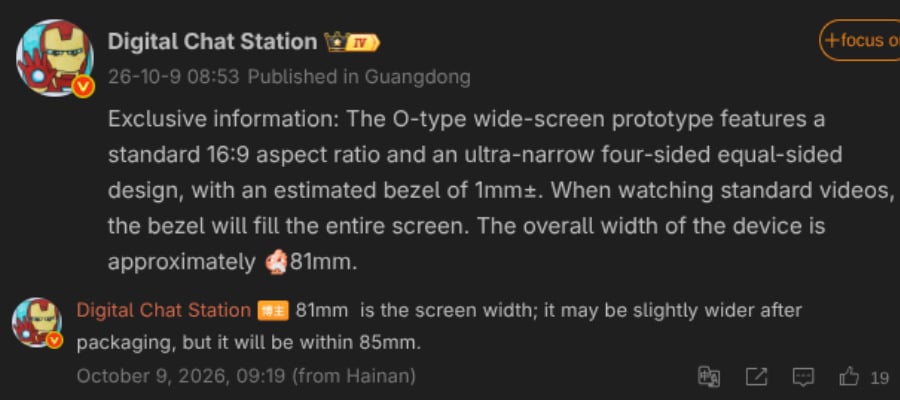
According to tipster Digital Chat Station, Redmi has changed the launch schedule of the K100 series. The Redmi K100 Pro series is expected to be introduced first, while the standard Redmi K100 could arrive later. The tipster mentioned that the standard model has not yet appeared in the required certification databases, suggesting a possible change in Redmi’s product strategy.
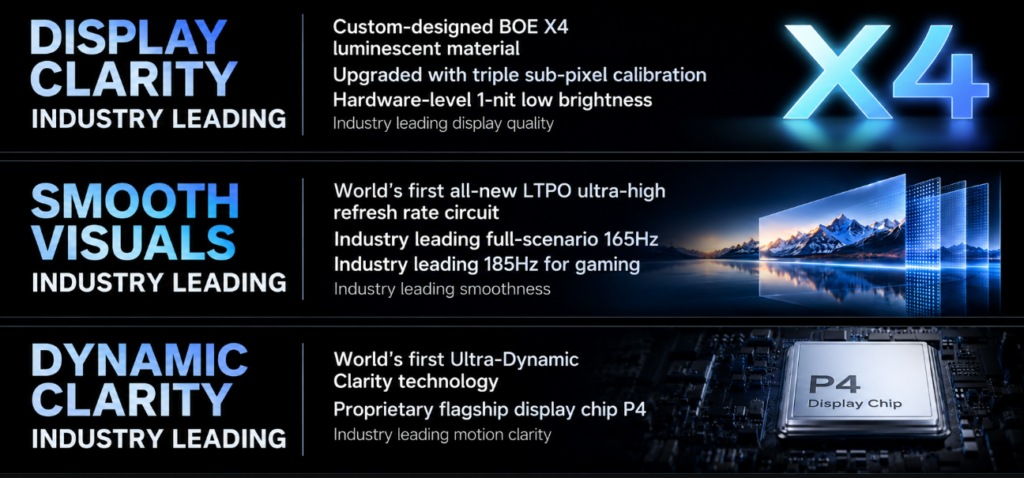
The upcoming K100 series is expected to continue the previous generation’s approach of offering a smaller flagship model and a larger Pro Max variant. The Redmi K100 is reportedly set to feature a 6.59-inch display, while the K100 Pro Max could come with a larger 6.9-inch panel with support for up to a 185Hz refresh rate.
Both models are expected to be powered by the Snapdragon 8-series chipset, feature batteries of up to 9,000mAh capacity, and run Xiaomi’s next-generation HyperOS out of the box.
Redmi K100 series reportedly 3C certified
Two Redmi smartphones have recently appeared on China’s 3C certification database. One device carries the model number M098FF and comes with support for up to 100W charging using the MDY-18-EW power adapter. The second device has the model number M511CD and also supports charging speeds of up to 100W with the same adapter. Both smartphones have reportedly received approval from China’s MIIT authority as well. Based on what DCS has claimed, it appears that none of these model numbers belong to the standard K100.
One of these certified devices could be the Redmi K100 Pro Max, although the exact identity of both models remains unclear. The Pro Max variant is also expected to feature a symmetrical dual speaker setup focused on improved audio output for gaming and entertainment.
For more daily updates, please visit our News Section.
It hasn’t been that long since Xiaomi announced the Xiaomi Smart Band 10 Pro. However, the company has already started working on the successors. The Xiaomi Smart Band 11 has already been spotted on Taiwan’s NCC database. Now, two new Xiaomi devices have just cleared network access approval in China, and tipsters say they belong to the upcoming Mi Band 11 series.
What got approved
China’s Ministry of Industry and Information Technology gave the green light to two Xiaomi Bluetooth devices, carrying model numbers M2616B1 and M2617B1. According to tipster Experience More, these two models are the Xiaomi Smart Band 11 and the Xiaomi Smart Band 11 NFC version. They will succeed the Xiaomi Smart Band 10 and Band 10 NFC.
Meanwhile, UL listing of the band confirms a battery capacity of 233mAh, the same as the current generation.
Xiaomi Smart Band 11 Xiaomi Smart Band 11 NFCXiaomi Smart Band 11 Battery Size
Another leaker, Smart Pikachu, says the Mi Band 11 is on track for a release in the second half of this year.
For context, Xiaomi followed a similar certification pattern with its last flagship band. The Band 10 Pro used model numbers M2551B1 and M2553B1 for its standard and NFC versions. There was also a separate sighting in May, when a wearable with model number M2561B1 turned up in certification databases in Singapore and Taiwan, listed simply as a “smart bracelet.”
What we know about the current Smart Band 10 series for comparison
Since full specs for the Mi Band 11 haven’t surfaced yet, it’s worth looking at what the current Smart Band 10 offers. Xiaomi’s existing base model packs a 1.72-inch AMOLED display with 1500 nits peak brightness, a 233mAh battery rated for up to 21 days, over 150 sports modes, and HyperOS 2.0 software, as we reported when the Smart Band 10 launched in China. The Pro variant goes further, with a 1.74-inch, 2000-nit display, HRV tracking, built-in GNSS, and Apple Health support.
Xiaomi Smart Band 10
If the Mi Band 11 keeps the same battery size, expect Xiaomi to lean on software and sensor upgrades instead of a battery bump. More details should surface as the second-half launch window approaches.
Asus has launched the new Vivobook 14 (X1404MA) and Vivobook 15 (X1504MA) in India, bringing AI-powered computing to more users. Powered by Intel Core 7 Series 3 processors with dedicated NPUs, the new laptops are designed for work, study, entertainment, and everyday productivity while offering a lightweight design and modern connectivity features.
Vivobook 14 and Vivobook 15: Specifications and features
Vivobook 15 / 14 (2026)
The new Vivobook lineup is powered by up to the Intel Core 7 350 processor paired with an NPU delivering up to 17 TOPS for on-device AI tasks. The laptops support up to 16GB DDR5 RAM and up to 512GB PCIe 4.0 NVMe SSD storage, and run Windows 11 Home. Graphics duties are handled by Intel Graphics, while connectivity includes Wi-Fi 6 and Bluetooth 5.3.
The Vivobook 15 features up to a 15-inch Full HD IPS display, while the Vivobook 14 comes with a 14-inch Full HD panel. Both displays offer a 16:9 aspect ratio, anti-glare coating, 250 nits brightness, TÜV Rheinland certification for reduced eye strain, and an 84 percent screen-to-body ratio.
Vivobook 15 / 14 (2026)
The laptops also include SonicMaster audio, a 720p HD webcam with a physical privacy shutter, a fingerprint scanner integrated into the ErgoSense touchpad, USB Type-C, USB Type-A, HDMI 1.4, a 3.5mm audio jack, and a 42Wh battery with a 45W charger. They are available in Cool Silver, Terra Cotta, and Quiet Blue finishes, feature a 180-degree lay-flat hinge, and meet MIL-STD-810H military-grade durability standards.
Vivobook 14 and Vivobook 15: Price and availability
The Asus Vivobook 15 (X1504MA) starts at Rs 75,990 and is available through Asus Exclusive Stores, Reliance Digital, Croma, Vijay Sales, the Asus eShop, Amazon, Flipkart, and authorised retail partners. The Vivobook 14 (X1404MA) starts at Rs 1,07,990 and will be available from July 26 through Asus Exclusive Stores, the Asus eShop, and authorised retailers.
Buyers can choose No Cost EMI or low-cost EMI options with repayment tenures of up to 24 months. Offline purchases also include EMI plans starting from Rs 5,066 for the Vivobook 15 and Rs 7,199 for the Vivobook 14. The laptops also include lifetime access to Microsoft Office Home 2024 and one year of 100GB OneDrive cloud storage.
For more daily updates, please visit our News Section.
A new leak claims Apple‘s upcoming foldable iPhone, expected to be called the iPhone Ultra, may have a screen as flat as the Oppo Find N6. The claim comes from blogger Fixed Focus Digital, who says the iPhone Ultra’s crease will be among the best in the industry.
The Oppo Find N6 from earlier this year is known for its flat screen despite being a foldable. It uses a 2nd-Generation Titanium Flexion Hinge made with 3D Liquid Printing technology. This process uses laser scanning to find small surface gaps, then fills them with photopolymer droplets.
As previously reported, Oppo built the Find N6 (review) around a titanium alloy dome hinge and Dome Memory Glass, calling it the flattest foldable screen available. The phone has also received Germany’s Rheinland seamless folding certification, and is durable up to 600,000 folds.
Apple has two options for iPhone Ultra’s hinge system
According to tipster Fixed Focus Digital, Apple has two options to make the screen crease-less (almost) in iPhone Ultra. Either liquid metal or 3D printing. Apple was initially expected to ship the foldable in limited quantity — blame the memory crisis — hence, it was expected to use a liquid metal-based hinge system.
Liquid metal is a specialized amorphous metal alloy used in hinge mechanisms. Unlike traditional metals with rigid crystalline structures, it cools into a disordered “metallic glass”. This grants the hinge high elasticity, scratch resistance, and the ability to snap back to its original shape.
However, the tipster says that if Apple manages to bargain with suppliers for memory supply and costs, it can ramp up production and switch to 3D printing technology. That is because manufacturing a liquid metal hinge is more complex and difficult than using 3D printing. Apple will decide on a specific hinge system by the end of July, says the insider.
As for pricing, the base iPhone Ultra model is rumored to start at $2,299 to $2,399, close to double the price of the current iPhone 17 Pro Max.
For more daily updates, please visit our News Section.
OpenAI is making another change to its growing AI ecosystem, this time affecting one of its newer products. The company has confirmed that ChatGPT Atlas, its standalone AI browser, will soon be retired as it shifts focus to a more capable ChatGPT desktop app that combines several AI tools in one place.
Atlas browser is making way for the new ChatGPT experience
ChatGPT Atlas
OpenAI launched ChatGPT Atlas for macOS in October 2025 as a browser built around ChatGPT. Instead of developing Atlas further, the company has decided to move its browsing capabilities into the revamped ChatGPT desktop app.
According to OpenAI, the lessons learned from Atlas and feedback from early users helped shape the new experience. The company has set August 9 as the target date for Atlas’ retirement and says more details will be shared with users through email and in-app notifications.
The redesigned ChatGPT desktop app now combines ChatGPT, Codex and ChatGPT Work into a single application. It includes a built-in browser that can browse websites, compare information from multiple sources, access Google Workspace and Microsoft 365 files, and continue tasks while users review the results.
OpenAI is also introducing a Chrome extension that brings ChatGPT into the browser sidebar, allowing users to summarise webpages, ask questions about online content and perform longer tasks without switching applications.
Atlas was introduced as an AI-first browser with an Agent mode that could carry out tasks on behalf of users. While the concept attracted attention, the browser remained limited to macOS, and its automation features were available only to paid ChatGPT subscribers. Reports and early reviews also suggested that Agent mode could be slower than completing some tasks manually.
Rather than competing directly with browsers such as Chrome, OpenAI now appears to be treating AI browsing as a feature inside ChatGPT instead of a separate product. The decision also means the planned Windows version of Atlas will not arrive. What do you think about OpenAI retiring Atlas and bringing its browser features into the ChatGPT desktop app? Share your thoughts in the comments.
For more daily updates, please visit our News Section.
India’s state-owned telecom operator BSNL has introduced a new satellite phone in India aimed at users who need reliable communication in places where conventional mobile networks are unavailable. Unlike a regular smartphone, the device connects through satellites instead of nearby telecom towers, making it suitable for critical situations and remote regions. The new offering is now available at a premium price and comes with strict regulatory requirements.
Built for communication beyond mobile networks
BSNL satellite phone
The BSNL satellite phone is priced at Rs 1,34,166 (~$1,400), including taxes, and is designed for areas where cellular coverage does not exist. Instead of depending on 4G or 5G towers, the handset communicates directly with satellites, allowing users to make voice calls even in isolated locations. BSNL has developed the service in partnership with global satellite communication provider Inmarsat, enabling connectivity across difficult terrain and off-grid regions.
The handset features a rugged design that is suitable for demanding outdoor conditions and includes a long-lasting battery for extended operation when access to charging facilities is limited. It also comes with an SOS emergency feature that can be used during distress situations, making it a practical communication tool during natural disasters, rescue missions, or operations in remote environments.
The satellite phone is not intended for everyday smartphone users. BSNL says it is aimed at sectors such as defense, disaster response, maritime services, mining, industrial operations, research teams, pilgrims traveling through isolated routes and adventure enthusiasts exploring remote destinations. In such situations, satellite communication can remain operational even when terrestrial telecom infrastructure is unavailable.
Buying or using the device requires prior authorization from the Department of Telecommunications, as satellite phones are regulated in India. Using one without approval can lead to legal action under existing regulations. Those interested can contact BSNL or visit a nearby BSNL office for more information. Alongside this launch, BSNL continues to strengthen its nationwide network with the rollout of nearly 99,000 4G sites.
For more daily updates, please visit our News Section.
Redmi has officially revealed several key details about the upcoming Redmi Note 17 ahead of its launch in China on July 14. Company executives have confirmed some of the biggest upgrades coming to the standard model, including its display, battery and a new colour option, giving buyers a clearer idea of what to expect from the next-generation budget smartphone.
The Redmi Note 17 will feature the largest OLED display ever seen on a Redmi smartphone, measuring 7 inches diagonally. The panel supports a 120Hz refresh rate, reaches up to 1200 nits of global brightness, and includes Xiaomi’s eye protection technology for more comfortable viewing.
Compared to the previous Redmi Note 15, which featured a 6.77-inch display, the new model takes a noticeable step up in size, making it one of the few smartphones in its segment to offer a 7-inch screen.
Redmi has also unveiled the Meteor Purple color variant, which features a distinctive streak-inspired finish on the rear panel. The official images suggest the standard Note 17 retains a flat design with a plastic frame, while the rear camera module carries a layout similar to the Pro model but with a different camera arrangement.
Another major highlight is the 8000mAh battery, which is uncommon in this price segment. Redmi is positioning the device as a long-lasting smartphone capable of handling heavy daily use without frequent charging. While the company has not revealed charging specifications for the standard model yet, the larger battery is expected to be one of its biggest selling points.
Redmi has also highlighted durability as a key focus for the Note 17 series, promising improved drop resistance and water protection across the lineup. The series will debut on July 14 at 7 pm in China, where Redmi is expected to announce the complete specifications, pricing and availability for both the Redmi Note 17 and Redmi Note 17 Pro.
For more daily updates, please visit our News Section.
Following an initial release in Japan earlier this month, Casio has brought its new Edifice EFK-200 series to the US market. The lineup introduces five new automatic watches to the Edifice brand.
Design Details
Casio has designed the series with a compact footprint; the standard steel models feature a 38mm case diameter, measuring 43.6mm lug-to-lug and 11.9mm thick.
The series is divided by its dial and case materials. Two models in the lineup utilize forged carbon, a composite material made by pressing carbon fibers and resin under high heat and pressure. Because of this manufacturing process, the marbled pattern on each component is unique.
The $330 EFK-200CD-1A features a forged carbon dial paired with a stainless steel case. The $500 EFK-200XPB-1A uses forged carbon for both the dial and the case itself, which slightly increases its dimensions to 38.8mm. This material change drops the weight of the XPB-1A to 81 grams, compared to the 153-gram weight of the stainless steel models.
The remaining three models feature electroformed, textured dials finished with a multi-layer lacquer to create a gradient effect. These include a blue model (EFK-200D-2A) and a red model (EFK-200D-4A), which both cost $330. The third version, EFK-200DG-5A, features a gold ion-plated case and bracelet and is priced at $410.
All five watches are powered by a 21-jewel Japanese automatic movement, which is visible through a see-through screw-lock case back. The movement operates at 21,600 vibrations per hour and includes a hacking seconds function, allowing the wearer to stop the seconds hand for precise time setting. It provides a power reserve of approximately 42 hours.
For the exterior hardware, Casio has equipped the entire EFK-200 line with scratch-resistant sapphire crystals and a water resistance rating of 100 meters. The stainless steel models come with solid H-link bracelets that alternate between brushed and mirror-polished finishes, secured by a one-touch three-fold clasp. The carbon-cased XPB-1A model replaces the steel bracelet with a resin band and a push-button butterfly clasp.
The full EFK-200 series is available now in the US.
In related news, Casio launches affordable new digital watches that blend classic styling with a futuristic retro-inspired design.
For more daily updates, please visit our News Section.
Artificial intelligence on smartphones is entering a new phase. According to Counterpoint Research, the industry is moving beyond AI assistants that simply answer questions and toward “Agent Phones” that can understand a user’s intent and complete tasks automatically. Instead of opening apps one by one, future smartphones are expected to coordinate multiple apps and services in the background, making everyday tasks faster and easier. This shift could redefine how people interact with their devices and how smartphone brands compete in the years ahead.
From AI Assistants to AI Agents
Today’s AI assistants are mainly designed to respond to questions, generate text, or provide recommendations. Counterpoint believes the next step is far more practical. Agent Phones are designed to understand what users want to achieve and then carry out the necessary actions automatically.
Rather than asking users to switch between several apps, these AI agents can manage complete workflows on their behalf. This changes the smartphone from a device that launches apps into an intelligent operating system layer that coordinates apps and services behind the scenes. As a result, future competition may depend less on hardware specifications and more on how reliably AI can complete real-world tasks.
Open Frameworks Are Accelerating the Shift
One of the biggest drivers behind this transition is the emergence of open “Claw” frameworks. These frameworks provide a shared execution layer that allows AI agents to understand user intent, execute multi-step tasks, and work across different applications.
Counterpoint highlights OpenClaw as a leading open-source framework in this space. Because these frameworks are openly available, smartphone manufacturers no longer need to build complete AI agent systems from scratch. This reduces development costs and engineering complexity, making advanced AI features more accessible across different smartphone price segments.
Agent-to-Agent Communication Improves Automation
Another important development is Agent-to-Agent (A2A) communication. Instead of relying on a single AI assistant, multiple AI agents can communicate with one another, share information, delegate responsibilities, and coordinate workflows.
This approach helps remove traditional app boundaries, allowing different services to work together more smoothly. The result is a more seamless experience where users spend less time manually managing apps and more time letting the phone handle routine tasks.
Smartphone Competition Is Changing
Counterpoint believes the smartphone industry is entering a new stage where AI execution matters more than standalone AI features or benchmark scores. Future devices are expected to compete on factors such as task execution quality, contextual understanding, ecosystem integration, intelligent automation, and overall reliability.
The research also outlines two different paths toward agentification. Internet companies are likely to build AI agents around their existing app ecosystems, while smartphone manufacturers are expected to integrate system-native AI agents directly into the operating system for deeper control over device functions and cross-app interactions.
TECNO EllaClaw
Counterpoint points to TECNO’s EllaClaw as an example of how this new approach can work in practice. Built using the Ella AI framework, the open-source OpenClaw platform, and Agent-to-Agent architecture, EllaClaw transforms a traditional AI assistant into an AI agent capable of completing tasks across multiple applications.
Its features include cross-app task execution and a one-tap phone caretaker that helps address battery drain, excessive data usage, device maintenance, and routine optimization. TECNO also focuses on solving practical problems for users, particularly in emerging markets, instead of concentrating only on AI model size or benchmark performance.
What’s Next?
Counterpoint believes the future of smartphones lies in practical AI that can complete tasks instead of simply responding to prompts. As open frameworks such as OpenClaw become more widely adopted, agentic AI is expected to expand beyond premium flagship devices and reach mainstream smartphones. In the coming years, the most successful AI phones may not be those with the largest AI models, but those that deliver the most useful, reliable, and intelligent everyday experiences.
Timex has announced the Deepwater Meridian 300 Titanium HEV Automatic, a new mechanical dive watch. The release expands the company’s catalog with a focus on utilitarian materials and standard diving specifications, moving away from its typical budget-focused quartz models to offer a dedicated tool watch.
Timex Deepwater Meridian 300 Specifications
The hardware is built around a 44mm case machined from Grade 5 titanium. The watch measures 15mm thick and has a 51mm lug-to-lug distance. The use of titanium is a practical choice for these specific dimensions, as it reduces the overall weight on the wrist compared to standard stainless steel while maintaining a high level of surface hardness.
The case features a matte, bead-blasted finish and includes a ceramic inlay on the unidirectional rotating bezel, which is used for tracking elapsed time. The dial is protected by a sapphire crystal treated with an anti-reflective coating.
For water resistance, the Deepwater Meridian 300 is rated for depths up to 300 meters. This is supported by standard dive hardware, including a screw-down crown, integrated crown guards, and a threaded screw-down case back.
Timex has also included an automatic helium escape valve (HEV) located on the side of the case at the 10 o’clock position. During saturation diving, helium gas can build up inside a watch case; the HEV allows this gas to safely vent during decompression, preventing internal pressure from damaging the crystal.
Inside the titanium case is a Miyota 8215 automatic movement. It is a standard 21-jewel Japanese caliber that winds itself via the wearer’s wrist movement and holds a maximum 40-hour power reserve. If the watch is left motionless for longer than 40 hours, it can be manually wound using the crown.
Timex is offering two visual variations of the watch: one with a black dial and luminescent hour markers, and another with a green dial where the entire dial surface is coated in Japanese Nemoto LumiNova SG2200 for low-light visibility.
Both models ship on a 20mm black HNBR (Hydrogenated Nitrile Butadiene Rubber) strap. HNBR is utilized for its high resistance to UV rays, heat, and chemical exposure. The strap includes perforations for ventilation and water drainage, alongside quick-release spring bars for tool-free swapping.
Pricing and Availability
The Timex Deepwater Meridian 300 Titanium HEV Automatic is currently listed for pre-order in the US for $999.
In related news, Timex has recently unveiled the 1981 Reissue, a retro-inspired watch featuring an ice blue dial and a compact 35mm case.
For more daily updates, please visit our News Section.
The iPhone 18 Pro Max may cost more to build than last year’s model, according to a new report from market research firm Counterpoint Research. The firm says the hardware cost for the 1TB version could rise by nearly $300 compared to the iPhone 17 Pro Max in the same storage size.
The main reason for the higher cost is — of course — memory. Counterpoint’s report says rising prices for NAND flash storage and DRAM are the biggest factors pushing up the overall cost of parts. Higher-capacity models, like the 1TB version, are said to be affected more since they use more memory to begin with. This means any increase in memory prices hits these versions harder than smaller storage options.
The New Chip Also Costs More
Memory isn’t the only factor for the price hike. The processor is also more expensive this time. The iPhone 18 Pro Max is expected to use Apple’s new A20 Pro chip, made using TSMC’s 2nm process.
While the new process will offer improved performance and power efficiency, it also costs more to make, which adds to the overall hardware cost. We have already reported on the iPhone 18 Pro Max’s pricing and rising memory costs, which matches this latest cost report from Counterpoint.
Not all components are getting more expensive, though. Counterpoint expects the display and some other parts to cost less than they did on the iPhone 17 Pro Max, which could help offset some of the increase from memory and the processor.
Apple May Raise Prices Differently by Storage Size
Since high-capacity models are affected more by memory costs, Counterpoint believes Apple may raise prices differently depending on storage size instead of a flat increase across all models. This would help protect profit margins on higher-capacity phones, which are more exposed to NAND price changes.
Counterpoint also predicts that even if Apple raises the average retail price of the iPhone 18 Pro Max by $200, its profit margin could still end up slightly lower than the iPhone 17 Pro Max.
For more daily updates, please visit our News Section.
Ugreen has launched the PB728 power bank in China for 359 yuan (around $52). It packs a 25,000mAh battery, supports up to 200W total output, and features built-in charging cables for added convenience.
Ugreen PB728 Power Bank Specifications
The power bank includes two built-in USB-C cables. The first is a 65cm retractable cable located at the top of the device, and the second is a 30cm cable attached to the side that also functions as a carrying lanyard. For users who need to plug in their own cords, the device provides one standard USB-C port and one USB-A port.
On the front of the unit, there is a color display. It shows the remaining battery percentage and provides real-time data on the current charging and discharging speeds.
Regarding power output, the standard USB-C port and both of the built-in cables can each deliver up to 100W individually. If you use two USB-C outputs at the same time, the power bank can provide a combined total of 200W.
For Xiaomi users, the USB-C outputs support the company’s MiPPS fast-charging protocol, allowing up to 90W speeds for compatible Xiaomi phones and tablets. The single USB-A port is capped at 33W.
Recharging a battery of this size can be time-consuming, but the PB728 supports 100W input through the standard USB-C port as well as both built-in cables. This allows the unit to recharge relatively quickly when connected to a compatible high-wattage wall charger.
Given the 25,000mAh capacity, the device is heavy. It weighs 623g and measures 158 x 54 x 50mm. The casing is made from a mix of PC and ABS plastics with a V-0 flame-retardant rating, and Ugreen has included its standard temperature monitoring and overcharge protections to manage heat during high-wattage transfers.
Despite the large physical size and capacity, the battery’s total energy rating is 90Wh. This keeps it under the 100Wh limit enforced by most airlines, meaning it is permitted in carry-on luggage for flights.
In related news, Baseus has recently introduced its ultra-thin 5,000mAh magnetic power bank to global markets, featuring support for 22.5W wired fast charging and 15W wireless charging.
For more daily updates, please visit our News Section.
Realme is launching the Narzo 100x 5G in India on July 15th. Ahead of the release, promotional pages on Amazon and Realme’s website have detailed the device’s hardware and software specifications, focusing on battery capacity, physical durability, and AI integration.
Realme Narzo 100x Specifications
The Narzo 100x packs a massive 8,000mAh battery that Realme claims can deliver up to three days of typical use. Despite the large capacity, the phone remains relatively slim at 8.8mm thick and supports 45W fast charging. Additionally, it includes bypass charging for cooler gaming sessions and reverse charging for powering other devices.
The Narzo 100x 5G features a 6.67-inch display with a 144Hz refresh rate and a peak brightness of 1,200 nits. It is powered by the MediaTek Dimensity 6300, a 6nm processor with 5G connectivity.
The device offers up to 256GB of storage and up to 14GB of dynamic RAM, which utilizes a portion of the storage drive as virtual memory. To manage internal temperatures under load, the phone uses a 5,300mm² vapor chamber cooling system alongside software-based cooling optimizations.
The rear camera system relies on a 50MP main sensor. On the software side, the Narzo 100x runs realme UI 7.0 and integrates several Google Gemini features directly into the operating system. These include Gemini Live, note summarization, and screen-sharing assistance. Realme has also included its own photo editing tools, such as an object eraser and portrait lighting adjustments.
The back panel incorporates a transparent-style aesthetic and an LED notification system called the Pulse Light. This light can be customized with nine colors and five speeds to indicate incoming calls, battery status, or sync with media playback from apps like Spotify.
For durability, the phone carries an IP65 rating for dust and water resistance, along with a MIL-STD-810H certification, meaning it is rated to survive drops from up to 1.8 meters.
Availability
The Realme Narzo 100x 5G comes in Midnight Black and Flash Orange colors. It will be available for purchase through Realme’s official website and Amazon India following its launch next week.
For more daily updates, please visit our News Section.
We use cookies on our website to give you the most relevant experience by remembering your preferences and repeat visits. By clicking “Accept”, you consent to the use of ALL the cookies.
This website uses cookies to improve your experience while you navigate through the website. Out of these, the cookies that are categorized as necessary are stored on your browser as they are essential for the working of basic functionalities of the website. We also use third-party cookies that help us analyze and understand how you use this website. These cookies will be stored in your browser only with your consent. You also have the option to opt-out of these cookies. But opting out of some of these cookies may affect your browsing experience.
Necessary cookies are absolutely essential for the website to function properly. This category only includes cookies that ensures basic functionalities and security features of the website. These cookies do not store any personal information.
Any cookies that may not be particularly necessary for the website to function and is used specifically to collect user personal data via analytics, ads, other embedded contents are termed as non-necessary cookies. It is mandatory to procure user consent prior to running these cookies on your website.