Advertisement

Huawei, Xiaomi, SMIC and 87 other Chinese firms collaborate to grow the local semiconductor industry

Information released by China’s Ministry of Industry and Information Technology (MIIT) reveals that 90 indigenous companies have filed a joint application for the establishment of the National Integrated Circuit Standardization Technical Committee with its proposed secretariat at the China Electronics Standardization Institute.huawei
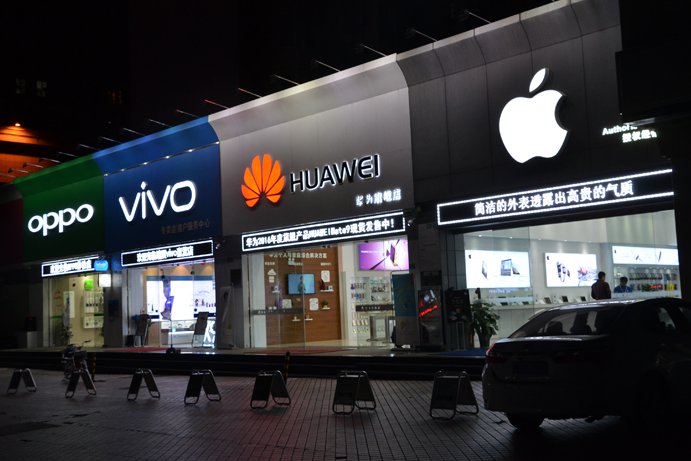
China’s semiconductor is one of the weak links in electronics manufacture. The recent ban on Huawei and ZTE from accessing US technology exposed the vulnerability of the local chip market. Even semiconductor companies like SMIC that were making effort to fill the void created by the ban were prevented from accessing US technology. Also, most of the foundries are either small-scale or weak in technology so they need to cooperate in groups.

The purpose behind the creation of the committee is to coordinate weak industries and the promotion of integrated circuit standardization work and strengthen the standardization team building.

The 90 Chinese firms that are part of this consortium include Huawei, HiSilicon, Xiaomi, Datang Semiconductor, Unichip Microelectronics, Zhanrui Communication, ZTE Microelectronics, SMIC, Datang Mobile, China Mobile, China Unicom, ZTE, Tencent, and more.

According to the application, the committee will focus on the research and formulation of the following standards:

  • Improve the relevant standards for the assessment of integrated circuit products, including conducting research on the assessment requirements of integrated circuit bare chips and organizing the formulation of relevant standards.
  • Track the development of emerging packaging technologies, focusing on the standardization of high-density FC-BGA packaging, wafer-level 3D rewiring packaging, through silicon via (TSV) packaging, SiP radio frequency packaging, packaging and ultra-thin chip 3D stacked packaging technologies , And solidify the results into the assessment procedures and requirements for flip-chip bonding, chip-scale packaging (CSP), wafer-level packaging (WLP), and system-in-package (SiP).
  • Conduct research and standard formulation in response to the performance, reliability and information security requirements of integrated circuit products in emerging applications. For example, for mobile Internet, cloud computing, Internet of Things, big data, etc., for key integrated circuits with a large amount of supporting and a wide range of applications, such as microprocessors, memories, field programmable circuits, custom circuits, system-level circuits (SoC and Related IP cores), etc., carry out corresponding standard research and formulation work.
  • Carry out parameter index system and quality assurance element research, formulate blank detailed specifications, so as to provide a basis for the preparation of detailed specifications for integrated circuit products, and ensure that product parameter indicators can fully meet the performance requirements, reliability requirements and information security of integrated circuits in the above application fields Guarantee requirements.
  • Improve the standard system of testing methods, mechanical and environmental testing methods to ensure that the testing and testing of various parameter indicators have standards to be followed.

RELATED;

(via)
 

Spin teams up with Segway-Ninebot to launch remote-controlled electric scooters

U.S electric scooter rental company, Spin, operates in various cities in the United States and provides rental scooters that can be parked after completion. However, the company recognizes the inherent danger posed by improperly parked scooters to pedestrians, especially people with disabilities.Spin S-200 electric scooter

In San Francisco, California, where Spin has the largest fleet of scooters, the San Francisco City Department of Transportation requires operators to respond to improperly parked scooters within two hours and can fine the operator $100 for each misplaced scooter. The purpose of fines and response requirements is to prevent scooters from being parked on the sidewalk. The company said it takes this very seriously and the average response time in the past three months is 54 minutes. Spin hopes to respond faster, and has begun researching how to reposition the scooter without the employees needing to respond. To achieve this goal, Spin announced an alliance with Tortoise to launch a new type of scooter called Spin S-200.

This scooter is a remotely operated electric scooter that will be deployed to cities in North America and Europe in 2021. This scooter will become part of the Spin Valet platform, making it possible to remotely operate the Spin fleet and reposition the scooter from pedestrians and other traffic in a matter of seconds. The new scooter was jointly developed with Xiaomi’s partner Segway-Ninebot, and the first pilot city will be Boise, Idaho.

Starting this spring, Spin plans to deploy 300 scooters for the project and use the knowledge learned there to provide references for future projects with global partners. Spin Valet will use the front and rear cameras and GPS built into the new S-200 scooter for precise positioning. Remote operators from Tortoise will be able to safely reposition the vehicle at a speed of 2 to 3 miles per hour, thereby relocating improperly parked scooters.

The platform will also allow the scooter to be repositioned to a location for use in times of high demand. These scooters will also be equipped with replaceable batteries. The company said that eventually, riders will be able to call an electric scooter and let it come to the pick-up location.

(via)
Samsung confirms it’s got rollable and slidable displays in the works

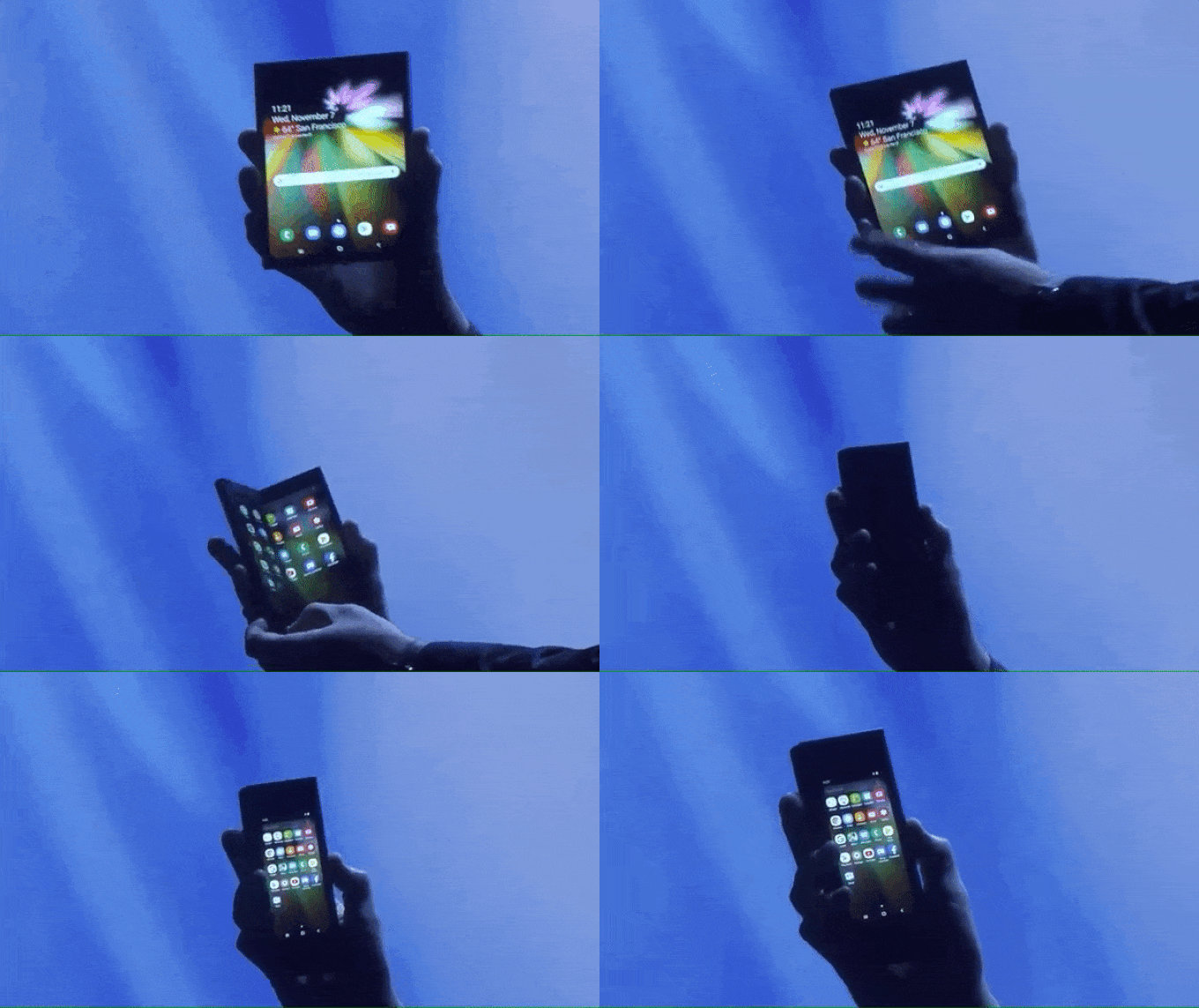
Samsung Display, the unit of Samsung Electronics which designs and produces displays for the parent company, has confirmed that it is presently working on innovative rollable and slidable screens for upcoming Samsung phones.Samsung's Infinity Flex Display GIFSmsung's Infinity Flex Display GIF

We saw a similar design when LG provided a sneak peek into its foldable smartphone during its CES 2021 event. The senior vice president of the display division of Samsung, Choi Kwon-young provided several exciting insights on the foldable display screen it is designing for Samsung smartphones primarily.  This came as the company, Samsung Display published its year 2020 financial report and earnings outlook.

According to Kwon-young, Samsung Display’s first rollable and slidable displays would be released later this year, and we should expect that Samsung’s mobile telecommunications division will be the first OEM to deploy the rollable display technology, as the primary customer of Samsung Display. However, we note that Samsung Display did not make any definitive statement to confirm whether Samsung’s mobile division will be the first to adopt the rollable designs.

The news by Samsung Display on foldable and slidable display screens may also imply that Samsung’s flip and fold displays may also adopt new technologies, in addition to important features like variable refresh rate and low power to maintain its leadership in the increasingly dense regular OLED market.

Our gazes are still trained on Samsung as they did not unveil the technologies that would be incorporated into Samsung’s upcoming line up this year, like the Galaxy Z Flip3 and the Galaxy Fold3. 

RELATED;

(source)


Xiaomi Mi 11 vs Samsung Galaxy S21: Specs Comparison

We finally got both the latest flagship series from Xiaomi and Samsung in the market. The main Android smartphone manufacturers released their new flagships with very original designs instead of copying each other. Xiaomi came up with the Mi 11, which packs amazing specifications but can still be considered a flagship killer. Samsung released the Galaxy S21 series and, among the three variants released, the one which can compete with the Mi 11 in terms of quality price ratio and specifications is the vanilla Samsung Galaxy S21. Here is a specs comparison that will explain to you the differences between the new flagship killers.

Xiaomi Mi 11 vs Samsung Galaxy S21

Xiaomi Mi 11 Samsung Galaxy S21
DIMENSIONS AND WEIGHT 164.3 x 74.6 x 8.1 mm, 196 g 151.7 x 71.2 x 7.9 mm, 169 g
DISPLAY  6.81 inches, 1440 x 3200p (Quad HD+), AMOLED  6.2 inches, 1080 x 2400p (Full HD+), Dynamic AMOLED 2X
PROCESSOR Qualcomm Snapdragon 888, octa-core 2.84 GHz Qualcomm Snapdragon 888, octa-core 2.84 GHz or Samsung Exynos 2100, octa-core 2.9 GHz
MEMORY 8 GB RAM, 256 GB – 8 GB RAM, 256 GB – 12 GB RAM, 256 GB 8 GB RAM, 128 GB – 8 GB RAM, 256 GB
SOFTWARE  Android 11, MIUI  Android 11, One UI
CONNECTIVITY  Wi-Fi 802.11 a/b/g/n/ac/ax, Bluetooth 5.2, GPS  Wi-Fi 802.11 a/b/g/n/ac/ax, Bluetooth 5.0, GPS
CAMERA Triple 108 + 13 + 5 MP, f/1.9 + f/2.4 + f/2.4
20 MP front camera
Triple 12 + 64 + 12 MP, f/1.8 + f/2.0 + f/2.2
10 MP f/2.2 front camera
BATTERY  4600 mAh, fast charging 50W, wireless charging 50W  4000 mAh, fast charging 25W and wireless charging 15W
ADDITIONAL FEATURES Dual SIM slot, 5G, reverse wireless charging 10W Dual SIM slot, 5G, water resistant (IP68)

Design

Which among Xiaomi Mi 11 and Samsung Galaxy S21 has the best design? It is mainly a matter of taste, even though I personally prefer the Xiaomi Mi 11 due to its curved display and higher screen-to-body ratio. But on the other hand, the Samsung Galaxy S21 has a better build quality. Unlike the Xiaomi Mi 11, it does not have a glass back and it comes with a plastic back and an aluminum frame, but its display is protected by Gorilla Glass Victus and the phone is waterproof with the IP68 certification. Xiaomi Mi 11 has a more attractive design imho, but it does not offer any certification against water and dust. Xiaomi Mi 11 is also available in a leather version which is even more raffinate.


Display

The Xiaomi Mi 11 has a superior display if compared to the Samsung Galaxy S21. This year, Samsung decided to opt for a Full HD+ resolution for the vanilla Galaxy S21 and the Plus variant, while Xiaomi Mi 11 offers a higher level of detail thanks to its Quad HD+ resolution. Further, it has a wider display and it can show up to one billion colors. It even comes with a higher peak brightness: up to 1500 nits. Samsung Galaxy S21 has a better fingerprint reader as it comes with an ultrasonic scanner instead of a classic optical scanner.


Specs & Software

Xiaomi Mi 11 wins the hardware comparison. Both Mi 11 and Samsung Galaxy S21 are fueled by the Snapdragon 888 mobile platform (note that the EU version of the Galaxy S21 has an Exynos 2100), but the Mi 11 offers more RAM (up to 12 GB), and this makes the difference. Both are based on Android 11 with highly customized user interfaces.


Camera

When it comes to the cameras, it is a win for the Samsung Galaxy S21 because it offers a more versatile camera department. Unlike the Xiaomi Mi 11, it has a telephoto sensor with optical zoom, as well as dual OIS and better additional sensors. The Mi 11 has a better 108 MP main camera, but the secondary sensors are disappointing. The Samsung Galaxy S21 also offers a better selfie camera.


Battery

The battery capacity of the Samsung Galaxy S21 is a bit below-average for a 2021 flagship, but the phone has good optimization and the battery life is not disappointing. However, the Xiaomi Mi 11 offers more with its 4600 mAh battery and faster charging technologies. With the Mi 11, you get 55W wired fast charging and 50W fast wireless charging. The Samsung Galaxy S21 stops at just 25W for wired charging and just 15W for wireless charging. Despite the bigger capacity, the Mi 11 has way faster charging times. Both support reverse wireless charging and USB Power Delivery 3.0.


Price

The starting price of the Xiaomi Mi 11 for the Chinese market is about €500/$606 at the actual change. Unfortunately, the Mi 11 is still not available in the global market, we can not give you its global price until February 8. The Samsung Galaxy S21 costs €849/$1030 in the global market. The Mi 11 wins this comparison thanks to its better display, battery, and fast charging technology. But the Samsung Galaxy S21 is more compact, waterproof, and it has great cameras, so you should not underestimate it.


Xiaomi Mi 11 vs Samsung Galaxy S21: PRO and CONS

Xiaomi Mi 11

PRO

  • Good price
  • Best display
  • Faster charging
  • Bigger battery

CONS

  • No optical zoom


Samsung Galaxy S21

PRO

  • Compact
  • Telephoto sensor
  • Waterproof
  • Thinner, lighter

CONS

  • Smaller battery

RELATED

Check the latest videos from our YouTube channel and subscribe:

More Redmi phones with 108MP cameras planned for 2021

The Redmi Note 9 Pro 5G launched as the first Redmi phone with a 108MP camera. That came as a surprise considering all of the phones in the Redmi K30 series have a 64MP main sensor. Now, Lu Weibing, the General Manager of Redmi, has hinted at the arrival of more Redmi phones with a 108MP camera.

In a Weibo post today, the top executive posted that he has realized that the brands that promoted the ToF camera no longer include it in their devices. Actually, Xiaomi and Redmi are one of the few companies that didn’t jump on the ToF train, so it is understandable why he is indirectly calling out those that championed the trend.

Redmi 108MP phones

In the same tweet, he revealed that more phones released this year will have 100MP cameras. We believe these upcoming phones with 108MP cameras will include models from Redmi too.

The Redmi K40 series has been confirmed to launch next month and while details of the camera specs for any of the models are yet to surface, at least one of them may have a 108MP camera. There are also other Redmi phones planned for this year such as the first Redmi gaming smartphone and the Redmi Note 10 series which may also launch with a 108MP primary camera.

The budget phones will most likely come with the ISOCELL HM2 sensor while the more expensive models may feature the new ISOCELL HM3 camera present in the Samsung Galaxy S21 Ultra.

We look forward to the launch of these phones and we are sure our readers are excited about their arrivals too.


RELATED:

Details of an even more powerful model than the Mi 11 Pro surfaces

Last year’s Mi 10 5G series had multiple models but at the top sits the China-exclusive Mi 10 Ultra. The flagship phone was released in August with better cameras and a faster charging technology than the Mi 10 Pro. Recent news from China points at Xiaomi planning a similar model that should be more powerful than the yet-to-be-announced Mi 11 Pro.

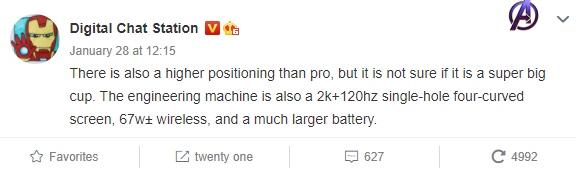
The source of the info is Digital Chat Station and he revealed in a Weibo post a few days ago that Xiaomi has a model higher than the (Mi 11) Pro, however, he is not sure if it will launch as the Ultra model.

Xiaomi Mi 11 Ultra

The prototype of the phone is said to have a 2K 120Hz four-curved display with a punch hole for the front-facing camera. It will also have 67W fast wireless charging and a bigger battery capacity.

If the phone is already in development, then it most likely has a Snapdragon 888 processor powering it.

The Mi 10 Ultra launched with a 6.67-inch FHD+ display, a Snapdragon 865 processor, up to 16GB of RAM, and 512GB of storage. It has a 48MP main camera paired with a 48MP periscope camera that brings 120x hybrid zoom. It also has a 20MP ultrawide angle camera and a 12MP telephoto camera. The hole punch in the left corner of the screen is home to a 20MP sensor.

Apart from its outstanding cameras, the Mi 10 Ultra is one of the few phones that has support for 120W fast wired charging. It also has support for 50W fast wireless charging and 10W reverse wireless charging. The battery capacity is 4500mAh.

RELATED:

Top stories from last week: Motorola Edge S launched, Carl Pei unveils Nothing, India permanently bans Chinese apps, Xiaomi’s truly wireless charging tech, and more

There were a number of pretty big announcements last week, and if you missed out on them because you were focused on the stock market, here’s a recap.


Motorola Edge S Featured 03

Motorola Edge S launched as the new flagship killer king

Motorola launched a new smartphone in China that has set a high standard for the flagship killer category. The Motorola Edge S starts at ~$310 and packs a Snapdragon 870 processor, a 90Hz display, dual front-facing cameras, quad-rear cameras, Turbo fast LPDDR5 RAM and UFS 3.1 storage, and a 5000mAh battery. It also has a desktop interface, allowing you to use it as a computer when connected to an external display. That is definitely a lot you are getting for that price.


Nothing fetaured

Carl Pei finally unveils what he has been cooking and it’s Nothing

Former OnePlus executive and co-founder, Carl Pei, unveiled his new startup following his exit from the phone company he founded, and to our surprise it is Nothing. Yes, Nothing is the name of his new London-based company.

The company is said to be into consumer technology and plans to announce its first batch of smart devices later this year. No info was provided about what category these smart devices will fall under but the company’s plan is to release an ecosystem of devices.


TikTok App
India permanently bans TikTok, WeChat, and several others

After issuing a temporary ban last year, the Indian government has permanently banned 60 Chinese apps that include popular ones such as TikTok, WeChat, Baidu, and UC Browser. ByteDance has had to cut its workforce following the loss of users of its app, TikTok.

The Indian government has said that the response gotten from the companies that own the affected apps regarding the security concerns it raised has not been satisfactory.


Mi Air Charge Technology

Xiaomi’s Mi Air Charge Technology is the wireless charging you’ve always wanted

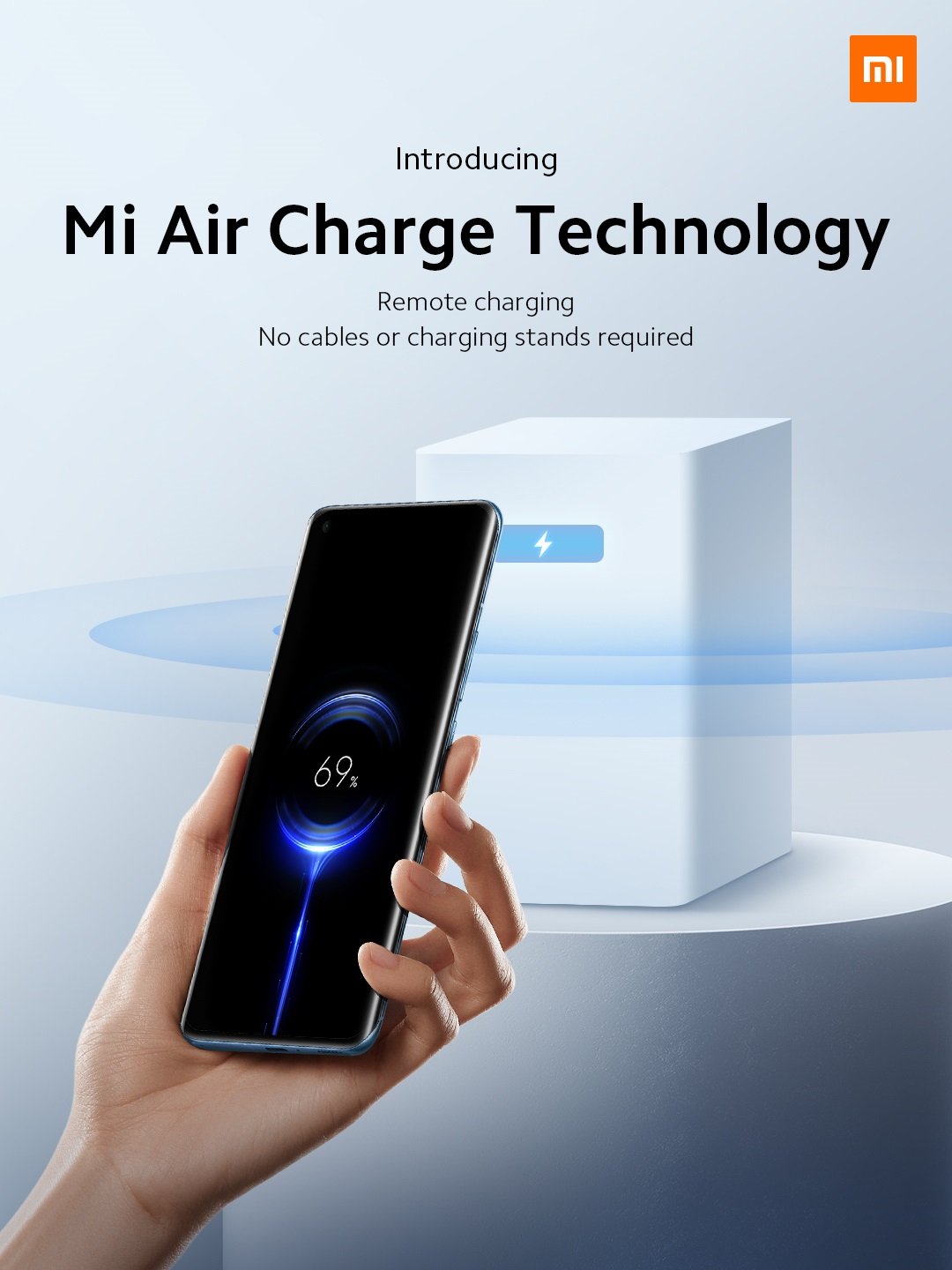
Mi Air Charge Technology is the wireless charging technology we’ve always wanted – one that doesn’t have you tethered to a spot. Current wireless charging technology requires you to place your phone on a device to charge but Xiaomi’s new and proprietary technology allows your phone to begin to charge wirelessly once you enter a room. The technology uses millimeter waves to charge and power compatible devices within a certain range.


Sony Xperia Pro
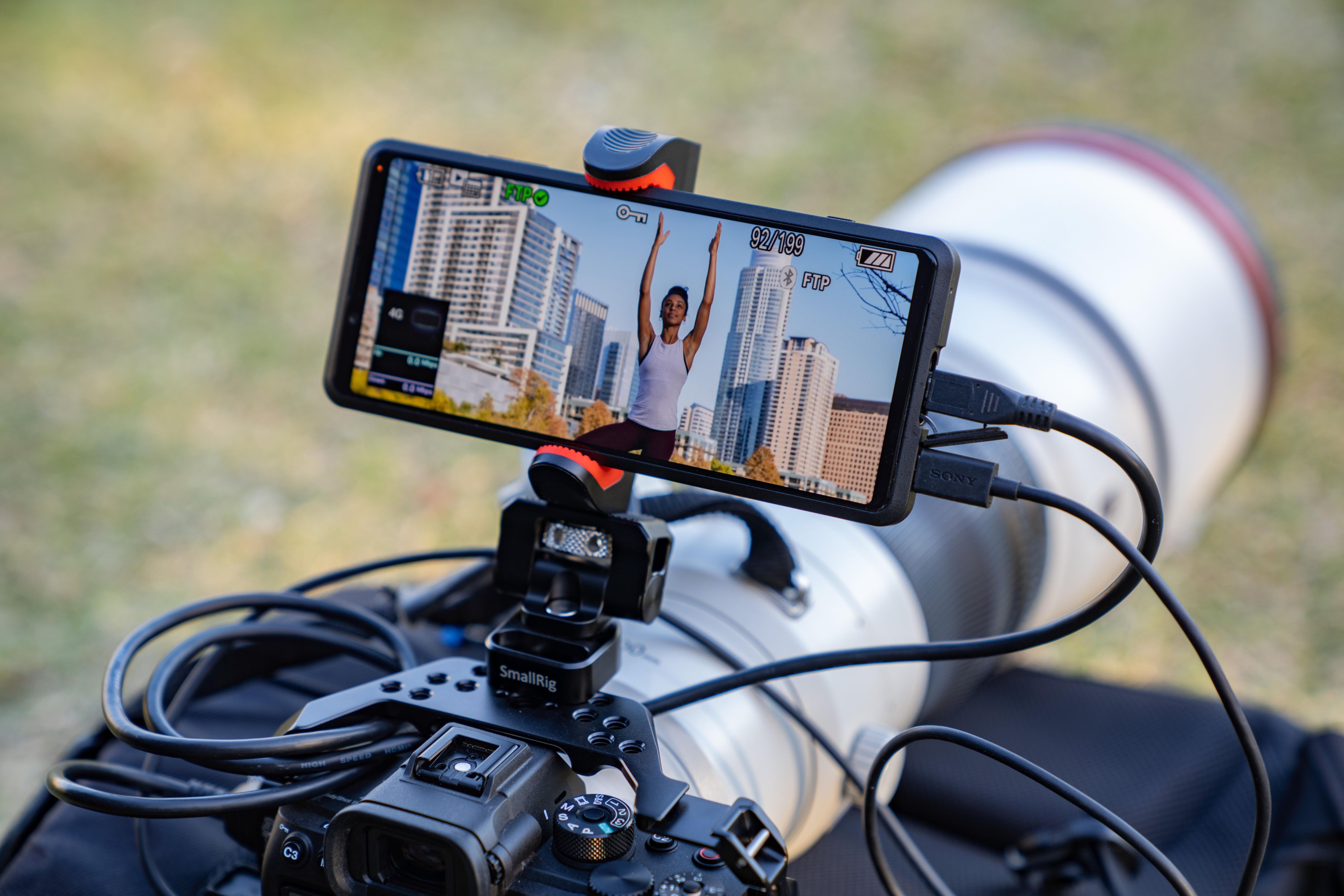
Xperia Pro in use with a professional camera

Sony’s first 5G phone for the US is for professionals and costs $2500

After nearly a year since it was announced, Sony’s Xperia Pro smartphone is now available for purchase in the US. The Japanese manufacturer is targeting professionals especially those in the creative industry. It packs professional camera features that are not available on the Xperia 1 II which it is based upon and it also costs a whopping $2500.


RELATED:

Get $20 OFF Baseus Heyo Rotation Kitchen Timer on Gearbest (COUPON)

Gearbest is currently having a flash sale with a wide variety of items that can help make your life easy and more efficient. Out of all the products, what stands apart is the Baseus Heyo Rotation Kitchen Timer. It is already up with a discount, and interested users can get an additional discount by adding the coupon code – GB-JISJQ. Apart from the kitchen, this device offers numerous other applications like camping, fitness, games, and more. Let’s take a look at its features.Baseus Heyo Rotation Kitchen Timer-2-

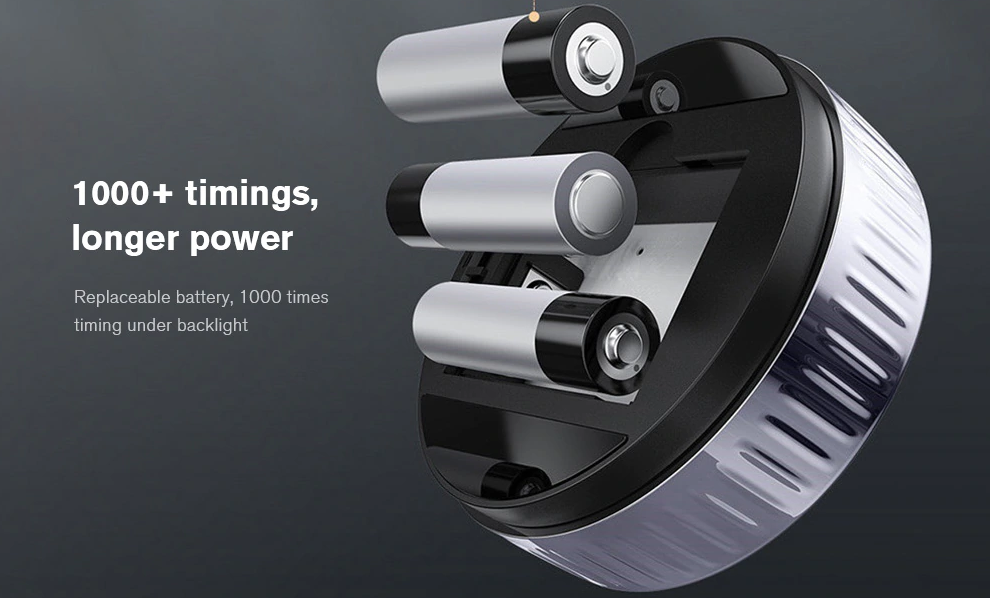
Baseus Heyo Rotation Kitchen Timer boasts a high-definition mirror that refracts light and shadow. It has a rotating silver shell that conveys the visual elements and frequency of the rhythm. One-key operation enables convenient use while the large contrasting fonts enhance readability. This electronically designed timer displays precise time and prevents repeated mechanical pressing. It can count down from 99 minutes 55 seconds to zero in both timer and stopwatch mode. Magnets at the back allow the user to easily latch it on any iron surface while the silicone pads at the back help retain a position on other surfaces.Baseus Heyo Rotation Kitchen Timer

Baseus Heyo Rotation Kitchen Timer enables the user to adjust the brightness according to the day- or night-light. It activates auto power-saving mode in 5 seconds after a pause or stop; to turn it back on the user can simply press the button on the screen. Additionally, it boasts 3 adjustable volumes- loud (80-90dB), soft (65-75dB) to meet your different needs. Made using ABS plastic, this unit is sturdy and can work in the temperature range of 0°C – 50°C.Baseus Heyo Rotation Kitchen Timer-3-

Baseus Heyo Rotation Kitchen Timer is up for sale and can be purchased at a discounted rate on Gearbest. Interested users can add coupon code – GB-JISJQ to get an additional discount. The offer only lasts for a limited time.

Readers can visit the official Gearbest website to check out other interesting offers and deals by clicking here.

Poll of The Week: Does your phone have a macro camera and how often do you use it?

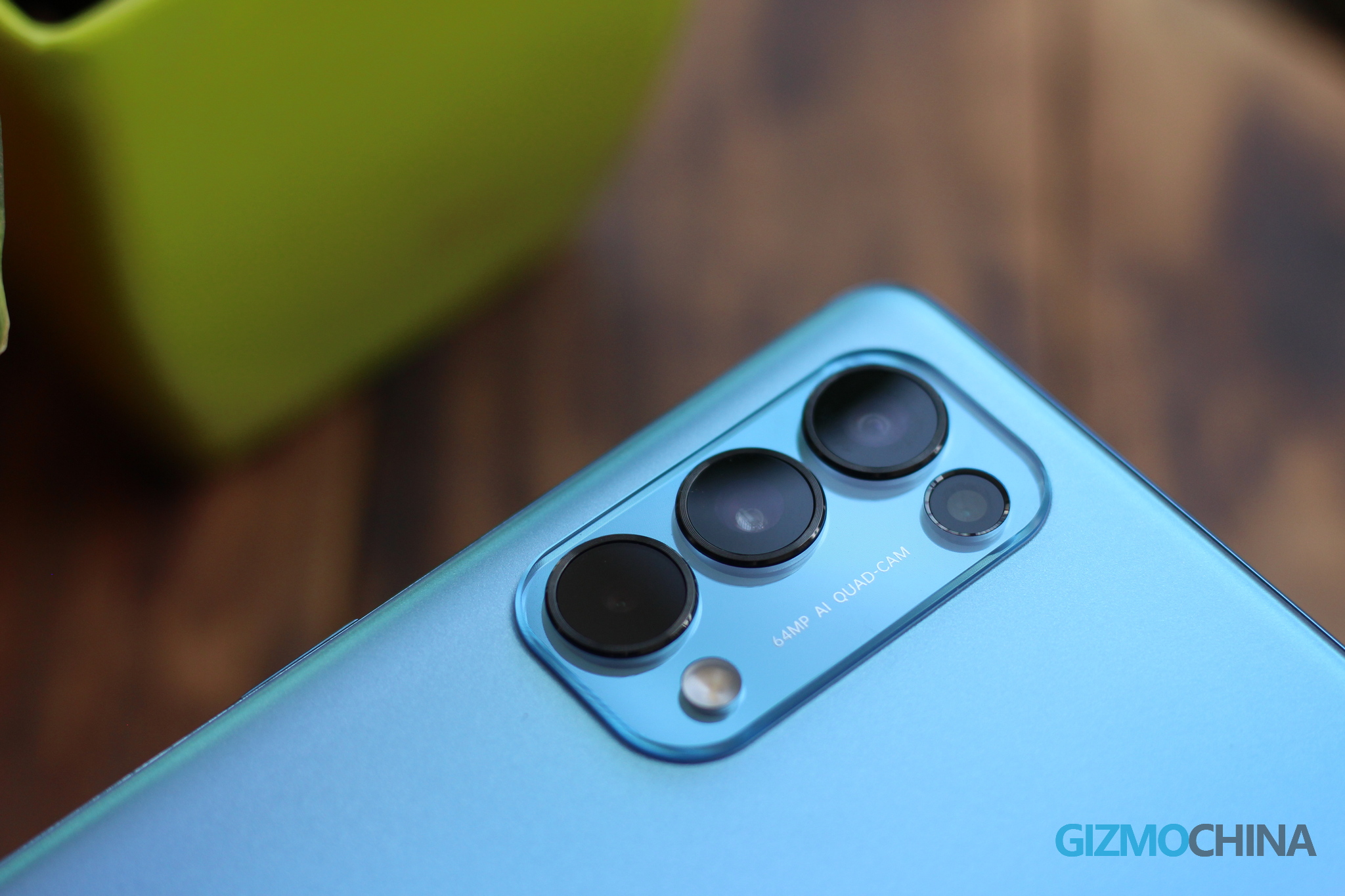
The macro camera is one that has become pretty popular in smartphones in the past year or more. This special camera allows users to capture extremely close-up images of small objects. We have seen several manufacturers include it in a lot of their phones, regardless of whether it belongs to the budget, mid-range, or flagship category.

OPPO Reno5 Pro 5G 9

For this week’s poll, we want to know if your phone has a macro camera and how frequently you use it if your answer is yes. Also, let us know in the comment box what you think about the macro camera and its addition to the camera system in modern phones.

So, please take the poll and be sure to leave a comment.

[yop_poll id=”70″]

RELATED:

iQOO 9 expected to come with a bigger battery capacity

The iQOO 7 was announced in China a few weeks ago. The phone is the second device in the world to have a Snapdragon 888 chipset, and on the first day it went on sale, Vivo recorded more than ¥200 million in revenue.

While the new flagship packs some upgrades, the battery capacity has remained unchanged from that of its predecessor, the iQOO 5 Pro. The iQOO 7 ships with the same 4000mAh battery even though it has an even bigger display than that of the iQOO 5 Pro. For folks who are disappointed at that part of the phone, it has been reported that its successor, the iQOO 9, will come with a bigger battery.

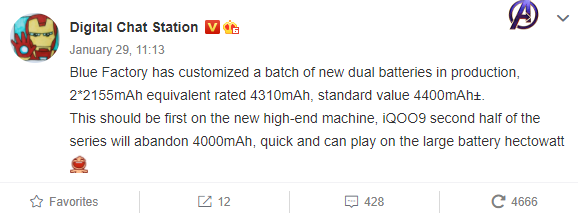
According to the Chinese leaker, Digital Chat Station, Vivo has a new dual-cell battery in production. Each of the cells has a capacity of 2155mAh while their combined rated capacity is 4310mAh. The battery is expected to be bundled first with the iQOO 9. The combined typical capacity is said to be about 4400mAh which is the same capacity as the battery inside the iQOO 3.

iQOO 9 battery

However, this is a dual-cell battery, which is what manufacturers use for devices with extremely fast charging. We expect the iQOO 9 will also have support for 120W fast charging just as the iQOO 7 and iQOO 5 Pro. The bigger battery should translate to more screen time for users.

The iQOO 9 is not expected to launch until the second half of the year and if we are to go by the iQOO 5 Pro’s release date, it should be announced in the middle of the third quarter of the year.


RELATED:

Next Week in Tech: POCO M3, Itel A47, Galaxy M02, and Realme X7 series launching in India

When the first work day of next week arrives, we will officially be in February. The year is flying by pretty fast because it feels like the 1st of January was just 2 weeks ago. Nevertheless, we still have 11 months to go this year, which means there are several products that are yet to launch, some of which will be arriving next week.


itel A47 February 1 launch

Itel A47

Transsion is the biggest phone company in Africa but it also sells phones under its Infinix, Itel, and Tecno brands in Asia. On Monday, the 1st of February, it will launch the Itel A47 in India. This is an entry-level phone with modest specs and Android Go, so it should be great for those on a very slim budget or those who are grabbing their first smartphone.


POCO M3 POCO Yellow Cool Blue Power Black All Colors Featured
POCO M3

POCO M3 heading to India

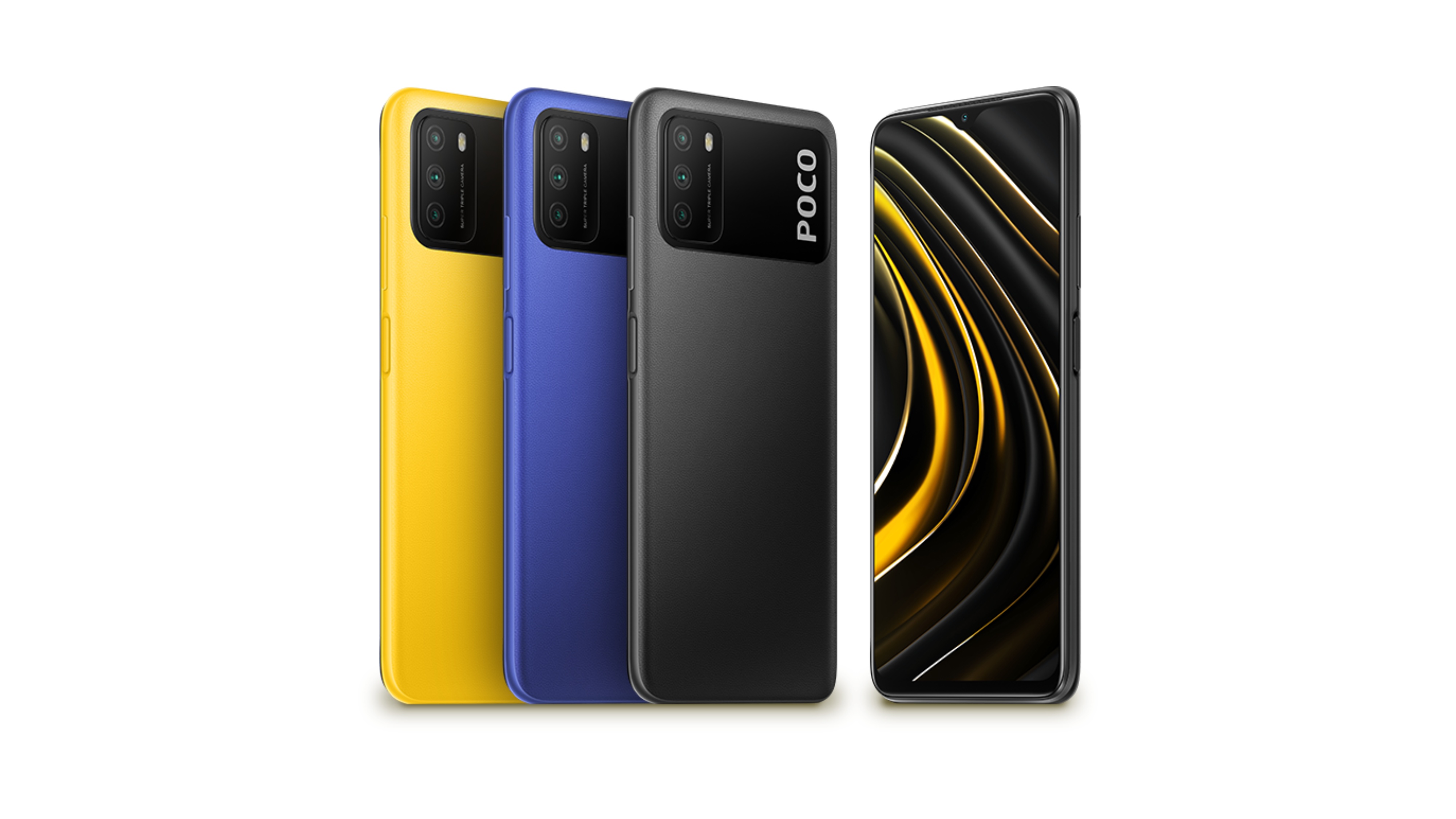
The POCO M3 was announced in Europe last November and became popular instantly thanks to its design, specifications, and low price tag. Now, two months after, POCO has announced it will launch it in India on February 2. We expect the phone to sell out pretty fast when it goes on sale.


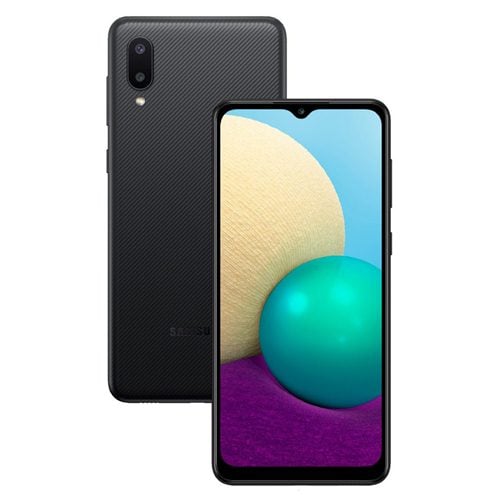
Samsung Galaxy M02
Samsung Galaxy M02

Samsung Galaxy M02

On the same day that POCO takes the wrap off the POCO M3 in India, Samsung will announce the Galaxy M02 too. The phone which has been reported will be priced under $100 is expected to have a 6.5-inch screen, a Snapdragon 450 processor, and a 5000mAh battery.


Realme X7 5G-

Realme X7 series

Realme will announce the Realme X7 and Realme X7 Pro on the 4th of February, also in India, Both phones have 5G support and are powered by the Dimensity 800U and Dimensity 1000+ respectively. They also have AMOLED screens and support for 65W fast charging.

All of the new week’s product launches are happening in India but there is a chance we may see other products get announced in other regions during the week.

RELATED:

LG’s profit in 2020 hit a record high but the mobile phone arm fails to rebound

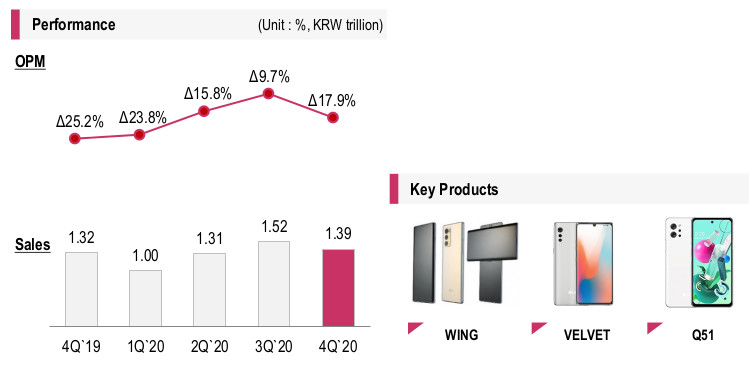
LG Electronics today released its earnings report for 2020. There was a 1.53 percent increase in its revenue of 63.26 trillion won (US$ 56.45 billion) from 2019. The financial report also showed that Q4 2020 revenue was 18.78 trillion won (US$ 16.76 billion) reflecting a massive jump of 16.9 percent from its corresponding performance in Q4 2019LG QualcommThe increased revenue figures of 2020 yielded an operating profit of 3.20 trillion won (US$ 2.85 billion), an increase of 31.1 percent from 2019, and this is a new record for the company. The record-setting performance was mainly driven by higher sales of home gadgets and OLED TVs in addition to a strong showing in automotive component solutions.

The operating profit for Q4 2020 was 650.20 billion won (US$ 580.19 million), ramping up 538.7 percent from 2019.

LG projects that 2021 will see a normalization of the global economy as vaccines are now coming on board across the world to cope with the COVID-19 pandemic.

The Mobile Communications division of LG reported revenue earnings of 5.22 trillion won (US$ 4.66 billion) for the full year 2020, while Q4 sales grew 4.9 percent to 1.39 trillion won (US$ 1.24 billion) from 2019, but 9.2% lower than Q3 2020, not unconnected with the global shortages of 4G chipsets in addition to sluggish sales of LG flagship smartphones in the global market.LG

The full-year operating loss was 841.20 billion won (US$ 750.63 million), reflecting increased marketing investments to support sluggish sales of flagship models, partially offset by manufacturing efficiencies.

In 2021, with 5G technology moving at a fast pace, the global demand for smartphones is expected to go up but intense competition is expected among the players.

Amidst speculations that LG plans to exit the mobile telecoms market, the company said that it plans to closely evaluate the business before coming to a decision.

RELATED;


Leak says ZTE Axon 30 Pro may come with a 200MP camera

ZTE has confirmed that the Axon 30 Pro flagship is coming. The phone which will be the successor to last year’s Axon 20 Pro flagship has been teased by ZTE’s president, Ni Fei, to have the industry’s best camera system. New info says that the phone may actually come with a 200MP sensor.

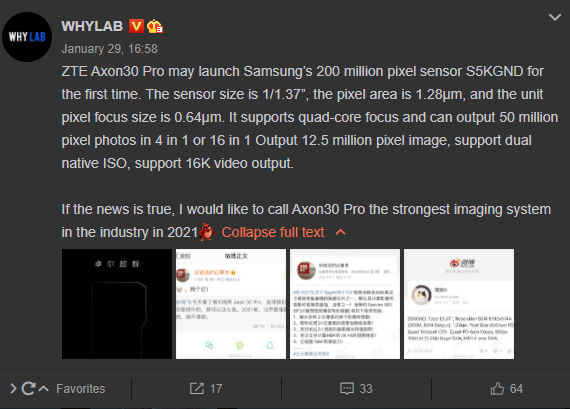
The info is from the Chinese blogger who goes by “WHYLAB” on Weibo and according to a post shared on the social media platform yesterday, he has heard that the Axon 30 Pro may come with Samsung’s 200MP sensor.

A few weeks ago, it was revealed that smartphones sporting Samsung’s 200MP sensor may soon launch. Now, it appears the ZTE Axon 30 Pro may be the first commercial phone to feature the sensor.

ZTE Axon 30 Pro 200MP

ZTE already confirmed that that the upcoming flagship will be powered by the Snapdragon 888 and one of the features of the chipset is support for up to 200MP cameras. Other processors that also support 200MP sensors are the Exynos 2100, Snapdragon 870, Dimensity 1200, Snapdragon 865 Plus, and Snapdragon 865.

WHYLAB also reveals the specs of the camera. His Weibo post reveals the model number of the sensor is S5KGND and it has an optical format of 1/1.37”, a pixel size of 1.28um, and a pixel focus size of 0.64um. The camera has quad-pixel autofocus and mimics a 50MP image sensor by quad pixel binning or a 12.5MP by 16:1 pixel binning. It is also said to support 16K video output.

Samsung has not yet revealed its plans for a 200MP sensor but there is a possibility that it may announce the camera shortly before the Axon 30 Pro launches, the same day it launches, or shortly after.

The Axon 30 Pro is expected to launch after the Chinese New Year holidays which is a few weeks from today.

RELATED:

New Nokia phone certified by Bluetooth SIG believed to be Nokia 2.4’s successor

HMD Global announced the Nokia 2.4 in September 2020. While a successor should not come until much later, recent announcements have shown that there is no clear cut pattern to HMD Global’s release schedule. This explains why a new device spotted on the Bluetooth SIG database is believed to be a successor to the Noia 2.4.

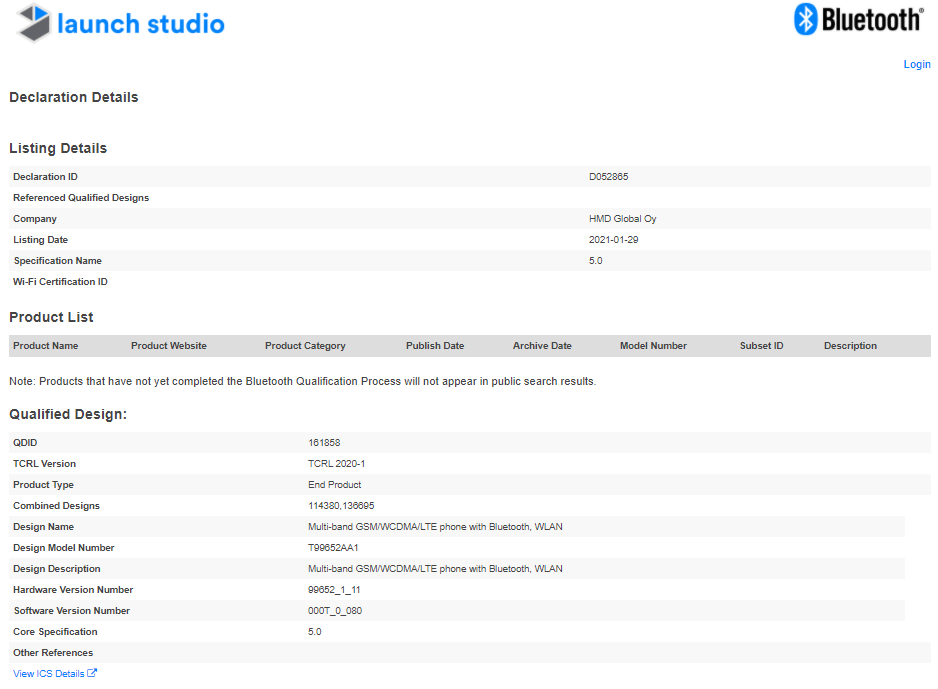
The device was first spotted on the Bluetooth SIG website by NokiaPowerUser with the model number T99652AA1 which is similar to the Nokia 2.4’s T99651AA1 model number. While there is no specific mention that this is the Nokia 2.4’s successor, the similarity in their model numbers points to the two devices being related.

Nokia T99652AA1

The Bluetooth certificate shows the device has support for Bluetooth 5.0 and support for LTE. Since this doesn’t have 5G support, it is most definitely a budget device.

The Nokia 2.4 launched with a 6.5-inch display with a waterdrop notch and a 1600 x 720 resolution. It has a MediaTek Helio P22 processor inside that comes with 2GB or 3GB of RAM. Depending on the RAM variant, you get 32GB or 64GB of storage. There is a dedicated MicroSD card slot so that you can add more storage without sacrificing the SIM slot.

A 13MP + 2MP dual camera combo sits on the back of the phone while a 5MP camera is in front for selfies. The Nokia 2.4 also has a fingerprint scanner on the back, a 4500mAh battery, and runs Android 10. It is one of the Nokia devices scheduled to get updated to Android 11 this quarter. However, we hope its successor runs Android 11 out of the box.

The new Nokia phone is expected to launch in the coming months.

RELATED:

realme UI 2.0 beta registrations go live for realme 6, X2, X3, X3 SuperZoom, C12, & C15

Chinese smartphone maker realme unveiled realme UI 2.0 based on Android 11 in late September 2020. Just like the previous iteration, the latest version of the brand’s mobile operating system is based on OPPO ColorOS, version 11 to be exact. So far, the company has only released stable update for a single device – realme X50 Pro. However, multiple phones have received beta builds. Now, six more handsets have been added to the beta program.

realme UI 2.0 Android 11 Logo Featured

Every OEM has a different name for their beta program. Hence, realme calls its initiative ‘Early Access’. When the brand officially announced realme UI 2.0 in the second half of last year, it also revealed an update timeline for all the eligible smartphones.

The company has been recruiting beta teasers for its devices, as per the schedule. Therefore, following the timeline, it has now opened beta registrations for the below-listed phones as part of the January 2021 quota.

Interested users of the above-mentioned handsets can head over to Settings > Software Update > Gear Icon > Trial Version > Apply Now and submit details to enroll in the initiative. If they get selected, they will be receiving the beta update via OTA.

That said, for some reason, any user wants to downgrade to the stable channel, they can do it by downloading and installing the appropriate rollback file. However, it is worth noting that this process will format their smartphone’s internal storage and they won’t be able to rejoin the Early Access program.

With all that being said, we do not know when realme will begin to seed stable builds for these phones. Because even the previous batch is yet to receive the stable update.


RELATED:


(Via)

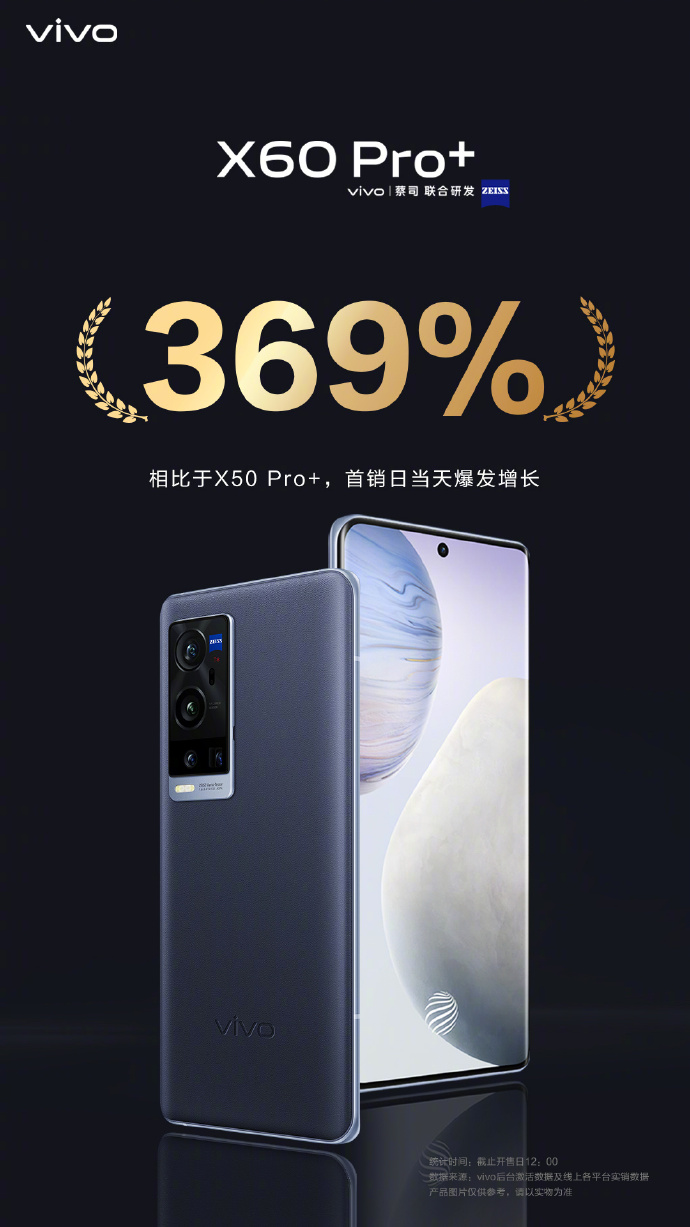
First day sales record of the vivo X60 Pro+ increased by 369% compared to predecessor

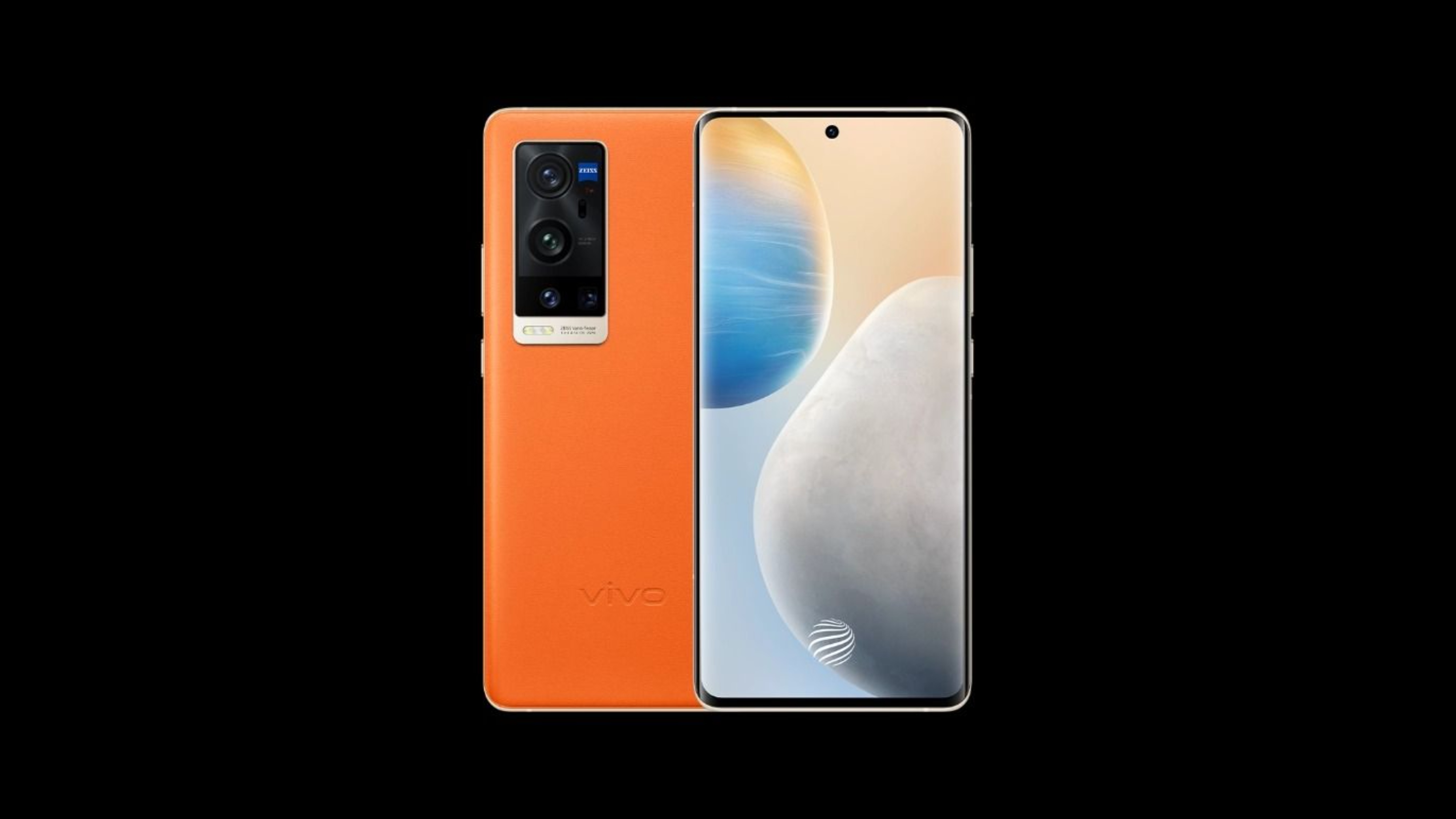
vivo launched the vivo x60 Pro+ flagship smartphone with Snapdragon 888 chipset on Jan. 21. The device went on a short sale a couple of days later(Jan. 23) at a starting price of 4998 yuan($778) and officially released today(Jan. 30). Now, the company has shared the first sales report of the device.

vivo X60 Pro Plus Classic Orange Featured

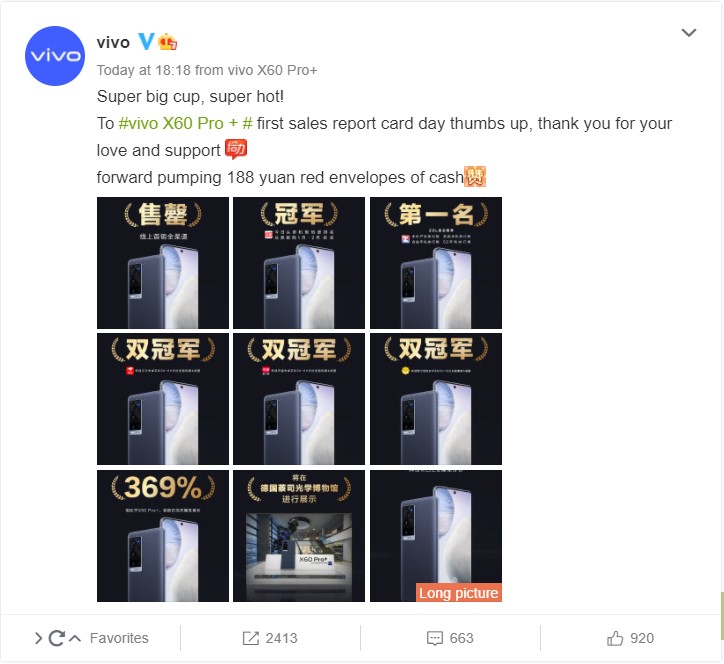
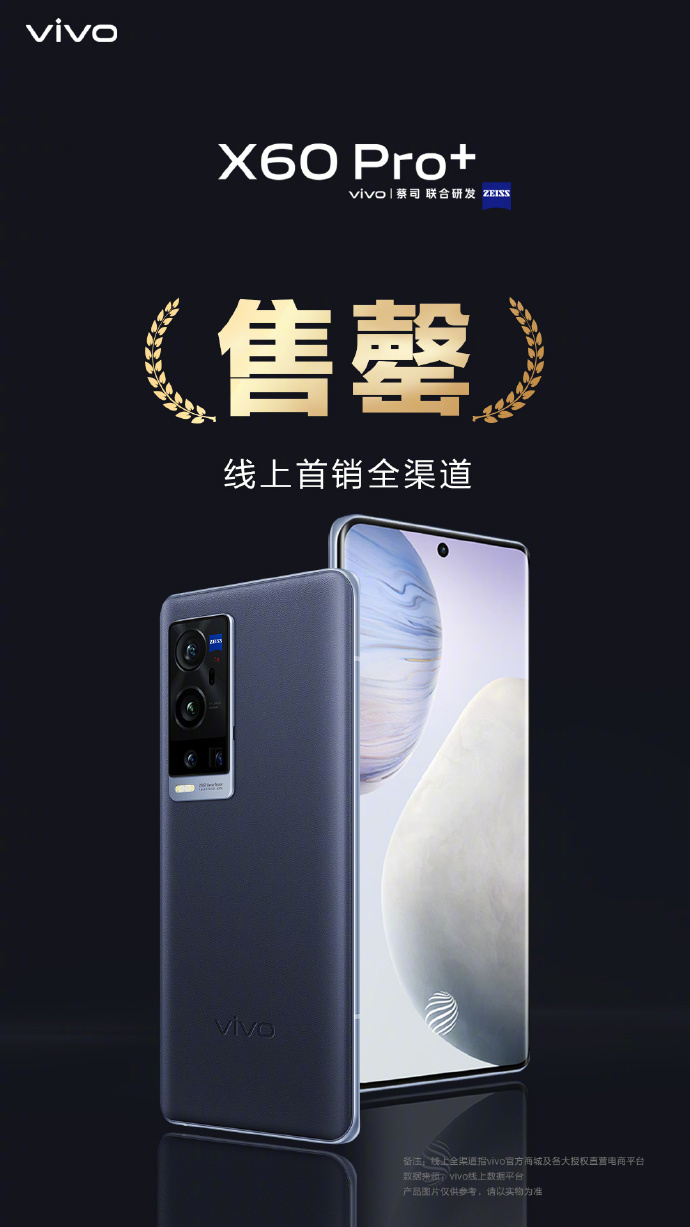
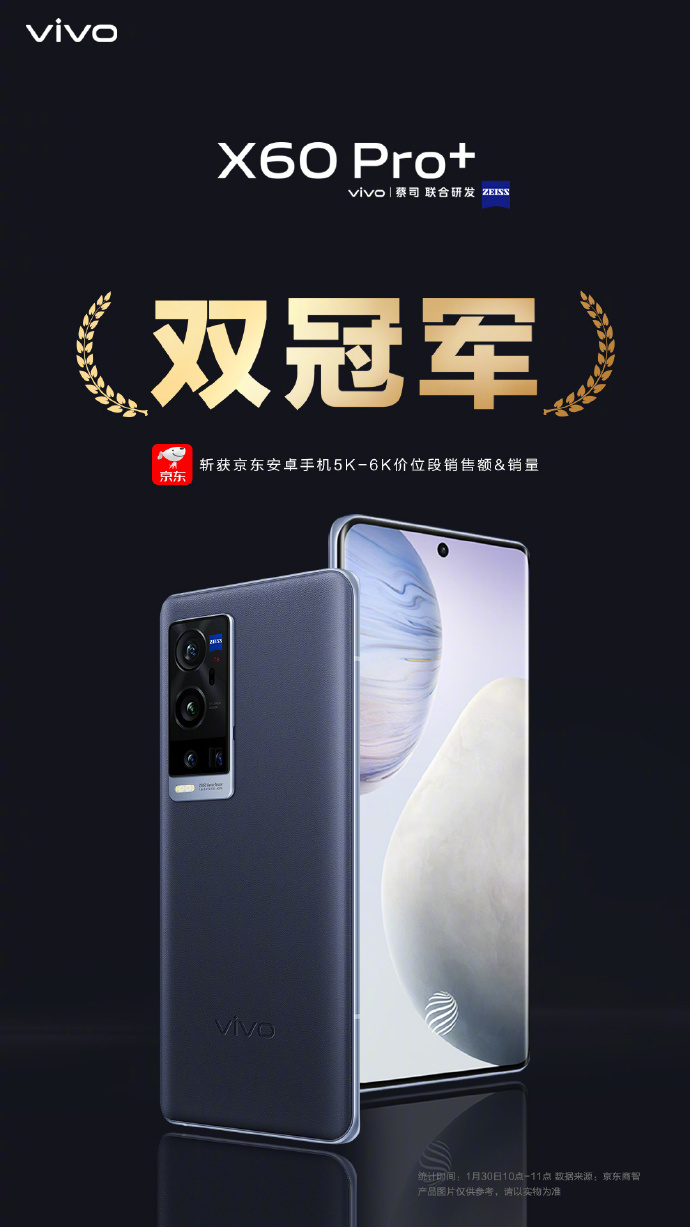
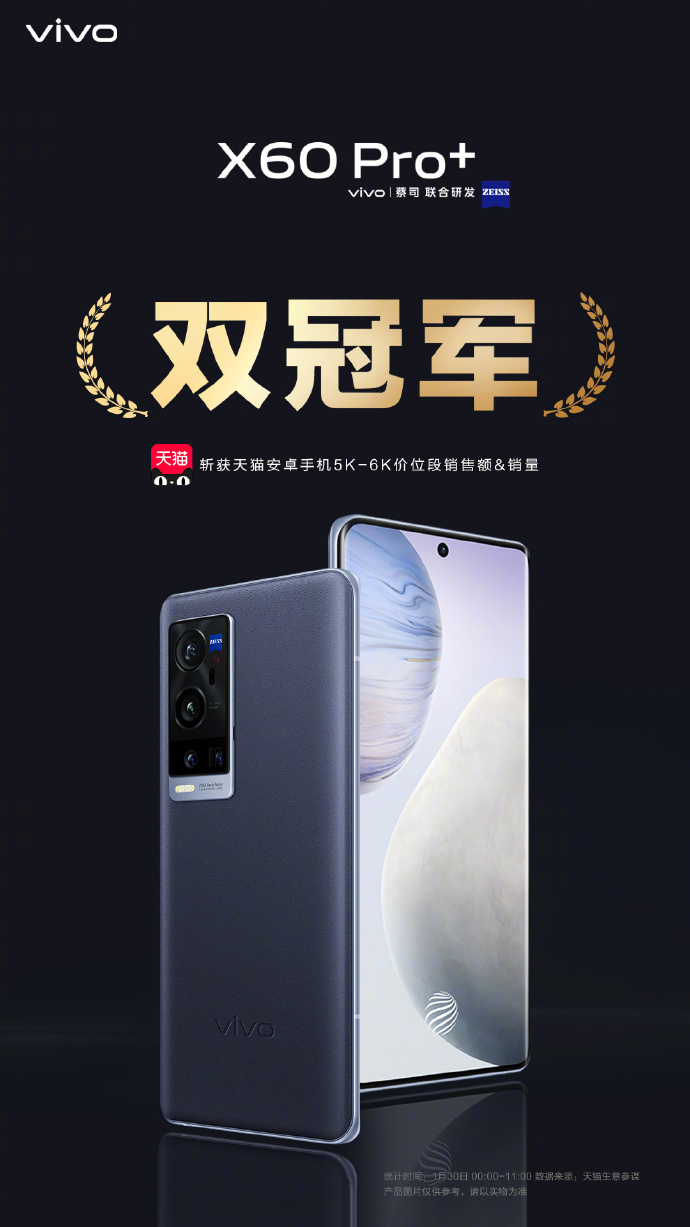
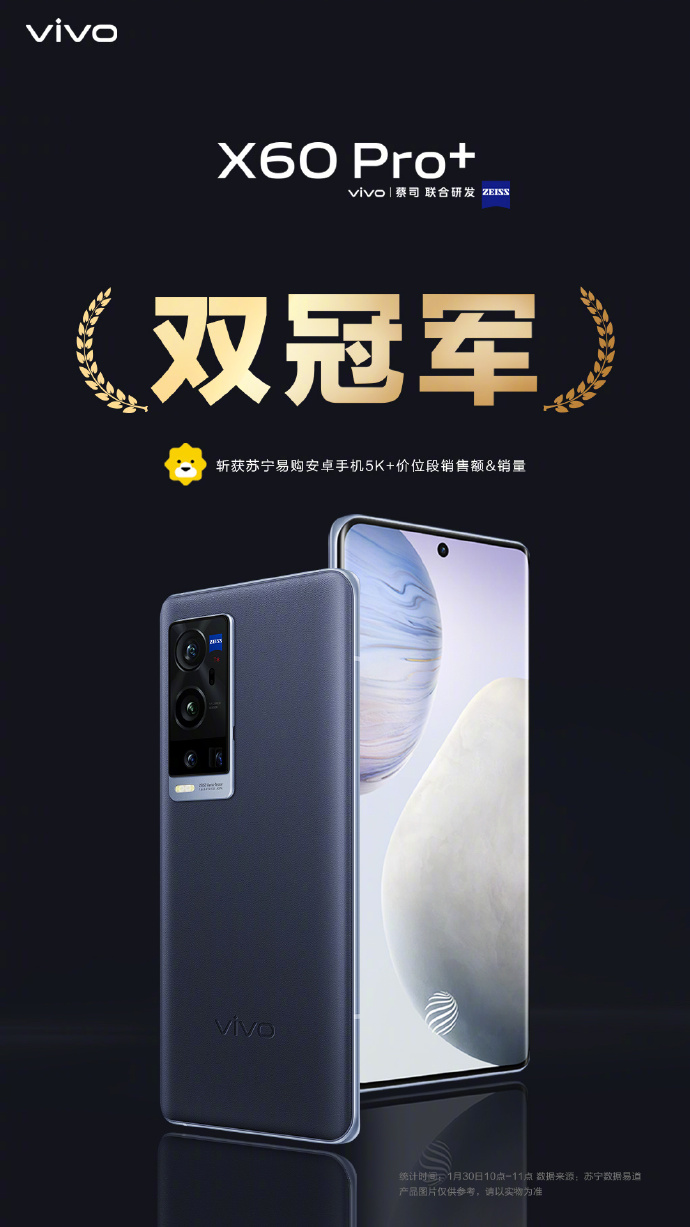
According to vivo, the vivo X60 Pro+ is currently sold out in almost all the online channels(as of Jan.30, at 11:00 Beijing Time). The company also says that the device remained a champion of sales in the 5000-6000 yuan($778-$933) category in major e-commerce platforms in China.

Precisely, platforms like JD.com(Jingdong), T-Mall, Suning record high volume of X60 Pro+’s sales. To compare, the company itself has said that the X60 Pro+’s first day sales beat its predecessor. To recall, its predecessor was the Vivo X50 Pro+ which launched back in June 2020.

In fact, it explicitly mentions that the first day sales growth of X60 Pro+ increased by 369% than X50 Pro+(as on 12:00 PM Beijing Time, Opening Day Sales). However, it hasn’t shared a specific number of units or value of the sales(in Chinese Yuan) on the Weibo post.

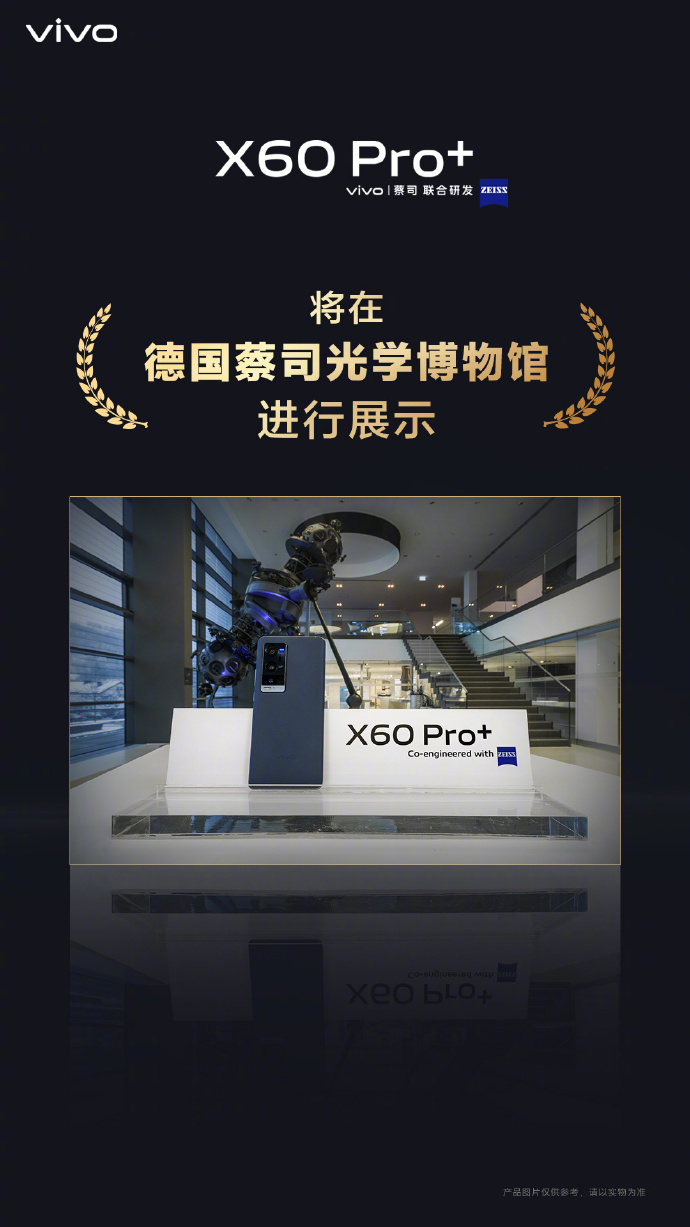
To put things in perspective, if one unit of X50 Pro+ sold last year during first day sale, the successor has sold about 369 units(an eg.). To celebrate this, the company says that a hoarding of X60 Pro+ will be exhibited in ZEISS Optics Museum, which is a Technology museum in Oberkochen, Germany.

X60 Pro+ is vivo’s first 2021 flagship smartphone with a high-quality leather rear finish, comes in Classic Orange and Phantom Blue colors. It features a 6.56 inches 120Hz AMOLED display, Snapdragon 888 chipset, 8/12GB DDR5 RAM, 128/256GB UFS 3.1 storage, ZEISS optics-powered quad-cameras with 48MP mains lens, 4,200mAh battery with 55W Flash Charging.

RELATED:


Xiaomi sues the US Government over Military Blacklist row

Recently, the US Govt targeted Xiaomi by adding it to the Military Blacklist. This effectively means that investors in the country should divest themselves from the blacklisted firms by November 11, 2021. To this Xiaomi released a statement saying that it has no relations with the Chinese Military. Today, as per a Reuters report, the company has gone a step ahead and filed a legal complaint.

Xiaomi Logo Featured

According to the report, Xiaomi has filed a legal complaint in a Washington district court against the U.S Dept. of Defense and Treasury. Precisely, Secretary Janet Yellen, Xiaomi, calls the judgment of adding Xiaomi to the Military Blacklist as “unlawful and unconstitutional”.

Just like the previous statement, Xiaomi again says that the company isn’t controlled by the People’s Liberation Army of China. Back when US Govt took the decision, it did not give any proof as to how the world’s third-largest smartphone maker is associated with the Chinese Military. Accordingly, this statement says that 75% of the company’s voting rights are with co-founders Lin Bin and Lei Jun.

It adds that the supposed “public association” with military, if existed, will only damage the company’s reputation with its partners.  Speaking of which the company says that a significant number of shareholders are from the U.S whose strategic relationship is critical to grow in a competitive market.

Although Xiaomi can still import U.S technology without a license unlike Huawei or DJI that are on the Entity List, it says that an immediate restriction on investment will cause irreparable harm to the company. Let’s wait and see how US Govt responds to this in the coming days.

RELATED:


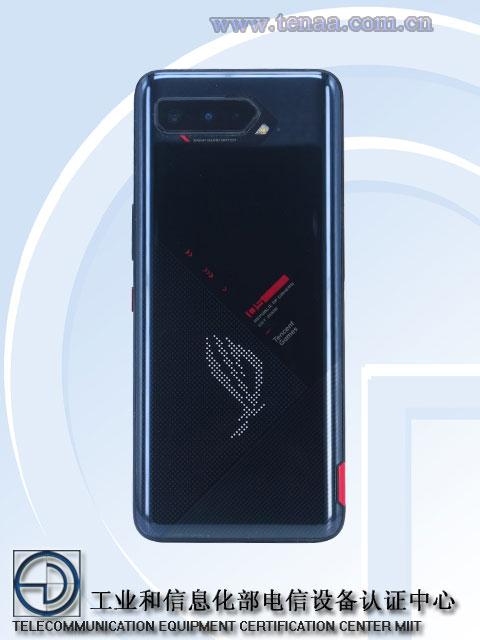
Asus ROG Phone 5 visits China’s TENAA, Key Specs and Images revealed

Asus confirmed the arrival of the next ROG Phone at the Snapdragon 888 chipset launch Summit in December 2020. Later, the company teased it after sometime in January this year. Although it hasn’t revealed the name of the next flagship, the device is likely to be ROG Phone 5(Tentative). Now, it has appeared on China’s TENAA, revealing key specs and images.


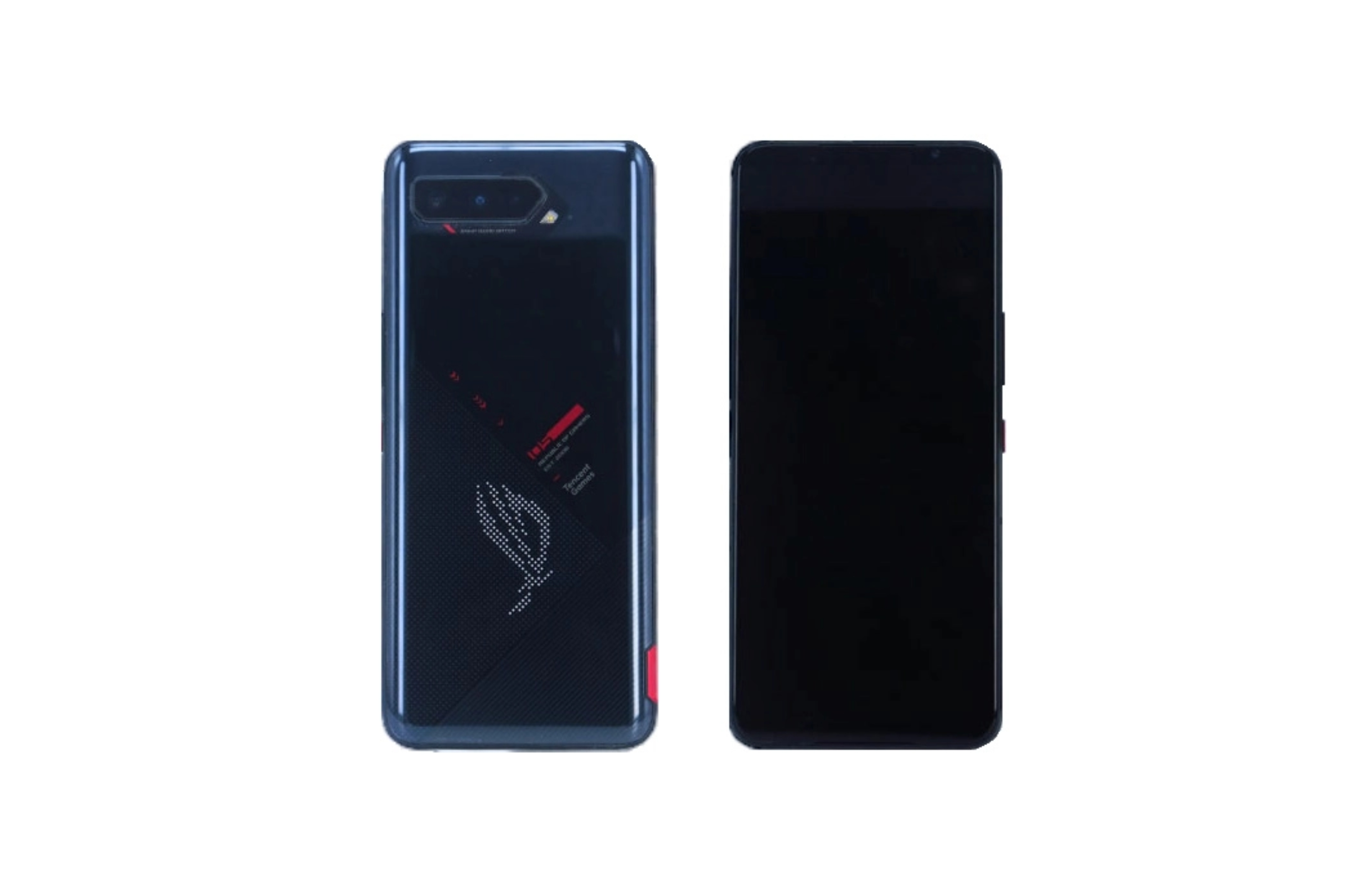
An Asus 5G Mobile Phone with model number ASUS_I005DA probably carrying the “ROG Phone 5” moniker appears on TENAA. The device measures 172.834 x 77.252 x 10.29mm which if true would have a higher thickness than ROG Phone 3(9.85mm).

To further hint at the naming, the rear of the device also has a “05” and “REPUBLIC OF GAMERS” on what looks like a secondary display. Moving on, we can see the “TENCENT GAMES” suggesting that the collab will continue for 2021 as well.

Recently, we also saw Red Magic announce its partnership with Tencent to improve the performance. Anyway, the ROG Phone 5 also seems to have a dot-matrix on the rear which could be for the Aura Lighting. If you remember, Asus launched the hidden LED Dot-Matrix on the lid of ROG Zephyrus G14 laptops in Jan. 2020(@ CES’20).

Similarly, we saw the lighting armor case for the ROG Phone 3 which also supports Aura lighting. That said, the ROG logo on the dot-matrix hints that this part could be controllable via the phone’s UI to display other messages too. Apart from this, the camera layout looks akin to the predecessor.

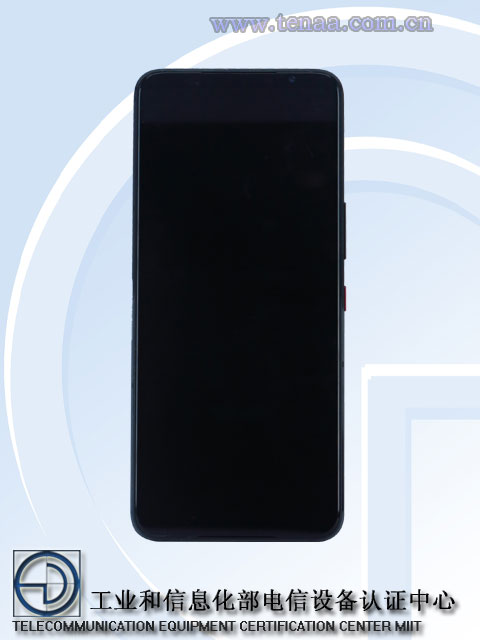
At the front, if you look closely, you can spot the dual-front firing speakers, display without notch/punch-hole, and a selfie camera at the top-right. On the right, there are power and volume buttons and on the left, we have a SIM tray which is probably dual-SIM.

As for specs, the TENAA listing suggests a 6.78-inch OLED display, 6,000mAh battery(dual-Cell- 2x3000mAh), and run Android 11. Other expected specs include at least an FHD+ display with 144Hz refresh rate, Snapdragon 888 chipset, 65W charging, 64MP main camera, and more.

RELATED:


(via)
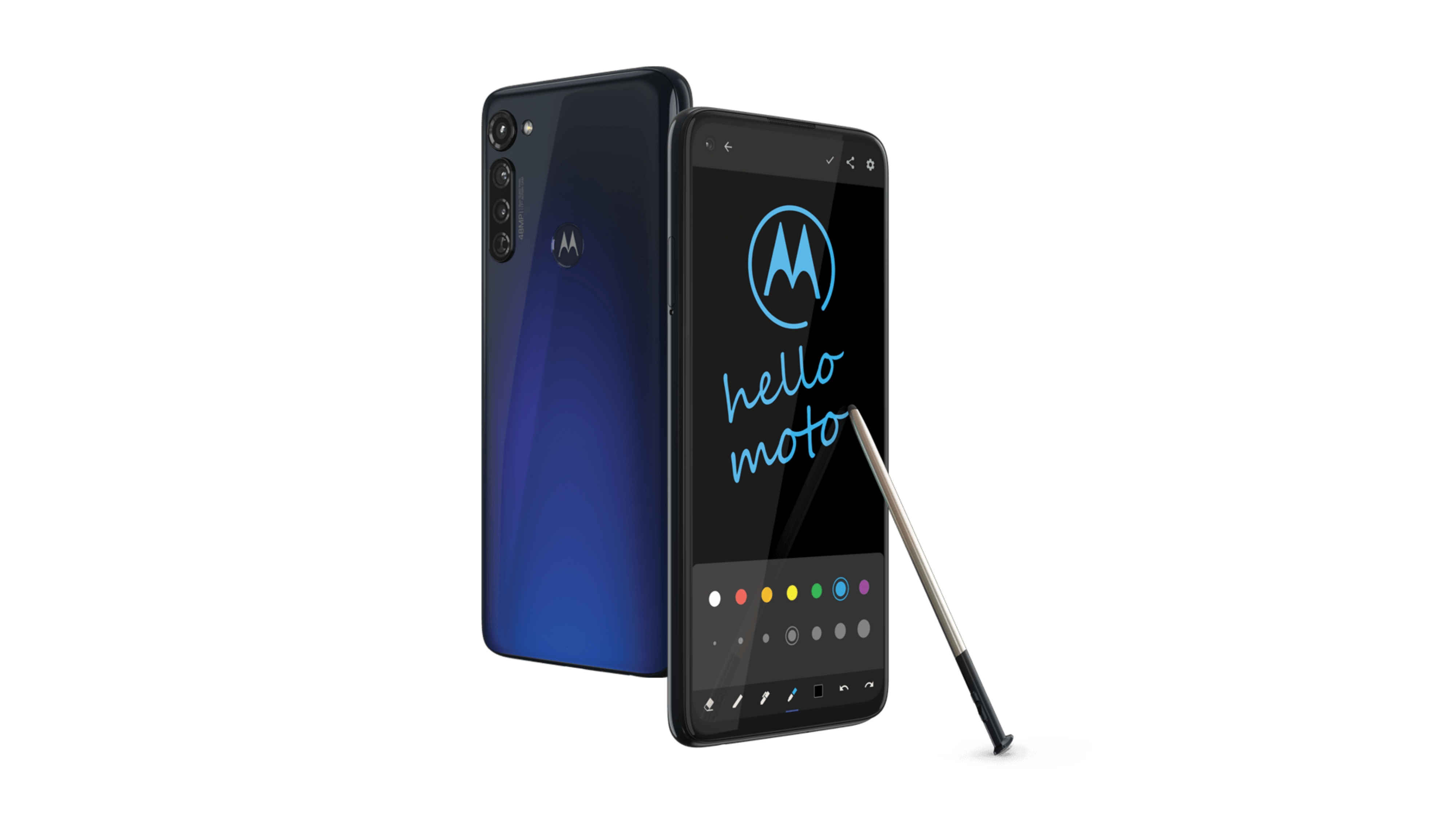
Moto G Pro is the first Motorola smartphone to get Android 11 update

In late December 2020, Motorola released the list of eligible smartphones for the Android 11 update. However, the company did not reveal when these phones will be getting the update. Now, a month later, one of those handsets, the Moto G Pro, has started receiving the Android 11 update.

Motorola Moto G Pro Mystic Indigo Featured

According to PiunikaWeb, Lenovo-owned Motorola has begun to roll out Android 11 update for Moto G Pro. The update is currently live in the UK, as per the company’s official update tracker page and multiple users on forums.

The latest system update for the handset comes with January 2021 security patch and weighs 1103.8MB in size. The changelog does not mention anything but users can expect features like chat bubbles, one-time permissions, smart device controls, and screen recorder to name a few.

Anyway, it seems like the update is being pushed in batches. Hence, it may take time to reach every unit. However, users can check if their device has got the update from Settings > System > Advanced > System update.

That said, at first glance, it seems weird for Motorola to release the Android 11 update first for Moto G Pro, a budget smartphone. But then, we realized that this handset is part of the Android One program. Therefore, this phone is also eligible for the Android 12 update as it debuted with Android 10.

Also, it is worth noting that this very same phone is sold as Moto G Stylus in the US. But that model is not part of the Android One program and there’s no telling when it will be getting the Android 11 update.


RELATED:


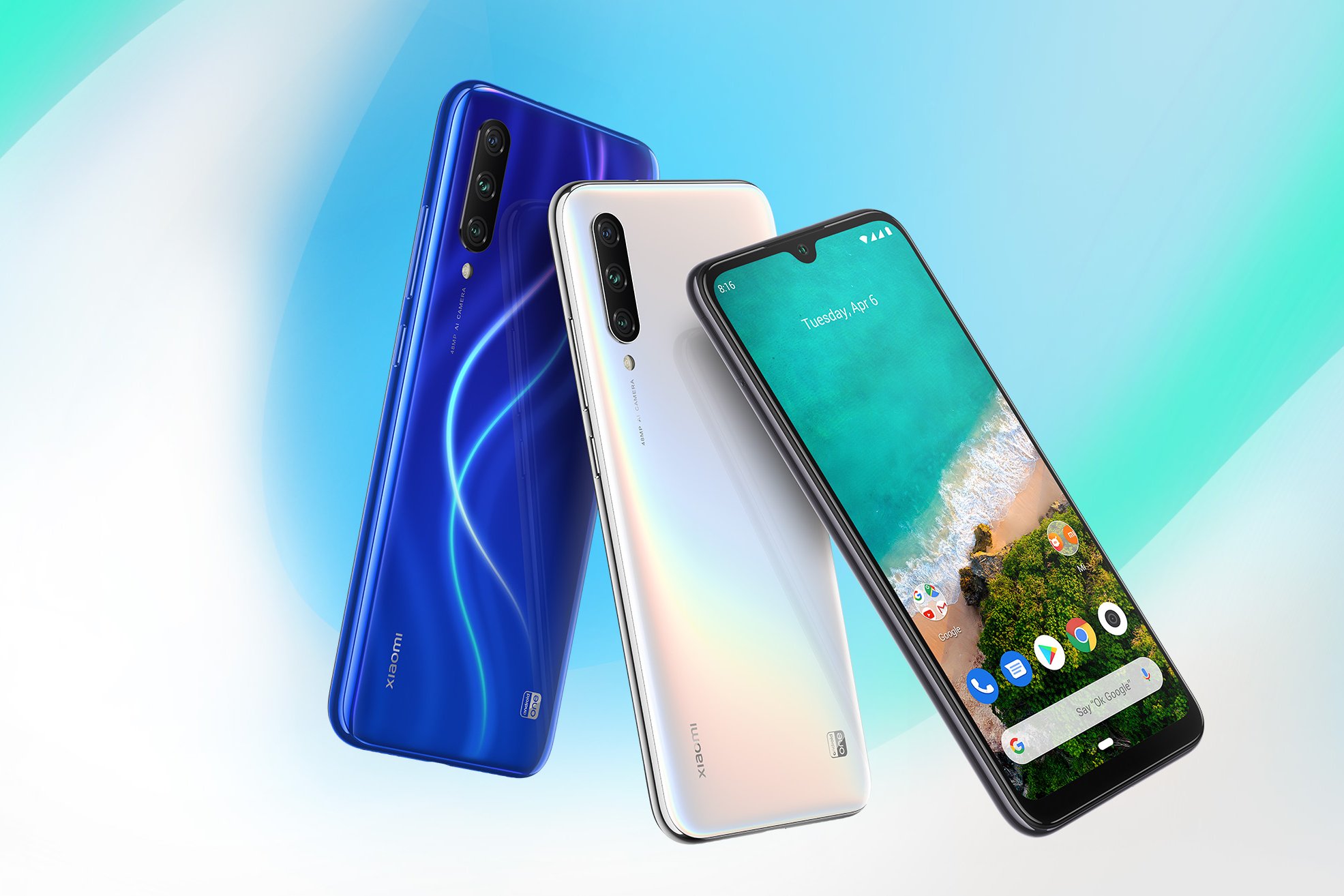
Xiaomi Mi A3 gets the missing Android 11 Screen Recorder in the latest update

On New Year’s Eve, Xiaomi released the Android 11 update for Mi A3 out of the blue. But unfortunately, this build bricked the phones. Hence, the company halted the rollout and offered free repairs for the affected customers. Then, the firm re-released the update after fixing the issue. However, the update did not include a native screen recorder, which is one of the main highlights of Android 11. Thankfully, the Chinese smartphone is now seeding out a new build with this missing feature.

Xiaomi Mi A3 Featured

The Android 11 update for Mi A3 came with December 2020 security patch though it was rolled out in early Janauary. Hence, the company has now released a new update that bumps up the security patch level to January 2021.

The latest system update for the Xiaomi Mi A3 comes with build number V12.0.4.0.RFQMIXM (global variant) and weighs 329MB in size. Just like any other OTA update, is it being rolled out in batches. Anyway, interested users can head over to Settings > System > Advanced > System update to check if their unit has received the update.
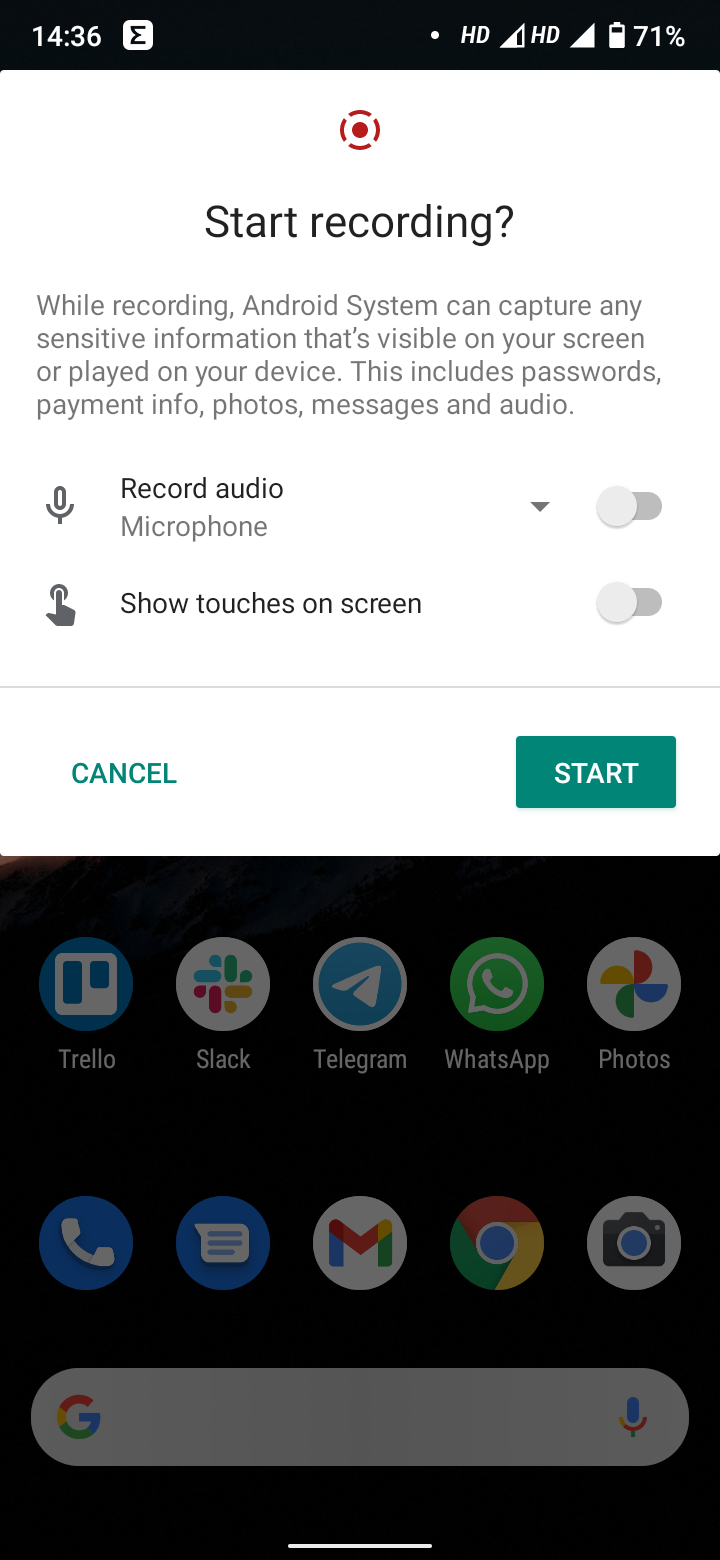
That said, the changelog for the update does not mention anything. But it brings the Android 11 native screen recorder, which was missing in the previous build. It can be accessed from the edit section of quick settings.

Xiaomi Mi A3 Android 11 Screen Recorder

Lastly, apart from the screen recorder, the new update also brings YouTube Music as a system app, and hence, it cannot be uninstalled.


RELATED: