In January this year at the CES 2020, OnePlus announced the Concept One smartphone which is equipped with a rear glass panel that has electrochromic technology in order to hide the rear cameras. The Reno 5 Pro+ 5G that was launched recently also has electrochromic technology on the rear panel.
OnePlus Concept One
There are indications that the technology may become a new trend in the mobile phone circle next year. According to noted tipster Digital Chat Station, the electrochromic technology which premiered on the Concept One and is going commercial on the Reno 5 Pro + will be utilized on many phones next year. The source tips mobile phone manufacturers such as Vivo, Xiaomi, Meizu, and Nubia as working on smartphones that will use electrochromic technology. Testing of this technology has reportedly started.
Electrochromic technology uses an invisible alloy called tungsten oxide. When tungsten oxide is applied to glass, the surface can conduct electricity, and the passed charge can change the composition of glass molecules, thereby generating a variety of gorgeous colors.
This technology allows users to customize the color of the back cover of the mobile phone and can prompt the user accordingly by changing the color of the back cover according to different application scenarios for functions such as incoming calls, message notifications, or health.
It is worth mentioning that, although the principle of electrochromic technology is complicated, it has minimal impact on the battery power of mobile phones. On the OnePlus Concept One, the electrochromic rear panel is monitored to consume only 2-3mAh of battery power in one hour.
At present, electrochromic technology has been widely used in buildings, airplanes, and automotive glass. It is believed that this technology will become one of the selling points of various mobile phone manufacturers in the near future.
It is a well-known fact that handheld vacuum cleaners are way more convenient and efficient than traditional ones. The only drawback that comes with this convenience is its high-price tag. Taking this into consideration, Xiaomi introduced Dreame T20 at a pocket-friendly price rate of $359.99. And as if that wasn’t enough, Amazon has decided to offer a huge $72 discount on it that users can redeem using a coupon code. Additionally, they can also get a treat of an added $10 off using code- WERAIGMF.
Xiaomi Dreame T20 features a strong suction power that allows it to clean thoroughly. With over 26 patents, its SPACE 4.0 Motor can operate at 125,000 RPM for added efficiency. This vacuum cleaner boasts a hair tangle-free design, built to conveniently peel off the hair wrapped around the roller to prevent disruptions. This especially comes in handy when people have furry pets.
Dreame T20 works on 4 modes that help clean the house swiftly by meeting various cleaning needs. The user can keep changing the suction level to fit any surface or area. It comes with a crevice nozzle, 2-in-1 brush, all-surface brush, and mite removal brush to help clean every surface ranging from marble floors to car seats and hard-to-reach areas. Furthermore, T20 also features an intelligent auto mode that can adjust the suction power across various floor types. It helps the user get a deep clean throughout their home while also preserving battery run-time and working life time.
Dreame T20 is light in weight and has an 8-stage noise reduction to offer seamless use. The finger-free form, detachable dust cap, and wall-mount storage are other such attributes that make this unit ultra-versatile.
Designed to offer end-to-end convenience, Xiaomi’s Dreame T20 makes cleaning look fun and easy. Currently, this unit is being sold at a discounted rate at Amazon where the page offers $72 off, using a coupon code. An additional $10 discount can also be redeemed by adding the “WERAIGMF” code, bringing its final price down to just $259 from the original- $359.99 price tag. This deal is valid only till December 12th, so hurry and buy yours now.
A number of exciting products launched last week and if you missed them, this recap is the best place to bring yourself up to speed.
AirPods go max!
Apple launched its first pair of premium over-the-ear headphones under the AirPods line. The AirPods Max, as it is called, has an interesting design that makes it stand out from the plethora of headphones in the market. It has noise cancellation, spatial audio, support for Siri, a 20-hour battery life, and isn’t cheap with its $549 price tag.
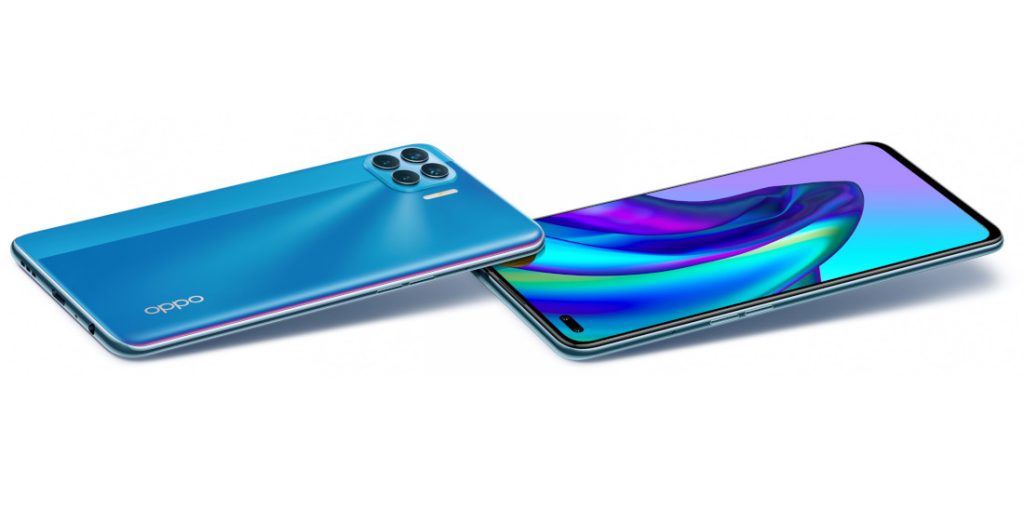
OPPO’s Reno series enters 5th gen in under 2 years
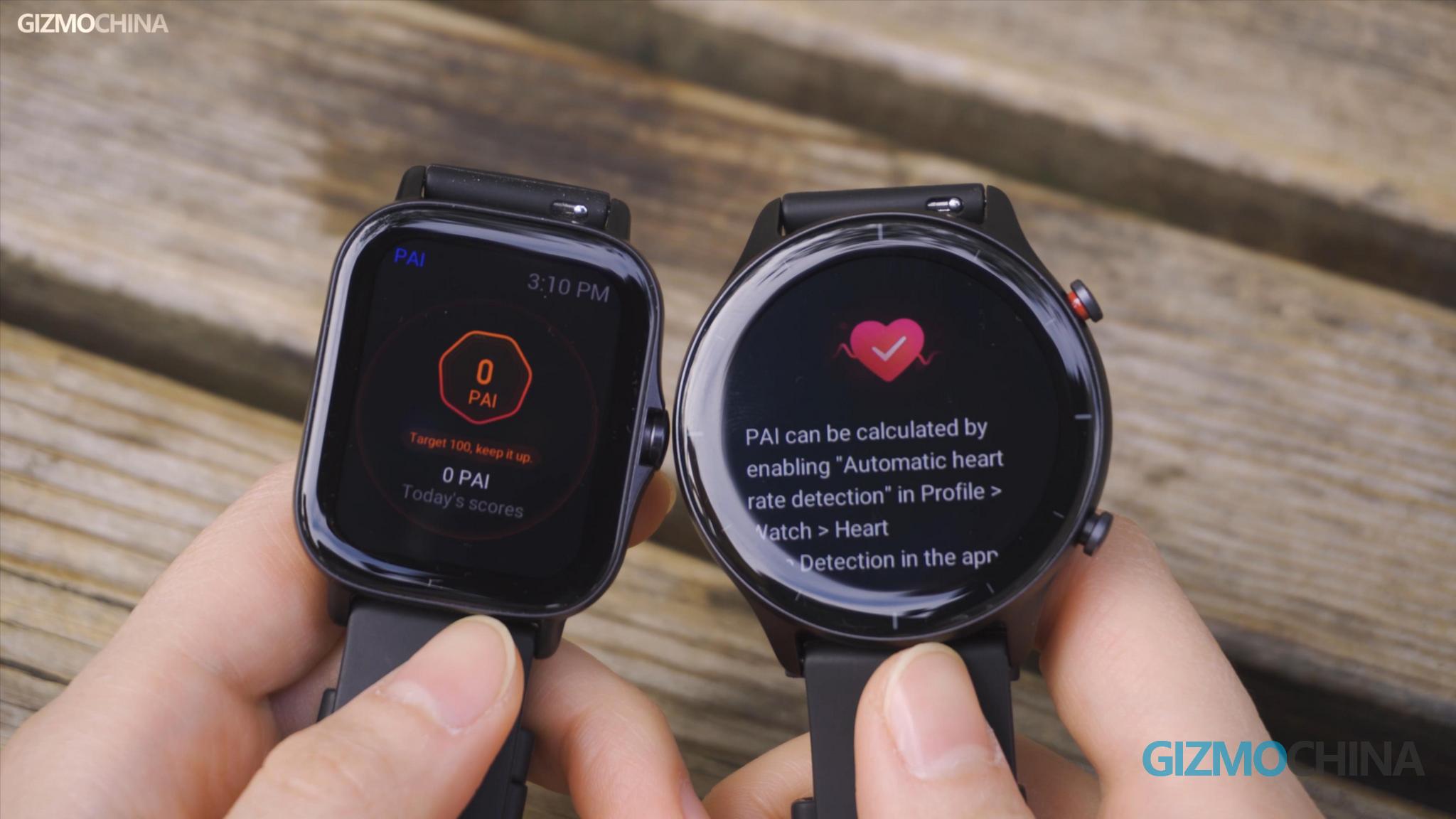
Two new smartwatches were announced last week. The Mi Watch Lite arrived first with a striking resemblance to the Redmi Watch but with more sports modes, GPS, and longer battery life. boAt, the Indian company which climbed to the 5th spot on IDC’s list of largest wearable brands in Q3 2020, also announced its latest offering, the Enigma. It supports fewer sports modes than the Mi Watch Lite but has a SpO2 sensor and a cheaper price tag.
Huawei enters the desktop PC business
Huawei announced its first desktop computer, the MateStation B515, last week. The computer is powered by an AMD processor and comes with a 23.8-inch monitor, a mouse, and a keyboard with a built-in fingerprint scanner.
OnePlus released two affordable flagships this year: OnePlus 8 and OnePlus 8T. After realizing top-tier flagships are not as popular as before, the company chose not to release a Pro variant of the 8T and came up just with the vanilla version. There is an older OnePlus device that is still in the market and you can find it in the same price range as the 8 and the 8T. We are talking about the OnePlus 7T Pro. If you want to know which is the best OnePlus flagship excluding the top-tier OP8 Pro, you are in the right place: this is a comparison between the main specifications of the OnePlus 7T Pro, 8, and 8T.
OnePlus 7T Pro vs OnePlus 8 vs OnePlus 8T
Vivo X51 5G
OnePlus 8
OnePlus 8T
DIMENSIONS AND WEIGHT
162.6 x 75.9 x 8.8 mm, 206 g
160.2 x 72.9 x 8 mm, 180 g
160.7 x 74.1 x 8.4 mm, 188 g
DISPLAY
6.67 inches, 1400 x 3120p (Full HD+), Fluid AMOLED
6.55 inches, 1080 x 2400p (Full HD+), Fluid AMOLED
PROCESSOR
Qualcomm Snapdragon 855+, octa-core 2.96 GHz
Qualcomm Snapdragon 865, octa-core 2.84 GHz
MEMORY
8 GB RAM, 256 GB – 12 GB RAM, 256 GB
8 GB RAM, 128 GB – 12 GB RAM, 256 GB
SOFTWARE
Android 10, Oxygen OS
CONNECTIVITY
Wi-Fi 802.11 a/b/g/n/ac, Bluetooth 5, GPS
Wi-Fi 802.11 a/b/g/n/ac/ax, Bluetooth 5.1, GPS
CAMERA
Triple 48 + 8 + 16 MP, f/1.6 + f/2.4 + f/2.2
16 MP f/2.0 front camera
Triple 48 + 16 + 2 MP, f/1.8 + f/2.2 + f/2.4
16 MP f/2.4 front camera
If we talk about the design, it is just a matter of taste. The OnePlus 8T has a more modern design with its rectangle-shaped camera module, but its flat display would not let me go for it. The OnePlus 8 is definitely the most attractive: it is thinner than its siblings, it is lighter and it has a curved screen with a punch-hole design. But some may like the OnePlus 7T Pro due to its full-screen display: it does not have any hole on the screen because it spots a motorized pop-up selfie camera. But this makes the handset thicker.
Display
Despite it is an older device, the OnePlus 7T Pro has a better display. It actually offers a higher resolution: Quad HD+, with 1440 x 3120 pixels and even a wider 6.67-inch diagonal. The OnePlus 7T Pro also offers a 90 Hz refresh rate and the HDR10+ certification. The OnePlus 8T has a higher 120 Hz refresh rate, but the resolution is lower. The OnePlus 8 is the most disappointing with its 90 Hz Full HD+ display, but it still offers a great panel. In each case, you get the OLED technology and an in-display fingerprint scanner.
Hardware/Software
The OnePlus 7T Pro loses this comparison because it packs an older chipset and it lacks 5G connectivity. It is fueled by the Snapdragon 855+ mobile platform from 2019, while you get the 2020 Snapdragon 865 with the OnePlus 8 and the 8T. Between the OnePlus 8 and the 8T, the latter is more convincing because it runs Android 11 out of the box, while OP8 is based on Android 10. However, it will be upgraded to Android 11, just like the 7T Pro. When it comes to the hardware department, each of these devices is a flagship providing blazing speeds and great stability.
Camera
The OnePlus 7T Pro is the best camera phone in this comparison. The main sensor of its triple rear camera has a brighter focal aperture allowing for better image quality, even in low light conditions. Further, it includes a telephoto sensor with 3x optical zoom which is actually absent on the OnePlus 8 and 8T. Last but not least, it has a brighter focal aperture for the front camera which can shoot better selfies.
Battery
The OnePlus 8T packs the biggest battery with a 4500 mAh capacity. In most of the scenarios, it is able to provide a longer battery life. If you use 5G and the 120 Hz refresh rate, you will get shorter battery life. But if you do not, it always wins. Further, the OnePlus 8T supports a faster charging technology with 65W power. Its battery is able to charge from 0 to 100 percent in less than 40 minutes thanks to 65W Warp Charge.
Price
The street prices of these three devices vary depending on the market. You can find the OnePlus 8 for less than €450/$550 with a bit of luck, while the OnePlus 8T Pro is priced less than €600/$725. Even the OnePlus 7T Pro is available for less than €450 in some cases. There is not a definitive winner of this comparison: the OnePlus 7T Pro lacks 5G and it has inferior hardware, but it is a better camera phone and it has a better display. OnePlus 8T has better hardware, a bigger battery, and a higher refresh rate. OnePlus 8 is an 8T with inferior specifications but it can let you save a lot of money.
The Mi Watch Lite may look like the Redmi Watch which was announced a few weeks before it but both wearables are different. Apart from their names and of course, the regions where they are sold, they also have different features. This post highlights the differences and should also help you decide which of the two you should purchase.
The table below shows a spec by spec comparison of the two watches.
Redmi Watch (REDMIWT01)
Mi Watch Lite (REDMIWT02)
Display
1.4-inch with 2.5D glass
320 x 320 resolution
323 PPI
1.4-inch with 2.5D glass
320 x 320 resolution
323 PPI
Straps: Elegant Black, Ivory, Ink Blue, Cherry Blossom, and Pine Needle Green
Ivory, Black, Navy Blue
Straps: Ivory, Black, Navy Blue, Pink, and Olive
The key differences between the two watches are sports modes, GPS, AI Assistant, NFC, battery life, and price.
Sports Modes
This is a key difference between both watches. The Redmi Watch supports just 7 sports modes whereas the Xiaomi Mi Watch Lite supports all seven of the Redmi Watch’s sports modes and adds four more – open water swimming, trekking, trail running, and cricket. Xiaomi did say that cricket mode will be added through an OTA upgrade, so out of the box, the Mi Watch Lite supports just 10 sports modes.
GPS
This is another major difference between the two watches. The Redmi Watch doesn’t have built-in GPS which means if you go for an outdoor run or cycle, you have to connect it to your phone to use GPS. The Mi Watch Lite, on the other hand, has GPS+GLONASS for positioning, so you don’t have to connect it to your phone to track your trajectory.
The Redmi Watch has both an AI Assistant and NFC. The assistant is Xiaomi’s XiaoAI and with the built-in microphone, users can ask it questions, set alarms, and use it to control compatible smart home appliances. It also has NFC for payments.
The Mi Watch Lite doesn’t have a built-in assistant which is why there is no microphone. It also does not have NFC, so there is no support for contactless payment.
Battery Life
Both watches have the same 230mAh battery capacity but the Redmi Watch has a lesser battery life – 7 days compared to the Mi Watch Lite whose battery life goes up to 9 days on a single charge.
Price
The Redmi Watch is officially sold for ¥299 (~$45) but third-party resellers sell it for a bit more. While Xiaomi is yet to reveal the price tag of the Mi Watch Lite, it is already on sale by retailers and can be gotten for even $58.90 on Giztop.
Conclusion
The Mi Watch Lite definitely has more to offer, at least for international buyers who won’t find a use for the Redmi Watch’s XiaoAI assistant and NFC payment support. The Mi Watch Lite has more sports modes, GPS, a slightly better battery life, and supports more languages but all of these come with a more expensive price tag. Nevertheless, it is the logical choice for any international buyer.
On a side note, we believe the Mi Watch Lite may launch in China as a sort of Redmi Watch Pro that has GPS and more sports modes. The reason is the model number which shows it is clearly a Redmi product that has been rebadged as a Mi product for international markets, so a local release is definitely possible. However, it should come with certain additional features such as NFC and the XiaoAI assistant, and a higher price tag than the standard model.
The Find X3 Pro renders, which were posted on Twitter by TheLeaks (@TheLeaks3) show that OPPO is sticking to the same front design as that of the Find X2 Pro. This means you are getting a curved display, which some may not like, and a punch hole at the top left corner of the screen for the selfie camera.
The rear is where the change has occurred. Gone is the vertical camera arrangement of the Find X2 Pro and in its place is a square-shaped camera housing with rounded corners.
There are four rear cameras and an LED flash on the back of the phone. One of the cameras has two silver rings around it and below it is a much smaller sensor which should be the macro camera that was reported in the specifications leak.
The OPPO Find X3 Pro has a curved glass back but we expect there will be other variants too, including a Lamborghini Edition.
1 of 3
Information revealed so far says the Find X3 flagship will have a 6.7-inch curved OLED display with a 1440p resolution and a 120Hz adaptive refresh rate. It will be powered by the new Snapdragon 888 processor which will be the chipset of choice for most flagship phones launching in 2021.
The rear cameras are said to include two 50MP Sony IMX766 cameras, one of which is the primary camera and the other is the ultrawide angle camera. It will also have a 13MP telephoto camera and a 3MP macro camera.
The Find X3 Pro will have a 4500mAh under the hood and will support both 65W fast charging and 30W wireless fast charging. It has been reported that OPPO has tweaked the algorithm of the 65W fast charging technology so that the device charges faster than its predecessor. The phone will also run ColorOS 11 based on Android 11 out of the box.
It’s not uncommon for OnePlus’ flagships to be on the radar of leaks before the launch. Recently, the company made the next flagship for 2021 official at the Qualcomm event. Although it didn’t reveal the names, going by the numbers, it probably will be the OnePlus 9 series along with a new 9E. Today, Phonearena brings us the first-ever hands-on real-life image of the non-Pro variant.
Citing anonymous sources, the report shows various images of what is reportedly a pre-production unit. Claimed to be the OnePlus 9 5G, the report has been supported by tipsters like Max Jambor as well. First off, the model number of the device is LE2117 which is contradictory to the earlier leaks that said it could be of the OnePlus 9 Pro. Next, the images show a device who’s rear panel has silver color.
Besides, the camera module on the device is similar to the earlier CAD renders having triple-cameras two large sensors, and a smaller one. There’s an LED flash beside the strip of cameras similar to OPPO’s Reno series of devices(Eg. Reno4 Pro). The rounded-rectangular layout also has a ‘ULTRASHOT’ written on it and the rear-panel logo isn’t of OnePlus.
Upfront, as you can see above, the device has a top-left punch-hole display. In addition to claiming it similar to the OnePlus 8T, the report says that it’s a 6.55-inch FHD+ flat display. It supports HDR, has a refresh rate of 120Hz, a resolution of 2400×1080, and 20:9 aspect ratio. What follows is a series of images to reveal the microphones(Top, bottom), SIM card tray, Type-C port, and Speaker( at bottom), along with the boot logo.
If the images along with the report turns is true, the device will have a metal frame made of Aluminum and have the ports and buttons at usual placements. Anyway, apart from looks, the report also shows some screenshots of its internals. Apparently, the LE2117 device has a board Lahaina (which hints at Snapdragon 888), has 8GB RAM, 128GB storage, and runs Android 11.
1 of 8
OnePlus Boot Logo
LE2117 Top
LE2117 Bottom portion
LE2117 Left
LE2117 Right
Lahaina (Snapdragon 888)
Android 11
8GB RAM, 128GB storage
The screenshots also include details like the 12MP f/1.88 rear camera and 4MP f/2.4 front camera. However, it could either be an error listing or indicate the actual output of the quad-Bayer 48MP, 16MP sensors respectively. Apart from this, earlier leaks say that the OnePlus 9 mostly won’t have an IP rating, unlike the Pro variant.
Following the announcement of Android 11 a few months ago, some manufacturers have begun rolling out the Android 11 update for their smartphones while others are yet to begin. Nubia belongs to the former as it has announced that the new version of Android is now available for its 2019 flagship phones – the Nubia Z20, Red Magic 3, and Red Magic 3s.
All three phones launched last year with Android 9 Pie pre-installed. However, only the Red Magic 3 (Chinese version) got updated to Android 10. Now that Android 11 is rolling out to the devices, we hope Nubia makes it available for global users soon.
The Nubia Z20 is a dual-screen phone. It has a 6.42-inch FHD+ curved display on one side and a smaller 5.1inch HD+ display on the other side. Both screens are AMOLED panels and the smaller one sits below a triple camera system.
The dual design allows the rear cameras to double as front-facing cameras as all you have to do when you want to make a video call or take a selfie is to switch to the smaller display on the back. This means you can take a wide-angle selfie with the 16MP ultra-wide angle camera; a sharper and more detailed selfie with the 48MP primary camera, or even better portraits with the 8MP telephoto camera.
Other features of the Nubia Z20 are a Snapdragon 855+ processor, up to 8GB of RAM and 512GB of storage, support for 8K video recording, dual side-mounted fingerprint scanners, a 4000mAh battery, and support for 27W wired fast charging.
The Red Magic 3S and Red Magic 3 are gaming phones. Both come with a 6.65-inch FHD+ display, 48MP triple rear cameras with 8K video recording, stereo speakers, 5000mAh batteries with 18W fast charging, and audio jacks. The difference is that the Red Magic 3S has a Snapdragon 855 processor while its older sibling comes with the Snapdragon 855.
Honor V40 series was earlier rumored to launch in December. However, leaks recently said the series has been cut down to one device(Honor V40) after failing to feature a Kirin 9000 SoC. Currently, the device is currently expected to debut in January. Now, a tipster says it has got MIIT certification.
Representative image: Honor V30 Pro
As Digital Chat Station reports(via ITHome), a device with a model number YOK-AN10 appears on China’s MIIT certification website. The listing shows the applicant as Glory Terminal Co Ltd.,(Translated) which refers to Honor. Further, the listing also confirms that the device will be a 5G device.
Now, if we recall, the tipster revealed the codename of the upcoming Honor smartphone last week. According to him, Honor V40 will have the codename YORK and model number YOK-AN10. Hence, the above listing and tipster’s info suggests that the device is most likely the V40 from Honor. Further, he also says that the Honor V40 will support 66W fast charging.
Precisely, he says that the standard charger of Honor is reportedly the same( HW-110600C0x) as Huawei. Previously, a Huawei 66W charger got China’s 3C certification back in July. It had the model number HW-110600C00 and rated as 11V/6A. This charging tech later debuted in the company’s latest flagship Mate 40 series.
While Honor is now effectively independent from Huawei, it seems like the company wants to use some of the latter’s technology even after parting ways. Anyway, the Honor V40 is likely to sport the MediaTek Dimensity 1000+ SoC. Earlier rumors said that the device will feature an AMOLED 120Hz display, 50MP Sony IMX700 RYYB camera sensor. Let’s wait for more leaks in the coming days.
A couple of days back, we saw the alleged real-life image of the upcoming Xiaomi Mi 11. However, the image had a device with a black rear making us wonder if it’s real. Today, the device has leaked completely in the Blue Gradient color that surfaced in renders a while ago.

Xiaomi Mi 11 render by Benjamin Geskin
A series of images claimed to be Mi 11 appears on slashleaks(via mobiltelefon.ru). As you can see below, the images show a person holding a device that is in Blue Gradient color. If you look closely, it has a squircle rear camera layout with two large sensors and a small one above the LED flashlight. These almost resemble the earlier leaked image of the Xiaomi Mi 11.
Further, the first larger sensor also has a white ring around it just like the concept renders that surfaced online. This could be the 108MP main sensor of the rear setup. To add to the merry, tipster Ice Universe claims that these are 100% legit images of the Xiaomi Mi 11. In any case, the launch should be very near, and hence, let’s wait for official images and pricing.
Various reports say that the other two sensors would be a 13MP ultra-wide, and 5MP macro sensors. That said, the Xiaomi Mi 11 will be the first to use Qualcomm Snapdragon 888 SoC according to Xiaomi. The series is likely to include two models- Mi 11,Mi 11 Pro.
Among the two, the Mi 11 is likely to feature an AMOLED display with a 120Hz refresh rate, 4,780mAh battery with 55W charging. The Xiaomi Mi 11 is also strongly rumored to go on sale this month with sufficient stocks. Early rumors also say that Mi 11 will come at least in 8GB RAM, 128GB storage, and start around 3,999 Yuan (~$610).
A few days back, Infinix said that it would reveal the pricing of the Smart HD 2021 entry-level smartphone in India. Today, as promised, the company has revealed the price and launch date officially. The company has also revealed the features and sale date of its first Android TV in the country.
Infinix Smart HD 2021 Price & Availability, X1 Android TV sale
The Infinix Smart HD 2021, as said in the earlier report, has a 2GB RAM, 32GB storage. It is now priced at ₹5,999($81.36). The official teaser page on Flipkart says the device will launch on December 16, at 12 PM IST. Considering the specs and price are already out, this should be the date for the first sale on Flipkart.
Apart from the entry-level smartphone, Infinix has also announced its First Android Smart TV in India. The X1 Android TV, as the company calls it, will go on sale from December 18 in the country. However, the Price will likely be announced on the launch date which is on December 14.
Infinix Smart HD 2021 Specifications
Infinix Smart HD 2021 features a 6.1-inch IPS HD+ display with 500nits brightness. The resolution will henceforth be 1560×720 pixels. Under the hood, it will have an SoC powered by 1.2GHz paired with 2GB RAM, 32GB storage, expansion via microSD up to 256GB.
Sporting Green, Blue, Dark Gray colors, the device also has 8MP cameras on front & rear, a rear fingerprint sensor, face unlock, a 5,000mAh battery, DTS Audio. Although Flipkart isn’t listing the specs yet, a page leaked by a Twitter user(@technoankit1) shows that it will run Android 10 Go Edition.
The X1 Android TV is the first Smart TV of the company in India. A video shared by the company on Twitter shows the features and specifications it will bring to the table. The TV is already said to come in 32-inch and 43-inch variants with a 400 nits brightness display.
Besides, the teaser opens up to the TV with a bezel-less design. The video reveals that the display on the TV will have EyeCare Technology, TÜV Rheinland certification for Blue-Light reduction, and Epic 2.0 Picture Engine with HDR10 and HLG.
Presenting the most awaited certified android TV from Infinix for the #SafestViewingExperience ever. Sale starts on 18th Dec.
For the unware, HDR10 is High Dynamic Range whereas HLG is Hybrid Log-Gamma. It is a backward-compatible standard meaning contents will be encoded to support a wider dynamic range whilst being on the SDR(Standard Dynamic Range) region.
Further, the teaser also confirms features like 24W speakers, Dolby Audio, Android TV certification(Google Assistant and Chromecast built-in) with support for OTT apps like Netflix, HBO Now, and more. The X1 Android TV, as per the teaser, will also feature a 64-bit quad-core MediaTek SoC with 1GB RAM, 8GB storage.
The year 2020 has been an exceptional year for mobiles. We not only have smartphones powered by 5nm chips but also consumer-ready foldable phones. OEMs have also been fast in delivering software updates in most cases. Interestingly, some of the brands even delivered updates for their out of support devices. Joining this elite list is the 6-year-old Galaxy Tab S 8.4.
Samsung launched the Galaxy Tab S 8.4 as the first model in the Galaxy Tab S flagship tablet series in 2014. This tablet came in two variants – WiFi and LTE. The former was powered by Exynos 5420, whereas the latter featured Qualcomm Snapdragon 800.
The main highlight of this product was its 8.4-inch WQXGA (1600 x 2560 pixels) Super AMOLED display. It debted with Android 4.4.2 (KitKat) and was updated up to Android 6.0 (Marshmallow). It has been over 6 years since this product was released and its software support has ended years ago.
Despite that, the WiFi variant of the Samsung Galaxy Tab S 8.4 with model number SM-T700 is now receiving a new update with firmware version T700XXU1CTK1 in Europe. This update rollout was first reported by GalaxyClub and since they don’t have access to this old tablet, the changelog for this new build is not known.
Also, it is not sure if this update will be made available for other regions as well as the LTE variant. Anyway, if you still happen to have this tablet lying around somewhere in working condition, then do try updating it.
ZTE has launched a new high-speed gallium nitride-based charger in its home country China. Dubbed as ‘ZTE 65W GaN Charger’, this charging accessory features three ports and supports multiple charging standards. Let us take a look at its entire specs, features, and price.
ZTE 65W GaN Charger Specifications and Features
The new ZTE super-fast charger uses gallium nitride (GaN) and therefore, it is comparatively smaller than similar spec’d fast chargers based on silicon. This 65W charger features a 90° folding pin and comes with three output ports – 2 x USB Type-C and 1 x USB Type-A respectively.
The maximum current outputs provided by this charger are as listed below.
USB Type-C 1 = 65W
USB Type-C 2 = 65W
USB Type-A = 30W
USB Type-C 1 + USB Type-C 2 = 45W + 18W = 63W
USB Type-C 1 + USB Type-A = 45W + 18W = 63W
USB Type-C 1 + USB Type-C 2 + USB Type-A = 45W + 15W = 60W
Talking about charging protocols, it supports the following and some other popular ones as well.
In simpler words, this single charger can be used to charge all your devices like smartphones, tablets, laptops, handheld gaming consoles, cameras, and other accessories. But unfortunately, it only comes in a single white color option.
ZTE 65W GaN Charger Pricing and Availability
The ZTE 65W GaN Charger is priced at ¥149 ($23) and is already up for sale in China. There’s no word on this product’s international availability. Hence, if you are interested in it, then you will have to import it.
Back in June, Meizu confirmed the launch of its first-ever proper smartwatch in Q4 2020. But the year is about to end and the company is yet to start teasing its new wearable. Instead, we are getting an update regarding this product from a popular leakster.
According to the well-known Chinese tipster Digital Chat Station, MEIZU Watch has entered mass-production. He also disclosed that this wearable would be backed by a 420mAh battery that is being supplied by a Shenzhen-based firm called Guardian.
Additionally, the leaker revealed that Meizu will also be launching a new pair of truly wireless earphones with support for ANC (Active Noise Cancellation). Unfortunately, he did not say anything about when these two products will be announced. Also, it is worth noting that this is the first time we are hearing about Meizu working on a TWS with ANC.
As of now, we are only sure about two things regarding the upcoming MEIZU Watch. First and foremost, it will be powered by Flyme For Watch software, as confirmed by the company itself. However, the base operating system is a mystery. It is not known whether the smartwatch will run Wear OS (Xiaomi Mi Watch), AOSP (OPPO Watch Chinese version), or something else (vivo Watch).
Secondly, the teaser poster that confirmed Flyme for Watch also gave us a hint that this watch will sport a square-shaped display. Apart from these two parameters and the battery capacity, nothing else is known about the MEIZU Watch.
If Meizu is indeed announcing its first actual smartwatch by the end of this year, then we can expect the brand to start teasing it in the coming days on the official Meizu Smartwatch Weibo account.
Note: We are calling this upcoming Meizu wearable as the company’s first proper/actual smartwatch as the firm has already released ‘Meizu Smart Watch Mix’ aka ‘Meizu Light Smartwatch’, a hybrid smartwatch in 2016.
In July this year, Xiaomi launched the Merach Merrick Nano Pocket Massage Gun under crowdfunding on the Youpin platform. As you may be aware, the Youpin platform isn’t open to intending backers outside China who may want to lay their hands on the product. The product has how been relaunched for the global market via Indiegogo.
The Merach NANO Pro features a compact body that is manufactured using aluminum alloy which has high strength, is lightweight, and brings a much better thermal conductivity. The aluminium alloy also good corrosion resistance. For maximum comfort and portability, both sides of the NANO Pro’s handles have soft silicone padding to assist with gripping, slip-resistant, and anti-knock.
The massage gun offers three intensity levels which include warm-up, enhance, and high intensity. It is compact but includes all the professional capabilities to meet everyone’s needs.
With high-powered torque of up to 600mN.m, 40lb force and a high-speed impact of 3500rpm, NANO Pro can precisely stroke into the hard-to-reach 8mm deep muscle group and effectively breaks up the lactic acid in the muscle for quick pain relief and fast recovery time after exercise, thus offering you a very comfortable and pleasant experience.
It is equipped with an embedded brushless motor and unique internal structure optimization technology. It also has a super low noise level of only 40dB at the 3500 rpm maximum speed, which is almost silent.
The Merach NANO Pro massage gun has a large battery capacity of 2500mah and a working time of 7-12.5 hours. However, the power consumption increases as the speed is increased. But at the base speed, you can use the NANO Pro for a month on one single charge if it is used an average of 15 minutes daily.
Further, it supports USB-C power delivery which is currently the fastest and most popular charging technology. The massage gun can be fully charged in less than 2 hours.
The Merach massage gun comes with four interchangeable massage heads to target all muscle groups and customize your massage. This will help relax all muscle tissues and aid relaxation.
The Merach Nano Pro Massage Gun adopts a Super Early bird starting price of $89. There are other available perks on the Indiegogo crowdfunding page. The gadget is expected to ship later this December.
Samsung Galaxy S21+ has been in the news in an unprecedented frequency and it doesn’t look like that will stop anytime soon. Just a couple of days back, we saw the first live image of the Galaxy S21+, and recently, more details of the product emerged. Right now, a video of the next-generation Samsung flagship has appeared online.
The YouTube video was posted by the YouTube channel Random Stuff 2 and is about 4-minutes long, enough to give us a detailed first look at the device. It also confirms most of the details that have leaked concerning the Galaxy S21 series.
When the design is compared to the Galaxy S20 line up, the device noticeably has an improved, razor-thin bezel. The device features a 6.7-inch 120Hz screen which an immersive viewer experience will look better on, thanks to the trimmed bezels which are uniform on all sides.
Previous leaks show that the Galaxy S21 series will adopt a new camera design. The Galaxy S21+ features three cameras on the rear.
The model that leaked in the video is said to be a pre-production PVT (Production Validation Test) unit, according to tipster Max Jambor. There will be a matte black finish on the final model. But the good thing is we have now confirmed what the Galaxy S21+ will look like.
The leaker behind the 4-minute video claims to have had the opportunity of using the flagship phone for over two weeks. Tipster Max Weinbach also suggests that the leaked smartphone unit is likely a carrier unit, either from T-Mobile or Metro which may have been given out for network connectivity testing before the launch.
We didn’t get to see the camera samples as the cameras were not tested in the video. The leaker hinted, though, that he wasn’t too impressed by the camera because certain shots got too saturated in that the blues are too blue and the greens are too green.
The video also shows the device running the GeekBench app and the test suggests the device is the Snapdragon 888-powered model. The Galaxy S21+ polled a single-core test score of 1,115 points and on the multi-core test, it scores an impressive 3,326 points.
Samsung is expected to officially announce the Galaxy S21 series on January 14.
Earlier this week, Ericsson filed a lawsuit against Samsung in the US. The company alleged that the South Korean tech giant has breached contractual commitments and even failed to negotiate over patent licensing and related payments.
According to a FierceWirelessreport, the telecom giant is accusing Samsung of violating its obligations for essential patent licensing under FRAND (Fair, Reasonable and Non-Discriminatory) terms. Furthermore, Ericsson wants a declaratory ruling that the companny complied with its own licensing commitments. A Samsung spokesperson reached out to FierceWireless via email and stated that, “Once we receive the complaint, we will review it and determine an appropriate response.”
In an announcement on December 11, Ericsson stated that the royalty payments for its intellectual property could be delayed if the renewal negotiations do not conclude before the current one expires. According to the telecom equipment provider, the delay in royalty payments and potential cost of litigation could have Ericsson see an operating income hit between roughly 118 to 177 million US Dollars starting in the first quarter of next year.
Ericsson filed the complaint against Samsung in the District Court for the Eastern District of Texas. In the complain, the company stated that, ““Without 4G and 5G technology and Ericsson’s inventions incorporated therein, smartphones and other mobile devices would not be able to provide the constant on-the-go access to video, streaming media, and gaming that consumers expect today.” It further added that both parties, “understood that Samsung would owe Ericsson a substantial balancing payment.”
Google Chrome, Mozilla Firefox, Microsoft Edge, and other browsers are suffering from an ongoing malware campaign. The attack has affected various browsers and is designed to inject ads into search results and add malicious browser extensions as well.
According Gadgets360report, a Microsoft blog post stated that from May to September 2020, the company recorded hundreds of thousands of encounters of the Adrozek malware across the globe. The tech giant even tracked 159 unique domains, each of which hosted an average of 17,300 unique URLs. This in turn hosted an average of over 15,300 distinct, polymorphic malware samples. The malware’s primary aim is to lead users to affiliated websites and even serve them ads by injecting them into search results.
Furthermore, the malware achieves this by also silently adding on other malicious browser extensions as well. This changes the browser settings to insert ads into webpages, where one wouldn’t otherwise find them. These ads can then be found on top of other legitimate ads from the search engine and is claimed to also modify DLL per target browser. In simpler terms, it can turn of security controls on the browser.
According to a Microsoft researcher, “Despite targeting different extensions on each browser, the malware adds the same malicious scripts to these extensions. In the past, browser modifiers calculated the hashes like browsers do and update the Secure Preferences accordingly. Adrozek goes one step further and patches the function that launches the integrity check.”
Prior to its actual launch date, Cyberpunk 2077 was already a success, with over 8 million copies already being sold worldwide through pre orders alone. These copies sold for around 60 US Dollars, bringing in a total just shy of 500 million US Dollars before the game even launched.
According to a BusinessInsiderreport, the new title has already amassed great sales, which show no signs of stopping. After its December 10 launch, Cyberpunk 2077 has topped sales chart and is also consistently the most viewed video game on popular game streaming service, Twitch. The game is also currently one of the most highly played title with Steam stats showing more than a million concurrent players at its peak. Keep in mind, this is on Steam alone, and doesn’t include any other service like Epic and even launched through GOG as well.
For those unaware, Cyberpunk 2077 was made by the renowned Polish studio CD Project RED who were also behind the popular Witcher series of games. The game was first announced back in 2012, and has been in development since. After 8 years, the hype behind the title had grown considerably, making it one of the most or if not the most anticipated launch in several years.
The game is an open world RPG title set within a cyberpunk styled world in the year 2077. It even has the famous Hollywood actor Keanu Reeves playing a major character in the game. Notably, the game is originally based around a table top board game that first launched in 1988. Since then, various sequels and spin offs have also launched with the latest, Cyberpunk RED, being the direct prequel to the event occurring in Cyberpunk 2077.
The Vivo Y52s is the latest budget-friendly 5G smartphone to go official in China. The handset sports a generic waterdrop notch display at the front. However, the screen carries support for a high refresh rate. The rear side of the device features a unique camera housing that includes 48MP dual cameras and an LED flash. After the Vivo Y73s and Vivo S7e, the Vivo Y52s is yet another Dimensity 720 SoC powered phone from the brand.
Vivo Y52s specifications and features
The Vivo Y52s has an LCD panel of 6.58 inches that offers a 20.07:9 aspect ratio and a Full HD+ resolution of 1080 x 2408 pixels. The screen also supports HDR10, a 90Hz refresh rate, and a 180Hz touch sampling rate. The handsets offer a screen-to-body ratio of 90.61 percent. It measures 164.15 x 75.35 x 8.4mm and it weighs 185.5 grams.
The Dimensity 720 SoC is coupled with 8GB of LPPDR4x RAM. For storage, the handset comes with support for 128GB of UFS 2.1 storage. It lacks support for a microSD card slot. The FunTouch OS based Android 11 OS comes preloaded on the smartphone. For maintaining internal temperature, the budget-friendly phone comes with a liquid-cooling technology.
At the front, the Vivo Y52s has an 8-megapixel selfie snapper. The back panel of the phone features a 48-megapixel primary camera with f/1.79 aperture and a 2-megapixel depth sensor. The rear cameras of the Y52s include features like night scene mode, time-lapse photography, 10x digital zoom, EIS, 4K video recording, and up to 1080p slow-motion video shooting.
The Vivo Y52s is backed by a 5,000mAh battery that supports 18W dual-engine fast charging. For security, the Vivo Y52s features a side-facing fingerprint reader and face unlock support. It comes with other features such as dual SIM, Wi-Fi 802.11ac, Bluetooth 5.1, GPS, USB-C, and a 3.5mm audio jack.
Vivo Y52s pricing and availability
The Vivo Y52s has arrived in China with a price tag of 1,898 Yuan (~$290). It comes in three colors such as Coral Sea, Monet, and Titanium Gray.
We use cookies on our website to give you the most relevant experience by remembering your preferences and repeat visits. By clicking “Accept”, you consent to the use of ALL the cookies.
This website uses cookies to improve your experience while you navigate through the website. Out of these, the cookies that are categorized as necessary are stored on your browser as they are essential for the working of basic functionalities of the website. We also use third-party cookies that help us analyze and understand how you use this website. These cookies will be stored in your browser only with your consent. You also have the option to opt-out of these cookies. But opting out of some of these cookies may affect your browsing experience.
Necessary cookies are absolutely essential for the website to function properly. This category only includes cookies that ensures basic functionalities and security features of the website. These cookies do not store any personal information.
Any cookies that may not be particularly necessary for the website to function and is used specifically to collect user personal data via analytics, ads, other embedded contents are termed as non-necessary cookies. It is mandatory to procure user consent prior to running these cookies on your website.