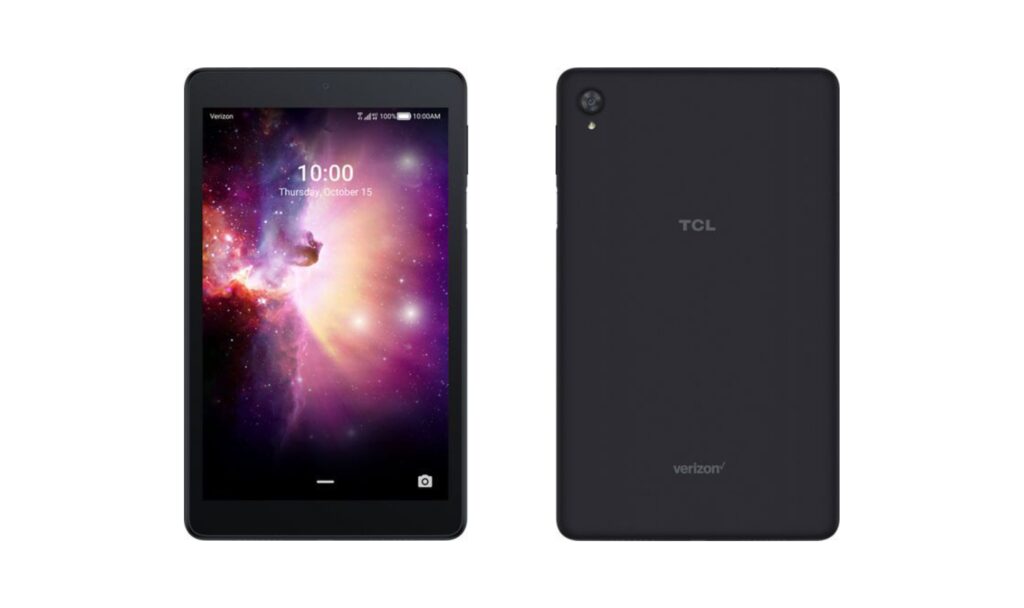
At IFA 2020, TCL announced a couple of tablets called TABMAX and TABMID for the European markets. Over a month later, Verizon Wireless has now rebranded the latter tablet as TCL TAB for the US market. It is priced at $199.99 and is already available for purchase on the carrier’s official website and from its retail stores across the country.
TCL TAB by Verizon Wireless
The newly launched TCL TAB is a budget Android tablet with an 8-inch FHD+ (1920 x1200 pixels) LCD panel with Asahi Dragontrail glass protection. Under the hood, it features Qualcomm Snapdragon 665 chipset paired with 3GB RAM and 32GB internal storage.
Although the company does not mention it, going by the pictures of the tablet, it seems to be made entirely of polycarbonate. That said, its rear panel sports an 8MP camera, whereas, on the front, it comes fitted with a 5MP sensor for selfies and video calls.
As for connectivity, the TCL TAB comes with dual-band WiFi 5, Bluetooth 5.0, and USB Type-C port. Unfortunately, it does not feature a 3.5mm headphone jack even though it is targeted for consuming media.
Anyway, it does come with Android 10, a 5,500mAh battery, support for microSD card (up to 256GB), and a side-mounted fingerprint sensor just like the new Apple iPad Air 4th Generation.
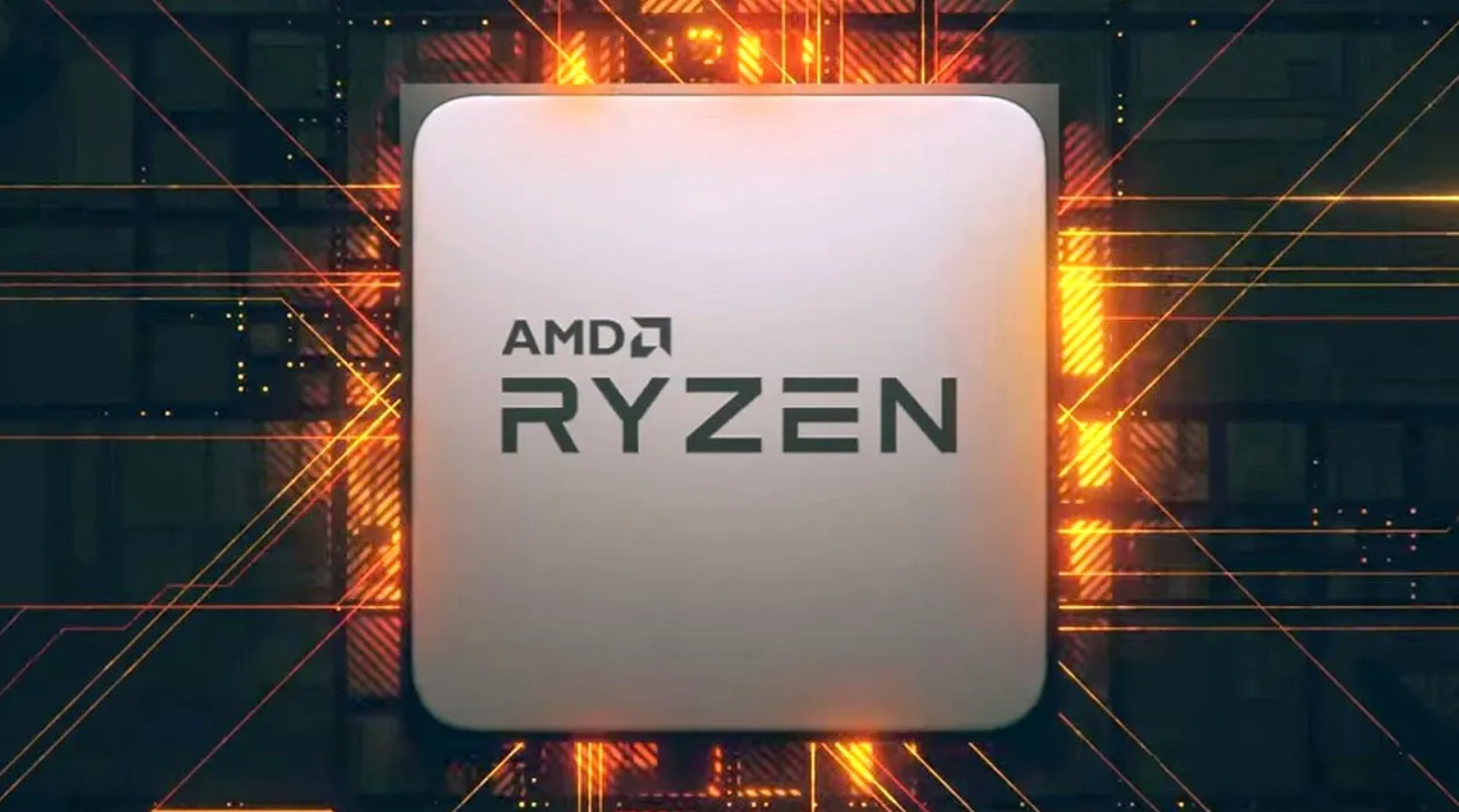
A new report has revealed that AMD is apparently working on better competing with its rivals, Intel and Nvidia, through the acquisition of Xilinx. Reportedly, the known chipmaker is in advanced talks with the FPGA maker for a deal of around 30 billion US Dollars.
For those unaware, Xilinx is known for its FPGA products and has shared a close relationship with AMD in the past. The company has worked with team red for the Xilinx deep learning solution on the AMD EPYC processors among other endeavors. FPGAs (Field Programmable Gate Arrays) are semiconductor devices that can be configured and offer various advantages over other types of devices like CPU or GPU in terms of flexibility with a varied workload.
According to a WallStreetJournalreport, the talks of acquisition are apparently in the advance stages, although no finer details regarding the deal are currently known. Although, the move might be AMD’s efforts to strengthen itself to better take on its primary rival Intel (for processors) and Nvidia (for graphics cards). Xilinx has made various breakthroughs within its 7nm processes and bringing its technology over to AMD might broaden the latter’s arsenal.
Furthermore, we could soon see a closely knit CPU+FPGA solutions in the near future through this buyout within AMD’s current chiplet designs. The EPYC platform would also benefit from this, with an integrated FPGA chiplets to boost AI workload performance in data centers. Notably, bringing Xilin under its roof might open doors for AMD in the automotive, aerospace and defense, data center, HPC, industrial, IoT, and communications markets that the FPGA maker currently operates within.
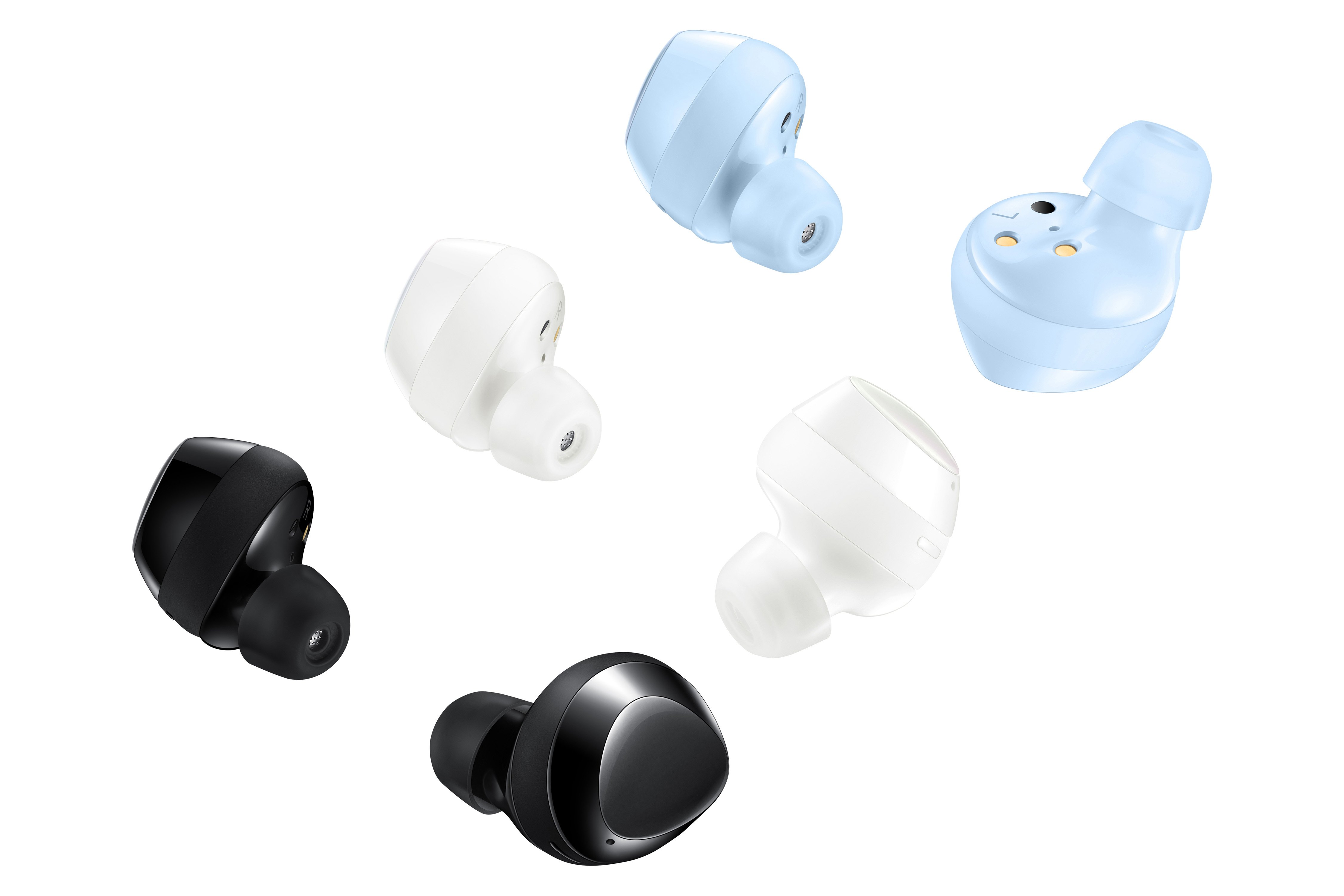
Not too long ago, Samsung had launched the Galaxy Buds Live that is currently its latest earbuds. Now, a new report has revealed that the upcoming earbuds from the company might be called Galaxy Buds Sound.
Samsung Galaxy Buds Live
According to a SamMobilereport, the earbud is in pre production at the moment, so it is still a while away from its official release. However, the South Korean tech giant has filed a new trademark application with the UK Intellectual Property Office for the name Samsung (Galaxy) Buds Sound. The trademark application is only for the name and doesn’t reveal any finer details regarding the product itself.
Furthermore, the application is filed under the Class 9 of goods, which also covers a wide range of products ranging from VR headsets and TVs to printers and even wireless earphones. So, Samsung can potentially use the name for many different categories of electronic gadget, but the “Buds” in the name is a clear indicator of it being a truly wireless earbuds hearables.
Samsung Galaxy Buds+
Unfortunately, we don’t have a lot of information to go on and the company might never actually use this name for its future earbuds. Samsung might just end up using another name altogether as well, with an example being the trademark for Bean and actually launching the Galaxy Buds Live. So take this report with a pinch of salt for now and stay tuned for more updates.
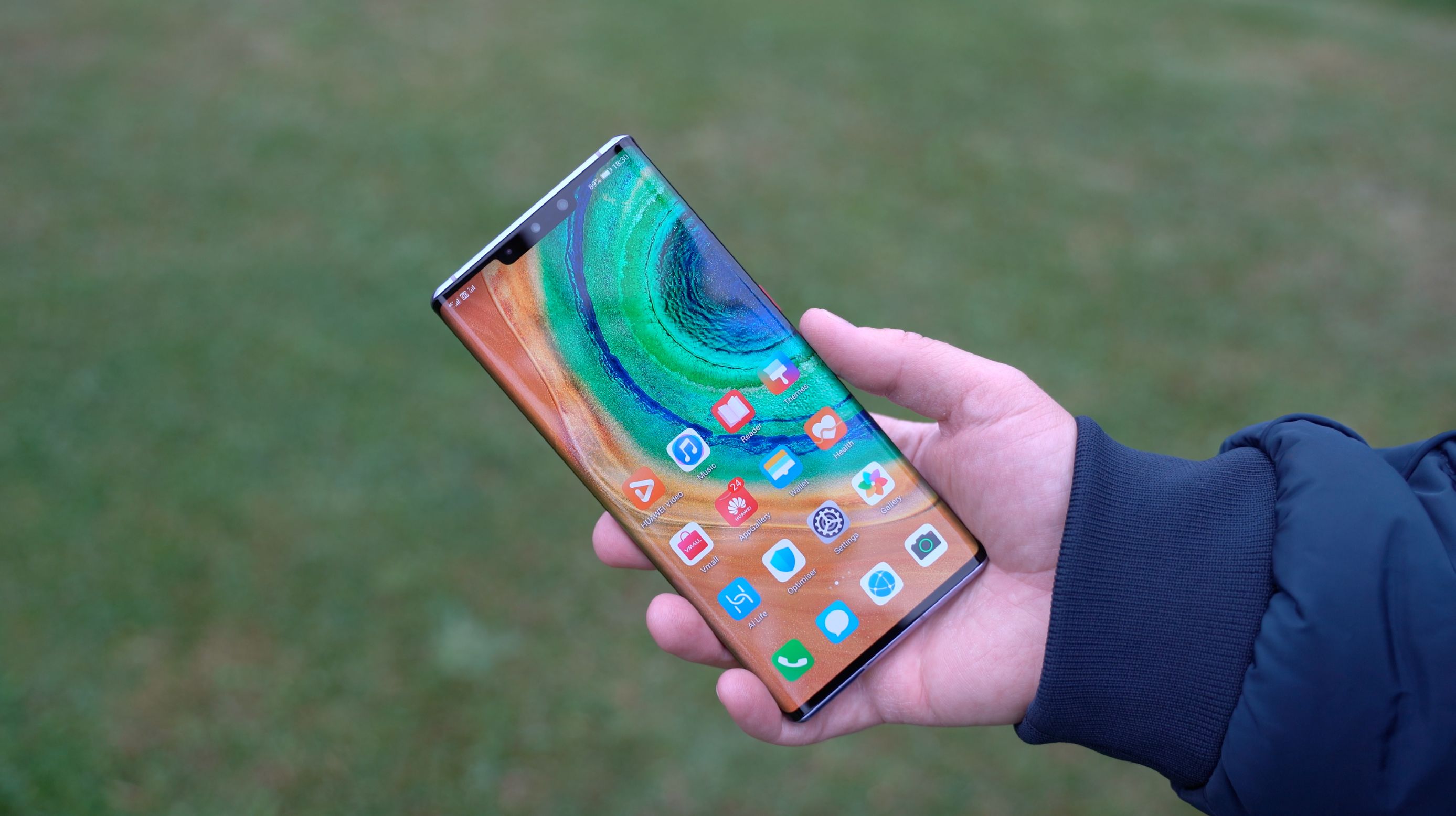
It has become difficult to get hold of a Huawei smartphone powered by the company’s own Kirin chipset ever since the United States government has imposed additional sanctions on the Chinese giant.
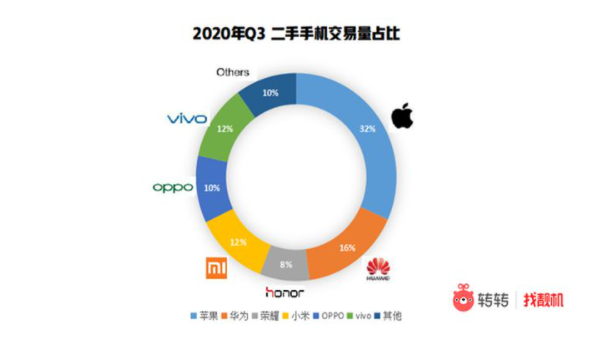
Because of this, the pricing of Huawei smartphones in the used devices or second-hand market has increased by more than 10 percent. This is interesting given that the pricing of the iPhone in the used devices market has declined.
According to the report, the pricing of Huawei devices powered by the Kirin chipset has increased by 12 percent from the month of June to September. Also, Huawei and Honor smartphones now cover around 24 percent of the second-hand market, on par with Apple.
The most popular smartphones from Huawei are 4G and 5G versions of the Mate 30 128GB model and Mate 30 Pro 128GB model, both of which have seen a price rise of 10 percent.
The report from China also shows that the value preservation rate of a variety of domestic smartphones exceeded 80 percent. Among them, the flagship model — Huawei P40 Pro 5G was ranked first with a retention rate of 84.96 percent.
For those unaware, Huawei lost access to chips because of the new sanctions from the United States. The company has stockpiled on Kirin chips but has a limited quantity that could last a few months.
Meanwhile, the company is gearing up to launch its upcoming flagship smartphone — Mate 40 in the coming weeks. The device will be powered by the Kirin 9000 chipset, which could be the company’s flagship chipset.
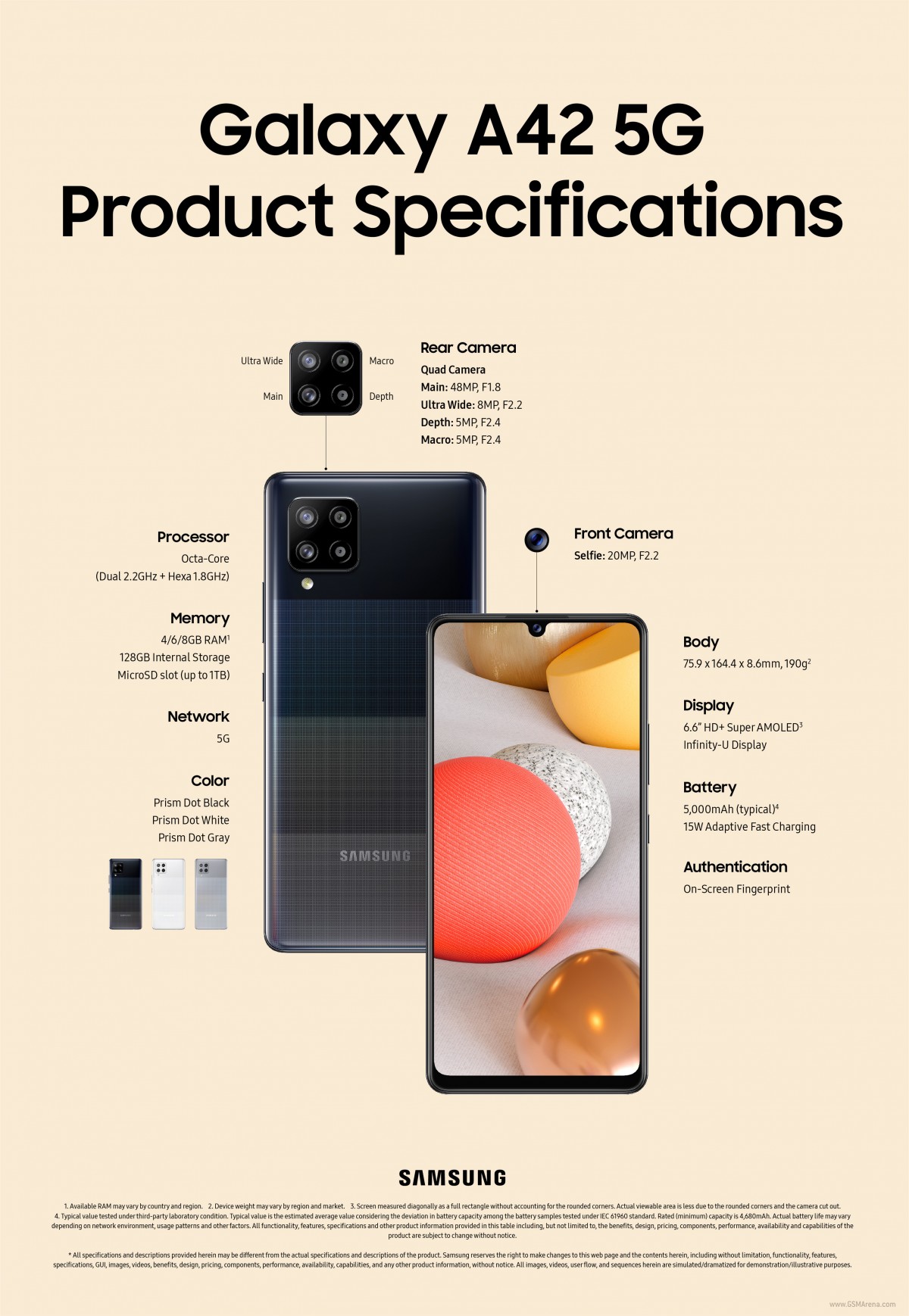
According to a GSMArenareport, the South Korean tech giant released an official image that detailed the complete specs of the upcoming affordable 5G device. The Galaxy A52 5G sports a 6.6 inch HD+ AMOLED Infinity U Display with a 20 megapixel selfie camera on the front. On the rear, a quad camera setup can be found with a 48 megapixel primary sensor (f/1.8), 8 megapixel ultra wide angle lens (f/2.2), 5 megapixel depth sensor (f/2.4), and another 5 megapixel macro lens (f/2.4).
Under the hood, the Samsung 5G handset runs the newly announced Qualcomm Snapdragon 750G SoC and is powered by a large 5,000mAh battery that supports quick charging up to 15W. For memory, customers are offering 4GB, 6GB, and 8GB of RAM configurations along with 128GB of internal storage, which is expandable via a microSD card slot.
The Galaxy A52 5G also houses an in display fingerprint scanner as well and will arrive in multiple color variants including, Prism Dot Black, Prism Dot White, and Prism Dot Gray. Unfortunately, while the specs have been showcased in the image, the company has yet to reveal an official launch date. However, we can expect the device to be more affordable than the previously launched, the Galaxy A51 5G.
Samsung launched the Galaxy A21s in the month of May in Europe as the world’s first smartphone powered by the company’s in-house Exynos 850 chipset. A month later, this handset made its debut in India in two storage configurations- 4GB + 64GB and 6GB + 64GB respectively, Now, nearly four months later, the South Korean tech giant has unveiled a new 6GB + 128GB variant of Galaxy A21s in the country.
The latest version of the Galaxy A21s only differs in terms of its internal storage and RAM. Apart from these two changes, this is exactly the same device that launched a few months back in India and other regions.
That said, the newly announced Galaxy A21s in 6GB + 128GB storage configuration is priced at ₹17,499. As part of the launch offer, Samsung is offering a ₹750 discount while buying it via ICICI Bank credit/debit card EMI option.
The base 4GB + 64GB and the former high-end 6GB + 64GB variants of this phone currently retails for ₹14,999 and ₹16,499 respectively. All three versions of this device can be bought in either White, Black or Bluet color option.
Last but not least, unlike the Galaxy M and Galaxy F series of Samsung smartphones, which are exclusive to Amazon, Flipkart, select offline retailers, and Samsung online store, the Galaxy A21s can be bought from literally anywhere.
Smartphone manufacturers have been trying to make several design changes to make their devices stand out from the competition. There are major developments happening for the front-facing camera module, from pop-up to under-display sensor.
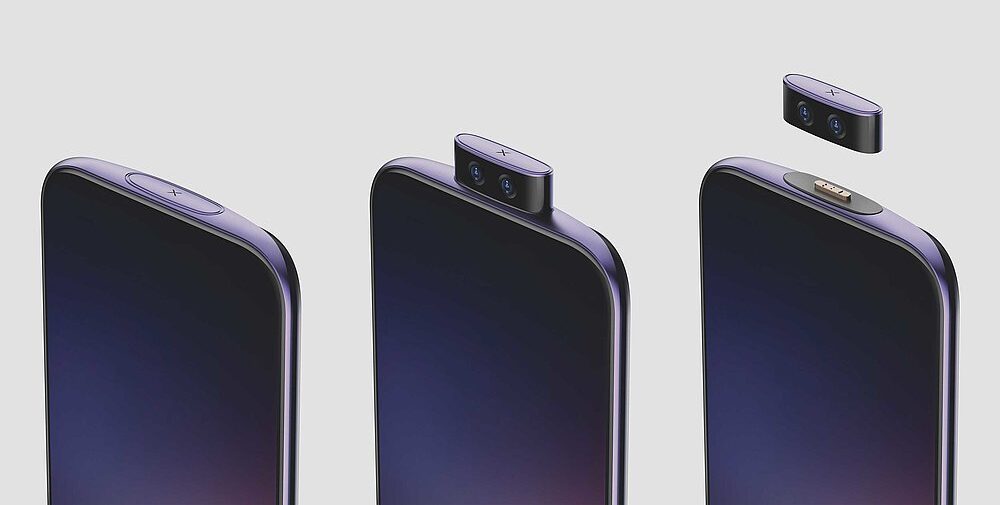
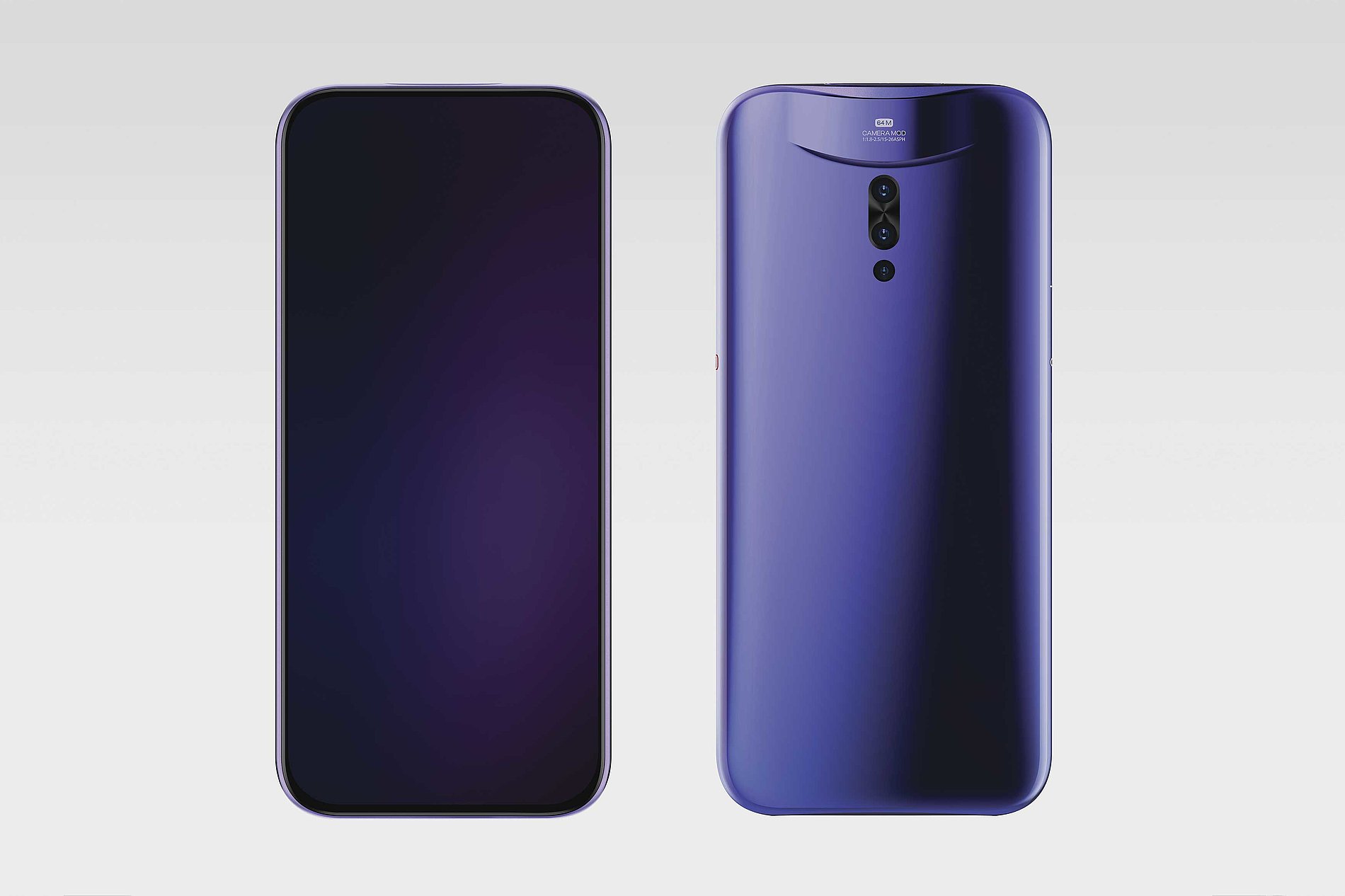
At the same time, Vivo has developed a new concept smartphone, dubbed IFEA that has a detachable front camera module. Now, this modular design from the Chinese company has won the Red Dot Design Award.
Based on the description on the award landing page, this new IFEA smartphone design from Vivo is an attempt to offer a new photography system and experience which is totally different from what is usually offered with a smartphone.
IFEA is designed to equip smartphones with a detachable front camera. It integrates enhanced user-friendly shooting features and the users can create and record images and videos anytime and anywhere.
Further, the device can also be controlled through voice commands, in what is said to be an interactive and intuitive design. IFEA has multiple accessories and support mechanisms with different modes to increase stability and storage.
So far, it seems that the phone is just a concept design and the company has no plans to make it available commercially anytime soon. If Vivo is indeed planning to launch it in the market, we should hear from the company soon.
Meanwhile, the China-based smartphone maker is gearing up to launch the Vivo X60 series phones in its home market in a couple of months, which will be the successor to the Vivo X50 series devices launched in June this year.
OnePlus is gearing up to launch its OnePlus 8T flagship smartphone in the coming days and ahead of the launch, the company has already showcased the device in Aquamarine color, which looks like a shade of green.
Now, leakster Ishan Agarwal has shared two renders of the upcoming smartphone, showcasing the device in Lunar Silver and Aquamarine. This is probably the first look at the Lunar Silver OnePlus 8T.
In terms of design, the phone features a quad-camera setup on the back which is placed in the top-left corner. The camera sensors are housed inside a rectangular module that has rounded corners, along with two LED flash.
As per the leaks, the OnePlus 8T will come with a 6.5-inch S-AMOLED Full HD+ display that offers a 120Hz refresh rate and 20:9 aspect ratio. Under the hood, it is powered by Snapdragon 865 SoC, along with up to 12GB of RAM and 256GB internal storage.
In the camera department, the phone features a 48MP primary sensor, a 16MP ultra-wide lens, a 5MP macro shooter, and a 2MP monochrome lens. On the front side, there’s a 16MP camera for taking selfies and video calling.
It is likely to come running the latest Android 11 operating system out-of-the-box with the company’s own OxygenOS on top. The phone is powered by a 4,500mAh battery along with support for Warp Charge 65 fast charging technology.
Interestingly, OnePlus CEO Pete Lau has already confirmed that the company won’t be launching a Pro variant of the OnePlus 8T smartphone because there’s no room for major improvements over its predecessor.
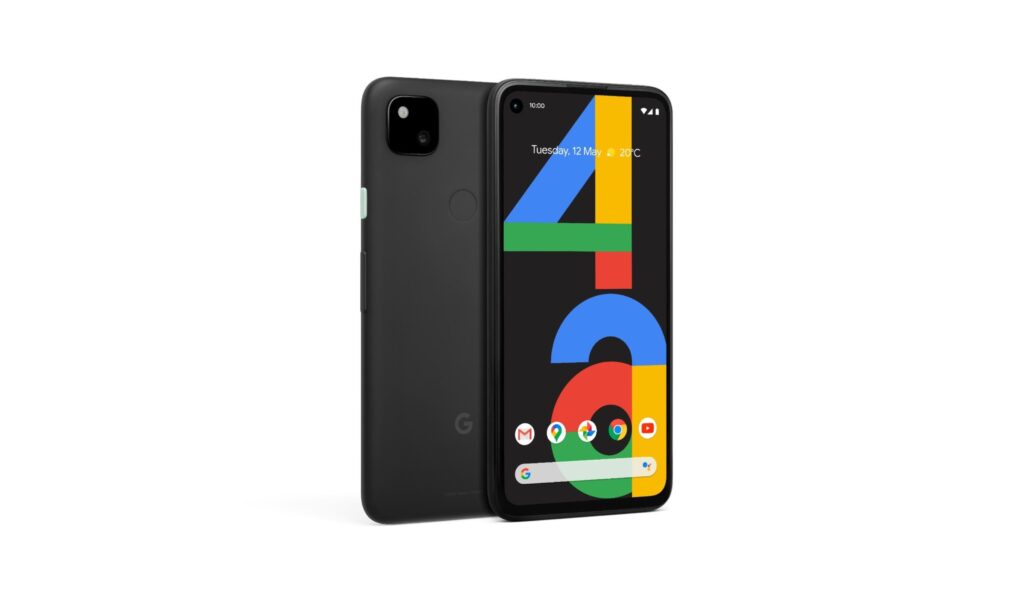
Google launched the Pixel 4a in the month of August in its home country after a long delay. At the same time, the internet search giant also announced its budget handset for India, however, it neither revealed its availability nor its price. But now, after two months from the device’s initial debut, the company has finally confirmed that Pixel 4a will be available in the world’s second-largest smartphone market from October 16 along with Nest Audio.
Both of them can be yours for an introductory price tags of ₹29,999 ($410) and ₹6,999 ($96) as part for Flipkart Big Billion Days sale. Thereafter, they will sell for ₹31,999 ($437) and ₹7,999 ($109) respectively. For comparison, the predecessors of these two devices debuted for ₹39,999 ($547) and ₹9,999 ($137).
The Google Pixel 4a is one of the best-rated budget smartphones in the US for its $349 asking price. But in India, even at an introductory price of ₹29,999, it will be competing against the likes of OnePlus Nord, realme X3/X3 SuperZoom, Redmi K20 Pro, and realme 7 Pro to name a few. All of these handsets are cheaper than the Pixel 4a and offer better hardware.
However, where Google excels is in the camera as well as the software department. The Pixel 4a, with its single 12.2 Sony IMX363 sensor performs better than most handsets, as per reviews by major publications.
But it is powered by an older Qualcomm Snapdragon 730G chipset paired with 128GB UFS 2.1 storage and 6GB RAM. This silicon is not bad but the competition offers many powerful chips like Snapdragon 855/855+ and Snapdragon 765G.
On the plus side, the Pixel 4a comes with a manageable 5.8-inch OLED display and weighs only 143g, thanks to its polycarbonate build. It even comes with a 3.5mm headphone that other devices in this range lack. In other words, it is a niche device and is definitely not meant for everyone.
Talking about Nest Audio, it is the direct successor to the original Google Home launched back in 2017 with a revamped design. Even the international reviews for it are positive just like the Pixel 4a.
That said, though it comes in five colors, in India, Google will be only selling the Chalk and Charcoal options. Apart from Flipkart, it will be also available at Reliance Digital and Tata Cliq retail stores spread across the country.
BOE, one of the leading display maker in China, has been trying to enter the list of suppliers for Apple for some time, and now it seems that the company has finally been able to do so with the upcoming iPhone 12 models.
As per the latest report, BOE has supplied flexible OLED panels for the iPhone 12 models to Apple. However, the order is said to be of limited quantity only as LG Display is still the tech giant’s second choice for display suppliers and Samsung Display being the primary supplier for the display panel.
Earlier, it was reported that the BOE, which is already a display supplier for MacBook and iPad, will be supplying OLED screens for the upcoming iPhones as Apple tries to reduce dependence on Samsung. But some reports indicated that the Chinese firm didn’t meet Apple’s standard but could enter the supply chain later.
Now, the company is expected to play a bigger role as an iPhone display supplier for next year’s models. China-based BOE has already set up a new production line called B11 (aka Apple line) which is specifically dedicated to the production of OLED panels for iPhones in the second half of 2021.
Meanwhile, Apple is all set to launch its next-generation iPhone 12 models on 13th October and has already sent out invites. This time, the company will be launching four models — all of which have an OLED screen and 5G connectivity support.
Realme is gearing up to launch a new smartphone series, dubbed as Realme Q2 series. While the launch date has not been confirmed by the company, reports indicate that it could go official on 13th October in China.
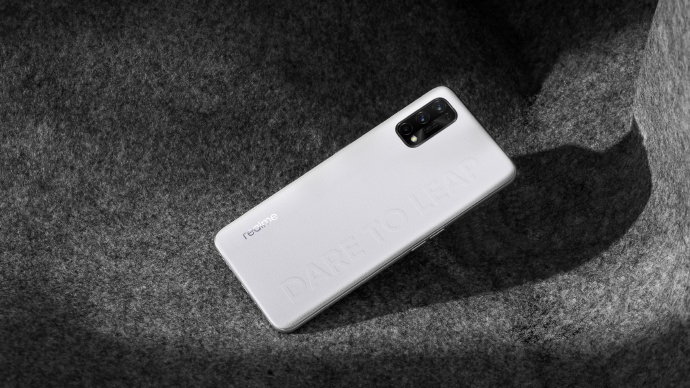
Now, Xu Qi, Realme’s Vice President and President of Global Marketing has shared some details about the upcoming device. He has confirmed that the Realme Q2 will come in a trendy design with a leather finish.
The photo of the phone’s back panel has also been shared by Xu Qi, which showcases the smartphone in a light grey colored leather finish. There’s also a fine print of “DARE TO LEAP”, the company’s tagline or motto as well as Realme branding.
As per the leaks, the Realme Q2 features a 6.5-inch Full HD+ LCD punch-hole display with a 120Hz refresh rate. Under the hood, it is powered by a 2.4GHz octa-core processor but the chipset name is not yet known. It could pack MediaTek Dimensity 1000+ SoC with support for 5G connectivity.
The phone is expected to come with a triple-camera setup on the back, including a 48-megapixel primary sensor, an 8-megapixel secondary lens, and a 2-megapixel sensor. On the front side, there will be a 16-megapixel snapper for taking selfies and video calling. It is powered by a 5,000mAh battery with fast charging support.
On the other hand, the Pro variant is expected to come packed with up to 8GB of RAM and 256GB of internal storage. It will feature a quad-camera setup on the back which includes 48MP + 8MP + 2MP + 2MP sensors. It is also said to come with support for 65W fast charging technology.
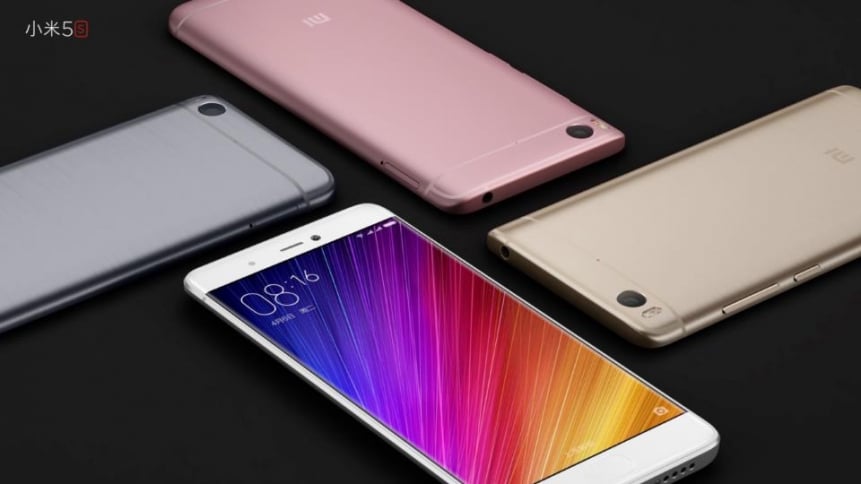
It has been a little over four years since Xiaomi launched the Mi 5 and Mi 5 Plus. We have had four successive flagship series since then in the Mi 6, Mi 8, Mi 9 and Mi 10 series. However, there are persons who still hold on to their Mi 5 models. But getting new OS update from Xiaomi is presently out of the question. The models originally boot Android 6.0 Marshmallow but were upgraded to Android 8.0 Oreo-based MIUI 10 as its final major upgrade.
However, if you own the Mi 5 or Mi 5 Plus and would like to experience the latest Android version on your good old Mi 5 or Mi 5 Plus, Lineage OS has come to the rescue. LineageOS 18.0 has ported the Mi 5 to Android 11.
A support page for the Mi 5 at XDA Developers (via 1, 2) claims that even with the third-party arrangement, practically everything works. Also, LineageOS 18.0 supports all configurations of the Mi 5. The custom ROM is in a beta phase anyway and you should expect some bugs and glitches.
On the other hand, the Mi 5s Plus ROM, which is not the same as the one for the Mi 5, is in a testing phase. Also, the Wfd Service does not work with this build.
In case you plan on porting to this custom ROM, do ensure that you save all your data before installing either of these ROMs.
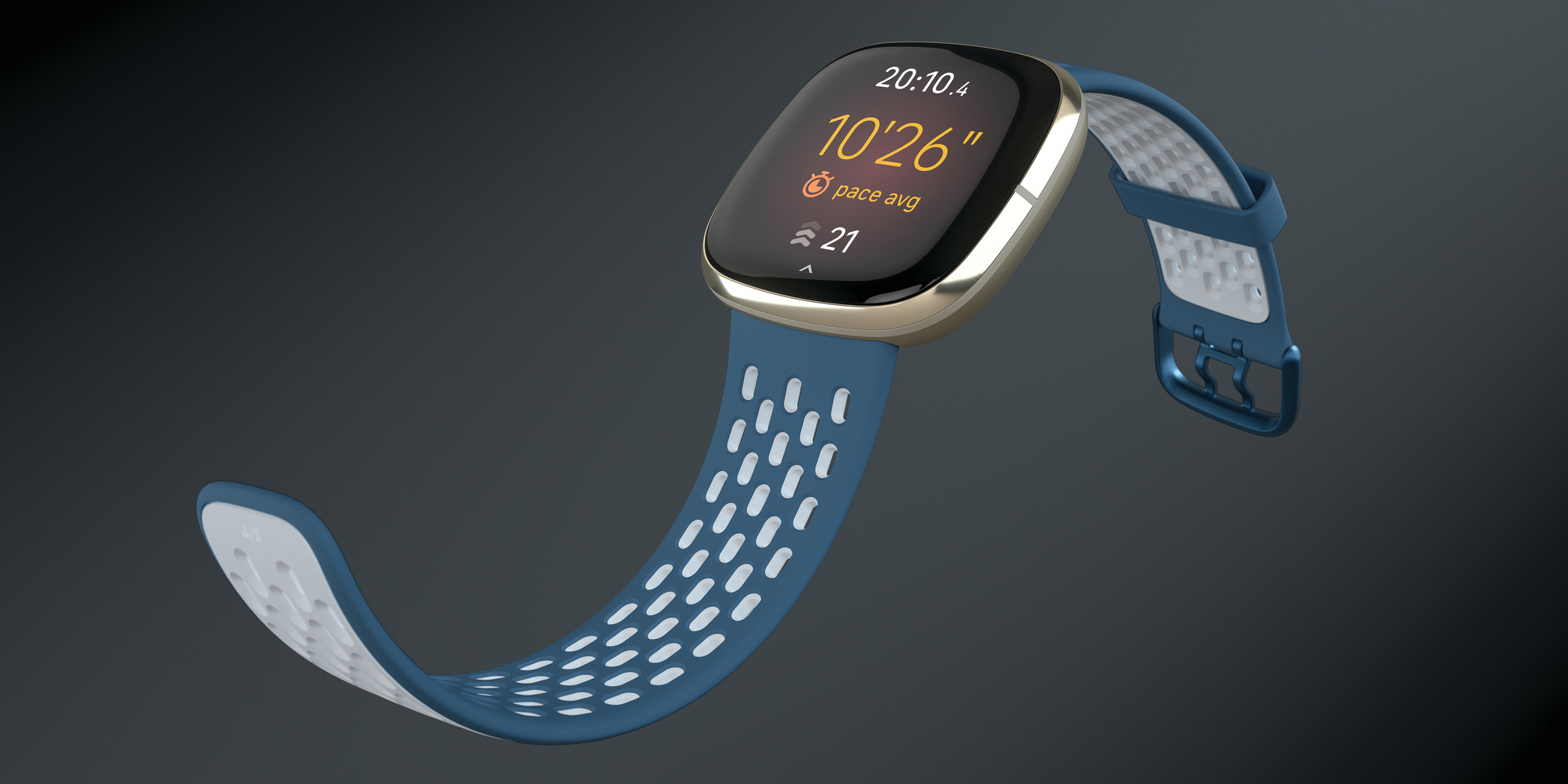
As the most expensive Smartwatch of the company yet, Fitbit Sense finally gets the ECG App functionality in the US, Germany, and UK. The App, which was not available at launch, was approved by both the FDA and EU last month.
As reported by Tizenhelp(via 9to5Google), the Smartwatch has already started getting the update in the US, Uk, and Germany. The report says that countries like India are also on the list but the exact date is unknown. For the unaware, Fitbit launched the Fitbit Sense Smartwatch back in August at $329. The Smartwatch has advanced health tracking features like ECG, EDA, and support for Google Assistant, and Alexa.
However, the ECG feature was not available at the launch as the company had an approval pending at the USA’s FDA(Food and Drug Administration). And the EU’s CE marking(EEA health standard). That said, the company is now rolling out the feature as promised. Besides, the report says the company conducted multi-site clinical trials across the US to submit data for regulatory approval.
ECG feature- How it works?
Coming back, the new update will be available to all users in the above-mentioned countries soon. You can also install it manually by downloading the app from Fitbit official website or trying it via the Fitbit app on your Smartphone. After installing, go to Assessments & Reports->Discover Tab->Heart Rhythm assistant. After accepting terms, open the ECG app on Fitbit Sense and complete setup. You have to put your fingers on either side of the stainless steel ring of the watch. This will take a reading of your heartbeat to help you access heart rhythm and detect any atrial fibrillation in the future.
Fitbit Sense Health and tracking features
Anyway, the Fitbit Sense is the first Smartwatch to have ECG(Electrocardiogram), and EDA(Electrodermal Activity) sensors. According to Fitbit, it has 98.7% and 100% successful rate of AFib, and Heartrate respectively. AFib is commonly an irregular heartbeat that can lead to several heart-related complications. However, EDA measures the sweat level on the skin to monitor stress levels.
Other features on the Smartwatch include Exercise modes, 24/7 100% accurate heartrate, skin temperature sensor, SpO2 for blood Oxygen levels, and more. The Smartwatch is already available in the US but will be available in Europe from October 16.
Huawei is expected to unveil its flagship Mate 40 series any moment from now. The anticipated models include the Mate X2 and Mate X2 Pro. The company may also introduce another flagship product, this time the Mate X2 foldable phone.
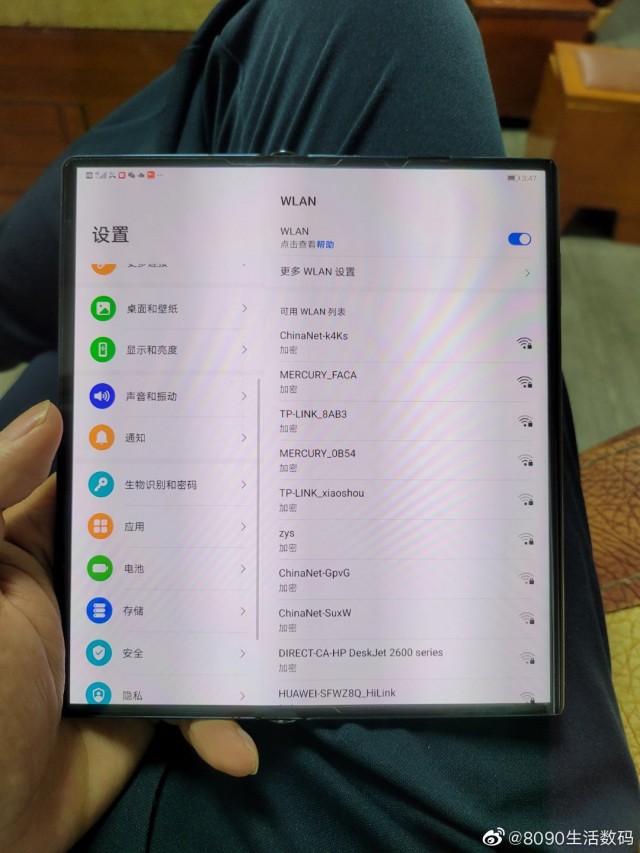
There is no official word on when the Mate X2 will be launched but there are speculations it won’t hit the market until next year. It could also make an appearance alongside the Mate 40 series. A purported hands-on image of the Mate X2 has leaked online. The leak which appeared on Weibo thanks to Chinese blogger @8090 Life Digital, gives us a glimpse of the alleged Mate X2 in its fully unfolded state. We must note that the device looks just like the Mate Xs which in turn was nearly identical to the Mate X.
The phone appears to utilise an outward folding design even though this is at variance with recent patent filings which point to an infolding design. The foldable design adopts the same screen protector as it predecessor.
The Huawei Mate X2 is rumoured to feature the same 8-inch screen as the Mate X alongside a rear-mounted camera setup. The foldable smartphone is also expected to pack the flagship Kirin 9000 chipset which will also be used by the Mate 40 series.
It appears the OnePlus Buds Z is not the only pair of earphones OnePlus plans to announce at its product launch next week. A leak has revealed the OnePlus Bullets Wireless Z will get a special edition. This new version will launch as the Bullets Wireless Z Bass Edition.
Exclusive for @91mobiles: #OnePlus is releasing 2 Wireless Earphones soon.
The new earphones will have a heavy focus on bass according to Ishan Agarwal, the leaker who revealed the info to 91Mobiles in an exclusive post. He says the core features such as the drivers, magnetic control, and fast charging technology will be similar to that of the original which was announced in April. However, the battery life will be a little less, dropping to 17 hours from the 20-hour battery life of the standard version.
There is no mention of the design but we expect some minor differences will be present. With respect to price, the Bullets Wireless Z Bass Edition should also be pretty affordable. The Bullets Wireless Z launched for $49.95 in the US (INR 1,999 (~$27) in India) but is now being sold for $29.95, so the Bass Edition should be really affordable too.
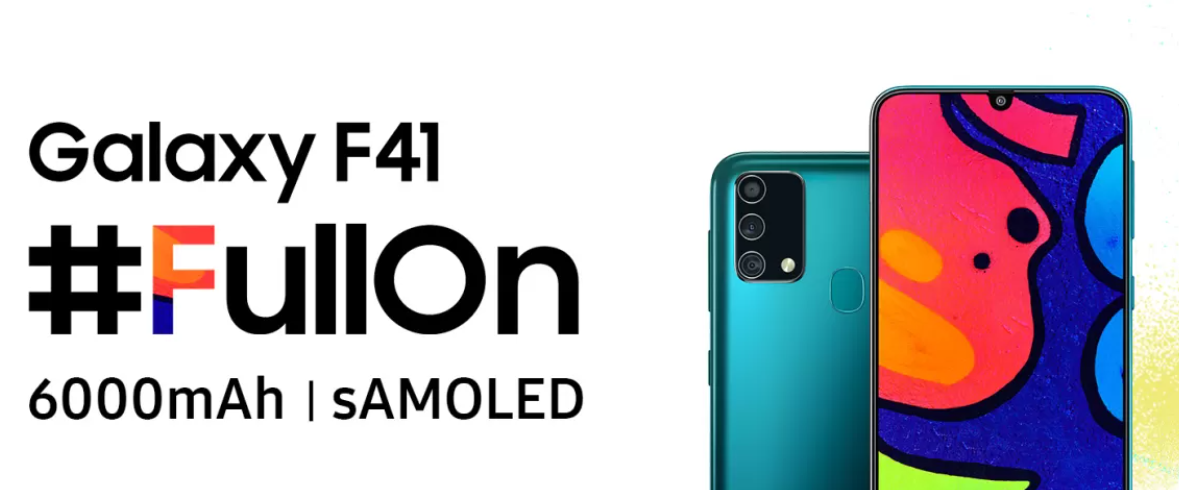
Samsung has finally launched the Galaxy F41 smartphone in India. The device packs in a 64MP rear camera sensor, 6,000mAh battery, and more. It goes on sale starting October 16 as a part of Flipkart’s Big Billion Day Sales and will be available at an exciting introductory price.
Design, Colors, ports
After teasing the device a while back, Samsung unveiled a new entrant of the F series of smartphones today. Design-wise, the first entrant of the F series, Galaxy F41, looks similar to the Galaxy M31. Weighing in at just 191g, the device has 8.9mm thickness. It has a water-drop style notch display on the front, and triple-rear cameras, a fingerprint sensor at the back.
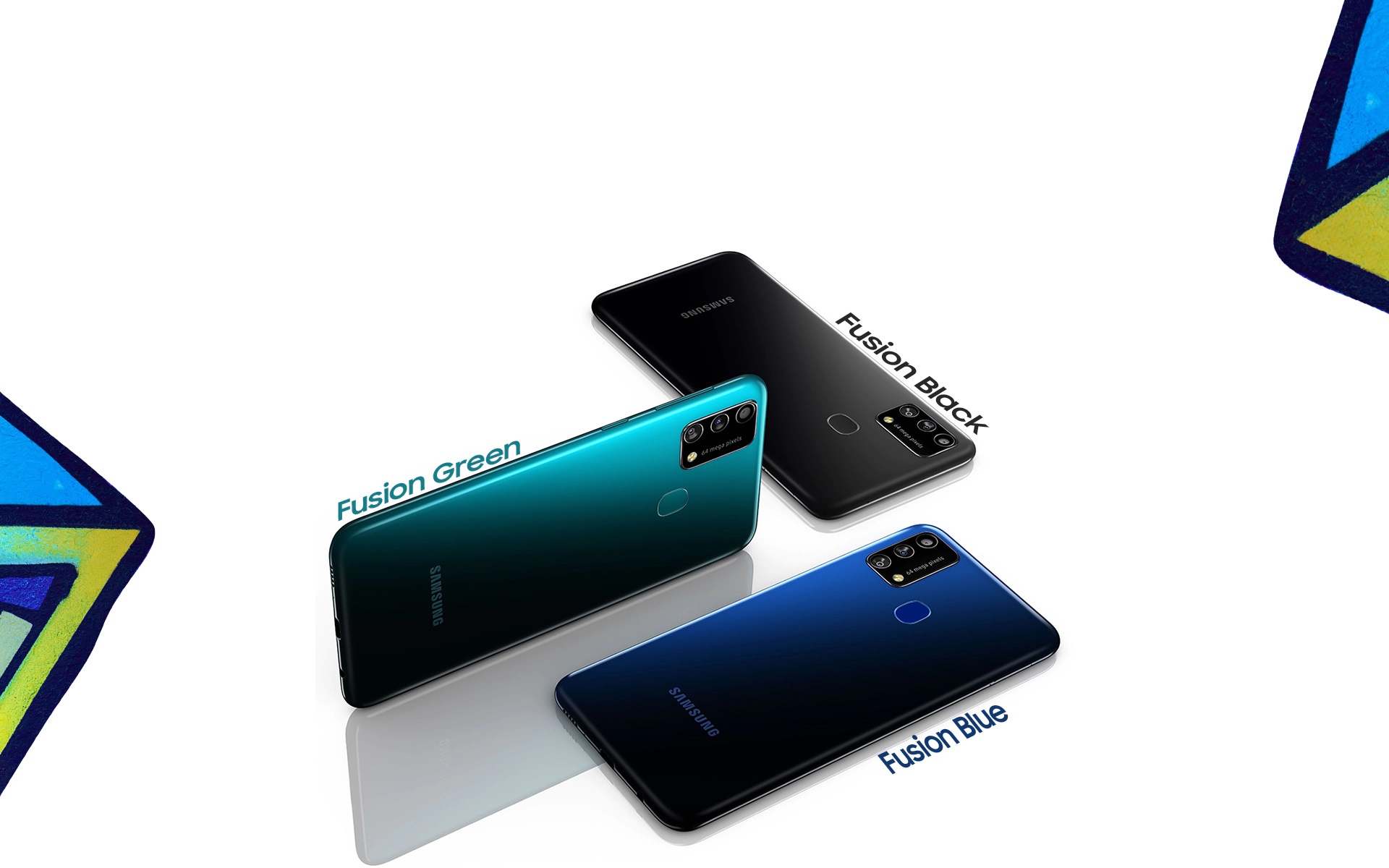
Samsung Galaxy F41 Colors Credit: Samsung
There are volume and power buttons to the right. It also features a USB-C port, speaker grille, and 3.5mm audio jack. As for the color variants, there are three- Fusion Green, Fusion Blue, and Fusion Black.
Specifications
The Galaxy F41 features a 6.4-inch FHD+ sAMOLED Infinity-U display. The display has a peak brightness of up to 420 nits, 110% NTSC color gamut, and 78960:1 contrast ratio. Under the hood, it is powered by the ever-existing Exynos 9611 SoC paired with a single 6GB LPDDR4x RAM. However, the storage variants are either 64/128GB.
If we turn the device back, we have the squircle layout housing three camera sensors and a flashlight. The primary sensor is a 64MP, while the other two are an 8MP ultra-wide with 123° FOV, and a 5MP sensor for live focus(depth). The selfie shooter at the front also supports live focus, smart beauty features and has a 32MP sensor.
Camera features, and Connectivity
That said, the camera features include Single take(burst mode), bokeh, filters, smart crop, and best moments for rear photo. Video mode has options like 4k(rear), Original video, hyperlapse, and boomerang. Further, connectivity options include 4G LTE with 2 SIM slots and a MicroSD slot for expansion up to 512GB. The device also has Wi-Fi 5, Bluetooth 5.0, and GPS for navigation.
All this is backed up by a huge 6,000mAh battery with support for 15W charging. The device runs Android 10-based One UI out of the box and sadly doesn’t come with Android 11 pre-installed. Also, Samsung’s website says the device will come with One UI 2.1 and the current stable 2.5 version. That said, we can expect One UI 3 based on the Android 11 update definitely in the future.
Price, offers, and Availability
As for the price, its original price is ₹16,999(~$232) for 6/64 and ₹17,999(~$247) for 6/128GB. But the company has an introductory offer on the occasion of Big Billion Days. The offer is a ₹1,500 discount on both the variants bringing their price down to ₹15,499(~$212) and 16,499($225) for 6/64 and 6/128GB respectively.
Other offers include an additional 10% discount on SBI card, pay only 70% of the value via Flipkart Smart Upgrade plan for payments via Credit card, and Credit card for EMI. As per the plan, customers can buy a new phone on Flipkart but return the existing one after 12 months.
The Samsung Galaxy F41 will go on sale from October 16 through Flipkart. However, we can also expect to sell via Samsung online and offline stores.
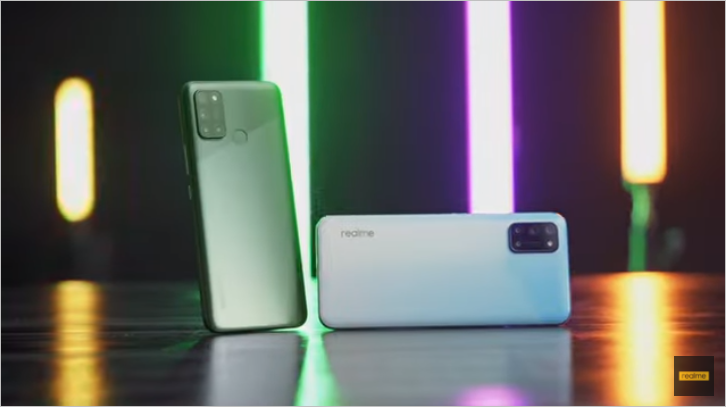
Realme took the wraps off the Realme 7i on Wednesday in India alongside several other AIOT products. The company has now released an early unboxing video of the device giving us a glimpse of the device, its key specs and what is inside the box.
The video shows that the device will ship with a TPU case, an 18W charging adapter and USB-C chord. You also get the option of a Fusion Green and Fusion Blue color variant on the device.
As a reminder, the Realme 7i packs a 6.5-inch HD+ LCD screen with 90Hz refresh rate. The display feature a punch-hole design located at the upper-left corner and which houses a 16MP selfie camera.
The phone equally packs a rear-mounted fingerprint sensor as well as a Quad-camera setup. The camera includes a 64MP primary sensor as well as an 8MP ultrawide, 2MP macro, and 2MP depth sensor.
The premium mid-ranger is powered has a Snapdragon 662 SoC paired with 4GB RAM. There are two storage options – 64GB and 128GB. But it also comes with a dedicated slot for a microSD card for storage expansion. The smartphone runs on Android 10-based Realme UI. Under the hood, there is a 5,000 mAh battery that charges at up to 18W through a USB-C port. Check out the unboxing video below.
The Realme 7i is priced at Rs.11,999 ($165) and Rs.12,999 ($180) for the 64GB and 128GB variants, respectively.
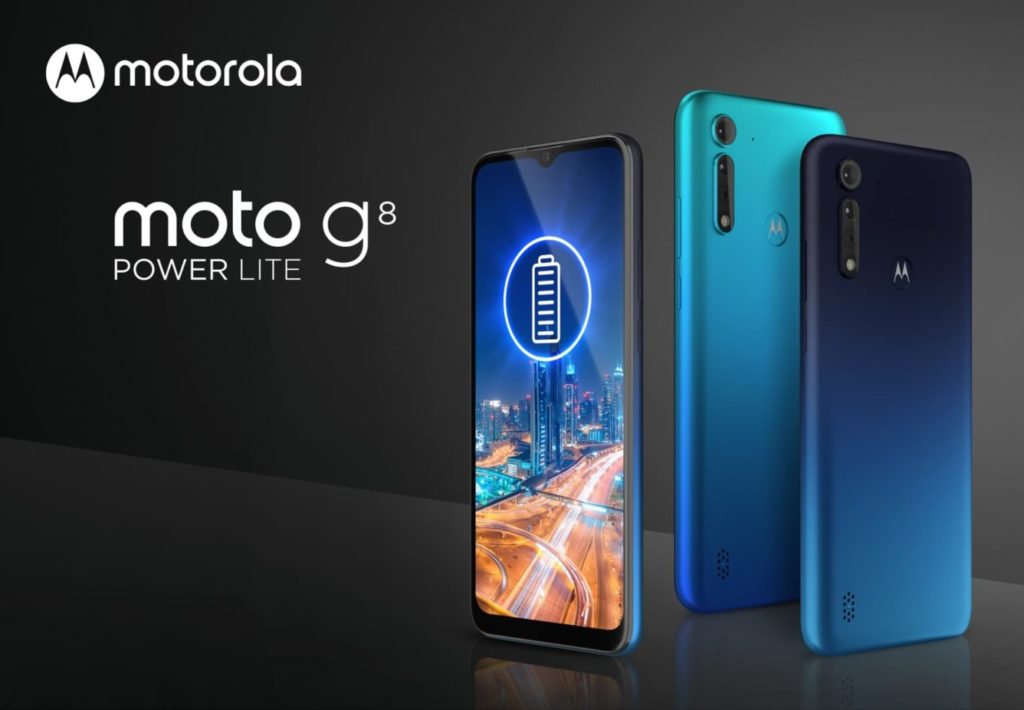
Motorola launched Moto G8 Power Lite in India in late May. Surprisingly, for a phone releasing in 2020, it came with Android 10 out of the box. Now, nearly five months after its launch, the handset has finally begun to receive last year’s Android 10 in the country while some devices are awaiting for their stable Android 11 build.
Moto G8 Power Lite
A few years back, Motorola was known for delivering faster Android updates. It was also one of the few companies to provide regular security patches. But that is not the case anymore.
The company has become so bad in software that it launched Moto G8 Power Lite with Android Pie after 8 months from the release of Android 10. What’s even worse is it has taken the firm almost five months to deliver a year old Android update.
Nevertheless, it is here now in India and if you own this smartphone, then make sure to check for the OTA update from Settings. That said, as it is being currently rolled out in batches, it may take time to reach your unit. Therefore, don’t worry if you haven’t received it yet.
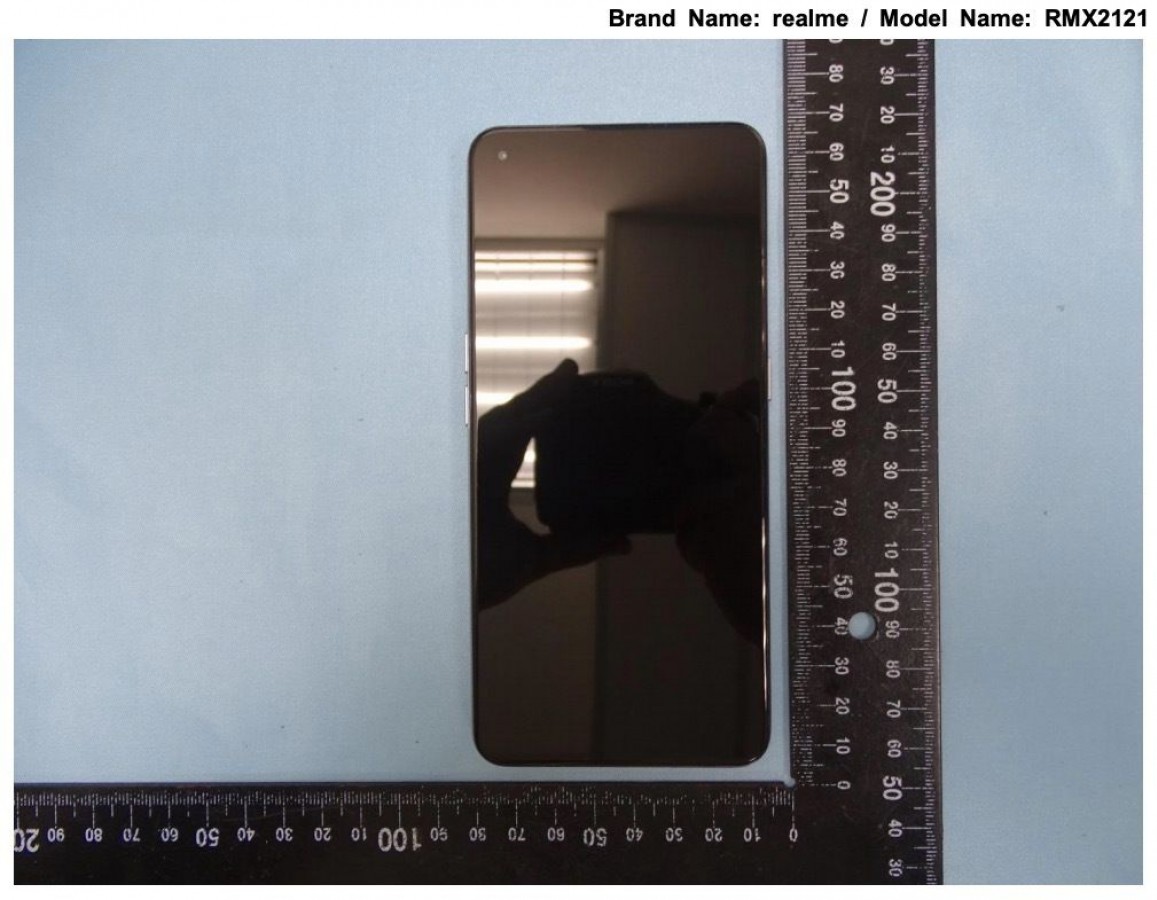
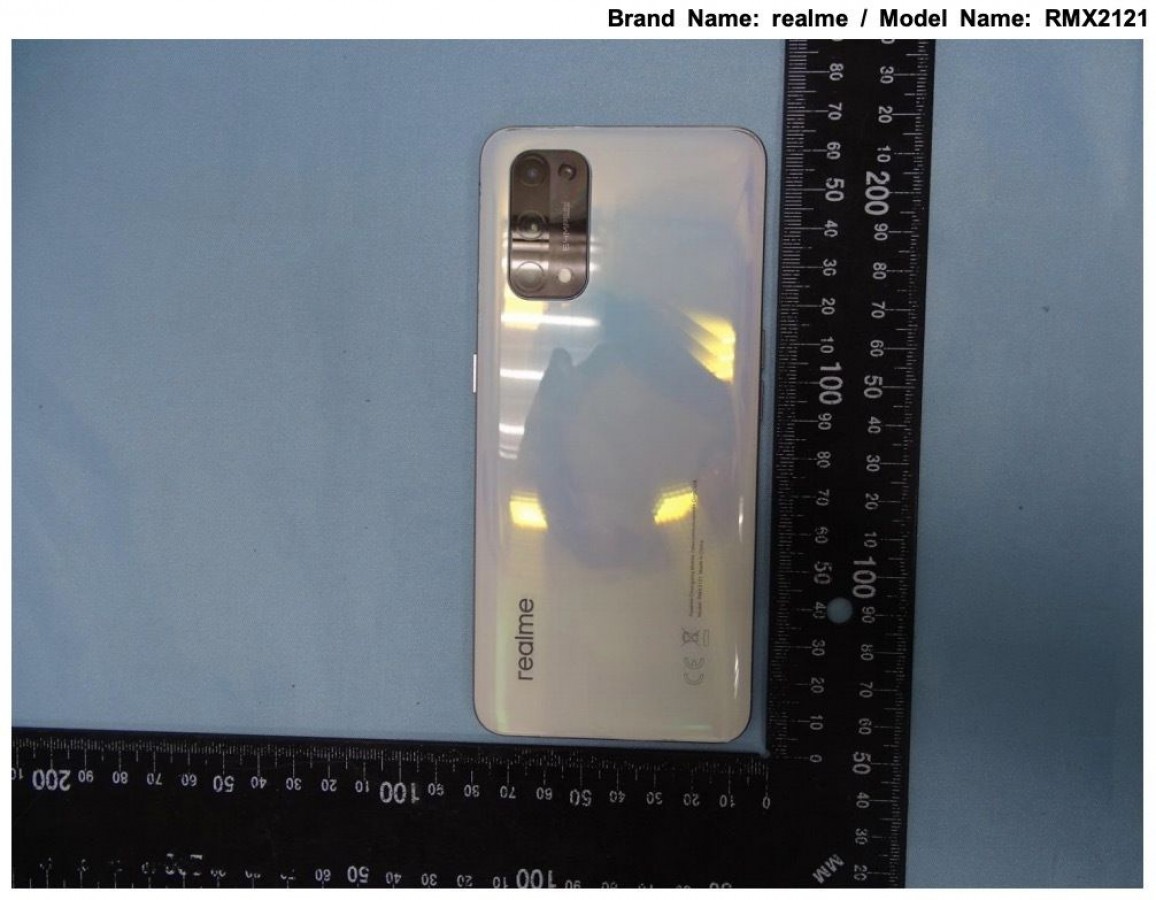
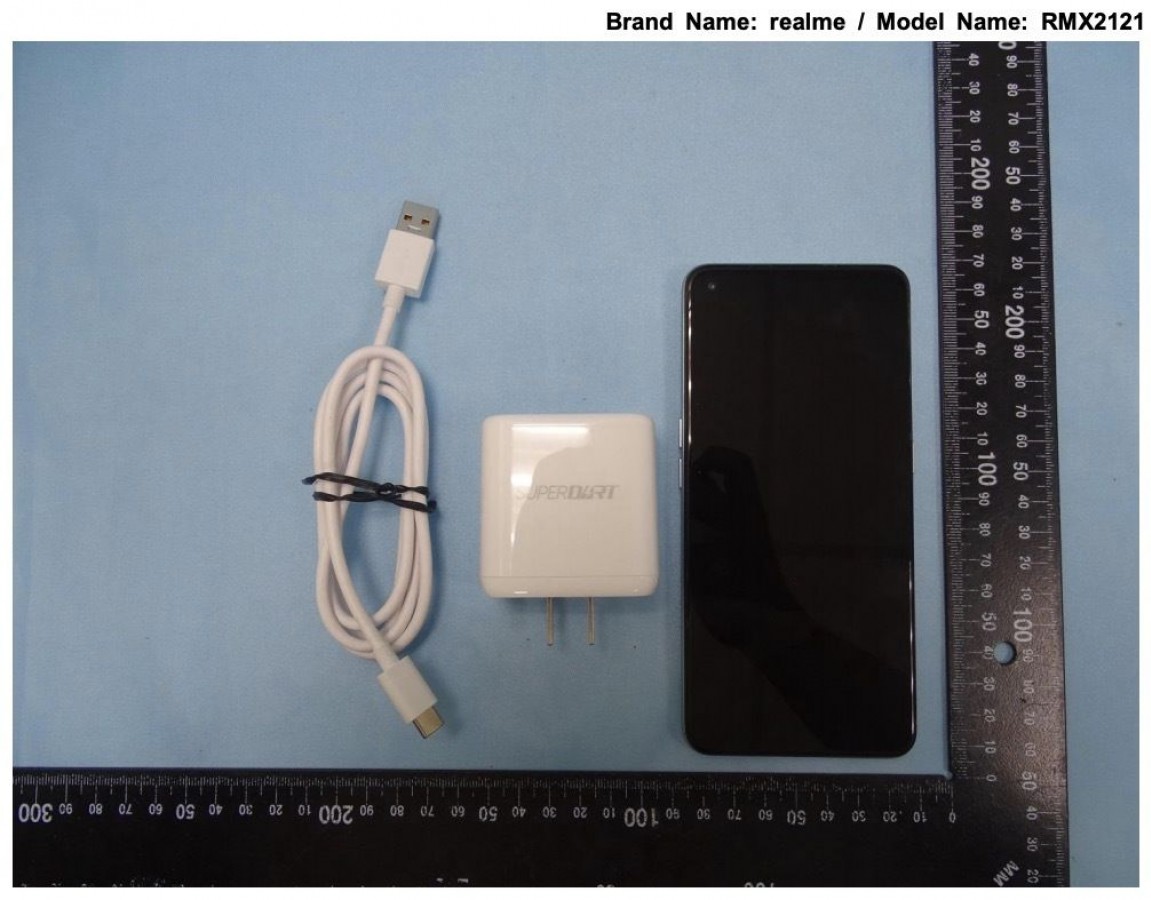
Realme X7 5G was launched alongside the Realme X7 Pro in China last month. The company had earlier disclosed hat a number of models will be introduced in Europe and we suspect the X7 Pro will be one of the models to hit the old continent. Apparently, the model will also be launched in several markets as it was listed on Thailand’s NBTC agency last week. Right now, a Realme model adopting the model number RMX 2121 has been spotted on Taiwan’s NCC agency.
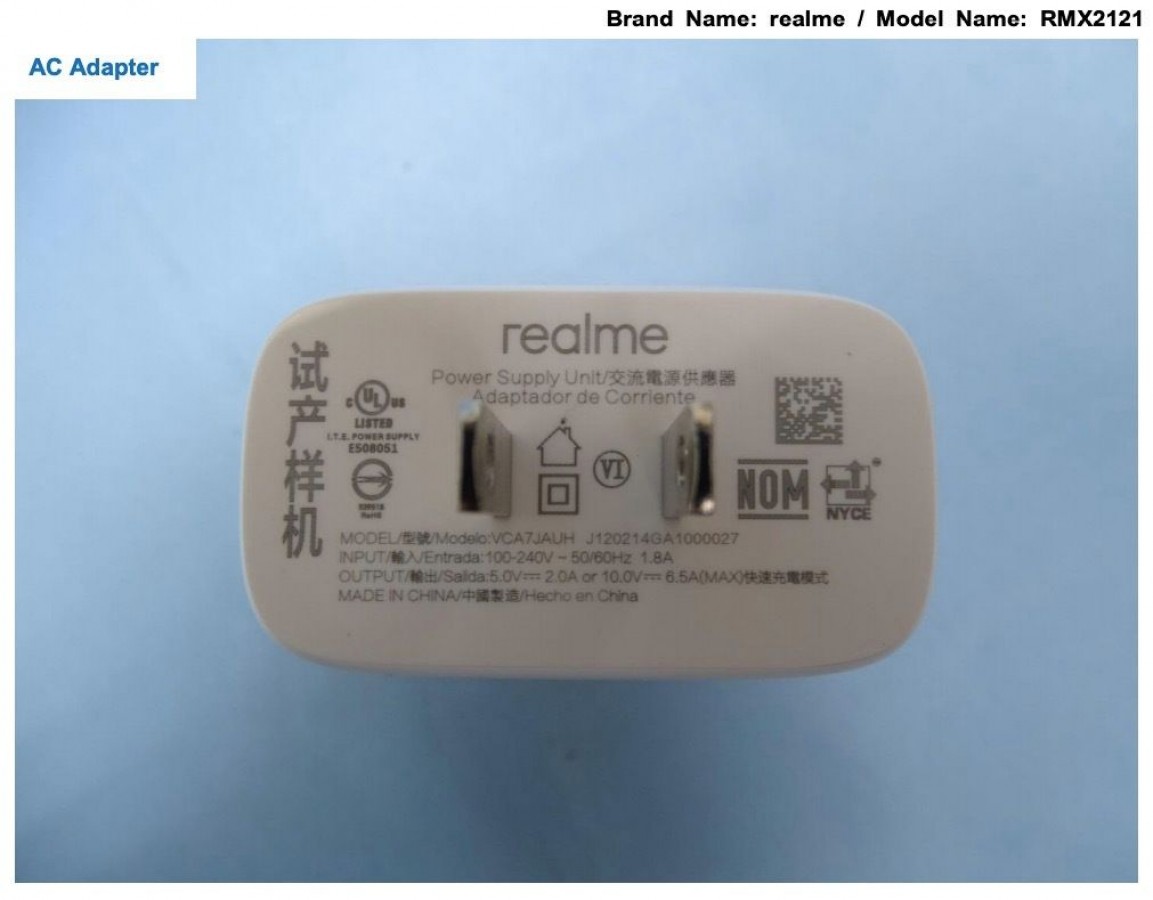
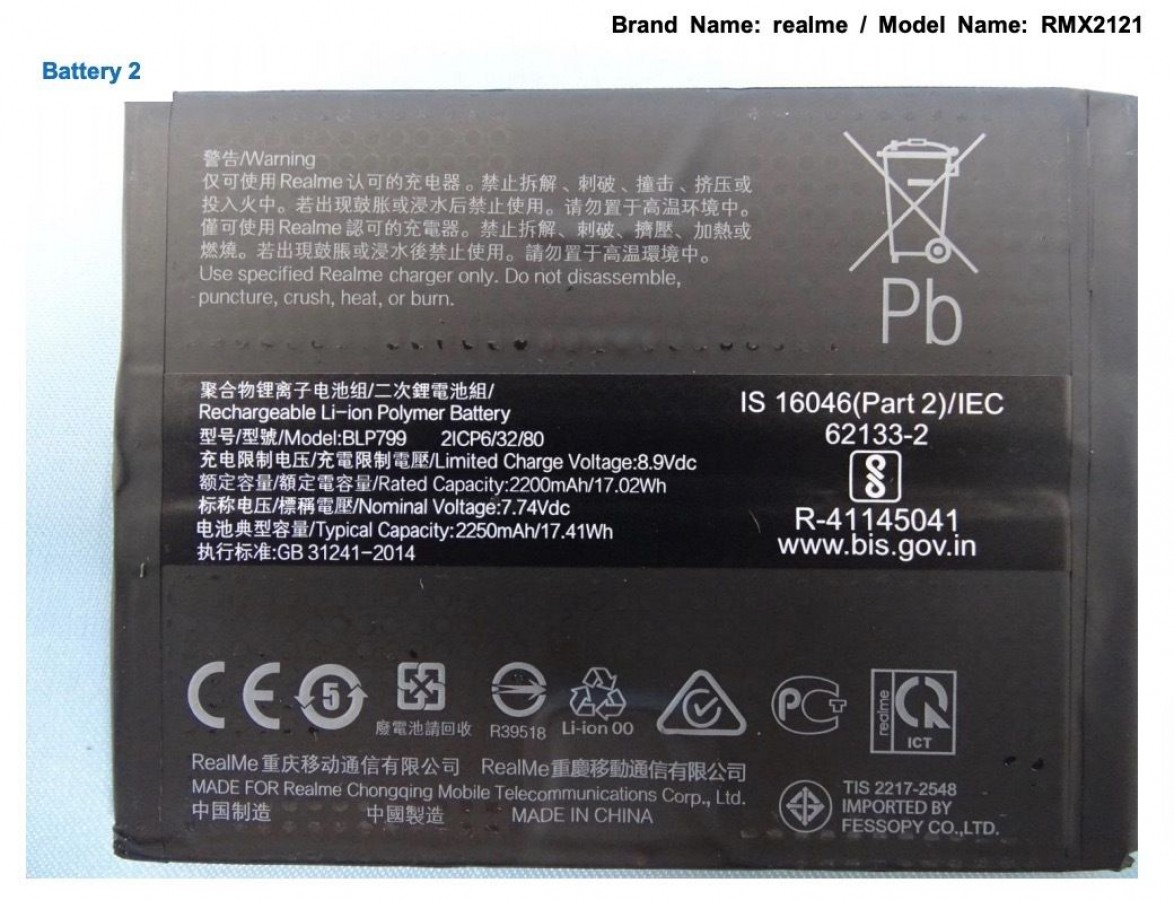
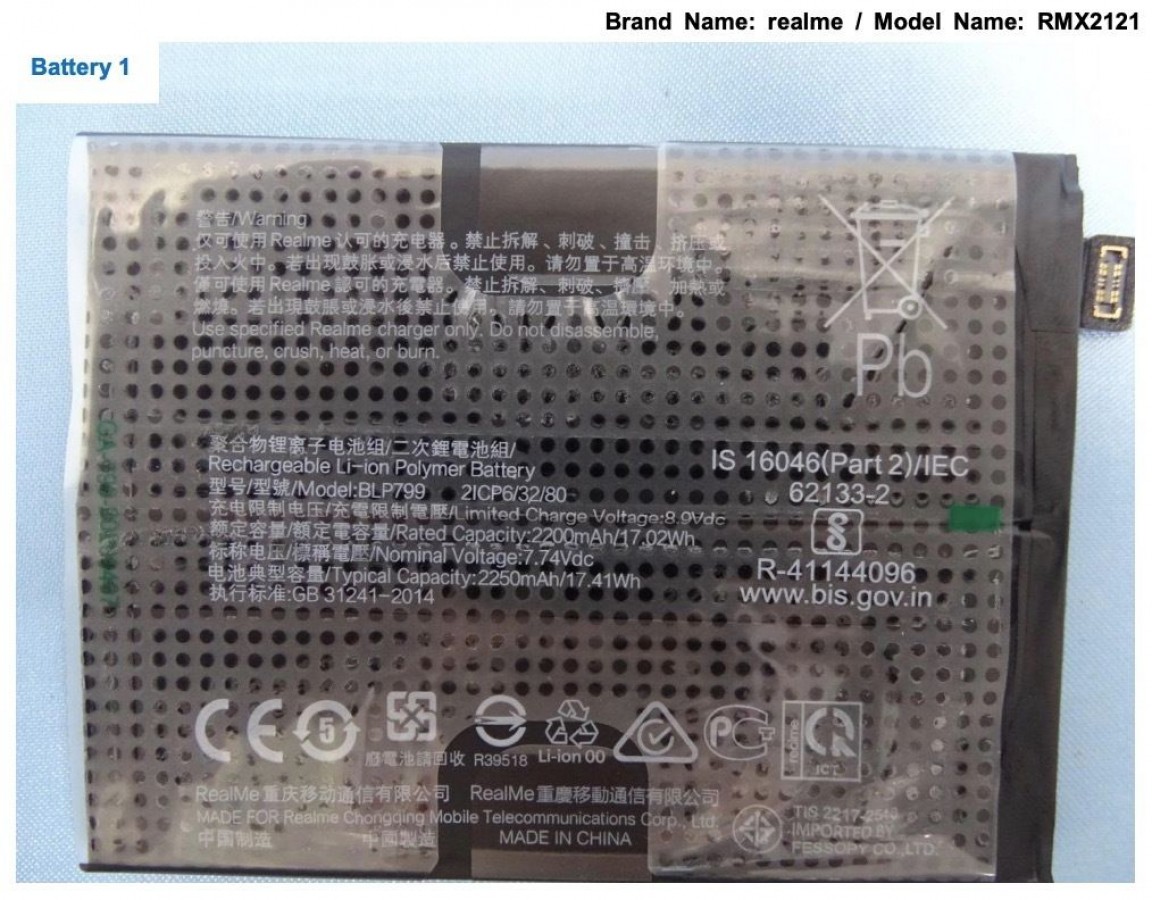
The NCC listing features images of the device as well as those of its batteries (two of them) and 65W SuperDart charger. As for the design, the phone has a similar design to the Chinese model. It packs a 6.55-inch punch-hole display and at the rear, there are four cameras. We’ll have to wait until the launch to know if there is any change from the Chinese version.
Furthermore, the NCC listing shows the dual batteries on board the Realme X7 Pro each have a capacity of 2250mAh, bringing the total battery capacity to 4500mAh. This dual structure is necessary for the 65W SuperDart charger to fully top up the phone from 0 to 100% in just 35 minutes.
1 of 4
Other details confirmed by the NCC listing include an 8GB RAM and 256GB storage. As a reminder, the X7 Pro is powered by MediaTek’s Dimensity 1000+ and so, it will be the first model launched outside China with that chipset.
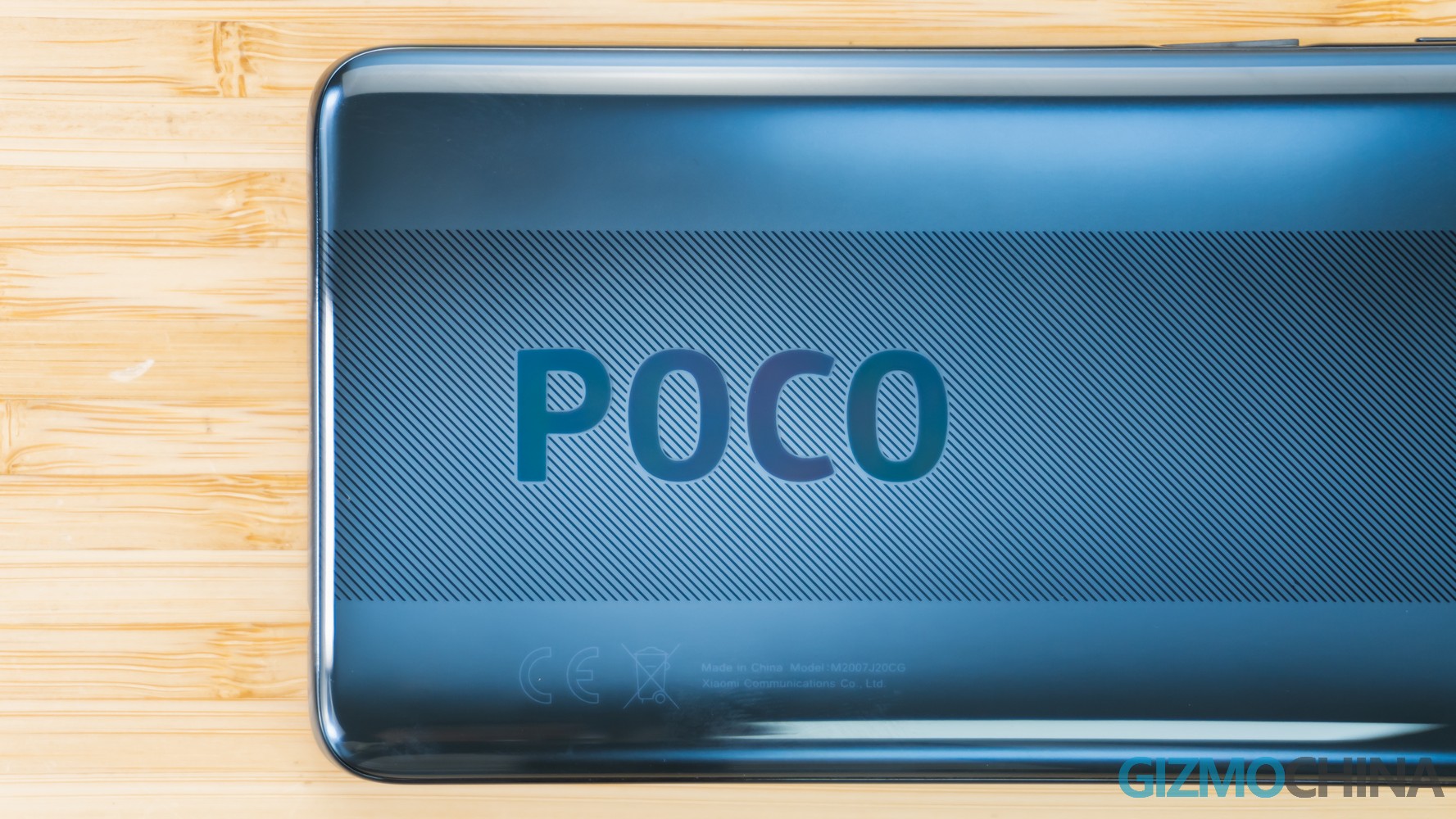
POCO is an independent brand since officially announcing it during early 2020. Once a sub-brand of Xiaomi, it debuted with the legendary POCO F1 in 2018 but became inactive for the whole of 2019. However, it came back with the POCO X2 which was a rebranded version of Redmi K30 in China. Since then, the company has been borrowing a few models from Redmi and relaunching it under POCO branding. Amidst a lot of criticism, Deputy Director of POCO, Anuj Sharma has explained to Indian Express the reasons for rebranding devices.
First off, Anuj says the rebranded POCO phones are better versions of Redmi devices. And, offer more value for the money. While he didn’t exactly mention how better they are, we have to agree on the value preposition part. For instance, Redmi launched the Note 9 pro with an 18W adapter in-box but included 33W in the “Max” variant. However, POCO M2 Pro which is a rebranded Note 9 Pro included a 33W charger in-box. And a Z-axis vibration motor at the same price as Note 9 Pro(₹13,999).
Besides, Anuj believes that POCO is a new brand and hence, it is difficult to design and develop phones on its own. This gives a clear cut explanation of why POCO currently uses resources from Xiaomi like factories, services, and MIUI. Further, he says that other brands like realme, OnePlus have also launched rebranded devices in the past. He also quotes that devices like OnePlus One and Realme’s first smartphone were rebranded versions of Oppo devices.
He goes onto say that POCO will follow the same strategy in the future. Also, the company is in no mood to develop a software version on its own and will continue with Xiaomi’s MIUI. For the unaware, POCO currently has X, M, C, and flagship F series of devices. The budget X, M, C, has rebranded devices like POCO X2(Redmi K30 China), POCO M2 Pro(Redmi Note 9 Pro), POCO M2(Redmi 9), POCO C3(Redmi 9C China).
We use cookies on our website to give you the most relevant experience by remembering your preferences and repeat visits. By clicking “Accept”, you consent to the use of ALL the cookies.
This website uses cookies to improve your experience while you navigate through the website. Out of these, the cookies that are categorized as necessary are stored on your browser as they are essential for the working of basic functionalities of the website. We also use third-party cookies that help us analyze and understand how you use this website. These cookies will be stored in your browser only with your consent. You also have the option to opt-out of these cookies. But opting out of some of these cookies may affect your browsing experience.
Necessary cookies are absolutely essential for the website to function properly. This category only includes cookies that ensures basic functionalities and security features of the website. These cookies do not store any personal information.
Any cookies that may not be particularly necessary for the website to function and is used specifically to collect user personal data via analytics, ads, other embedded contents are termed as non-necessary cookies. It is mandatory to procure user consent prior to running these cookies on your website.