Lenovo had showcased its ThinkPad X1 Fold laptop with a foldable design at CES 2019 and unveiled the commercial version of the same at Consumer Electronics Show earlier this year in Las Vegas.
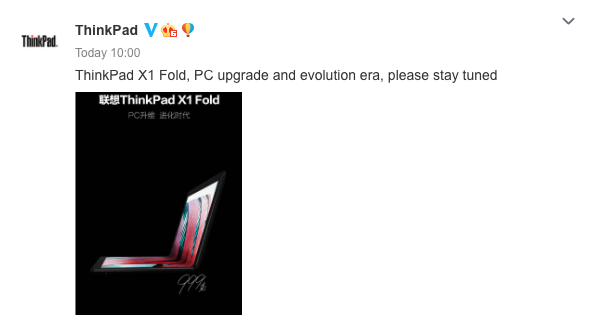
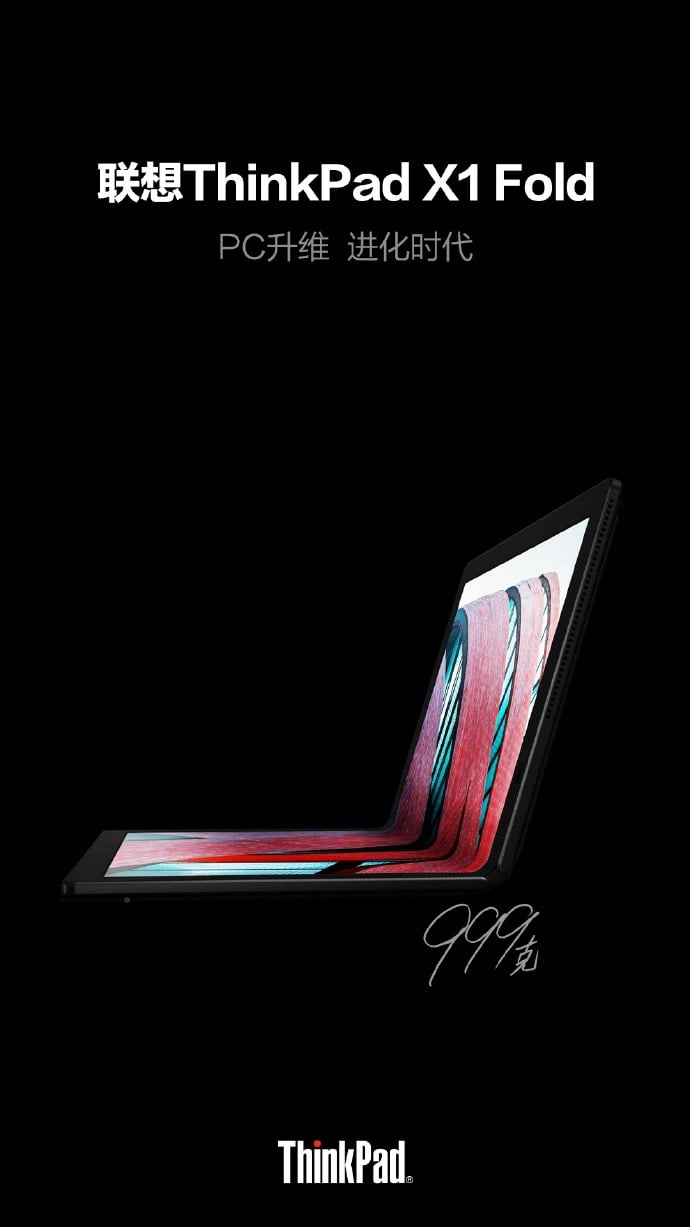
Now, the company has shared a teaser poster of the Thinkpad X1 Fold on its Weibo account, which hints that the company is all set to launch the foldable laptop in China. However, there’s no confirmation about this development.
The teaser poster shared by the company reveals only one information about the foldable laptop — its weight. It is mentioned that the product weighs just 999 grams and the poster also includes a render of the laptop.
When the device was unveiled earlier this year, it was said to have a 13.3-inch flexible OLED display panel with a screen resolution of 2048 x 1536 pixels and a 4:3 aspect ratio. There’s also a Microsoft’s Windows Hello-compatible camera on the bezel.
It is powered by a special Intel chipset which has not yet been specified but is said to have “hybrid technology”. The device packs 8GB of RAM and 1TB SSD storage and is equipped with a battery that promises 11 hours of usage on a single charge.
Since it’s a foldable laptop, both the top area and the bottom area have a display panel. It arrives with an additional wireless keyboard for those who prefer it, but users can use the laptop without attaching the keyboard.
In the software department, it is likely to come powered by the Windows 10 Pro operating system with the company’s own solutions and optimizations or the foldable screen. It remains to be seen if we will see anything related to the Windows 10X, which has been postponed by Microsoft, along with Surface Neo.
At the time of unveiling the Lenovo ThinkPad X1 Fold, the company had said that the shipments could start from mid-2020. It is priced at $2,499, which roughly converts to about 17,298 yuan in China.
Honor, a sub-brand of Huawei, has today officially confirmed that the company will soon launch a new smartwatch in its home market China — Honor Watch GS Pro. While the company has teased the launch, the exact date has not been revealed yet.
Making the announcement about this smartwatch, the company shared a teaser image on Weibo, along with a caption that reads: “Honor Watch GS Pro will be released soon, from the city to the outdoors, accompanying you to explore the 10,000 possibilities in life!”
Although the company has not revealed any information related to the watch, we know that the device carries model number KAN-B19 as the product was recently certified by the Economic Commission for Europe. The teaser image also hints that the smartwatch will come with a circular dial design.
We expect to get more information about this Honor Watch GS Pro in the coming days and the company could make the device official in a couple of weeks. An announcement related to its launch date could happen in the coming days.
The most recent smartwatch launched by the company is Honor Magic Watch 2, which comes powered by the company’s own Kirin A1 chipset, a 1.39-inch AMOLED display, 15 different sport modes for tracking, and 455mAh battery for two weeks of usage.
Google Assistant may not be the most popular virtual assistant around but Google is sure looking to expand its functionalities with preference given to globalization of the app. The Silicon valley-based company has now announced new feature for the virtual assistant.
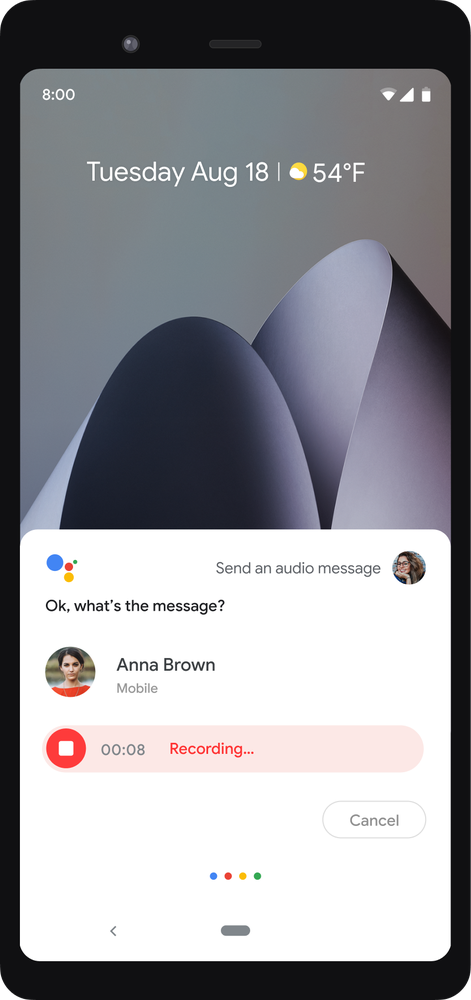
In a blog post, Google disclosed that users will now be able to send audio messages to contacts using Google Assistant. That will come in handy in scenarios where one is too tired to type on a phone or when the hands can’t be used to hold a phone for any reason. With Google Assistant, the owner can then use their voice to dictate a message.
According to Google, Voice-messaging is the modern-day walkie-talkie and is the easiest way to send a quick note to friends and family. The company also hinted that the feature will be available on Android smartphones and you won’t need to hold down the little mic icon to record the audio message. The feature will be available in English-speaking countries around the globe, as well as in Portuguese in Brazil.
You can make use of this feature with the voice command, “Hey Google, send an audio message”. The smart assistant will ask you who you want to send an audio message to and what message you’d like to record. Alternatively, you can say “Hey Google, send an audio message to Paul saying I’m on the way.”
Apart from the audio message feature, Google also flaunted five other cool ways in which Google Assistant’s voice prompt can be utilised including getting help reading web articles and snapping a selfie.
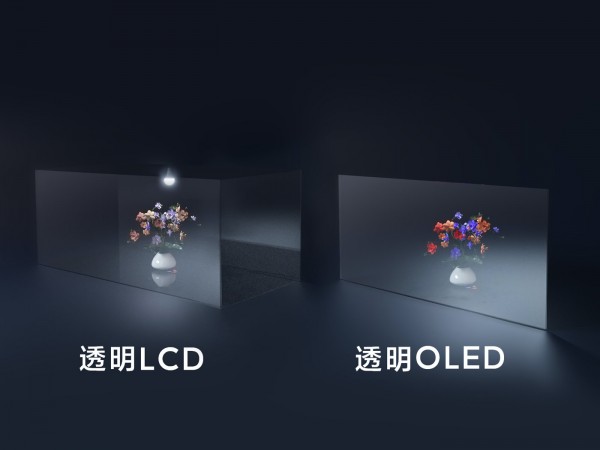
There are some who belong to the school of thought that Xiaomi is a copycat but the Chiese tech giant has often found a way to silence such critics with innovative products. The Mi Mix readily come to mind in this regard and recently, Xiaomi unveiled the Mi TV Lux, a transparent OLED TV.
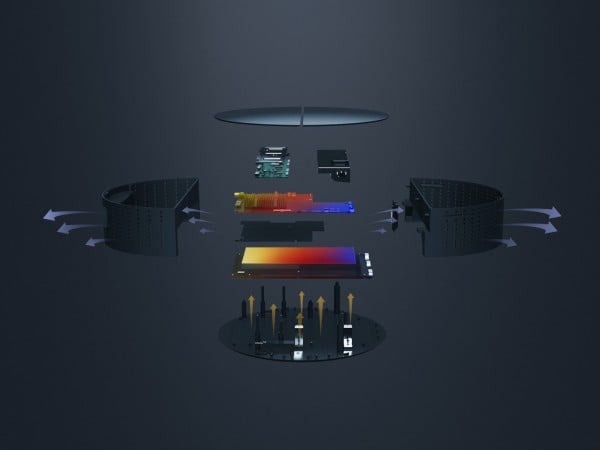
In case you are at a loss as to how the company was able to pull off such technological feat, Xiaomi has shared some details of the transparent TV’s design. The details include how the components that were supposed to be at the non-existing back panel was moved to the round base of the TV which doubles as the stand.
The processor, sound hardware and other electronic components that come to play in the working of the TV were fitted into the base. There is also a heat sink and the whole base is dotted with vents to help with convective cooling.
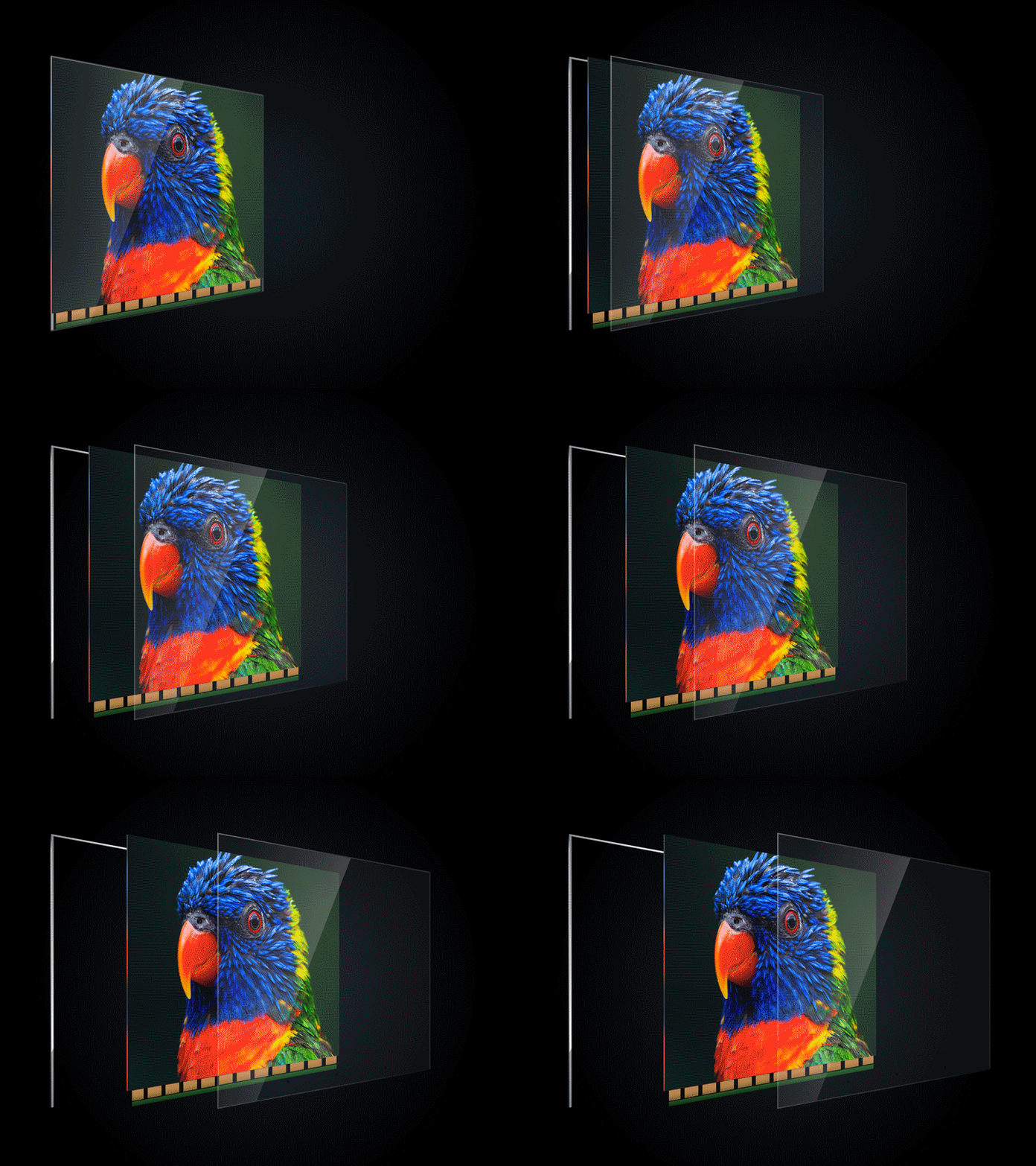
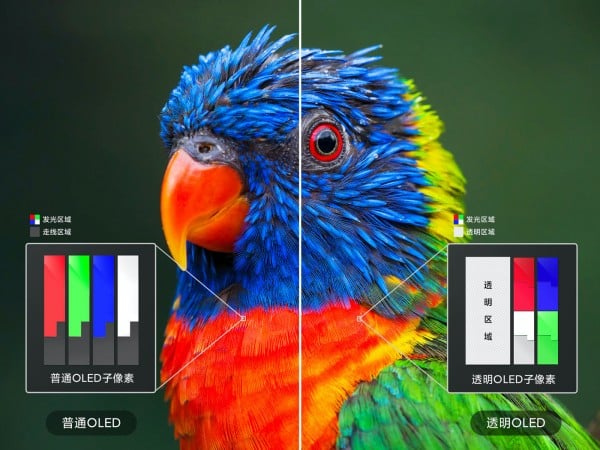
The TV’s display is an OLED panel which is selected because it can work without a backlight as opposed to a transparent LCD TV that would have needed an external light. But then, an OLED isn’t naturally transparent. So what Xiaomi did was to design the RGBW matrix is a unique way which sees only half of the panel getting covered with pixels, while the other half is left transparent. The pixels are fine enough that you can’t see them at a normal viewing distance and the gaps between them are equally tiny, so you can’t see them either – it all merges into a seemingly normal sheet of glass.
The display panel has a 55-inch glass bonded to the OLED panel using UV-curable glue to keep it protected. The TV also has a thin metal frame that surrounds the edges of the glass in order to give the TV a rigid build.
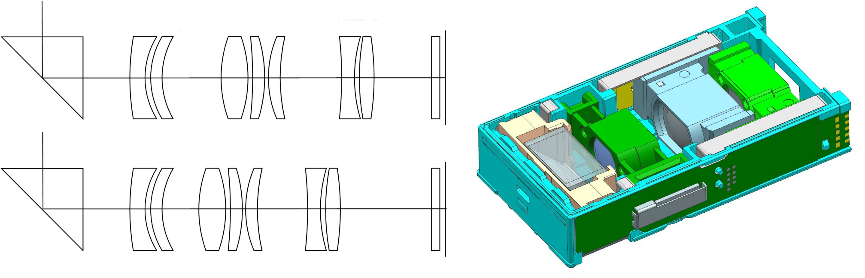
OPPO has taken the wraps off its next-gen hybrid optical zoom technology. The new camera technology still uses a periscope lens but with a new configuration. OPPO says the next-gen camera tech brings better zoom and an improvement in image quality thanks to a stacked periscope zoom lens structure.
The new hybrid zoom technology uses a 7-element lens in the setup shown below. They are grouped into three and work together to adjust the focus. The module is said to have a focal length of 85 mm to 135 mm as a result of the flexible movement of two of the groups of lenses. OPPO says using f/3.3 and f/4.3 apertures, the groups are able to fully utilize the optical capabilities of the lenses.
The press release says there is a new large sensor with a maximum output of 32MP that “incorporates Fusion, a multi-focal length image fusion technology, multi-camera field-of-view alignment technology, and super-resolution algorithms to deliver a focal length coverage of 85mm to 280mm.”
OPPO said its engineering team had to rebuild the imaging module structure and designed a more versatile medium-focal length imaging system. This system is made up of a 16-bit high-precision driver IC and corresponding auto-focus and optical image stabilization modules.
The job of the driver IC is to precisely control the movement of the two flexible groups of lenses. OPPO says it was developed on the need for a step-zoom on longer distances and claims it significantly enhances zoom precision, delivering stable and sharper images.
OPPO next generation hybrid zoom technology module camera sample
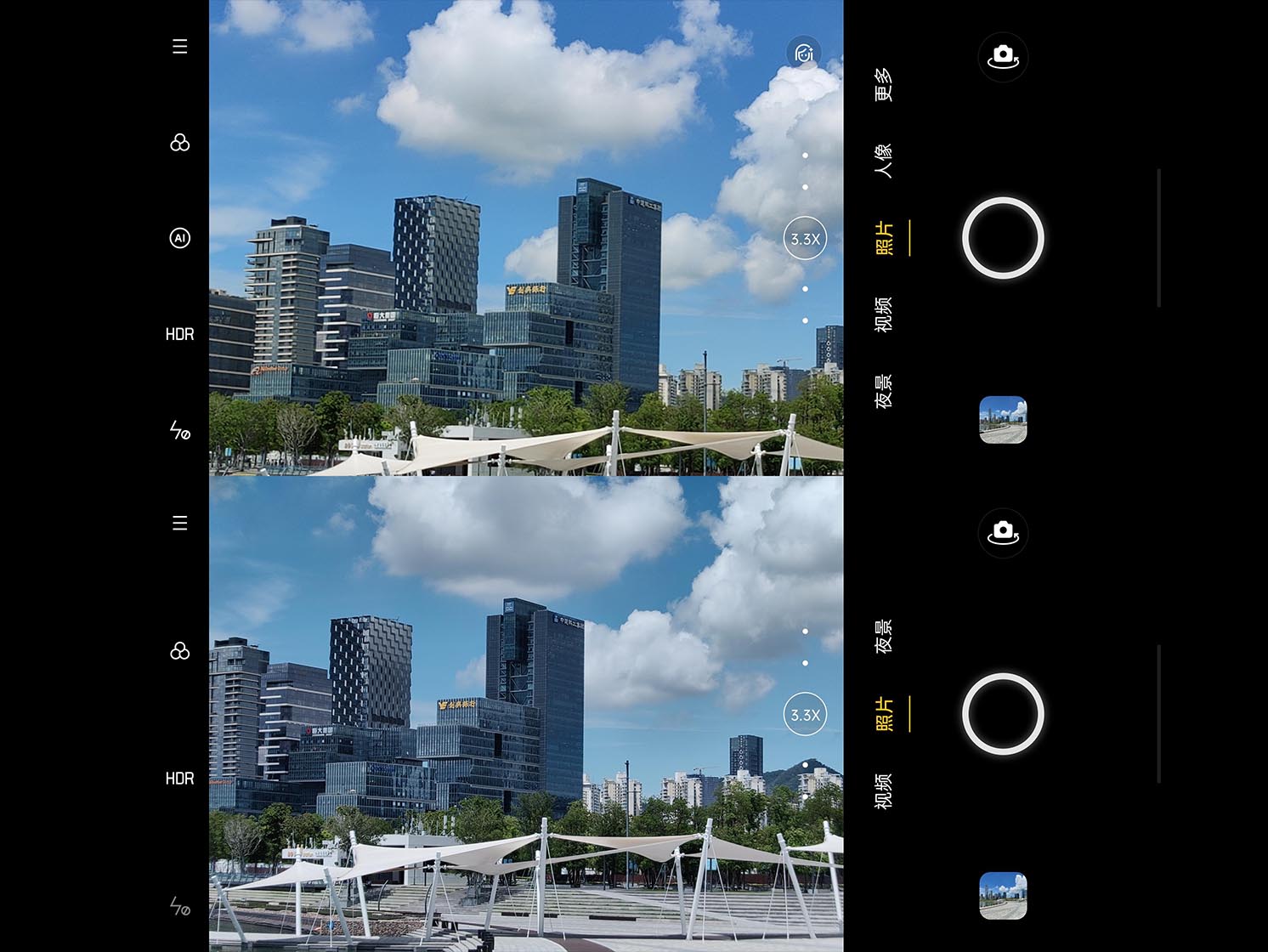
OPPO included some sample images taken with the new camera system. The image above, from left to right, was taken at a wide-angle, at 85mm equivalent focal length, and at 135mm equivalent focal length. The new sensor supports 4-in-1 pixel binning and allows for full HD at both near and far distances.
The new hybrid zoom technology has improved how users shoot at 85mm and 135mm focal lengths. OPPO says users will be able to take real and accurate images even with complexities and changes in lighting. The images above show the previous generation at 85mm and the next-gen hybrid zoom’s 85mm equivalent focal length. The image below shows samples shot taken at 135mm focal length with the one on the right taken with the new hybrid zoom technology.
Sample photo taken at 135mm with the next-gen technology on the right
OPPO didn’t say when we should expect the new hybrid zoom technology in a commercial device, but if it is launching another flagship this year, it may ship with the new camera technology.
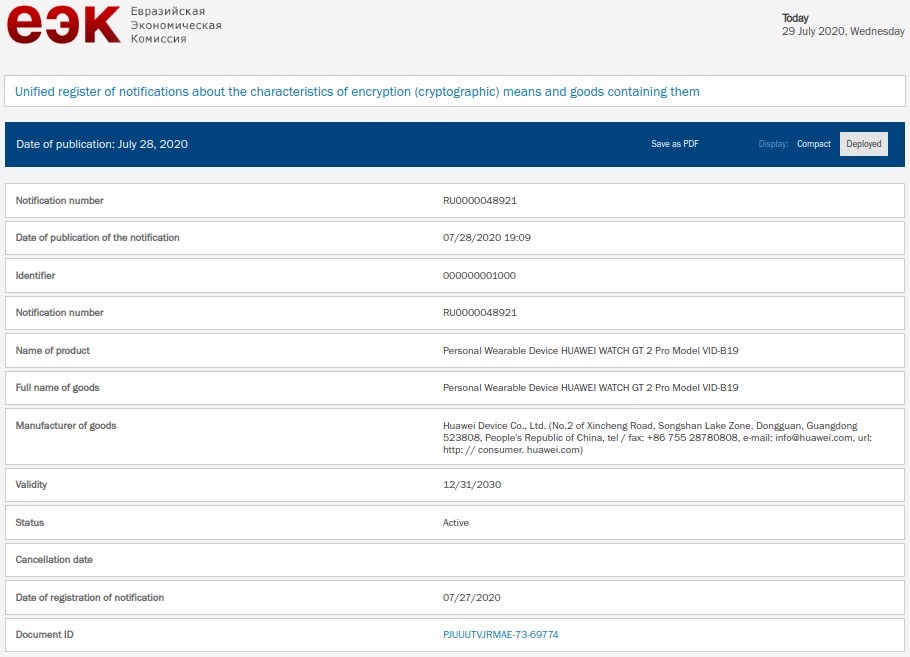
Huawei has received multiple certifications for a new smartwatch called the Watch GT 2 Pro. There is a chance this is the smartwatch that will launch alongside the Mate 40 series rather than the HarmonyOS-powered Mate Watch.
The Watch GT 2 Pro has been certified by various agencies including the FCC, Europe’s ECC, Malaysia’s SIRIM, and Singapore’s IMDA. It has been reported that one of the key features of the upcoming smartwatch whose model number is VID-B19, is support for 10W wireless charging.
The watch will have the same 455mAh battery capacity as the Watch GT 2 but we cannot say if the battery life will be the same. One of the selling points of the Huawei Watch GT 2 is its 2-week battery life. The upcoming pro version should pack more features compared to the Watch GT 2 and the Watch GT 2e, and of course have a higher price tag.
The design of the Huawei Watch GT 2 Pro is unknown but we expect it to have a circular dial like its predecessors and be available in multiple sizes.
The Zenfone 7 launches next week, and in what can be termed a surprise, no leaks have revealed what the phone looks like. While there have been rumors that ASUS will keep the flip camera design of the Zenfone 6, a new official teaser has now confirmed it.
The teaser is a 6-second video posted on Twitter by the official ASUS Deutschland (@asusde) account. The video shows the front of the Zenfone 7 which is plain and does not have a notch or punch hole. ASUS has done a good job of trimming the bezels as they are practically non-existent. We want to believe this is the same type of Nano Edge Display that ships with the Zenfone 6. The video also shows the volume rocker on the right side of the phone.
Towards the end of the video, the words “Flip Deine Welt” appear on the screen which translates to “Flip Your World”, teasing the device has flip cameras. The original tweet also has the hashtag #FlipDeineWelt.
The official ASUS global account posted a slightly modified version of the video but with the caption “Get ready to defy ordinary” and #Zenfone7 is coming soon. ASUS used the hashtag #DefyOrdinary for the Zenfone 6.
We expect more teasers will be released in the days leading up to the launch of the phone. Hopefully, we get to see what the rear looks like before the launch. We also hope the Zenfone 7 comes with triple cameras this time around, including a portrait lens.
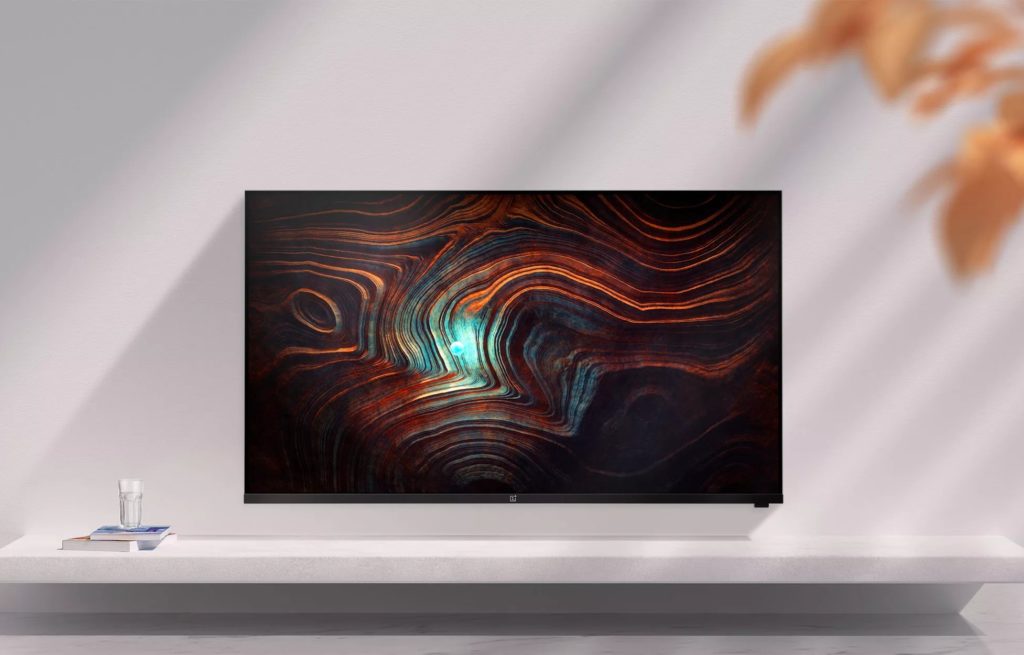
Oneplus entered the Indian smart TV market with the launch of Oneplus TV Q1 series last year. In early July, before launching the OnePlus Nord, the brand introduced two more affordable smart TV series in the country called OnePlus TV U and Y. The latter series is now receiving OTA2 update with a number of optimizations.
The OnePlus TV Y series is the cheapest smart TV offerings by OnePlus in India. There are two models in the series namely OnePlus TV 32Y1 and OnePlus TV 43Y1. As their name suggests, they come with 32-inch and 43-inch panels respectively.
Booth the TV models share common hardware except for the difference in panel size and resolution – HD (1366 x 768 pixels) and FHD (1920 x 1080 pixels). Hence, they run the same software build and are receiving update together.
The company calls the new update as OTA2 as OTA1 was already released soon after the launch of these TVs. It adds support for more Alexa skills as well as optimizes OnePlus Connect experience, audio quality, and system memory usage.
OnePlus TV Y Series – 32Y1 & 43Y1 OTA2 Official Changelog
More skills Added to Work with Alexa
Optimized OnePlus Connect experience by offering a better connection between Mobile and TV
Optimized Audio Quality in default settings
Optimized the system and memory usage for smoother experience
According to the OnePlus Community post, the update is being rolled out in batches and will be soon made available for more users if there are no issues.
A new feature is now available for OnePlus users in India. Called OnePlus Scout, it allows users to search for almost anything from a single search bar. The new feature comes with the new version of the OnePlus Launcher.
Before, you could only search for apps using the search bar available in the launcher. However, with OnePlus Scout, users can now search for files, contacts, locations, restaurants, and public spots. It doesn’t end there. You can also search for news and weather updates from the web and even solve math problems by accessing the Calculator app on the phone according to XDA-Developers.
OnePlus Scout is available with version 4.7.2_200818175549 of the One Plus launcher app. After the update, you will be greeted with a setup menu for the feature. It will request for permission to access your contacts, storage, and location. As you can see, it doesn’t request access to your messages, so sadly, you will not be able to search for info from there.
OxygenOS is known for its customizations and OnePlus allows you to customize certain features of OnePlus Scout. You can choose to have all the apps display when you enter the app drawer or just the search bar. You can also choose whether search results should be from other installed apps or also from the web. There is also a toggle for enabling search tips.
OnePlus Scout is a nice feature and one we hope will be available for other markets. We hope OnePlus announces a wider rollout soon.
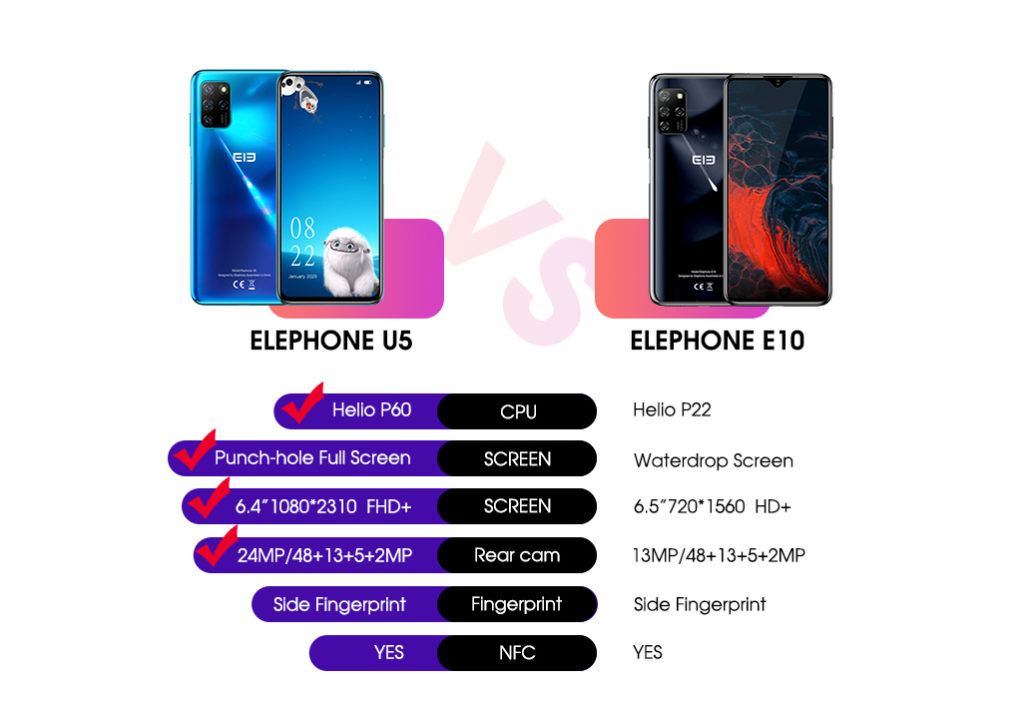
Elephone recently unveiled its new affordable smartphone – Elephone U5 featuring some exceptional specs at an affordable price. It offers great value-for-money if we go through the specifications and design of the newly launched Elephone U5. The smartphone houses a 6.44-inch FHD+ display with a 19.5:9 aspect ratio and ultra-narrow bezels. There are several other advancements over the Elephone E10 which was launched earlier this year.
Both the smartphones offer decent specifications but at the present time, Elephone U5 offers better value-for-money rather than the Elephone E10. In our specs comparison, we have found that with a minimal increase in your budget you can get more than better hardware. You can check our comparison of Elelphone U5 vs Elephone E10 to get a full overview.
Performance
Elephone U5 is powered with Helio P60 chipset housing an octa-core processor and Mali-G72 MP3 GPU. Meanwhile, the Elephone E10 comes with a MediaTek Helio P22 which houses 4 cores of 2.0GHz ARM Cortex and 4 Cores of 1.5GHz ARM Cortex which is a bit lower than that of Helio P60 cores. There’s a PowerVR GE8320 GPU on board to handle graphics.
Display
There’s a 6.5-inch punch-hole display featuring a resolution of 1080 x 2310 pixels for a wider viewing experience. Meanwhile, the Elelphone E10 offers a 6.5-inch 720 x 1560 pixels resolution only. As we can see, Elephone U5 offers a better display with Full HD resolution and provides a better viewing experience with a punch-hole camera. Elephone E10 features a waterdrop display which bares the viewing experience.
Camera
Elephone U5 hosts a 48-megapixel primary sensor, a 13-megapixel ultrawide sensor, a 5-megapixel depth sensor, and a 2-megapixel macro camera. The primary camera is capable of capturing detailed photos with accurate color saturation. There’s also a 24-megapixel front camera for beautiful selfies.
On the other hand, Elephone E10 features a 13-megapixel front camera, meanwhile, it also houses a similar quad-rear camera featuring a 48-megapixel primary sensor.
Other features
Apart from some design changes, there’s hardly any difference between both the devices. There’s also a 4000 mAh battery on these devices which is efficient enough to give you a day’s standby.
You can enjoy contactless payment transactions by using the NFC chip via a Google Pay. Elephone U5 is available for the price of $159.99 but you can get a $30 discount for a limited time. It is available in two color options of Ocean Blue and Black.
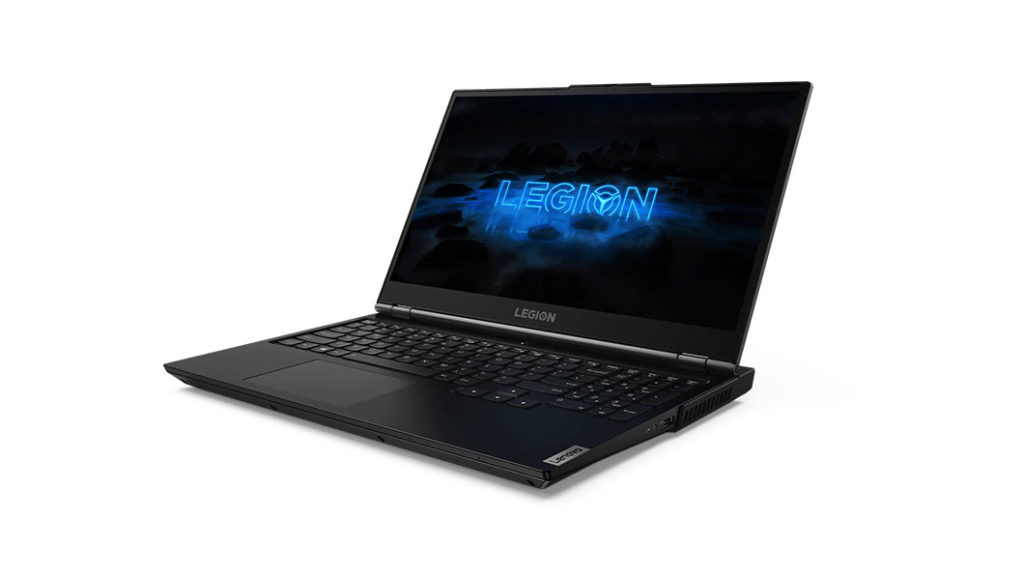
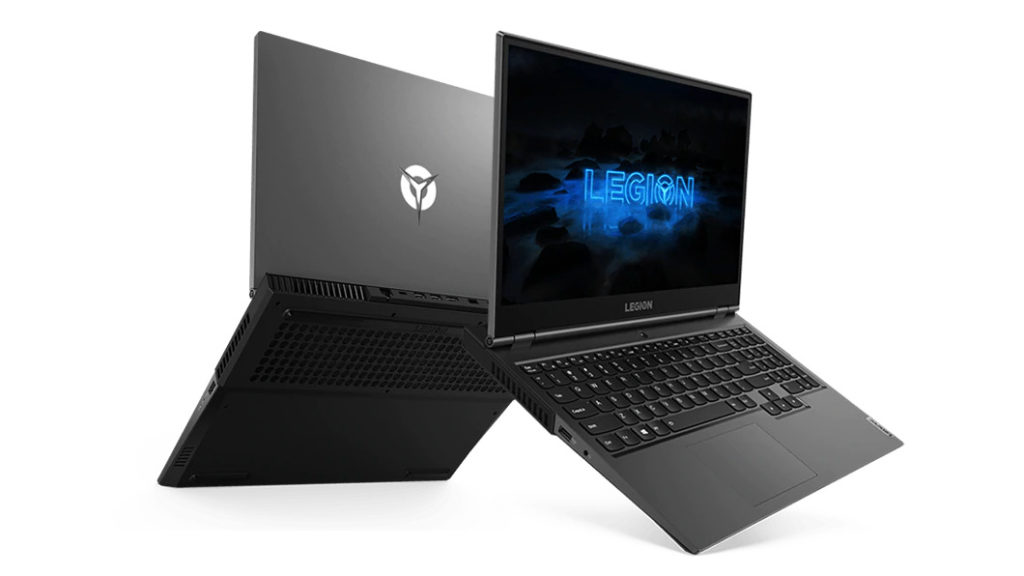
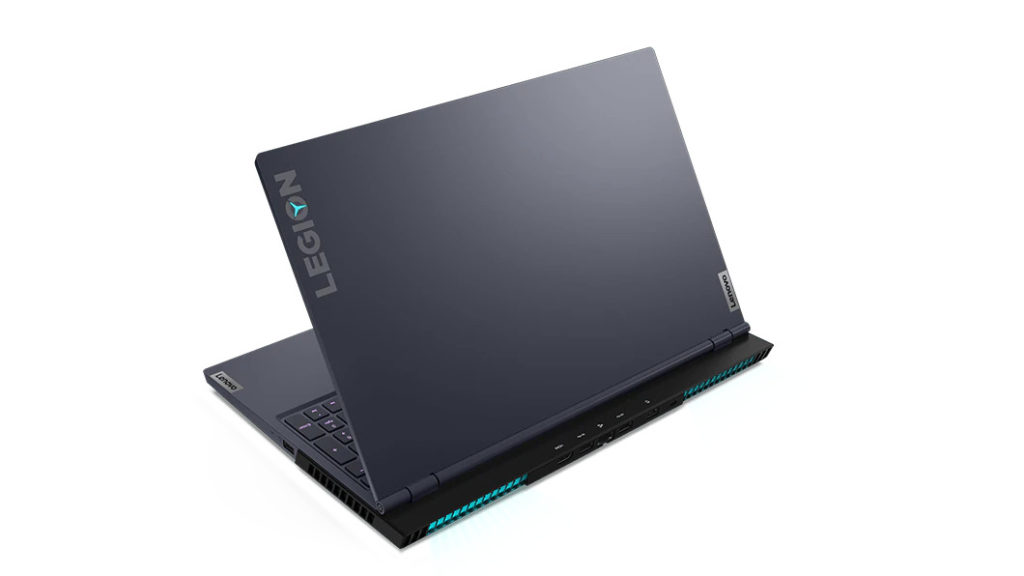
After teasing them for a few days, Lenovo officially launches Legion 5i, Legion 5Pi, and Legion 7i gaming laptops in India. They are up for orders on the Lenovo online store and will be available across offline and retail stores in the coming days.
Lenovo Legion 5i
The Legion 5i is the cheapest gaming laptop launched by Lenovo in India today for a starting price of ₹79,990 ($1,072). It is powered by up to 10th generation Intel Core i7-10750H processor paired with up to 6GB NVIDIA GeForce GTX 2060 GPU and 16GB 2,933Hz DDR4 RAM.
As for storage, buyers get up to either 1TB PCIe SSD or 1TB 7,200RPM HDD on this laptop. Though all the variants sport a 15.6-inch FHD IPS LCD panel, buyers can opt up to 144HZ refresh rate, 100% sRGB color gamut, and 300 nits of maximum brightness.
Other features of this gaming notebook include WiFi 6, Bluetooth 5.0, 4 x USB Type-A 3.1 Gen 1, 1 x USB Type-C 3.1 with DisplayPort, 1 x HDMI 2.0, 1 x RJ45, 3.5mm headphone jack, 2 x 2W Harman Kardon speakers, 720p webcam, and up to 80Whr battery.
Lenovo Legion 5Pi
The Lenovo Legion 5Pi is costlier than the previous laptop starting at ₹1,34,990 ($1,810). This laptop shares its entire specifications with the previous model. The difference between the two is this one starts at a better configuration than the former and hence the more starting price.
Another noticeable difference is that this gaming laptop come in Iron Grey color, whereas that one features Phantom Black paint job. Also, this notebook will be made available later this month.
On the other hand, the other two laptops – Legion 5i and Legion 7i are already on sale on Lenovo’s official website and will be soon available for purchase across retail stores and online portals.
Lenovo Legion 7i
The Legion 7i is the most expensive gaming laptop launched by Lenovo today for a starting price of ₹1,99,990 ($2,682). It is powered by up to 10th generation Intel Core i9 H series processor paired with up to 32GB 2,933MHz DDR4 RAM, 8GB NVIDIA GeForce GTX 2080 SUPER Max-Q GPU, and up to 1TB PCIe SSD.
It features 15.6-inch FHD IPS LCD screen with up to 100% sRGB color gamut, 500nits of peak brightness, and 144Hz refresh rate. As for connectivity and ports, it comes with WiFi 6, Bluetooth 5.0, 3 x USB Type-A 3.1 Gen 1, 1 x USB Type-C 3.1 with Thunderbolt/DisplayPort/HDMI, 1 x USB Type C 3.1 Gen 1 with DisplayPort 1.4, 1 x HDMI 2.0, 3.5mm headphone jack, 1 x RJ45, 3.5mm headphone jack, and 1 x power-in.
Other features include 2 x 2W Dolby Atmos speakers, 720p webcam, and up to 80Whr battery.
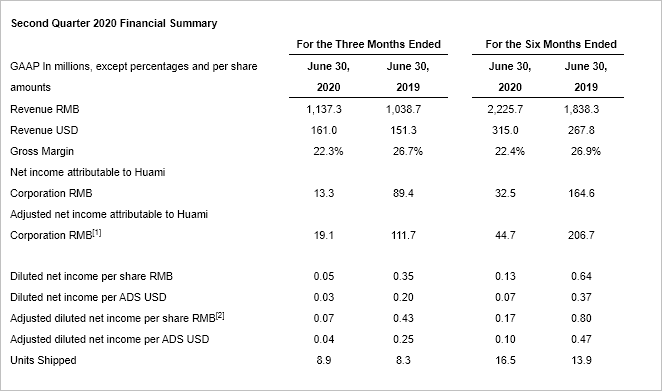
Xiaomi’s ecological chain partner Huami has announced its quarterly financial report for the second quarter of the year. The company reported revenue of RMB1.137 billion, or US$161.0 million for the second quarter which ended on June 30, 2020.
The revenue is slightly higher than what the company posted in the first quarter which is RMB 1.0885 billion ($153.7 million) but the net profit of 13.3 million for Q2 is 85% lower than the 89.4 million yuan profit posted in Q2 2019. That means the company spent a higher amount on operational costs, perhaps as a result of the COVID 19 pandemic.
“I am proud of our teams and our brands that generated revenue growth of 9.5% in the second quarter and 21.1% for the first half of 2020, with the challenges of the worldwide pandemic,” said Wang Huang, Chairman and CEO of Huami.
“New products introduced in the first half of the year, including smartwatches, earbuds and other smart health devices helped our growth, although the pandemic did alter the magnitude of our and the industry’s growth. Interest in our new smart health devices and the recent success in the application of our proprietary health data analysis tools for healthcare insurers and providers give us confidence in our strategy, growth and future guidance,” he added.
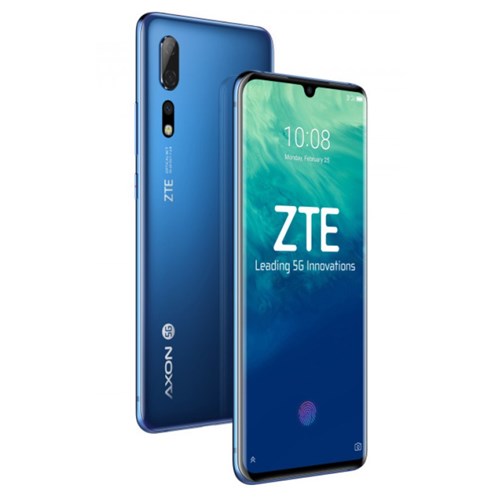
ZTE’s upcoming Axon 20 5G will be the world’s first commercially-available smartphone with an in-display selfie camera when it launches on September 1. Today, the Chinese manufacturer released a special post highlighting all the other technologies it brought to the market first.
ZTE Grand S II
Grand S II – World’s first phone with voice control technology
Nowadays, it is easy to call on the voice assistant on your phone to carry out certain functions such as making a call, turning on/off Bluetooth, or launching an app. However, before Google Assistant and Siri became mainstream, ZTE was the first manufacturer to announce a phone you could operate simply by voice. This phone was called the ZTE Grand S II and it was announced in late 2014. You could even unlock the phone with your voice.
ZTE Grand S III
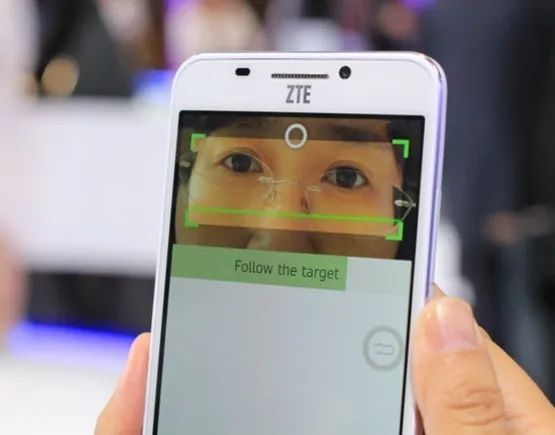
Grand S III – World’s first smartphone” with an eye-based biometric solution
A few months after announcing the Grand S II, ZTE set another record when it launched the Grand S III at the 2015 edition of the Mobile World Congress. The phone was the first in the world with an eye-based biometric solution. The technology dubbed Eyeprint ID was able to unlock the phone by scanning the user’s eyes and the pattern of the blood vessels in them. It was a secure solution that could be used for payment as it was unique to each person.
ZTE Axon Mini
Axon Mini – World’s first smartphone with a pressure-sensitive screen
The Axon Mini launched as the first phone with a pressure-sensitive screen. Announced in July of 2015, the phone had a force touch display which means certain menus and options would become available depending on how much pressure you applied when pressing the display.
ZTE Axon M
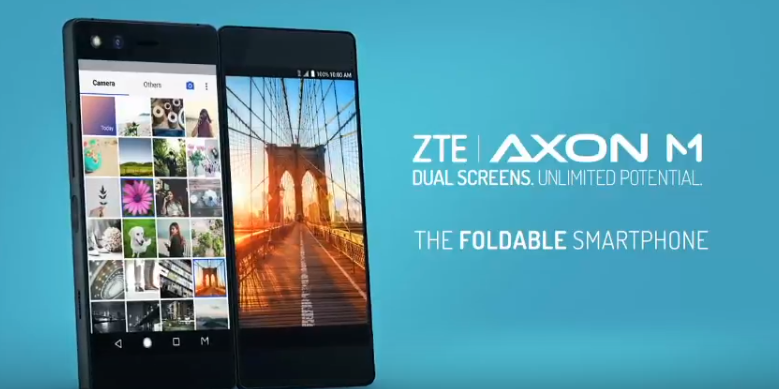
Axon M – World’s first foldable dual-screen phone (actually not true!)
Before the Surface Duo, there was the Axon M. Just like Microsoft’s Android-powered device, the 2017 ZTE Axon M also launched with dual displays. ZTE claims it is the world’s first foldable dual-screen phone but that is not true. The 2011 Kyocera Echo and the 2012 Sony Tablet P arrived well before it did and with dual-displays too.
ZTE Axon 10 Pro 5G
Axon 10 Pro 5G – First commercially-available 5G phone in China
The Axon 10 Pro 5G launched as the first 5G commercially-available 5G phone in China. It was also the first 5G smartphone in Northern Europe and the Middle East.
ZTE Axon 11 SE 5G
Axon 11 SE 5G – First 5G phone to support all 4 major Chinese operators
The Axon 11 SE 5G launched as the first smartphone in China to be compatible with 5G networks from all of China’s four major carriers.
ZTE has sure made its mark in the mobile industry and we are pretty excited to see how great the Axon 20 5G is at taking pictures and recording videos with its in-display camera.
A report that emerged in January this year indicated that Huawei was planning to launch a desktop PC and had already begun market research. Tech giant, Huawei has got several products under its belt ranging from smartphones, laptops, tablets, smartwatch, fitness band, to routers. But the company is yet to launch a desktop PC.
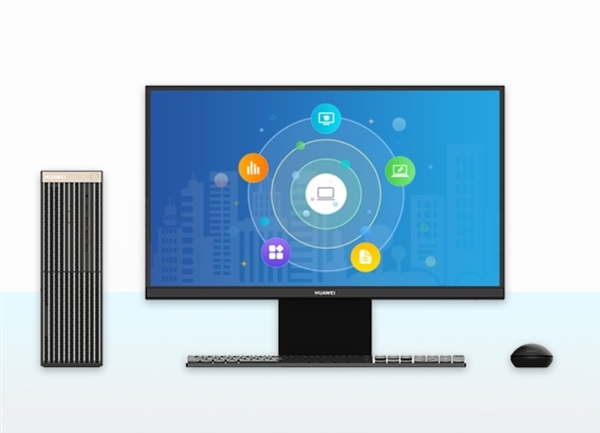
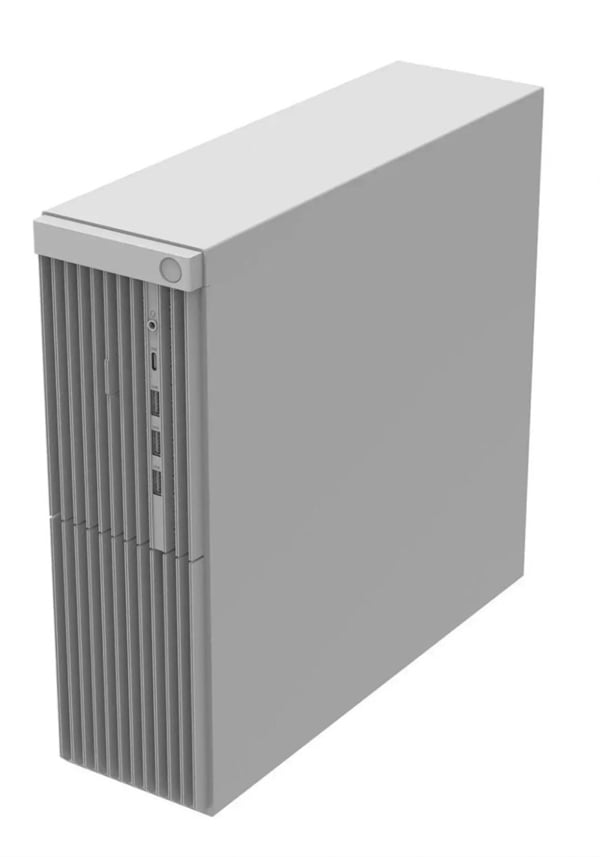
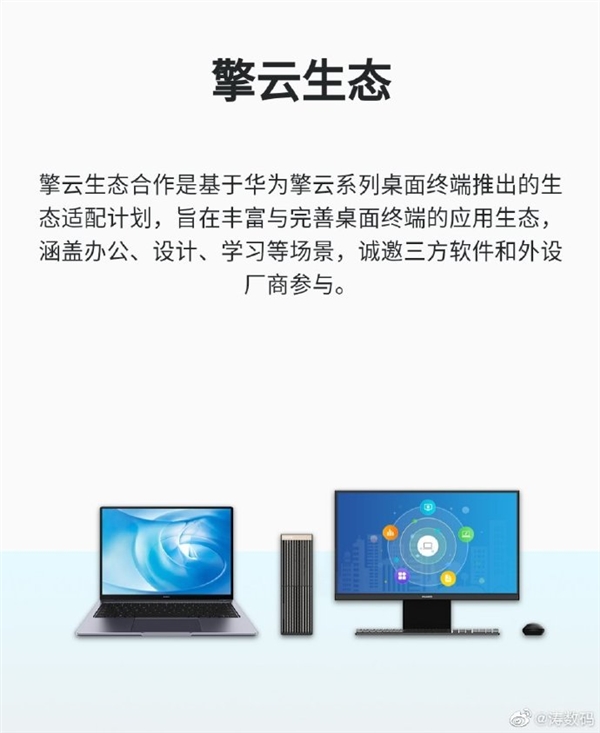
Right now, renders of what is said to be the rumoured Huawei desktop PC has appeared online. The desktop PC is said to have appeared on the official website of Huawei’s developers. It is reported that the PC is called Qingyun W510 and is manufactured by Foxconn.
Going by the renders, the desktop PC is equipped with a complete host, a display, keyboard and a mouse. The front of the main unit adopts a straight grid design, and the appearance is relatively simple.
According to previous reports, Huawei’s desktop is expected to be equipped with Kunpeng 920 3211K, with a 24-core specification, a frequency of up to 2.6GHz, and a non-removable CPU board. The desktop PC is said to have been designed for government and enterprise customers and is equipped with China-made UOS and so Windows cannot be installed.
Not long ago, UOS V20 Professional Edition (1021) was released. Compared to the previous version, UOS Desktop V20 Professional Edition has a new style of launcher and many powerful self-developed applications, including scan management, backup and restore, installer, file security function.
In July of this year, leakster @_rogame once exposed the appearance of a new Huawei desktop PC. The image is consistent with the design of the new image exposed this time. The PC comes with 3 USB-A and 1 USB-C port and a headphone port on the front of the device. Further, the PC is said to be equipped with an optical drive, and on the back are 4 USB-A ports, network cable ports, etc.
We don’t have any idea of when Huawei will launch this model. We also expect more detailed specs will emerge soon.
Realme’s C series is Realme’s entry-level lineup and it is having a huge success in the Asian market thanks to its devices carrying a very high value for money and a very affordable price if compared with their specifications. The Chinese company launched three new devices from the C lineup in the last period: Realme C11, C12, and C15. They come with similar specifications and similar aesthetics, so it is not easy for inexperienced people to understand which one is the best for their actual needs. This comparison will highlight all the main differences between Realme C11, C12, and C15, besides telling you which is the most interesting handset from the trio.
Dual 13 + 2 MP f/2.2 and f/2.4
5 MP f/2.4 front camera
Quad 13 + 2 + 2 MP f/2.2, f/2.4 and f/2.4
5 MP f/2.0 front camera
Quad 13 + 8 + 2 + 2 MP f/2.2, f/2.3, f/2.4 and f/2.4
8 MP f/2.0 front camera
BATTERY
5000 mAh, 10W charging
6000 mAh
6000 mAh, 18W fast charging
ADDITIONAL FEATURES
Dual SIM slot
Dual SIM slot, reverse charging
Dual SIM slot
Design
Realme C11, C12, and C15 are almost identical when it comes to the design. They all come with a polycarbonate body, a square-shaped camera module, and a borderless display with a waterdrop notch. It is a cool design for an entry-level, despite it is made of polycarbonate. Even though it is the most affordable, the Realme C11 looks more interesting because its color variants are slightly more original and the phone is thinner and lighter. It is a more compact device because it has a smaller battery than its costlier siblings. The bigger is the battery, the more is the space needed to house it inside the phone.
Display
With Realme C11, C12 and C15, you get essentially the same display. It is a below-average 6.5-inch panel with an HD+ resolution and a diagonal of 6.5 inches. As we said, it is a below-average display due to its resolution and overall quality, but in the actual market, you can not find better display in the entry-level segment, unless you move to the price range above €150. So these devices are cool.
Specs & Software
Realme C11, C12, and C15 all feature the same Helio G35 SoC by MediaTek. It is the most powerful entry-level chipset in the market, so it provides very nice CPU and GPU performance. It is even meant for gaming, thanks to HyperEngine technology. The only thing which changes in the hardware departments of these devices is the memory configuration. With Realme C11, you get just 2 GB of RAM and 32 GB of internal storage, while with the Realme C12 you can get 3 GB of RAM which is definitely better not only for advanced users but for daily use too. The Realme C15 comes with up to 4 GB of RAM and up to 64 GB of RAM and it represents the best option for power users. In each case, you get a micro SD dedicated slot, a dual SIM slot, and Android 10 out of the box customized by Realme UI.
Camera
The camera setup changes depending on the model, but all you get with the costlier ones is a higher number of sensors. Indeed, the main camera is always a 13 MP f/2.2 sensor. With the Realme C11, you only get one additional depth sensor. With Realme C12, you get two additional sensors, including the 2 MP depth sensor found on the Realme C11 and a 2 MP monochromatic camera. With Realme C15 you get all these sensors plus an 8 MP ultrawide camera. Further, it has a better 8 MP front camera than Realme C11 and C12. If you do not care about ultrawide shots and selfies, then Realme C11 and C12 are enough for you. But if you do, you’d better go for the Realme C15.
Battery
In each case, we are talking about amazing battery phones. Thanks to their huge batteries, these devices are able to last a lot of time on a single charge. But Realme C12 and C15 are superior to the Realme C11 due to their bigger 6000 mAh battery (instead of 5000 mAh). Besides offering a bigger battery than Realme C11, the C15 also comes with 18W fast charging, which is not present on the C11 and the C12.
Price
Given that these devices are still not global, we will only mention the prices for the Indian market. Realme C11 costs about €84/$100 (Rs. 7,499) at the actual change, Realme C12 is priced €100/$120 (Rs. 8,999), and Realme C15 costs €123/$147 (Rs. 10,999). The Realme C15 is naturally the best, but with the Realme C12 you can save money with a limited number of compromises: you only have to renounce two better camera sensors, fast charging, and a higher-end memory configuration. Unless you are a really basic user, we do not recommend the Realme C11 since it has just 2 GB of RAM. Further, it has a smaller battery.
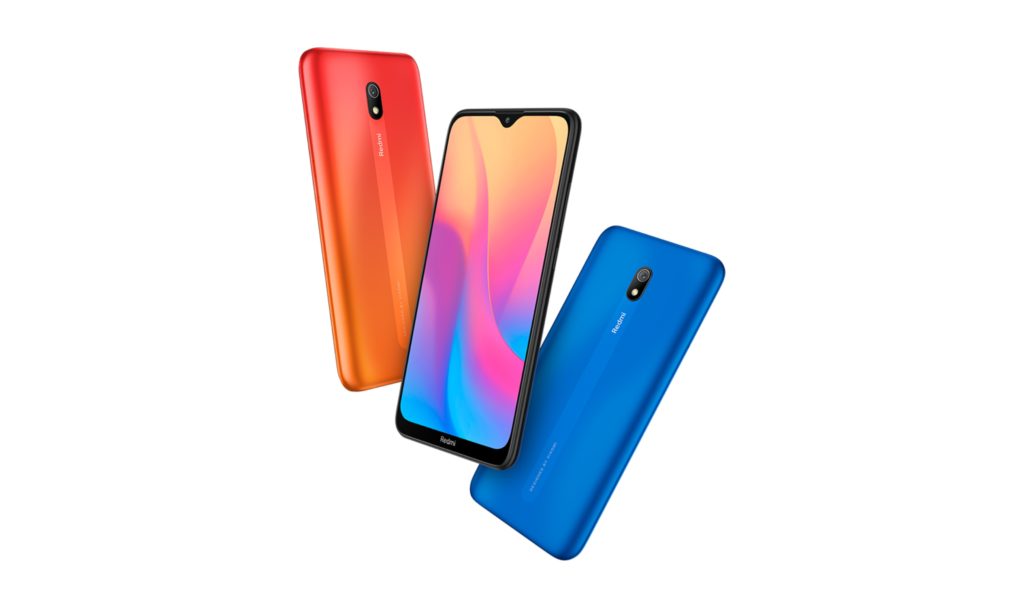
Xiaomi has been updating its smartphones to MIUI 12 for the past few months. Additionally, the company has been also rolling out Android 10 update to its 2019 Redmi budget smartphones. Redmi 8A, the second cheapest handset launched by the company last year is now receiving this update worldwide.
Just like any other Xiaomi device, the Redmi 8A first received Android 10 update in China, It was rolled out late last month. Slowly, the update has now made it to all the international versions of the handsets except Indonesia, which we believe will be receiving it soon.
Here are all the build numbers of Redmi 8A Android 10 update for all the regions.
Region
Build Number
China
V11.0.2.0.QCPCNXM
Global
V11.0.1.0.QCPMIXM
India
V11.0.1.0.QCPINXM
EEA (Europe)
V11.0.1.0.QCPEUXM
Russia
V11.0.1.0.QCPRUXM
Since the Chinese variant got the update in July, the build for that variant comes with July 2020 security patch. Similarity, the Global Variant also gets the same patch as its update was rolled in the first week of August. On the other hand, all other variants of Redmi 8A are receiving Android 10 update with August 2020 security patch.
Having said that, the Redmi 8A is also eligible for MIUI 12 but it won’t be getting Android 11 like other 2019 budget smartphones.
Xiaomi Youpin has launched the Ningmei Soul GI6 desktop computer which is powered by an AMD Ryzen R5 2600 processors. The desktop PC comes with a starting price tag of 1799 yuan (~$260).
The Ningmei Soul GI6 desktop computer comes in three version – a Share version, Fun edition, and Enjoy edition. The desktop PC is powered by an AMD Ryzen R5 2600 processor and an RX550 4G graphics card. The processor is paired with 8GB of RAM and 180GB of solid-state drive. It can achieve 160FPS with high LOL characteristics.
The fun edition is also equipped with a Ryzen R5 2600 processor but packs an RX590 8G graphics card. It equally packs 8GB memory and a bigger 256GB storage. This version can achieve 110FPS with high special effects for PlayerUnknown’s Battlegrounds. It carries a higher price tag of 2,599 yuan due to the improved graphics card and larger storage
Finally, the Enjoy edition which is priced at 2999 yuan has an RX590 8G graphics card just like the fun edition. However, the processor pairs with 16GB of memory and 512GB solid-state drive. It can also achieve 110FPS with high special effects for PlayerUnknown’s Battlegrounds.
In terms of the design, the Ningmei Soul GI6 desktop computer adopts a high-value appearance consisting of a transparent outer cover. It also features a dual-fan design which has a relatively good heat dissipation performance. Thanks to the solid-state hard drive, the boot time of the computer is only 9 seconds.
Further, the Ningmei desktop PC is equipped with ASUS Master Series A320 high-spec motherboard. It equally comes with five-fold hardware protection using channel layered isolation and audio shielding technology, so that the sound output is pure in an undisturbed environment, making it easier to capture sound when playing games.
Meizu is seeding out a new system update to its flagship smartphones – Meizu 17 and Meizu 17 Pro in China. The new update, apart from adding new features, also fixes a large number of bugs reported by users. The company calls this an “important update” as it brings an overall improved experience.
Like the company claims, the new Flyme update for Meizu 17 and Meizu 17 Pro indeed brings a number of small changes here and there as per the changelog.
Some of the new features that this OTA update adds to Meizu 17 series are as listed below.
Haptic feedback support for third-party applications like WeChat and Alipay
Smart screen timeout which extends screen dimming time when a face is detected
Optimized multi-tasking view with a new swipe up gesture to exit.
Revamped Meizu Pay app
New Game Center and various customizations in Game Mode
That said, do you know why Meizu is calling it an “important update:? Because according to the official changelog, the latest system update for Meizu 17 and Meizu 17 Pro fixes a total of 23 known bugs. This is insane as companies usually fix a small number of issues at a time.
The Meizu 17 series is not available outside China. But if you are using an imported unit or a Chinese citizen using it in another country, make sure to download and install this new Flyme update to get all the benefits.
Last but not least, it is worth noting that last month’s system update for these handsets added support for stabilization while recording videos from all the cameras.
The ASUS Zenfone 6 was one of the more interesting smartphones announced last year. It not only had impressive specs but it was also pretty affordable with a starting price of $499 for the base model with 6GB of RAM and 64GB of storage. The phone will be getting a successor on August 26, and ahead of the event, its pricing details have leaked which reveals the Zenfone 7 will also be a lot more affordable compared to other flagships.
The source of the info is Roland Quandt (@rquandt) and according to a tweet posted earlier today, the ASUS Zenfone 7 will be priced at €549 for the 8GB RAM + 256GB version. That sure is a great price for a phone powered by the Snapdragon 865+ and with a 5000mAh battery.
If your budget is a bit lower, you will be able to pick up the 6GB RAM + 128GB version of the phone for €499 according to the leaker.
It has been reported that the Zenfone 7 will keep the flip camera design of its predecessor. This means the display will be devoid of a notch or punch hole. Other reported features include support for 30W fast charging, NFC, and Wi-Fi 6.
Realme launched the Realme C12 and C15 smartphones in India earlier today. Along with the two smartphones, the company also took the wraps off a new wired earphone in India. The headphones carry a price tag of Rs. 399 (~$5).
realme Buds Classic
The Realme Buds Classic adopts a half in-ear design instead of an in-ear design which was utilised on the earlier models. The earphones also feature large 14.2mm drivers.
There is a single button remote for call and music control, in-line HD microphone and has built-in cable organizer in yellow colour to keep in tangle-free. The earphones feature a half-in design with a rounded shape to fit the ear canal comfortably, and the 14.2mm drivers with a diaphragm made from premium nanoparticle composite material promise deeper bass and clear vocals.
The Realme Buds Classic comes in Black and White colours. The gadget will be available on Amazon.in and realme.com from August 24th. It will also be available from offline stores in no distant time.
We use cookies on our website to give you the most relevant experience by remembering your preferences and repeat visits. By clicking “Accept”, you consent to the use of ALL the cookies.
This website uses cookies to improve your experience while you navigate through the website. Out of these, the cookies that are categorized as necessary are stored on your browser as they are essential for the working of basic functionalities of the website. We also use third-party cookies that help us analyze and understand how you use this website. These cookies will be stored in your browser only with your consent. You also have the option to opt-out of these cookies. But opting out of some of these cookies may affect your browsing experience.
Necessary cookies are absolutely essential for the website to function properly. This category only includes cookies that ensures basic functionalities and security features of the website. These cookies do not store any personal information.
Any cookies that may not be particularly necessary for the website to function and is used specifically to collect user personal data via analytics, ads, other embedded contents are termed as non-necessary cookies. It is mandatory to procure user consent prior to running these cookies on your website.