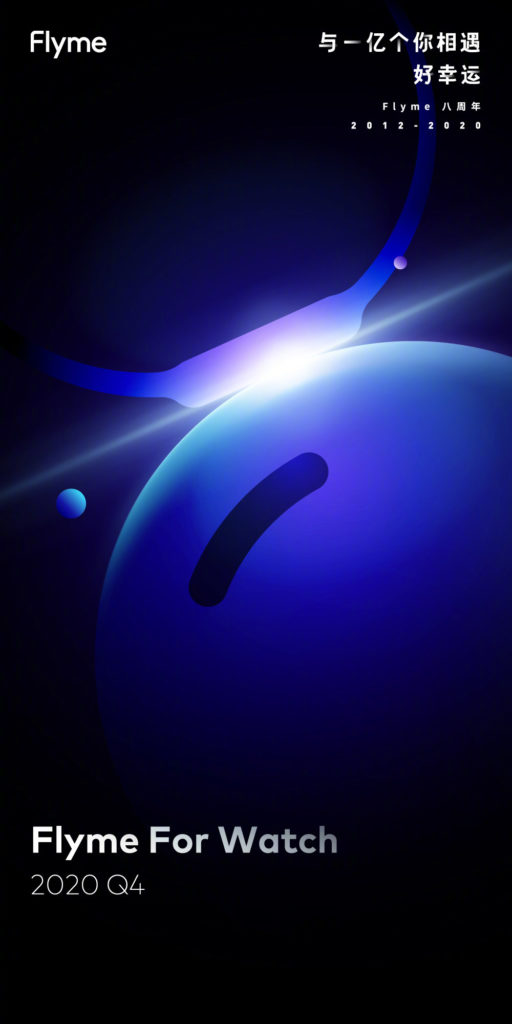
Meizu is one of the oldest Chinese smartphone makers with little presence in international markets. According to the latest teaser on Flyme’s (the company’s Android skin) official Weibo account, the brand’s first proper smartwatch will be finally launching in Q4 2020 with Flyme For Watch software on board.
Meizu is known for smartphones with standout designs. Since its inception, its hardware and software have been different from other companies. However, the company has not launched a proper smartwatch in its 12 years of existence in the smartphone industry.
But that’s going to change soon as the brand officially teases the launch of its first-ever proper smartwatch in Q4 2020. Additionally, it also confirms that it will be running Flyme For Watch.
Having said that, the base OS underneath the Flyme For Watch is a mystery. For instance, Xiaomi uses Android Wear platform for its MIUI For Watch. On the other hand, Oppo’s ColorOS Watch is based on AOSP.
Also, you might have noticed by now that we are calling the upcoming Meizu wearable as ‘proper smartwatch’. That’s because the brand already launched a hybrid smartwatch called ‘Meizu Smart Watch Mix’ aka ‘Meizu Light Smartwatch’ in 2016.
Although the launch of Meizu’s next wearable is months away, we can expect it to start leaking days or even weeks ahead of its official announcement.
Olympus has recently announced that it is planning on leaving the camera business entirely. The company will be selling its imaging division to an investment fund.
Japan Industrial Partners has previously bought the VAIO computer business from Sony and haw now also signed an MoU (memorandum of understanding) that will have Olympus transfer its imaging division. This division was a small part of Olympus’ business that mostly comprises of medical equipment manufacturing, with an example being endoscopes.
The company’s CEO, Yasuo Takeuchi, had hinted at this move back in 2019 in a press conference when he said that Olympus’ camera division can be sold. Although that remark was watered down later on. According to an official statement from the company “we had implemented measures to cope with the extremely severe digital camera market, due to, amongst others, rapid market shrink caused by the evolution of smartphones.” However, it seems those efforts have not succeeded as the business will be sold off now.
Japan Industrial Partners is expected to streamline the imaging division, similar to what it did with VAIO. In other words, it will continue to develop products using the Olympus brand such as OM-D and Zuiko. Olympus and JIP will sign a definitive agreement by the end of September with the entire deal closing near the end of this year. Unfortunately, finer details and financial terms have yet to be revealed.
Earlier this year, Samsung unveiled its Odyssey lineup of gaming monitors at CES 2020. While pre-order for the Odyssey G7 and the Odyssey G9 monitors had started in the US, only the G7 was listed in South Korea. Now, the company has finally launched the Odyssey G9 globally.
The Samsung Odyssey G9 is priced at 1.9 million KRW (roughly 1,600 US Dollars). It is the world’s first dual-QHD resolution supporting monitor, is NVIDIA G-Sync compatible, and has a 1000R curvature. The new gaming monitor is also the world’s first monitor to support HDR10+, which is thanks to its QLED panel with DisplayHDR 1000 certification.
The high end gaming monitor had won the CES 2020 Innovation Award in the Computer Peripherals and Accessories category due to its unique curved design. So, gaming enthusiasts have something to really look forward to. The Samsung Odyssey G9 sports a 49 inch curve QLED panel with a 5120×1440 resolution and an aspect ratio of 32:9.
Furthermore, it has a high refresh rate of 240Hz with 1ms response time and 1000 nits of peak brightness. The monitor also covers 95 percent of the DCI-P3 color gamut and is compatible with both NVIDIA G-Sync and AMD FreeSync Premium Pro. So, gamers that have hardware from either team red or green will benefit in this regard. Notably, the monitor can also be rotated, swiveled, and tilted according to users’ requirements.
In terms of ports, the Odyssey G9 has two DisplayPort 1.4 ports, one HDMI 2.0 port, three USB 3.0 ports, and a headphone jack. Additionally, the monitor also offers features like Black Equalizer and Virtual Aim Point. It is also the first monitor in the industry to receive TÜV Rheinland’s best rating for its 1000R Curved Display and Eye Comfort certification. The Samsung Odyssey G9 arrives in a single white variant, but with an Infinity Core lighting area at the back. This region supports 52 colors and 5 different lighting effects. So RGB lovers rejoice!
A new report has suggested that the Samsung Galaxy Note 20 Ultra will have its zoom lens capped at 50x magnification. This may seem odd considering the previously released Galaxy S20 Ultra sports a 100x Space Zoom, but the company is reportedly placing an emphasis on image quality and user experience over raw numbers.
Note20 Ultra will cancel 100X, the maximum is 50X, Samsung will strive to optimize the zoom experience of the maximum 50X, more focus on the experience.
The news was first shared by Ice Universe, a known leakster, on Twitter. According to his tweet, the South Korean tech giant will not feature the 100x Space Zoom that was found in the previously launched flagship series. Instead, an additional focus is being placed on improving the image quality and user experience when magnified to 50x zoom.
Despite having one of the best looking camera modules, in terms of technicality, the Galaxy S20 Ultra was not as impressive in real life when compared to its rivals. Thus, it would seem plausible that Samsung would double down on achieving high numbers and prioritize the improvement of its existing technology and offer a better photographic experience overall.
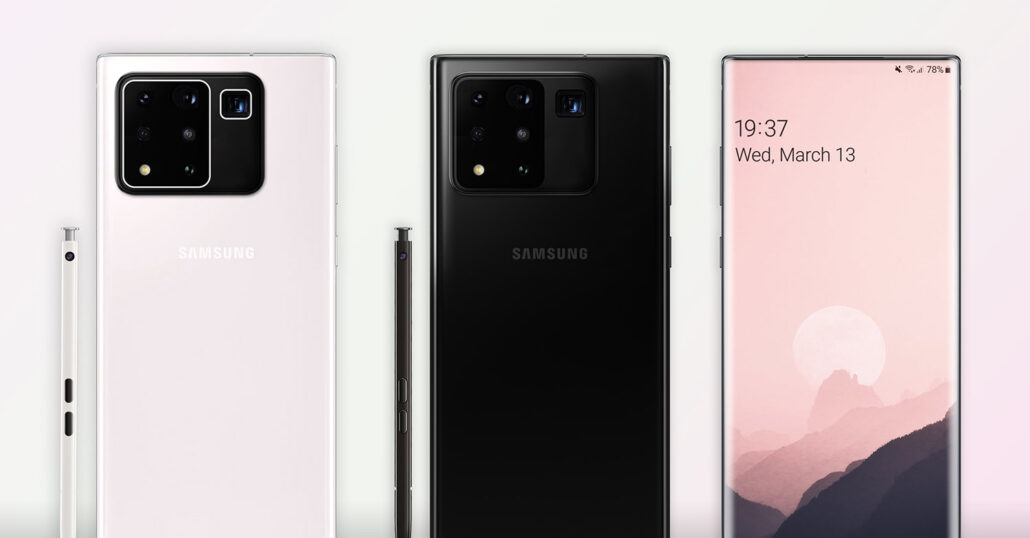
Samsung Galaxy Note 20 Ultra Render
Unfortunately, Ice Universe did not share any finer details into the matter. It is also currently unknown if the Galaxy Note 20 Ultra will feature the periscopic lens either. While rumors regarding its other key specs have already surfaced, we would have to wait for the official announcement to confirm anything. So stay tuned as we will be covering its rumored August 5th Unpacked launch event.
Huawei’s smartwatches are simply known as ‘Huawei Watch’. But earlier in May, the company filed a trademark for ‘Mate Watch’. Now, according to a new tip from the same person (@RODENT950) who spotted the trademark, the so-called Huawei Mate Watch might run HarmonyOS and could launch alongside the Mate 40 series.
If Huawei’s schedule has kept up then the Mate Watch is the first HongMengOS powered smartwatch, will be released with the Mate 40 series. rumors say it would happen during Chinese National Day.🤷♂️ #HuaweiMate40Series#HuaweiMateWatch
Last year, Huawei officially introduced its homegrown operating system called HarmonyOS. It is a distributed OS based on Linux micro-kernel architecture.
As per the roadmap shared by the company at Huawei Developer Conference (HDC) 2019, HarmonyOS 2.0 will be released this year with support for PC, cars, and smart wearables. Hence, it is possible for the upcoming Huawei Mate Watch to run HarmonyOS instead of Huawei Lite OS found on its current smartwatches.
In addition to the software, the tipster also says that according to rumors, the wearable might launch alongside Mate 40 series on Chinese National Day, which will be celebrated on October 1st. This goes in line with a previous leak, which suggested the launch of Huawei Mate 40 series to take place in October as scheduled despite tensions from the US government.
Earlier this week, a Brazilian diplomat revealed that the US government is providing funds to companies in the country and other regions to buy 5G networking equipment from Huawei rivals.
The US is helping in financing telecom operators in Brazil and other countries. This is to prevent them from buying 5G gear from “untrusted” Chinese companies, which primarily hints at Huawei. According to Ambassador Todd Chapman, appropriate alternatives for 5G technology have been found through Ericsson, Nokia, and Samsung.
The funds have been allocated from the US International Development Finance Corporation (DFC), which is a government agency that finances private development projects. Furthermore, Chapman stated that Huawei Technologies is untrustable as a partner that will help build 5G across the globe, despite being the world’s largest telecommunications equipment provider.
For those unaware, Huawei has been in Brazil for over 20 years and has partnered with local telecom operators to test 5G networking in the region. It has already built the backbone of the infrastructure regarding the newer and faster bandwidth using Chinese equipment. Notable partners include major carriers like Telefonica Brasil SA, TIM Participacoes SA, America Movil’s Claro and Oi SA.
Honor is expected to launch its next phablet dubbed as Honor X10 Max on July 2. But we know almost everything about this handset, thanks to a number of leaks in the past few days. In addition to those, the brand itself has also begun to tease some specs officially on Weibo. Earlier today, it revealed that this device will feature an RGBW panel.
Normally, displays found on smartphones use RGB pixel arrangement. But the upcoming Honor X10 Max will come with RGBW screen.
LCD panels with RGB (Red, Blue, Green) pixel arrangement produce white color by illuminating the aforementioned color pixels at their highest intensity. But some of the light is weakened due to the color filters.
On the other hand, RGBW LCD panels have a dedicated white subpixel. Thus, the overall brightness produced by these displays is better than conventional RGB screens found on most smartphones.
The brand even showcased the display brightness prowess of Honor X10 Max in a video. This particular video was shot on the day of Summer Solstice (June 21) when the sunlight hit directly on Tropic of Cancer.
The display on the Honor X10 Max will be of 7.09-inches making it the perfect choice for consuming content and playing games. It will be powered by a Mediatek Dimensity 5G chipset unlike Kirin 820 on the regular Honor X10.
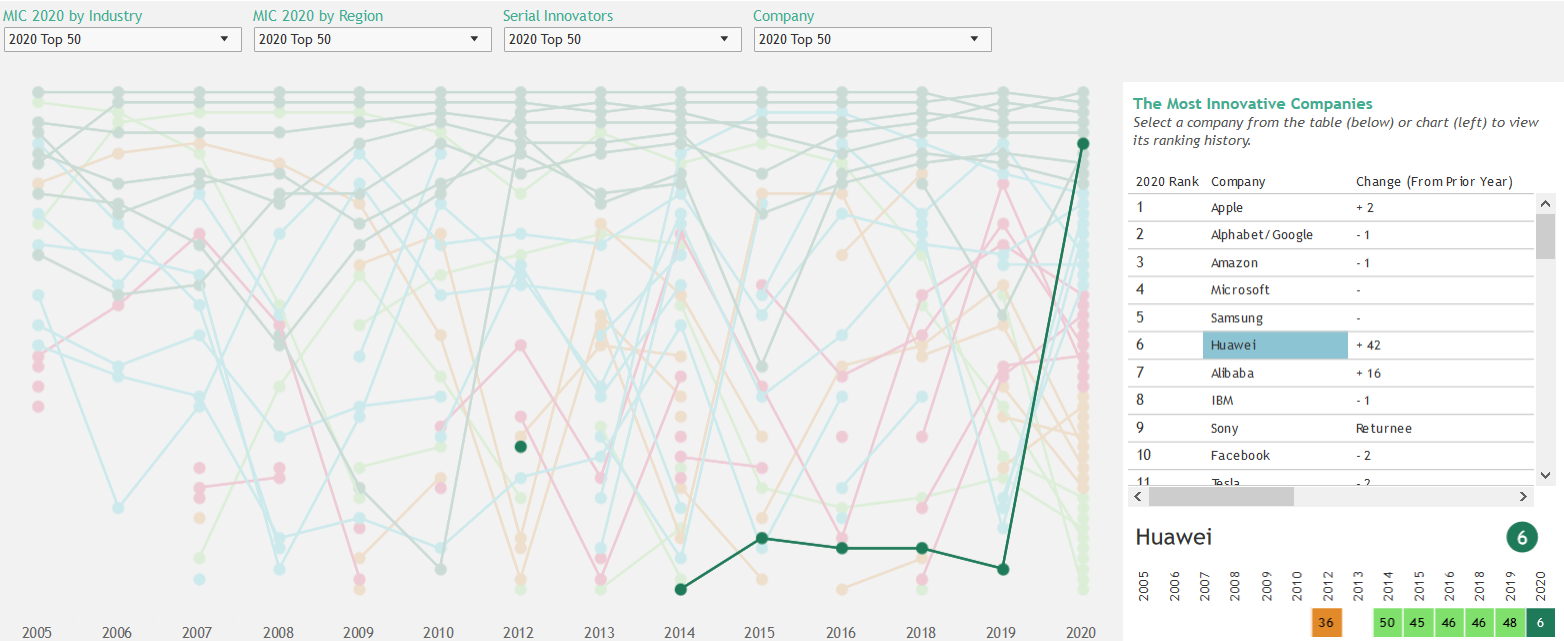
Huawei, the Chinese tech giant, has made a huge leap up the rankings in the list of the Most Innovative Companies over time. The rankings were made by BCG that has surveyed global innovation since 2005 and listed the top 50 companies that they believe deserve these spots.
In this list, Huawei has made a massive jump in recent times, crossing 42 positions to reach the number 6 spot in the list just below Samsung and Microsoft. Back in 2014, the company was at the very bottom and has made its way up since then. Keep in mind it wasn’t a straight line up, as Huawei did see a healthy rise in 2015, but it was quickly followed by a decline to the 48th position. However, from here the popular consumer electronics maker took off, beating the likes of Sony, Facebook, Alibaba, and more.
Furthermore, the rankings also include many known tech based brands as well, including Apple that currently holds the top spot. Google follows close behind in second place followed by Amazon. Xiaomi also made the list as a returnee this year, meaning they were not ranked since 2016. Now, the Chinese vendor holds the 24th spot on this list.
There can be many possible reasons for this immense rise in innovation for Huawei. The company is a pioneer in 5G networking and has been pushing the adoption of the newer and faster bandwidth in many regions despite pressures from the US. Additionally, the ban from the US has also forced the company to innovate and adapt on multiple fronts with proprietary development occurring for both software and hardware.
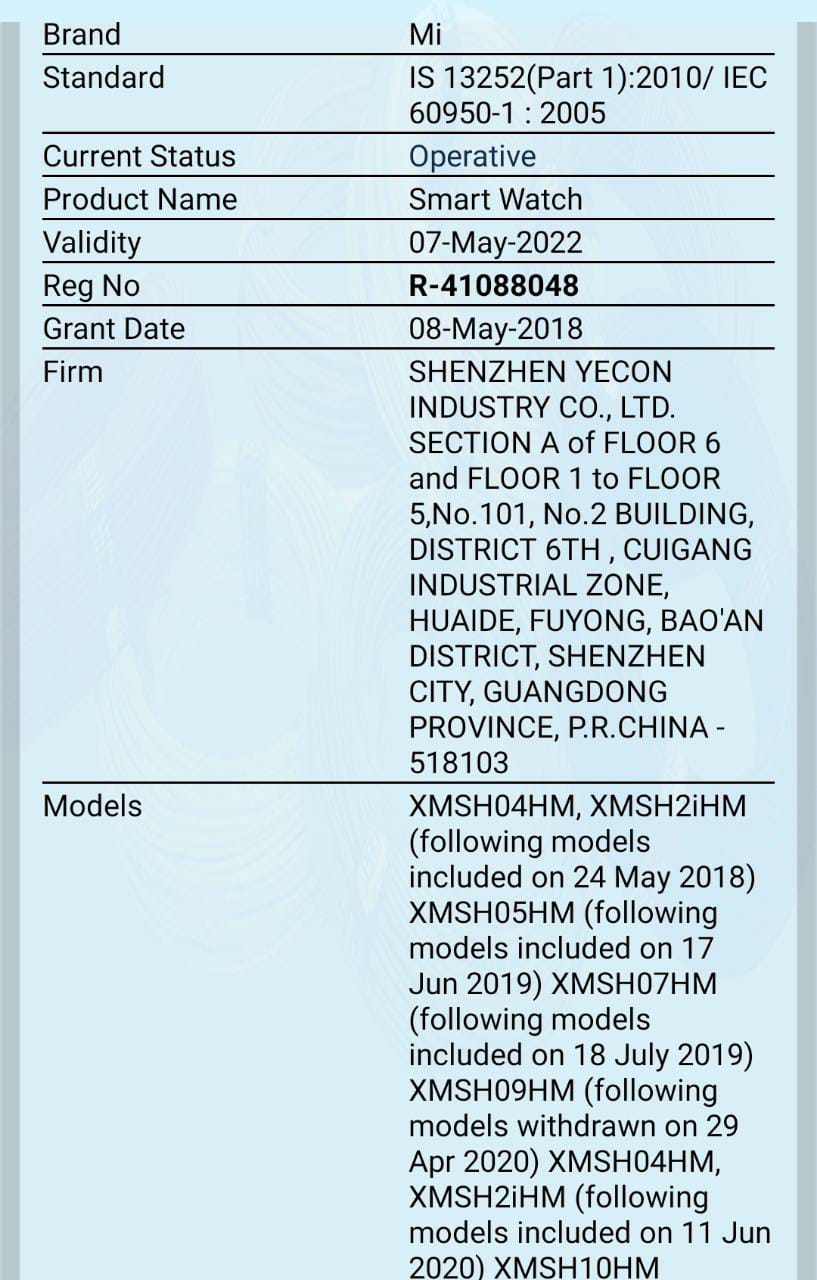
Xiaomi recently unveiled the Xiaomi Mi Band 5 fitness tracker in China. The smart band comes in NFC and non-NFC versions. Rumors surrounding it have claimed that unlike before, Xiaomi will be selling the NFC version of the Mi Band 5 in global markets. India could be one of the first markets to receive the fitness tracker as it has been approved by the Bureau of Indian Standards (BIS).
The XMSH10HM model number that has appeared on the database of BIS belongs to the Xiaomi Mi Band 5. Last year, Xiaomi launched the Mi Band 4 in China in June and it arrived in India in September. Its successor went official earlier this month in the homeland and now it could be arriving in multiple markets including India in the near future.
In 2018, Xiaomi India introduced the Mi Band 3 in the country in the month of September. Hence, there is a possibility that this year too the Mi Band 5 may break cover in the same month in India.
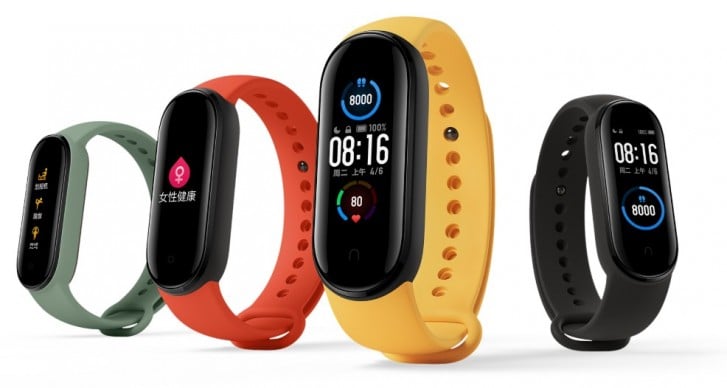
The Xiaomi Mi Band 5 is a 50ATM water-resistant fitness tracker. It comes with an all-new magnetic charging dock. Once charged, the device can last for up to 14 days.
The Mi Band 5 is fitted with a 1.1-inch color AMOLED and it comes numerous watch faces. The device supports 11 sports modes and it has a heart rate sensor. Other functions of the Mi Band 5 include sleep tracking, Personal Activity Intelligence (PAI) index, remote-control camera function, and Xiao AI assistant. There is an NFC chip onboard for contactless payment.
The global edition of the Mi Band 5 may feature Amazon Alexa assistant. Its NFC variant is priced at 229 Yuan (~$32) whereas the non-NFC model sells for 189 Yuan (~$27) in China. It comes in strap colors like black, blue, pink, orange, purple, yellow, and green.
Amid the ongoing COVID-19 pandemic, Huawei Technologies has opened a new flagship store in one of China’s most exclusive shopping streets. The move comes just after the United States added more sanctions on the Chinese giant.
It seems that the company is also trying to get a bigger market share in its home country, where it already is a leading smartphone brand, to rival the likes of Apple. The new Huawei flagship store has three floors, covering almost 5,000 sq. meters.
New Huawei Flagship Store in Shanghai, China. (Image: Reuters)
It is established in a stylish art deco building in Shanghai. The store is located just across the street when Apple has its own store. Before the store officially opened its door for customers, lined were formed to go inside. As per the reports, the crowd mainly consisted of young customers who wanted to experience the latest Huawei products.
The store will also be hosting free daily lectures on various topics, ranging from video production to fitness and music. Just like what Apple does, the store will have around 220 consultants who will offer translations in 10 languages to help customers.
Last year, Huawei had opened its “first global flagship store” in downtown Shenzhen, where the company is based. Apart from China, to boost its brand in the European market, the company has launched big stores in Madrid and Paris.
Huawei is gearing up to launch its next-generation premium Mate 40 series of flagship smartphones, just around the time of the new iPhone launch. However, the recent crackdown by the U.S. has disrupted the supply chain of Huawei which is leading to delay in the production of components and parts for the upcoming devices.
But with such antics, the company is making sure that it keeps pandering to the local users in China. it seems that with this new store opening, the company is appealing to the patriotism of Chinese customers. And it seems to be working.
Chinese customers are now opting for Huawei smartphones after the United States essentially put the Chinese giant on a blacklist. With customers opting for Huawei instead of other Chinese brands like OPPO, Vivo, and Xiaomi, Huawei is now targeting the loyal base of Apple in China. The company now has around 42.6% of the market share in China.
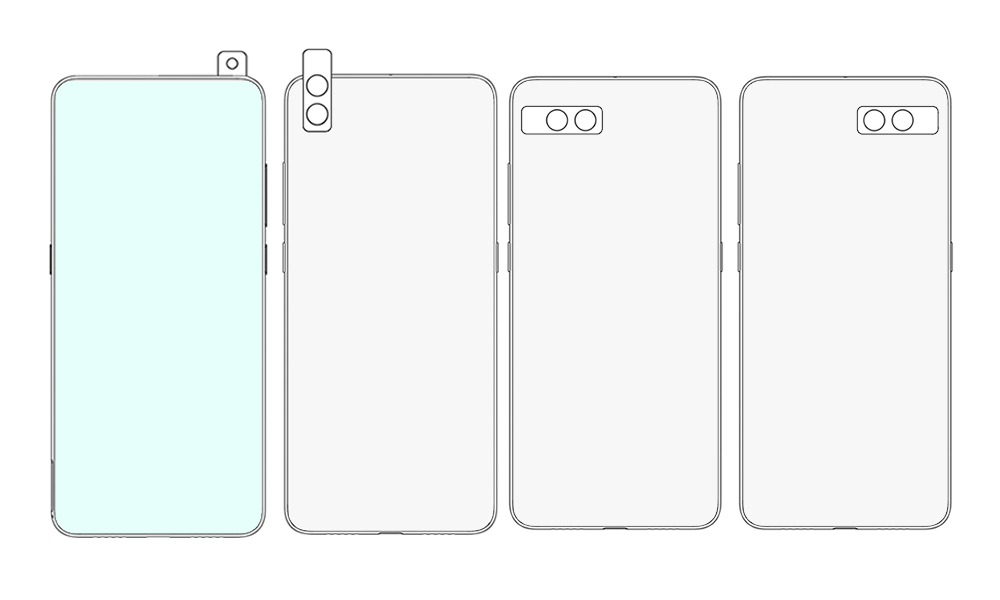
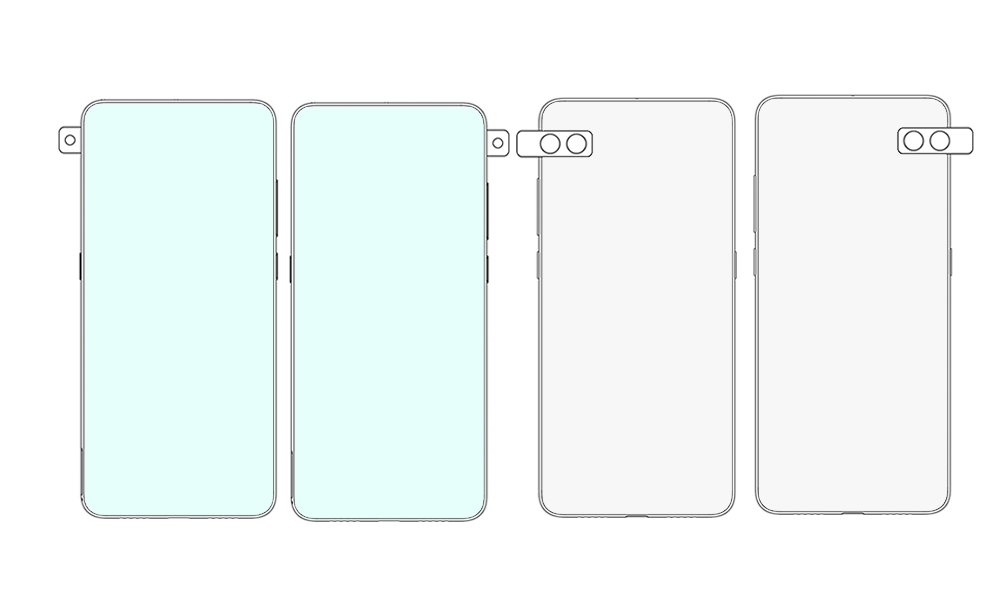
Now, yet another smartphone patent from Xiaomi has surfaced online which shows a unique camera module designed in such a way that the front-facing camera sensors won’t be visible when not in use.
The aim of this design is pretty clear. The company wants to use as much front space as possible for the display. So, there are no camera sensors placed on the front side and the entire front panel is covered with a screen.
From the images, it seems that the camera module has a rotating design so when the front-facing camera is triggered, the module rotates and a sensor pops out. Because of 360-degree rotation support, the camera can also slide out from the side of the phone.
This design patent could be an alternative to the current pop-up camera mechanism as well as an alternative to the under-display camera technology. While Visionox has announced in-display camera technology for mass production, some brands have said that the tech isn’t yet ready for flagship-grade performance.
As for this particular patent, it remains to be seen if Xiaomi decides to go ahead and start working on a smartphone with this design to bring it out commercially. As not all patents see the light of the day, there’s no certainty that we’ll see a smartphone with this design getting launched.
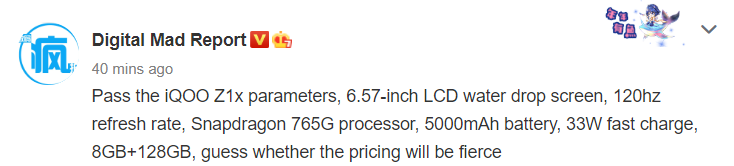
iQOO is expected to soon announce the iQOO Z1x mid-range phone in China. The company is yet to confirm the existence of the device that is set to arrive as an inferior version of the Dimensity 1000+ powered iQOO Z1 that debuted last month in China. A Weibo user and a known tipster has shared the key specifications of the iQOO Z1x phone.
New information reveals that the iQOO Z1x has a waterdrop notch display of 6.57 inches. This leak contradicts previous claims that the iQOO Z1x will have a punch-hole display like other iQOO phones that debuted this year. The LCD panel will carry support for Full HD+ resolution and up to 120Hz refresh rate.
The iQOO brand was introduced last year in China. So far, all the phones that it has launched have featured the powered Snapdragon 8XX series flagship chipsets. The iQOOZ1x will be the company’s first to feature Snapdragon 7XX SoC. Multiple leaks have revealed that the Snapdragon 765G SoC will be driving the smartphone. The SD765G powered iQOO Z1x with V2012A model number was spotted with 8 GB of RAM and Android 10 OS on Geekbench in the previous month.
The iQOO Z1x will be arriving with an internal storage of 128 GB. As it was revealed yesterday, the Z1x will be backed by a 5,000mAh battery. Its 3C appearance revealed that it could be shipping with a 33W rapid charger. According to another tipster, the smartphone will be flaunting a 48-megapixel primary camera on its back. Probably, the phone will be fitted with a triple camera system.
The iQOO Z1x will be aggressively priced in China. The iQOO Z1 starts at 2,198 Yuan (~$311). Hence, there is a possibility that the Z1x could be starting well under 2,000 Yuan (~$283).
Realme will be launching the Realme C11 smartphone in Malaysia on June 30. Reports surrounding the smartphone have revealed that the mid-range phone has a model number of RMX2185. The same has been found listed at the database of the Bureau of Indian Standards (BIS) which indicates that it will be also heading to the Indian market in the near future.
In addition to BIS appearance, the Realme C11 moniker was recently found listed in the support for Realme India. The BIS listing of the RMX2185 has no information available on its specs. However, Realme has already revealed some of the key specs of the phone ahead of its Malaysian launch.
The Realme C11 is expected to arrive with 3 GB of RAM and a built-in storage of 32 GB. It will also feature a dedicated microSD card slot.
Realme C11
The rear side of the Realme C11 has an AI dual-camera system that includes a main lens of 13-megapixel. The camera supports Super Nightscape mode for enhanced photography in low light conditions. The posters of the phone have revealed that it will be the first Realme phone to feature a square-shaped camera module. The handset is expected to arrive in black and green color options. There is no word on its pricing.
Gadgetlootbox is a booming Chinese retailer that offers bargain deals on selected products. It provides massive discounts and coupons on the items that are listed on the website. The focus of the website is to offer hefty discounts for listed products, thereby providing the cheapest price to its visitors.
Since many of you may not know the retailer, let’s take a look at what it offers.
Gadgetlootbox Services
Gadgetlootbox offers value-for-money deals to maximize your saving, provides member benefits and rewards. It aims to bring a worry-free environment after and before buying any product. Many customer benefits and rewards are also part of the new service.
It adds authentic product reviews and offers support for the products ordered from the platform. The publishers and marketers can also benefit from the Gadgetlootbox affiliate program. Furthermore, the company is bringing tech-influencers, reviewers, and geeks on the platform to promote the products and grab greater discounts in return.
For example, the techies can promote the Lepow Monitor for the discounted price of $149 using a dedicated coupon, and 20 buyers will get 100% cashback.
Other features of Gadgetlootbox:
Payment Support – Gadgetlootbox supports Paypal for global payment support. It is the easiest and safest platform for financial transactions across the globe.
Fast Delivery – The users in the US will get the products delivered within 7 Days DOA guarantee. It means 99.99% of deliveries will be made within a week across the US.
Warranty – All the devices bought from the website will offer a one-year repair warranty. It helps the users to remain stress-free if buying from Gadgetlootbox.
To better understand how to avail a deal, let’s take a closer look at an example.
In the below section, we have added steps to shop Lepow Portable monitor easily. It houses a 15.6 inch HD display built with OPS panel. It is a lightweight and slim portable display measuring 0.3 inches in thinness and weighing over 1.76 pounds. The users can easily connect Lepow portable monitor with PS4, Xbox One, Fire TV Stick, and other devices by connecting it with the Mini HDMI, Type C port, and 3.5mm audio port.
Our review of the Lepow monitor will be up very soon!
How to use Gadgetlootbox
It is quite easy and simple to use platform. Follow the steps below to enjoy the exciting discounts and offers on popular gadgets.
Create a new account by heading to the Gadgetlootbox website. You need to press the ‘Sign Up’ button on the top left corner. You can check the screen-shot below for better understanding.
Select the favorite deal you want to grab by hitting the ‘Buy Now’ button. For example, You want to buy the Lepow Portable monitor, then hit the Buy now button and hit the continue to checkout on the proceeding page. Note: Before hitting the button, make sure that the deal is deliverable in your area by checking the additional details present at the bottom of the display.
The user can easily participate in the giveaway and can grab a 5% commission if any friend buys it from the link below. To get the free Lepow Portable Monitor to follow the steps below to enter it. A. Place an order, and then submit a review in the comments section.
B. The company will randomly select 20 Most useful content and will publish it on the Facebook page.
C. You will get 100% cash back on the product you bought.
Checkout Process
Gadgetlootbox follows a simple checkout process with fewer clicks or taps. The user can easily apply any coupon code before making payment using Paypal. You will be redirected to the order page once payment is succeeded.
Delivery and Warranty
The package will be delivered within seven days in the US if it is available in the US local warehouse. You can know more about 7 Day Dead on Arrival Guarantee by heading to the Warranty and Return page. Overall, one year warranty is available on every product that is available on the Gadgetlootbox.
Customer Service
Gadgetlootbox support is available with an email contact at [email protected].
It is an overwhelming service for the users who look for good discounts on their favorite products. Moreover, it can help publishers, and influencers earn commission by sharing the products and deals with their followers and readers. As of now, the user can head over to Gadgetlootbox to grab Lepow portable display.
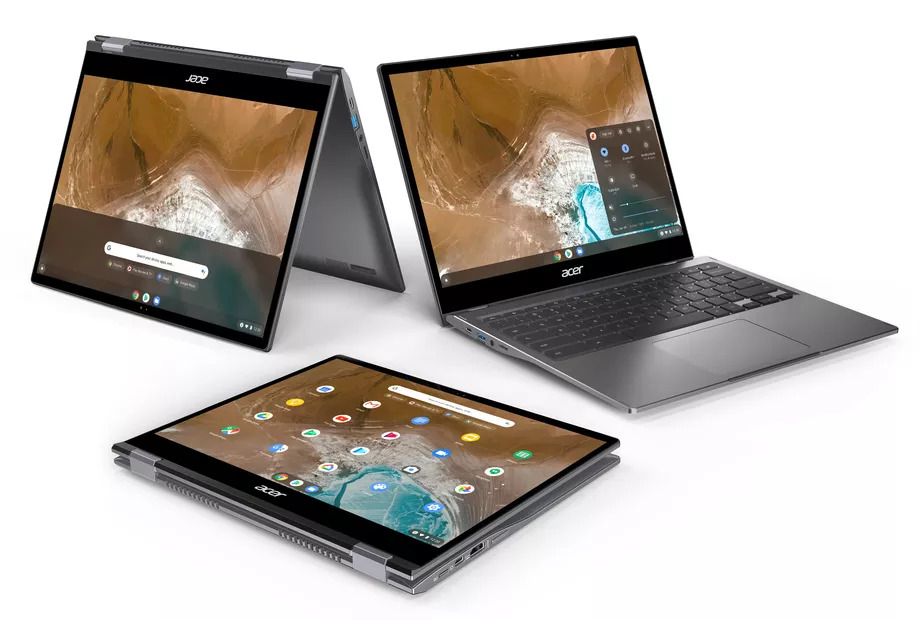
Acer has announced its latest Chromebook, dubbed as the Chromebook Spin 713, which is a part of the Intel Project Athena program. Compared to the previous generation Spin 13 Chromebook, the new premium device has a better look, feel, and design.
It comes with a sturdy aluminum chassis which the company claims can survive drops from up to 48 inches and withstand up to 132 pounds of force. The hinge supports 360-degree rotation and the device weighs 3.02 pounds.
The Acer Chromebook Spin 713 comes powered by the latest 10th generation Intel processors, packed with up to 16GB (DDR4) RAM and 256GB SSD. As for the display, it features a 13.5-inch screen with a 3:2 aspect ratio and 2256 x 1504 pixels resolution. The screen comes with a coating of Gorilla Glass on top.
The keyboard on the device reportedly has good travel and decent spacing. It also comes with a pair of USB Type-C ports, an HDMI port, a USB port, and a microSD-card reader. The device supports dual-band Wi-Fi 6 and Bluetooth 5 as connectivity options.
As for battery life, the company says that it will last for up to 10 hours on a single charge. Acer has also announced the business-oriented Enterprise Spin 713, which comes with Google’s Chrome Enterprise security solution.
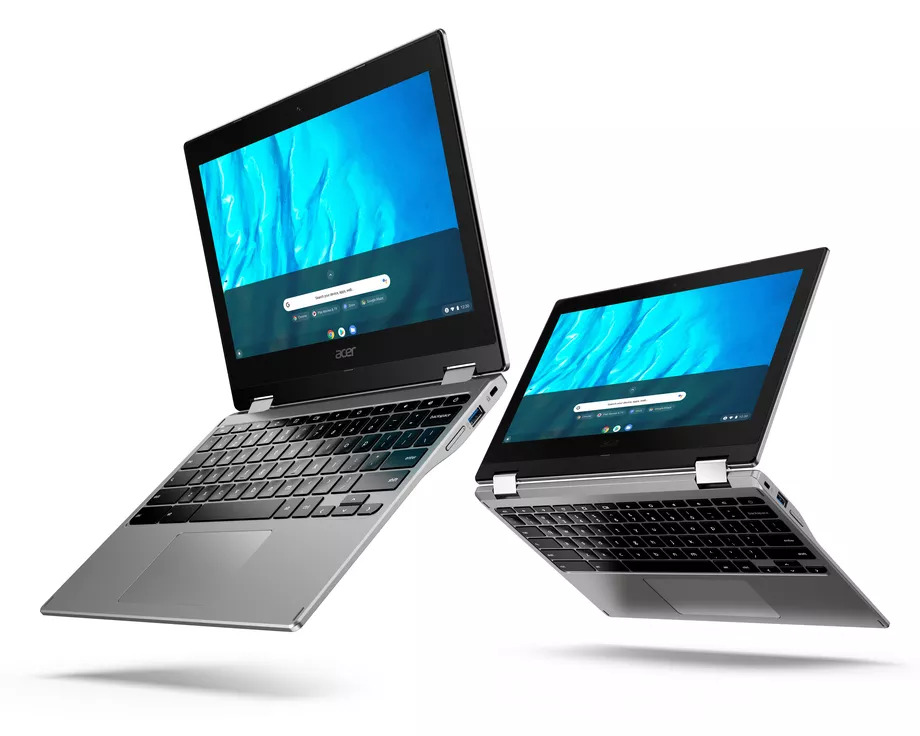
The company has also announced Acer Spin 311 Chromebook which comes with an 11.6-inch display and is designed for casual users and students. Under the hood, it is powered by MediaTek‘s MT8183 octa-core processor.
The screen of the device as well as the trackpad is protected by a layer of Gorilla Glass. It is promised to offer around 14 hours of battery life on a single charge. So far, Acer has not released the full specs sheet of the Spin 311 but it should be released soon.
Coming to the pricing of the devices, the Chromebook Spin 713 starts at $629 and will be available for purchase in North America from next month. On the other hand, the Enterprise Chromebook Spin 713 will be available from August for a starting price of $1,099. The budget Chromebook Spin 311 starts at $259 and will be up for sale from July.
Today, the Motorola One Fusion+ will go on sale in the Indian market for the first time. It will be available for purchase at 12:00 PM local time through the online marketplace Flipkart. The device will be offered in two color options — Moonlight White and Twilight Blue, for a price of ₹16,999 (~$224).
As for the specifications, the smartphone comes with a 6.5-inch Full HD+ 19.5:9 ‘Total Vision’ display, offering 2340 x 1080 pixels screen resolution. Under the hood, the device is powered by the Qualcomm Snapdragon 730G SoC, coupled with 6GB RAM and 128GB internal storage.
In the camera department, it features a quad-camera setup that consists of a 64-megapixel primary camera, a 118-degree 8-megapixel ultrawide shooter, a 5-megapixel macro lens and a 2-megapixel depth sensor.
On the front side, there’s a 16-megapixel snapper for taking selfies and video calling, housed inside a pop-up mechanism. The phone comes with a rear-mounted fingerprint sensor as well as a dedicated Google Assistant button.
The device runs the Android 10 operating system out-of-the-box and is powered by a 5,000mAh battery that has support for 15W TurboPower fast charging technology.
The Xiaomi Redmi 9 handset has gone official in China today. In the past few days, the handset debuted in markets like Spain and Malaysia. The smartphone is coming to India since it is one of the major markets for Xiaomi. Recently, the Bureau of Indian Standards (BIS) had certified two model numbers that belong to the Redmi 9 phone. Interestingly, the TUV certification of Redmi 9 model numbers reveal that one variant may debut as a POCO device.
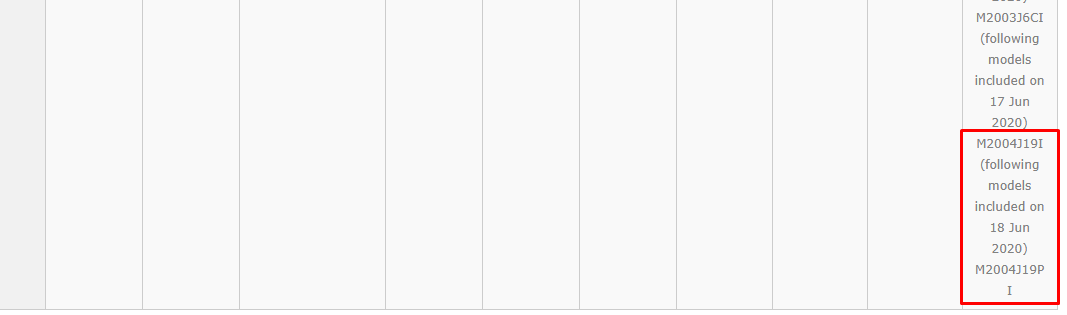
As can be seen in the screenshot taken from the BIS site, the Indian authority recently approved two model numbers such as M2004J19I and M2004J19PI. These Redmi 9 model numbers along with M2004J19AG (Europe variant), M2004J19C (China variant), and M2004J19G (global) were spotted at Bluetooth SIG body in May.
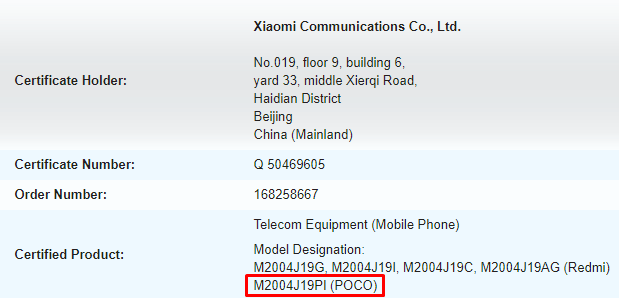
The BIS listing suggests that M2004J19I and M2004J19PI are heading to India. The above-mentioned model numbers have also surfaced on TUV Rheinland certification. The listing reveals that M2004J19G, M2004J19I, M2004J19C, and M2004J19AG are Redmi branded devices whereas the M2004J19PI is POCO phone.
The exact product name of the M2004J19PI is not known. However, it is likely to be a Redmi 9 variant with POCO branding. Hence, it is likely to debut as the cheapest POCO smartphone. It could be a POCO M2 series.
POCO is gearing up to launch its next phone in India. It is believed that a variant of the Redmi Note 9 series could be breaking cover in India as POCO M2 Pro. The M2004J19PI may end up as POCO M2. Since these details aren’t officially confirmed, readers are advised to digest the report with a grain of salt.
OPPO had launched the OPPO A9 2020 smartphone in the Indian market in September last year. Just a month after the launch, the device received a price cut of ₹1,000 which brought down the price from ₹16,990 to ₹15,990 (~$211).
Now, the device has received yet another price cut in the Indian market, and this time the price slash is of ₹3,000 for the base model. With this, the 4GB RAM variant of OPPO A9 2020 now starts at ₹12,990 (~$172).
The pricing of the other variant which packs 8GB RAM and 128GB storage remains the same. However, Amazon.in has listed the device at ₹18,490 (~$245) instead of ₹18,990, which is ₹500 less than the original price.
The OPPO A9 2020 comes in two color options — Marine Green and Space Purple. A couple of months after the launch, the Chinese company started offering a third color option in India — Gradient White. Later, the Vanilla Mint color option was introduced in India.
As for the specifications, the smartphone features a 6.5-inch waterdrop Sunlight Screen which offers a screen resolution of 1600 x 720 pixels and has a screen-to-body ratio of 89 percent. There’s a Blue Shield for filtering blue light and protecting from eye fatigue.
Under the hood, the device is powered by Qualcomm Snapdragon 665 chipset and packs 4GB or 8GB RAM, and both the variants pack 128GB UFS 2.1 internal storage. It also comes with a dedicated microSD card slot for expanding the storage capacity up to 256GB.
In the camera department, it comes with a quad-camera setup on the back which consists of a 48-megapixel f/1.8 primary camera, an 8-megapixel f/2.25 aperture with 119-degree ultrawide angle camera, and two 2-megapixel cameras with f/2.4 aperture.
On the front side, it features a 16-megapixel camera with an f/2.0 aperture and AI beautification. The phone has electronic image stabilization and an Ultra Night Mode 2.0 that also works with ultrawide angle photos.
The OPPO A9 2020 features stereo speakers and Dolby Atmos. The smartphone runs Android 9 Pie-based ColorOS 6.0.1 with features such as Game Boost 2.0 for smoother and more responsive gaming, HyperBoost, Game Space, Game Assistant, and a Riding Mode.
The device also comes with a rear-mounted fingerprint sensor. The smartphone is powered by a 5,000mAh battery which also supports reverse charging. At the time of devices with fast charging speed, this one supports just 10W charging.
Last week, Huawei unveiled the Enjoy 20 Pro smartphone in China. The 5G-ready phone is the first phone in the Enjoy 20 series to go official. As scheduled, the Enjoy 20 Pro went on sale for the first time in China today. The handset landed in the country with a starting price of 1,999 Yuan.
Huawei Enjoy 20 Pro 5G pricing
The Huawei Enjoy 20 Pro is available in China in two models such as 6 GB RAM + 128 GB storage and 8 GB RAM + 128 GB storage. They are priced at 1,999 Yuan (~$283) and 2,299 Yuan (~$325), respectively. The phone comes in three colorways like Magic Night Black, Dark Blue, and Galaxy Silver. There is no word on the global availability of the device.
The Enjoy 20 Pro has a 6.5-inch IPS LCD waterdrop notch screen that offers 90Hz refresh rate and Full HD+ resolution. The EMUI 10.1 based Android 10 OS runs on the phone.
The Dimensity 800 5G brings 5G capabilities on the Enjoy 20 Pro. It has LPDDR4x RAM, UFS 2.1 storage, and a nano memory card slot for more storage. The device features a side-facing fingerprint sensor.
The Enjoy 20 Pro has a front camera of 16-megapixel. Its rear has a triple camera unit that includes a 48-megapixel main camera, an 8-megapixel ultra-wide lens, and a 2-megapixel macro lens. There is a 4,000mAh battery inside the device that supports 22.5W fast charging.
In terms of specs, the Enjoy 20 Pro is almost identical to the Enjoy Z phone that debuted in May. Also, it is believed that the upcoming Honor 30 Lite 5G is a rebranded version of the Enjoy 20 Pro.
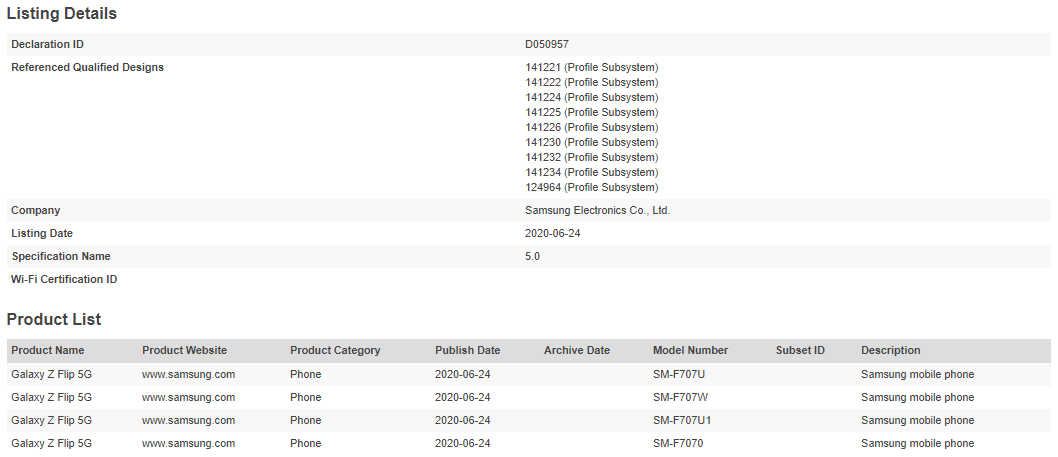
According to past reports, Samsung will be launching the Galaxy Z Flip 5G flip phone with a foldable screen in August alongside the Galaxy Note 20 series and Galaxy Fold 2. As the name goes, the Galaxy Z Flip 5G will be a 5G-ready version of the original Galaxy Z Flip 5G that went official in February this year. Samsung is yet to confirm the existence of the Galaxy Z Flip 5G. The moniker of the device and its models have received approval from the Bluetooth SIG authority which indicates its launch is not far away.
The Galaxy Z Flip 5G variants such as SM-F707U, SM-F707W, SM-F707U1, SM-F7070, SM-F707N, and SM-F707B have been certified by the Bluetooth SIG body. The Bluetooth SIG listing only confirms that the Galaxy Z Flip 5G supports Bluetooth 5.0.
The Samsung SM-F707B model has been previously spotted at the Geekbench benchmarking platform. The listing revealed that the device is loaded with Android 10 OS and it has Snapdragon 865 SoC and 8 GB of RAM.
Like the original Galaxy Z Flip, its upcoming 5G edition will also feature a dual-party battery with a rated capacity of 3,300mAh. The flip phone is expected to support 15W fast charging. The other thing that is known about the device is that it could be arriving in brown color. There is no word on the pricing of the Galaxy Z Flip 5G.
We use cookies on our website to give you the most relevant experience by remembering your preferences and repeat visits. By clicking “Accept”, you consent to the use of ALL the cookies.
This website uses cookies to improve your experience while you navigate through the website. Out of these, the cookies that are categorized as necessary are stored on your browser as they are essential for the working of basic functionalities of the website. We also use third-party cookies that help us analyze and understand how you use this website. These cookies will be stored in your browser only with your consent. You also have the option to opt-out of these cookies. But opting out of some of these cookies may affect your browsing experience.
Necessary cookies are absolutely essential for the website to function properly. This category only includes cookies that ensures basic functionalities and security features of the website. These cookies do not store any personal information.
Any cookies that may not be particularly necessary for the website to function and is used specifically to collect user personal data via analytics, ads, other embedded contents are termed as non-necessary cookies. It is mandatory to procure user consent prior to running these cookies on your website.















 A. Place an order, and then submit a review in the comments section.