Xiaomi has just acquired a 27.44 percent stake in Zimi International Corp. The smartphone vendor entered into an agreement with the popular power bank maker with a cash and share deal.
Xiaomi will be buying the stake for a sum total of 102.84 million US Dollars. Out of this, 25.78 million US Dollars will be paid in cash while the rest will be through shares. The Chinese tech giant made the announced earlier this week, on Thursday (21st May 2020). Zimi is a known consumer product manufacturer with various smart products under its belt, including mobile accessories and even IoT gadgets (Internet of Things).
Apart from the 25.78 million US Dollar cash payment, Xiaomi is offering 54,379,044 shares to Zimi Corp. Both companies have had a close relationship, with the Vice President of Xiaomi Group, Zhang Feng, who was also responsible for the founding of Zimi Corp. Since then, Zimi has become a close partner within Xiaomi’s ecosystem.
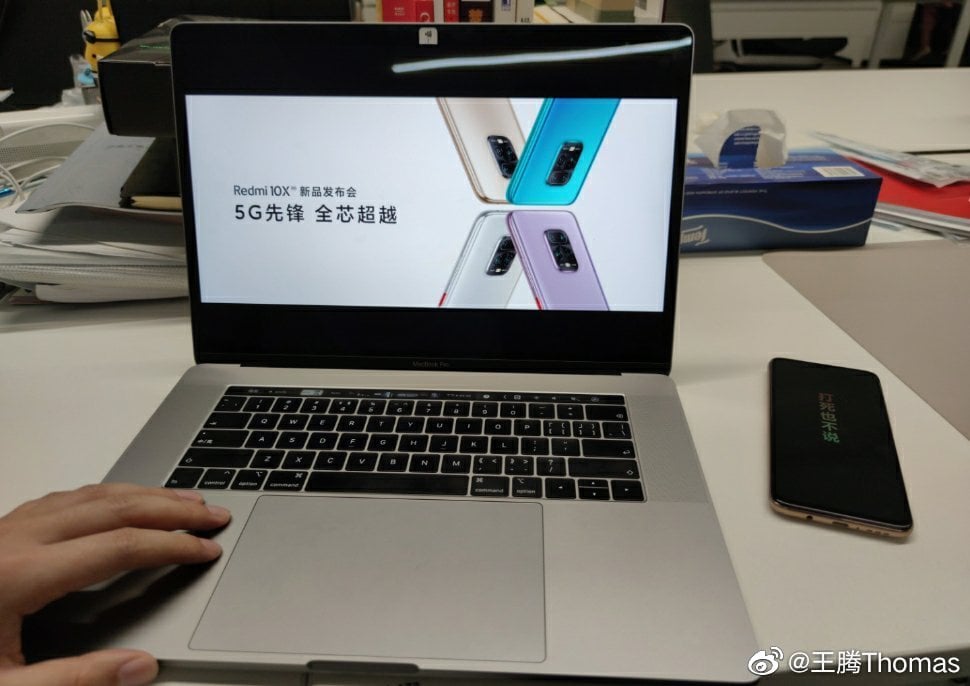
Ahead of the launch of Redmi 10X series smartphones in China on 26th May, Lu Weibing, General Manager of the Redmi brand the President of Xiaomi China has revealed some important details about the Redmi 10X Pro.
He has confirmed that the smartphone will come with a quad-camera setup on the back, featuring support for 30X zoom and Optical Image Stabilisation (OIS). With this, the phone becomes the second Redmi device to have OIS support after Redmi K30 Pro.
The camera sample shared by the company showcases starry track mode in the camera. Wang Teng, Product Designer at Xiaomi says that capturing such images usually requires DSLR camera and needs multiple manual settings adjustments, but it can be easily done with the Redmi 10X’s Romantic Star Track mode.
The smartphone is confirmed to come with an AMOLED display panel where the screen size is said to be 6.57-inch, 2400 x 1080 pixels resolution, and 20:9 aspect ratio. It will also be the first device to come powered by the newly launched MediaTek Dimensity 820 chipset.
It will pack up to 8GB of RAM and 256GB of internal storage. Along with the quad-camera setup on the back, the phone is expected to feature a 16MP front-facing snapper for taking selfies and video calling.
The smartphone will be running the latest Android 10 operating system, possibly with the new MIUI 12 on top. The device is said to be powered by a 4,420mAh battery and will come with support for 22.5W fast charging technology.
The Redmi 10X and 10X Pro smartphones are set to get launched in China on 26th May and to know the pricing and availability details, we’ll have to wait a few more days for the official launch event to take place.
Oppo is a popular name in the smartphone market but the company also makes other products. Most of the company’s current portfolio involves accessories for phones such as wired / wireless earphones, power banks, and even a smartwatch. Now, according to a new teaser by Oppo Health official Weibo account, the brand is set to launch a TWS for sleeping.
The market for sleeping aids is not much crowed as of now. The most popular product in this category was Bose Noise-masking Sleepbuds, which was discontinued last October due to faulty battery. There are other models but most of them are from uncommon brands that are not recognized well by the public.
At CES 2020, Huami announced Amazfit ZenBuds, its first sleeping earbuds. You can snag one from GizTop for $129.99. It is the only TWS for sleeping from a known brand at the moment. Above all, it is cheaper than the competition too.
Since the market for sleeping earbuds is void, Oppo is trying to seize the opportunity to make a name for itself. The teaser poster shared by the company only reveals the outline of the product along with the May 24 launch date.
That being said, we can expect Oppo to tease some of the specifications of its TWS for sleeping in the coming days.
Google Pixel 4a smartphone was earlier rumoured to get launched on 22nd May but the launch has been delayed. There are some reports hinting that the launch of Pixel 4a will be taking place along with Android 11 announcement on 3rd June.
However, the latest report claims that the Google Pixel 4a will be announced on 13th July and will go on sale from August. It says that the Just Black color variant will be up for purchase from 6th August while the Barely Blue variant will be available from 1st October.
There’s no reason given about Google pushing the launch of the Pixel 4a smartphone but the report mentions that it is because of market conditions. It also adds that there’s no supply chain issue and the units are ready to ship.
Another major revelation is the not only the Pixel 4a, Google is also delaying the launch of the upcoming Pixel 5 smartphone, which is expected to pack 5G support. While no timeline has been revealed, it seems that the launch could take place towards the end of the year, possibly in November.
The company could try to start selling the smartphone around the holiday season hoping for a good sales run. Apart from the market conditions, this could be a strategy of Google given that the sales numbers of Pixel 4 series is nowhere near what the company expected.
Multiple leaks related to the Google Pixel 5 have confirmed that the upcoming smartphone from the search engine giant won’t be a flagship offering but will be positioned in the upper mid-range category and could come powered by the Qualcomm Snapdragon 765G or the newer Snapdragon 768 chipset.
As for the Google Pixel 4a, the phone features a 5.81-inch OLED panel with a punch-hole design and Full HD+ screen resolution. The phone is expected to arrive with Snapdragon 730 SoC, 6GB of RAM and 64/128 GB internal storage.
The Android 10 operating system will come pre-installed on the smartphone and it will be powered by a 3,080mAh battery that is expected to support 18W fast charging. The phone may arrive in the U.S with a starting price of $349.
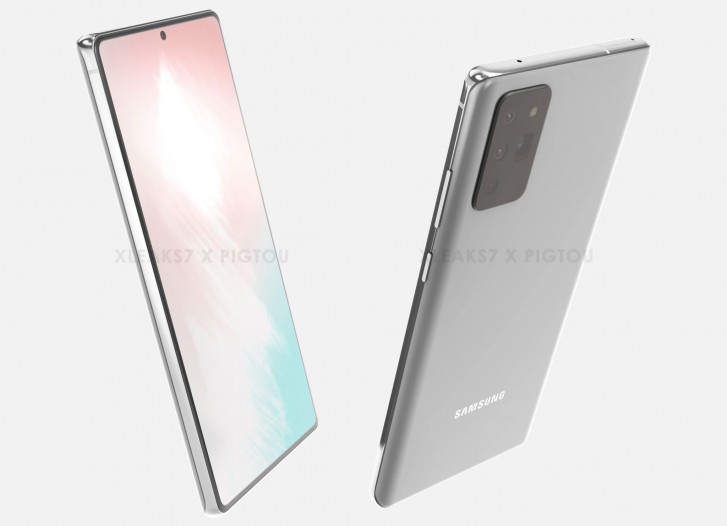
Samsung had launched the Galaxy Note 10 series in early August last year. Hence, the Galaxy Note 20 series are expected to break cover in the same month this year. Pigtou publication has shared CAD renders of the Galaxy Note 20. It claims that the renders have been made based on the final design of the smartphone.
The publication revealed the Galaxy Note 20 has 161.8 x 75.3 x 8.5mm dimensions. The predecessor Note 10 measured 151 x 71.8 x 7.9mm. Hence, the Galaxy Note 20 is a bigger and thicker device compared to the predecessor model. The source of the renders has claimed that Samsung will also launch Galaxy Note 20+ alongside the Note 20.
The front design of the Note 20 is identical to the predecessor. The handset is expected to house a 6.7-inch display with a top-center positioned punch-hole. The Note 10 had buttons for volume and power on the left edge. The successor model will have these buttons on the right edge. The top edge of the phone features a SIM tray.
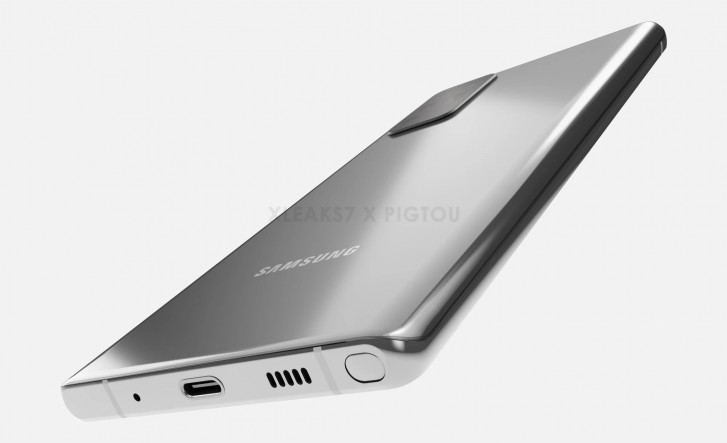
The S-Pen slot has been repositioned to another side. The bottom edge also features a USB-C port flanked between a microscope and a speaker grille. The rear panel of the phone has a rounder appeal with curved edges. The camera module present at the top-left corner of the phone’s back could be similar to what’s available on the Galaxy S20 Ultra.
Rumors surrounding the new Note series phones have revealed the Galaxy Note 20 and Note 20+ will be available with Snapdragon 865 or Exynos 990 depending on the market. The Note 20 may come with a 4,000mAh battery whereas the Plus edition may house a larger 4,500mAh battery. These phones are expected to arrive with a 120Hz refresh rate supporting S-AMOLED displays.
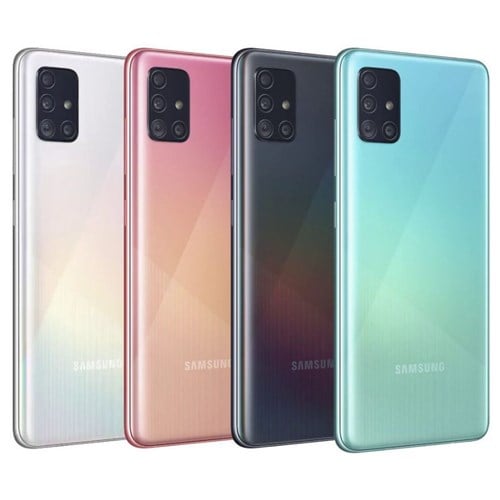
Samsung launched Galaxy M11, Galaxy M21, and Galaxy M31 phones in the recent past. The South Korean company is now reportedly working two new Galaxy M-series phones such as Galaxy M51 (SM-M515F model number) and Galaxy M31s (SM-M317F). It is speculated that the Galaxy M51 could be a rebranded version of the Galaxy A51. However, it may arrive some changes in design and hardware. The Galaxy M31s moniker suggests that it could be an updated version of the Galaxy M31 that debuted earlier this year. A fresh report on 91mobiles has revealed the camera specs and launch timeframe of both devices.
The publication has learned through industry sources that the Galaxy M31s smartphone may debut as early as next week or at the beginning of June. The Galaxy M51 is speculated to debut by the end of June.
The South Korean company may launch it earlier, but it could be made available for purchase by late June or early July. The reason behind it seems to be a slow production due to COVID-19 lockdown restrictions. The Galaxy M51 and M31s are both expected to come with a rear-facing 64-megapixel quad camera. Hence, it appears that the renders of the Galaxy M51 that appeared with triple rear cameras a few months ago were incorrect. The main sensor seems to be Samsung’s ISOCELL GW1 64-megapixel lens.
A previous report by Sammobile had revealed the Galaxy M51 and Galaxy M31s will both come with 128 GB of built-in storage. Both devices may also come in 64 GB storage versions. The One UI 2.0 based Android 10 OS will come preinstalled on M51 and M31s. The M51 may also feature an in-screen fingerprint reader.
While the rumor mill has been actively leaking information on Galaxy M51 and Galaxy M31s, Samsung is yet to confirm its existence. Since the handsets are speculated to debut soon, the South Korean company may release their teasers soon.
Honor announced the Honor Play 4T and Play 4T Pro smartphones in April. These phones arrived with budget-friendly specifications and pricing. Yesterday, an upcoming Honor Play4 Pro popped up on a Chinese retailer site. The listing revealed the images of the smartphone. The Chinese leakster who shared the same images on Weibo claimed that it is powered by Kirin 820 5G chipset. However, another tipster from China who is known for Huawei and Honor leaks has claimed that the Play4 Pro has Kirin 990 5G.
The tipster stated that the Honor Play4 Pro won’t be a low-budget device like the Play 4T series. He said that the Play4 Pro is the spiritual successor of the Honor Play that had debuted in 2018. At that time, the Honor Play with Kirin 970 SoC onboard arrived as a gaming-focused handset.
Hence, the Honor Play4 Pro is expected to arrive as a flagship device with Kirin 990 5G. Like the Honor Play, the Play4 Pro is likely to come with gaming capabilities. The tipster claimed that the phone may arrive with a pricing of around 3,000 Yuan.
Honor is yet to confirm the existence of the Honor Play4 Pro. The tipster said that the smartphone may debut either in June or July. The handset is speculated to have an OXP-AN00 model number and it was spotted at Wi-Fi and 3C certification platforms recently. The 3C listing of OXP-AN00 that it could be coming with a 40W fast charger whereas Wi-Fi listing revealed support dual-band Wi-Fi and EMUI 10 based Android 10 OS. The handset is believed to feature a Sony IMX600Y 40-megapixel main camera on its back.
The Honor Play4 Pro images have revealed that it is a dual punch-hole screen and a side-mounted fingerprint reader. The smartphone has a dual-camera setup on its rear.
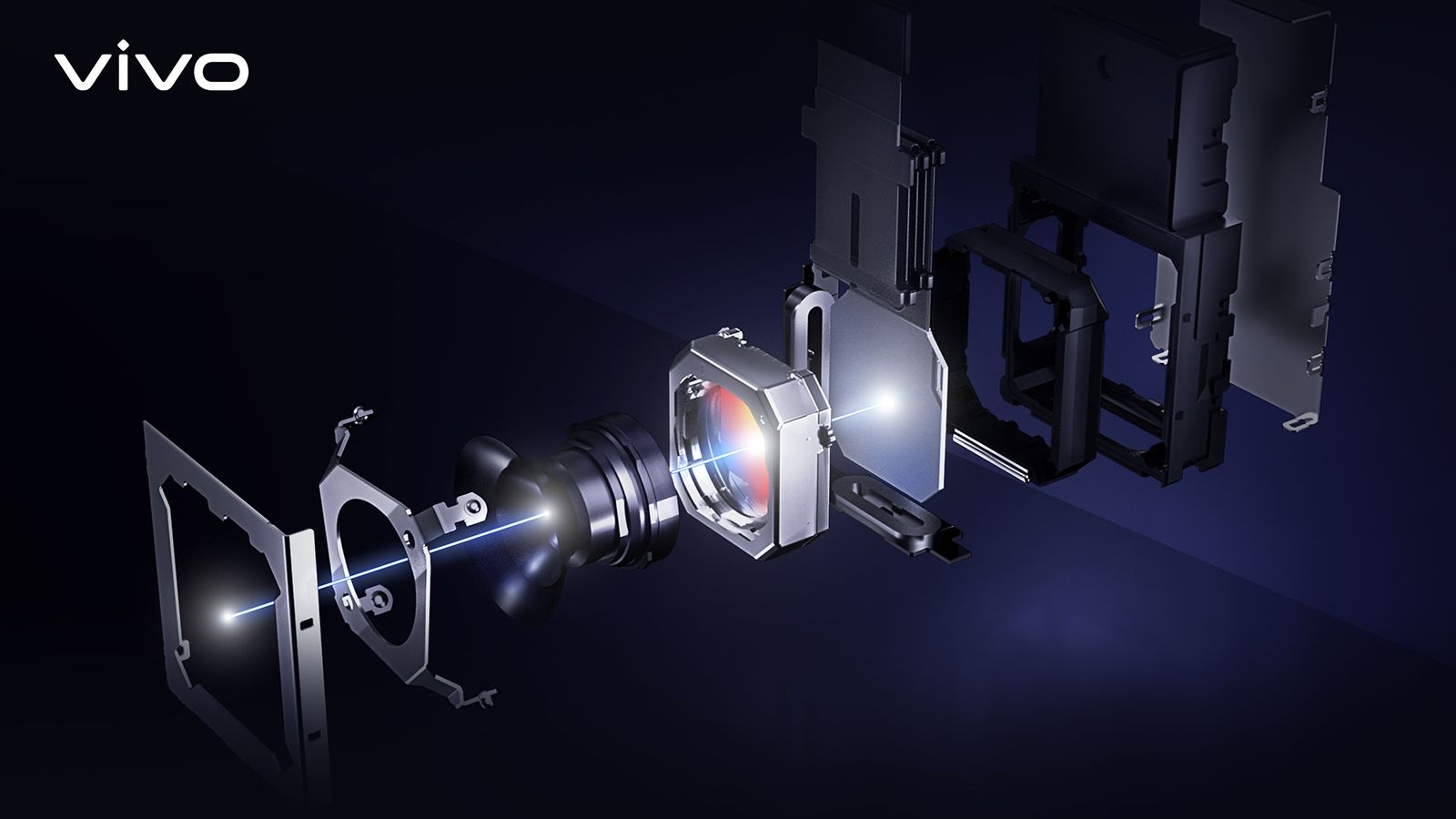
Vivo is launching its new Vivo X50 smartphone on 1st June in China and the company has already confirmed that the device will feature micro gimbal camera for the primary sensor that aims to offer improved optical stabilisation.
The technology is the same that was showcased with the Vivo Apex 2020 Concept Smartphone which was unveiled earlier this year. However, it will be making its debut commercially with the Vivo X50. Ahead of the launch, Vivo has now revealed the technical details of the micro gimbal camera.
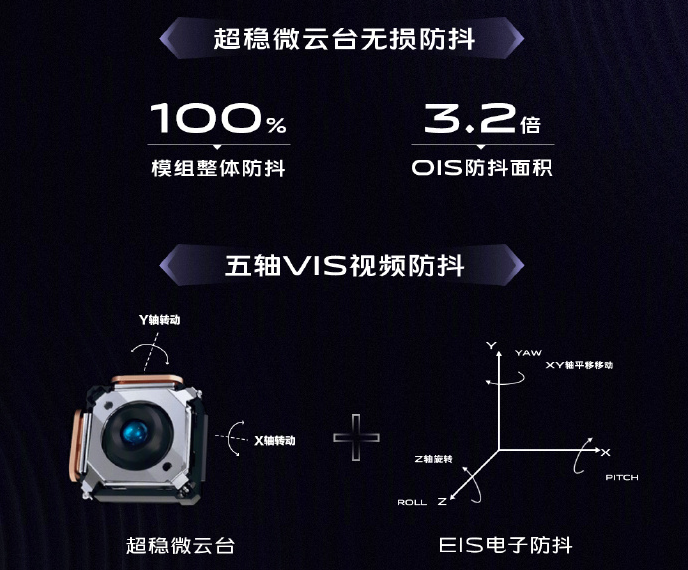
The micro gimbal mechanism has a magnetic frame which is controlled by voice coils. There’s also a suspension bracket which is connected to the base with double ball bearings. The setting enables X-axis and Y-axis tilt angles of up to 3 degrees each, which the company says is three times that of traditional OIS.
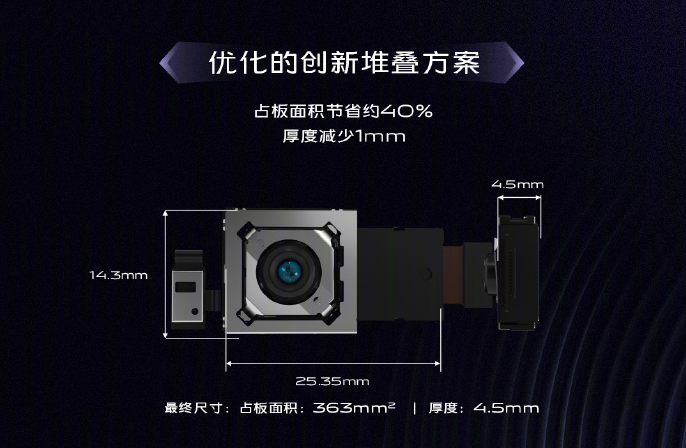
To ease up any tension from twisting during stabilisation, the company has extended and folded the sensor’s ribbon into a dual-S shape. Thus, the module takes up extra space but the company says it managed to keep the thickness at 4.5mm.
Vivo has also shared a teaser video using the micro gimbal camera which showcases the awesome optical stabilisation of the sensor as well as an impressive low-light capabilities. Apart from videos, the output from still photos is also quite impressive.
The company has already confirmed that the Vivo X50 Pro features an ultra-large primary camera sensor with a focal length of 16-135mm and supports 5x optical zoom as well as 10x digital zoom. The company is also expected to be capable of 360-degree movements and offer anti-shake technology.
While Vivo has been revealing details about the upcoming smartphone’s camera module, the company has not yet confirmed the camera specifications for the quad-camera setup. But everything will be clear once the phone gets launched in China on 1st June, along with the pricing and availability details.
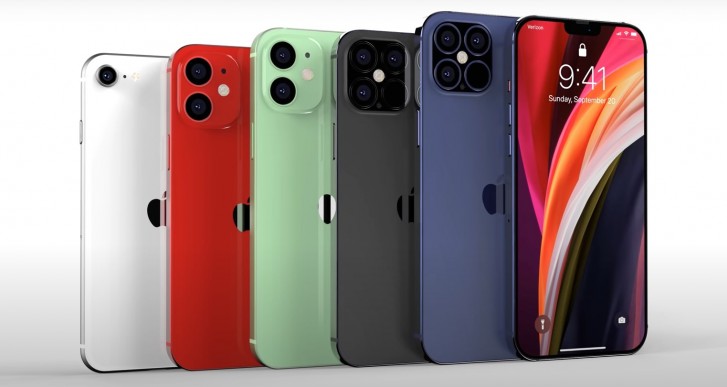
Taiwanese research firm DigiTimes has revealed that LG Innotek, Sharp and Shenzhen O-Film technology have received orders from Apple for camera modules for upcoming iPhone 12 models.
The report is also said to have revealed that Apple will utilise OLED screens for all the models and that the US company will take the wraps off the products in the second half of 2020. The 2020 iPhone lineup is said to comprise of a new 5.4-inch device, two 6.1-inch models, and one 6.7-inch handset.
LG is reportedly selected already to supply camera modules for the two high-end 6.1-inch and 6.7-inch models. Module shipments for the two models are expected to reach 35-40 million units in 2020. On the other hand, Sharp and China’s O-film are said to share the orders for the two lower-end 5.4-inch and 6.1-inch phones. Camera module shipments for the two models are expected to hit 50-55 million units this year.
Most of the orders will be supplied by Sharp Corporation, with the Japanese company expected to account for 60 to 70 per cent of those shipments. Shenzhen O-Film Technology will be responsible for the remaining 30-40 per cent. The report also disclosed that the production of the camera modules will commence in July.
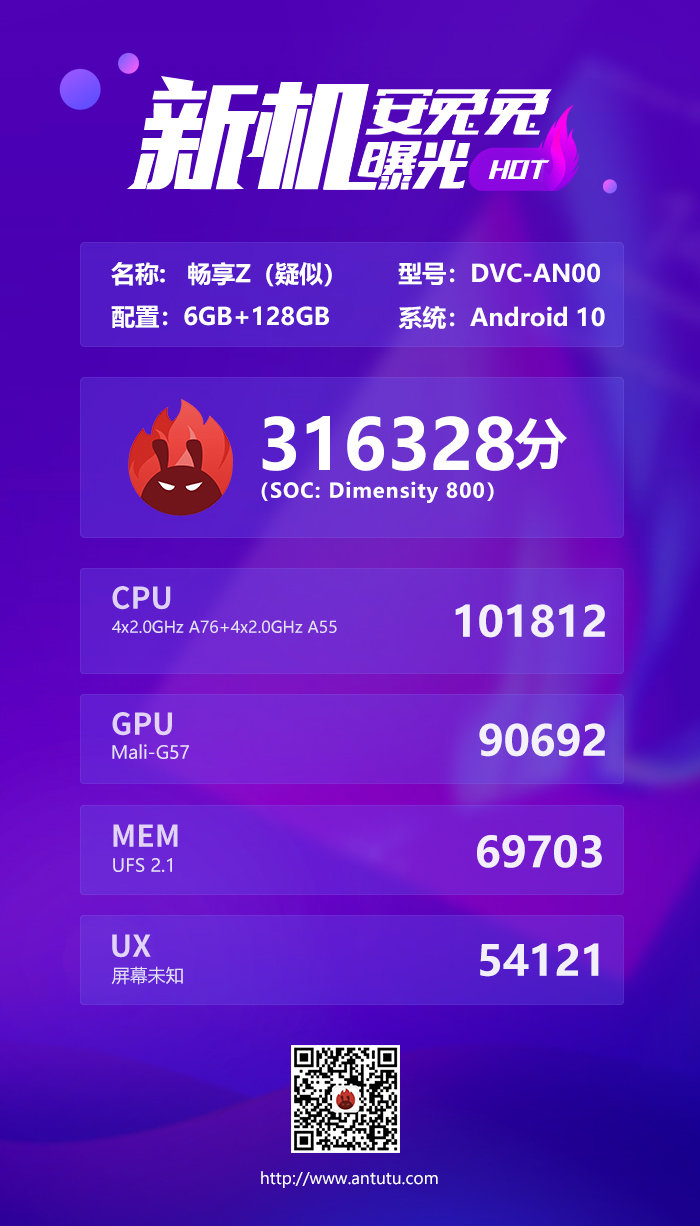
Huawei confirmed recently that it will be unleashing the Huawei Enjoy Z smartphone on May 24. The handset is expected to debut as the cheapest 5G phone from the Huawei camp. The recent appearance of the smartphone suggested that it could be powered by Dimensity 800 5G chipset. Now, the smartphone has appeared on AnTuTu benchmarks. It also once again reveals that the Dimensity 800 will be present under the hood of the Huawei Enjoy Z.
The Huawei Enjoy Z 5G has a model number of DVC-AN00. Its Geekbench listing revealed the presence of MediaTek MT6873 which is the model number of Dimensity 800 along with other specs like 6 GB of RAM and Android 10 OS. It scored 526 and 2088 in the single-core and multi-core tests of Geekbench.
The AnTuTu appearance of the same DVC-AN00 Huawei Enjoy Z 5G smartphone shows it has Dimensity 800, 6 GB of RAM, 128 GB of native storage, and Android 10 OS. In the CPU, CPU, memory, and UX tests, the handset scored 101,812, 90,692, 69,703 and 54,121 points, respectively. It recorded an average benchmarking score of 316,328.
AnTuTu further revealed that the Huawei Enjoy Z 5G’s display supports 1080 x 2400 pixels full HD+ resolution. The handset is said to be equipped with an LCD panel and a side-facing fingerprint reader.
It has a 16-megapixel selfie camera in its waterdrop notch. AnTuTu reveals that the phone features a primary lens of 48-megapixel on its rear. A previous report had claimed that the handset has a 48-megapixel + 8-megapixel + 2-megapixel triple camera system.
The Huawei Enjoy Z is listed for pre-sale on Suning and Tmall e-commerce sites in China. The handset will come in variants such as 6 GB RAM + 64 GB storage, 6 GB RAM + 128 GB storage and 8 GB RAM + 128 GB storage. Its color variants are Midnight Black, Sakura Pink, and Dark Blue. There is no word on its pricing.
Xiaomi‘s latest performance report for the first quarter of 2020 revealed among other things that the company’s TV brand is ranked among the top 4 smart TV brands globally and the first in China. The company’s rise to prominence, just like on its smartphone division, is mainly hinged on the drive to provide amazing smart TVs at affordable pricing. The company has now launched a new Mi TV 43″ model with the model number E43K. What makes this new product interesting is the 1099 yuan (~$155) price tag slapped on the new model.
Xiaomi presently has a couple of other 43-inch models including E43X, E43C, and E43A, all priced at 1199 yuan ($169). The new E43K model is 100 yuan cheaper and that is because the model doesn’t have Bluetooth onboard. Since there is no Bluetooth connectivity, the new model utilises the standard infrared remote control as against the Bluetooth remote which the other 43-inch versions feature.
The new Mi TV E43K has a 43-inch fullscreen display with a resolution of 1920×1080 pixels. The product utilises a bezel-less design which gives an immersive viewing. This is made possible as the screen uses a new generation of adhesives that ensure the screen is firmly bonded to the structural component.
The Mi smart TV is equipped with a 64-bit dual-core processor paired with 1GB of RAM and there is 8GBof internal storage. The TV supports wireless projection, DTS decoding, and has a built-in PatchWall artificial intelligence TV system. The PatchWall system not only provides access to a large database of contents but also enables the user to view smart home devices and receiving devices.
The TV also features WiFi connectivity which enables the wireless projection allowing the TV to serve as a screen for a projector even without an HDMI cable. The TV has a rich blend of interfaces which allows it to be connected to computers, game consoles, external audio equipment, etc.
The Galaxy A51 5G and Galaxy A71 5G phones went official in Vietnam back in December 2019. Both phones debuted as first Samsung phones powered by Exynos 980 5G chipset. In some markets, the South Korean company is selling 4G variants of both phones. The company is expected to launch the Galaxy A51 5G and Galaxy A71 5G smartphones in the U.S. Fresh information shared by XDA Developers reveals that the U.S. edition of the Galaxy A71 5G will be driven by Snapdragon 765 SoC.
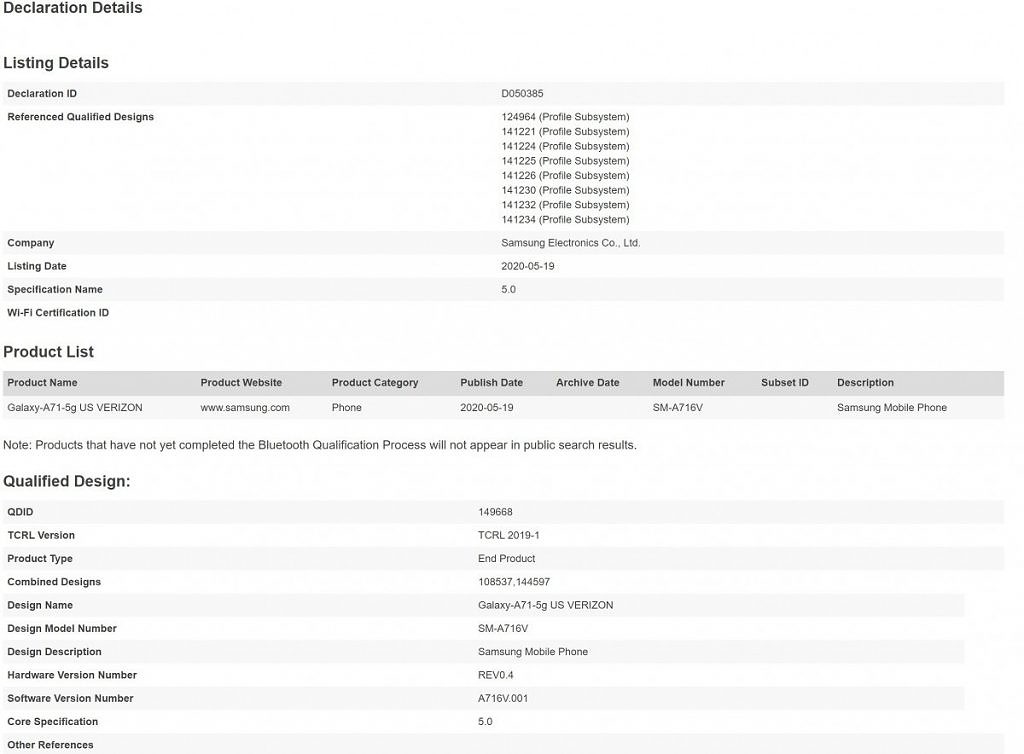
The Verizon variant of the Galaxy A71 5G has surfaced on the database of the Bluetooth SIG platform. The model number of the device is SM-A716V. The publication revealed after investigating the publicly available database for upcoming devices with online services from Verizon, it could come across “Samsung_a71xq” text. Here, “x” refers to a 5G device and “q” means it is fueled by a Snapdragon chipset.
The Geekbench listing of the U.S. variant of the Galaxy A71 5G has revealed that it is powered by a Qualcomm SoC that has a base frequency of 1.80GHz. Since Qualcomm offers Snapdragon 765 and 765G as the 5G chipset for powering mid-range phones, there is a possibility that the Galaxy A71 5G for the U.S. may include any of the two chipsets. The Verizon variant of the Galaxy A71 5G may come with mmWave support, while the non-Verizon models may lack it.
The publication has claimed that the Verizon and non-Verizon variants of the Galaxy A71 5G may break cover in the U.S. in June or July. The rest of the specs of the A71 5G for the U.S. could be the same as its 5G variant available in other countries.
The Redmi 10X smartphone is scheduled to go official on May 26. It is expected to launch as the first smartphone powered by the Dimensity 820 5G chipset. Ahead of the launch, the company has been consistently releasing posters through Weibo to reveal its features. Two images showing the phone’s display and its Always-On Display feature have been shared by the executives of the company.
In the first image, Xiaomi China Commercial Director Yang Lin can be seen posing for a photo with UNIQ boyband singer Wang Yibo. Lin can be seen holding the Redmi 10X smartphone. As can be seen in the image, even when the display is off, a blue-colored text can be seen glowing on it.
The company has already confirmed that the Redmi 10X is equipped with an AMOLED panel which allows it to support Always-On Display (AOD) feature. It makes it possible for the display to show limited information like time, date, battery status and notifications, and so on without turning on the entire screen. The other image that was shared by Wang Teng Thomas who is the Product Director with Xiaomi Redmi has also shown the Redmi 10X with its AOD feature.
Since the phone features an AMOLED display, it also comes with an in-screen fingerprint reader. The size of the screen is 6.57 inches and it supports 1080 x 2400 pixels full HD+ resolution. The image also shows that the bottom edge of the smartphone has a 3.5mm audio jack, a USB-C, a microphone, and an external speaker.
The Redmi 10X’s Dimensity SoC is rumored to be coupled with up to 8 GB of RAM and up to 256 GB of built-in storage. It has a 16-megapixel selfie camera and a quad-camera setup on its back. The phone houses a 4,420mAh battery. The Redmi 10X will be available in four color editions such as white, purple, blue, and gold. The Redmi 10X series reportedly includes Redmi 10X 4G, Redmi 10X 5G and Redmi 10X Pro 5G.
Samsung is among the very few smartphone companies that builds its own chipsets and now the South Korean giant has planned to become the leading semiconductor company in the world by 2030.
In line with that goal, the company has announced that it will start building a new chipset production facility in Pyeongtaek, South Korea which will be focused on manufacturing 5nm chipsets from Samsung.
The new facility will be responsible for making AI-powered (artificial intelligence), high-end smartphones, and HPC (high-performing computing) chips. The company has already started construction work which is expected to get completed by next year.
With the planned investment of around KRW 10 trillion ($8.1 billion), Samsung is looking to start production at this new facility by the second half of next year, i.e. H2 2021. The new production means that Samsung now has three such facilities in the Gyeonggi Province in South Korea, each one in Pyeongtaek, Hwaseong, and Yongin.
Samsung is going after TSMC which is currently the world’s leading contract chip manufacturer capturing a massive 54 percent of the market share. TSMC has already started mass production of 5nm chips and is currently making Apple’s A14 chipset.
The development from Samsung comes just days after TSMC announced its new 5nm chip production line in Arizona, United States. The company is expected to spend about $12 billion between 2021 and 2029 on the project, with construction slated to begin next year.
Chinese giant Huawei is also among the leading mobile chipset makers but we’ll have to see what the future holds for the company given that TSMC has stopped taking new orders from Huawei after the U.S. government changed rules where companies making use of any of the U.S.-based company’s design or tech needs a special permission to do business with Huawei. This is also a major blow to TSMC as Huawei was the second largest client for the company after Apple.
OPPO launched a new trio of affordable smartphones in the global market: it is composed of OPPO A52, OPPO A72, and OPPO A91. The first covers the price range below €200, the second is sold for less than €300, while for the third you need more than €300. Which one should you choose in order to get the highest value for money? Is it worth spending more for a device like the OPPO A91, you can save money as much as possible by going for the OPPO A52 or should you sit in the middle with the A72? This specs comparison will give you a complete view of the main specifications of these three phones.
Quad 12 + 8 + 2 + 2 MP, f/1.8 + f/2.2 + f/2.4 + f/2.4
8 MP front camera
Quad 48 + 8 MP + 2 + 2 MP f/1.7, f/2.2, f/2.4 and f/2.4
16 MP f/2.0 front camera
Quad 48 + 8 + 2 + 2 MP f/1.8, f/2.2, f/2.4 and f/2.4
16 MP f/2.0 front camera
BATTERY
5000 mAh, fast charging 18W
5000 mAh
Fast charging 18W
4025 mAh, Fast charging 20W
ADDITIONAL FEATURES
Dual SIM slot
Dual SIM slot
Dual SIM slot
Design
Do not expect premium materials from these devices as they are made of polycarbonate, but you still get a pretty nice design with each of them. Despite it does not feature a punch-hole display (unlike the OPPO A52 and the A72) and it comes with a traditional waterdrop notch, the one I love is the OPPO A91 because it offers a higher screen-to-body ratio, a more minimalistic rear side, a thinner (and lighter) body, and an in-display fingerprint reader. OPPO A52 and A72 come with the same design, with the exception of colors. The strongest point is the punch-hole display making them more futuristic, but they are less compact and they have a bigger camera module on the back.
Display
One of the key features of the OPPO A91 is the presence of an AMOLED display offering more brilliant colors and deeper blacks, as well as an in-display fingerprint scanner. It is a smaller display compared to OPPO A52 and A72, but it has a more stunning image quality. The OPPO A52 and A72 which can be considered successors of OPPO A5 and A9 2020 both come with the same IPS panel, but unlike their predecessors, they boast a satisfying Full HD+ resolution just like the OPPO A91. Note that OPPO A52 and A72 boast stereo speakers, while OPPO A91 is mono.
Hardware/Software
Despite OPPO A52 and A72 are more affordable phones than OPPO A91, their Snapdragon 665 chipset (by Qualcomm) offers more or less the same power and performance level as the Helio P70 (by MediaTek) found on the A91. What really makes the difference is the amount of RAM: you get only 4 GB on the OPPO A52 and A72, while OPPO A91 ships with 8 GB of RAM. OPPO A52 and A72 differ for the internal storage: the former offers 64 GB, while the latter has 128 GB (just like the A91). The operating system installed is Android 10, customized by ColorOS.
Camera
OPPO A72 and A91 come with the same camera department composed of a 48 MP main sensor, an 8 MP ultrawide lens, and two additional sensors with 2 MP resolutions. They are not high-end camera phones, but they are all but disappointing. OPPO A52 is inferior due to its inferior 12 MP main sensor and 8 MP front camera (against the 16 MP front snappers of its rivals), but the secondary sensors of the rear camera setup are the same.
Battery
OPPO A52 and A72 win the battery life comparison and they are two of the best battery phones thanks to a huge 5000 mAh battery. But OPPO A91 remains a pretty nice battery phone with its 4025 mAh battery.
Price
OPPO A52 sells for €199/$217 globally, OPPO A72 is available for €279/$305, and OPPO A91 has a €329/$360 price tag. Despite the OPPO A91 is the best phone of this comparison, I do not think it is worth spending more than €300 to get it. It has a better display and (slightly) better performance, but it lacks stereo speakers and it has a smaller battery than OPPO A52 and A72. Unless you need an above-average camera setup and 128 GB of internal storage, OPPO A52 should be enough. But if you want more than just decent cameras and more storage, then go for the OPPO A72. Do you agree?
Vivo announced the Y30 in Malaysia earlier this month and the device came with an affordable price tag of RM899 (~$208). There are feelers that the device will be made available in the India market in the first week of June. 91mobiles quotes Vivo officials who did not want to be named to have disclosed this detail.
The Vivo Y30 is an affordable mid-range model equipped with most of the features you’ll find in a high-end model. The device packs a 6.47-inch IPS LCD with a punch-hole at the top left corner housing the selfie camera. The display has reduced bezels on all sides except at the chin where it is a little bit pronounced.
The rear shell of the phone is made of polycarbonate material with a glossy appeal. The Y30 has four cameras housed inside a rectangle-shaped housing at the rear. The setup is pioneered by a 13-megapixel lens followed by an 8-megapixel ultrawide shooter of, a 2-megapixel macro lens and a 2-megapixel depth sensor. The device equally packs a rear-mounted fingerprint reader.
For hardware, the Vivo Y30 crams a MediaTek Helio P35 chipset under the hood, paired with 4GB of RAM. The phone comes with expandable internal storage of 128GB. Keeping the light on is a massive 5,000mAh battery which supports only 10W charging. Providing the interface is Vivo’s proprietary FunTouch OS 10 based on Android 10 OS. The phone comes in Moonstone White and Dazzle Blue colour options.
The Y30 is expected to retail for around Rs.15,000 in India.
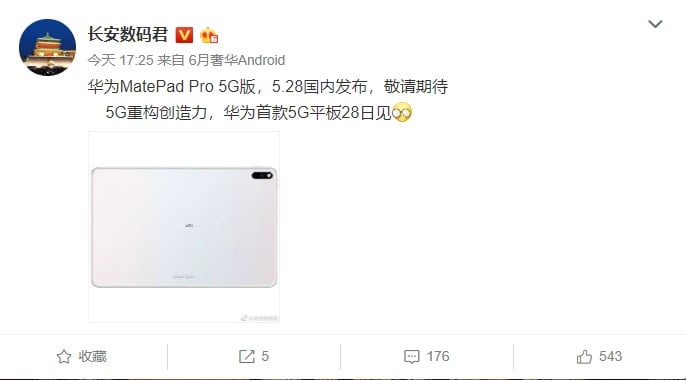
Huawei has already launched the MatePad Pro 5G in Europe as far back as February this year but the flagship tablet is yet to be sold in China. A tipster has now hinted that the MatePad Pro 5G will be launched in China on May 28. It is sort of an irony that the Huawei MatePad Pro 5G was launched in Europe before China considering 5G has rolled out more in China.
As a reminder, the MatePad Pro 5G is flagship tablet as it is powered by a Kirin 990 chipset paired with 8GB of RAM and up to 512GB storage. The tablet packs a nanoSD card slot onboard that can be used to expand the storage when needed.
Design-wise, the MatePad Pro features a 10.8-inch IPS LCD display with rounded corners and a punch-hole that houses an 8-megapixel selfie camera. The display comes with quad HD+ resolution of 2560 x 1600 pixels and DCI-P3 color gamut. The device weighs just 460 grams. With 4.9mm slim bezels around the display, the MatePad Pro promises a screen-to-body ratio of 90 percent.
The tablet is equipped with a huge 7,250mAh battery that supports 40W rapid charging. However, the device ships with 20W fast charger. There is also support for 15W wireless charging and 7.5W reverse wireless charging on the onboard.
The rear aspect of the device is made of a premium metal panel. The rear panel features a 13-megapixel main camera with f/1.8 aperture. It comes with features like phase detection autofocus and LED flash. The device comes with support for M-Pencil stylus that 4096-level pressure sensitivity nib. The stylus can be charged wirelessly by simply attaching to the device.
For interface, the Huawei MatePad Pro runs EMUI 10-flavoured Android 10 OS. It also ships with a smart keyboard which can be bought separately costing around €129 (around $140). Other features include Histen 6.0 audio support, quad speakers, Wi-Fi 802.11ac, Bluetooth 5.1, GPS (only on LTE edition) and USB-C.
Oppo Find X2 Pro is the company’s flagship smartphone of 2020. The phone costs a whopping €1,199. It shares its entire specifications with the OnePlus 8 Pro except for camera setup and rear design. The handset comes in two finishes – ceramic and vegan leather. The latter variant recently underwent JerryRigEverything durability test and passed it with some caveats.
The Oppo Find X2 Pro passes all the regular JerryRigEverything durability tests without any hiccups. The only problem with the phone is its vegan leather AKA artificial leather.
This material is durable and does not get easily damaged. But when it gets bruises as a result of sharp objects, there’s no way to fix it. The inner white plastic material becomes visible through the torn outer layer.
This makes the handset look terrible (personal opinion) and you cannot even apply skins on this material. Thus, if your €1,199 Find X2 Pro gets damaged, you will have to use case for the rest of its life if you don’t want to show off the ugly back.
Anyway, as Zack mentions in the video this is a similar type of vegan leather that is used by Tesla in its cars. But the ones used in cars are thicker than on the Find X2 Pro and that is the primary reason it can be torn apart easily with sharp objects.
That being said, the Oppo Find X2 Pro is of the unique smartphones launched this year with high-end specs and stand-out design.
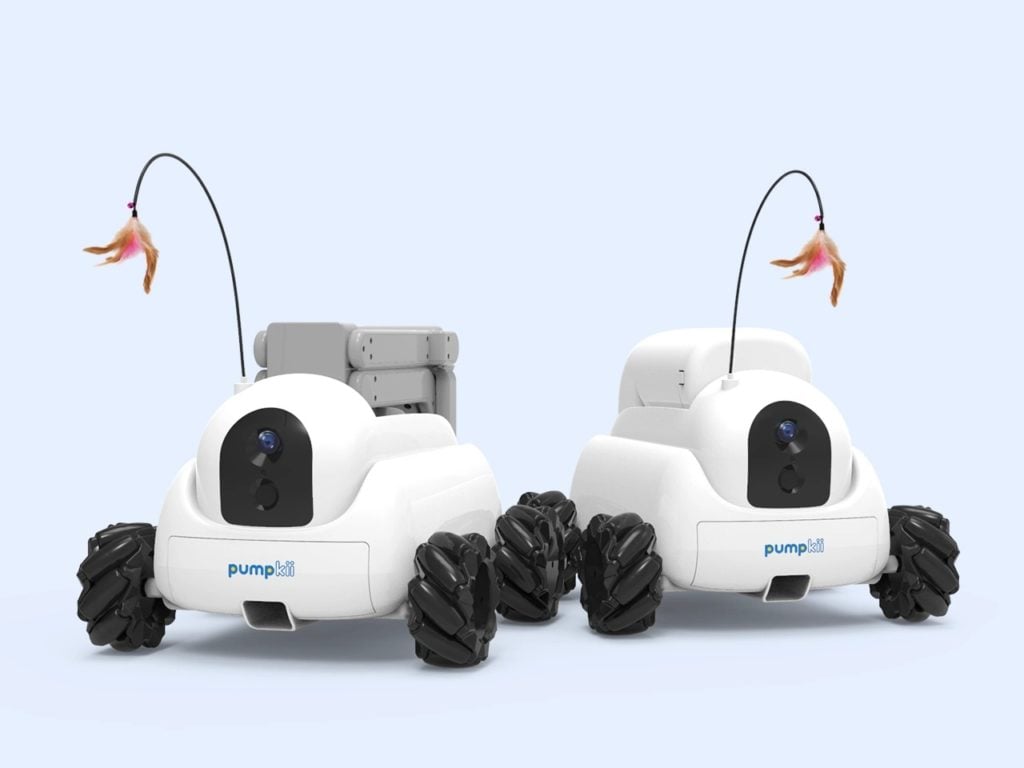
We have seen a whole dog robot, a medic robot, and various other robots for different works, but the Pumpkii Robot is designed for something unconventional. The new Robot from Pumpkii, a talented group of engineers and pet lovers has built a new exceptional robot that can be your pet’s best companion. Pumpkii Robot has the ability to clean and entertain pets including both dogs and cats. The useful robot is soon going to be available from Indiegogo at a super early bird price of $99. However, it will retail for the price of $229 once officially out of the funding phase. You can know more details about the Pumpkii Robot over at Indiegogo, or can he’s Dover to the official website for detailed specifications.
Pumpkii Robots make you free from your pet worries by facilitating them when you’re out for work. It features every useful feature that helps to take care of your pets effectively.
PumpKii Robot is a multifunctional machine that can perform various features from rewarding pets on task accomplishment, to watching and talking with them live via the inbuilt camera and mic. Remote assistance using the Pumpkii app from anywhere around the globe. Moreover, it can effectively clean the pet’s waste and can even cleanse the litter box itself.
PumpKii Robot is fitted with a wheeled base, high-definition IP camera, external apparatus like treat pod, robotic arm, teasing faster, and much more. The availability of a software development kit and open hardware interface opens the door for endless opportunities.
Reward Pets with Treats
Your pet is lazy or keeps sitting in the same place for hours? Then the PumpKii robot’s feature of rewarding would help you to make them more energetic and active. The robot houses a treat pod that can be filled with different treats aka food items or some playing material. You can treat your pets with these items on the accomplishment of any tasks or freely using an intuitive application on your smartphone.
Ability to talk and watch your pets
If you’re missing your pet while working in the office or during your vacations. Then, you can easily chat with your friend using the inbuilt cameras of Pumpkii robot. The inbuilt app helps the robot to make movements and check your pets in any chore of your house.
Automatic Clean Litter Box
The robotic arm at the base helps it to get rid of the litter and even empties the litter box. The whole process is automatic and the user need not to interfere in any way.
Overall, it is an innovative Robot that helps to relapse you from some pet duties a keeps you stress-free when you are away from your pets. You can subscribe the Pumpkii Robot at its Indiegogo project page for an early bird price of $99.
The US-China trade war may soon cause Chinese companies listed on US stock markets to be delisted. Reuters reports that Baidu Inc. is planning to delist from Nasdaq due to the tension between its home country and the US.
The anonymous sources that revealed the info on the company’s plans, said discussions are still at an early stage and may change.
The sources also said Baidu believes it is undervalued on Nasdaq. The search engine’s shares are reported to have fallen more than 60% since they peaked in May 2018.
The company’s co-founder and Chief Executive, Robin Li, told China Daily that they were paying close attention to America’s tight scrutiny of Chinese companies listed on US stock markets.
For a good company, there are many choices of destinations for listing, not limited to the U.S. – robin Li, Co-founder of baidu,
Baidu, CTrip, and NetEase Inc. are reported to have had discussions with Hong Kong Exchanges and Clearing on a secondary listing just as Alibaba has done so as to have an investor base closer to home.
The US Senate passed a bill on Wednesday that may hinder the listing of Chinese companies on US exchanges unless they follow standards for US audits and regulations. Chinese companies looking to get listed on US exchanges may change their minds following the passage of the bill.
We use cookies on our website to give you the most relevant experience by remembering your preferences and repeat visits. By clicking “Accept”, you consent to the use of ALL the cookies.
This website uses cookies to improve your experience while you navigate through the website. Out of these, the cookies that are categorized as necessary are stored on your browser as they are essential for the working of basic functionalities of the website. We also use third-party cookies that help us analyze and understand how you use this website. These cookies will be stored in your browser only with your consent. You also have the option to opt-out of these cookies. But opting out of some of these cookies may affect your browsing experience.
Necessary cookies are absolutely essential for the website to function properly. This category only includes cookies that ensures basic functionalities and security features of the website. These cookies do not store any personal information.
Any cookies that may not be particularly necessary for the website to function and is used specifically to collect user personal data via analytics, ads, other embedded contents are termed as non-necessary cookies. It is mandatory to procure user consent prior to running these cookies on your website.





 The publication revealed the Galaxy Note 20 has 161.8 x 75.3 x 8.5mm dimensions. The predecessor Note 10 measured 151 x 71.8 x 7.9mm. Hence, the Galaxy Note 20 is a bigger and thicker device compared to the predecessor model. The source of the renders has claimed that Samsung will also launch Galaxy Note 20+ alongside the Note 20.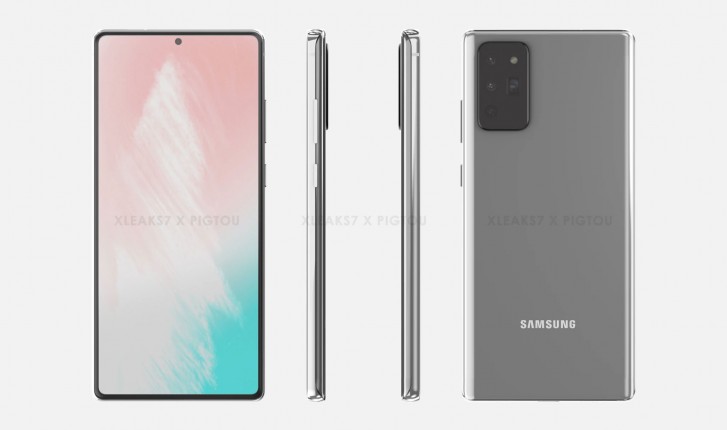
 Hence, the Honor Play4 Pro is expected to arrive as a flagship device with




 The company has already confirmed that the Redmi 10X is equipped with