Advertisement

Samsung’s Galaxy S20 Ultra is a camera beast and more

The Galaxy S20 series was unveiled at the Samsung Unpacked event yesterday. Samsung’s new series includes the Galaxy S20 which replaces the Galaxy S10e and the Galaxy S20+ that takes over from the Galaxy S10 Plus. However, the highlight of the series is none other than the Galaxy S20 Ultra.
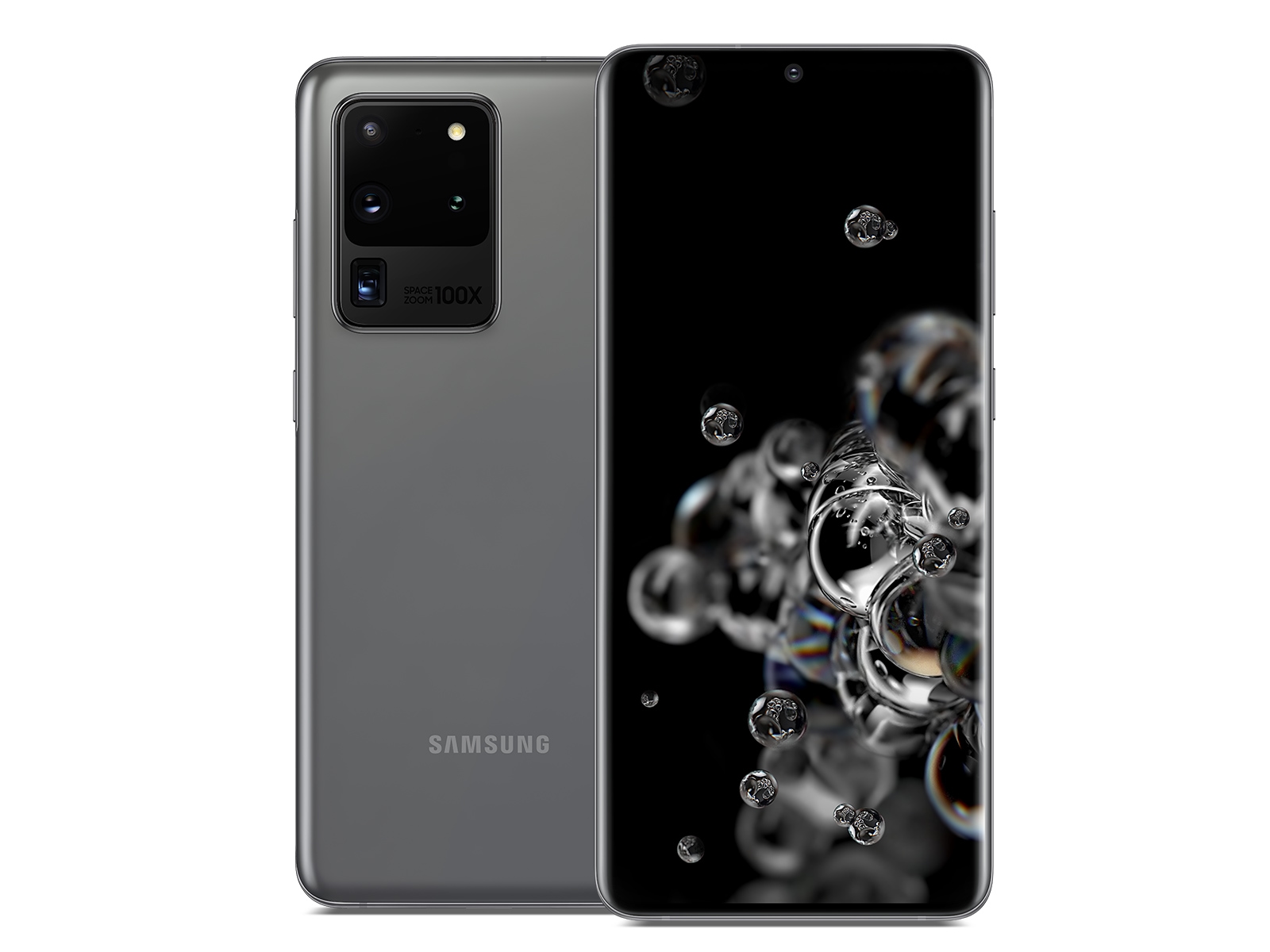
The Galaxy S20 Ultra pushes Samsung’s flagship phones beyond a level that the Plus models of the Galaxy S10 and Galaxy Note10 ever did. It maxes out at everything, from the main camera which is a 108MP sensor to its zoom that gets you closer to your subject by 100x, to the RAM which goes up to 16GB, and its battery capacity that is 5000mAh. The Galaxy S20 Ultra is definitely in a different class of its own but will likely not be for long when other flagships arrive.


Specs and Features

The Galaxy S20 Ultra has the same curved QHD+ Infinity-O display with a centered hole punch as its siblings. However, it is larger at 6.9-inches, making it even bigger than the 6.8-inch Galaxy Note10+. Just like the other S20 models, this also has a 120Hz refresh rate and a 240Hz touch sampling rate. Samsung says the device automatically switches between 60Hz and 120Hz refresh rate.

The Galaxy S20 Ultra has a 108MP primary sensor with a 1/1.33” large sensor which uses 9-in-1 pixel binning. It also has a 12MP f/2.2 120° ultrawide angle camera, a 48MP telephoto camera with a periscope lens, and a DepthVision (depth of field) camera. The front-facing camera jumps from 10MP in its siblings to a 40MP f/2.2 camera.
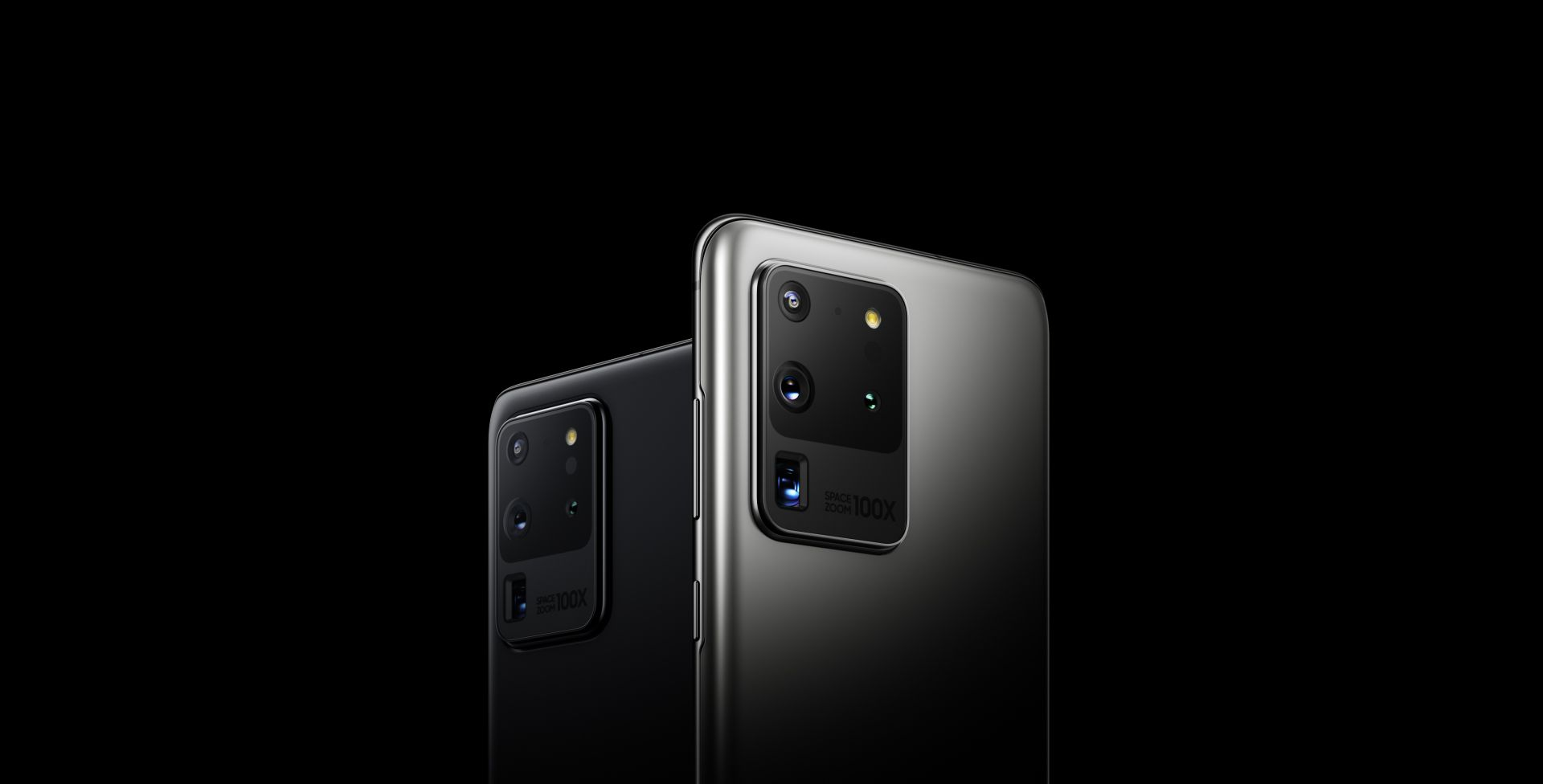
Galaxy S20 Ultra

The Galaxy S20 Ultra has 10x hybrid optical zoom while its Super Res Zoom or digital zoom goes up to 100x. If you own an 8K TV, you can record in 8K with the Galaxy S20 Ultra.

The phone has an in-display fingerprint scanner for security. It packs a massive 5000mAh battery with support for 45W fast charging and ships with a 45W adapter. It also supports 15W wireless charging, and reverse wireless charging. Samsung ships it with Android 10 with One UI 2.0 on top.

Price and Availability

The Galaxy S20 Ultra is available in 4G and 5G variants but the prices we got our hands on are for the 5G version. The base model with 12GB of RAM and 128GB of storage is priced at $1399 but you can grab the 16GB version with 512GB of storage for $1599. The phone is available in Cosmic Black and Cosmic Grey and all pre-orders ship with a free pair of Galaxy Buds+.


Samsung’s second foldable device arrives as the $1380 Galaxy Z Flip

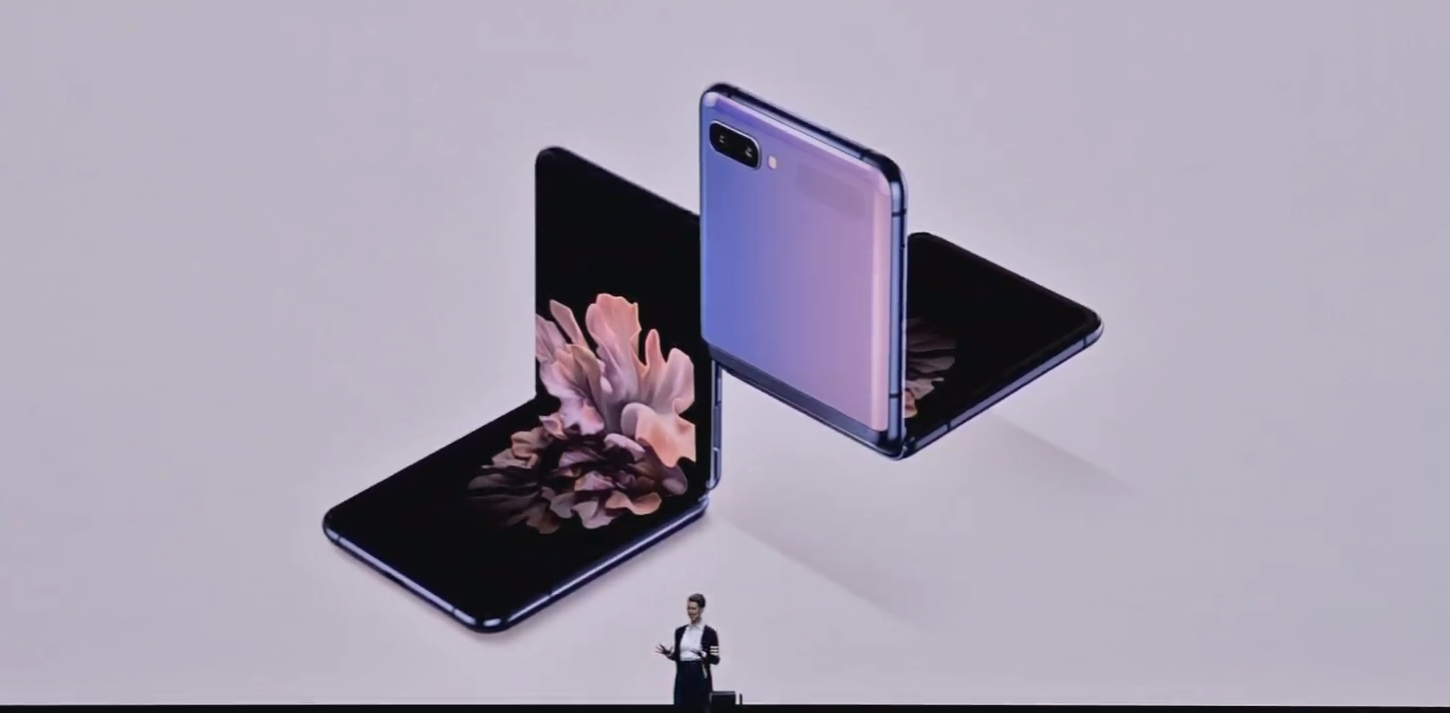
Samsung kicked off the galaxy Unpacked Event with the launch of the Galaxy Z Flip. The Galaxy Z Flip Z is its second foldable smartphone, following the launch of the Galaxy Fold last year. While the Galaxy Z Flip has a design different from the Galaxy Fold, what has not changed is its expensive price.

Galaxy Z Flip launch

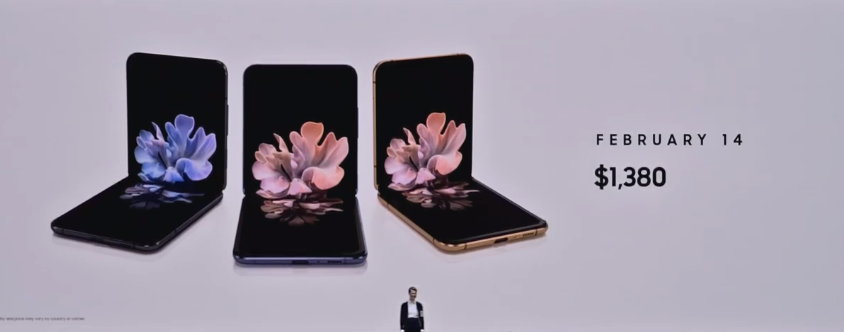
The Galaxy Z Flip has a price tag of $1380 and is available in Mirror Purple and Mirror Black. However, some select markets will get a third color variant called Mirror Gold.

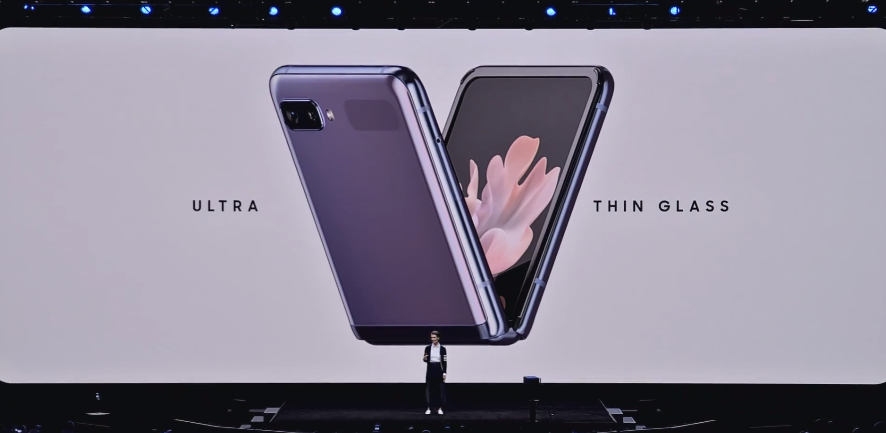
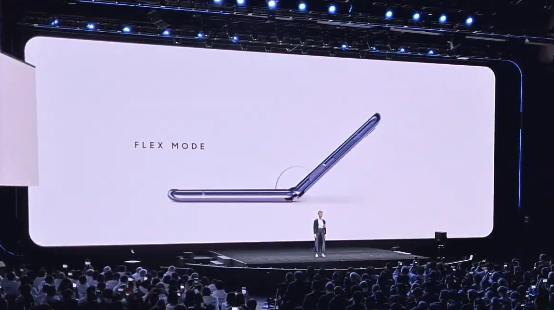
That amount gets you a phone that has a 6.7-inch flexible hole-punch display covered with Ultra-Thin Glass (UTG). Samsung has designed the phone to be used in three ways – closed mode where the phone is shut and the user operates it by using the small 1.1” Super AMOLED cover display on the back; in open mode where the phone is opened up flat to be used as a regular smartphone; and finally, Flex Mode, where the display can be stopped at any angle much like the way you can adjust the screen of your laptop.

Galaxy Z Flip launch UTG

Galaxy Z Flip Flex Mode

In Flex Mode, certain apps have been designed to make the best use of this position. For example, the upper part of the phone can play a YouTube video while the lower part can display the chat or comment section associated with the video.

The Galaxy Z Flip has a Snapdragon 855+ processor, 8GB of RAM and 256GB of UFS 3.0 storage. It has a 12MP f/1.8 1.4um primary rear camera paired with another 12MP camera but with an f2.2 aperture. It also has a 10MP f/2.4 selfie camera. There is a fingerprint scanner on the right-side frame of the upper part of the device.

There is a 3300mAh battery inside the device with support for 15W fast charge and it ships with One UI 2 based on Android 10.

Galaxy Z Flip Price

Galaxy Z Flip Box contents

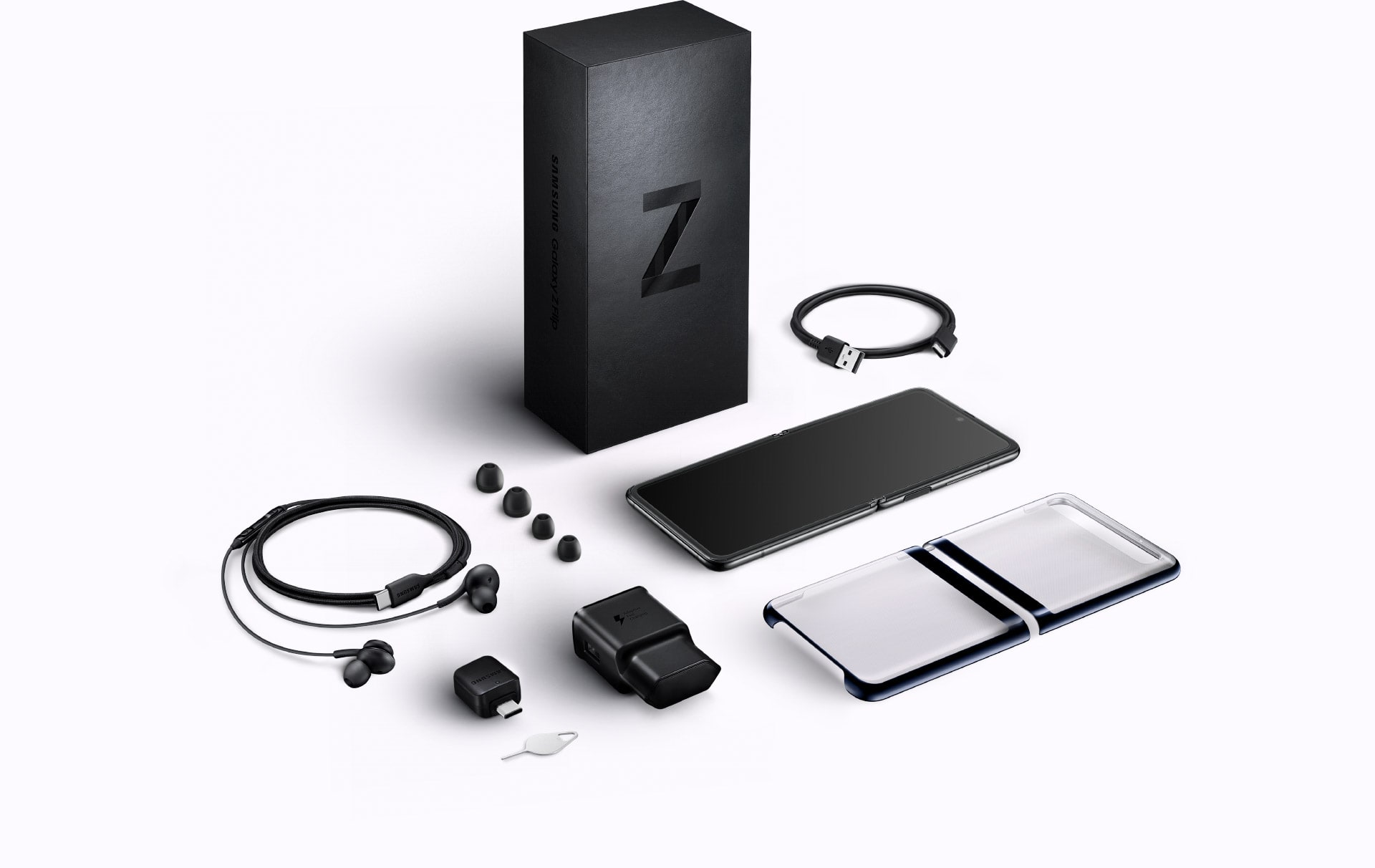
The Galaxy Z Flip will be available starting this Friday, February 14. There will also be a Thom Browne Edition Limited Edition that will be unveiled in New York tomorrow (February 12) at the New York Fashion Week. The Galaxy Flip Z will come with a free YouTube Premium subscription and will include a pair of AKG USB Type-C earphones and a case inside the box.


Latest Mi 10 teasers reveal camera specs, battery capacity, and more; will come in white too

The launch of the Mi 10 series is just two days away but Xiaomi has no problem revealing more features of the phone. Today, it has unveiled a bunch of new posters that confirm certain features of the upcoming phones.


Mi 10 Camera Specs

The Mi 10 will have four rear cameras, one of which is a 108MP sensor with 1/33” sensor size. One of the posters released today reveals more details about the cameras.

[envira-gallery id=”304981″]

Apart from having a 108MP sensor, Xiaomi says the Mi 10 will be able to record in 8K. It will also have 10X hybrid optical zoom, 50x digital zoom, and have both OIS and EIS. That sure are big improvements when compared to the Mi 9 from last year but that is not all.

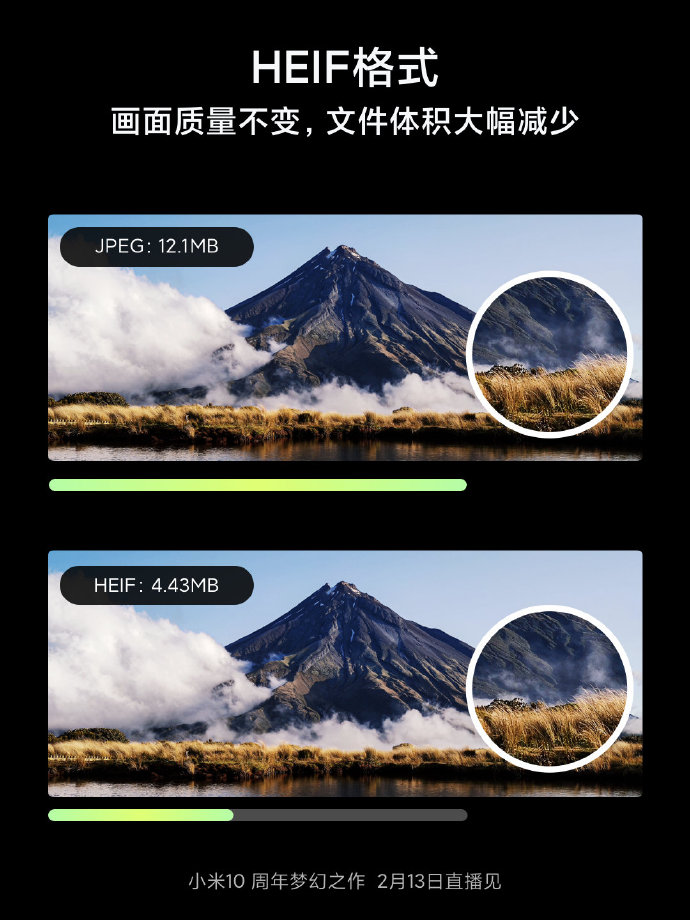
The Mi 10 will be able to shoot in HEIF format. This is an image format based on the HEVC encoder but uses less space compared to JPEG. The poster below compares an image saved in JPEG and HEIF. As you can see, the HEIF format is more than 50% smaller in size.

Mi 10 HEIF Support

Xiaomi says the Mi 10 will have support for slow-mo selfie and be able to record in a 2.35:1 movie format. The phone is also expected to set a new DXOMARK record.


Mi 10 Audio

Xiaomi has stubbornly stuck to mono speakers for years but that changes with the Mi 10. The upcoming flagship will have stereo speakers according to two new teaser posters released today.

Mi 10 Stereo Speakers

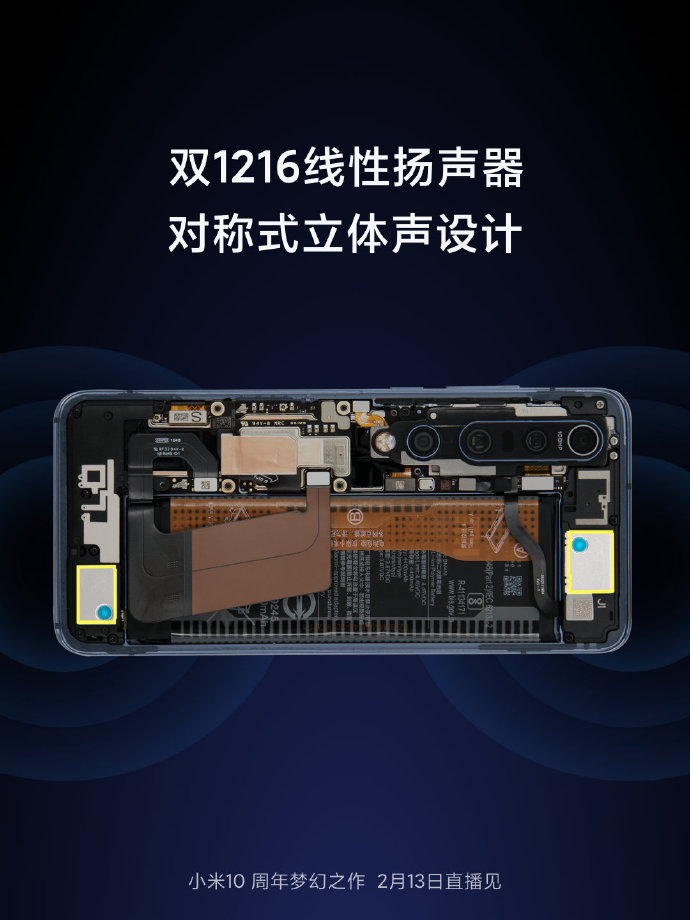
One of the images shows a cross-section of the phone’s internals and we see there is a 1216 linear speaker at each end of the phone. The accompanying post says the sound cavity for the speaker is equivalent to 1.2cc and the gain difference between the two speakers is close to zero. In a separate post, CEO of Xiaomi, Lei Jun, said the one-way amplitude has been increased from 0.4mm to 0.65mm and the number of magnets has been increased from 3 to 7.

Xiaomi Mi 10 Stereo Speakers

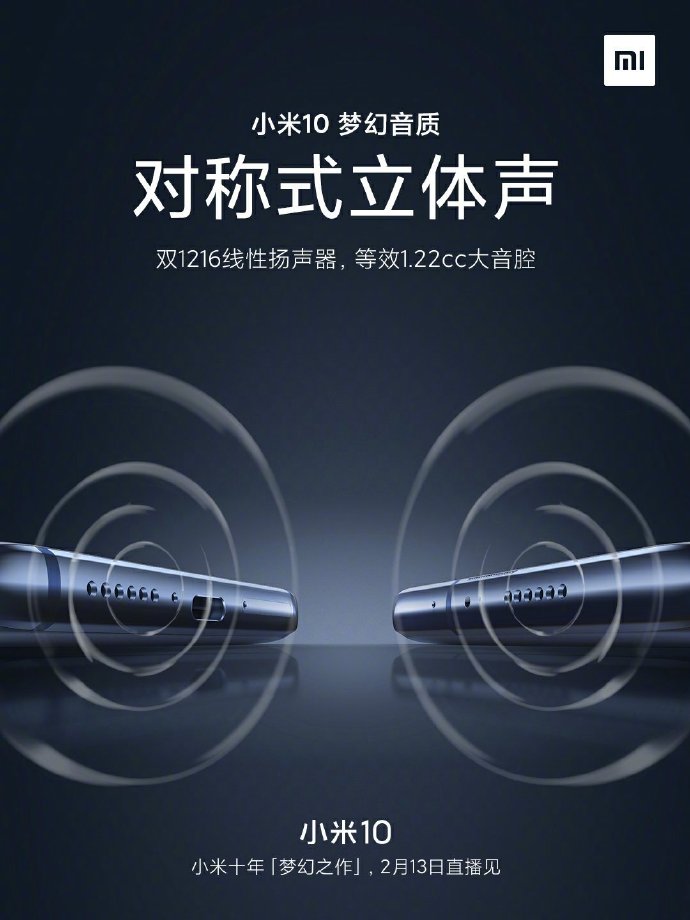
The second image shows the Mi 10 will have a 6-hole speaker grille at the bottom and another 6-hole speaker grille at the top. The top grille is unusual as most phones with stereo speakers use the cut-out for the earpiece as the outlet for the top speaker.


Mi 10 Battery Capacity

Xiaomi has not released a poster yet for the battery capacity but fans with a keen eye have spotted the battery capacity in the first poster above for the stereo speakers.

If you zoom in on the battery in the image, it reads that the Mi 10 packs a 4400mAh battery (~4500mAh). That is a huge bump in capacity when compared to that of the Mi 9 which launched with a 3300mAh battery. However, a big battery is the standard now that phones are launching with 5G support.


Xiaomi Mi 10 will come in White

Xiaomi shared a poster of the Mi 10 this week that shows the phone in cyan and peach. Vice President of Xiaomi, Chang Cheng, revealed today on Weibo that the phone will also be able in white.

The Mi 10 series launches on Thursday, February 13, in China and will be announced at a global event in Spain on February 23.


(Sources: 1, 2, 3, 4)

POCO X2 camera samples are pretty impressive!

POCO announced its first phone since the brand went solo last week. The POCO X2 went on sale for the first time today and we expect the device to be a hot-selling one. For folks that are still not convinced about making the X2 their next smartphone, the camera samples that have been obtained from early reviews may just turn out to be the deal sealer.

The POCO X2 features a dual-LED flash assisted quad-camera system where the main camera is a Sony IMX686 64-megapixel main lens, teaming up with an 8-megapixel ultrawide lens with a field-of-view of 120 degrees, a 2-megapixel dedicated lens for macro shots and a 2-megapixel depth assist sensor. The POCO X2 offers plenty of camera features such as raw camera capture, bokeh, 4K video shooting at 30fps, HD video shooting at 960fps, video blogging mode, ultrawide video recording.  The camera performs impressively both under low light and bright lighting conditions.

The selfie camera also performs well in capturing beautiful shots. As a reminder, the X2 is equipped with a 20MP+2MP dual camera setup at the front. The front cameras support AI portrait mode, screen flash and full HD video recording at 30fps.

We’ll still wait for more reviews, especially DXOMark’s to know where the POCO X2 stands in the ranking of premium midrange phone cameras. Find more camera samples shot by the POCO X2 from below.


(source 1, 2)

poco x2

Redmi 8A Dual vs Realme C3: Specs Comparison

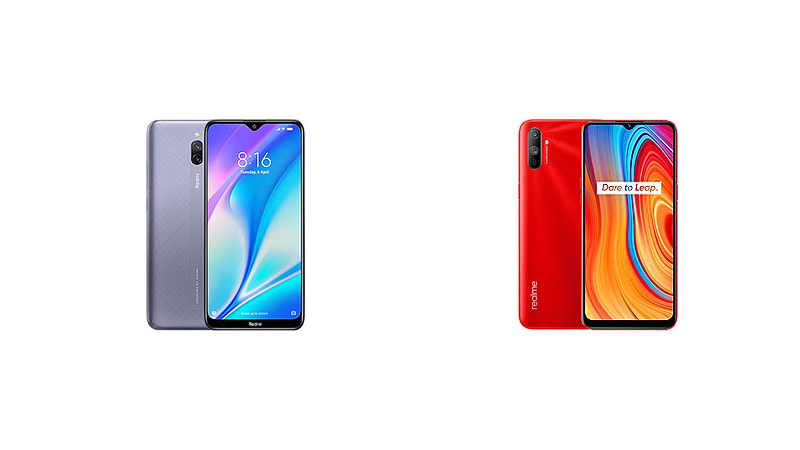
Redmi launched a new variant of its most affordable last-generation entry-level smartphone in India: the Redmi 8A Dual. The release came a few days after the launch of the Realme C3, which is the last-generation entry-level handset from Realme. I personally believe that Redmi 8A Dual and Realme C3 are the best last-generation smartphones you can get for less than €100. That is why we decided to make a specs comparison between them. We usually choose three devices for comparisons, but in this case, we do not believe there is a better choice than these ones in that price range on the paper, at least from mainstream brands. Now, let’s find out which is the best among these kings of entry-level phones.

Xiaomi Redmi 8A Dual vs Oppo Realme C3

Oppo Realme C3 Xiaomi Redmi 8A
DIMENSIONS AND WEIGHT 164.4 x 75 x 9 mm, 195 grams 156.5 x 75.4 x 9.4 mm, 188 grams
DISPLAY 6.5 inches, 720 x 1560p (HD+), 270 ppi, IPS LCD 6.22 inches, 720 x 1520p (HD+), 270 ppi, IPS LCD
PROCESSOR Mediatek Helio G70, octa-core 2 GHz Qualcomm Snapdragon 439, octa-core 1.95 GHz
MEMORY 2 GB RAM, 32 GB – 3 GB RAM, 32 GB – 4 GB RAM, 64 GB – micro SD dedicated slot 2 GB RAM, 32 GB – 3 GB RAM, 32 GB – 4 GB RAM, 64 GB – micro SD dedicated slot
SOFTWARE Android 10, Realme UI Android 9 Pie, MIUI
CONNECTIVITY Wi-Fi 802.11 b/g/n, Bluetooth 5.0, GPS Wi-Fi 802.11 b/g/n, Bluetooth 4.2, GPS
CAMERA Dual 12 + 2 MP f/1.8 and f/2.4
5 MP f/2.4 front camera
Single 12 MP f/1.8
8 MP f/2.0 front camera
BATTERY 5000 mAh, battery charging 10W 5000 mAh, fast charging 18W
ADDITIONAL FEATURES Dual SIM slot, reverse charging Dual SIM slot

Design

The Aura XGrip Design of the Redmi 8A is simply amazing not only for the look but also for the grip. Thanks to a mesh texture, you can get a firm grip and keep fingerprint marks out of the picture. Further, it is a very original design scheme. Last but not least, Redmi 8A Dual is way more compact and easy to use with one hand than Realme C5. Unfortunately, both the devices do not feature a fingerprint reader, but they are both splash resistant. The Redmi 8A Dual even comes with a P2i coating. You can choose among three color variants for Redmi 8A Dual (Sky White, Sea Blue and Midnight Grey) and two color variants for Realme C3 (Frozen Blue and Blazing Red).


Display

The only big difference between the displays of Realme C3 and Redmi 8A Dual is the size. In each case, you get a modest IPS panel with an HD+ resolution. Not a big deal, but a sufficient display for every task. What really changes is the size: Redmi 8A Dual has a compact 6.22-inch display, while Realme C3 offers a wide 6.5-inch panel. If you want a device easier to use with one hand and easier to keep in a pocket, go for the Redmi 8A Dual. But if you often use your device for advanced tasks such as reading, watching movies, playing games or so, then Realme C3 might be a better option due to its wide panel.


Specs & Software

Redmi 8A Dual and Realme C3 are fueled by different chipsets: the former has a Snapdragon 439 under the hood, while Realme C3 is powered by the MediaTek Helio G70. The new Helio G70 is a lot more powerful than Snapdragon 439 and benchmarks proved it several times. Further, Realme C3 comes in a higher-end memory configuration boasting 4 GB of RAM and 64 GB of internal storage. Last but not least, Realme C3 has Android 10 out of the box (customized by Realme UI), while Redmi 8A Dual ships with Android 9 Pie.


Camera

As its name suggests, Redmi 8A Dual mainly differs from the vanilla Redmi 8A for its dual rear camera. But despite this big change, Realme C3 remains a better camera phone, at least on the paper. Its main 12 MP sensor boasts a brighter focal aperture and it should be able to shoot better photos. In both case, you get a secondary depth sensor and an 8 MP selfie camera, so the real big difference is the main sensor of the rear camera. Both are just sufficient camera phones, but it is impossible to find anything better at those prices.


Battery

Redmi 8A Dual and Realme C3 are champions of battery life. They feature a huge 5000 mAh battery that is awesome for an entry-level smartphone. Due to its smaller display, we believe Redmi 8A Dual will feature a longer battery life than Realme C3. Expect the same amazing battery life as the vanilla Redmi 8A. Further, 8A Dual charges faster than Realme C3 thanks to an 18W fast charging technology. However, Realme C3 still remains one of the best battery phones, so you should not worry so much about batteries here.


Price

Realme C3 is available in India with a starting price tag of just Rs. 6,999 / $97 / €90 in its 3/32 GB memory configuration, while for the Redmi 8A Dual you need Rs. 6,499 / €84 / $90 to purchase the version with 2 GB of RAM and 32 GB of internal storage; for the 3/32 GB you need Rs. 6,999 just like the Realme C3. Given its great camera, wider display and better chipset, I would personally go for the Realme C3. But Redmi 8A Dual is a more compact device and it has a longer-lasting battery, so do not underestimate it.

Xiaomi Redmi 8A Dual vs Oppo Realme C3: PRO and CONS

Xiaomi Redmi 8A

PRO

  • More compact
  • Reverse charging
  • Fast charging
  • Splash resistant

CONS

  • No fingerprint scanner


Oppo Realme C3

PRO

  • Wider display
  • Better hardware
  • Android 10
  • Splash resistant
  • Reverse charging

CONS

  • Inferior cameras

Oppo Confirms Rumors about Employing Workers and Technicians for Production of Masks

On February 9th, Oppo confirmed reports about it dispatching workers along with a group of technicians in an attempt to help similar businesses to manufacture masks.

Oppo

Reports about Oppo and Vivo arranging workers and increasing production capacity to make masks have been doing the rounds online, claiming the companies plan to boost the mask production capacity. The Chinese smartphone maker admitted that it has assigned mask production duties to a group of workers and technicians, hoping to support similar enterprises in making masks.

Oppo plans to cash in on its vast experience and noteworthy capabilities to help prevent and control of the coronavirus outbreak. Keeping in line with that, the company recently donated RMB 30 million to the Wuhan Charity Federation for the restriction and prevention of pneumonia and the recently surfaced coronavirus epidemic.

Also, to make sure Oppo products that are currently under warranty in China can be repaired in time despite the severe epidemic situation, the company has decided to extend the warranty period of the users and may opt to continue updating it depending on the development of the epidemic. For more details, all you need to do is to follow Oppo’s official account and get notified about updates.
 

(Source)

Motorola Razr 2019 will launch in Blush Gold this Spring

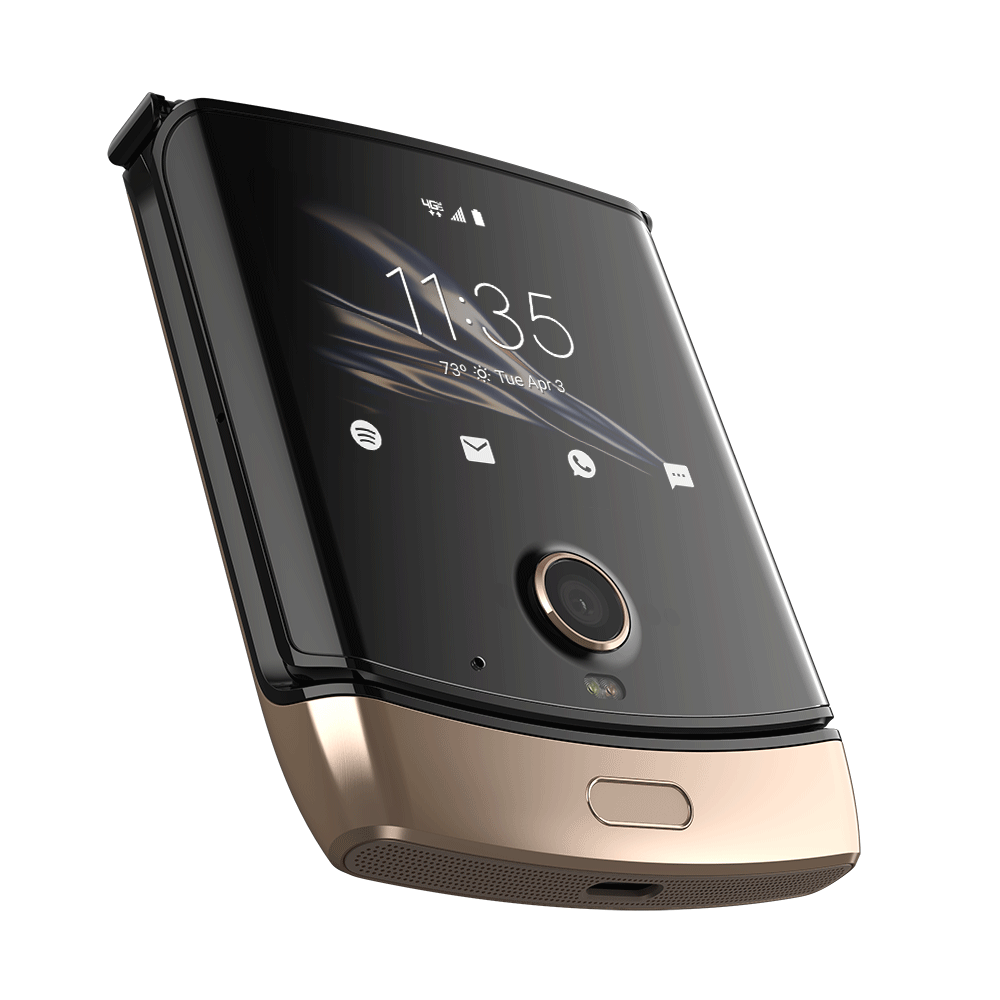
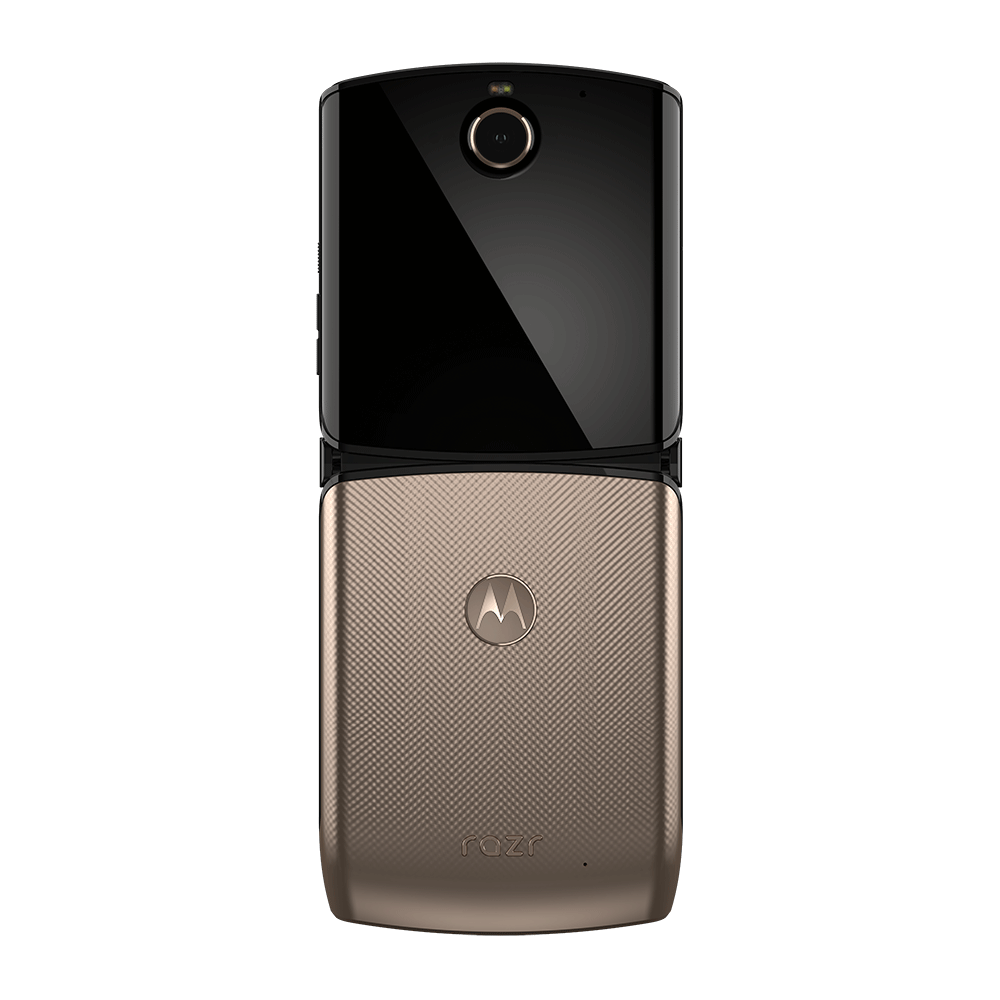
The Motorola Razr 2019 is already available for purchase. The foldable device is priced at $1500 and is available in a single color variant called Noir Black. However, if you prefer the Blush Gold variant that leaked last week, Motorola says it will be available this spring.

Renders of the Blush Gold variant were posted on the web by Evan Blass (@evleaks). This variant has the bottom half of the phone coated in gold paint. The chin where the fingerprint scanner is placed is also gold and there is a gold ring around the rear camera too.

There will be no difference with respect to the specs and price between this new colorway and the currently available Noir Black. So you get a 6.2-inch FHD+ foldable display with a notch, a 2.7-inch secondary display, a Snapdragon 710 processor, 6GB of RAM, 128GB of storage, and a 2510mAh battery.

Motorola ships the Razr with Android 9 Pie out of the box. We hope an Android 10 update is available by the time the Blush gold variant is ready to ship.


(Source, Via)

Xiaomi releases more details of the upcoming Mi AIoT Router AX3600

Xiaomi recently announced that it would unveil a new wireless router that uses the WiFi 6 protocol alongside the Mi 10 series. The company has now released more details of the new router via a Weibo post.

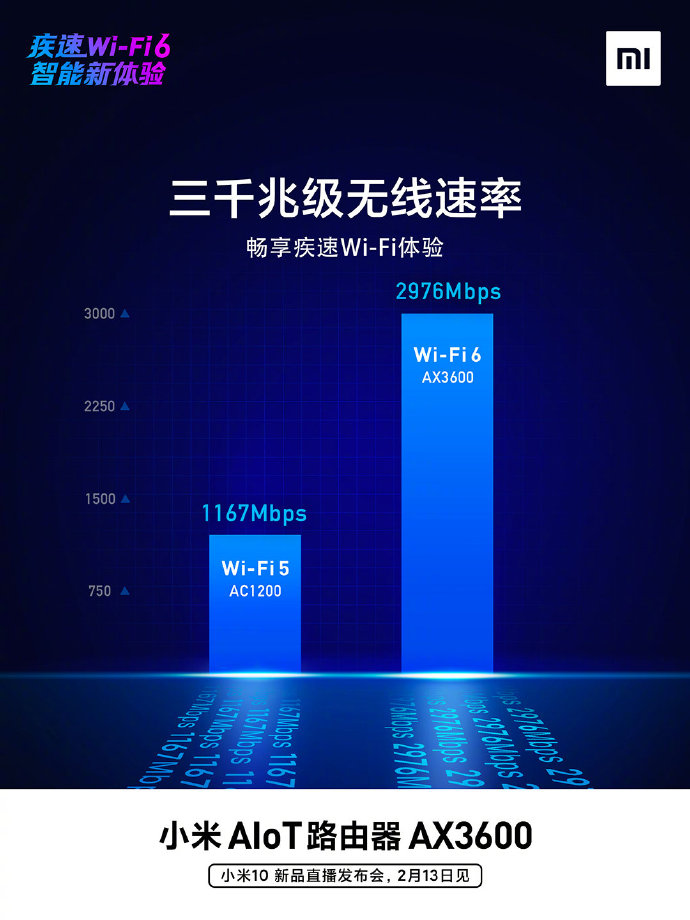
The new router is revealed to go by the moniker “Xiaomi AIoT Router AX3600” and as stated, it comes with WiFi 6 which will also be onboard the Mi 10 series. The new WiFi standard delivers a fast network with low latency. According to the details the device’s theoretical dual-frequency concurrent rate is up to 2976Mbps. It also uses OFDMA technology which allows users to send data for multiple terminal devices at the same time in one transmission. In this regard, the transmission is more efficient. The Mi AIoT Router also comes with MU-MIMO technology that allows multiple antennas of the router to serve multiple devices at the same time, making the Internet smoother.

These features are in addition to the latest WiFi 6 features which includes optimized power consumption and wider coverage capabilities. It also brings support for multi high-speed concurrent connections. In other words, the connection is stronger with a wider range and can better support multiple connections at the same time. Other benefits include lower latency overall, high rate of data transmission and more.


Realme Buds Air Yellow Version shipping delayed in China due to coronavirus outbreak

Much to the dismay of those restlessly waiting to get their hands on Realme’s yellow-tinted Buds Air, the Chinese smartphone maker has postponed its plan to launch this variant of the earbuds in China amid the coronavirus epidemic.

Realme Buds Air yellow version
In an official apology letter, which was released on February 11th, Realme said consumers making the final payment on February 14th will be first in line to receive Buds Air yellow version. The Shenzhen-based company is expected to resume normal production as soon as it can while ensuring the utmost protection of its employees and consumers against the coronavirus outbreak.

realme buds air yellowRealme took the covers off its Buds Air wireless headset in January in China this year. The earphone is powered by an R1 chip with a 119.3ms delay. Furthermore, it supports an impressive array of features including wear detection, Type-C, and wireless charging, smart touch, and adopts the ENC call noise reduction technology for a superior calling experience. The Realme Buds Air bears a price tag of 369 yuan ($53).
 

You can check out realme’s apology letter below:

Dear Realme User,

In order to strengthen the prevention and control of pneumonia epidemic of the new type of coronavirus, governments across the country, Guangdong and other regions have introduced regulations and measures such as extended holidays, postponed resumption of work, and traffic control. Enterprise rework and production have been affected to varying degrees. Therefore, the delivery time of the Realme Buds Air yellow version headphones will also be delayed. For customers who deliver the final payment on February 14, we expect to start shipping on March 3.

We apologize for any inconvenience caused by this delayed shipment. Realme will resume normal production as soon as possible under the premise of protecting the health of customers and employees. Thank you for your understanding and support.

realme

February 10, 2020


Xiaomi will attend MWC 2020; releases precautions that would be adhered to

The Mobile World Congress is billed to commence later this month. Just when the hype was building as regards the products that would be released at MWC, the mobile show has been hit by a wave of withdrawals. It all began with Amazon announcing its withdrawal from participating at MWC, citing fears over the Coronavirus ravaging China. Other companies like Sony, NVIDIA, LG, Ericsson have also announced their withdrawal from the exhibition.

Xiaomi is expected to announce the Mi 10 & Mi 10 Pro at MWC 2020

But in a twist, Xiaomi has reaffirmed that it will participate at MWC 2020. Since some of its team members will come from China, the company released some safety guidelines that would be followed to ensure that any infected person doesn’t make the trip and the safety of fans, the media, partners and others in Barcelona are assured.

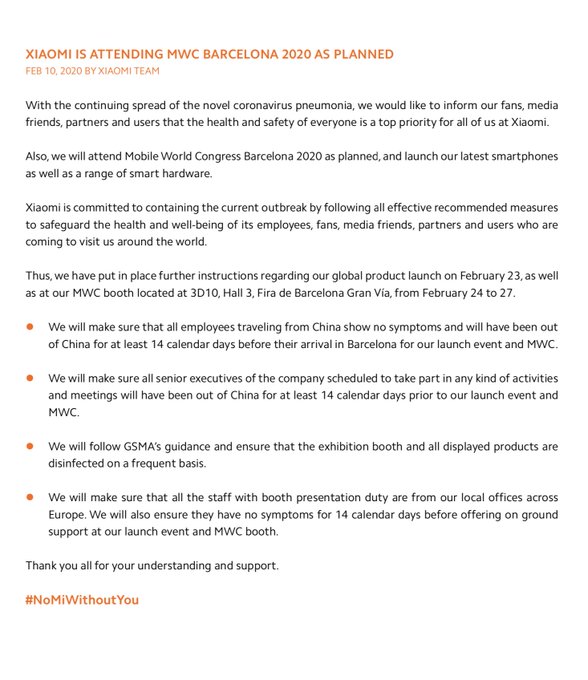
In a press release earlier today, the Chinese tech giant stated that in order to align with personal and product safety during MWC, certain core measures will be adopted. Find the full text of the statement below;

“With the continuing spread of the novel coronavirus pneumonia, we would like to inform our fans, media friends, partners and users that the health and safety of everyone is a top priority for all of us at Xiaomi.

Also, we will attend Mobile World Congress Barcelona 2020 as planned and launch our latest smartphones as well as a range of smart hardware.

Xiaomi is committed to containing the current outbreak by following all effective recommended measures to safeguard the health and well-being of his employees, fans, media friends, partners and users who are coming to visit us around the world.

Thus, we have put in place further instructions regarding our global product launch on February 23 as well as at our MWC booth located at 310, Hall 3, Fira de Barcelona Gran Via, from February 24 to 27.

  • We will make sure that all employees travelling from China show no symptoms and would have been out of China for at least 14 calendar days before their arrival in Barcelona for our launch event and MWC.
  • We will make sure all senior executives of the company scheduled to take part in any kind of activities and meetings will have been out of China for at least 14 calendar days prior to our launch event and MWC.
  • We will follow GSMA’s guidance and ensure that the exhibition booth and all displayed products are disinfected on a frequent basis
  • We will make sure that all the staff with booth presentation duty are from our local offices across Europe. We will also ensure they have no symptoms for 14 calendar days before offering on ground support at our launch event and MWC booth. Thank you all for your understanding and support hashtag no me without you”

Xiaomi is taking a different path from those taken by fellow Chinese firms Vivo which announced it is pulling out from MWC 2020.  MediaTek and Intel also announced their withdrawal recently. The event may get cancelled considering the number of companies that have already announced they won’t be attending. Apart from that, two persons have reportedly been infected by the Coronavirus in Spain where the event would take place.


(source)


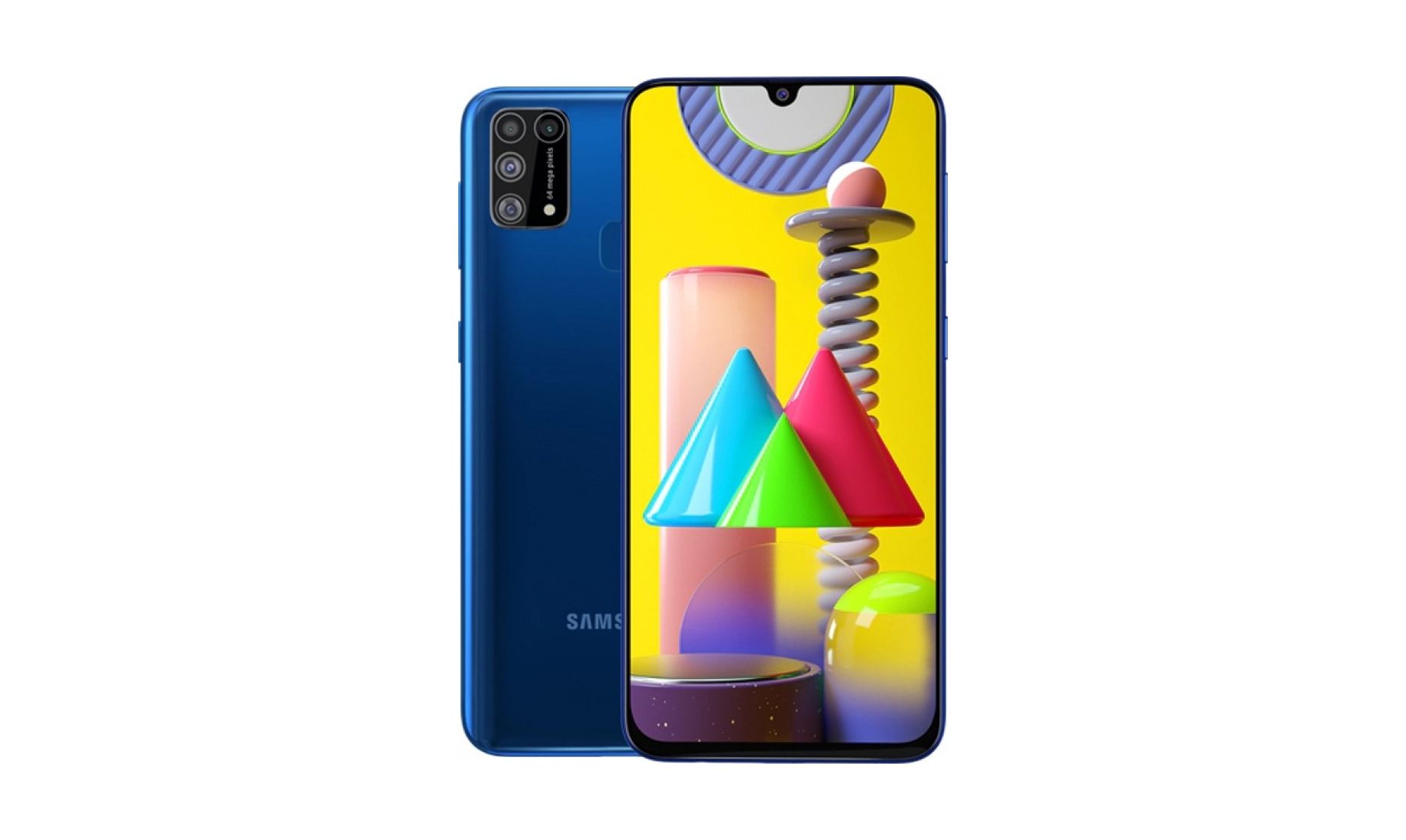
Samsung Galaxy M31 to sport 32MP front camera, up to 8GB RAM and 128GB storage, claims report

The Samsung Galaxy M31 will launch in India on February 25 and it will be exclusively for purchase through Amazon India. Some of the key highlights of the smartphone were revealed earlier including screen resolution, battery capacity, and camera specifications. The latest report on PriceBaba reveals exclusive information on the processor, RAM and storage variants.

The latest batch of data comes from reputed leakster Ishan Agarwal. According to the report, The Galaxy M31 flaunts a 32-megapixel front camera with an aperture rating of f/2.0. As per earlier reports, we know that the rear camera includes a quad-sensor module comprising of a 64-megapixel primary lens with an aperture rating of f/1.8. The latest report reveals an 8-megapixel secondary lens with an aperture rating of f/2.2, and two 5-megapixel sensors with aperture ratios of f/2.2, and f/2.4 respectively.

Samsung Galaxy M31
Samsung Galaxy M31

Samsung Galaxy M31 Specifications and Features

The Galaxy M31 comes in two variants, with 6GB of RAM and 64GB of storage, and 8GB of RAM and 128GB of storage respectively. An earlier report on 91mobiles revealed that Samsung might launch a third variant with 4GB of RAM and 64GB of native storage. However, the recent report lacks any information on the latter.

The smartphone is rumored to flaunt a 6.4-inch Super AMOLED Infinity-U display and draw power from an Exynos 9611 SoC. The handset is likely to be powered by a massive 6,000 mAh battery with a 15W fast charge. The Galaxy M31 runs on Android 10-based One UI 2.0 skin on top and flaunts USB Type-C connectivity and a 3.5mm AUX port. The smartphone flaunts a rear-mounted fingerprint scanner for additional security.

Although there is no formal word on pricing, the Samsung Galaxy M31 is rumored to be priced around the Rs. 15,000 (~$211) mark. Watch this space for more, as we bring you the latest updates on the Samsung Galaxy M31.


(source)

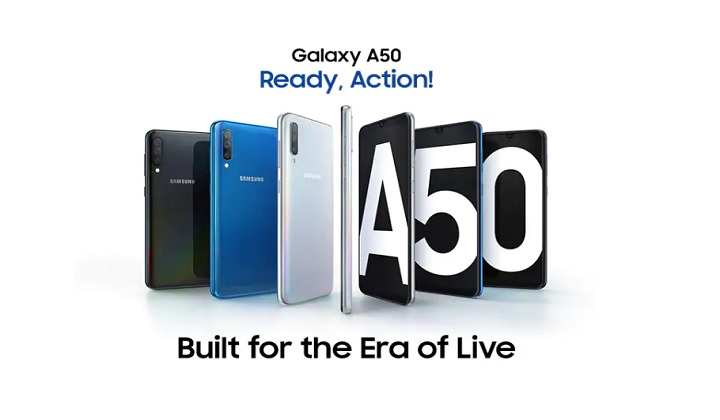
Samsung Galaxy A50 price slashed in India after arrival of Galaxy A51

The Samsung Galaxy A50 recently received a price cut of Rs. 4,500 in India. It is a limited period price cut that it is valid until Feb. 21. The new price cut comes just days after Samsung launched its newest model in the A series, Galaxy A51.

The Samsung Galaxy A50 midrange phone had launched last year in February with an original starting price of Rs. 21,490 (~$301). With the current limited period discount offer, its current price stands at Rs. 16,990 (~$238). Of the two variants that Galaxy A50 has to offer, the discount is applicable only for its 6 GB RAM + 64 GB storage high-end model. The 4 GB RAM + 64 GB storage base model continues to enjoy no price cut and is available on Flipkart for a price of Rs. 17,499 (~$245).

Galaxy A50 key specifications

The first thing worth noticeable in terms of the phone’s features is its triple camera setup on the rear-side. It houses a 25-megapixel primary sensor, an 8-megapixel ultra-wide lens and a 5-megapixel additional depth sensor. For selfies, the phone has a 25-megapixel sensor at the front.

Powered by an octa-core Exynos 9610 processor, Samsung A50 comes with 6 GB RAM and 128 GB storage, additionally extensible up to 512 GB. It is backed with a battery of 000mAh and supports 15W fast charging via USB Type-C port. The Galaxy A50 has a 6.4 inches Infinity-U Super AMOLED display with FHD+ resolution. Reports say that the handset would soon get the latest Android 10 OS with Android Pie-based One UI skin.

Galaxy A50 Featured

The all-new Samsung Galaxy A51

Bolstering its A-series line up, Samsung launched its newest model Galaxy A51 in January 2020. The phone has a 6.5 inches AMOLED Infinity-O display with a resolution of 1080 x 2400 pixels. It runs One UI 2.0 based on Android 10 and is powered by a 4000 mAh battery with proprietary 15W fast charging. It packs an inbuilt storage of 128 GB extensible by a microSD card (up to 512 GB).

At its rear, Samsung Galaxy A51 comes with a whooping 48-megapixel primary camera, a second 12-megapixel camera and third lens of 5-megapixel. The front camera for shooting selfies is 32-megapixels in resolution. The Exynos 9611 chipset powers the device with up to 6 GB of RAM.

The Samsung Galaxy A51 arrived in launched in India in Prism Crush Blue, Prism Crush Black, Prism Crush Pink, and Prism Crush White colours. The Galaxy A51 has a starting price of Rs. 23,999 (~$329) in India.


OnePlus phones get Google Assistant’s Ambient Mode

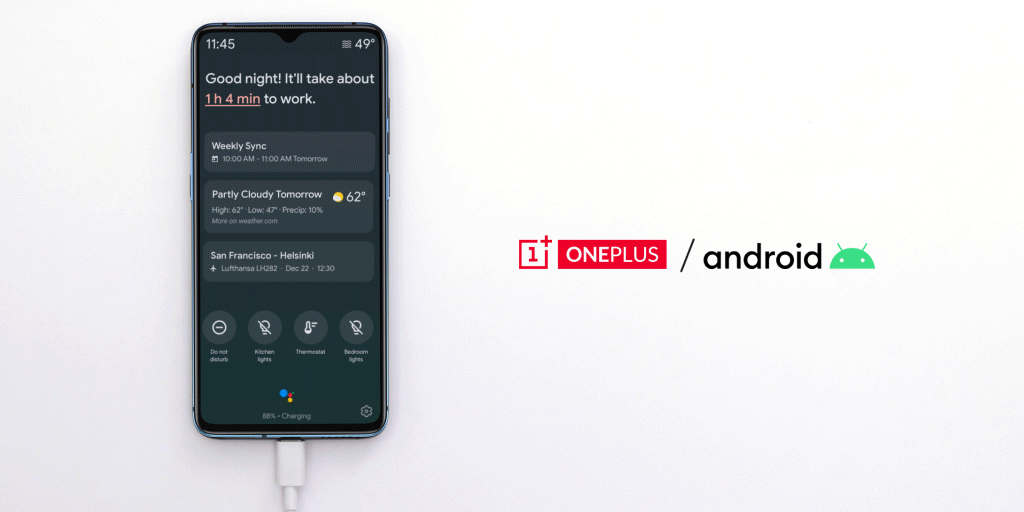
Last year, Google announced Ambient Mode, a Google Assistant feature that allows you to be able to use the Google Assistant even when the device is being charged. It debuted on the Nokia 7.2 and Nokia 6.2. In Ambient Mode, your phone will be able to function as a digital photo frame, control smart home devices, and even display reminders and weather info.

Google Assistant Ambient Mode for OnePlus

OnePlus has announced that the feature is now available for its devices. Ambient Mode is available on OnePlus phones starting with the OnePlus 3.

If you own a supported OnePlus device, you can opt-in for the feature by connecting your phone to your charger. You should get a notification for Ambient Mode and all you have to do is follow the instructions to set it up. You can also enable the feature by launching the Google App Settings > Assistant > Devices (Phone).

OnePlus says it is a staged rollout, so it will not be available yet for all users and might take up to a week for full release.


(Source)

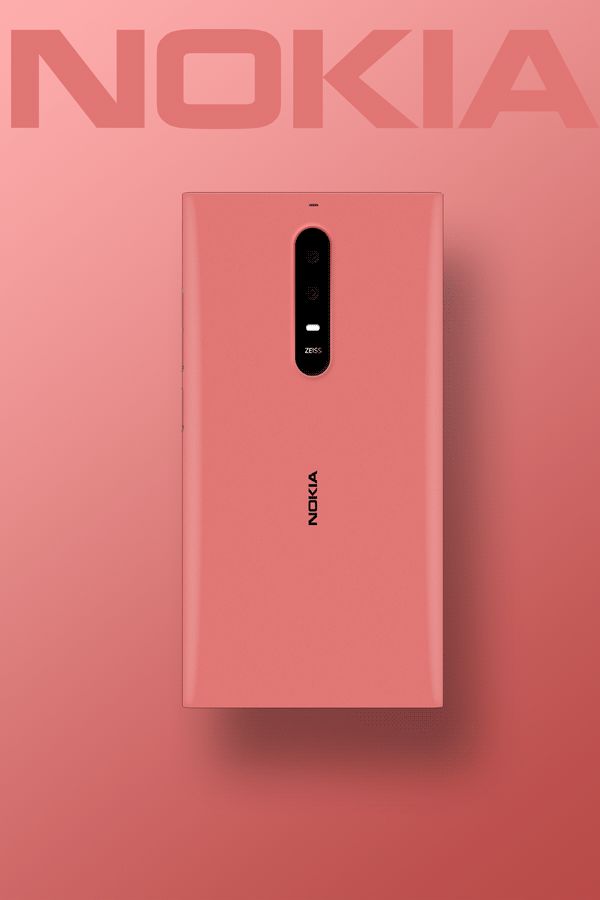
Nokia N9 2020 Concept envisions a classic design but it’s not appealing!

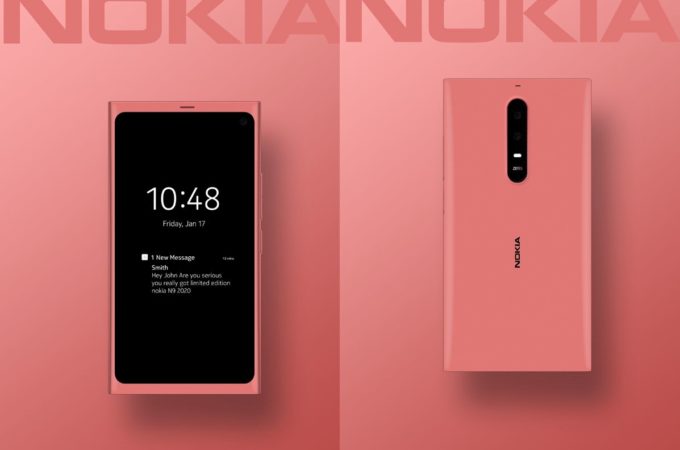
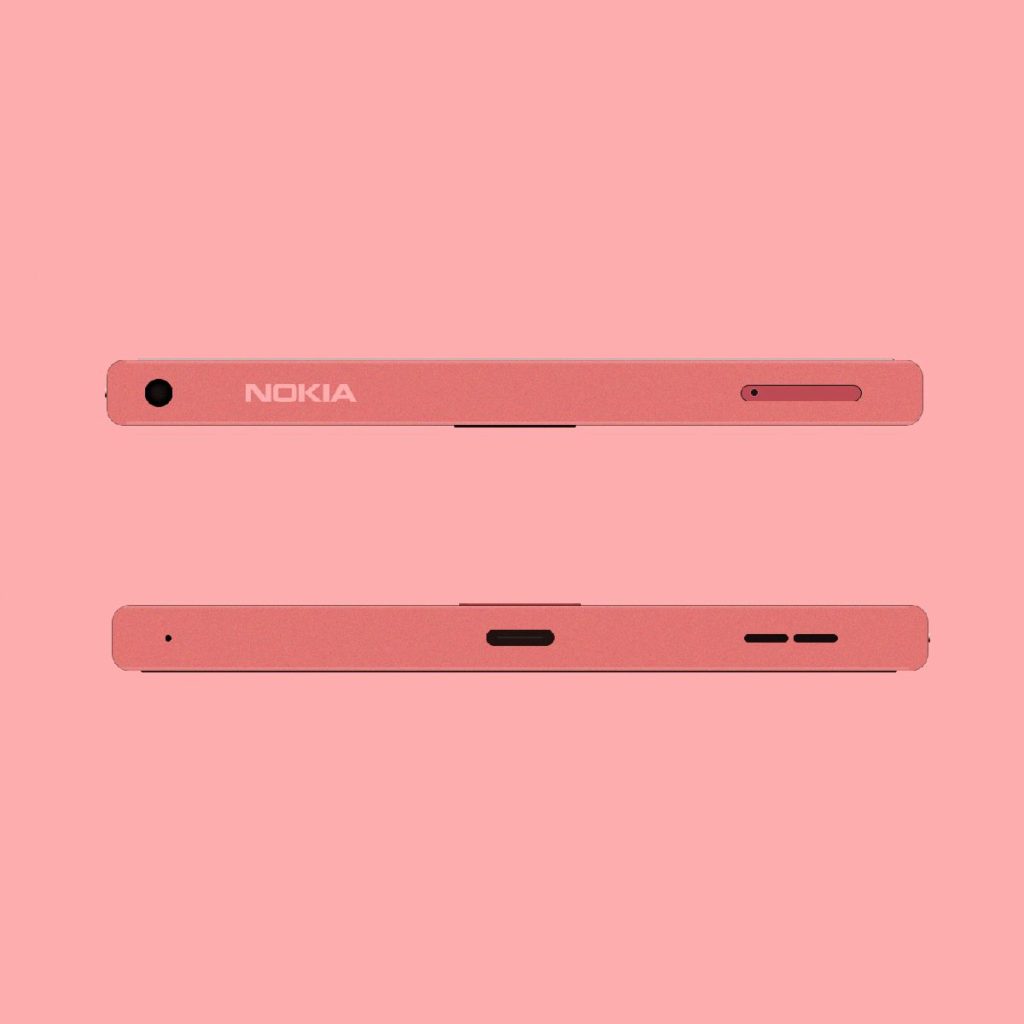
Nokia first announced the Nokia N9 in June 2011 with a design that can become a precursor to the Lumia lineup. The device featured a rounded “Oreo” camera which was adopted recently on the Nokia 7.2 and OnePlus 7T. HMD has made some efforts to return to the glory days with the relaunch of several classics such as the Nokia 3310, Nokia 800 etc. The device has now got a remake with the Nokia N9 2020 Concept design. shared recently by Concept Phones. Nokia N9 2020

The design was created by designer Antony Andreas with several features borrowed from the original design but with expanded functionality. Instead of a plastic body, the device is envisioned with an aluminium unibody and a more refined design. It retains the angular edges of the original N9 but the sides are perfectly curved. The design could easily pass for that of an iPod. The fuselage even extends on the display edges just like on the original model resulting in thick bezels on the top and bottom. The device adopts a pink hue which looks attractive. The designer even thinks the Lumia 1020’s yellow hue won’t be a bad idea.

The Nokia N9 would be 10 years old by 2021 and Nokia may decide to relaunch the device again. n my opinion, the design has outlived its usefulness. The design should take its rightful place among the classic. If the N9 is to be relaunched, Nokia may likely go for an entirely different design just as it did with the Nokia 3310. What do you think about the design? Give us your thought in the comment section below.


Best apps to display internet speed in status bar

Better Internet Speeds have become a reality throughout the world. In the last decade, connectivity has improved a lot, thanks to the evolution of fiber-optics and rollout of next-generation communication networks. Parallelly, smartphones have also improved in the recent past with powerful hardware and optimized software. Overall, the Internet has become an integral part of our lives, and now we can’t imagine our life without it. Android as a platform has helped the smart telephony to improve a lot. It has emerged as the world’s largest smartphone platform. There are tons of apps in the Play Store to ease our day-to-day lives. In this well-connected world, sometimes the user needs to display realtime internet speeds in the status bar, so we have concluded a whole list below.

internet speed monitor apps

Must See: Best Note-Taking Apps for this year!

There are several ways to show internet speeds in the Android status bar. The users can rely on custom MODs, custom ROMs or can simply install a third-party app for the purpose. However, manufacturers like Motorola, OnePlus and Xiaomi already packs an inbuilt Network Activity Monitor, but users of other devices still have to rely on third-party apps.

So let’s see the best network activity monitors to show internet speeds in the status bar.

Best Apps to show Internet speed in the Status bar

Internet Speed Meter Lite

It is an important speed and usage monitor application. Internet Speed Meter Lite displays the internet speed in the status bar and shows more metrics in the notification panel. The user can see the connection speed anytime while using any app.

internet speed meter lite pro

The app is completely free and even does not show any advertisements. The primary features of the app include real-time speed update in the status bar, daily data usage, separate status for Mobile and WiFi network. It monitors traffic data for the last 30 days, and it does not impact battery life much. The user can customize the UI color and status bar icon from the settings menu. It also shows the speed meter on the device’s lock screen.

There’s an Internet Speed Meter Lite Pro version also with advanced features. The user will get graph, time and usage of the current session, app usage for mobile and wifi, and realtime speed of running apps.

Download 

Net Speed Indicator

net speed indicator

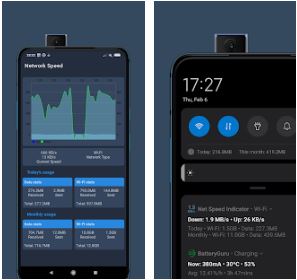
If you want more intuitive User Interface and compatibility with the present-day notch displays, then Net Speed Indicator is the best choice. It is a small nifty monitoring tool that allows checking realtime internet speed from the status bar. The user can also check the network speed in the notification or in-app itself.

It monitors every single byte being sent and received from the smartphone and then filters into week and month wise. However, WiFi and Carrier data are monitored differently. The developer has a long to-do list of features that will gradually roll out in the future.

Download

Internet Speed Monitor

It is another small app that monitors Internet Speed “smartly, safely and in a correct way.” It keeps a record of data transfer on a daily and monthly basis. The beautiful yet intuitive user interface of the app makes it easier to use. It also shows information including WiFi frequency, IP address, Link Speed, SSID and much more.

There are many customization options available in the settings panel. The user can easily customize settings for the application, notification, and floating widget. The position, color, and size of the floating widget on the status bar can be set.

Download 

These are some best speed monitor apps available for Android smartphones. If there’s any other that we have missed, then let us know via the comments below.

Related: Best Apps to take Scrolling Screenshots on Android?

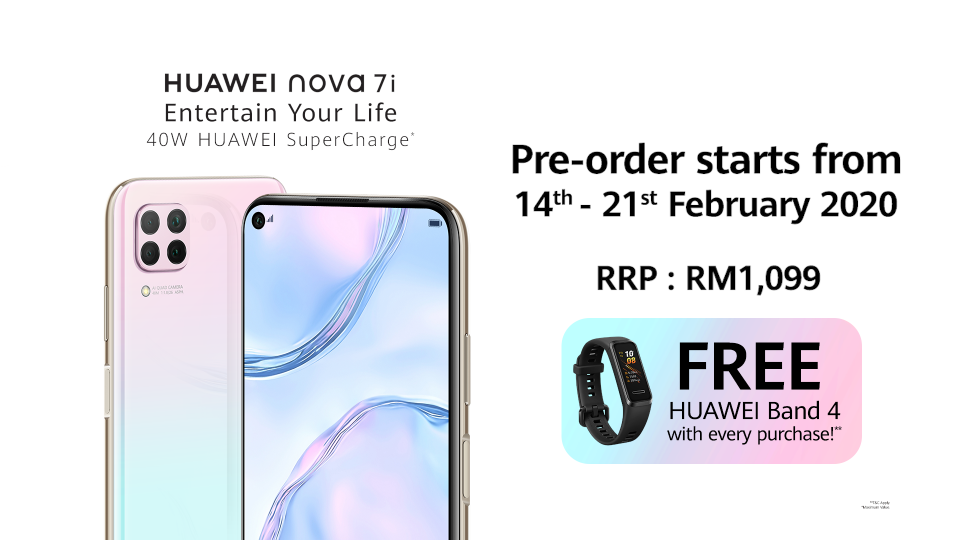
Huawei Nova 7i pricing confirmed ahead of February 14 launch

Huawei is slated to unveil the Nova 7i at an event in Malaysia later this week. The device is rumored to be a rebadged Nova 6 SE that was launched in China in 2019. The smartphone packs in quite the punch with its robust specifications and trendy design. The only drawback being the lack of Google Services due to the unending US trade ban. The company unveiled the price of the handset during the announcement earlier today.

Huawei Nova 7i Price 

The Huawei Nova 7i is priced at RM 1,099 (~$265). This comes as a major surprise since the Nova 6 SE is priced at CNY 2,199 (~$312) despite being the same device. Not that we are complaining! The Nova 7i will launch in three color options, namely Emerald Green, light blue and pink gradient and black. Buyers in Malaysia will be provided with a free Huawei Band 4 on purchase of Huawei Nova 7i.

Huawei’s press release confirms that the smartphone will launch on February 14. Although the Nova 7i is the first device to flaunt the ‘7’ moniker, it is not a new design. In fact, Huawei Nova 7i moniker is a rebranded version of the Huawei Nova 6 SE that went official in China in December 2019. Due to the lack of Google Services on the Nova 7i, users will have to rely entirely on installing unverified APKs, and the Huawei App Gallery.

Huawei Nova 7i Features and Specifications

The Nova 7i flaunts a 6.4-inch IPS LCD display with a resolution of 2310 x 1080 pixels. The smartphone features a side-mounted fingerprint scanner instead of a conventional rear panel-mounted design or under-display module. The smartphone is powered by a 2.27 GHz octa-core Kirin 810 chipset with 8 GB of RAM and 128 GB of native storage, expandable up to 256 GB via a microSD card.

In terms of optics, the Huawei Nova 7i flaunts a quad-camera setup at the rear, complete with a 48-megapixel primary sensor, an 8-megapixel ultrawide lens, and two 2-megapixel sensors for macro and depth photography. The camera module also features an LED flash unit. On the front, the Nova 7i flaunts a 16-megapixel camera housed within the punch-hole located near the top left corner.

The Huawei Nova 7i draws power from a 4,200 mAh battery with 40W fast charge support and runs on Android 10-based EMUI 10. The handset uses a hybrid nano-SIM slot with support for 4G LTE. The other features of the Nova 7i include dual 4G VoLTE, Wi-Fi 802.11 a/b/g/n/ac, USB-C, GPS,  3.5mm AUX port and side-facing fingerprint reader.


(via)

AT&T CEO thinks US govt. buying stake in Nokia, Ericsson is a bad idea

Amid growing concerns about Huawei’s global dominance in the field of technology, the US could be looking at potential rivals to counter Huawei’s success in the coming days. While a faction of the US administration is considering the possibility, the idea has not gone down well with many individuals. Especially from people in the private sector who believe the government’s involvement in private American or allied companies does not bode well for the future.

“I do not think it’s a good idea”, revealed Randall Stephenson, CEO at AT&T, when CNBC asked for his opinion on the US Attorney General’s comments on the government investing in Nokia and Ericsson. In his defense, Stephenson said, “Governments generally do not have the greatest reputation when it comes to investing in the private sector”.

Stephenson’s comments came shortly after US Attorney General William Barr suggested that the US should take the initiative to acquire a stake in private sector companies like Nokia and Ericsson to secure 5G equipment for future use. He said instead of simply asking allies to avoid using Huawei’s products, the US government should work on a substitute. Shares of Nokia and Ericsson opened strong post the Attorney General’s comments, with shareholders suggesting the companies accept the offer.

Stephenson, however, agrees with some of the ideas shared by the Attorney General. For example, AT&T has been working closely with Microsoft and Dell along with the White House to develop a software-based alternative to Huawei’s 5G equipment.

Speaking on the subject Stephenson said, “AT&T has been the pioneers of software-based architecture in networking. We are using hardware that would have been considered unconventional half a decade ago. We use generic hardware since it can run any software with ease. We prefer using unconventional ways to avoid a competitive comparison with Huawei, using innovation and software over government mandates to achieve our goals”.

Stephenson further explained the precarious situation the US Government is facing as its 328 million citizens is far outnumbered by China’s population of 1.4 billion. “If Huawei gets a market share of over 90% in China, they control 30% of the global market. If the US does not use Huawei’s equipment in its network, we have to rely on a sub-scale supply chain, which is why we need an innovative solution to the problem”.

AT&T has already made some major investments into developing software-based networks, although it had previously pointed at cost-cutting as the motive behind the move. The company previously vowed to virtualize 75% of existing networks by 2020 using SDN (Software-Defined Networking). It has also made significant investments to include open-RAN (Radio Access Network) in its networks.


(via)

Xiaomi launches the Smoovie Multifunctional Infrared Camera Detector

Privacy is a major concern in this digital era. It is now possible to place a spy cam inside a hotel room or even a public restroom and share the nude or private content of individuals who visit the place online for a profit. This has made it important to scan a hotel room for hidden cameras while on vacation among other applications. One of Xiaomi’s ecological chain companies has launched the Smoovie Multifunctional Infrared Detector.Smoovie Multifunctional Infrared Detector

The Smoovie Multifunctional Infrared Detector comes with a built-in 3D all-around vibration sensor chip. The sensor is very sensitive such that it can be used as an anti-theft/anti-lost device as well. In this case, you just need to attach it to the valuable possession and it vibrates and blasts an alarm to effectively prevent the loss of items.Smoovie Multifunctional Infrared Detector

The infrared detector is equipped with a 230 mAh lithium battery and supports USB charging, thus eliminating the need to replace the battery frequently. The battery is also durable as it can be used continuously for 24 hours on a single charge in the camera detector mode. If the device is put in alarm mode, it can be used continuously for 72 hours continuously.

The design of the camera detector adopts a compact and lightweight style. It weighs just 34g and has a lanyard which can be used to hang the device anywhere.

It is also very simple to use, let’s talk about the infrared scanning function first. The first step is to turn on the side power switch. The second step is to short press the function key to enter the infrared scanning mode, with the eyes close to the detection window. The third step can short press the function key to adjust the red light flashing frequency or turn off. The fourth step is to scan the environment and observe the abnormal red flashpoint through the window to find suspicious items.

To turn on the one-button alarm display function, the first step is to turn on the side power button, the second step long-press the function button for 2 seconds to enter the alarm mode. Pressing for 2 seconds also exits the alarm mode to sleep mode.

The Smoovie Infrared Detector is priced at 99 yuan ($14).


(source)


Purported iQOO 3 may launch in India on February 25 under Rs. 40,000 (~$561)

iQOO India is expected to launch its first flagship phone in India in this month. The name of the device is currently under the wraps. Meanwhile, iQOO China today confirmed that its next phone will be debuting as iQOO 3 in the home market. While the launch date for the iQOO 3 in China is yet to be confirmed, a new leak states that iQOO India will be announcing its first phone in India on Feb. 25. It remains to be seen whether the smartphone carries the same iQOO 3 moniker. Another publication has revealed some information on the pricing on the two rumored iQOO phones that are expected to arrive in India.

Citing information from industry sources, 91mobiles has claimed that the only the launch date of the phone is confirmed, and its name is still a secret. The said device has Snapdragon 865 mobile platform onboard and carries support for 5G connectivity. It is already known that the upcoming iQOO phone for India will be equipped with liquid cooling technology.

Previous reports had claimed that iQOO India will be launching two smartphones. The first one could be SD865 powered iQOO 3 whereas the other one is said to be a 4G ready device. Probably, the second phone from iQOO for India may arrive some time later. According to The Mobile Indian, the 4G phone will be priced under Rs. 35,000 (~$491) whereas the 5G phone is said to be priced under Rs. 40,000 (~$561).

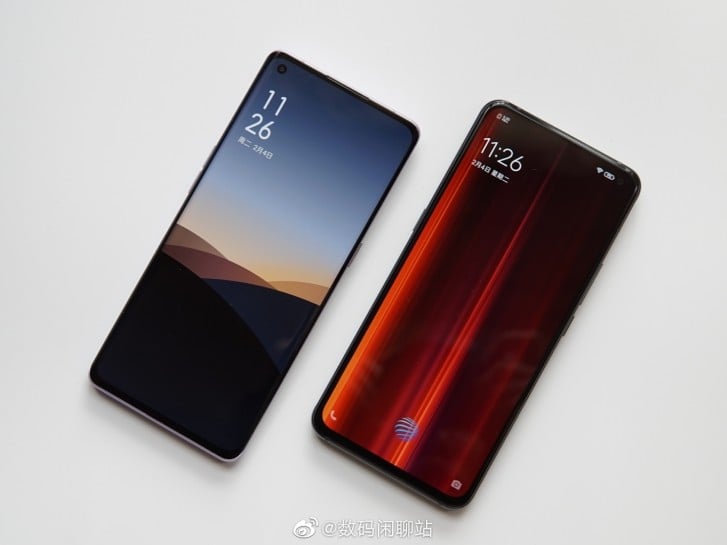
Allegegd iQOO 3
Allegegd iQOO 3 (right) with purported OPPO Find X2 (left)

The publication has further stated the retail package of the upcoming iQOO phone will include earphones among other accessories. It will be made available for purchase through online channel first and later offline platforms will be also selling it. The 4G phone is said to be packed with flagship-grade specs and gaming-centric features. It remains to be seen whether it features the Snapdragon 855 or Snapdragon 845 chipset. The report further mentions the new iQOO phones will be exclusive made for the Indian market and it will be decked with some industry first features.

On Feb. 11, Samsung will be holding a global launch for the Galaxy S20 series. It is yet to be confirmed whether India will be receiving the Exynos 990 chipset or Snapdragon 865 mobile platform powered S20 phones. The Xiaomi Mi 10 series will go official in China on Feb. 13. These phones may not arrive soon in India. Hence, there is a possibility that iQOO could become the first company to launch an SD865 phone in India.


(source 1, 2)

[UPDATE: MediaTek out too!] Vivo & Intel withdraw from MWC 2020, Apex 2020 concept launch delayed

UPDATE: MediaTek has also announced its withdrawal from MWC 2020 this year due to the coronavirus epidemic.

Vivo and Intel are joining the likes of TCL, Sony, and LG to withdraw from MWC 2020 which will be held later this month in Barcelona, Spain. Both the companies expressed concerns about the safety of its employees as well as the public as the reason for backing out of one of the world’s biggest tech shows of the year.

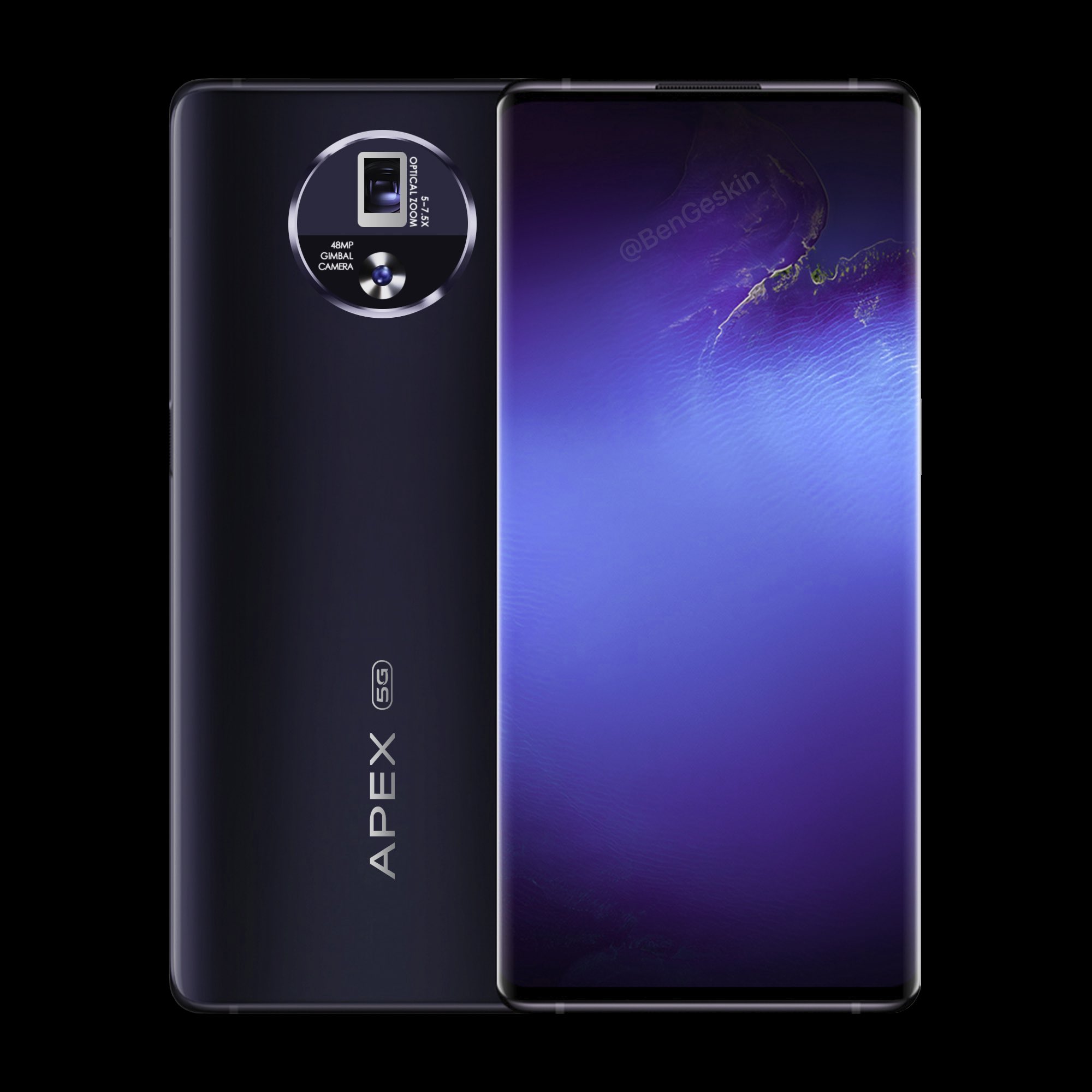
Vivo APEX 2020
Apex 2020 concept render by Ben Geskin

Vivo was all set to announce its new Apex 2020 concept smartphone at MWC 2020. The phone was expected to showcase Vivo’s advancements in smartphone technology. So, this withdrawal could be a big setback for the company as well as the event. Some brands like Sony have announced online launch events for their products, but Vivo is yet to confirm if the Apex 2020 concept phone will get a similar treatment

Intel also explained to VentureBeat in a statement that its withdrawal was an act of caution in response to the ongoing coronavirus crisis in China. A lot of other brands like LG, NTT Docomo, NVIDIA, Amazon, and TCL have either backed out of the event completely or have reduced their presence at the event.

The GSM Association, which organizes MWC every year also issued a statement detailing the countermeasures taken to combat the spread of coronavirus. The association said it wouldn’t allow anyone from China’s Hubei province and attendees will have to prove that they were outside of China for 14 days before the event. The organizers have also called for a ‘no handshake’ policy at the event this year.