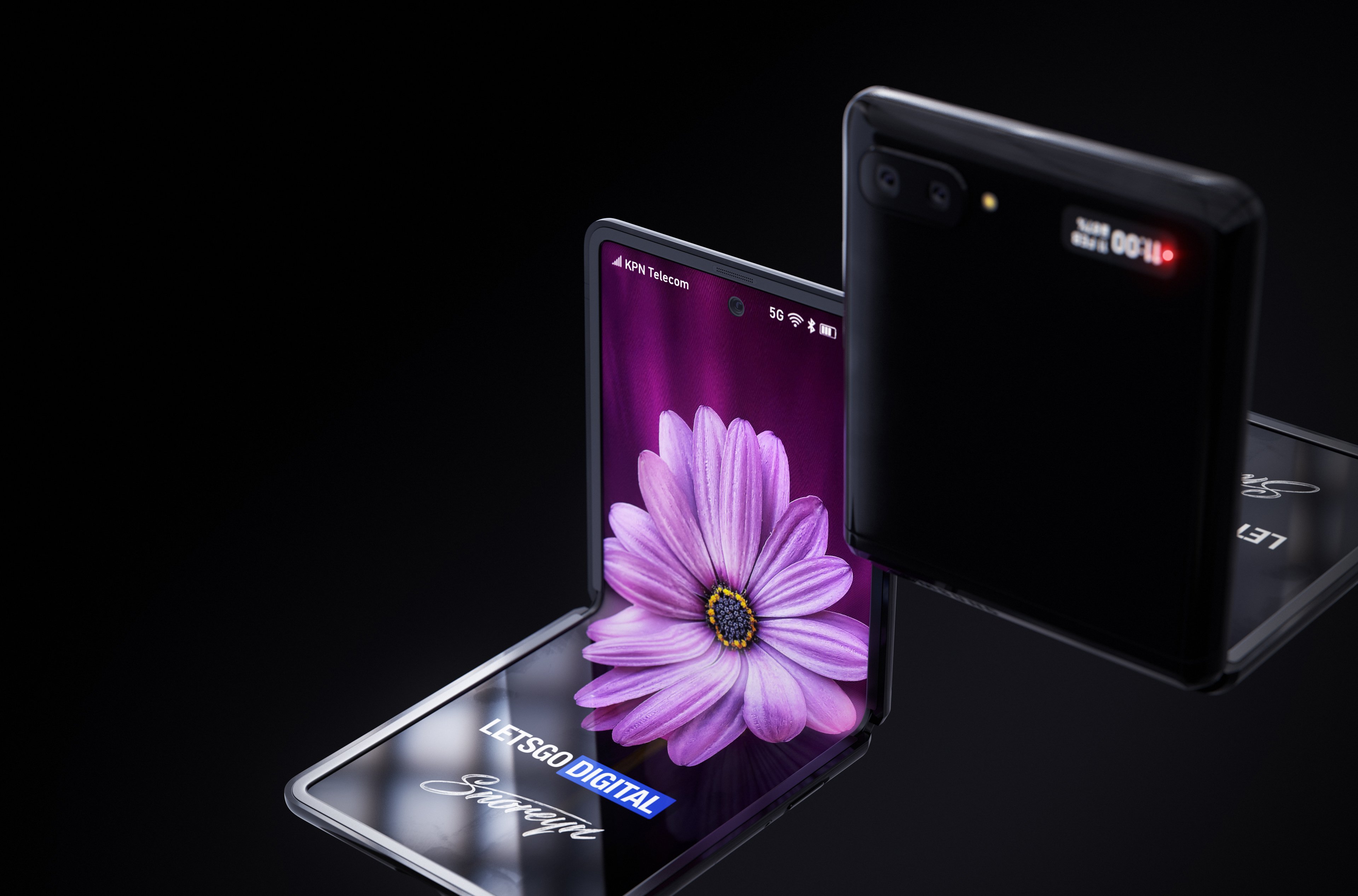
On Feb. 11, the Galaxy Z Flip will be debuting as the second foldable phone from Samsung alongside the Galaxy S20 series. Like the Motorola Razr 2019 that was announced in November 2019, the Galaxy Z Flip is a clamshell phone that sports a foldable display. In December, the leaked shots of the device had appeared to reveal some of its design. Some of its specs have also appeared in the recent past. A new tweet by Ishan Agarwal has the key specifications of the Galaxy Z Flip.
Samsung Galaxy Z Flip specifications (Rumored)
The Galaxy Z Flip will be equipped with a 6.7-inch Dynamic AMOLED display. Leaked shots had revealed that it has an Infinity-O punch-hole on the display. The phone sports a front-facing camera of 10-megapixel.
The rear side of the Galaxy Z Flip has a dual camera setup. It is now known that its primary lens is of 12-megapixel. Previous leaks had claimed that it could be equipped with a 108-megapixel main lens. The phone will be running on One UI 2.1 based Android 10 OS. The Galaxy Z Flip will offer users with a large internal storage of 256 GB. It could be housing a 3,300mAh or 3,500mAh battery.
Past reports have claimed that the Galaxy Z Flip is a Snapdragon 855 powered device. It is expected to feature an ultra-thin glass (UTG) and plastic film on the display. There will be a 1-inch secondary display placed alongside the dual camera system for checking notifications. The Z Flip will carry support for 15W fast charging.
The Galaxy Z Flip will be arriving in Black and Purple color options. The purple variant will have a darker look which will give it a premium appeal. Rumors from South Korea have revealed that it could be in colors like blue, red and pink.
Galaxy Z Flip price (Rumored)
A South Korean publication had recently reported that the Galaxy Z Flip will be priced between ~$860 and ~$1300 in South Korea. The pricing leak reveals that the device will be cheaper than the Snapdragon 710 powered Motorola Razr flip phone that carries a price tag of $1,500.
In related news, Samsung is reportedly working on a new Galaxy Z foldable device with tri-folding design. No details on the specs of the phone are available at the moment. It is speculated to be packed with flagship specs and it may go official in second half of 2020.
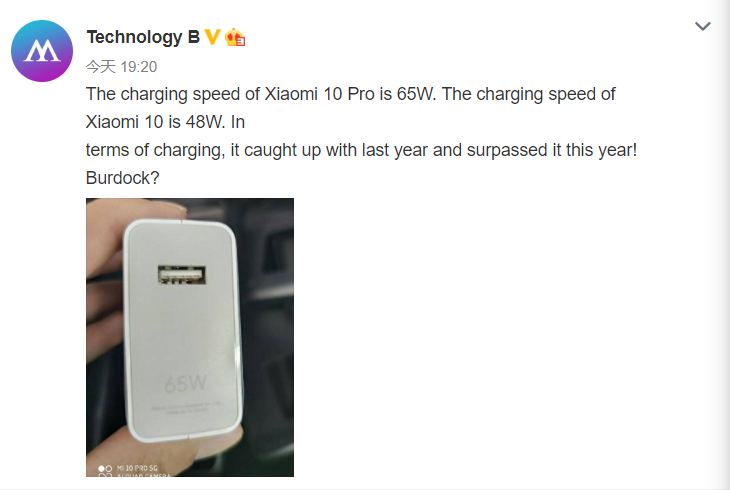
Live photos of the Xiaomi Mi 10 Pro leaked earlier today and one of the images showed the phone will have a 65W charger. A new leak has revealed the Mi 10 will come with a slower charging technology but one that still surpasses last year’s own.
According to Technology B, a Weibo account that posts details about upcoming devices, the standard Mi 10 will support 48W fast charge technology. This is slower when compared to the Mi 10 Pro’s 65W charge but faster than the Mi 9’s 30W fast charge and the Mi 9 Pro 5G’s 40W fast charge.
While the Mi 10 will charge slower than the Mi 10 Pro, it has been reported that it will have a bigger battery capacity. The info was revealed in a leak at the beginning of the month by Digital Chat Station. According to the Weibo post, the Mi 10 will have a battery capacity of about 4800mAh while the Mi 10 Pro will have a battery capacity of about 4500mAh.
The power rating for wireless charging for both phones are still unknown but they will be faster than that of the previous generation.
Both phones will be powered by the Snapdragon 865 processor and will have a 108MP primary camera. It was previously reported that the Mi 10 will have a 64MP primary camera but a Weibo post by Digital Chat Station yesterday said the phone has a 108MP camera.
Other expected features include an AMOLED display with a punch hole at the top left corner, stereo speakers, and Android 10 out of the box.
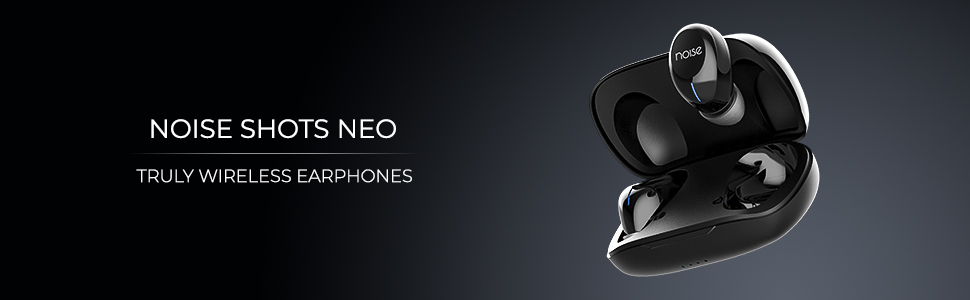
Just last week, Noise announced the Shots XO TWS earbuds that are priced at ₹5,499 (~$77). It has now followed it with another model called the NEO which sells for less than half the price of the XO.
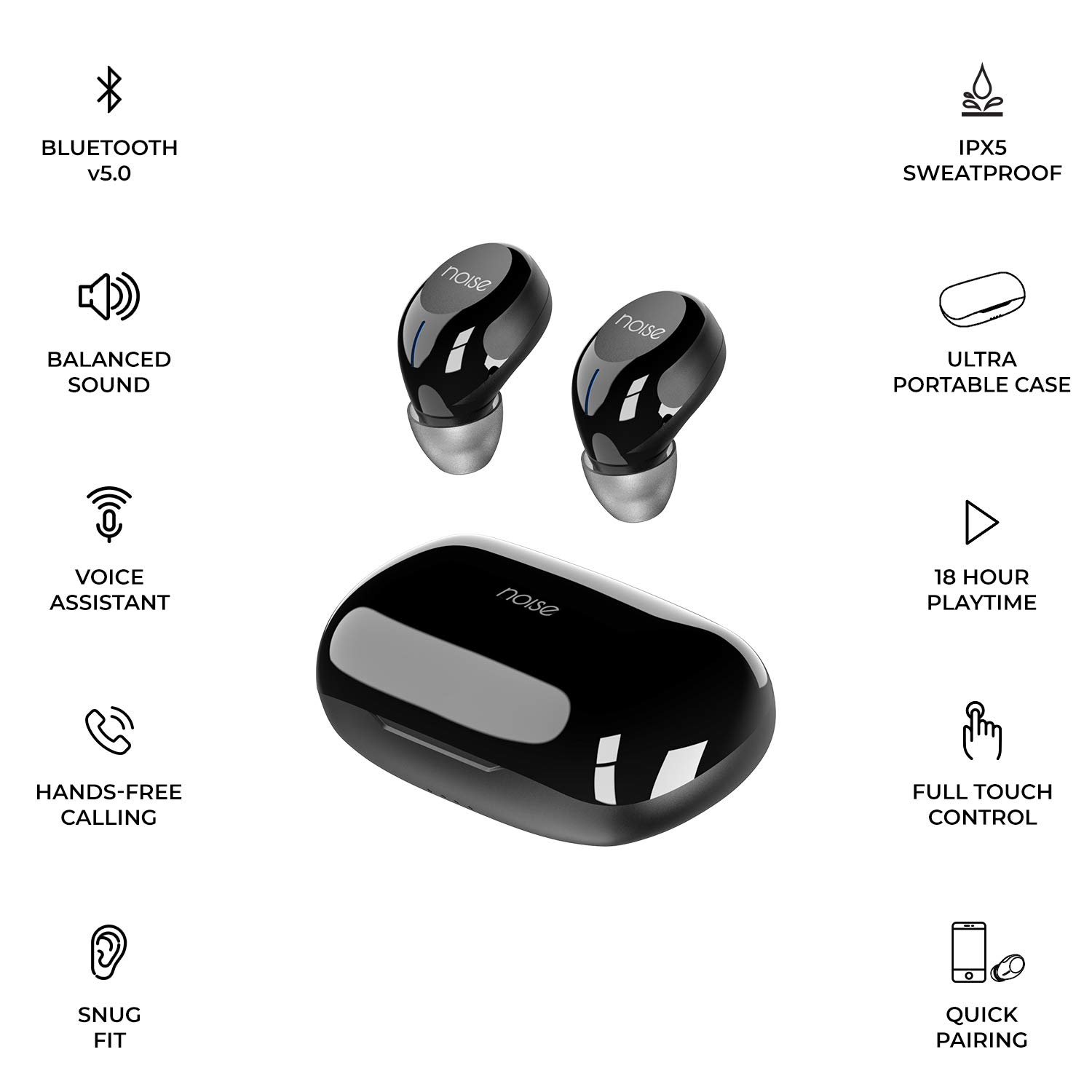
The Noise Shots NEO not only have a cheaper price tag but also have a different design. The earbuds come in a glossy case that flips open like a clamshell. The earbuds themselves also have a glossy finish paired with silver or white silicone tips. It comes in Icy White and Jet Black
The earbuds each have a 9mm driver and connect via Bluetooth 5.0. They support touch inputs for volume controls, music playback, and calls. You also get support for Google Assistant and Siri.
The earbuds will last 6 hours on a single charge and go up to 18 hours with the charging case which packs a 400mAh battery. There is no support for wireless charging and it charges via a Micro-USB port. These are the trade-offs when compared to the XO. However, it has an IPX5 rating making it sweat resistant and fit to be used when it rains (light rain).
[envira-gallery id=”301580″]
The Noise Shots NEO can be purchased on Amazon India. They are available for ₹2199 (~$31) for a limited time.
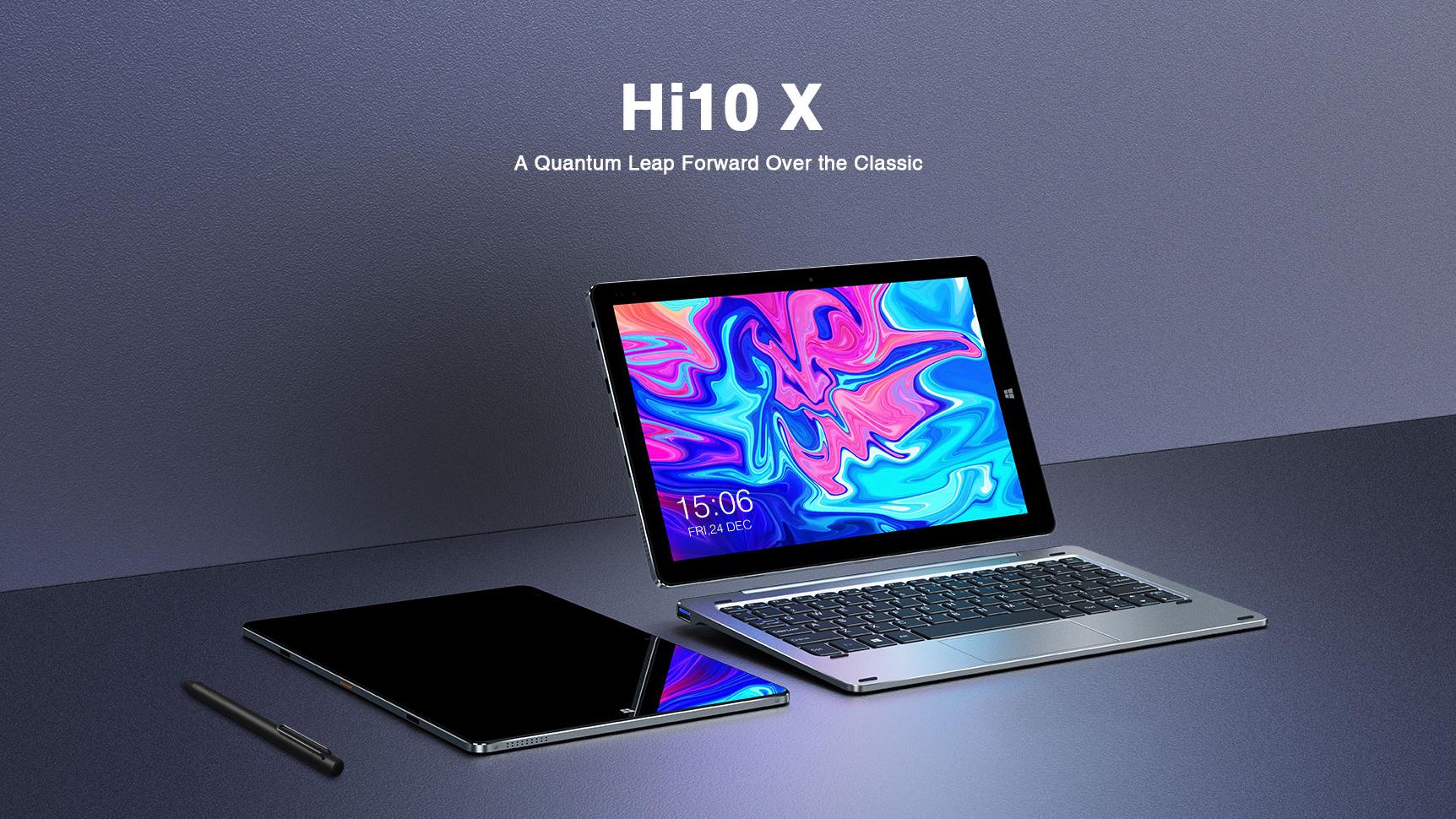
The Hi10 Series has been extremely successful for Chuwi as it includes a model for every taste and financial state. Recently, a new member joined the Series as the Chinese manufacturer launched the Hi10 X. Equipped with Intel’s Gemini Lake N4100 CPU and 9th Gen GPU combined with 6GB of RAM and 128GB of storage, the Hi10 X received a generous spec bump. There is also a 10.1″ fully-laminated FHD IPS display, high-quality full metal body, and dual USB Type-C ports. Below, you can see the unboxing video released by Chuwi last week.
Hi10 X size and portability
1 of 2
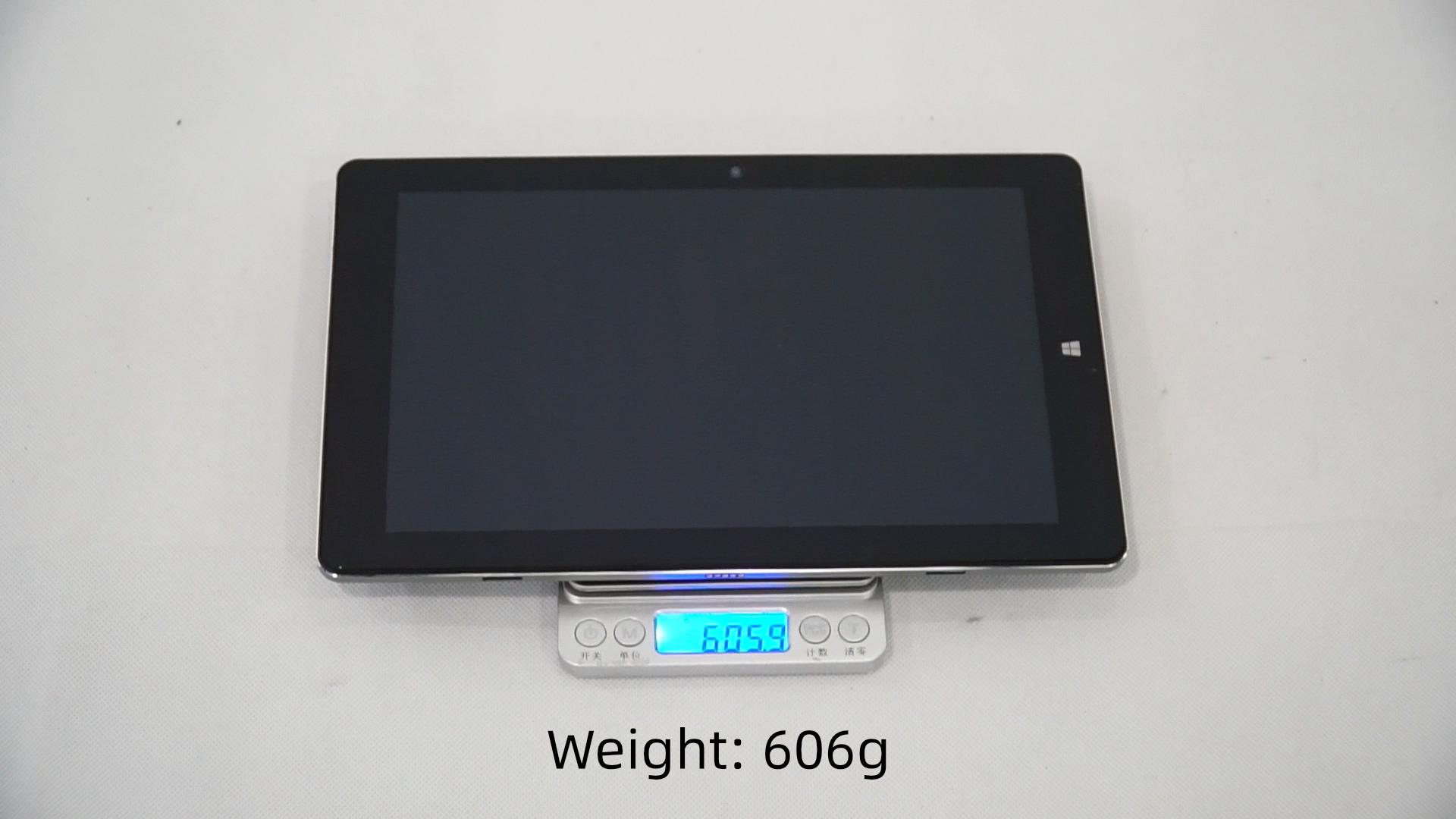
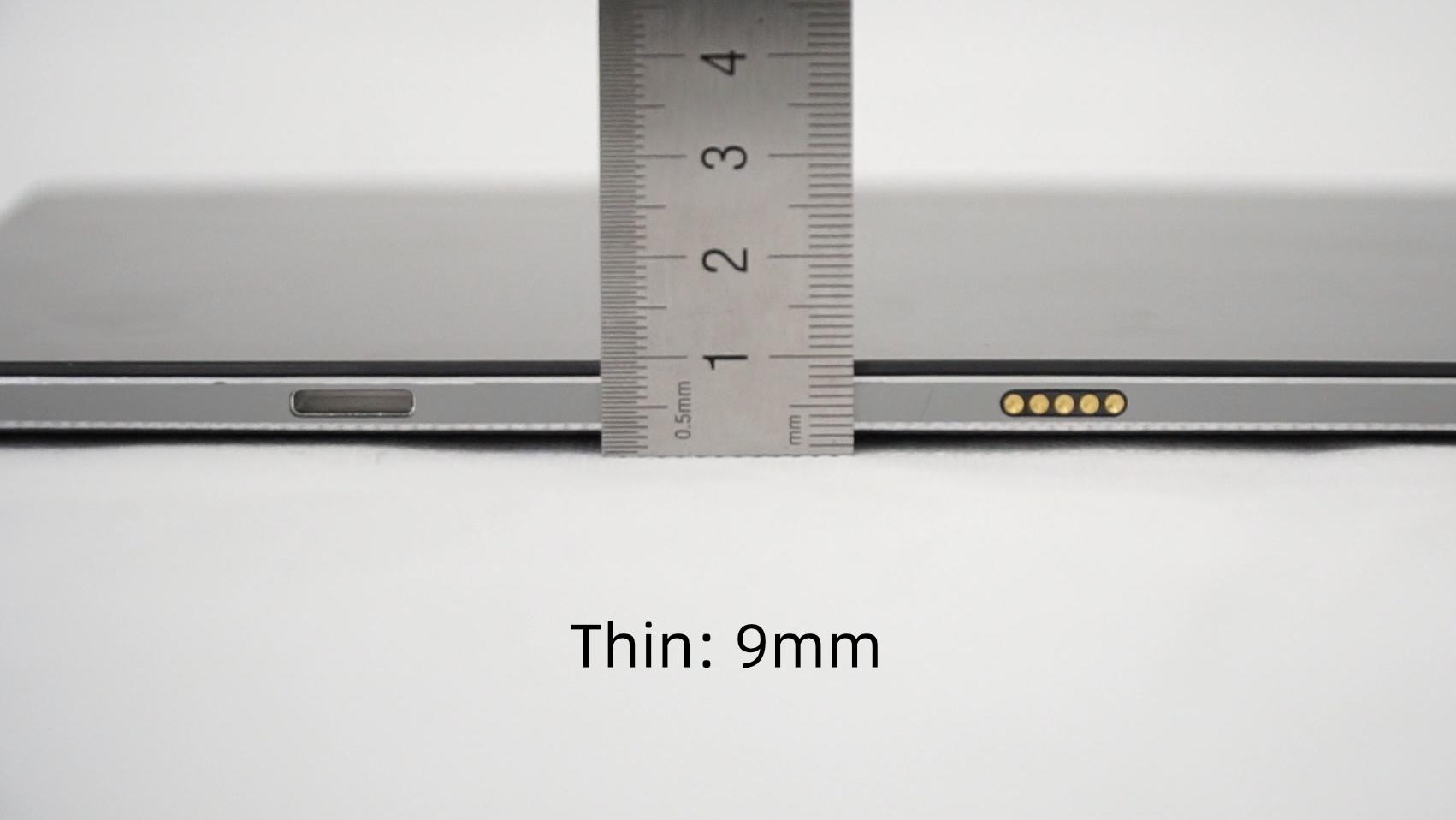
As you can see in the video, the device is very thin at just 9mm and the full-metal body combined with the 10.1″ compact display, brings the weight down to just 606g. The overall size and weight make it ideal for carrying around all day in your backpack or briefcase.
Benchmark Test
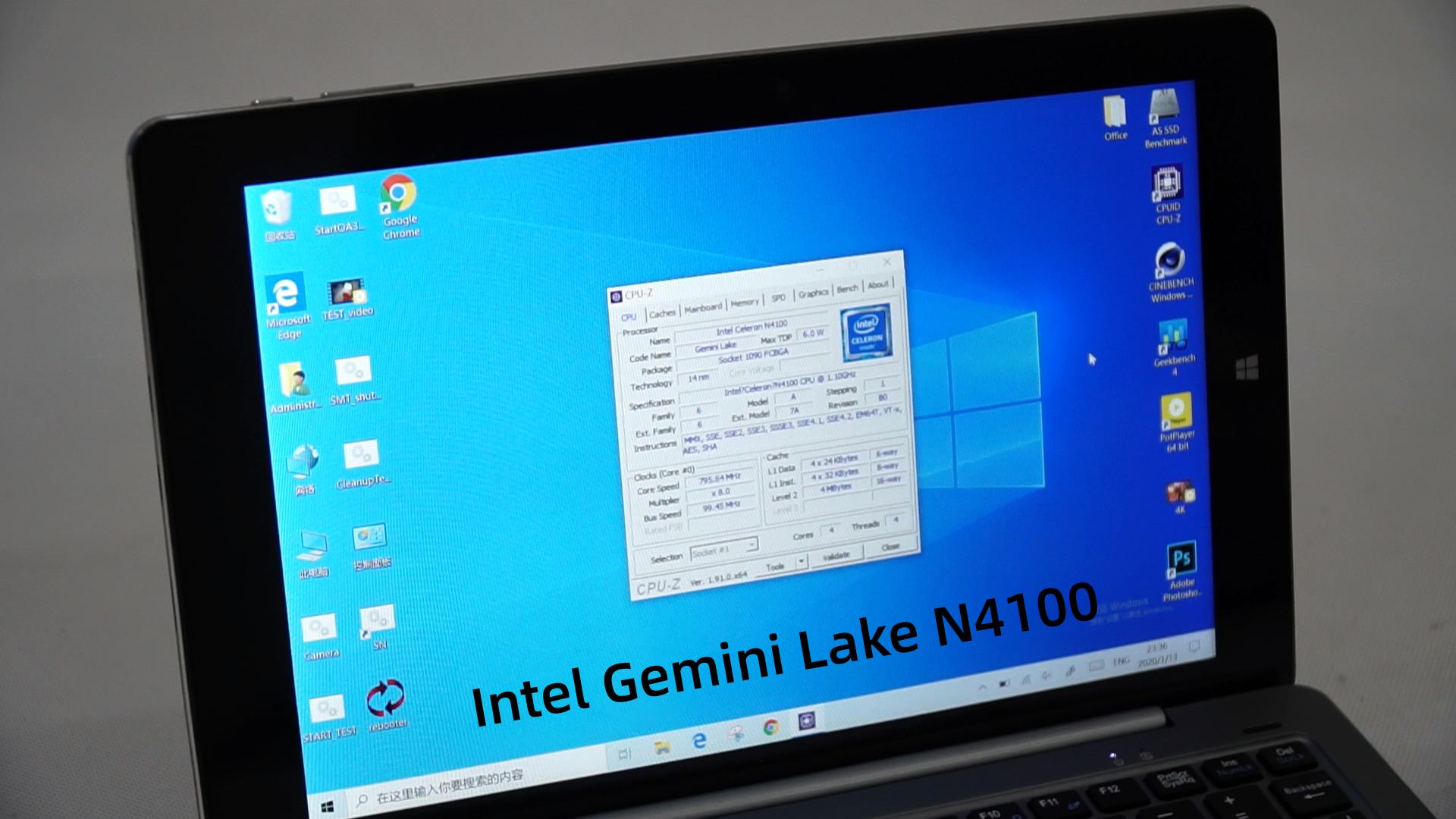
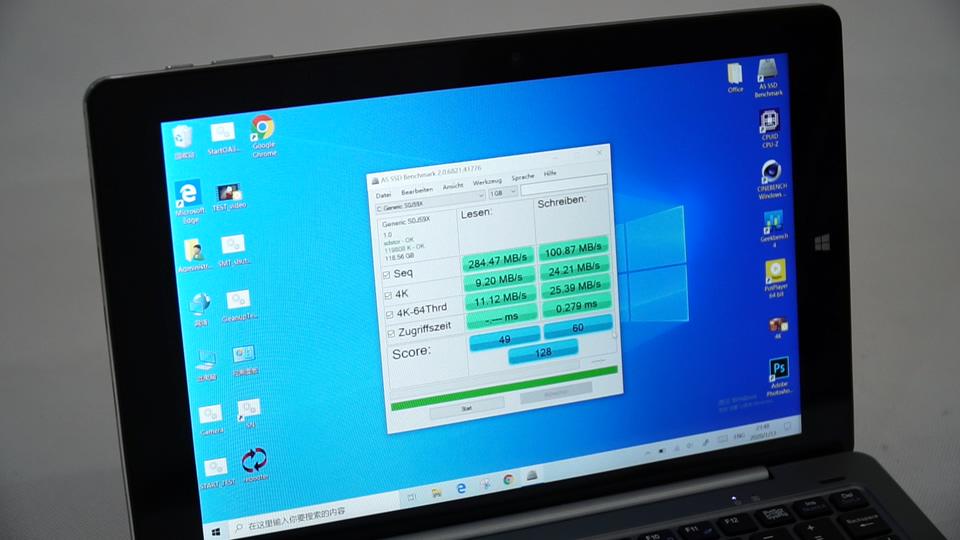
As we mentioned above, the device comes equipped with the Intel N4100 SoC that is manufactured using the 14nm process. It’s a 4-core/4-threads CPU accompanied by the 9th Gen UHD Graphics 600 GPU as well as 6GB of RAM and 128GB of eMMC.
1 of 4
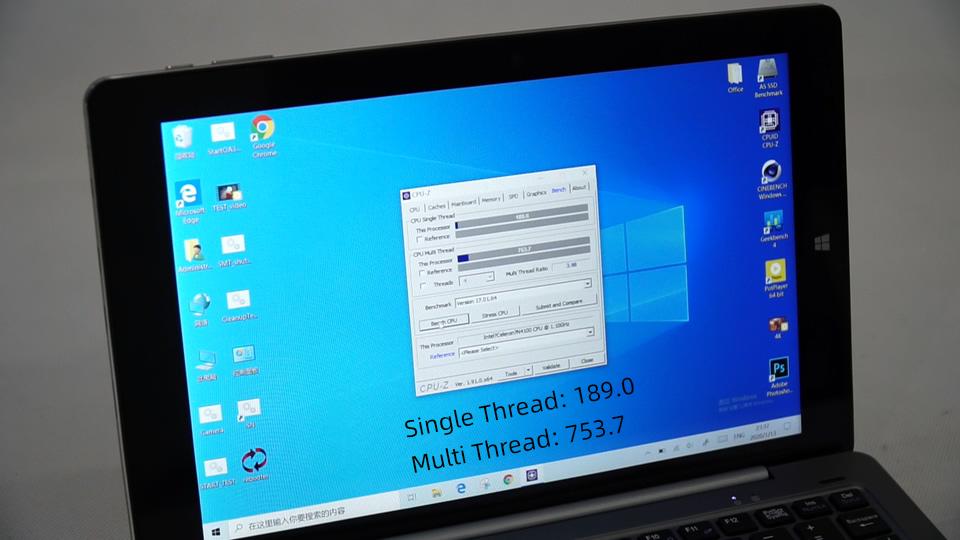
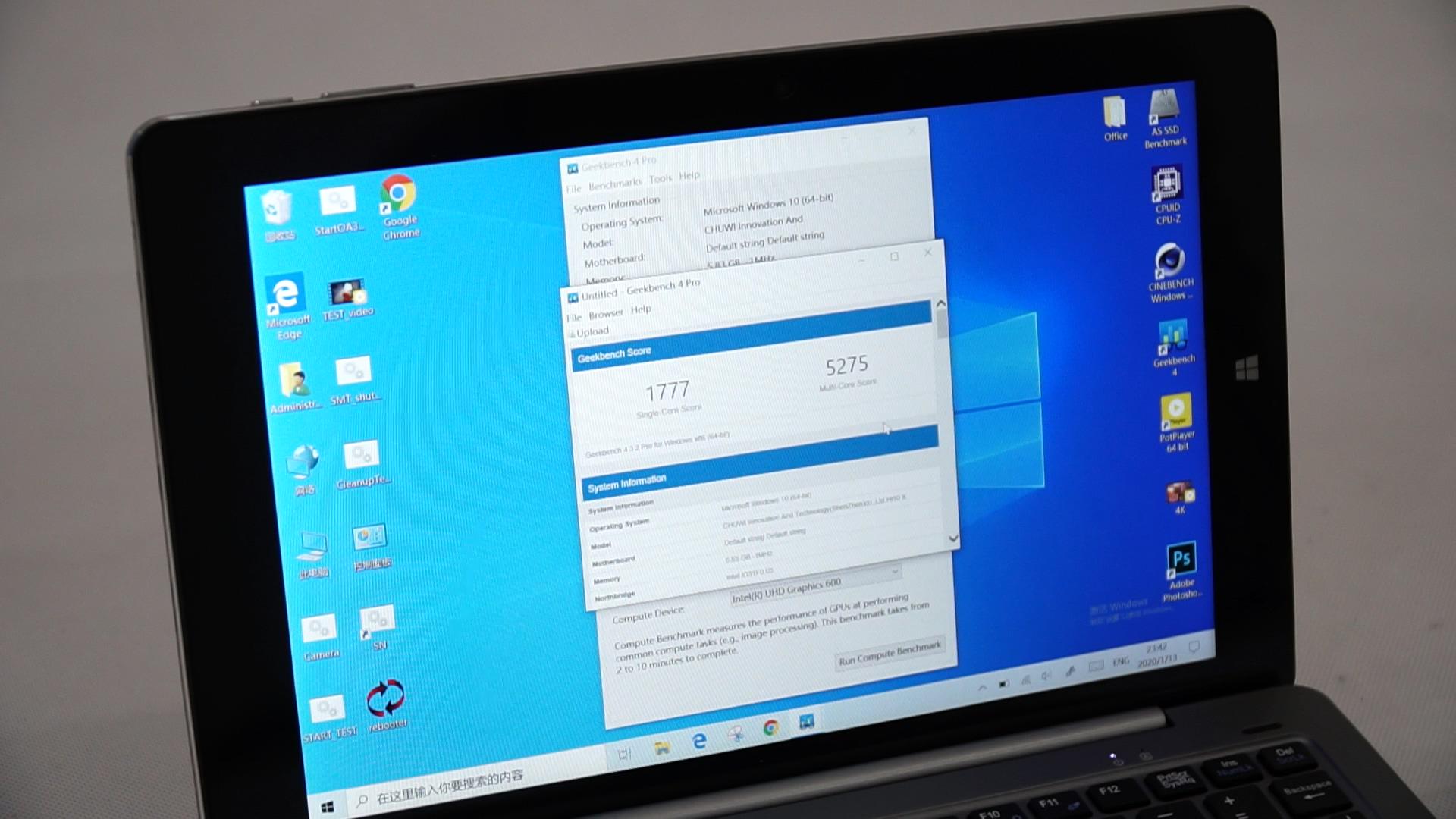
In the video, you can see the benchmark tests performed. In the CPU-Z test, the N4100 CPU scores a single-thread score of 189.0 and a multi-thread score of 753.7. In the GeekBench 4 test, it scored a single-core score of 1777 and a multi-core score of 5275.
Office and entertainment experience
1 of 2
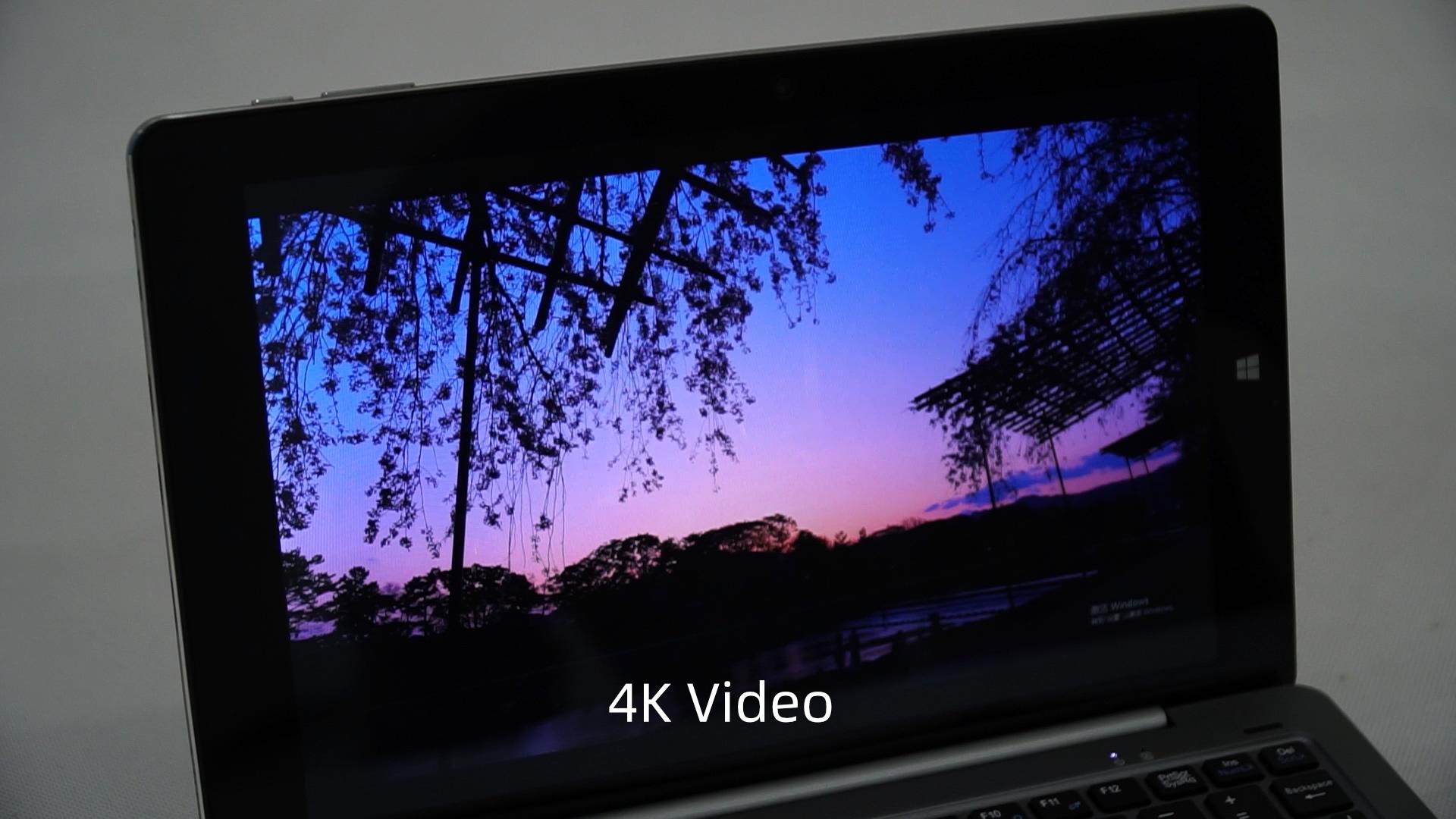
Being preloaded with Windows 10 OS, the Hi10X can run office software and deal with multitasking efficiently. It can be transformed into a laptop in just a few seconds by attaching the detachable keyboard. What’s more, the UHD Graphics 600 GPU offers plenty of graphics performance and the device decodes 4K video smoothly.
The most cost-effective 10.1″ around
As you can see, Hi10 X is an adequate performer and offers a good user experience. The spec upgrade was what it needed to become an up-to-date 2in1 tablet while the light full-metal body, double USB Type-C ports, and 10.1″ IPS display give every other 10.1″ Windows tablet out there, a run for their money. The Chuwi Hi10 X is currently on sale over at Banggood and Aliexpress. To learn more details and order it, visit the official product page.
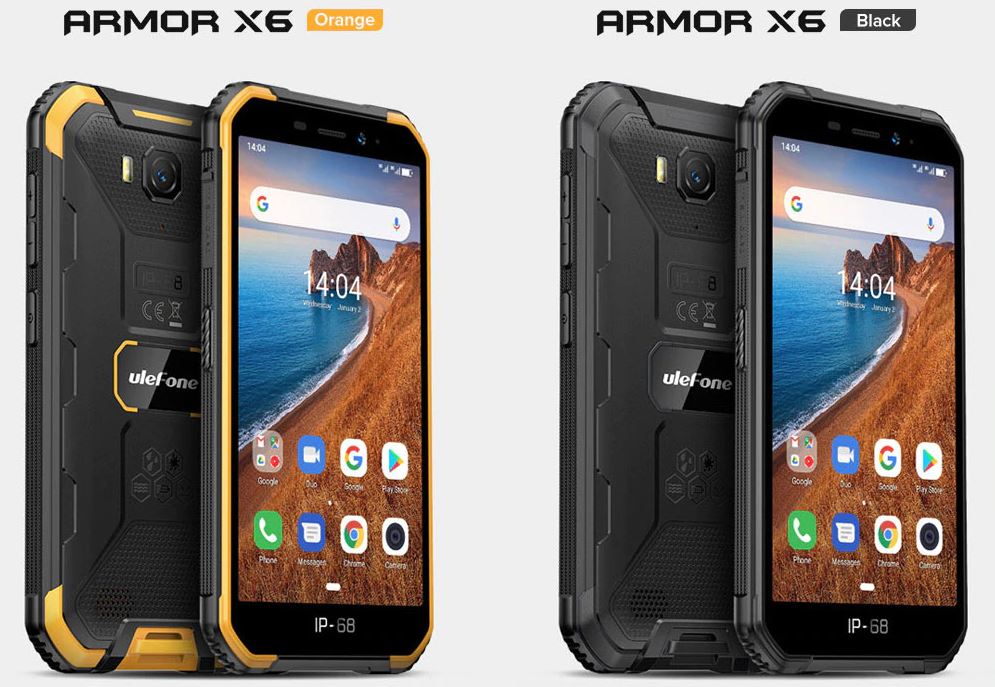
The Ulefone Armor X6 isn’t new in the market. The super-budget rugged phone has shown up in a lot of durability test videos and today Ulefone released a new video to demonstrate the phone’s battery performance. Let’s check it out.
Featuring a low-consumption CPU and a hefty 4000mAh battery, the Armor X6 should take you through the day easily. As you can see in the video, after 2 hours of heavy use that included 30min use of each actions like phone calls, music playback, movie playback, and online gaming, the battery went down by just 11%. If we do the math, the phone can go on for more than 18 hours on a single charge! For an average user, this means about 4 days on a single charge so no worries of being out of power when you are out.
Besides the big battery, the Armor X6 comes with a quad-core power-efficient SoC backed by 2GB of RAM and 16GB of storage. In addition, there is a 5″ HD display, an 8MP rear camera and a 5MP selfie shooter that is also used for face unlock, dual-SIM/dual-standby support, Android 9 Pie, etc. Its price right now is just $69.99 and you can see all the details and order it on Aliexpress. To see more Ulefone models, visit their official website.
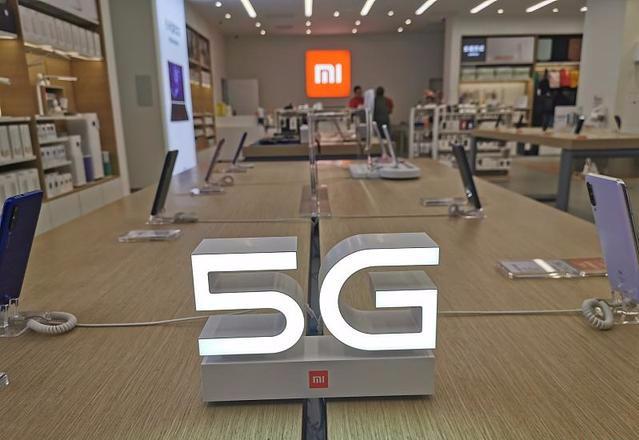
Uganda may emerge as one of the first country in Africa where 5G technology will be rolled out. Already, Chinese telecommunications equipment giant ZTE has teamed up with local carrier MTN to carry out the first 5G network trial in Uganda. Aside being the first 5G test run in the country, it is also the first of such test carried out in East Africa and that makes MTN the first to bring the Standalone 5G network into reality in East Africa.
The trial was carried out on Friday with Uganda’s Prime Minister Ruhakana Rugunda in attendance. The PM stated that the government supports the development of new technology provided it will solve people’s challenges and make life easier and affordable. He also express optimism that technologies like 5G would have an impact on the economic development of the country.
The head of the country’s communications commission also added that they are working to ensure that there is an appropriate infrastructure that supports 5G. He also noted that Uganda is the third country in Africa to have 5G technology after South Africa and Nigeria.
On his part, Wim Vanhelleputte, chief executive officer MTN Uganda, said 5G technology would have increased speeds and capacity with exact wireless connections but similar to fiber optic cable experience. This would enable easier wireless connections compared to running fiber optic cables to every facility or home, he added.
“In the next two to three years, we will embark on massive commercial rollo ofthe technology,” he said, noting that advancements like telemedicine will be easier when there is real-time connection.
Yi Yahua, ZTE corporation vice president for Southern Africa, said ZTE is fully supportive to MTN Uganda’s strategy to tap into the potential of modern mobile technologies to serve this country better and move forward with 5G industrialization.
One of the trends we will see this year in the mobile industry is the punch hole. However, depending on the phone, the hole can be placed at the top left corner, center, or top right corner of the display. Other differences will be the size of the hole with some housing a single camera while other will have dual cameras.
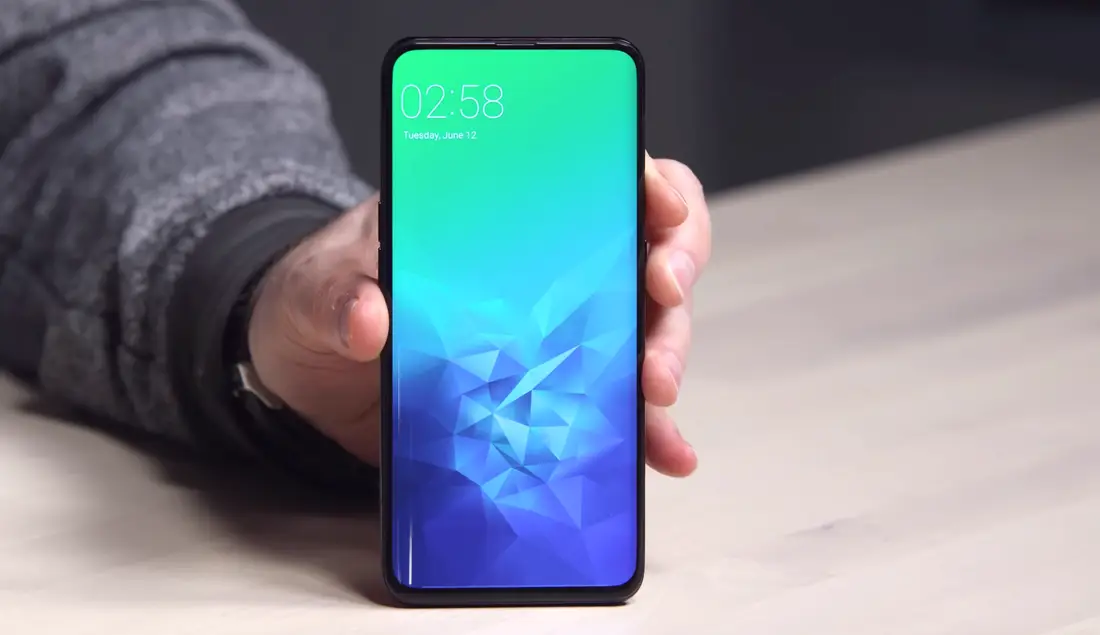
Today, an unknown phone with a punch hole for dual cameras has surfaced on the web. While this is not the first device to have this a punch hole for dual selfie cameras, it is the configuration that makes it unique.
According to Tech YouTuber, Arun Maini a.k.a. Mrwhosetheboss, who shared the photo, the unnamed phone is the first in the world with 44MP dual selfie cameras.
Holding an unreleased smartphone right now, with world's FIRST 44MP Dual Punch-hole front camera…
The highest selfie camera we have seen on a phone is 32MP but a leak from last week revealed Samsung’s Galaxy S20 Ultra 5G will have a 40MP selfie camera. It seems this unnamed manufacturer doesn’t want Samsung to hold on to the title for too long.
The manufacturer and the model of the phone is unknown and so also is the camera sensor which is probably custom-made for the device. It is important to mention that Samsung did announce a 43.7MP sensor last year called the ISOCELL Slim GH1. This is the closest sensor we can think of.
There are speculations as to the manufacturer of the phone. We believe it is an OPPO phone based on that battery icon. However, the identity of the phone itself remains unknown but we are pretty sure it is not the Find X2. Reports say the Find X2 will have a single punch-hole and the display will be curved. The phone in the image has a flat display, and other than the dual selfie cameras, it looks uninteresting.
Nevertheless, do share your guesses as to the manufacturer and the model of the phone in the comment box below.
A man traveling through Portland International Airport apparently had a layover long enough that he decided to play some video games. Playing games at the airport isn’t such a big deal if you’re using something like a Nintendo Switch, laptop, or smartphone. Where gaming at the airport can become a big deal is if your preferred gaming platform is a PlayStation 4.
An Apex Legends player made headlines after he decided to kill some time while waiting on a flight the old-fashioned way – by plugging his trusty PlayStation 4 into one of the airport’s many monitors and getting in some game time. Unfortunately, he discovered that one isn’t exactly allowed to do such things at an airport, to absolutely no one’s surprise.
When approached and asked “to unplug and cease using the monitors at the airport” by operations supervisors, he reportedly asked “very politely” if he could finish up his round first. That request was denied, and Port of Portland spokesperson Kama Simonds took the opportunity to use the incident as “a good reminder of what not to do at the airport.”
Simonds added that power outlets are fair game to travelers, but monitors are out of the question. She said this incident demonstrates the addictive nature of screens and urges travelers to keep their game systems in their luggage until they arrive at their final destination. She adds that it’s extremely important not to use airport information monitors to play them. “Don’t try to set them up and play them in the airport,” she says.
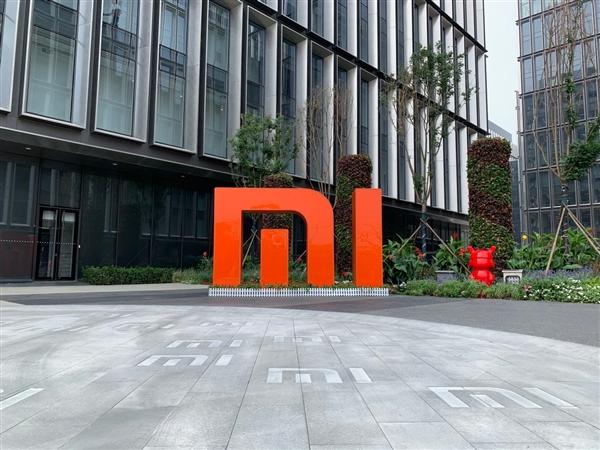
Xiaomi has had its eyes set on the consumer finance sector for a long time running. The sector has proven to be an important and lucrative one for the likes of Alibaba, Tencent etc. TheChina Banking and Insurance Regulatory Commission announced on Friday that it has given Xiaomi the nod to set up a consumer finance company in Chongqing, a municipality in the southwest of the country. The regulatory body gave a six-month deadline from the January 10 approval date for the entity to be established.
The consumer finance outfit has as its key shareholders Chongqing Rural Commercial Bank (CRCB), and three other Chongqing-based companies. Proposed registered capital is set at RMB 1.5 billion ($218.6 million).
Chinese media reported in November that Xiaomi would become the 28th company in the country to acquire a consumer finance license, joining Baidu, Alibaba, and many others.
Xiaomi told Chinese media that setting up the new company will help it to gain a firmer foothold in Chongqing, and it expects to expand consumer finance across the country.
Shortly before the Chinese tech giant launched its 2018 initial public offering on the Hong Kong stock exchange, it disclosed that it planned to spin off its finance business into an independent entity. The move was seen by many as a way for the financial arm go public.
Consumer finance is seen as a veritable alternative for the company considering the slow growth witnessed by its smartphone business in recent times. Xiaomi’s financial product portfolio includes consumer loans, supply chain finance, financial technology, third-party payments, online insurance, and digital banking. The Chinese company is equally eyeing lucrative financial technology markets overseas. It acquired its digital banking license in Singapore earlier this month and was said to be in talks to expand its financial product offering in India late last year.
Earlier today (20th January 2020), Lu Qianho, the Director of Consumer Experience Department of ZTE reposted Oppo‘s Vice President Shen Yiren’s ost regarding the Oppo Find X2. The former is apparently a fan of the Oppo Find series and is excited about its upcoming latest entry.
In 2018, Oppo had officially unveiled the Oppo Find X in June. The smartphone was the Chinese company’s flagship device and boaster the highest screen to body ratio that was available at that time. The smartphone arrived with a number of notable features like 3D facial recognition and the, then rare, mechanized pop-up camera.
The launch of the smartphone went successfully and was well received in many regions. However, its popularity didn’t stop there as Lu Qianho also became a fan of the device calling it “really amazing.” Lu reshared Oppo Vice President’s post and also stated that the Oppo Find X2 could be regarded as “the representative of the domestic (China) flagship series” and that he hopes it still “maintains a delicate appearance and light feel.” It is rare for competitors in the stiff smartphone market to praise other OEM’s offerings, so this comes as a pleasant surprise.
Oppo’s Find X2 is expected to arrive in the first quarter of 2020 this year and is also speculated to be unveiled at MWC 2020 which will take place in February. Reportedly, it will feature a high refresh rate of 120Hz on display with a 2K resolution. Shen Yiren has placed an emphasis on the device being one of the best smartphone displays of 2020 but we will have to wait and see regarding the tall claim.
Oppo Find X
Under the hood, Oppo Find X2 will most likely sport Qualcomm’s Snapdragon 865 SoC since it is a flagship smartphone and will support 5G networking. Reportedly, it also features super flash charging with rates up to at least 65W. Unfortunately, we will have to wait until the official announcement before providing any concrete statements, so stay tuned.
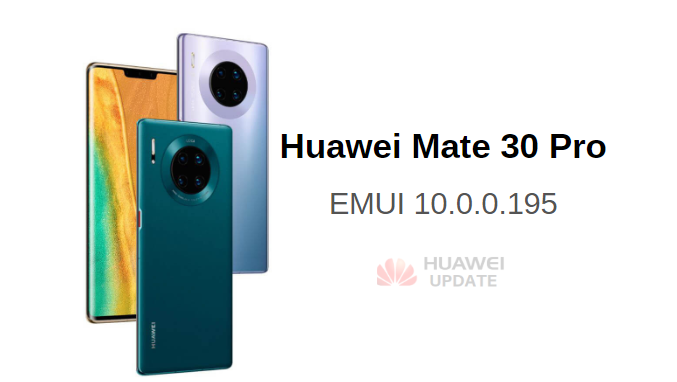
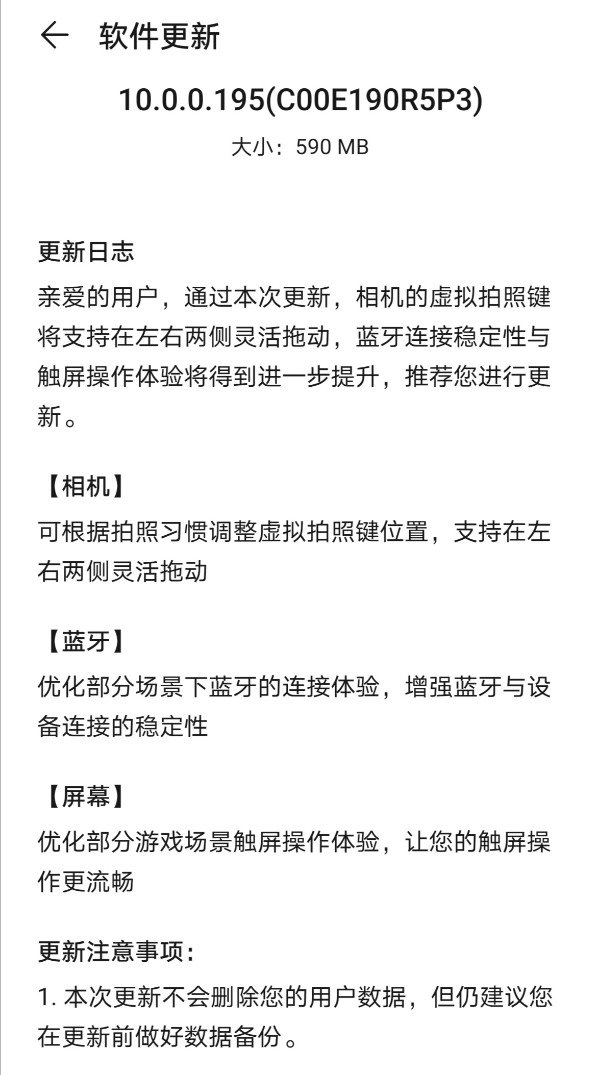
Huawei Mate 30 Pro was released late last year and became the first Huawei model to be launched without google apps preinstalled. The Mate 30 Pro presented with EMUI 10 based on Android 10. Huawei has now started rolling out a new update for the model. The latest version EMUI 10.0.0.195 system update brings the virtual camera key to support flexible drag on the left and right sides, Bluetooth connection stability and optimization of the screen operations.
The update which is available to users in China only has a file size of 590MB. Here are the Mate 30 Pro EMUI 10.0.0.195 update changelogs:
Camera:
The position of the virtual camera key can be adjusted according to the shoots, and flexible dragging on the left and right sides is supported.
Bluetooth:
Optimize the Bluetooth connection experience in some scenarios and enhance the connection stability between Bluetooth and the device.
Optimize the touch screen operation experience of some game scenes to make your touch screen operation smoother.
To download the EMUI 10.0.0.195 update, just tap on Settings > System > Software update > Check for Updates > Download. Or, You can also get this update via the Hicare app: HiCare > Update > Check for updates. Alteratively, open the HiCare app > Log in > Select country/region > Agree to the User Agreement and Privacy Notice > Update > Request update > Apply > Checking for new system update > Download and install.
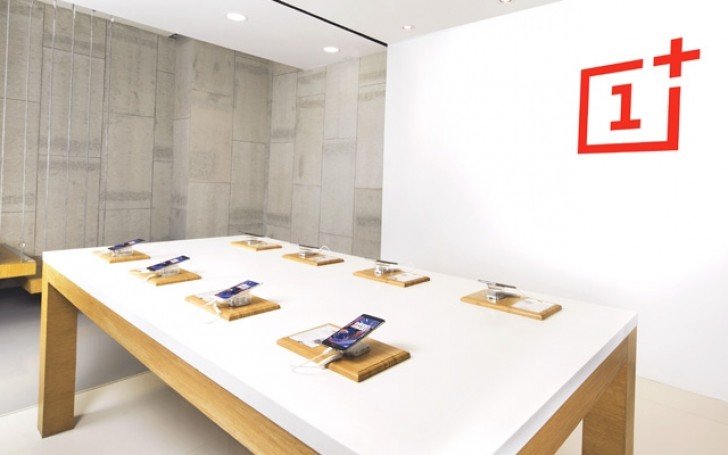
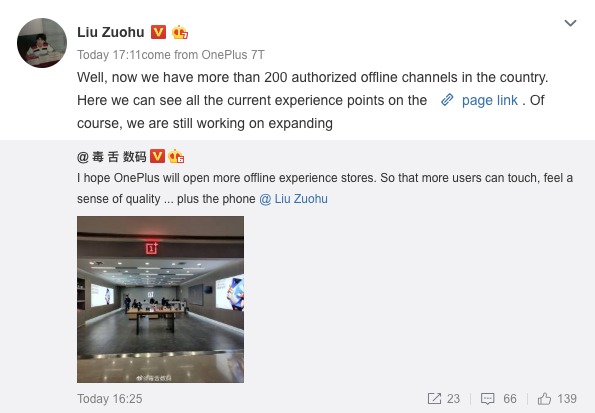
OnePlus is looking to expand its offline channels for sales of its electronic products like smartphones and more. As of right now, the company has already opened up about 200 physical stores in China.
Back in November 2015, the Chinese company had issued an announcement that it was closing down its 45 OnePlus experience stores across the country. The move was made to further grow its online channel and reserve its limited finances at the time. Back then the company had only offered 3 smartphone models with which it could not sustain due to it cutting into the OEMs profits.
OnePlus Experience store that lets customers use the company’s smartphone offerings before checking out
Jumping forward to now, the company has seen great success with its e-commerce approach. A notable example is the Indian market where its handsets were well received and even became a top runner in the premium segment in recent times.
Earlier today (20th January 2020), Pete Lau, the CEO and Co-Founder of OnePlus, stated that the company has over 200 offline stores, which include its experience stores and even authorized sellers, with more expected to arrive soon after. These stores will include, and are not limited to, smartphones alongside the peripheral accessories like earphones and more.
The senior executive shared this news on Weibo, the Chinese microblogging website, through his official account. It is indicative of the company’s success and its plans on expanding the physical distribution of its electronic products. The expansion primarily focuses on the home country, China, but will also include overseas expansion soon after.
Major OEMs are continuously launching new smartphones with evolved specifications and features. In today’s competitive environment, chipset plays a pivotal role in the smartphone making. It hosts processor for general computing, Graphics processor for rendering graphics and Accelerated Processing Unit for taking care of Artificial Intelligence. It’s a powerhouse of the smartphone. Qualcomm and MediaTek are some primary players manufacturing chipsets for smartphones. However, Qualcomm generally caters to a wider market. Today, we have concluded a list of smartphones running Qualcomm Snapdragon 855+ processor.
Qualcomm announced the Snapdragon 855+ chipset was launched in the second half of last year with some advancements over the predecessor. The Snapdragon 855+ generally features a 2.36 GHz processor core rather than the 2.84 on Snapdragon 855. A better GPU with an improved clocking speed of 675 MHz is present. The new chipset scores better on different benchmark websites. It is a great fit for the 90Hz displays to work without an issue.
Due to these increments, several smartphone manufacturers used it on their smartphones late last year. It’s the favourite chipset for gaming as well as flagship smartphones.
List of all Snapdragon 855 Plus Phones
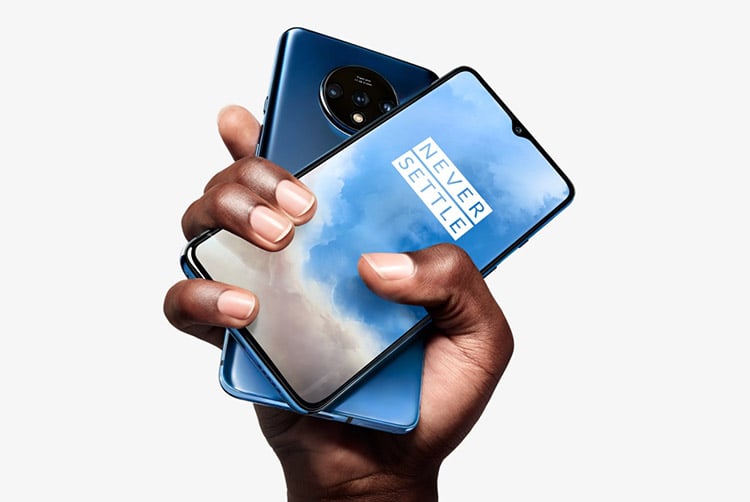
OnePlus 7T & 7T Pro
Following every plan, the Chinese manufacturer announced the OnePlus 7T series – OnePlus 7T and OnePlus 7T Pro last year featuring Qualcomm Snapdragon 855+ chipset. The OnePlus 7T features a 6.55-inch FLuid AMOLED Display having a 90Hz refresh rate. THe smartphone is well received by the users around the globe.
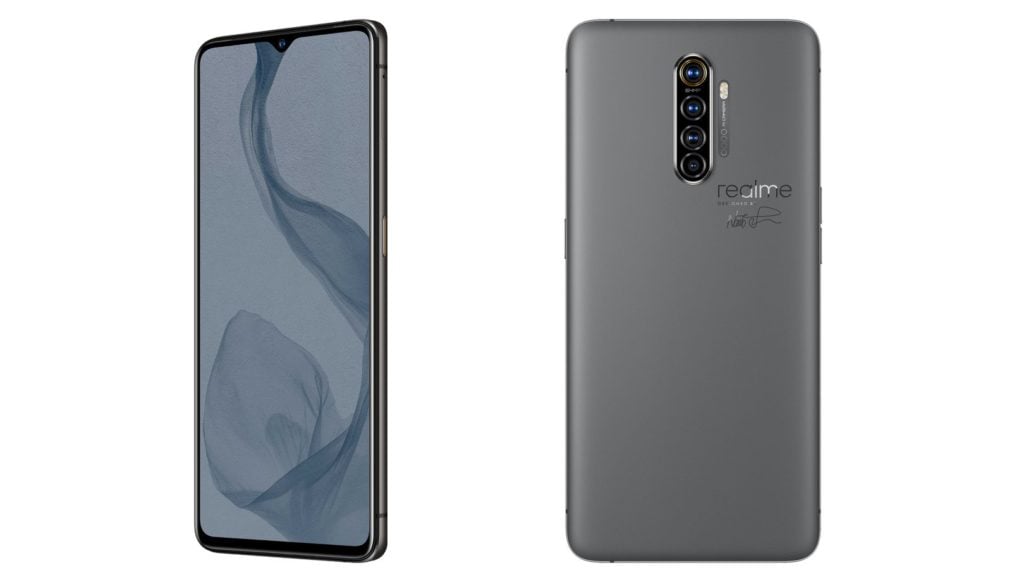
Oppo’s sub-brand – Realme recently announced its maiden flagship device – Realme X2 Pro with Qualcomm Snapdragon 855+. The smartphone is launched by the company to compete against the OnePlus, and Xiaomi’s high-end premium smartphones. The device features high-end specifications at super competitive prices. It is well-received by the users in India.
Other Specification of Realme X2 Pro
The Realme X2 comes with a 6.5-inch Super AMOLED display having the resolution of 1080 x 2400 pixels with an aspect ratio of 20:9. The display gives 402 ppi pixel density, 1000 nits brightness, HDR10+ support, and Corning Gorilla Glass 5 protection mirror.
Qualcomm Snapdragon 855+ chipset powers the device. it is coupled with the Octa-Core processor and Adreno 640 GPU.
A quad-camera module featuring a 64-MP primary camera, 12-MP telephoto lens, an 8-MP ultrawide sensor, and a 2-MP depth sensor.
There’s a 16-MP front camera with HDR and gyro-EIS support.
It comes in different storage options of 6GB RAM + 64 GB IFS 2.1 Storage, 8GB RAM + 128GB UFS 3.0 Inernal Storage, 12 GB RAM + 256 GB Internal Storage.
In Connectivity, the phone comes with a WiFI, Bluetooth 5.0, GPS, NFC, FM Radio, USB 2.0.
The Sensors include under-display fingerprint, accelerometer, gyroscope, proximity, and compass.
A 4000 mAh battery with 50W fast charging technology is present.
Realme XT Pro is available in Neptune Blue, Red Master Edition, Gray Master Edition, and Lunar White.
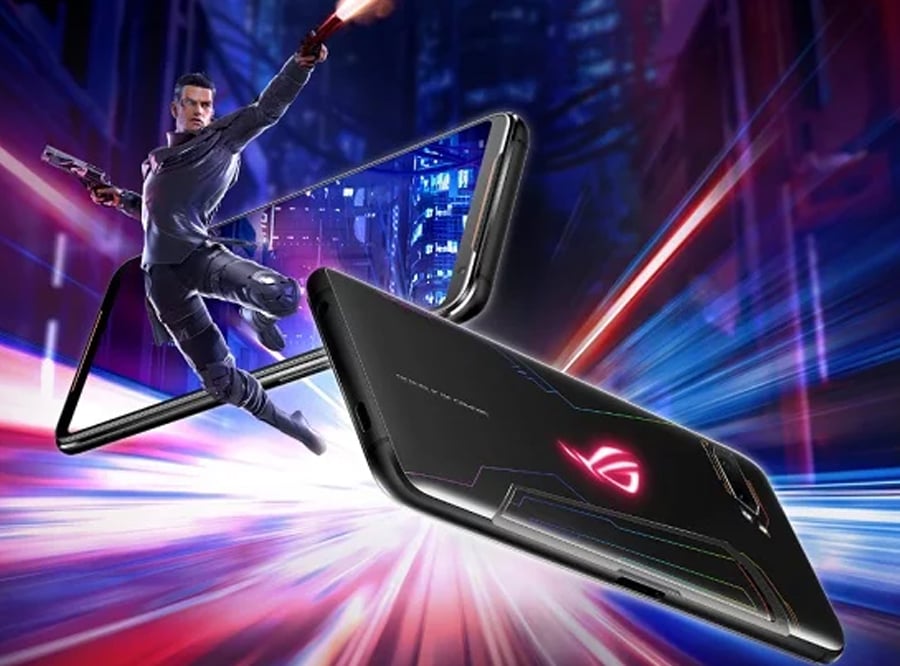
Asus launched the next-generation gaming smartphone in September 2019. The smartphone is packed with Qualcomm Snapdragon 855+ chipset, Adreno 640 GPU, and an Octa-Core processor. Asus has added the best possible hardware of that time and even optimized it with the efficient software system.
Other Specifications of Asus Rog Phone 2
The smartphone carries a 6.59-inch AMOLED display with the 1080 x 2340 pixels resolution having Corning Gorilla Glass 6. The display further hosts Corning Gorilla Glass 6, HDR10, 120Hz and packs 240Hz touch-sensing.
It is powered by Snapdragon 855+ processor.
In optics, there’s a dual rear camera featuring a 48-megapixel primary camera and a 13-megapixel ultrawide camera.
A 24-megapixel selfie sensor with Panorama and HDR.
There’s support for WiFi, Bluetooth 5.0, GPS, NFC, FM Radio and USB 3.1 Type-C Reversible.
A huge 6000 mAh battery with 30W fast battery charging.
Available in Matte Black and Glossy Black colours.
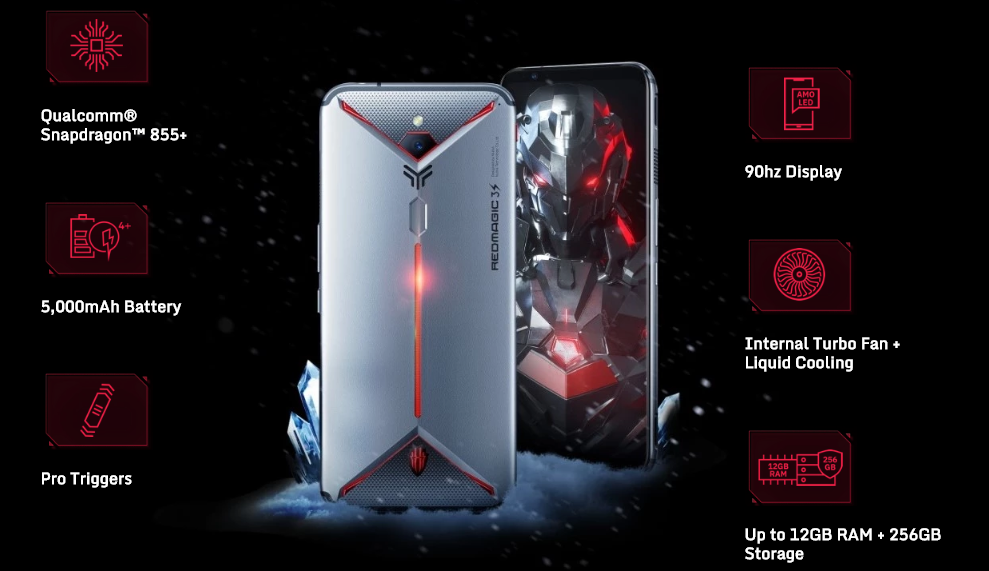
It is another gaming smartphone featuring Snapdragon 855 Plus chipset with 8GB RAM. Nubia Red Magic 3S flaunts a 6.65-inch full-HD+ Super AMOLED display sporting 90Hz refresh rate. The display sports a 90 Hz refresh rate, DC diming and 2340 x 1090 pixel resolution. After the initial launch in China, the gaming smartphone surfaced in India.
Other Key Specs of Nubia Red Magic 3S
Powered by Qualcomm Snapdragon 855+ chipset, octa-core processor and Adreno 640 Graphics Processing Unit.
Nubia Red Magic 3S is available in 8GB RAM + 128GB and 12GB RAM + 256GB storage with UFS 3.0.
The primary camera features a single 48-megapixel sensor and a 16-megapixel selfie camera.
In Connectivity, the smartphone offers WiFi, Bluetooth 5.0, GPS, Radio, USB 3.1 Type-C.
There is a fingerprint sensor, accelerometer, gyroscope, proximity, and compass.
The device features a 5000 mAh Non-Removable Battery, 18W fast charging and Quick Charge 4+ support.
IT is available in Mecha Silver, Cyber Shade, Eclipse Black.
It is another affordable yet premium smartphone from Xiaomi. The Xiaomi Mi 9 is powered with Qualcomm Snapdragon 855+ chipset featuring an octa-core processor, and Adreno 640 GPU. There’s a triple camera module featuring a 48-megapixel primary, 12-megapixel telephoto, and 16-megapixel ultrawide cameras.
Other features of Xiaomi Mi 9 Pro
A 6.39-inch Super AMOLED display features a 1080 x 2340 pixels resolution, 19.5:9 aspect ratio and support HDR 10.
The smartphone runs on Android 10 based MIUI 11.
A single 20-MP camera iss present on the front for selfies along with support for HDR.
In connectivity, the smartphone packs a Wifi, Bluetooth 5.0, NFC, Infrared port, and USB 2.0 Type-C reversible connector.
A huge 4000 mAh Li-Po non-removable battery sits inside the phone with 40W battery charging and 30W wireless fast charging.
Xiaomi MI 9 Pro comes in Dream White and Titanium Black colours.
Redmi K20 was launched black in September 2019 with Qualcomm Snapdragon 855+ on board. The smartphone comes packed with a 6.39-inch Super AMOLED display. There are slight changes in the Redmi K20 Pro Premium over the Xiaomi Mi 9 Pro.
Other Features of the Redmi K20 Pro Premium:
The smartphone features a triple rear-camera module featuring a 48-megapixel primary sensor, an 8-megapixel telephoto lens, and a 13-megapixel ultrawide lens. The rear camera is accompanied by a Dual-LED flash and HDR.
There’s a motorized 20-megapixel pop-up camera featuring HDR for selfies and video calling.
A 6.39-inch Super AMOLED display featuring 1080 x 2340 pixels is present with a Corning Gorilla Glass 5.
Non-removable Li-Po 4000 mAh battery with 27W quick charging.
The dimensions measures as 156.7 x 74.3 x 8.8 mm (6.17 x 2.93 x 0.35 in) with 196 grams weight.
It is available in different colours like Carbon black, Flame Red, Glacier Blue, Summer Honey, and Pearl White.
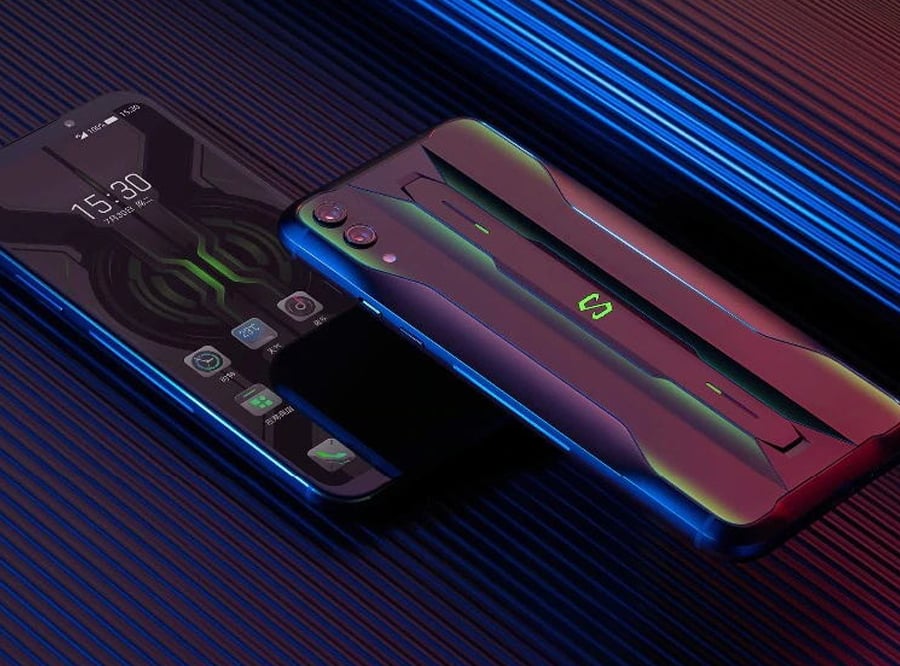
It is another powerful gaming device from Black Shark featuring SNapdragon 855+ chipset. It is a successor to Black Shark 2 which carries Snapdragon 855 chipset. The device carries a 6.39-inch AMOLED display featuring 1080 x 2340 pixels, 19.5:9 aspect ratio, Always-on display and 240 Hz touch-sensing.
Other specs of Black Shark 2 Pro
A dual rear camera module featuring a 48-megapixel primary camera, a 12-megapixel telephoto lens and an LED flash.
A 20-megapixel selfie camera is present with features like HDR.
In Connectivity smartphone packs a WiFi, Bluetooth 5.0, GPS, USB 2.0 Type-C.
The smartphone features a Fingerprint, accelerometer, gyroscope, proximity, and compass.
There’s a 4000 mAh Li-Ion battery with 27W fast charger.
The smartphone features Shadow Black, Iceberg Grey, Gulf Blue, Streamer Purple.
According to a new report by IDC (International Data Corporation), the global shipment of used smartphones crossed over 206 million units in 2019 alone. This sizable number includes used smartphones and also officially refurbished one.
The number is also a notable growth of 17.6 percent from 2018, which had seen 175.8 million smartphone units being shipped worldwide. Similarly, IDC has predicted that the number will grow even more in the near future, with a predicted forecast of 332.9 million units in 2023 going by an annual growth rate of 13.6 percent starting from 2018.
The used smartphone market is seeing rapid growth and growing market prospects despite its declining market popularity over the past. Furthermore, a research manager with IDC stated that “the used market for smartphone shows no signs of slowing down across all parts of the globe” while the shipment for new smartphones is predicted to see “minimal growth over the next few years.”
IDC has credited the major contributing factor of the growth of used smartphones to financial factors. Generally, used and refurbished handsets are more cost-effective and a viable alternative to both consumers and businesses over recently released offerings. This even extends to OEMs not maintaining a balance of features to pricing.
In recent times, no big breakthroughs in processing and features have been achieved. In other words, the price of the newer smartphones has been on the rise while the number of worthwhile features and notable performance improvements have been fewer. For example, an in-display fingerprint scanner and a punch-hole camera are quite convenient in providing a more content friendly viewing experience but offer no new functionality over conventional rear-mounted fingerprint scanner and a teardrop notch.
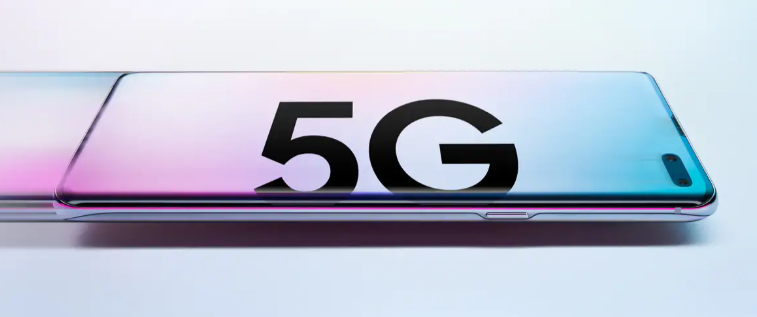
Samsung Galaxy S10 5G
Lastly, IDC mentioned that the wider adoption of 5G network across different regions is expected to impact the used smartphones as well. Meaning, People would seek out refurbished 5G handsets over their older 4G devices to gain access to the newer and faster bandwidth.
According to a recent report by Nikkei, Japan has begun planning a comprehensive strategy for “post-5G” (6G) technology that achieves communication speeds that are 10 times faster than 5G by 2030. The report claims that China, South Korea, and Finland have also started research and development and investment this segment, but Japan have been surprisingly slow with the adoption of 5G technology, and are hoping to make up with an early push toward 6G.
The Ministry of Internal Affairs and Communications of Japan will set up a government-civilian research society in January, under the chairmanship of the University of Tokyo Goshinjin, and under the direct supervision of the general affairs minister Takao Sanae. Relevant people from NTT and Toshiba will also be invited to discuss 6G performance goals and policy support by June.
Japan claims that through using “post-5G” (6G) high-speed communication technology, it is possible to depict a future society in which individual stereoscopic images emerge from conference rooms or classrooms far away, and robots take care of people.
The country will invest $2.03 billion in the research and development of 6G. It’s expected to provide a speed 10 times faster than what the world will witness in terms of 5G technology, which sounds frankly ridiculous. Unused high-frequency waves will be used in the 6G network.
Other countries have begun to take action as well. The Chinese government announced in November 2019 that it will establish two 6G R & D institutions. Finnish universities and government-affiliated institutions have also launched 6G R & D projects. In South Korea, Samsung Electronics and LG Electronics each set up research centers in 2019.
Huawei is working on alternatives to Google Mobile Services. It already has its suite of apps called Huawei Mobile Services which includes AppGallery (its version of the Play Store), Huawei Video (its replacement for YouTube), Huawei Themes, Huawei Wallet, and Huawei Browser etc,. It also has Huawei Quick Apps which is its alternative to Google’s Instant Apps.
Huawei also included Location Kit and Map Kit in HMS Core (its collection of tools for app developers) to provide location and mapping services but there was no mapping data to use. A report by Reuters says the Chinese mobile giant has partnered with TomTom, the Dutch company known for its mapping services.
The info was revealed by Remco Meerstra, the spokesman for TomTom. Apparently, the deal was finalized a while ago but they decided to keep a tight lid on it until now. The deal will result in Huawei’s use of TomTom’s mapping services, traffic information, and navigation software in its apps, and thus serving as an alternative to Google Maps.
The upcoming Huawei P40 series should have the new mapping service pre-installed. Other models may get the feature via an update.
Amazon’s founder and CEO, Jeff Bezos, arrived in India a few days ago to meet with government officials and also attend a company event. Yesterday, Mr. Bezos took to Twitter to announce the roll-out of a new fleet of fully-electric delivery auto-rickshaws.
The move is part of the retail giant’s Climate Pledge to reduce its carbon emission and also switch to renewable energy.
In a report today, The Economic Times reported that Amazon said its fleet of delivery vehicles in India will include 10,000 electric vehicles by 2025. These vehicles will include both three-wheeled and four-wheeled vehicles. Amazon already began a pilot program in several cities and is now expanding it.
Some of the cities these electric vehicles will operate in include Delhi, Bangalore, Coimbatore, Hyderabad, Ahmadabad, Pune, and Nagpur. So if you reside in any of these cities, you should keep your eyes peeled for these new vehicles.
India is not the only country where Amazon will be switching to electric vehicles. In the US, it has placed an order for 100,000 electric delivery trucks from automaker, Rivian. The vans are expected to be on roads by next year and should rise to 100,000 by 2030.
Amazon’s goal is to become carbon-neutral by 2040 which is a decade earlier than the target set by the United Nations Paris Agreement.
Flipkart, its rival in India, is also switching to electric vehicles. The retailer announced last June that it plans to replace 40% of its delivery vans with electric models by March 2020.
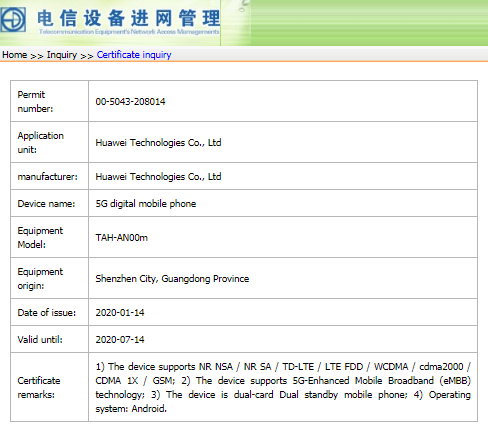
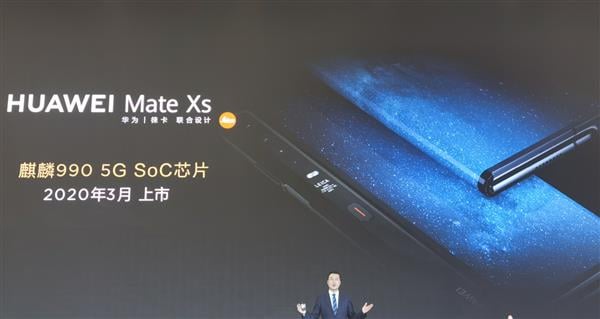
In October 2019, Huawei had confirmed that it will be launching a more powerful edition of the Huawei Mate X foldable in March this year. The Mate X was fueled by the Kirin 980 chipset. The forthcoming Huawei Mate Xs will be driven by the Kirin 990 5G chipset. In December, the Mate Xs that has a model number of TAH-AN00m had bagged 3C certification in China. With the launch drawing near, the new foldable phone has surfaced on the database of TENAA.
The screenshot reveals that the Huawei Mate Xs shows that it is a 5G device that carries support for NSA and SA 5G network in China. The TENAA listing of the phone is yet to populated with its full specs and images. Hopefully, the Huawei Mate Xs TENAA listing will be updated soon with its specs and images.
The 3C appearance of the phone in December had revealed that it could be with a 65W fast charger. Huawei Consumer Group CEO Yu Chengdong had recently in an interview that the Huawei Mate Xs will be unveiled at the Mobile World Congress (MWC) 2020 tech trade show that will be held in between Feb. 24 and Feb. 27.
The Huawei Mate X was priced at 16,999 Yuan (~$2,476). Rumors surrounding the upcoming Mate Xs have revealed that the Mate Xs could be a cheaper device despite coming with improvements in display and design. The device will be equipped with an upgraded hinge system and a newer Kirin 990 5G processor. Since the Mate Xs is less difficult to manufacture compared to its predecessor, it is likely that the Mate Xs could be coming with a cheaper price tag.
As far as the hinge of Huawei Mate Xs is concerned, it is more durable and fine tuned compared to the hinge on the Mate X. The display size will remain intact as the predecessor model. With design improvements, the Mate Xs will be slightly smaller than the previous model.
In related news, Huawei is reportedly working on another smartphone with foldable screen. It is likely to go official in the second half of 2020. It remains to be seen whether it arrives with clamshell form factor like the upcoming Galaxy Z Flip or it features a tri-fold design like the rumored Galaxy Z phone.
Earlier today (20th January 2020), Mitsubishi Electric Corp announced that it had been the target of a series of cyberattacks that has led to information regarding Government agencies and other business partners being compromised.
Mitsubishi Electric is an integral asset in Japan’s defense and infrastructure industries. Hence, the cyberattack implies a possible leak of information, such as email exchanges with the Defense Ministry and the Nuclear Regulation Authority. Furthermore, even documents related to projects with private organizations, railway operators, telecommunications and automakers are also at risk.
However, the company has also assured that no highly important data regarding infrastructure operations have been breached. Previously, Mitsubishi had conducted an internal investigation in June 2019 after an irregular activity was noticed on devices located in Japan. The investigation found unauthorized access to the management section at its head office and other departments.
According to reports, a Chinese hacker group is suspected of attacking Mitsubishi Electrics by gaining unauthorized access to personal computers and services. It is being said that the cyberattack had targetted information related to job applicants and employees of the month alongside sales and technologies as well. Although, it is still a call for caution as even cybersecurity experts in the field are susceptible to cyberterrorism.
Since the attack, Yoshihide Suga (Chief Cabinet Secretary) has mentioned that “no leak of sensitive information regarding defense equipment and electricity” has taken place and also sent outa public apology for the sudden unrest that was caused. Notably, Mitsubishi Electic is a major manufacturer in the field of defense and is accredited with the 3rd largest contract for major defense equipment at the Defense Ministry, according to a discal report of 2018.
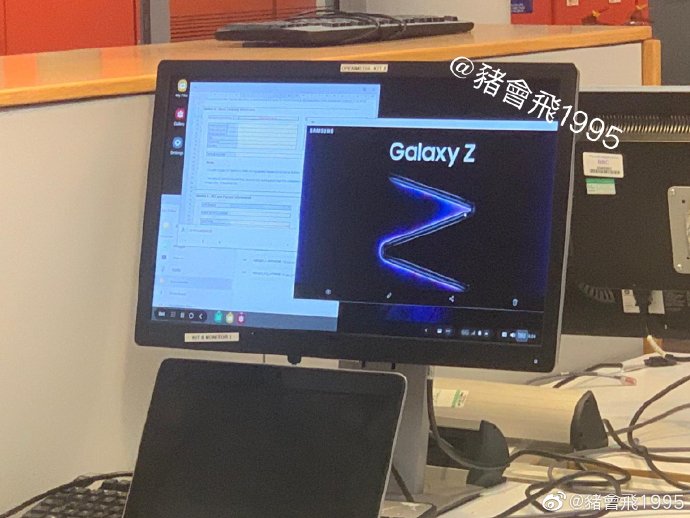
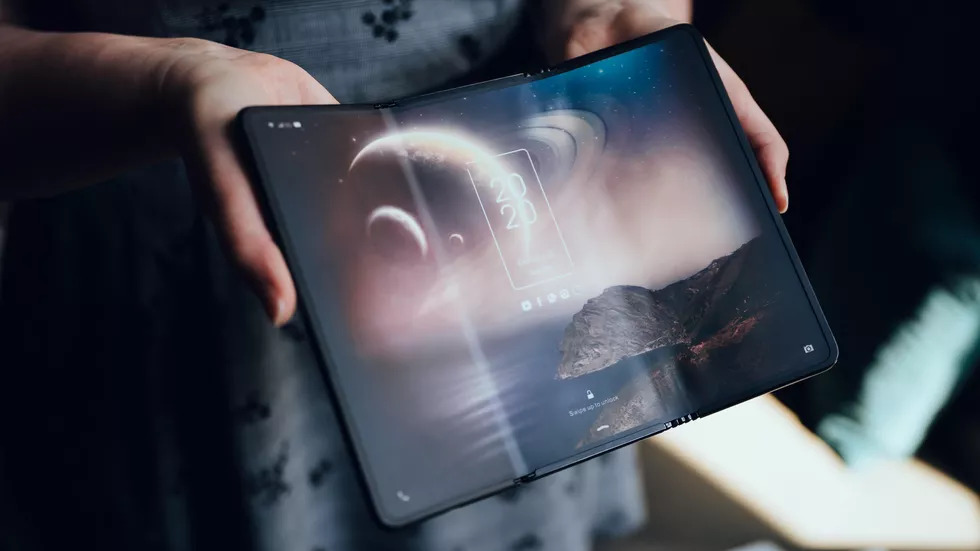
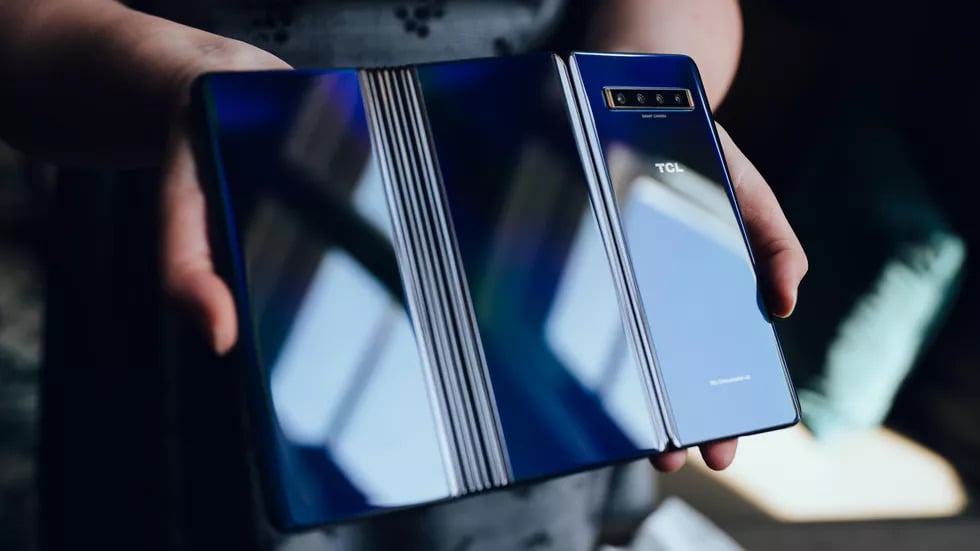
Last year in October, TCL had showcased a prototype of a foldable phone with tri-folding display with dual hinges. When folded, it could be used a regular smartphone and when unfolded, it provided users with a large display of around 10 inches. There is no update on when the company will be mass producing it. A fresh leak reveals that Samsung could be working on a foldable phone with tri-folding design. A tipster from China has shared an image that showcases the three-fold design of an upcoming Galaxy Z foldable phone.
The exact name of the Galaxy Z phone with three-fold design is not known yet. The design that can be seen in the leaked image shows that the Galaxy Z tri-folding smartphone will appear quite similar to the TCL’s foldable prototype with tri-folding display. Hence, it appears that it could be fitted with two hinges that could be folding in opposite direction. Hence, the two hinges could assist the device appear like the letter Z that will make it possible to fold it in zigzag manner.
The TCL prototype was completely unfolded, it revealed that it featured a quad camera setup on the third part of the device. Also, when unfolded, the frontside provides users with a massive display area. However, when folded, it can be used a regular smartphone. One drawback of the tri-folding design is that the device becomes quite thick when folded as seen in the image below. It remains to be seen how thick Samsung’s forthcoming Galaxy Z tri-folding phone could be.
There is no word on the launch date of the Galaxy Z tri-fold device. It could be arriving in the latter half of the year. Currently, the company is gearing up to launch the Galaxy S20 series along with Galaxy Z Flip clamshell foldable phone on Feb. 11. The Galaxy Z Flip is powered by the Snapdragon 855. The said processor powered various Android flagship phones in the previous year. The rumored Galaxy Z tri-folding smartphone could be equipped with premium specs.
What’s your opinion on the three-fold design of the Galaxy Z foldable phone? Share us your views by posting your comments below.
We use cookies on our website to give you the most relevant experience by remembering your preferences and repeat visits. By clicking “Accept”, you consent to the use of ALL the cookies.
This website uses cookies to improve your experience while you navigate through the website. Out of these, the cookies that are categorized as necessary are stored on your browser as they are essential for the working of basic functionalities of the website. We also use third-party cookies that help us analyze and understand how you use this website. These cookies will be stored in your browser only with your consent. You also have the option to opt-out of these cookies. But opting out of some of these cookies may affect your browsing experience.
Necessary cookies are absolutely essential for the website to function properly. This category only includes cookies that ensures basic functionalities and security features of the website. These cookies do not store any personal information.
Any cookies that may not be particularly necessary for the website to function and is used specifically to collect user personal data via analytics, ads, other embedded contents are termed as non-necessary cookies. It is mandatory to procure user consent prior to running these cookies on your website.