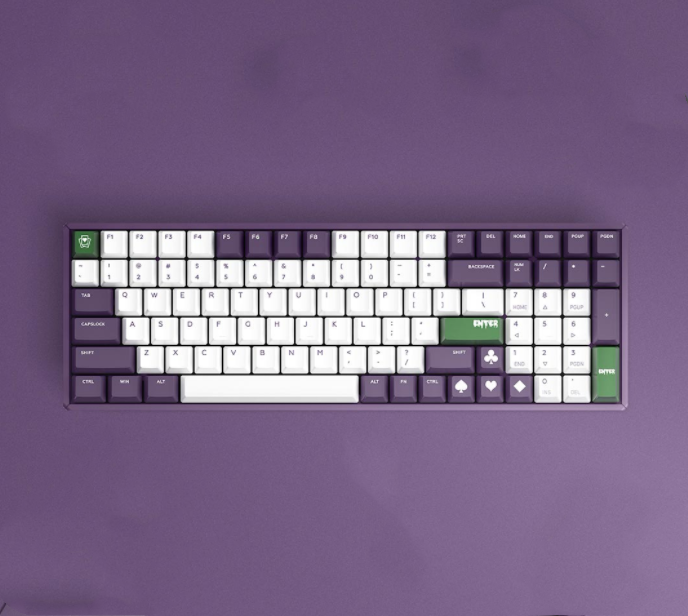
Xiaomi‘s Youpin crowdfunding platform has brought us plenty of oddities and interesting gadgets, but today’s product is a lot more conventional. The IQUNIX F96 is a new mechanical keyboard featuring Cherry MX keys and key-line separation. The wired version starts at 896 yuan ($130), while the wired + Bluetooth variant goes for 1188 yuan ($172).
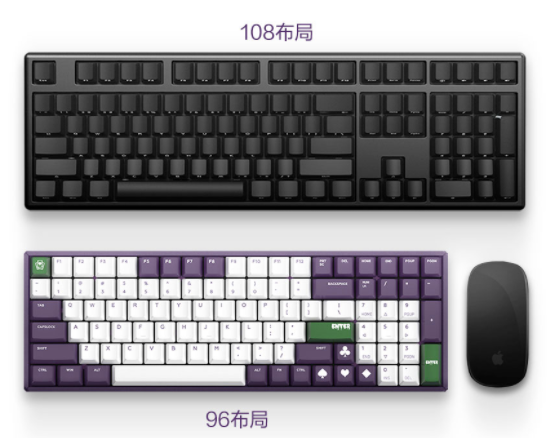
So, let’s take a closer look at the dimensions of the colourful little mechanical keyboard here. The dimensions for the IQUNIX F96 measure in at 372 × 123.5 × 42mm with a weight of 1060g. It adopts an all-aluminum alloy shell with three colors of dark blue, coral orange and white, as well as built-in RGB lights with a variety of lighting effects.
The IQUNIX mechanical keyboard uses Cherry MX switches, ensuring that the keys have a nice and satisfying click with every press. These come in red, green, brown and muted red options, as you’d expect from any mechanical keyboard. On top of that, they also come in backlit and non-backlit versions in case you need it.
As for connectivity, the wireless version of the IQUNIX F96 utilizes Bluetooth 4.0 for its wireless connection. The device can seamlessly switch between three different paired devices, and in case you suddenly need it, you can also use a USB Type-C cable for a wired connection. Overall, the IQUNIX looks like a solid mechanical keyboard, especially with its smaller size making it more portable.
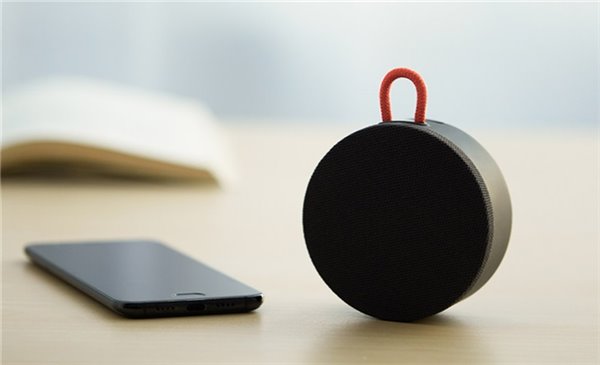
Xiaomi has launched the Mi Outdoor Bluetooth Speaker Mini and it is now on sale on Mi Mall for 99 yuan ($14). As the name implies, the Outdoor Bluetooth Speaker Mini is a smaller version of the MI Outdoor Bluetooth Speaker that was launched in September 2019 priced at 199 yuan ($28).
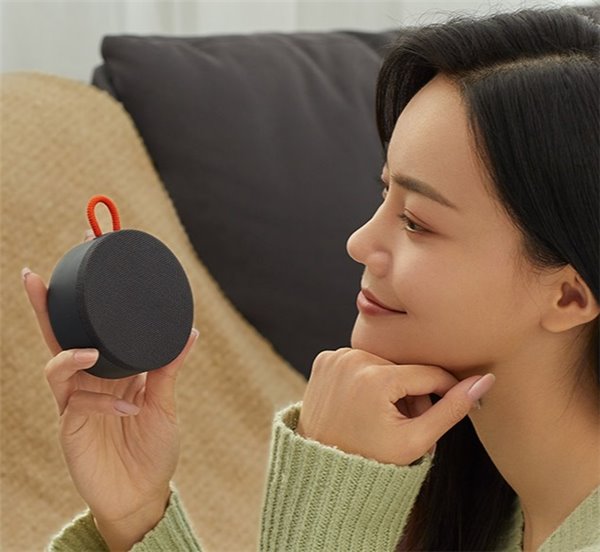
This new model looks like a miniaturized version of last year’s sleek portable Bluetooth speaker. The design is similar as well as several of the features. This model adopts the attractive lanyard pattern of its predecessor but the lanyard is shorter on this model. It also supports Bluetooth 5.0 protocol. The mini has a dimension of 86 × 86 × 45mm and weighs 185g. It also utilises a USB Type-C interface which is located just under the lanyard. The Mi Bluetooth Speaker Mini also presents with an impressive 2000mAh battery that Xiaomi says can deliver up to 10 hours of music playback at 60% volume level. The portable speaker also comes with IP55 level dustproof and waterproof protection.
Furthermore, the Mi Outdoor Bluetooth Speaker mini supports true wireless stereo interconnection function. This means it can interconnect two speakers to form a wireless stereo speaker with the delivery of stereo effects on left and right channel playbacks.
The Bluetooth speaker mini equally has a built-in high-sensitivity, high-signal-to-noise ratio microphone, and integrated echo cancellation technology, which can be used to answer and hang-up calls with one click.
Vivo was one of the smartphone manufacturers who shook the industry last year with its array of amazing products. Little wonder the company still ranks among the top 5 OEMs in terms of phone shipment. One of the spectacular smartphones we saw from its stable was the Vivo NEX 3. The model is about getting a new variant this year if the latest TENAA listing is anything to go by.
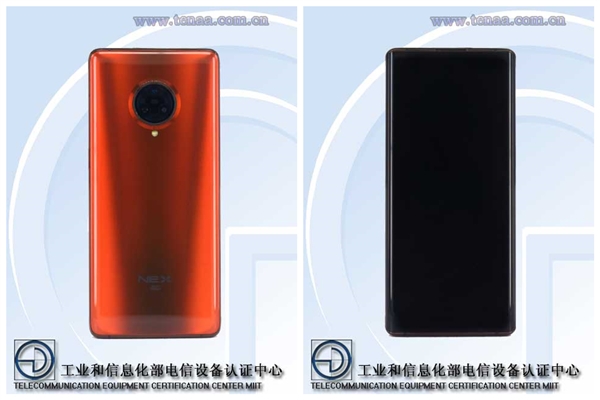
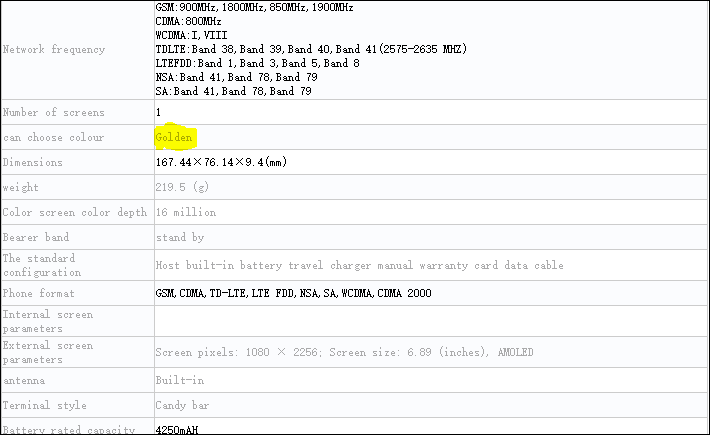
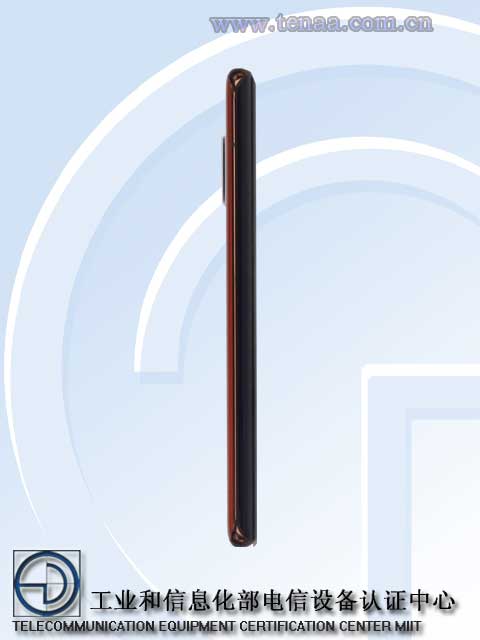
The BBK subsidiary has got a new orange variant of the NEX 3 which has just been certified by China’s telecoms regulatory agency TENAA. The colour is listed as “Golden” but the corresponding image shows it in fact, has an orange-coloured rear panel.
Apart from the new colour, the model is similar to the Vivo NEX 3 that has already hit the market. As a reminder, the NEX 3 comes with dual-mode 5G support making it the first 5G flagship from the NEX series with such configuration. The phone is powered by a Snapdragon 865 SoC and sports a 6.89-inch display with a resolution of 2256 x 1080pixels. Most spectacular, the phone boasts of a mammoth 99.6% immersive screen ratio which happens to be the highest any OEM has been able to expand to on a commercial device.
The NEX 3 comes with 8GB of RAM and 128GB/256GB storage options. For photography, there is a 16MP camera at the front. On the other hand, the device features a triple rear camera setup comprised of a 64 MP main cameras + 13 MP super wide-angle/macro + 13 MP telephoto lens. It gets its light from a 4500mAh which supports 44W ultra-fast flash charge.
On 10th January 2020, Lei Jun, Co-Founder and CEO of Xiaomi group, revealed on the company was almost called Xuande or Red Star when it was founded. The story was shared earlier today on the 10th anniversary of the Xiaomi community.
According to Lei Jun, a few of the founding members sat for a meeting, the first official meeting ever, on 14th January 2010. In the meeting, the main topic of discussion was the naming of the brand. Apparently, Red Star was one of the first to be proposed but was rejected due to a certain trademark issue.
Xiaomi’s new logo that was unveiled on the company’s 10th anniversary earlier this month
Another name that was put up was Xuande but that was also not approved due to people saying it not sounding right. The list of supposed names numbered in the hundreds and included Red Storm, Xuande, Qianqi, Antong, Lingxi and more, which were introduced a decade ago.
Since the Xiaomi was branded, the “MI” logo has been prevalent and associated with the company. Mi stands for more than just an acronym (shortened version) and holds two different meanings, according to Lei Jun. First, Mobile Internet, as Xiaomi was going to be a mobile company on the internet. The second was Mission Impossible as the company was going to perform and complete a task that seemed impossible, difficult or not yet undertaken.
The official Mi logo of Xiaomi
Lastly, the founder also shared a Buddhist proverb that described the aforementioned values relating a grain of rice to a large mountain. This was shared on the senior executive’s official Weibo account (the Chinese microblogging website).
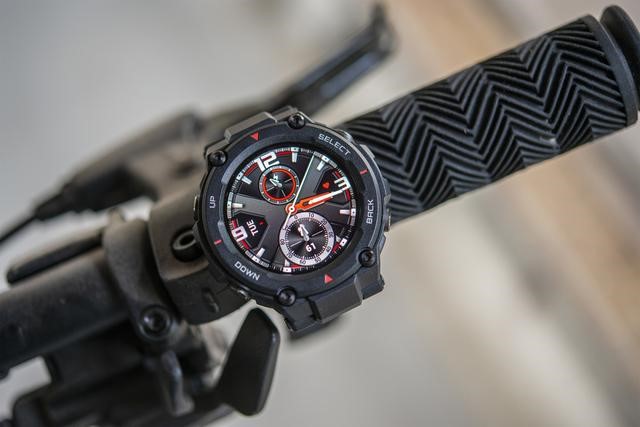
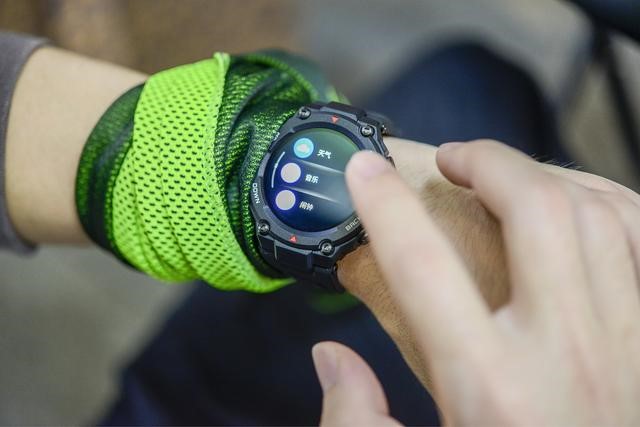
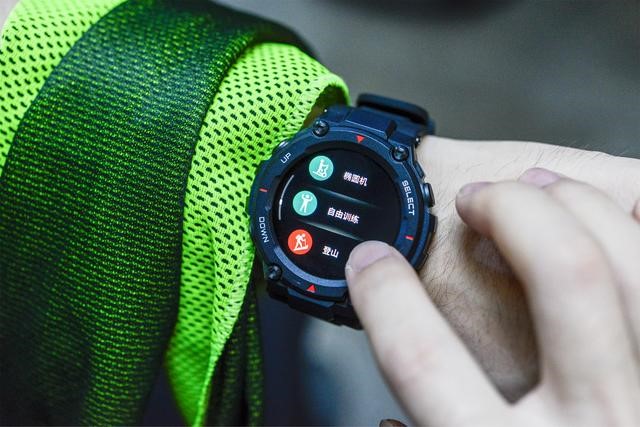
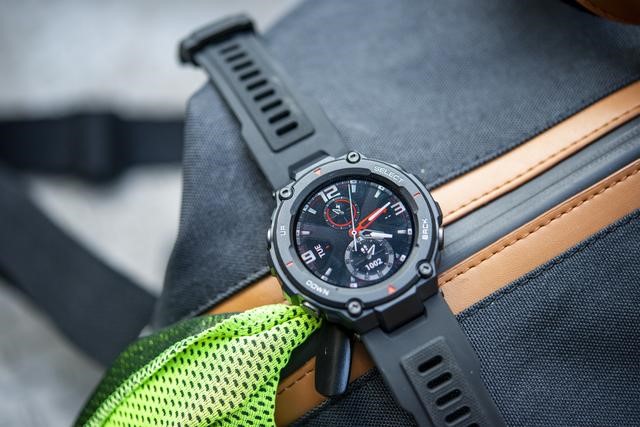
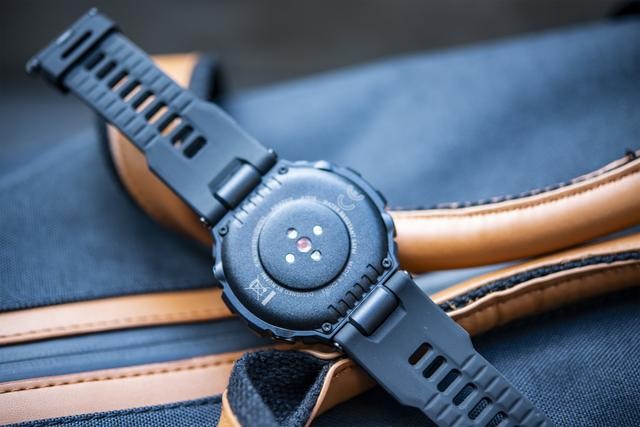
Xiaomi‘s ecological chain company Huami held a launch event at CES 2020 and perhaps, the most outstanding product that was announced was the Amazfit T-Rex smartwatch which was dubbed by the media as the Casio G-Shock of smartwatches. That is because the T-Rex presents with a rugged design that bears semblance with Casio’s popular G-Shock watch. We have now got a couple of hands-on pictures of the smartwatch courtesy of Giztop.
The Amazfit T-Rex fits perfectly into its own class, that is a rugged smartwatch equipped with all the features you’ll find in a regular smartwatch. Even the watch faces reflect the outlook of a mechanical watch. The watch has the MIL-STD-810G military-grade build and can withstand extreme heat and cold. The heat resistance is up to 70℃ while it can stick up in severely cold weather condition of up to -40℃.
Further, the watch is resistant against corrosion, moisture and has a durable body. The T-Rex is touted to have passed a 240-hour damp heat test and 96-hour acid-alkali test.
As a reminder, the Amazfit T-Rex packs a 1.3-inch AMOLED screen with an “always on display” function and resolution of 360 x 360 pixels. The display is protected by a layer of Corning Gorilla Glass 3 on top.
Features onboard include an optical heart rate monitor (PPG), 3-Axis Acceleration Sensor, Geomagnetic Sensor, and Ambient Light Sensor. For connectivity, it comes with Bluetooth 5.0 LE and GPS + GLONASS and is compatible with Android 5.0 devices or later and iOS 10.0 or later.
The smartwatch features 14 sports modes, has 5ATM water-resistant design, is equipped with BioTracker PPG optical sensor for all-day heart rate monitoring and provides rapid heart rate alerts. The device is powered by a 390mAh battery which Huami claims to offer up to 20 days of battery life on a single charge.
The Amazfit T-Rex comes in five colour options — Black, Ash, Camouflage, Green, and Khakhi. As for the availability, the Black version (Chinese and Global versions) is available to buy from Giztop for just $139.99. The Chinese version is expected to ship before January 15 while the Global version will ship before mid-February.
Google is known for its free and open-source products and services. The search giant has a never-ending list of services that are used by users globally in order to get information, manage businesses, and host personal content. Similarly, Google Calendar helps users to manage their time, schedule tasks, and remember things with reminders. There are various benefits of using the Google calendar as the sole schedule maker for your day-to-day tasks. However, some privacy concerned users are looking for alternatives to Google Calendar.
Google Calendar offers seamless sync of reminders, scheduled tasks, and other details across various devices. The user only needs to sign-in the Google account to get access to all the information on another device. Moreover, it supports voice commands over Google Assistant-powered devices like Google Nest, Nest Mini, and others. On the other hand, there are some privacy concerns, along with some other issues that are making users move towards alternatives.
We have concluded a list of some best Google Calendar alternatives below.
List of best Google Calendar Alternatives
Simple Calendar
Price: Free – $1.19
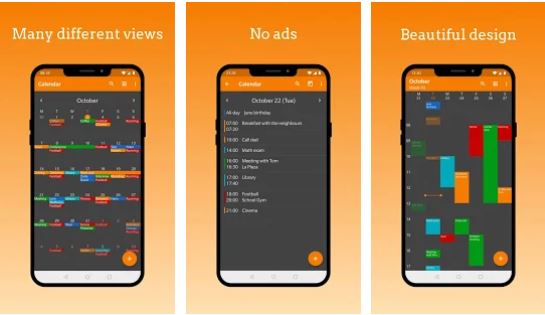
It is an open-source calendar app offering highly customizable features with a simple yet beautiful interface. The app is ad-free and does not need unnecessary permissions. It is the product of Simple Mobile Tools, which is known for its competitive open-source tools that stand neck-to-neck with the professional tools from Google and Microsoft.
Simple Calendar carries all the necessary features without any advertisements and annoying popups. The privacy, security, and stability of the app is ensured by the fact that it does not need internet access. It supports 29 languages, export, and import events utility via .ics files, multiple event reminders, handy snooze option, and much more.
The users can quickly switch between daily, weekly, monthly, or yearly views for easy accessibility. The flexible event creation is possible with the support for powerful repetition rules, and reminders. Simple Calendar offers customizable themes and also carries widgets for better integration. Users can flawlessly sync events from other apps like Google Calendar, Microsoft Outlook, Exchange, etc. There’s also support for location via Google Maps, proper notification channels, customizable reminders, and more.
Simple Calendar Pro version is also available at a negligible cost $1.19.
TimeTree is a shared calendar platform, with over 18 million users globally. It’s is awarded as the Best App of 2015 on Apple’s App Store. The main feature of teh TimeTree is its shared calendar feature that allows multiple users to access and maintain the same calendar. It has the flexibility to remind every user within the group for reminders. The roles such as admin, members can be assigned to users for better maintenance.
The user can form different groups and can add members of his/her choice. This feature is quite helpful while sharing Calendars with family, friends, and the workplace.
TimeTree can also be used to jot down notes and then share it with the users, groups. The Shared Notes feature is quite useful in planning events, organizing to-do lists, and creating small notes.
TIMETree includes all the Multinational Holidays of 13 countries and 13 languages. It offers heavy dynamicity for the users residing in different countries. It helps organize events, manage work, and becoming more productive. The app supports Widget and also works on PC, iOS, and Android smartphones. The calendars can be easily shared with anyone via any social media platform.
It is regarded as the best calendar app for Android by several renowned media houses. Digi Calendar Agenda is the most flexible and customizable calendars. Its clean and elegant User Interface makes scheduling quick and easy.
It easily sync with major apps such as Google Calendar, Outlook, and Exchange. Digi Calendar Agenda app offers great accessibility within the app with seven intuitive views, including day, week, agenda, month, next month, list, and year. The users can also use six different widgets for viewing the schedule at a glance.
Digi Calendar supports more than 560K+ public holidays, sports, and TV schedules. Planning something for travelling or hosting a party in your backyard? Then the app will make you aware of the Weather conditions of that particular day. It can give you an accurate weather display, including metrics like temperature, humidity, precipitation, pressure, cloud, wind, and sunrise.
There’s support for 42 different colors for better organizing along with a built-in location search. Other features include, Notifications maps navigation support, local calendar without sync, combines date and time picker, Invitation management, even image matching, etc.
The app is available for free on the Play Store with in-app purchases.
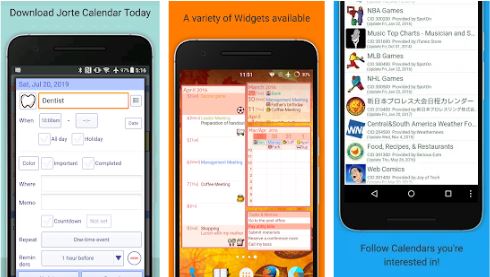
Jorte App is known for its ability to customize. The app can be tweaked not only based on appearance but also on its functionality. The users can select different types of events apart from color and font customization. It is a single app for writing notes, planning, and setting reminders and events.
Jorte is downloaded more than 30 million times and is termed as the most popular organizer app. Major publications have termed it as one of the best apps offering competitive calendar and event organizing features.
It can sync with Microsoft Office 365 and Evernote. It even supports a countdown feature to calculate the remaining days to an event. Jorte helps in writing down notes. It also offers cross-platform sync via Jorte Cloud. Other features include different widgets, multiple calendar views, sync with Google calendar, and Cloud.
Jorte also offers some premium features, including Weather Forecast, Jorte Store for icons and themes, and others.
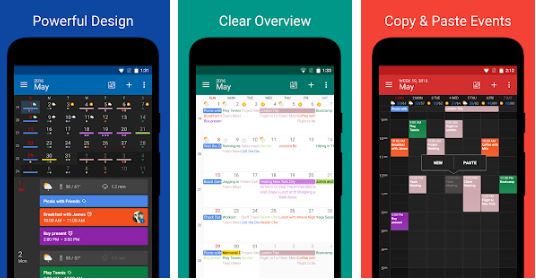
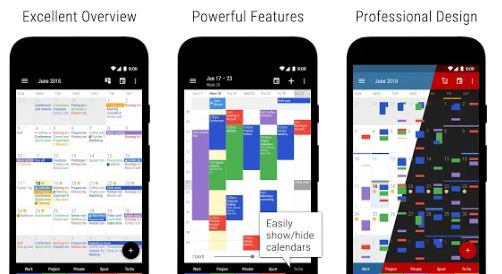
It is the sequel of Business Calendar from Appgenix Software. It is a popular personal organizer with support for calendar, schedule planner, and task organizer within a single app. Business calendar 2 supports six different calendar views of the month, week, day, agenda, year, and tasks. There are a flexible daily and weekly planner with adjustable 1-14 days.
Business calendar 2 supports sync with Google Calendar, Microsoft Outlook, Exchange, and other popular services. The beautiful yet intuitive user interface eases the navigation between different views. There’s also an inbuilt appointment scheduler with drag and drop events feature. It provides hassle-free event details with convenient dialogs.
Support for status bar reminders and popup notification makes you never miss any event. Seven different native widgets are available for easy accessibility features. Along with online sync option with various services, the users can also use it locally without any internet connection.
It has inbuilt event management tools, including invitee management, heat map in a year view, live search, sharing, and initiations management. There are over 600+ emoticons support to make the calendar look for expressive. Business Calendar 2 Pro version offers several useful features without advertisements.
It is a convenient and flexible iOS app that can sync across your Mac calendar. It can easily take control of your events, reminders, and essential meetings by syncing across your iOS device. Fantastical 2 is an award-winning calendar app with several powerful features and an intuitive user interface.
It can sync across different calendar services such as iCloud, Google Calendar, Exchange, and more. Fantastical 2 supports English, French, German, Italian, and Spanish languages. It can show event details along with the map for actual locations. The background app allows events, reminders, and alerts notifications, even if the app is not opened for a while.
Fantastical 2 features significant new parser features. Along with reminders, the app also supports geofencing for some automation. The users can add URLs and locations to events, search within the calendar, and integrate other calendar services. Simple voice commands allow you to add calendar events.
It is available on iOS and Mac for $1.99 and $24.99.
These are some best alternatives for Google Calendar. Each app mentioned above hosts different features and have their own merits and demerits. If you have any popular recommendations, then let us know via the comments below.
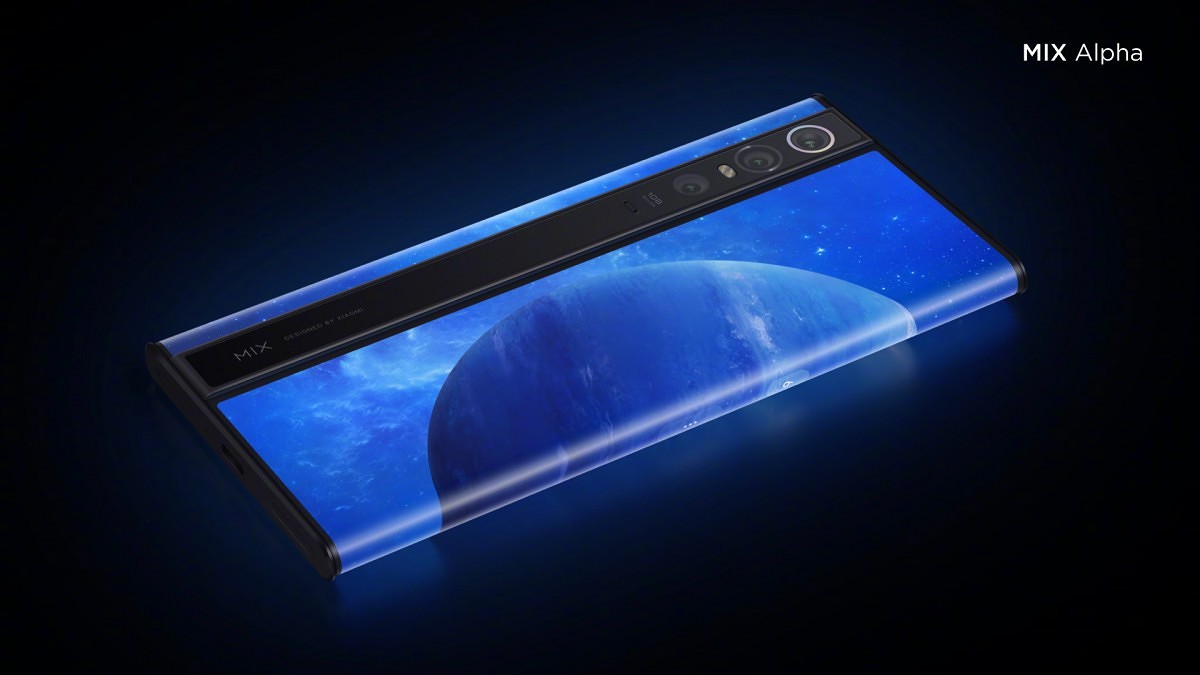
Earlier today (10th January 2020), a business conference was held in Beijing by the Xiaomi Group. In the event, a notable announcement regarding the Mi Mix Alpha was made public, that the device is currently ready for mass production
The event saw the appearance of the Chinese company’s research and development team for smartphones (the ones behind the surround screen technology in the Mi Mix Alpha), who won Xiaomi’s Annual Technology Award for 2019. And in an interview, Cui Baoqiu, chairman of Xiaomi’s technical committee and Han Haicai, the architect behind the surround sound screen research and development team brought up the topic regarding the production of Mi Mix Alpha.
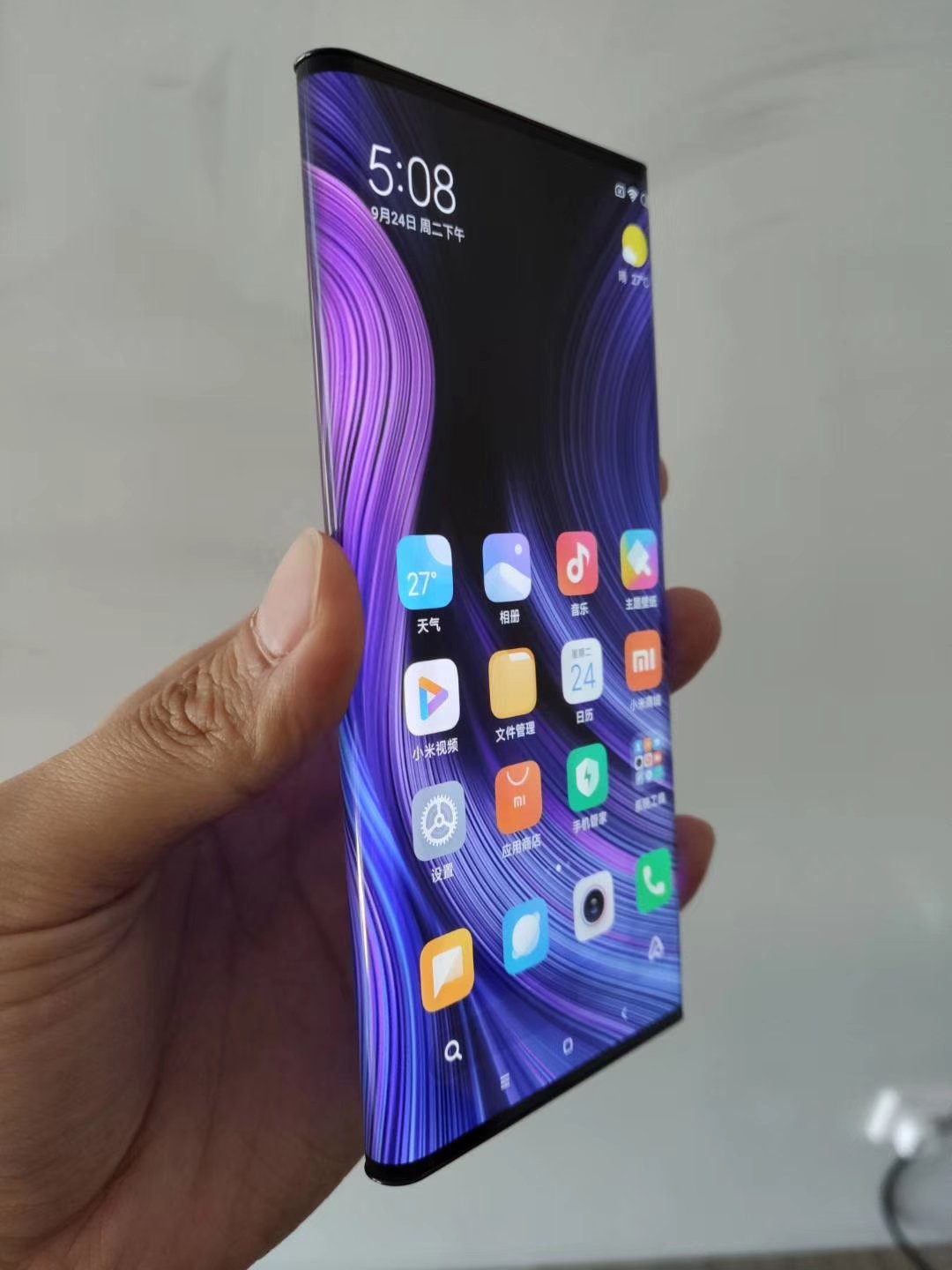
Xiaomi’s Mi Mix Alpha with a surround screen display that covers a majority of the smartphone’s body
According to the senior officials, the smartphone has not been mass produced yet, with no plans of doing so being on the table. However, they stated that Xiaomi is currently at the capacity where it can start the mass production of the handset.
It has further been revealed that the Mi Mix Alpha was developed after Lei Jun (Co-Founder and CEO) decided on the need for a unique and innovative smartphone. Additionally, the device was also made to break the repetitive cycle of similar types of smartphones that are currently in circulation.
Xiaomi had initially announced the Mi Mix Alpha back on 24th September 2019, which has garnered a lot of attention ever since. One of its unique selling points was definitely its unique surround screen technology, that had the display cover a vast majority of the smartphone’s body. From what we know so far, it is a concept handset that will likely not see mass production like Xiaomi’s other flagships and would only be released in limited numbers.
Although the interview confirmed that the company can technically start mass production, Xiaomi needs to first coordinate with the local Chinese Government and other smartphone-related departments before selling the product on a large scale. As of right now, the Mi Mix Alpha stands as a testimony to Xiaomi’s innovative creations and technological developments, according to Cui Baoqiu.
“The best camera is the one you carry with you”. This is one of the biggest truths in photography. Especially nowadays that smartphone cameras have improved so much that the average eye wouldn’t be able to distinguish a photo shot on a smartphone from one shot on a DSLR camera. And since all of us carry our smartphone every day, this is the best camera.
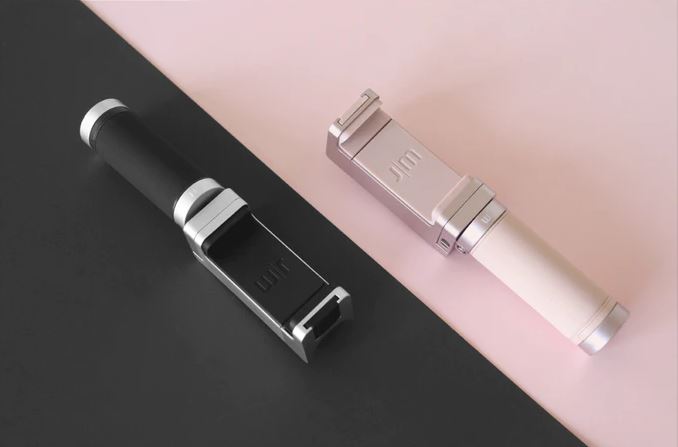
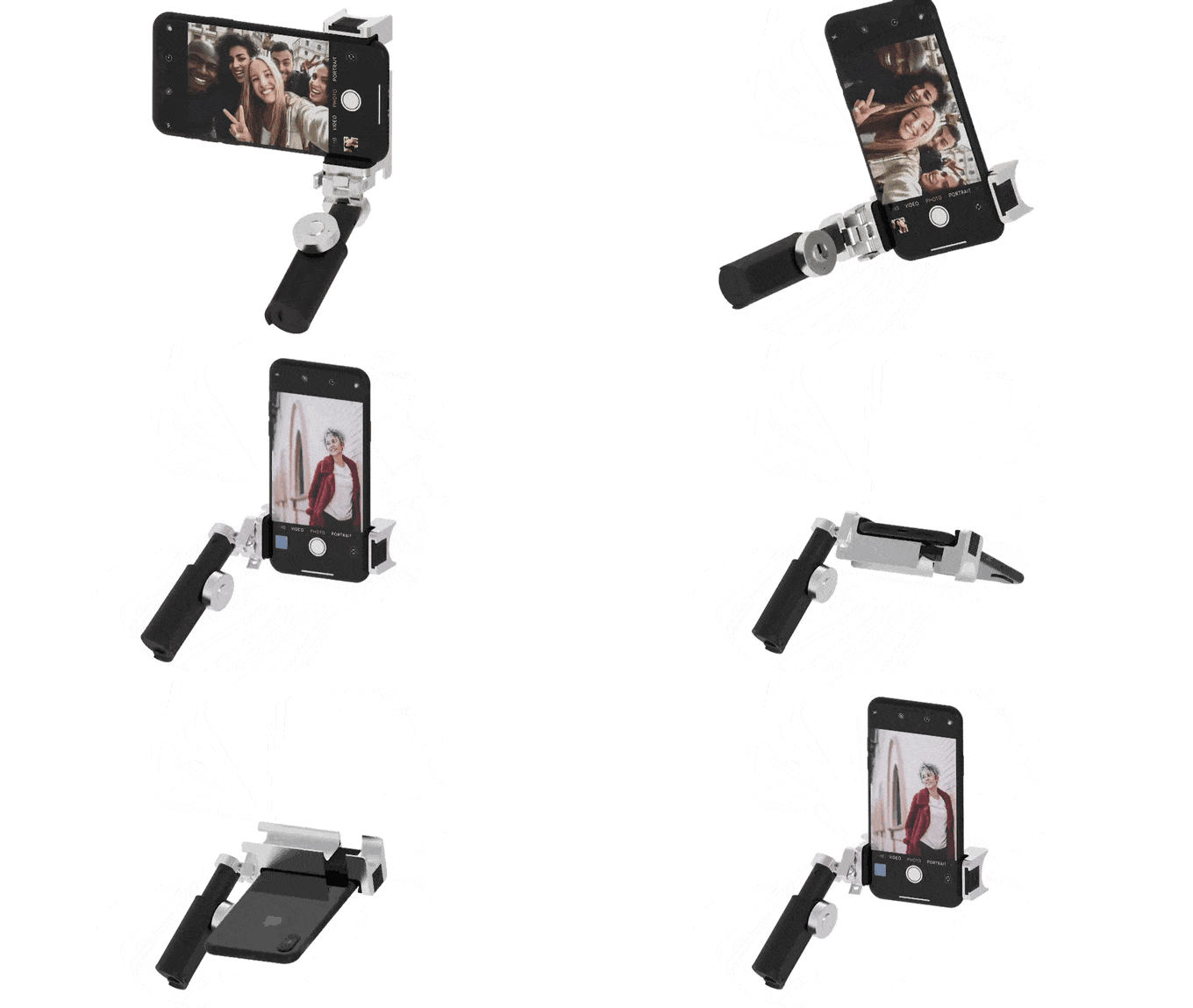
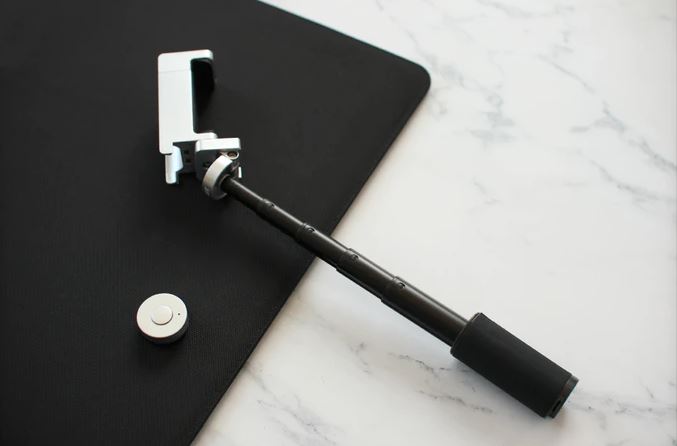
But there are some obstacles that prevent a user from shooting the best photo he can with the greater of all being an unstable hand. Just Mobile managed to solve this problem with its original ShutterGrip™ a year ago and now they are ready to release ShutterGrip 2 with a brand new finish and more flexible ways of controlling your camera in your pocket.
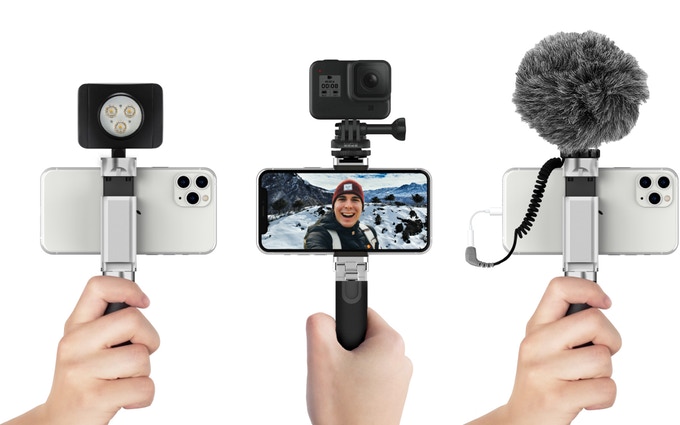
The design goal of ShutterGrip 2 is to re-create the comfort and control of a traditional DSLR camera. Starting from the palm grip, to the optimally positioned shutter release button, the final creation is a palm grip that is comfortable to operate with one hand, and a secured camera that is always ready by your side.
And there’s no need for a proprietary app, just Bluetooth pairing is enough and you are good to go no matter if you own an Android or iOS device.
It is able to support both landscape and portrait grips. When taking landscape videos, just place the ShutterGrip 2 in the middle of the phone and flip the palm grip down. Besides that, there are several other uses of the accessory that you can see on Kickstarter crowdfunding platform. Go ahead and visit the campaign and catch an Early Bird offer now.
Update: TENAA has published the full specs of the Gionee Steel 5. It confirms the resolution is 1520 x 720. Other new details have been added to the post.
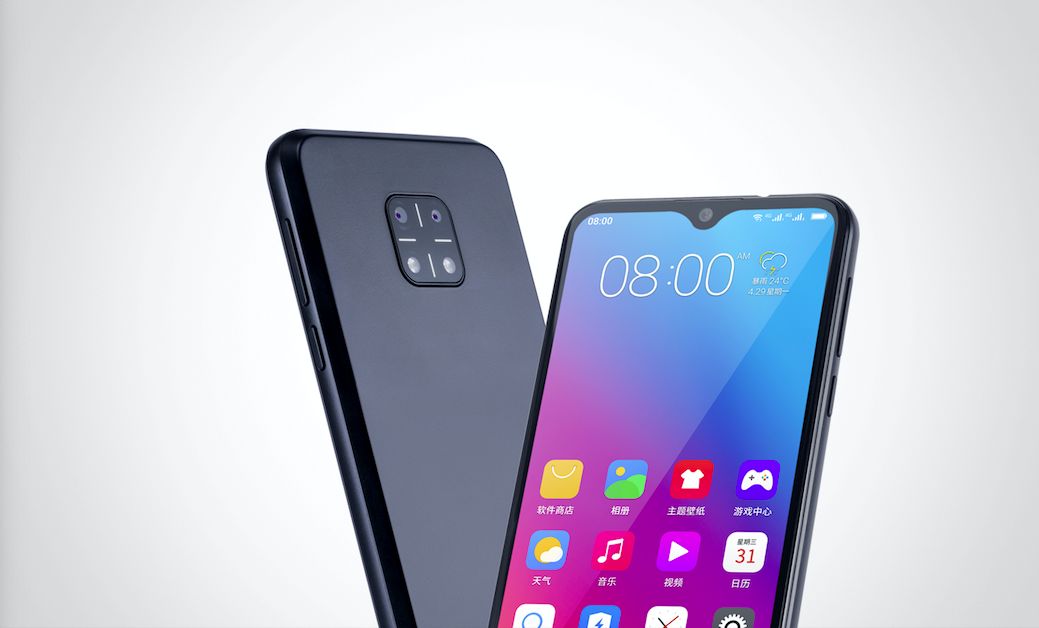
Gionee has announced a new smartphone called Gionee Steel 5. The last Steel series phone from the company was the Gionee Steel 3, released back in 2017. The smartphone sports a trendy waterdrop notch display screen. The company claims that the Steel 5 has a tough and stylish design. Also, it features a square-shaped camera system for its dual-camera setup.
Gionee Steel 5 specifications and features
The Gionee Steel 5 has a 6.217-inch IPS LCD display with a waterdrop notch. The screen has an HD+ resolution of 1520 x 720 pixels.
The back panel of the phone has a square-pattern camera housing that includes two camera sensors and a pair of LED flash. It comprises of the main camera of 12-megapixel and a secondary shooter of 2-megapixel that are coupled with Phase Detection Autofocus (PDAF) technology. The device is fitted with a 13-megapixel camera on the front for capturing selfie shots.
The Gionee Steel 5 is backed with a 5,000mAh battery that is coupled with an intelligent power management system. The smartphone supports 5V/2A charging. The phone comes in three memory options – 3GB, 4 GB, and 6 GB RAM with 64GB or 128 GB of expandable storage. The company did not reveal the name of the processor that powers the smartphone but it is an octa-core chipset with four cores clocked at 2.0GHz and the other four cores clocked at 1.5GHz. The Android 9 Pie OS customized with the company’s Amigo OS skin runs on the device. It does not seem to feature a fingerprint scanner. The handset measures 159.7 x 75.9 x 9.9mm.
There is no word on the availability of the Gionee Steel 5. It is good to see the brand trying to resurrect by announcing its first phone of 2020 at the beginning of the year. Hopefully, the company will be unveiling more phones this year.
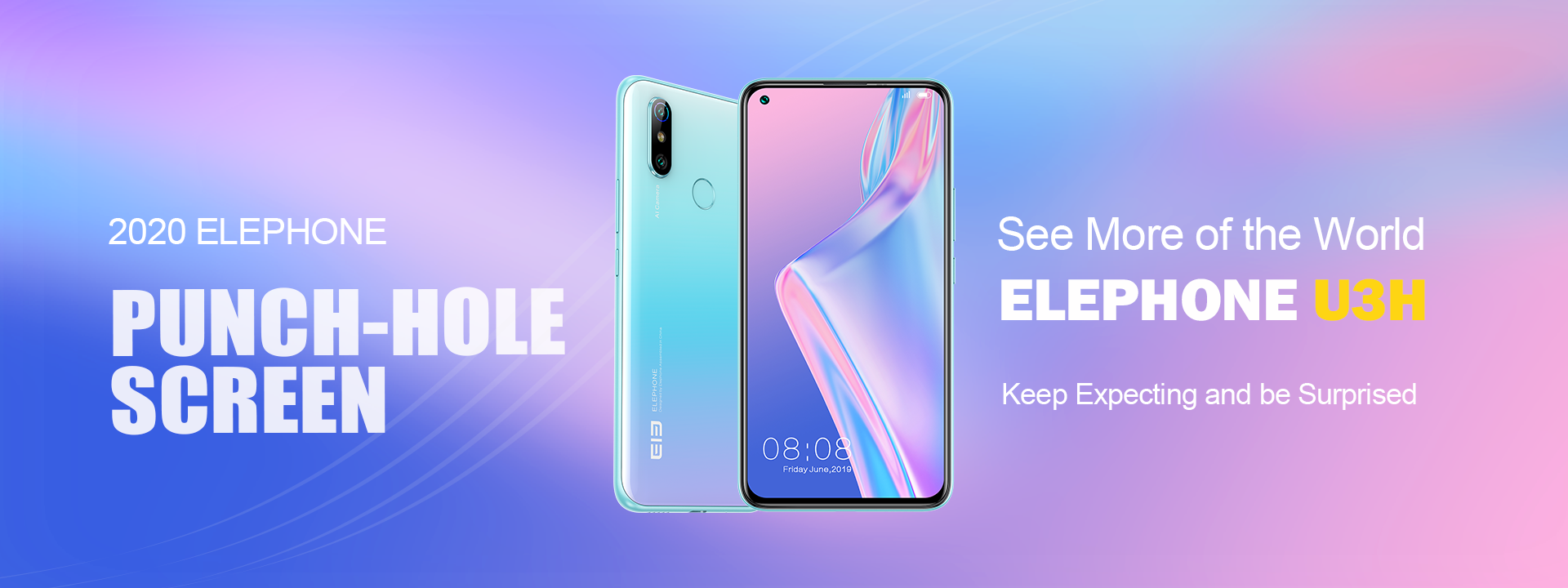
It’s been a while since we heard news from Elephone regarding a new device launch but it seems that work is in progress as they silently launched a new mid-range flagship on their Official Store on Aliexpress. We are talking about the Elephone U3H and it features great specs and an even greater price tag.
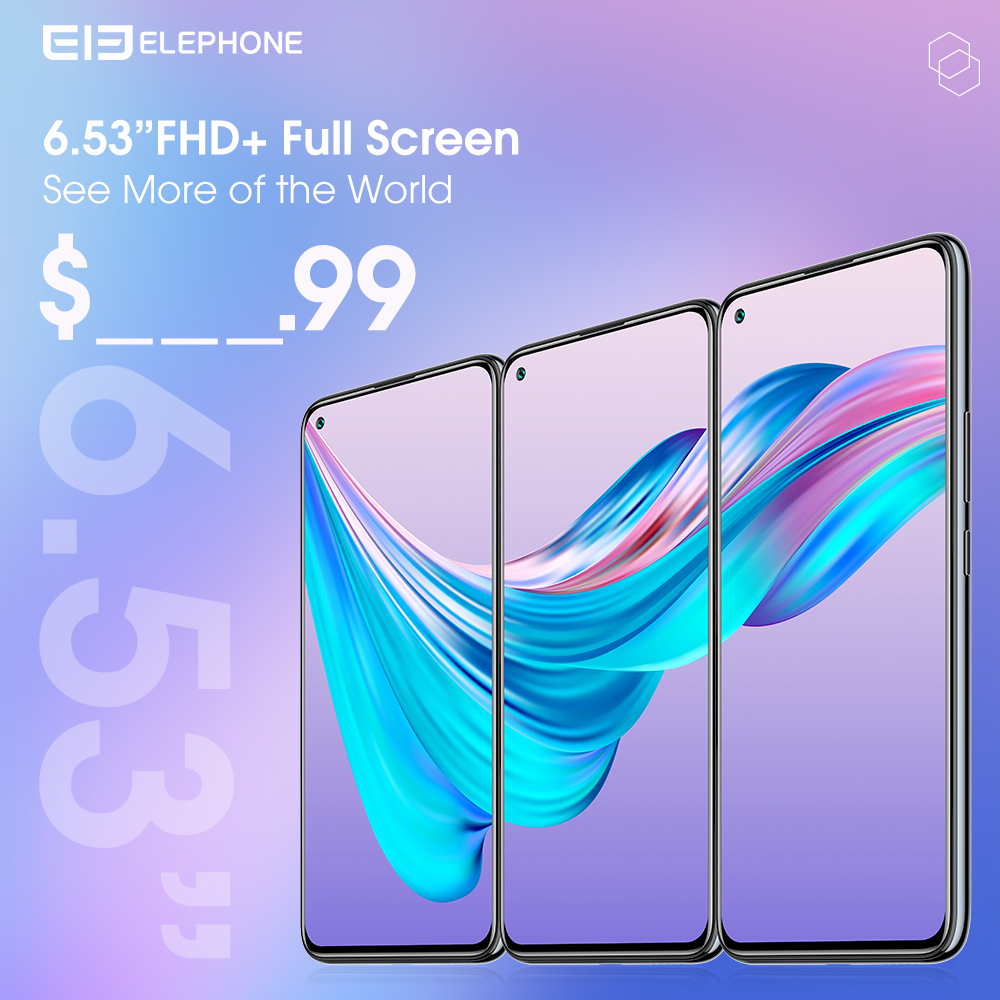
The Elephone U3H sports a 6.53″ FHD+ display with hole-punch 24MP selfie camera and is powered by the Helio P70 SoC backed by 8GB of RAM and 256GB of storage! The rear camera is a dual setup consisting of a 48MP main sensor and a 5MP secondary one while the phone also supports NFC as well as Wireless Charging. During the presale period that is already running, you can get it at just $229.99!
In the meantime, there is a U3H Giveaway activity ongoing on Elephone’s Facebook page and you can join here for a chance to win the Elephone U3H for free.
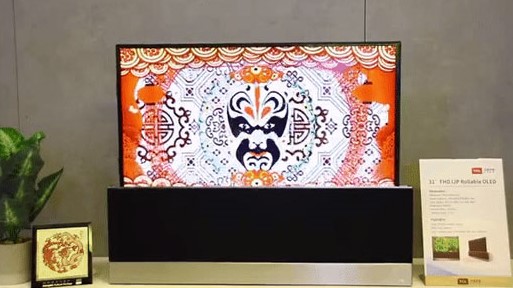
TCL and Juhua have just showcased a 31 inch rollable OLED TV prototype. It is being touted as the world’s first to be made with an inkjet technology and combines TFT with an OLED display.
Interestingly, the inclusion of two different technologies gives it the advantage of having quantum dots from the OLED with the backplane of TFT screens. This allows the prototype unit to output 200 nits of brightness which cover 90 percent of the DCI P3 color space.
The Rollable OLED TV Prototype from TCL and Juhua
The rollable OLED TV prototype was developed by the National Printing and Flexible Display Innovation Center with Guangdong Juhua’s printing display technology and TCL (through CSOT, a Chinese panel manufacturer). In simpler terms, the printed OLED display is a new breed of such display and the prototype made in collaboration is the first of its kind.
In comparison to traditional displays with conventional evaporation technology, the new type of display brings a wide range of advantages. These include, not requiring FMM (fine metal mask), simple device structure, high material utilization and support for large sizes.
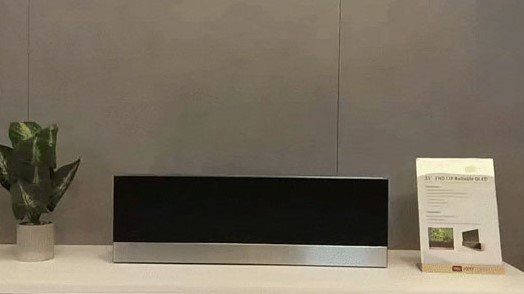
The base of the prototype where the screen rolls and hides into
Most importantly, the main advantage of such types of flexible displays are the low cost of development. As of right now, devices and technology related to flexible displays are relatively expensive. Thus, the newer method can lead to a positive development in the future due to its economic value.
Notably, the prototype rollable TV from TCL and Juhua also bears significant resemblance to LG’s rollable 4K OLED TV.
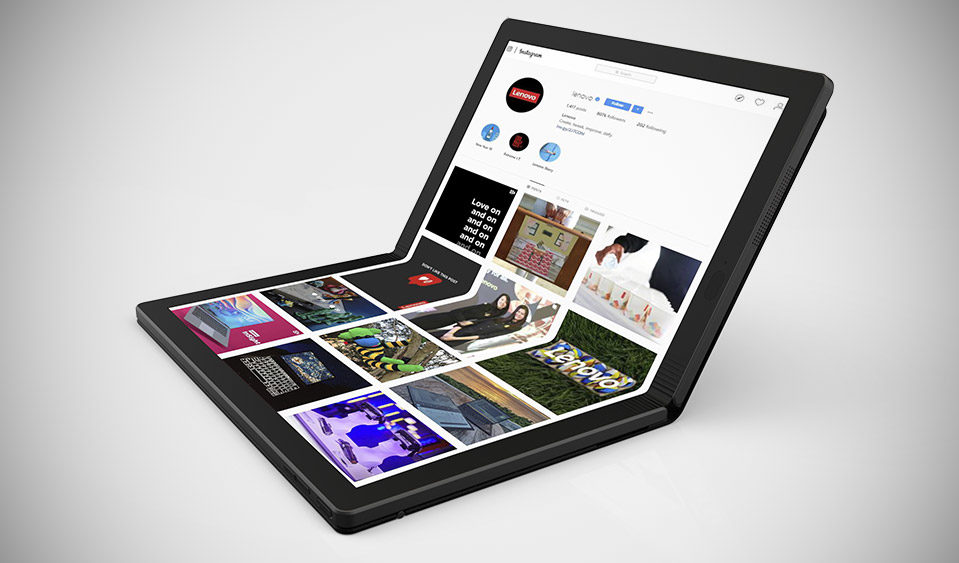
Lenovo, a known electronics brand, hasn’t been the most successful company in the smartphone market in recent years. However, the same does not apply to its business operations as a whole. Reportedly, the company holds upwards of 40 percent share in the PC market in China.
Liu Jun, Executive Vice President and President of Lenovo China group, stated in an interview that 40 percent of the Chinese PC market share is held by Lenovo. The sizable figures are for the fiscal year of 2019 and the company’s PC operations in China generate revenue exceeding 10 billion US Dollars.
Lenovo’s upcoming foldable laptop, the ThinkPad X1 Fold
More than half of Lenovo’s Chinese PC market from younger target audiences and students. Thus, the company is always innovating on different ways to developed customized products according to the youth generation’s preferences with market strategies and technology reflecting the same, according to Liu Jun.
The senior executive also shared two words regarding the future prospects of Lenovo in China, namely “Acceleration” and “Ecology.” The former stands for continued growth in advancements and expansion, while the latter stands for shattering internal and external boundaries to achieve “open integration and cooperation.”
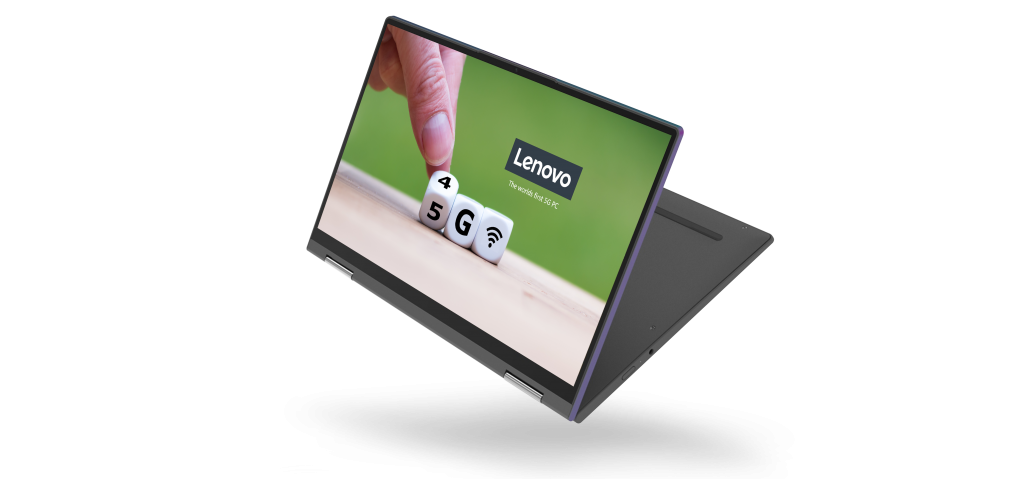
Lenovo laptop with 5G networking capabilities
This is indicative of Lenovo planning to defend its strong position from its competitors, expand and diversify to gain an advantage. Similar to smartphones, the PC market is also highly volatile and dependent on technological breakthroughs. Hence, we can expect to see some notable advancements this year from the industry.
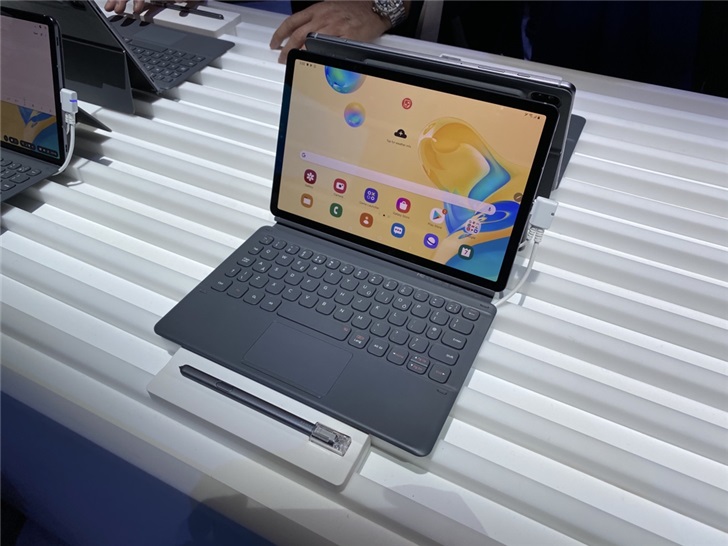
Recent reports have revealed that South Korea will be soon receiving the Galaxy Tab S6 5G as the world’s first 5G ready tablet. It is expected to go official in the first quarter of 2020. The arrival of tablet is nearing as it was recently spotted at the database of Android Enterprise. Recently, the tablet was spotted with specifications sheet in South Korea. The new leak reveals that the Galaxy Tab S6 5G will be just a 5G version of the Galaxy Tab S6 that had gone official last year.
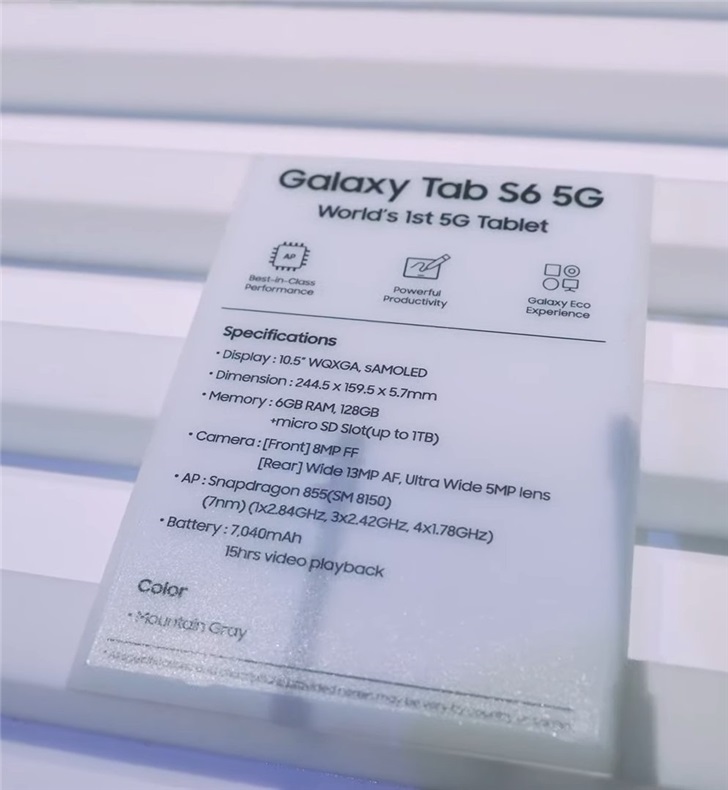
Samsung Galaxy Tab S6 5G live image and specs
The image of the Galaxy Tab S6 5G shows that it resembles with 4G LTE edition. The attachable keyboard and S Pen stylus can be also seen in the image.
The specs of the Galaxy Tab S6 5G are also exact match with its 4G LTE variant. The specifications sheet shows that Tab S6 5G measures 244.5 x 159.5 x 5.7mm. It is equipped with an sAMOLED display of 10.5 inches that offers WWQXGA resolution.
The flagship tablet draws power to perform from the Snapdragon 855 mobile platform which powered most of the Android flagship phones in 2019. The device is backed by a 7,040mAh capacity that offers 15 hours of video playback.
The chipset of the Tab S6 5G is coupled with 6 GB of RAM. When it comes to storage, the device powers an internal space of 64 GB and there is a dedicated storage expansion slot that supports up to 1 TB of microSD card. It is speculated that the device could be also available in 8 GB RAM + 256 GB storage version.
The tablet has a front camera of 8-megapixel. The rear side of the device is fitted with a dual camera setup that has a main wide-angle lens of 13-megapixel which is coupled with a 5-megaipxel ultra-wide shooter. It is expected to run on One UI 2.0 based Android 10 OS. The specs sheet states that it will be available in Mountain Gray color.
The rumor mil is yet to reveal the pricing of the Galaxy Tab S6 5G. Hopefully, the tablet would be made available in other countries that carry support for 5G network.
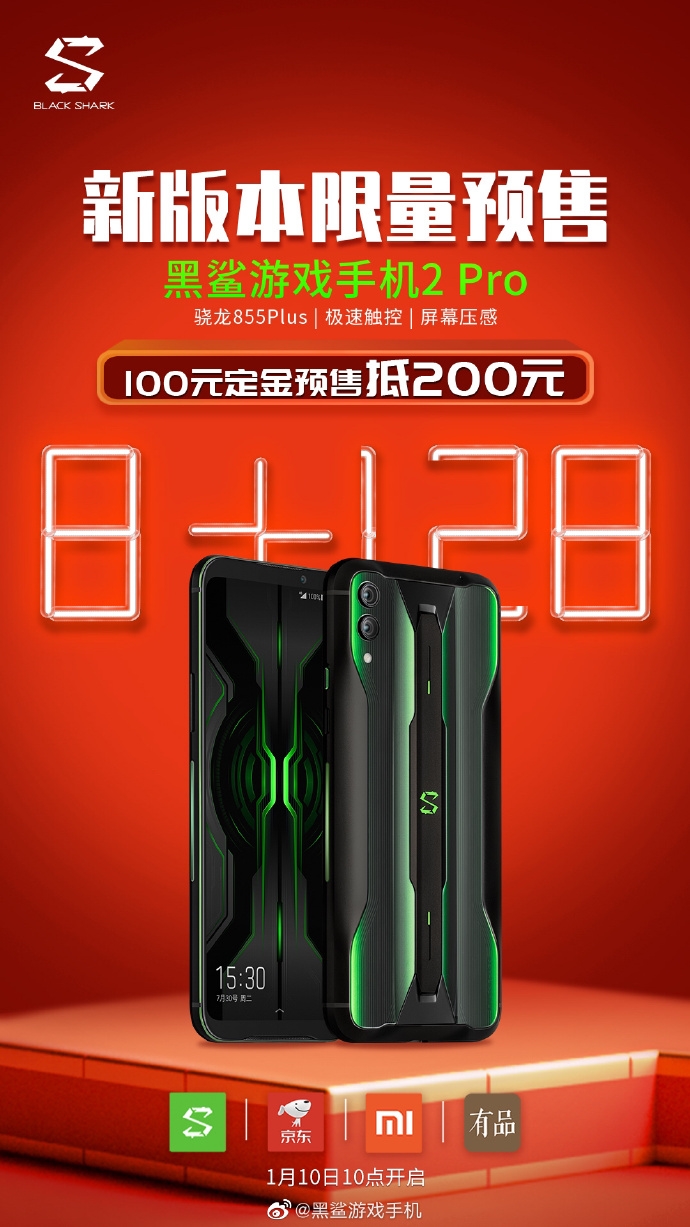
In July last year, Xiaomi-backed gaming smartphone maker Black Shark launched its Black Shark 2 Pro smartphone which is powered by Qualcomm Snapdragon 855 Plus SoC. The phone was launched in two memory variants — 12GB + 128GB and 12GB + 256GB.
Today, the company has launched a new variant of the Black Shark 2 Pro (Full Specs) smartphone in the Chinese market, making it the first one to come with 8GB RAM. Yes, the new variant of the phone comes with 8GB RAM and 128GB internal storage.
The Black Shark 2 Pro 8GB + 128GB model is priced at 2,699 yuan which roughly converts to $390. However, the phone is up for pre-order in China costing 2,599 yuan (~$375) and will start shipping from 14th January.
Unlike other models, this 8GB RAM variant comes in only one color — Electron Black. For comparison, the 12GB + 128GB model costs ¥2999 (~$436) and the 12GB + 256GB model is priced at ¥3499 (~$504).
The main selling point of the Black Shark 2 Pro is its processor – the Snapdragon 855 Plus – which was announced recently. It has higher clock speeds (CPU and GPU) than the Snapdragon 855. Black Shark even bragged about the phone’s performance; sharing its AnTuTu score of 500,610 points at the launch.
It features a 6.39-inch Super AMOLED display with notch-less design and offers Full HD+ screen resolution of 1080 x 2340 pixels. The display offers features like DC dimming 2.0, DCI-P3 color gamut, 240Hz touch sampling rate and 34.7ms touch response speed.
The device also comes with an in-screen fingerprint reader. Coming to the camera department, is fitted with a dual camera setup that includes a Sony IMX586 48-megapixel primary lens with f/1.8 aperture and a 12-megapixel telephoto lens with 2x optical zoom.
On the front side, there’s a 20-megapixel snapper for taking selfies and video calling. The Black Shark OS UI based on Android 9 Pie operating system runs on the Black Shark 2 Pro smartphone, which is packed with a 4,000mAh battery that supports 27W fast charging.
According to a new report, a bill has been introduced in a State in the US which seeks to ban the use of cell phones for anyone under the age of 21.
On Tuesday (7th January 2020), the State of Vermont introduced a bill by Democratic Senator, John Rodgers, which sought to prohibit cell phone usage by age. The Government official stated that people under the age of 21 “are not developmentally mature enough” to use mobile phones safely.
To supplement this bill, major harmful incidents like car crashes and cyber bullying among teens were brought up as the need for the proposed act; since cell phone is reportedly one of the leading reasons for teenage deaths in the US, while smartphones are most likely to be used by teenagers to engage in bullying and threatening activities and by its extension even suicides.
According to the bill, a person found to be in possession or using a cell phone will be fined by $1,000 and be punished with jail time up to a year if they are under 21 years of age. The bill also mentions maturity as a factor as people under 21 can not legally smoke cigarettes, consume alcohol or possess guns and wish to include smartphones within the same category.
Currently, no US state has passed a bill on the minimum age for cell phone ownership but has strict laws in place for smoking, drinking and firearms. Notably, John Rodgers admitted that he expects the bill not to pass but brought it up regardless to bring attention towards firearms in the country.
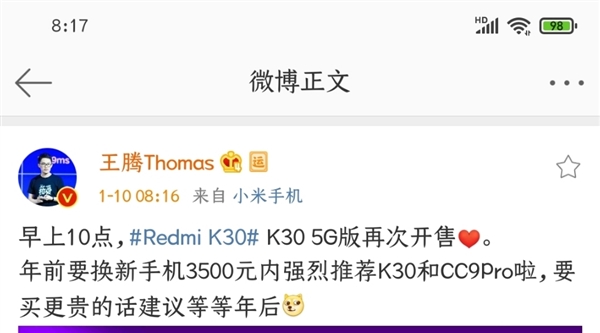
Xiaomi is expected to soon announce its Xiaomi Mi 10 series of flagship phones. Rumors have so far revealed that the lineup includes Xiaomi Mi 10 and Mi 10 Pro smartphones. Xiaomi’s Product Manager Wang Teng Thomas shared a Weibo post and then seems to have deleted it quickly. A screenshot of the deleted Weibo post revealed that pricing and release date of the Mi 10 series.
In the Weibo post, Teng has suggested buyers to go for Xiaomi Mi CC9 Pro or Redmi K30 smartphones if they needed a smartphone under the 3,500 Yuan (~$505) pricing. However, users who are looking for an expensive and premium phone can wait for the Chinese year to end.
The Xiaomi Mi 9 Pro 5G smartphone was introduced with a starting price of 3,699 Yuan (~$533). Hence, there is a possibility that the Xiaomi Mi 10 and Mi 10 Pro phones could be priced between 3,500 Yuan (~$505) and 5,000 Yuan (~$721). As far the launch of the Mi 10 series is concerned, Xiaomi may announce it after the upcoming Spring Festival of China (after Jan. 25). Hence, it may debut earlier in February.
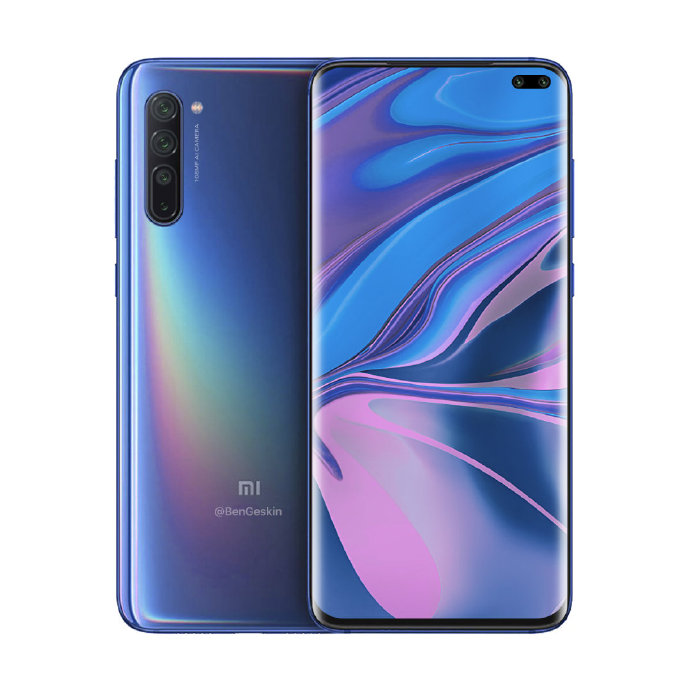
Past reports have revealed that the Xiaomi Mi 10 series will be equipped with an AMOLED display with punch-hole design. Known tipster and designer Benjamin Geskin has shared the render of the Xiaomi Mi 10 based on the rumors surrounding it. A leaked photo of the phone that had surfaced last week had revealed that it is equipped with a vertical quad camera setup.
Recent reports have claimed that the Mi 10 could be coming with a 90Hz refresh rate screen and it may feature 64-megapixel (Sony IMX686) + 20-megapixel (ultrawide) + 12-megapixel (telephoto) + 5-megapixel (depth) quad camera setup. The handset may house a 4,800mAh battery with 30W fast charging support.
On the other side, the Xiaomi Mi 10 Pro’s screen may deliver 120Hz refresh rate. It is rumored to be equipped with 100-megapixel (main) + 20-megapixel (ultrawide) + 12-megapixel (telephoto) + 5-megapixel (depth) quad camera system. It could be housing a smaller battery of 4,500mAh capacity that may carry support for 66W rapid charging. These phones are also rumored to be equipped with fast wireless charging and reverse wireless charging.
It took a whole decade for major smartphone manufacturers and internet companies to realize the ill-effects of white screens on users’ eyes. Several tech enthusiasts, content makers always keep stuck to the big white screens to develop new content and earn a decent living. The continuous exposure to white screens can make eyes dry and even cause some significant discomfort to the user. The tech giants are now working to provide a dark-mode for every service and product to save users’ eyes from harmful blue light,
Google is also working to bring a dark mode for all its products and services available either on Android, iOS, Web, or any other environment. The search giant has even added inbuilt support for the dark theme in Android 10. The users can switch to dark mode with a single global toggle. Gmail is another popular app that recently received the Dark Mode compatibility on Web, iOS, and Web environments. However, Gmail’s Dark Mode is compatible only with newer Android versions and devices. The users on old Android devices and versions need to follow our guide to enable it.
There are various advantages of using Dark Mode while working and surfing the internet for long periods.
Advantages of Dark Mode
Reduces Eye Strain – The primary motive of the dark-mode is to reduce the eye strain. It eliminates the harmful blue light from distracting white spaces on webpages. The dark mode is more useful during night time.
Improves Battery Efficiency – The devices using AMOLED displays also benefit Dark Mode as the pixels remain turned-off on the black colored areas. According to recent research, the AMOLED displays can save 63% power while using the dark mode.
Limits Image Distortion – The other means of reducing eye strain distorts the image by adding a filter layer. However, the dark mode mute colors that reduce strain on eyes and consumes less power.
The dark mode is not only used by Google, but several entertainment apps such as Netflix, Spotify, YouTube, Instagram, and WhatsApp also use it. The smartphone manufacturers like Xiaomi, Oppo, Samsung, Huawei have also embedded the support for dark mode on their own skins.
The users can follow the steps below to get the Gmail dark theme even on old Android versions using the Xposed Module. Google rolled out Gmail Dark Mode last year, but its usage is limited to Android 10 via the global toggle button. The users on Android 9 and versions before are still helpless.
We have got a way out to get the Gmail Dark Theme on old Android versions by using the Xposed Module called Gmail Dark theme Enabler. The users can install the module either via the Xposed or EdXposed module. However, in both cases, the device should be rooted.
Prerequisites
A Rooted Android smartphone with an Xposed framework or EdXposed module (unofficially version of the Xposed for newer Android version).
We hope you have successfully installed the Gmail Dark Theme Enabler Xposed module to get the Gmail Dark Theme on old Android devices. If you get any problem while installing the module, then just let us know via the comments below.
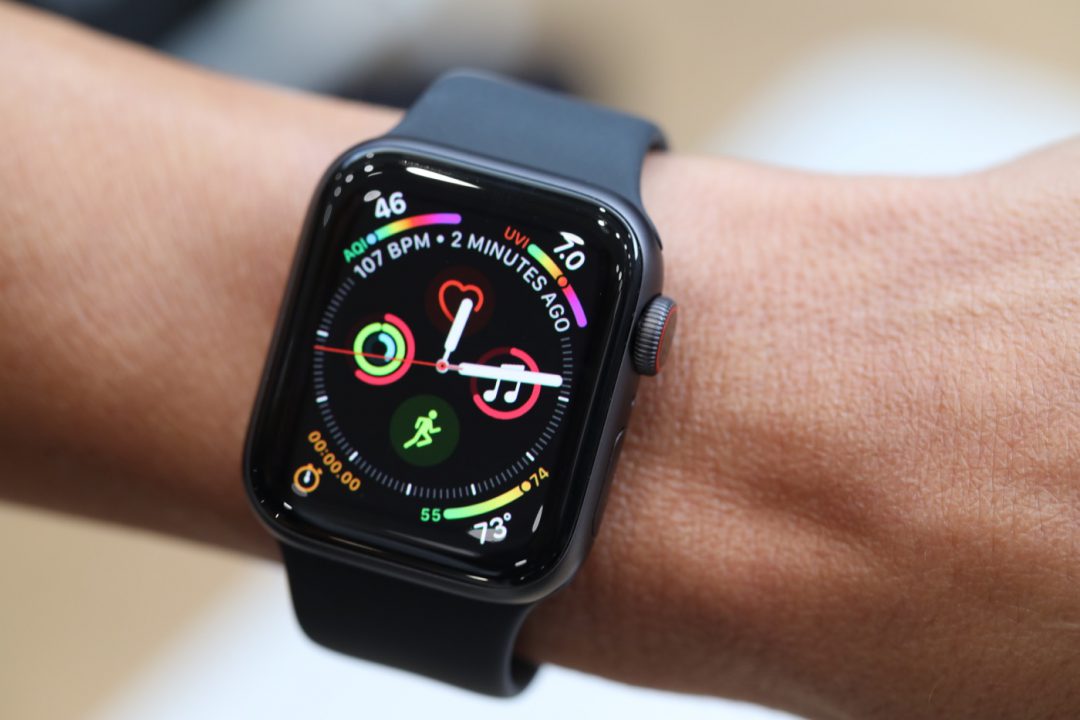
Apple Inc, the Cupertino based company known for the iPhone, has been accused by Masimo Corp. for stealing its technology. The claims are against the Apple Watch and its health monitoring systems.
Masimo is known for developing signal processing technology for health related monitors. Recently, the company and it’s subsidiary Cercacor Laboratories have claimed in a lawsuit that Apple stole secret trademark information. Reportedly, the popular smartphone maker approached as a business partner but then proceeded to hire key employees from Masimo. This includes Michael O’Reilly, the Vice President of Apple’s health technology department.
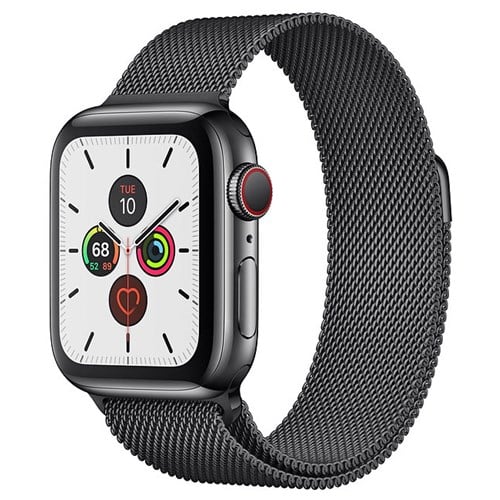
Apple Watch Series 4
Both health care related companies, Masimo and Cercacor, claimed that its non-invasive monitoring system which operated with light had been stolen by Apple. Apparently, the smartphone manufacturer used this technology to overcome performance issues with its Watch offerings. The US based OEM is being accused of multiple counts of infringement among 10 different patents.
Apple Watch’s blood oxygen monitoring system and heart rate detection through the light emitters have come under scrutiny. Masimo wishes to prevent any further usage of its patented inventions and wishes for orders that help achieve this. In the accusation, Apple Watch 4 and Watch 5 have been pointed out to be the main culprits.
Unfortunately, finer details and specifics regarding the accusation are still at large. Furthermore, the specified amount in damages faced by Masimo and Cercacor is also currently unknown. As of right now, no official announcement or statements have been made by Apple regarding the serious accusation. Notably, the company has been reached out for queries so stay tuned for more details that should arrive soon.
A couple of days ago, a post on Reddit’s Android forum alarmed everyone which claimed that Chinese spyware comes pre-installed on all Samsung phones. While the author acknowledged that the claim is sensational, but he claimed that it’s the truth.
The issue that the post claims is related to Samsung‘s Device Care application which comes pre-installed as a part of the company’s Android implementation that cannot be removed. The user who posted on Reddit discovered some strange traffic coming out of Device Care’s storage scanner, which looks for junk files that can be deleted to free up space.
That scanner was sending data back to Chinese domains — and because storage scanners generally need access to all of the files on your computer, the data could include almost anything. However, the immediate explanation in the post wasn’t entirely reassuring.
The scanner utility was made in collaboration with Qihoo 360 but it wasn’t clear which data was being sent back to Qihoo and why, which led the Redditor to tag it as spyware. However, Samsung says that the truth is less alarming than it appears.
The South Korean giant says the only data sent back to Qihoo is generic information needed to optimize storage, which generally includes naming OS version, phone model, and storage capacity, among other data.
It adds that Qihoo’s main contribution is a reference library for identifying junk files, but that library is stored locally in the utility, and the company never receives data that would allow it to identify a particular file on a user’s device.
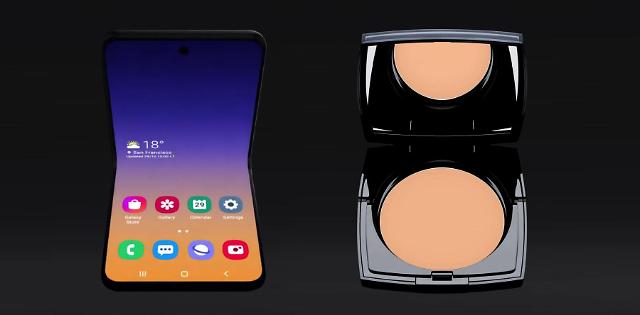
At the Consumer Electronics Show (CES) 2020, Samsung had yesterday demoed its 13.3-inch notebook prototype with sliding screen through a private meeting. Recent reports had claimed that the South Korean company may showcase its clamshell foldable phone on Friday at CES 2020. As expected, earlier today, it again held a private meeting to showcase the purported Galaxy Fold 2. The company confirmed that its upcoming clamshell foldable smartphone is called Galaxy Bloom.
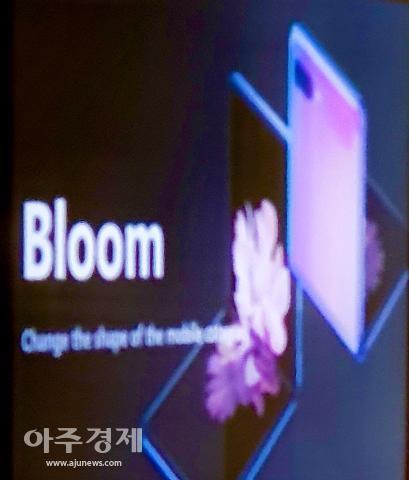
According to a South Korean publication Aju News, Samsung had held the secret meeting at CES 2020 with partners and carriers. DJ Koh, Samsung Electronics CEO confirmed that the official name of its next foldable phone with clamshell design is Galaxy Bloom. A blurry image that was shot during the meeting has also surfaced shows the clamshell design of the phone along with its Galaxy Bloom name.
Koh said that the design of the Galaxy Bloom is inspired from French cosmetics brand Lancome’s compacts. So, the device will be reportedly aimed towards female audience who are in their 20s. Samsung had first showcased its design at the Samsung Developer Conference (SDC) 2019 in October last year. Since it is a clamshell device, it can be folded up and down around its horizontal axis. Checkout leaked shots of the phone from last month.
Unlike the original Samsung Galaxy Fold, the forthcomingGalaxy Bloom clamshell foldable phone won’t be featuring a plastic film over its display. Instead, the company will be making use of an ultra-thin glass (UTG) on the device. Also, it will be the first smartphone ever to arrive with support for 8K video recording. The Galaxy Bloom will be arriving in 4G and 5G flavors.
At the meet, it was also confirmed that the successor of the Galaxy S10 will be called Galaxy S20. The series will include the regular Galaxy S20, Galaxy S20 Plus and Galaxy S20 Ultra. The latter will be equipped with 100-megapixel camera. The camera of the S20 Ultra is codenamed as Hubble. It was named after the space telescope. All the phones in the S20 series will be equipped with support for 8K video shooting. By letting users shoot 8K content, the company can resolve the shortage of the 8K TV content since it expects the expansion the market for 8K TVs.
Samsung is expected to hold its Galaxy Unpacked 2020 event on Feb. 11. The South Korean tech giant is likely to unleash the Galaxy Bloom alongside the S20 series at the event.
We use cookies on our website to give you the most relevant experience by remembering your preferences and repeat visits. By clicking “Accept”, you consent to the use of ALL the cookies.
This website uses cookies to improve your experience while you navigate through the website. Out of these, the cookies that are categorized as necessary are stored on your browser as they are essential for the working of basic functionalities of the website. We also use third-party cookies that help us analyze and understand how you use this website. These cookies will be stored in your browser only with your consent. You also have the option to opt-out of these cookies. But opting out of some of these cookies may affect your browsing experience.
Necessary cookies are absolutely essential for the website to function properly. This category only includes cookies that ensures basic functionalities and security features of the website. These cookies do not store any personal information.
Any cookies that may not be particularly necessary for the website to function and is used specifically to collect user personal data via analytics, ads, other embedded contents are termed as non-necessary cookies. It is mandatory to procure user consent prior to running these cookies on your website.