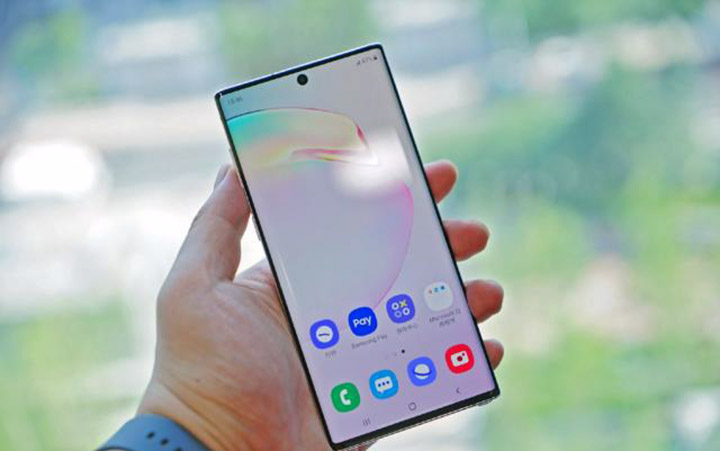
It’s been a while since we heard news from Elephone regarding a new device launch but it seems that work is in progress as they silently launched a new mid-range flagship on their Official Store on Aliexpress. We are talking about the Elephone U3H and it features great specs and an even greater price tag.
The Elephone U3H sports a 6.53″ FHD+ display with hole-punch 24MP selfie camera and is powered by the Helio P70 SoC backed by 8GB of RAM and 256GB of storage! The rear camera is a dual setup consisting of a 48MP main sensor and a 5MP secondary one while the phone also supports NFC as well as Wireless Charging. During the presale period that is already running, you can get it at just $229.99!
In the meantime, there is a U3H Giveaway activity ongoing on Elephone’s Facebook page and you can join here for a chance to win the Elephone U3H for free.
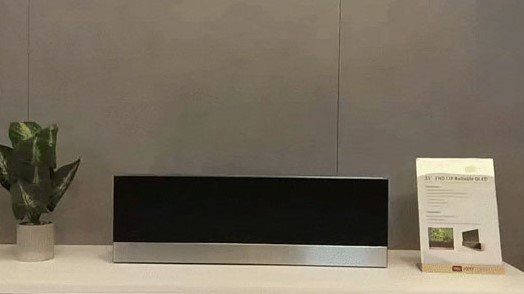
TCL and Juhua have just showcased a 31 inch rollable OLED TV prototype. It is being touted as the world’s first to be made with an inkjet technology and combines TFT with an OLED display.
Interestingly, the inclusion of two different technologies gives it the advantage of having quantum dots from the OLED with the backplane of TFT screens. This allows the prototype unit to output 200 nits of brightness which cover 90 percent of the DCI P3 color space.
The Rollable OLED TV Prototype from TCL and Juhua
The rollable OLED TV prototype was developed by the National Printing and Flexible Display Innovation Center with Guangdong Juhua’s printing display technology and TCL (through CSOT, a Chinese panel manufacturer). In simpler terms, the printed OLED display is a new breed of such display and the prototype made in collaboration is the first of its kind.
In comparison to traditional displays with conventional evaporation technology, the new type of display brings a wide range of advantages. These include, not requiring FMM (fine metal mask), simple device structure, high material utilization and support for large sizes.
The base of the prototype where the screen rolls and hides into
Most importantly, the main advantage of such types of flexible displays are the low cost of development. As of right now, devices and technology related to flexible displays are relatively expensive. Thus, the newer method can lead to a positive development in the future due to its economic value.
Notably, the prototype rollable TV from TCL and Juhua also bears significant resemblance to LG’s rollable 4K OLED TV.
Lenovo, a known electronics brand, hasn’t been the most successful company in the smartphone market in recent years. However, the same does not apply to its business operations as a whole. Reportedly, the company holds upwards of 40 percent share in the PC market in China.
Liu Jun, Executive Vice President and President of Lenovo China group, stated in an interview that 40 percent of the Chinese PC market share is held by Lenovo. The sizable figures are for the fiscal year of 2019 and the company’s PC operations in China generate revenue exceeding 10 billion US Dollars.
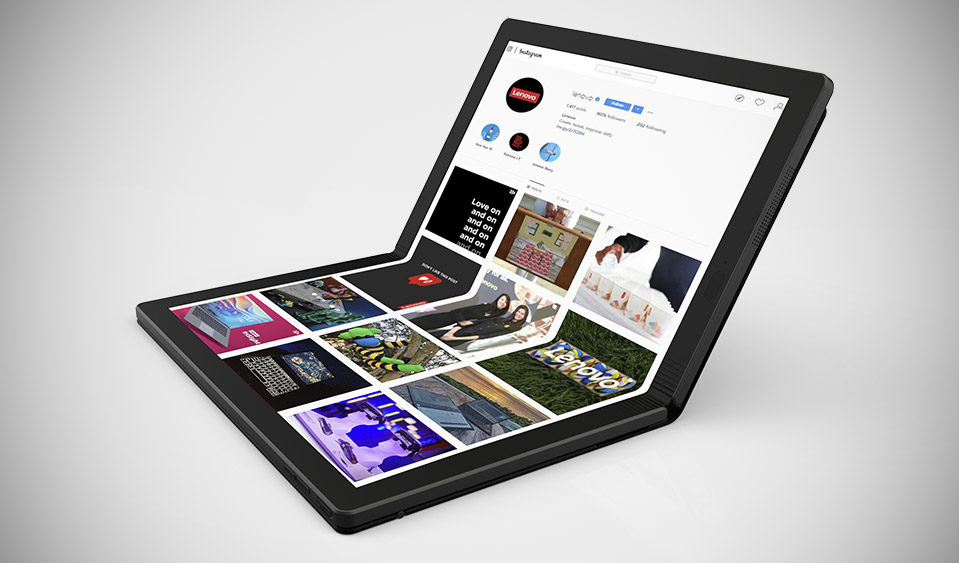
Lenovo’s upcoming foldable laptop, the ThinkPad X1 Fold
More than half of Lenovo’s Chinese PC market from younger target audiences and students. Thus, the company is always innovating on different ways to developed customized products according to the youth generation’s preferences with market strategies and technology reflecting the same, according to Liu Jun.
The senior executive also shared two words regarding the future prospects of Lenovo in China, namely “Acceleration” and “Ecology.” The former stands for continued growth in advancements and expansion, while the latter stands for shattering internal and external boundaries to achieve “open integration and cooperation.”
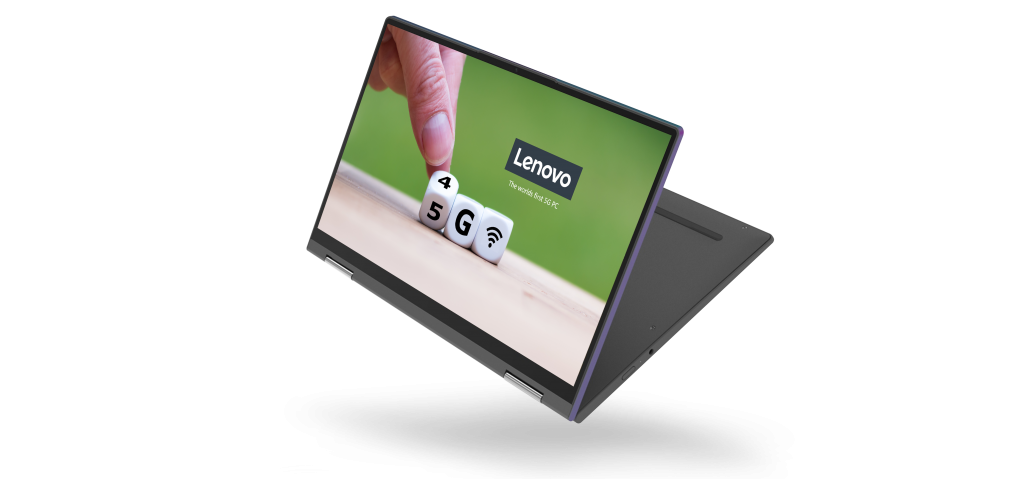
Lenovo laptop with 5G networking capabilities
This is indicative of Lenovo planning to defend its strong position from its competitors, expand and diversify to gain an advantage. Similar to smartphones, the PC market is also highly volatile and dependent on technological breakthroughs. Hence, we can expect to see some notable advancements this year from the industry.
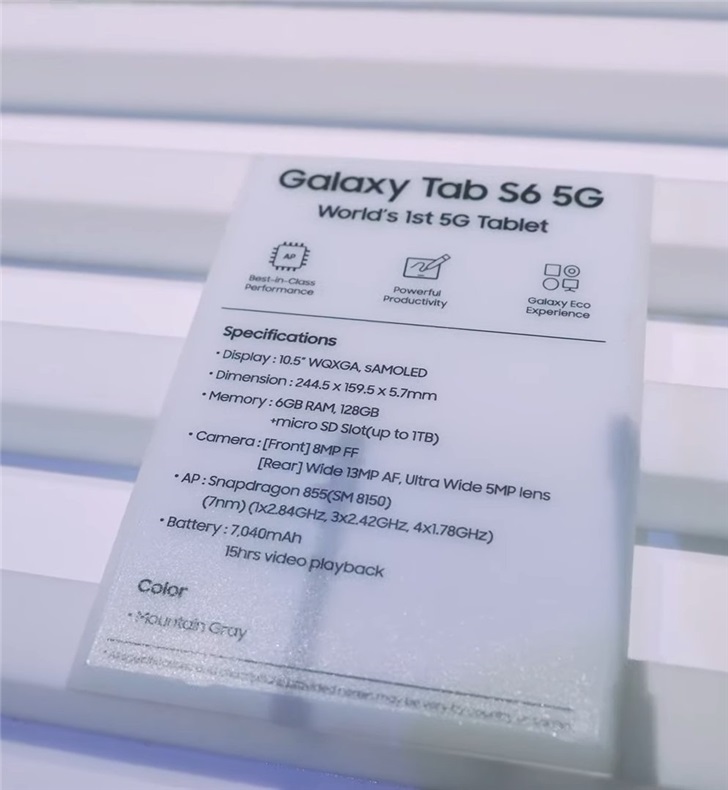
Recent reports have revealed that South Korea will be soon receiving the Galaxy Tab S6 5G as the world’s first 5G ready tablet. It is expected to go official in the first quarter of 2020. The arrival of tablet is nearing as it was recently spotted at the database of Android Enterprise. Recently, the tablet was spotted with specifications sheet in South Korea. The new leak reveals that the Galaxy Tab S6 5G will be just a 5G version of the Galaxy Tab S6 that had gone official last year.
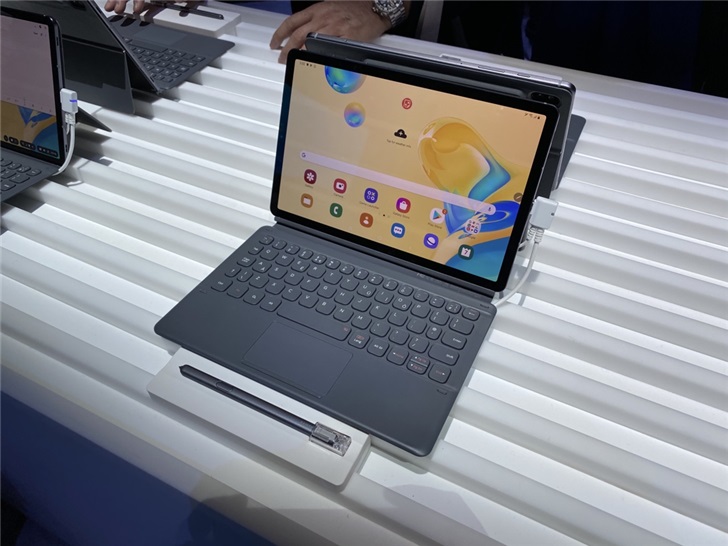
Samsung Galaxy Tab S6 5G live image and specs
The image of the Galaxy Tab S6 5G shows that it resembles with 4G LTE edition. The attachable keyboard and S Pen stylus can be also seen in the image.
The specs of the Galaxy Tab S6 5G are also exact match with its 4G LTE variant. The specifications sheet shows that Tab S6 5G measures 244.5 x 159.5 x 5.7mm. It is equipped with an sAMOLED display of 10.5 inches that offers WWQXGA resolution.
The flagship tablet draws power to perform from the Snapdragon 855 mobile platform which powered most of the Android flagship phones in 2019. The device is backed by a 7,040mAh capacity that offers 15 hours of video playback.
The chipset of the Tab S6 5G is coupled with 6 GB of RAM. When it comes to storage, the device powers an internal space of 64 GB and there is a dedicated storage expansion slot that supports up to 1 TB of microSD card. It is speculated that the device could be also available in 8 GB RAM + 256 GB storage version.
The tablet has a front camera of 8-megapixel. The rear side of the device is fitted with a dual camera setup that has a main wide-angle lens of 13-megapixel which is coupled with a 5-megaipxel ultra-wide shooter. It is expected to run on One UI 2.0 based Android 10 OS. The specs sheet states that it will be available in Mountain Gray color.
The rumor mil is yet to reveal the pricing of the Galaxy Tab S6 5G. Hopefully, the tablet would be made available in other countries that carry support for 5G network.
In July last year, Xiaomi-backed gaming smartphone maker Black Shark launched its Black Shark 2 Pro smartphone which is powered by Qualcomm Snapdragon 855 Plus SoC. The phone was launched in two memory variants — 12GB + 128GB and 12GB + 256GB.
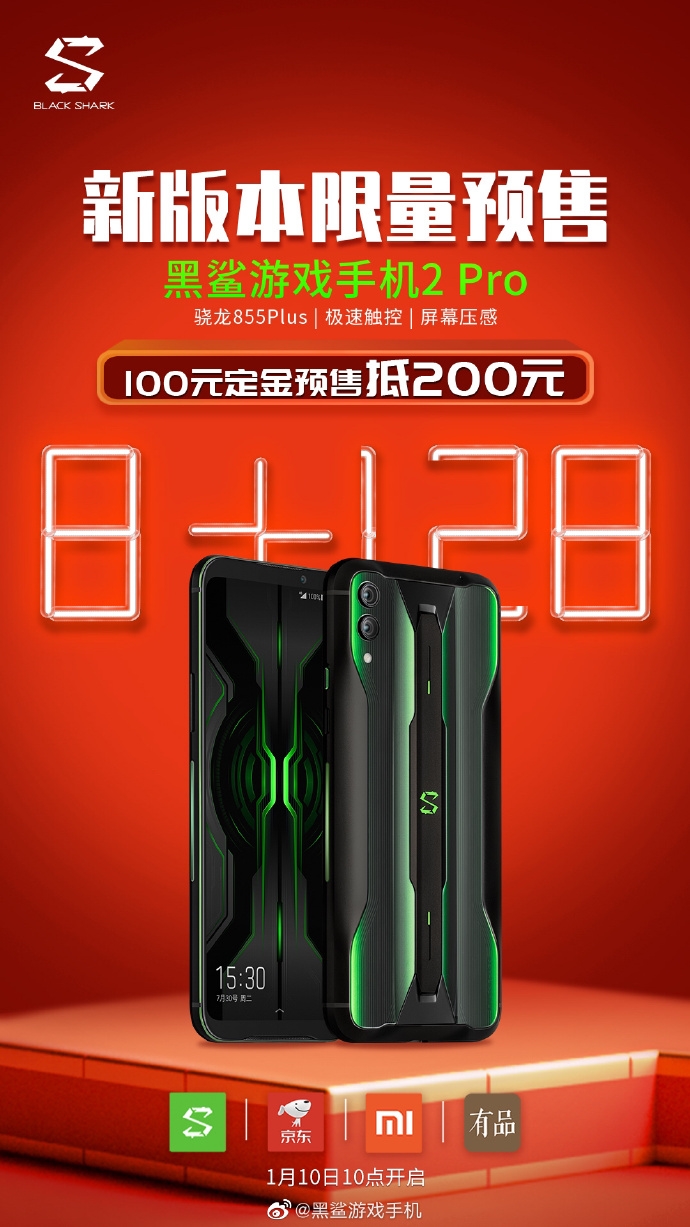
Today, the company has launched a new variant of the Black Shark 2 Pro (Full Specs) smartphone in the Chinese market, making it the first one to come with 8GB RAM. Yes, the new variant of the phone comes with 8GB RAM and 128GB internal storage.
The Black Shark 2 Pro 8GB + 128GB model is priced at 2,699 yuan which roughly converts to $390. However, the phone is up for pre-order in China costing 2,599 yuan (~$375) and will start shipping from 14th January.
Unlike other models, this 8GB RAM variant comes in only one color — Electron Black. For comparison, the 12GB + 128GB model costs ¥2999 (~$436) and the 12GB + 256GB model is priced at ¥3499 (~$504).
The main selling point of the Black Shark 2 Pro is its processor – the Snapdragon 855 Plus – which was announced recently. It has higher clock speeds (CPU and GPU) than the Snapdragon 855. Black Shark even bragged about the phone’s performance; sharing its AnTuTu score of 500,610 points at the launch.
It features a 6.39-inch Super AMOLED display with notch-less design and offers Full HD+ screen resolution of 1080 x 2340 pixels. The display offers features like DC dimming 2.0, DCI-P3 color gamut, 240Hz touch sampling rate and 34.7ms touch response speed.
The device also comes with an in-screen fingerprint reader. Coming to the camera department, is fitted with a dual camera setup that includes a Sony IMX586 48-megapixel primary lens with f/1.8 aperture and a 12-megapixel telephoto lens with 2x optical zoom.
On the front side, there’s a 20-megapixel snapper for taking selfies and video calling. The Black Shark OS UI based on Android 9 Pie operating system runs on the Black Shark 2 Pro smartphone, which is packed with a 4,000mAh battery that supports 27W fast charging.
According to a new report, a bill has been introduced in a State in the US which seeks to ban the use of cell phones for anyone under the age of 21.
On Tuesday (7th January 2020), the State of Vermont introduced a bill by Democratic Senator, John Rodgers, which sought to prohibit cell phone usage by age. The Government official stated that people under the age of 21 “are not developmentally mature enough” to use mobile phones safely.
To supplement this bill, major harmful incidents like car crashes and cyber bullying among teens were brought up as the need for the proposed act; since cell phone is reportedly one of the leading reasons for teenage deaths in the US, while smartphones are most likely to be used by teenagers to engage in bullying and threatening activities and by its extension even suicides.
According to the bill, a person found to be in possession or using a cell phone will be fined by $1,000 and be punished with jail time up to a year if they are under 21 years of age. The bill also mentions maturity as a factor as people under 21 can not legally smoke cigarettes, consume alcohol or possess guns and wish to include smartphones within the same category.
Currently, no US state has passed a bill on the minimum age for cell phone ownership but has strict laws in place for smoking, drinking and firearms. Notably, John Rodgers admitted that he expects the bill not to pass but brought it up regardless to bring attention towards firearms in the country.
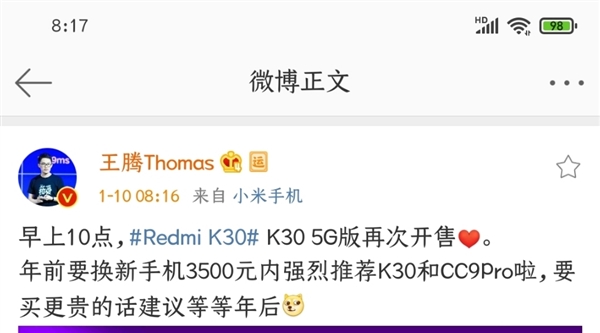
Xiaomi is expected to soon announce its Xiaomi Mi 10 series of flagship phones. Rumors have so far revealed that the lineup includes Xiaomi Mi 10 and Mi 10 Pro smartphones. Xiaomi’s Product Manager Wang Teng Thomas shared a Weibo post and then seems to have deleted it quickly. A screenshot of the deleted Weibo post revealed that pricing and release date of the Mi 10 series.
In the Weibo post, Teng has suggested buyers to go for Xiaomi Mi CC9 Pro or Redmi K30 smartphones if they needed a smartphone under the 3,500 Yuan (~$505) pricing. However, users who are looking for an expensive and premium phone can wait for the Chinese year to end.
The Xiaomi Mi 9 Pro 5G smartphone was introduced with a starting price of 3,699 Yuan (~$533). Hence, there is a possibility that the Xiaomi Mi 10 and Mi 10 Pro phones could be priced between 3,500 Yuan (~$505) and 5,000 Yuan (~$721). As far the launch of the Mi 10 series is concerned, Xiaomi may announce it after the upcoming Spring Festival of China (after Jan. 25). Hence, it may debut earlier in February.
Past reports have revealed that the Xiaomi Mi 10 series will be equipped with an AMOLED display with punch-hole design. Known tipster and designer Benjamin Geskin has shared the render of the Xiaomi Mi 10 based on the rumors surrounding it. A leaked photo of the phone that had surfaced last week had revealed that it is equipped with a vertical quad camera setup.
Recent reports have claimed that the Mi 10 could be coming with a 90Hz refresh rate screen and it may feature 64-megapixel (Sony IMX686) + 20-megapixel (ultrawide) + 12-megapixel (telephoto) + 5-megapixel (depth) quad camera setup. The handset may house a 4,800mAh battery with 30W fast charging support.
On the other side, the Xiaomi Mi 10 Pro’s screen may deliver 120Hz refresh rate. It is rumored to be equipped with 100-megapixel (main) + 20-megapixel (ultrawide) + 12-megapixel (telephoto) + 5-megapixel (depth) quad camera system. It could be housing a smaller battery of 4,500mAh capacity that may carry support for 66W rapid charging. These phones are also rumored to be equipped with fast wireless charging and reverse wireless charging.
It took a whole decade for major smartphone manufacturers and internet companies to realize the ill-effects of white screens on users’ eyes. Several tech enthusiasts, content makers always keep stuck to the big white screens to develop new content and earn a decent living. The continuous exposure to white screens can make eyes dry and even cause some significant discomfort to the user. The tech giants are now working to provide a dark-mode for every service and product to save users’ eyes from harmful blue light,
Google is also working to bring a dark mode for all its products and services available either on Android, iOS, Web, or any other environment. The search giant has even added inbuilt support for the dark theme in Android 10. The users can switch to dark mode with a single global toggle. Gmail is another popular app that recently received the Dark Mode compatibility on Web, iOS, and Web environments. However, Gmail’s Dark Mode is compatible only with newer Android versions and devices. The users on old Android devices and versions need to follow our guide to enable it.
There are various advantages of using Dark Mode while working and surfing the internet for long periods.
Advantages of Dark Mode
Reduces Eye Strain – The primary motive of the dark-mode is to reduce the eye strain. It eliminates the harmful blue light from distracting white spaces on webpages. The dark mode is more useful during night time.
Improves Battery Efficiency – The devices using AMOLED displays also benefit Dark Mode as the pixels remain turned-off on the black colored areas. According to recent research, the AMOLED displays can save 63% power while using the dark mode.
Limits Image Distortion – The other means of reducing eye strain distorts the image by adding a filter layer. However, the dark mode mute colors that reduce strain on eyes and consumes less power.
The dark mode is not only used by Google, but several entertainment apps such as Netflix, Spotify, YouTube, Instagram, and WhatsApp also use it. The smartphone manufacturers like Xiaomi, Oppo, Samsung, Huawei have also embedded the support for dark mode on their own skins.
The users can follow the steps below to get the Gmail dark theme even on old Android versions using the Xposed Module. Google rolled out Gmail Dark Mode last year, but its usage is limited to Android 10 via the global toggle button. The users on Android 9 and versions before are still helpless.
We have got a way out to get the Gmail Dark Theme on old Android versions by using the Xposed Module called Gmail Dark theme Enabler. The users can install the module either via the Xposed or EdXposed module. However, in both cases, the device should be rooted.
Prerequisites
A Rooted Android smartphone with an Xposed framework or EdXposed module (unofficially version of the Xposed for newer Android version).
We hope you have successfully installed the Gmail Dark Theme Enabler Xposed module to get the Gmail Dark Theme on old Android devices. If you get any problem while installing the module, then just let us know via the comments below.
Apple Inc, the Cupertino based company known for the iPhone, has been accused by Masimo Corp. for stealing its technology. The claims are against the Apple Watch and its health monitoring systems.
Masimo is known for developing signal processing technology for health related monitors. Recently, the company and it’s subsidiary Cercacor Laboratories have claimed in a lawsuit that Apple stole secret trademark information. Reportedly, the popular smartphone maker approached as a business partner but then proceeded to hire key employees from Masimo. This includes Michael O’Reilly, the Vice President of Apple’s health technology department.
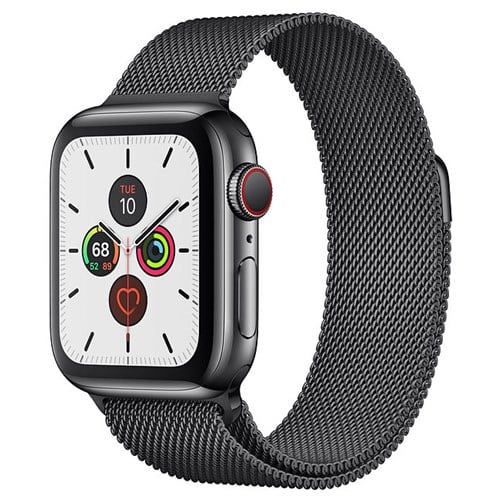
Apple Watch Series 4
Both health care related companies, Masimo and Cercacor, claimed that its non-invasive monitoring system which operated with light had been stolen by Apple. Apparently, the smartphone manufacturer used this technology to overcome performance issues with its Watch offerings. The US based OEM is being accused of multiple counts of infringement among 10 different patents.
Apple Watch’s blood oxygen monitoring system and heart rate detection through the light emitters have come under scrutiny. Masimo wishes to prevent any further usage of its patented inventions and wishes for orders that help achieve this. In the accusation, Apple Watch 4 and Watch 5 have been pointed out to be the main culprits.
Unfortunately, finer details and specifics regarding the accusation are still at large. Furthermore, the specified amount in damages faced by Masimo and Cercacor is also currently unknown. As of right now, no official announcement or statements have been made by Apple regarding the serious accusation. Notably, the company has been reached out for queries so stay tuned for more details that should arrive soon.
A couple of days ago, a post on Reddit’s Android forum alarmed everyone which claimed that Chinese spyware comes pre-installed on all Samsung phones. While the author acknowledged that the claim is sensational, but he claimed that it’s the truth.
The issue that the post claims is related to Samsung‘s Device Care application which comes pre-installed as a part of the company’s Android implementation that cannot be removed. The user who posted on Reddit discovered some strange traffic coming out of Device Care’s storage scanner, which looks for junk files that can be deleted to free up space.
That scanner was sending data back to Chinese domains — and because storage scanners generally need access to all of the files on your computer, the data could include almost anything. However, the immediate explanation in the post wasn’t entirely reassuring.
The scanner utility was made in collaboration with Qihoo 360 but it wasn’t clear which data was being sent back to Qihoo and why, which led the Redditor to tag it as spyware. However, Samsung says that the truth is less alarming than it appears.
The South Korean giant says the only data sent back to Qihoo is generic information needed to optimize storage, which generally includes naming OS version, phone model, and storage capacity, among other data.
It adds that Qihoo’s main contribution is a reference library for identifying junk files, but that library is stored locally in the utility, and the company never receives data that would allow it to identify a particular file on a user’s device.
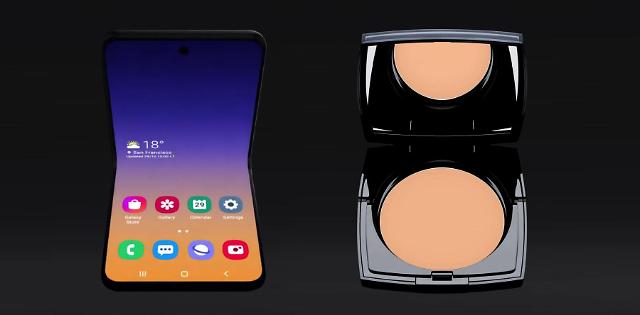
At the Consumer Electronics Show (CES) 2020, Samsung had yesterday demoed its 13.3-inch notebook prototype with sliding screen through a private meeting. Recent reports had claimed that the South Korean company may showcase its clamshell foldable phone on Friday at CES 2020. As expected, earlier today, it again held a private meeting to showcase the purported Galaxy Fold 2. The company confirmed that its upcoming clamshell foldable smartphone is called Galaxy Bloom.
According to a South Korean publication Aju News, Samsung had held the secret meeting at CES 2020 with partners and carriers. DJ Koh, Samsung Electronics CEO confirmed that the official name of its next foldable phone with clamshell design is Galaxy Bloom. A blurry image that was shot during the meeting has also surfaced shows the clamshell design of the phone along with its Galaxy Bloom name.
Koh said that the design of the Galaxy Bloom is inspired from French cosmetics brand Lancome’s compacts. So, the device will be reportedly aimed towards female audience who are in their 20s. Samsung had first showcased its design at the Samsung Developer Conference (SDC) 2019 in October last year. Since it is a clamshell device, it can be folded up and down around its horizontal axis. Checkout leaked shots of the phone from last month.
Unlike the original Samsung Galaxy Fold, the forthcomingGalaxy Bloom clamshell foldable phone won’t be featuring a plastic film over its display. Instead, the company will be making use of an ultra-thin glass (UTG) on the device. Also, it will be the first smartphone ever to arrive with support for 8K video recording. The Galaxy Bloom will be arriving in 4G and 5G flavors.
At the meet, it was also confirmed that the successor of the Galaxy S10 will be called Galaxy S20. The series will include the regular Galaxy S20, Galaxy S20 Plus and Galaxy S20 Ultra. The latter will be equipped with 100-megapixel camera. The camera of the S20 Ultra is codenamed as Hubble. It was named after the space telescope. All the phones in the S20 series will be equipped with support for 8K video shooting. By letting users shoot 8K content, the company can resolve the shortage of the 8K TV content since it expects the expansion the market for 8K TVs.
Samsung is expected to hold its Galaxy Unpacked 2020 event on Feb. 11. The South Korean tech giant is likely to unleash the Galaxy Bloom alongside the S20 series at the event.
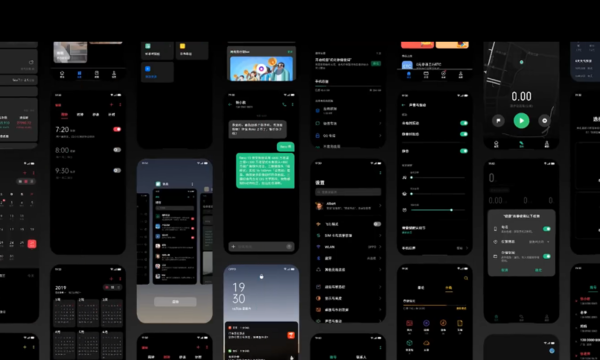
A couple of months ago, in November last year, Oppo officially unveiled its ColorOS 7 custom user interface and the company has already started rolling out beta update of the same to some of its devices.
Now, the company has officially announced ColorOS 7 2020 Q1 Limited Early Adopter Plan with support for several smartphone models. The smartphone models in this early adopter plan include Oppo Reno, Reno Inspiration Edition, Reno 10x Zoom Edition , Reno Barcelona Custom Edition, Reno Ace, Reno Ace Gundam Edition, and Reno 2.
Additionally, the company has confirmed that the limited edition will be available from 13th January for Oppo R17 and R17 New Year Editions while Reno R17 Pro, R17 Pro New Year Edition and R17 King Custom Edition will get it on 15th January.
Further, Oppo Find X, Find X Lamborghini Edition, Find X Super Flash Charge Edition, K5, and Reno Z are slated to start adopting the update in February whereas Reno 2Z will get the same in March this year.
The company is also expected to reveal a more detailed early adopters plan for the second quarter of this year, which could include smartphones like Oppo R15, R15 Dream Edition, K3, A9, A9x, and A11 series models.
Apart from the Oppo smartphones, it has been revealed that the Realme X and X Youth Edition will get the update in February this year; Realme Q in March and X2 and X2 Pro in April this year.
ColorOS 7 is based on Oppo’s Infinite Design concept that has its core philosophy in lightweight visuals for a clean and user-friendly interface. It brings additional privacy-related features such as the Personal Information Protection option that allows users to protect their personal data from third-party apps and software. To know more about ColorOS 7, including all the new features, click here.
Last year, Xiaomi launched its MIUI 11 custom user interface and now the Chinese brand has confirmed that the next-generation custom UI MIUI 12 is officially on its way. This is in line with the company’s pattern of unveiling the new version of its user interface in the beginning of the year.
Right now, apart from confirming MIUI 12, the company has not yet revealed anything related to the upcoming interface. Since Xiaomi has just confirmed this, it is too early to say what it could bring to the plate. However, we expect to get more information about this in the coming weeks.
MIUI has been one of the major offerings from Xiaomi, which was first released in 2010. Since then, the company has been continuously updating this custom operating system and it’s been around 444 weeks.
The upcoming MIUI 12, which will mark the 10th anniversary of the Xiaomi’s user interface, is expected to bring a refreshed interface along with some impressive features. It will be interesting to see what the company has planned to mark this milestone.
It was recently reported that with the MIUI 12, the company will introduce support for a global system-wide dark mode. This came from one of the developers of the company working on this upcoming product.
At a time when the company is releasing MIUI 11 stable to most Xiaomi and Redmi devices, it has started working on the new features for MIUI 12. Back in October, the company’s executive, Xu Jieyun, General Manager of Public Relations confirmed that Xiaomi has already started working on the new MIUI 12 OS.
The recently launched MIUI 11 is a big update for Xiaomi that changes up a lot of things for the popular custom operating system. Starting with the visual aspects, you get slightly softer icons, a system-wide dark mode, new Mi Lan Pro system font and improved always-on display functionality. There are also new animations, themes, wallpapers and improved notification system.
It also focuses on enhancing the audio experience with all-new dynamic natural sound effects and alarms. Xiaomi also announced the new Mi Go Travel suite which will help you with booking tickets for a broad range of transport ranging from airplane to rail and bus alongside currency conversion and an extreme power-saving mode.
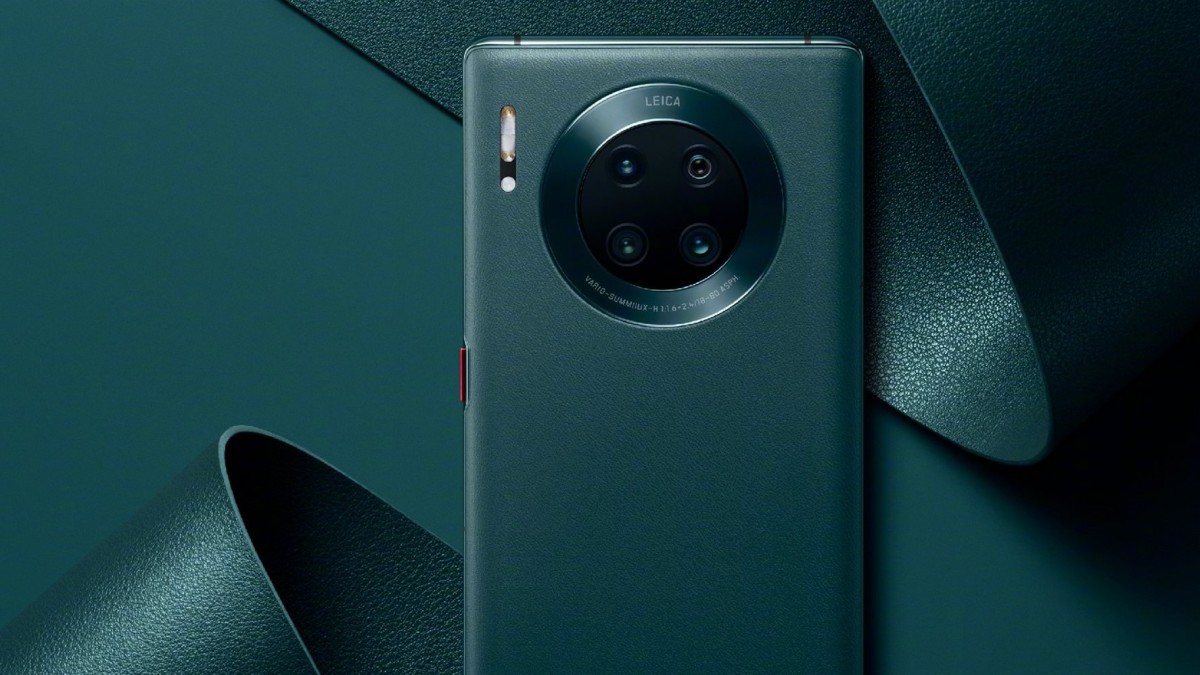
The Huawei Mate 30 series of smartphones have been available for purchase in China since the past few months. Recently, the company also started selling the Mate 30 Pro 5G in its home market.
Now, the Huawei Mate 30 Pro 5G isn’t limited to the Chinese market as the company has now launched the device in the UAE as well. The phone will be up for sale in the UAE from 15th January for a price of AED 3,899 (~$1,062).
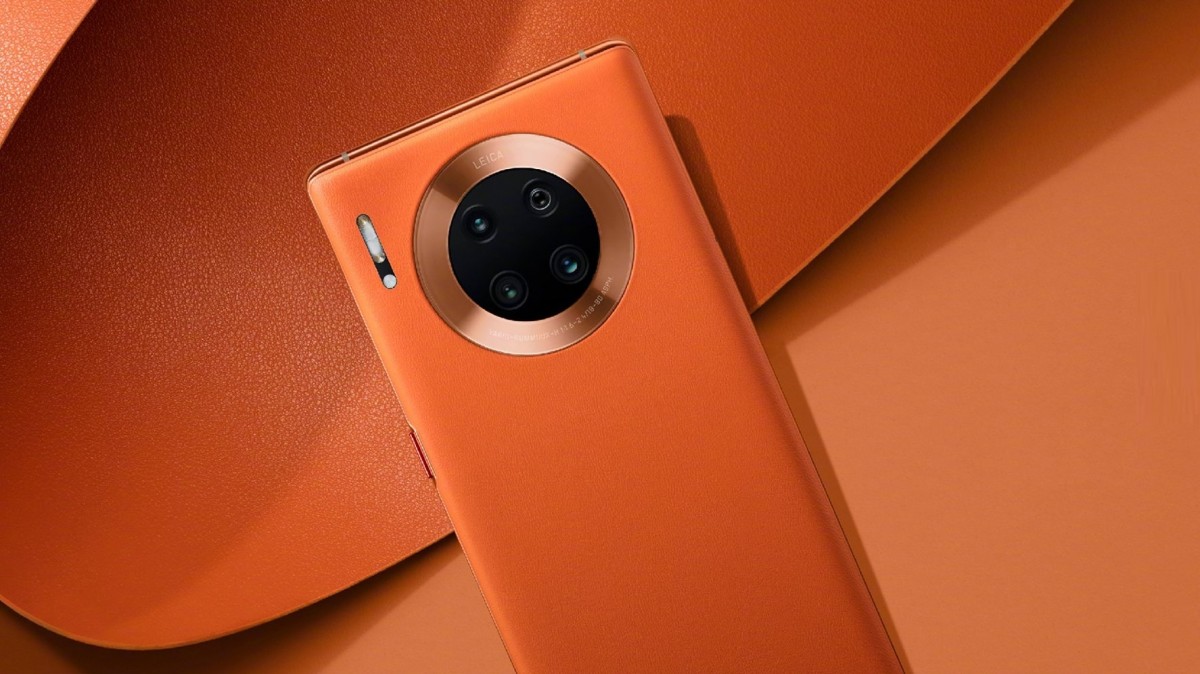
Huawei Mate 30 Pro 5G Vegan Leather Orange
The company has also revealed while the official sale begins from 15th January in the UAE, the device will be up for purchase from 23rd January through Huawei Experience Stores and select other retailers in the region.
Further, those who pre-order the smartphone, will get a bunch of freebies worth AED 1,829 (approximately $497), which includes a SuperCharge wireless car charger, a DJI Osmo Mobile 3 gimbal, and VIP services.
When launched in China, the company had announced two color variants for the device — Vegan Leather Orange and Vegan Leather Forest Green. It features a 6.53-inch OLED display that offers full HD+ resolution of 1176 x 2400 pixels, 18.5:9 aspect ratio, and Gorilla Glass 6 protection on top.
Under the hood, Kirin 990 5G chipset powers the smartphone and comes packed with up 12GB of LPDDR4x RAM and UFS 3.0 storage of up to 512GB. There is a nanoSD card slot (shared SIM slot) for expanding its storage.
The Leica-engineered quad-camera setup on the back includes an OIS assisted 40-megapixel main lens, an 8-megapixel telephoto sensor with 3x optical zoom support, a 40-megapixel ultrawide shooter and a 3D ToF lens. The phone features a front-facing camera of 32-megapixel for taking selfies and video calling.
The smartphone is running EMUI 10 based Android 10 operating system and is powered by a 4,500mAh battery that supports 40W fast charging, 27W fast wireless charging and reverse wireless charging.
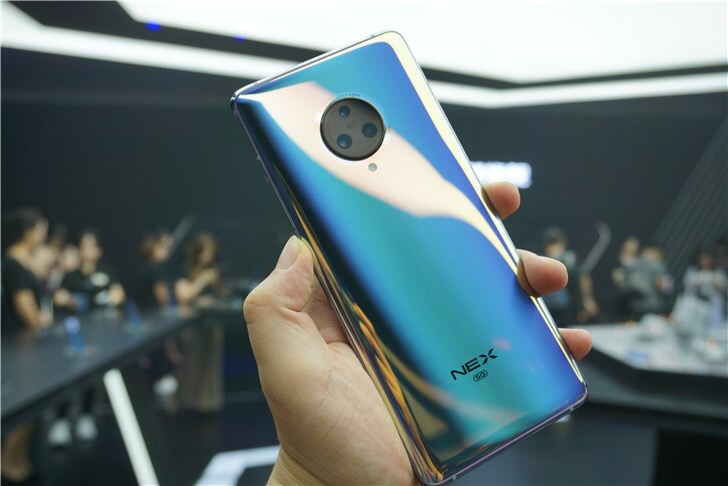
Vivo is expected to announce a new smartphone in China soon. The Vivo V1950A phone had recently bagged certifications from China’s MIIT and 3C. Yesterday, it was seen on TENAA with minimum specs. The TENAA listing of the Vivo V1950A has now been updated with its entire specifications. The specs of the Vivo V1950A are exact match with the Snapdragon 855+ powered Vivo NEX 3 5G phone from last year. The TENAA listing of the smartphone suggests that it could be the same phone driven by the new Snapdragon 865 mobile platform onboard.
Vivo V1950A specifications
The Vivo V1950A has 167.44 x 76.14 x 9.4mm dimensions and it weighs 219.5 grams. The phone sports a 6.89-inch AMOLED display that produces 1080 x 2256 pixels full HD+ resolution. The TENAA images of the phone are still unavailable, but it seems that it could be sporting a notch-less waterfall display with extremely curved edges. The display of the Vivo V1950A is integrated with a fingerprint sensor.
The Vivo V1950A handset is fueled by an octa-core processor that clocks at 2.84 GHz. The handset supports NA and SA dual-mode 5G networks. The official listing of Snapdragon 865 mobile platform on Qualcomm’s website states that it offers up to 2.84GHz clocking speeds. Moreover, it carries support dual-mode 5G networks. Hence, it is likely that the Vivo V1950A could be driven by the Snapdragon 865 SoC. The handset is equipped with 8 GB of RAM.
The Vivo V1950A is expected to hit the Chinese markets in 128 GB and 256 GB storage choices. The handset won’t be featuring a microSD card. For capturing selfies, the Vivo V1950A has a 16-megapixel front lens. The phone could be housing a motorized pop-up camera system for the front camera. On its rear is the triple camera setup that could be arranged in a round shaped module. It comprises of a 64-megapixel primary shooter and a pair of 13-megapixel lenses.
Some reports had claimed that the Vivo V1950A could be the upcoming iQOO 3 gaming smartphone. However, the TENAA listing suggests that the company could be gearing up to launch it as a new variant of the Vivo NEX 3 5G with SD865 onboard with support dual-mode 5G.
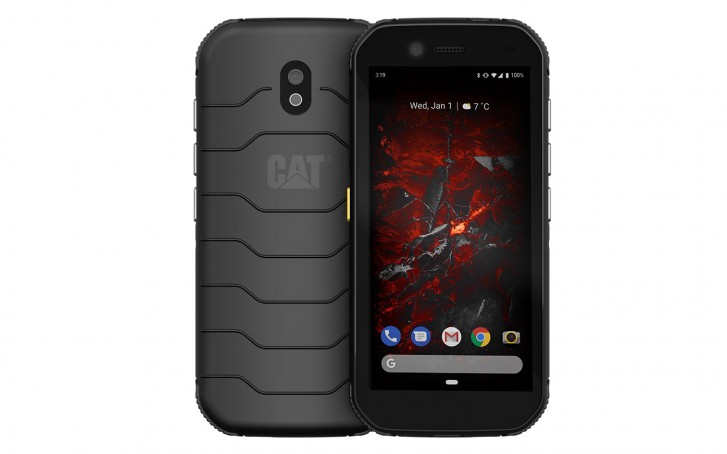
Cat, a brand known for making heavy-duty machines and equipment, has also been making smartphones since past few years. Now, the company has added a new device to its portfolio of rugged smartphones, dubbed as Cat S32.
Instead of the on-going trend in smartphones such as high-powered processor, edge-to-edge or bezel-less display, the company’s focus lies on battery longevity and the phone’s durability in extreme weather conditions.
The Cat S32 smartphone comes with a 5.5-inch HD+ display with 1440 x 720 pixels screen resolution and 18:9 aspect ratio. Further, the display is protected by DragonTrail Pro Glass and the company claims that the phone can also be operated with either wet fingers or while wearing gloves.
The smartphone’s body is rated IP68 for water resistance (1.5m up to 35 minutes) and is MIL SPEC 810G compliant for shocks and vibrations with the company claiming that it has been drop tested from 1.8m onto steel.
Also, the housing of the device is made of a rubberised material that offers excellent grip so that you don’t need to put the phone into a case. It also offers a customizable key on the left that can be useful for push-to-talk applications.
Under the hood, the device is powered by MediaTek Helio A20 quad-core chipset, coupled with 3GB of RAM and 32GB of internal storage. Connectivity options on the device include CAT 6 LTE speeds VoLTE, and Wi-Fi calling along with Bluetooth 5.0, NFC, and a 3.5mm headphone jack.
The device features a 13-megapixel camera sensor on the back and comes with a 5-megapixel front-facing shooter for taking selfies and video calling. The phone is powered by a 4,200mAh battery which is claimed to offer two days of battery life.
The Cat S32 smartphone, which carries a suggested selling price of €299, will be available for purchase from the company’s official website CatPhones.com. If you want to opt for an established brand, then Samsung XCover rugged smartphone has also been made official.
It is an open secret that the US government has been lobbying several countries especially its allies against using Huawei‘s 5G infrastructure. Brazil has indicated that it won’t tolerate any pressure from the U.S. over whether to allow Huawei to participate in the bidding process for its 5G network.
This was stated by Marcos Pontes, the minister for science, technology, innovation and communications in a recent interview. Pontes is responsible for establishing the criteria for the construction of the latest generation of ultra-fast Internet. He added that he would not veto any company from the bidding process and that the final decision would be based purely on merit.
The Brazilian minister also disclosed that the country’s 5G auction could be delayed until 2021. The auction was initially planned for March this year and then postponed until the second half of 2020. Pontes attributes this delay to a technical problem which is that the new network would interfere with the transmission from the satellite dishes that currently relay TV signals in Brazil. According to the minister, the government is currently studying two alternatives: putting filters on the satellite dishes or changing the transmission frequency used by the country’s TV providers.
Not only that, the agency which regulates the telecommunications sector was slow to publish the official notice announcing the auction.
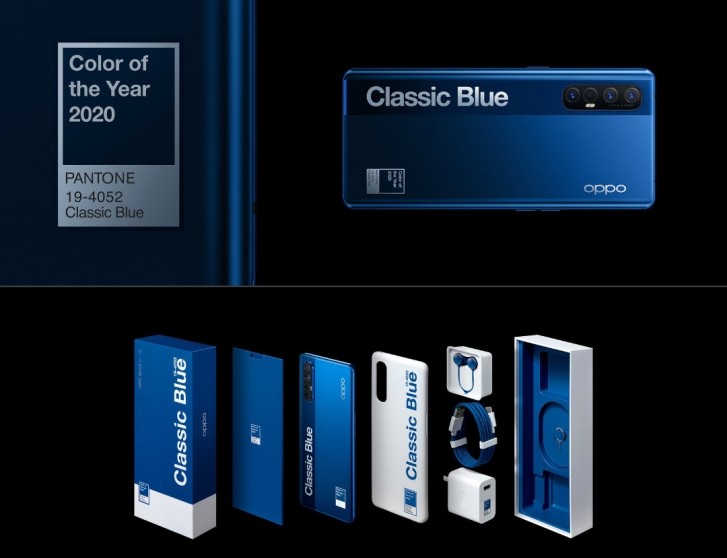
OPPO went official with the Reno3 series towards the end of December 2019. One variant that stood out among the lot was the Reno3 Pro Classic Blue variant said to have been inspired by the Pantone Color of the Year. The new variant is now officially listed for reservation on Oppo’s China website.
Details on the listing show that the Reno3 Pro will retail for 4,199 yuan (~$600) and it will be available for its first flash sale tomorrow at 10 AM local time.
The Classic Blue Reno3 Pro features a unique design on its back panel makes the phone stand out in a crowd of gradients and other colourful paint jobs. The rear panel design also includes the name of the variant “Classic Blue” boldly written on the side just below the camera. The device comes with 12 GB RAM and 256GB storage as well as a second 8GB RAM + 128GB storage variant. The variant equally comes in a fancy retail package.
As a reminder, the OPPO Reno3 Pro packs a Snapdragon 765G with built-in 5G modem. The phone gets its juice from a 4,025 mAh battery with support for VOOC 4.0. It also has as one of its highlight, a 48MP main camera in a vertically aligned quad-camera arrangement.
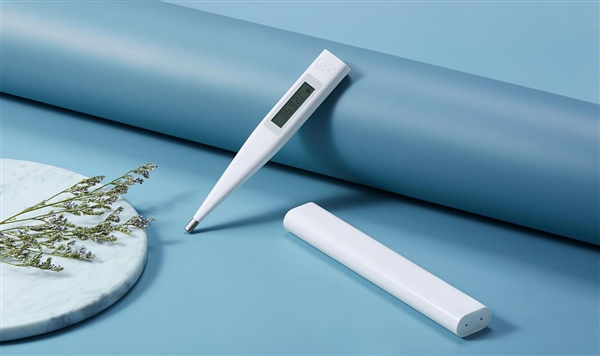
Xiaomi has just launched the MIJIA Digital Thermometer. This isn’t the first thermometer that is popping up under the MIJIA brand but the model can be used on two part of the body – the armpit and oral cavity. The device also offers fast and accurate temperature measurement.
In terms of the appearance, the MIJIA digital thermometer uses a large LCD display, the size of a USB flash drive. The display has a backlight function which will make it easy to read the temperature value even at night.
The thermometer supports two temperature measurement modes. It can deliver a rapid body temperature reading in just 30-second. After the rapid temperature measurement is completed, the temperature measurement is continued for about 5 minutes until the buzzer sounds, indicating that the warm body temperature value has been gotten.
Further, the MIJIA digital thermometer can be paired with the MIJIA app via a smartphone in order to keep a record of every member of the family. The records of 9 members of the family can be uploaded. In addition, the app automatically changes colour to alert users of unusually high temperature.
The MIJIA digital thermometer is priced at 69 yuan ($9.9) will be launched simultaneously on January 10 at Xiaomi Mall, Xiaomi Home, Xiaomi’s authorized store, Tmall, and Jingdong.
A few days after Oppo unveiled its first 5G midrange smartphones, its brand Realme came up with its first 5G device as well: the Realme X50 5G. Both are among the first 5G mid-rangers hitting the shelves and, given that the prices are similar and they are both mid-rangers, it is not easy to make a choice. That is why we decided to compare the Realme X50 5G with the Oppo Reno3. While the Reno3 Pro is undoubtedly superior to the Realme X50 5G, we cannot tell you the same when it comes to the vanilla Reno3, or at least not for every aspect. After reading this comparison, you should be able to understand which one mostly fits your needs.
Quad 64 + 12 MP + 8 + 2 MP f/1.8, f/3.0, f/2.3 and f/2.4
Dual 16 + 8 MP f/2.0 and f/2.2 front camera
Quad 64 + 8 + 2 + 2 MP f/1.8, f/2.2, f/2.4 and f/2.4
32 MP f/2.4 front camera
BATTERY
4200 mAh
Fast charging 30W
4025 mAh, Fast charging 30W
ADDITIONAL FEATURES
Dual SIM slot, 5G
Dual SIM slot, 5G
Design
The presence of a punch-hole display on the Realme X50 5G makes its front side more attractive, but the front panel is not everything. The Oppo Reno3 has a way thinner body and it is even a more compact device. When it comes to the rear side, it is all about tastes. I prefer the multiple gradient hues of the Oppo Reno3, but the reflective and minimal glass of the Realme X50 5G is beautiful as well. Both are made of premium materials with glass backs protected by Gorilla Glass 5 and aluminum frames.
Display
Here you have to choose between a very high refresh rate and a better image quality. The Realme X50 5G is one of the few devices boasting a high 120 Hz refresh rate which provides a smoother user experience as well as a better gaming experience. On the other hand, unlike the Realme X50 5G, the Oppo Reno3 has an AMOLED panel boasting a better color reproduction. While Realme X50 5G has a side-mounted fingerprint reader, the Oppo Reno3 has a more modern and comfortable in-display fingerprint scanner. Realme X50 5G has a slightly wider panel, while Oppo Reno3 is more compact.
Specs & Software
Despite Realme X50 5G has the same Snapdragon 765G found on the Oppo Reno3 Pro, the MediaTek Dimensity 1000L found on the vanilla Reno3 offers higher performance, at least according to the first benchmarks. We are yet to see how this new MediaTek high-end processor will behave in the long term, but it looks promising. Both the phones come with up to 12 GB of RAM, but Realme X50 5G offers up to 256 GB of internal storage, while Oppo Reno3 stops at 128 GB. Both the phones come with the support to 5G connectivity thanks to a 5G multi-mode modem integrated into the chipset. And you even get Android 10 out of the box. Realme X50 5G is the first smartphone with Realme UI: a customized version of ColorOS for Realme devices. The company is yet to fully reveal it.
Camera
The Oppo Reno3 is equipped with a more interesting rear camera setup. It is a quad camera including a main 64 MP sensor with OIS for both photos and videos, a secondary ultrawide lens, a monochromatic sensor, and a depth sensor. Realme X50 5G does not have OIS, but unlike the Oppo Reno3, it has a telephoto lens with a 2x optical zoom. The front camera is definitely more interesting on the Realme X50 5G as it is a dual 16 + 8 MP camera including an ultrawide lens. But this does not mean that Oppo Reno3 does not click amazing selfies with its 32 MP snapper.
Realme X50 5G is equipped with a bigger 4200 mAh battery, but this does not necessarily mean a longer battery life than Oppo Reno3. The display of the X50 5G is an LCD panel that consumes more energy (not only for the LCD technology, it is even a wider display and it has a higher 120 Hz refresh rate). And we still do not know the energy consumption of the Dimensity 1000L, especially with that 5G modem. Both the phones support 30W VOOC Flash Charge 4.0, but the Oppo Reno3 obviously charges faster since its battery is smaller.
Price
The 8/128 GB configuration of the Realme X50 5G requires about €322/$358, while the same configuration of the Oppo Reno3 costs €440/$489. On the paper, Oppo Reno3 offers something more with its nice display, potentially better rear cameras and an apparently amazing chipset. But we will have to test them both to confirm our impressions and that is still not possible since just a few days have passed since their announcements.
We use cookies on our website to give you the most relevant experience by remembering your preferences and repeat visits. By clicking “Accept”, you consent to the use of ALL the cookies.
This website uses cookies to improve your experience while you navigate through the website. Out of these, the cookies that are categorized as necessary are stored on your browser as they are essential for the working of basic functionalities of the website. We also use third-party cookies that help us analyze and understand how you use this website. These cookies will be stored in your browser only with your consent. You also have the option to opt-out of these cookies. But opting out of some of these cookies may affect your browsing experience.
Necessary cookies are absolutely essential for the website to function properly. This category only includes cookies that ensures basic functionalities and security features of the website. These cookies do not store any personal information.
Any cookies that may not be particularly necessary for the website to function and is used specifically to collect user personal data via analytics, ads, other embedded contents are termed as non-necessary cookies. It is mandatory to procure user consent prior to running these cookies on your website.