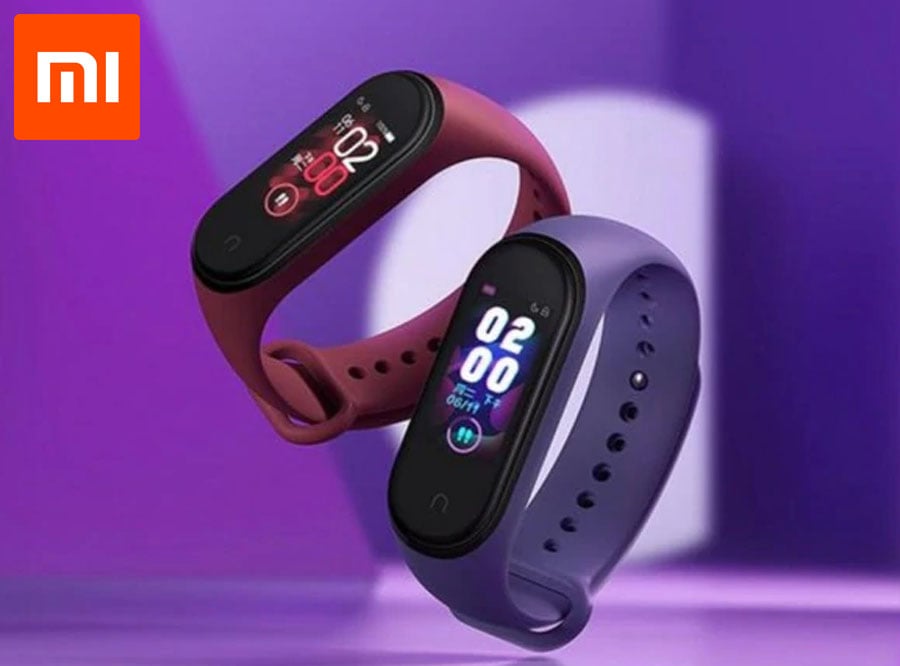
Advertisement

Huami introduces Amazfit PowerBuds and Amazfit ZenBuds TWS earphones

Huami’s Amazfit today introduced T-Rex smartwatch and Amazfit HomeStudio treadmill paired with a smart mirror. Along with that, the company has also launched a couple of true-wireless earbuds are promised earlier.

The company has today launched Amazfit PowerBuds and Amazfit ZenBuds. The company says that PowerBuds comes with a built-in heart rate sensor to monitor your heart rate during workout while ZenBuds will help you to get a good sleep.

Amazfit PowerBuds
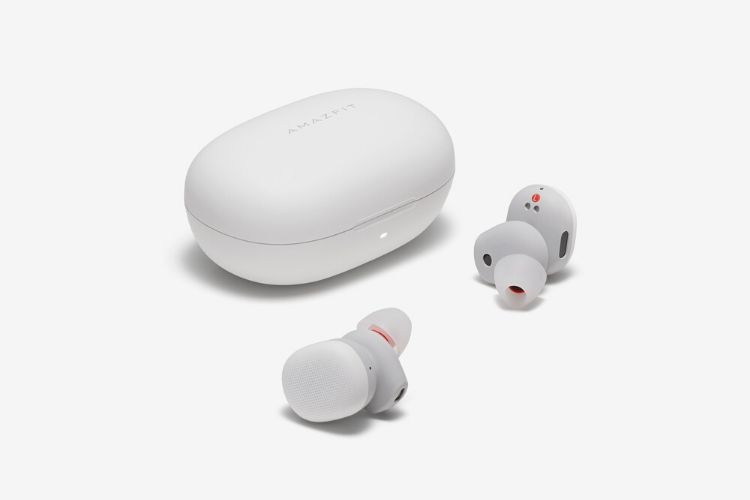
Amazfit PowerBuds

This earbuds weighs just 6 grams and comes with a magnetic ear hooks (weigh 1 gram) to provide a more sporty look and stop them from falling out during workouts. As mentioned, the highlight is that it can monitor your heart rate in real-time with a built-in Huami PPG heart rate sensor.

They are equipped with an advanced composite diaphragm that offers a high-fidelity audio experience. The in-ear design and Motion Beat mode will offer enhanced beat and tempo. Each earbud supports touch controls for controlling playback, answer calls, and call upon Google Assistant or Siri.

It also comes with support for ENC dual-microphone noise reduction technology and Thru Mode for ambient sound enhancement. As per the company, the Amazfit PowerBuds iffers an 8-hour battery life on a single charge, which can be extended to up to 24 hours using the charging case. They are priced at $99.99 and will become available in February 2020.

Amazfit ZenBuds

Amazfit ZenBuds

Amazfit ZenBuds are designed to help you de-stress and have a good night’s sleep. It comes with a noise-blocking design (still fit snugly in your ears) and are backed by Knowles Balanced Armature.

It features Smart Interference to create the “right environment and generate sleep-inducing, soothing sounds” to help you sleep better. It also wakes you up with a gradually-rising personal alarm.

The device automatically detects when you are asleep to turn off the sounds, along with heart rate tracking, body position, and movement data collection. As for the battery life, the company claims that ZenBuds offer 12-hours of battery backup on a single charge but you can extend it to 8 nights with the charging case. This includes 12 hours every night – with three hours of music playback, followed by sleep tracking.

Amazit has not yet announced pricing and availability details for the ZenBuds. However, we expect them to be available in the market sometime later this year.


Samsung Galaxy Fold 2 will allegedly feature a weaker SoC than expected

With Samsung’s announcement official, it’s expected that the Korean giant will unveil both the Galaxy Fold 2 and the Galaxy S20/S11 lineup on February 11. What’s not official are the Galaxy Fold 2 specs, and according to a new report, the SoC powering the new foldable handset may disappoint a lot of people who want the very best and capable hardware.

A few months ago, a report said that Samsung wants to make the Galaxy Fold 2 more affordable than its predecessor. The device would be priced at around $1,000, the rumor said, or half of what the Fold costs. Apparently to achieve this, Samsung’s new Galaxy Fold 2 will feature last generation’s Snapdragon 855 SoC instead of this generation’s 865.

This leak comes from Ishan Agarwal, whose leaks have often turned out to be accurate over the last few years. Now, this isn’t exactly a bad thing. The Snapdragon 855 is still a fantastic processor, and it’s much better than most current mid-range processors. On top of that, there’s the obvious reason of producing a more affordable folding phone.

Other specifications include a 10MP front camera, which isn’t the most ambitious, but will get the job done. We’ve also heard rumors it’ll feature dual rear cameras, as opposed to the original Galaxy Fold’s triple camera setup. Once again, this move could be done to reduce the overall cost, so let us keep our fingers crossed for February 11.

(Source)

A Crowdfunded Smartphone offers a lengthy 4 year Warranty and inexpensive repairs

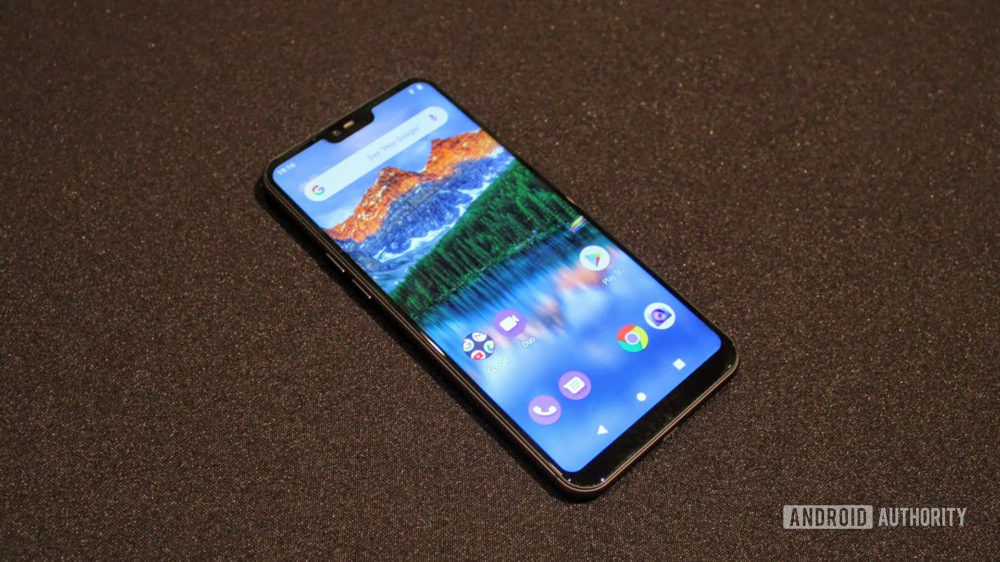
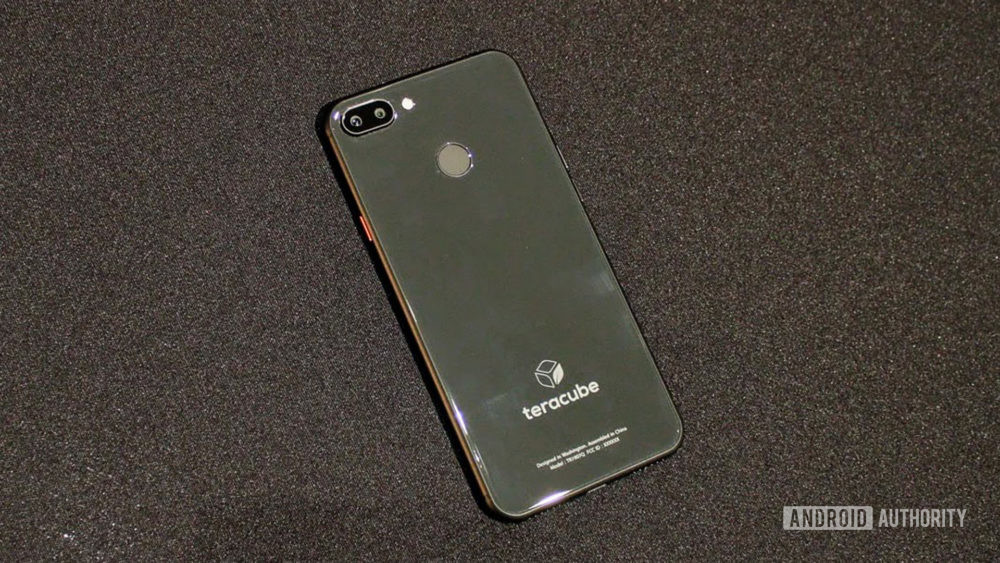
Historically, smartphones have always arrived with a warranty and by its extension even repair services. So what sets this particular handset apart from the rest in the after-sales regard. Well, this crowdfunded device arrives with a lengthy 4 years of warranty on top of which, repair services rates are relatively affordable as well.

The smartphone in question is the Teracube One which is set to start shipping later this month (January 2020). The smartphone is being crowdfunded and has surpassed its initial Kickstarted program goal of $25,000. According to the disclosed figure, the company raised a large sum of $125,000, which is five times the original goal. Keep in mind, the figure may not seem large in an industry dominated by multi-billion dollar corporations, but makes a large difference for a brand new company sourcing investment through crowdfunding.

Terecube
Terecube One

The Teracube One with its 4-year warranty (granted one must cover the shipping costs if they live outside of the US) is also being well received for its repair rates. The team behind the smartphone offers a flat $39 repairs for accidental damages. The meager sum allows one to repair their screens and water related damages.

Notably, Teracube has stated that it will even offer free battery replacements throughout the four year warranty period (if reasonable degradation is found in the battery). Even after your device is out of warranty period, it will only cost $39 for a new battery. Furthermore, the Terecube team is also planning to update its Android smartphone with up to 3 years of major OS updates in addition to security updates.

Terecube

For those interested, the Terecube One is a budget smartphone features a MediaTek Helio P60 SoC. It is powered by a 3,300mAh battery and is equipped with 6GB of RAM and 128GB of internal storage. In terms of photography, the Terecube One sports a 12MP+5MP dual camera setup with an 8MP selfie shooter at the front. The smartphone also supports NFC and houses a 3.5mm headphone jack. The phone starts shipping later this month and carries a $349 price tag.

For more coverage on CES 2020 events and launches, click here.


(Via)

Honor to launch MagicWatch 2 and Band 5i in India on January 14

Honor, a sub-brand of Chinese electronics behemoth Huawei, has just sent out invites for the official launch of a range of smart accessories which includes MagicWatch 2 and Band 5i in India. Honor has teamed up with notable eCommerce platform Amazon to sell its products. Although the Jan. 14 launch date has been confirmed, there is no word on when the devices will be sold to the public. The Honor 9X smartphone is also launching on the same day in the country. The same platform could be used by Honor to announce its new smart accessories for the country.

Honor is all set to unveil the Honor MagicWatch 2 and Honor Band 5i at an event in New Delhi. Both the MagicWatch 2 and the Band 5i are listed on Amazon India revealing a few key features, along with the ‘Notify Me’ button. Honor officially launched the Watch Magic 2 back in November 2019 in China, replacing the 1st-generation Watch Magic. 

Honor MagicWatch 2 Specifications and Features

Honor MagicWatch 2-
Honor MagicWatch 2

The Honor MagicWatch 2 flaunts 42mm and 46mm dials with a 316L stainless steel chassis. The 42mm variant features a 1.2-inch circular display, while the 46mm unit comes with a 1.39-inch screen. Both smartwatches sport an always-on AMOLED panel with a ton of customization features. The device is powered by a HiSIlicon Kirin A1 SoC and features 15 different goal-based fitness modes. Honor claims the MagicWatch 2 has an effective battery life of 14 days and comes with a dual satellite positioning system that accurately records user data like speed and direction while cycling or running.

The MagicWatch 2 has 13 different courses especially for running. It comes with real-time voice-over guidance and supports an array of additional features including heart rate monitoring, Huawei TruSleep sleep monitoring and Huawei TruRelax. The smartwatch features 4GB of native storage, is water-resistant, and is equipped with a built-in speaker and microphone.

Honor Band 5i Specifications and Features

Honor Band 5i

The Honor Band 5i sports a 0.96-inch display with a resolution of 160 x 80 pixels. The fitness band features a 24-hour heart-rate monitor with sleep tracking, flaunts built-in USB connectors and is water-resistant up to 50 meters. The device is also capable of tracking fitness and offering personalized recommendations based on previously recorded data.


Samsung will showcase a brand new sliding phone concept at CES 2020

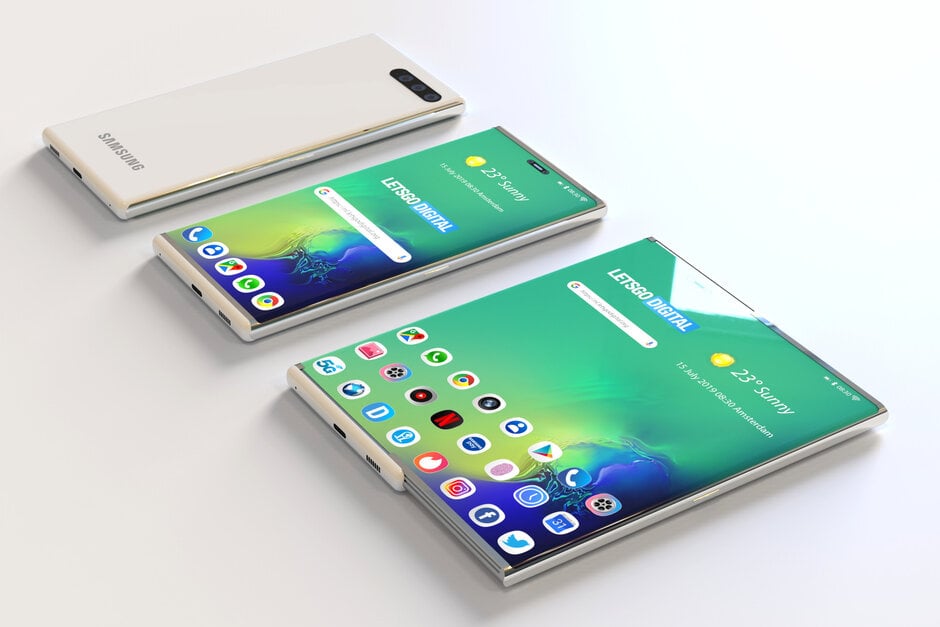
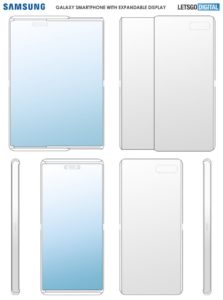
Samsung‘s been using their flexible displays for many different devices lately. They’ve had the infamous Samsung Galaxy Fold, and the sequel to that device is coming soon as well, So, what’s next on the list for Samsung? Apparently it’s sliding phones according to reports.

We’ve heard Korean media report that Samsung has set up a private booth over at CES 2020 to showcase its concept slideable display phone to potential customers. If this is true, it’s fully possible the company might showcase a device like this at said booth. It’s not a stretch, and it would be an impressive showcase of the company’s engineering prowess. The question is, what exactly would these devices look like?

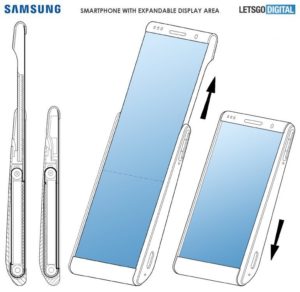
These sliding phone patents (courtesy of LetsGoDigital) show us a few Samsung sliding phone concepts for two devices, one extremely long, and another that’s wider. They’re fairly unconventional, but it’s possible the company can find some practical use for it. What’s interesting about these however is that we might be able to see them very soon.

Samsung has done this before  with foldable phones the last few CES expos to gauge acceptance, and those actually materialized, so the slide-out handset may be commercialized at some point, too. It’d be interesting to see if Samsung can push out their first sliding device before competitors like Xiaomi and LG come out with theirs.

You can find more CES2020 coverage from here.

(Source)

Foxconn backs out of $5 billion investment plan in India

Taiwanese electronics giant Foxconn will not set up manufacturing units in Maharashtra, India. The development closely follows the heels of Foxconn failing to strike a feasible deal with the state’s government. Although Indian consumers are unlikely to be directly impacted by the decision, Foxconn’s exit will leave a scar on other gadget manufacturers.

According to Subhash Desai, Minister of Industries, Maharashtra government, Foxconn had been on the lookout for a feasible piece of land to set up manufacturing facilities for the last five years. Despite being interested in a few pieces of land, the company failed to finalize a deal at par with its interests.

“Foxconn is in no position to move ahead with its decision to invest in the state due to some internal conflicts. The decision will not affect the end users, although, other gadget manufacturers might feel the heat. This is a one-off issue since other manufacturers have invested in Maharashtra and are doing quite well” Desai said.

Foxconn logo

In the light of Apple wanting to set up assembly units in India, Foxconn had shown interest in setting up manufacturing plants in Maharashtra back in 2015. According to the company’s Memorandum of Understanding (MoU) it agreed to invest $5 billion in the state over the course of five years. However, the plan could never be executed despite both sides meeting on several occasions, and the government offering numerous land parcels.

Foxconn was originally eyeing a piece of land in the Chakan-Talegaon area near Pune city of Maharashtra, but the state government offered a land parcel at another location called Khopoli instead. It was also offered a piece of land spanning over 500 acres at Palghar but failed to show interest. Foxconn later planned to set up its manufacturing facility at the Jawaharlal Nehru Port Trust (JNPT) in Navi Mumbai (New Mumbai) and had submitted its bid for the 44 acres of land. However, that too ended up with global terminal operator DP World, the highest bidder. The Maharashtra government is now planning to offer incentives to corporations based on the employment opportunities that they create.


OmniVision unveils 48MP sensor with large 2.4um pixel size with binning

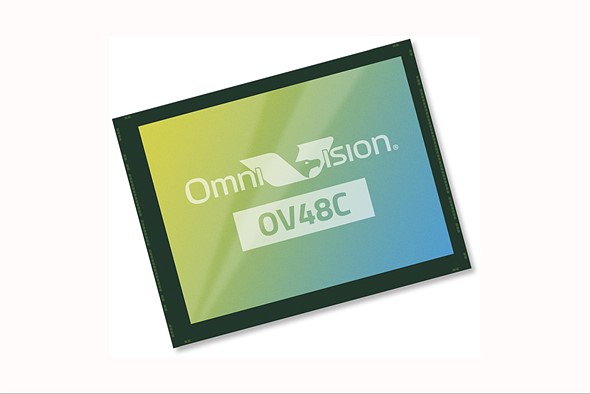
OmniVision, a known brand that manufactures image sensors for smartphone cameras, has just unveiled its latest sensor that rivals South Korean giant, Samsung. At CES 2020, the company showcased the OV48C, which is a unique 48 megapixel camera sensor.

The OV48C from OmniVision technically has the same size as Samsung’s 108 megapixel sensor; however, it differs by keeping the resolution at 48 megapixel. This is done to accommodate its larger 1.2um pixels against Samsung’s 0.8um pixels.

OmniVision
OmniVision OV48C with Pixel Binning technology

Furthermore, the OmniVision sensor has a 4 cell color filter (Quad Bayer) that outputs full resolution images at either 48 megapixels or use pixel binning for 12 megapixel images. The latter effectively makes the pixel size twice as large, about 2.4um pixels.

In terms of videography, the OV48C image sensor can output 8K videos without binning and 4K videos at 60fps (Frame per Second). It also supports slow motion videos at 240fps on 1080p resolution or 360fps on 720p resolution. Notably, the new OmniVision sensor features PureCel Pus technology as well, or in other words, an OmniVision version of Samsung’s ISOCELL technology.

OmniVision
OmniVision’s new OV48C 48 megapixel image sensor

The OV48C is also capable of staggered HDR (i.e, multi-shot high dynamic range) and thanks to its on-chip dual conversion, it can further reduce noise in captured shots. Earlier today, the samples shots from the sensor were made available and it begs the question of when will we see the sensor on a smartphone? And, which smartphone manufacturer is going to adopt it first?

For more coverage on CES 2020 events and launches, click here.


(Via)

Apple acknowledges iPhone XR connectivity problems in the UK

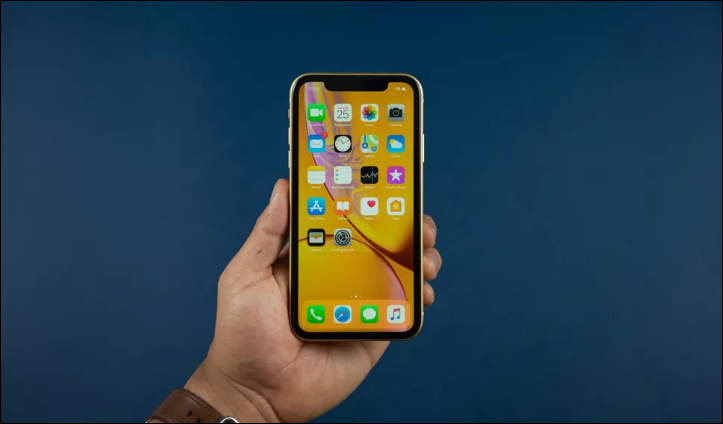
Apple iPhone XR has been a success for the company, however, some users of the handset on UK’s second-largest carrier, O2, have been experiencing issues that affects calls, texts, and data usage.

Now, both the companies — Apple and O2, have publicly acknowledged the issue and Apple has even promised a fix for the same. The problems affect calls, texts and data usage with users reporting loss of signal on multiple occasions throughout the day.

iPhone Xr

O2’s comment was that it’s working closely with its partners to resolve the issue affecting its iPhone XR users. It says that IT fix 101 — turning the phone off and on again — provides a temporary fix, but it’s unclear how long that lasts before the iPhone XR connectivity problems reoccur.

Apple’s statement also confirmed the connectivity issues and promised a software fix with the upcoming iOS release. It said: “We are aware of an issue causing intermittent network connectivity affecting some O2 customers, and we will have a fix in an upcoming software release.”

Although iPhone 11 series has superseded iPhone XR and data from Counterpoint suggests that it was the best-selling smartphone in the first three quarters of 2019.

(Via)

Redmi 8 Phantom Red edition releasing in China tomorrow

The Redmi 8 and Redmi 8A smartphones were made official in October in China. The Redmi 8 has been available in colors like Fairy Green, Sapphire Blue and Carbon Ash. From tomorrow, the Xiaomi sub-brand will be also selling a new color variant called Phantom Red for Redmi 8 buyers in China.

The Redmi 8 Phantom Red color edition will be available only for its 4 GB RAM + 64 GB storage edition starting at 10 AM (local time) in China tomorrow. This model is priced at 799 Yuan (~$115). The Phantom Red shown in the above poster resembles with the Ruby Red color variant of the smartphone that is available in India.

Redmi 8 Phantom Red

The lower 3 GB RAM + 32 GB storage edition of the Redmi 8 is currently selling for 699 Yuan (~$100). It is currently available in other three colors. In related news, Redmi will be also carrying out the first sales of the Twilight Orange version of the Redmi Note 8 Pro tomorrow at 10 AM in China.

Redmi 8 Specifications and Features

The Redmi 8 is equipped with a 6.22-inch IPS LCD display that produces 720 x 1520 pixels HD+ resolution. It delivers an aspect ratio of 19:9. The modest Snapdragon 439 chipset drives the smartphone with up to 4 GB of RAM. It comes in 32 GB and 64 GB storage models and it features a microSD card slot for more storage. The MIUI 11 based Android 9 Pie OS comes preloaded on the device.

The Redmi 8 has a dual camera system on its back. It has a Sony IMX363 12-megapixel primary shooter that is accompanied by a depth sensor of 2-megapixel. Upfront is an 8-mgeapixel selfie camera. The phone houses a gargantuan battery of 5,000mAh capacity that supports 18W rapid charging through USB-C. A fingerprint reader is also available on the device.


Redmi Note 8 Pro Twilight Orange color variant to release tomorrow in China

Redmi had announced the Redmi Note 8 series of smartphones in August in China. The Redmi Note 8 Pro is the world’s first smartphone to arrive with a 64-megapixel camera. The handset was introduced in three colors like Fritillaria White, Ice Emerald (Green) and Light Gray. Today, the Chinese firm confirmed through a Weibo post that it will begin with the sales of the Redmi Note 8 Pro Twilight Orange color variant tomorrow in China.

The Redmi Note 8 Pro Twilight Orange edition will be available for purchase at 10 AM (local time) tomorrow. While the smartphone sells in four RAM and storage combinations, the Twilight Orange model will be available in two choices such as 6 GB RAM + 128 GB storage and 8 GB RAM + 128 GB storage. These variants are respectively priced at 1,399 Yuan (~$201) and 1,599 Yuan (~$230).

Redmi Note 8 Pro Twilight Orange

There are two other variants of the phone such as 6 GB RAM + 64 GB storage and 8 GB RAM + 256 GB storage. They are currently selling with respective price tags of 1,199 Yuan (~$172) and 1,799 Yuan (~$258) in China. These two models are currently unavailable in the new Twilight Orange color.

Redmi Note 8 Pro Specifications and Features

The Redmi Note 8 Pro flaunts a waterdrop notch enabled display that delivers 19.5:9 aspect ratio and 1080 x 2340 pixels full HD+ resolution. A selfie camera of 20-megapixel is fitted inside the display notch. The quad camera system available on the backside of the Redmi Note 8 Pro has a 64-megapixel Samsung GW1 primary shooter, an ultrawide 8-megapixel lens, a 2-megapixel depth sensor and a macro lens of 2-megapixel. A fingerprint reader is present below the rear camera system.

The Helio G90T gaming-focused processor from MediaTek fuels the Redmi Note 8 Pro. The smartphone can be availed in China in 6 GB and 8 RAM variants and storage options like 64 GB, 128 GB and 256 GB. There is a hybrid SIM slot on the device for expanding its storage.

The Redmi Note 8 Pro is equipped with a 4,500mAh battery. It supports 18W fast charging through USB-C. The phone offers connectivity options such as dual SIM support, 4G VoLTE, Wi-Fi 802.11ac, Bluetooth 5.0, GPS, NFC and 3.5mm audio jack. The MIUI 11 based Android 9 Pie OS comes preloaded on the smartphone.


OnePlus reveals new Optimized Charging feature for extending battery lifespan

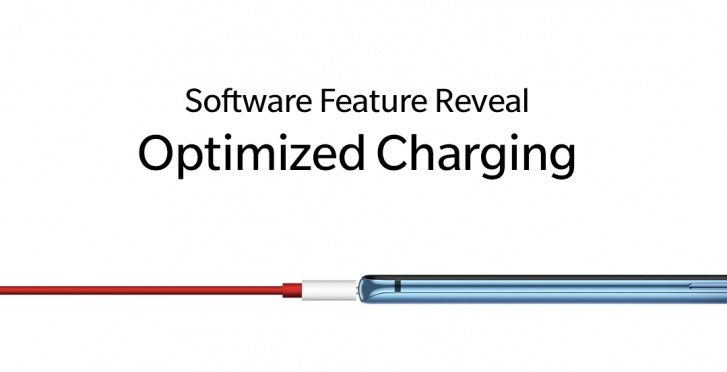
For most, the best time to charge your phone is when you’re sleeping, simply for the fact that you’re not using it during those hours, but this isn’t necessarily the best thing for your battery life in the long term. To solve this battery issue, OnePlus has unveiled a new feature coming soon to their devices called “Optimized Charging.”

So, what exactly does Optimized Charging do and how does it help? Well, when you put your OnePlus phone to charge before going to bed, it will refill its power cell to 80 percent of its maximum capacity and then temporarily stop. A hundred minutes before you usually wake up, your first alarm or event of the day, the phone will then charge to full.

According to OnePlus, while charging technology has changed, batteries themselves have not changed at all in terms of chemical substances. The only way to charge a battery fast is to increase either the voltage or, in OnePlus’ case, the current that comes from the charger. While now generally safe, fast charging can lead to faster degradation of the battery cells, especially when left plugged in at 100%. Optimized Charging hopes to help with that.

If you have access to a OnePlus 7 or OnePlus 7 Pro and the company’s Open Beta software, you check out the feature by pulling down the notification shade on your phone, tapping the cog icon to launch the Settings app and then tapping on the “Battery” heading. You’ll then see a toggle to turn on Optimized Charging. If you try it, tell us how it turns out.

(Source)

Hisense unveils world’s first smartphone with a colour e-ink display

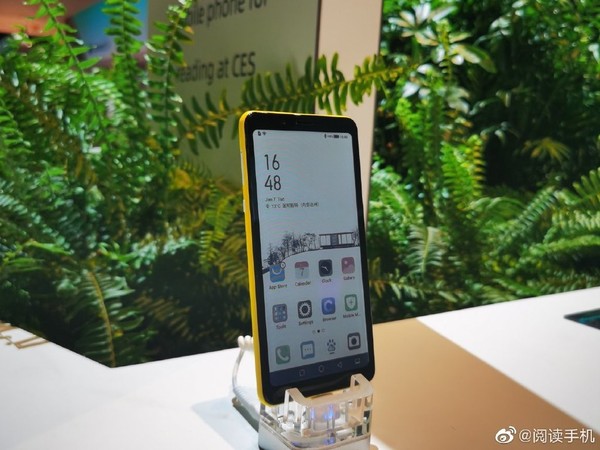
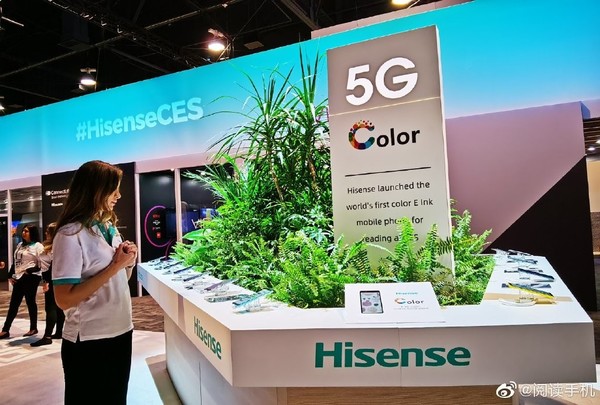
While e-ink displays on smartphones have been on the rise for the past few years, no company has really pushed the tech forward until now. Hisense, known for their TVs, have launched a smartphone with a color e-ink display at CES 2020. This is the first instance of a coloured e-ink display on a smartphone that we’ve ever seen, and it’s a fresh push forward.

According to Hisense, the production process of e-ink displays for smartphones has matured to the point that even these coloured e-ink displays can be mass produced. They also claim these new displays feature better refresh rates than previous e-ink phones, and that they’re also more vivid if that weren’t already obvious enough.

Last year we saw Hisense release an e-ink smartphone called the A5, but that one followed its contemporaries with a black and white e-ink display. Now that we have this coloured e-ink display, the technology has just become a lot more viable for most users. If this follows the A5’s concept, then it’ll probably end up being a mid-range device too.

The first E Ink enabled smartphone came out in 2012. This was the original YotaPhone and it featured a full color display on the main screen and an e Ink one on the back. In 2013 Onyx developed their own smartphone, which only had a single E Ink screen. The reception was lukewarm, primarily because it wasn’t really marketed in North America. Now with this recent development, we’re looking forward to seeing how this trend turns out.

You can find more CES2020 coverage from here.

(Source)


Amazfit HomeStudio treadmill paired with smart mirror announced at CES 2020

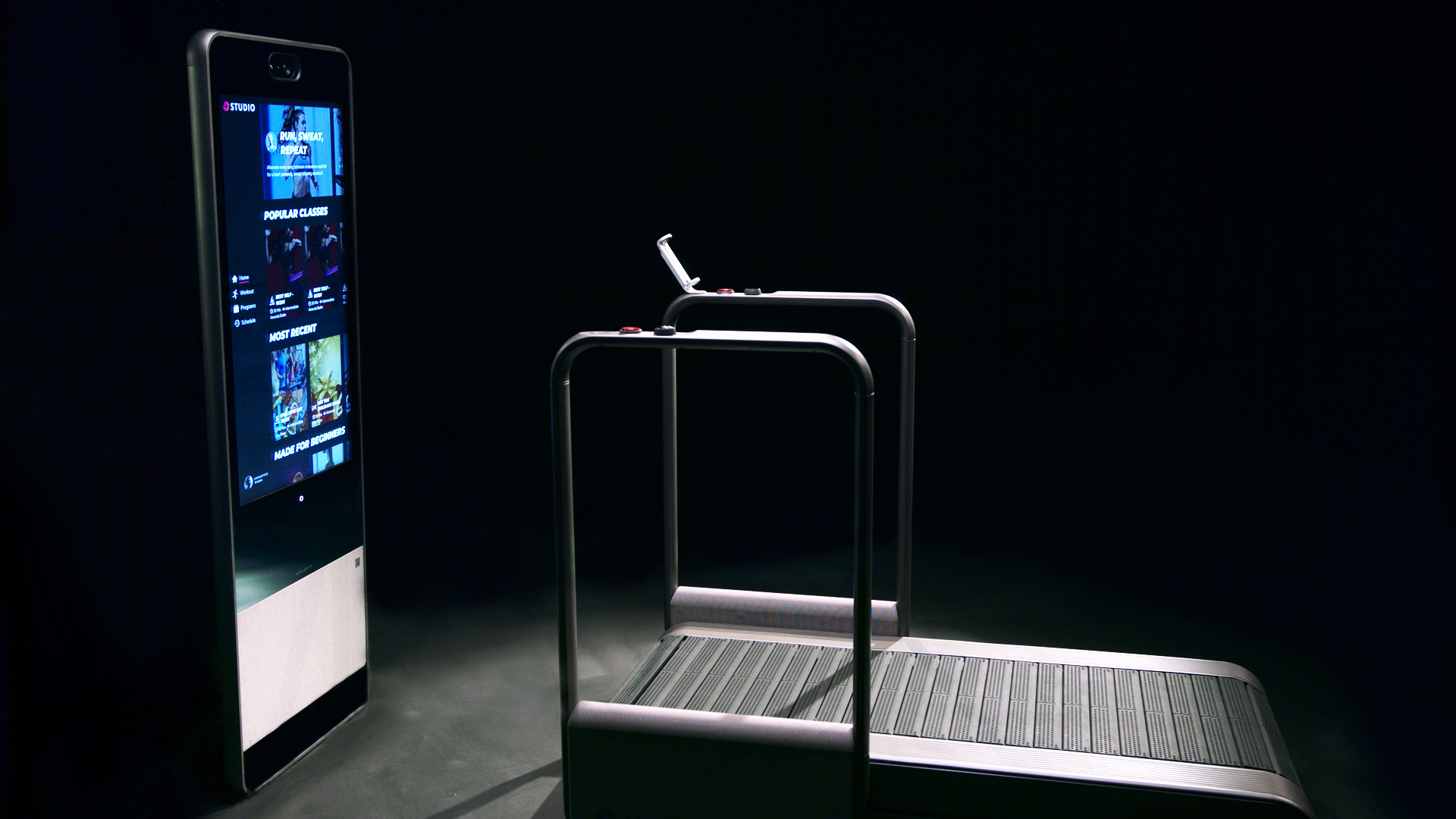
Huami, a wearable devices making company from China and fitness startup Studio have partnered to launch a connected treadmill. During Huami’s keynote at CES 2020, the company announced its new Amazfit HomeStudio treadmill.

The first thing you’ll notice on the Amazfit HomeStudio is the lack of traditional front panel/dashboard. Instead of that, the user can control the device using smartphone which the content is delivered to a separate, vertically-oriented 43-inch HD screen that the companies are calling the Glass.

Amazfit HomeStudio

The Glass is a giant phone-like device that seems like a smart mirror. It also includes a camera that can analyze the user’s movements with computer vision. For those who are worried about the privacy issue, there’s a slide piece that can cover the camera sensor.

The company has introduced two models of the device — a premium model that uses slat belt technology and can reach speeds of up to 12mph. Then there’s AirRun, which a foldable version that reaches a top speed of 9 mph.

It also offers classes through the glass, enabling users to access a library of 1,000 classes across a wide variety of exercises. Also, not all the exercises are treadmill-based as it offers options to participate in yoga, sculpt and stretching classes on the floor.

Basically, Amazfit HomeStudio combines Studio’s content with Huami’s hardware expertise, and it integrates with Huami devices and other wearables to track heart rate. While treadmill is best for running, the Glass also offers several interesting classes.

Huami has said that the pricing details and availability information for the Amazfit HomeStudio will be revealed soon. While it has not revealed the pricing details, it said that the price “will delight US customers.”

You can find more CES 2020 coverage here.


MediaTek Dimensity 800 with integrated 5G modem for low priced phones announced
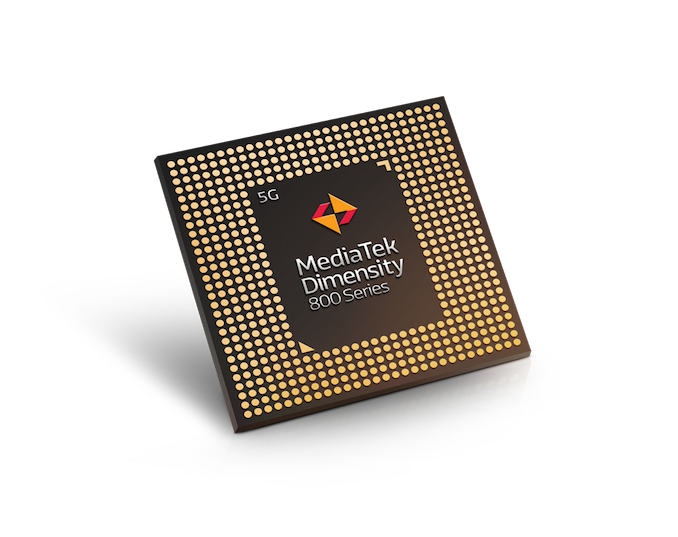
MediaTek has unveiled the 5G-ready Dimensity 800 SoC at the ongoing Consumer Electronics Show (CES) 2020. It is third chipset in the Dimensity series that includes Dimensity 1000L which powers the OPPO Reno3 and the Dimensity 1000 that is expected to power budget-friendly 5G flagship phones this year. The Dimensity 800 is a mid-range solution with integrated 5G mode that is designed to bring dual-mode 5G capabilities to low priced smartphones.

Dimensity 800 Specifications

The Dimensity 800 is a 7nm octa-core processor that comprises of four Cortex A76 cores clocking at 2.0GHz and four Cortex A55 cores working at 2.0GHz. For graphics, it is equipped with Mali-G77MC4. The SoC offers is coupled HyperEngine gaming technology for enhanced gaming experience. The Dimensity 800 with its APU 3.0 offers up to 2.4 TOPS of AI performance.

Smartphones with Dimensity can support full HD+ resolution supporting display with up to 90Hz refresh rates. Also, devices featuring can support up to 16 GB of LPDDR4x RAM.

The Taiwanese manufacturer claims that the Dimensity 800 has a flagship-grade ISP as it can support as many as four cameras. Dimensity 800 powered smartphone can have up to 64-megapixel cameras or 32-megapixel + 16-megapixel dual cameras. The company has added algorithms for AI-autofocus, autoexposure, auto white balance, noise reduction, dedicated facial recognition and HDR for enhanced photography experience. The company states that it to be equipped world’s first multi-frame 4K video HDR capability.

The Dimensity 800 5G chipset carries support for 2CC carrier aggregation that promises 30 percent wider coverage than other platforms that offer 1CC with no carrier aggregation. The SoC carries support for 2G/3G/4G multi-mode and Dynamic Spectrum Sharing (DSS). It also supports voice and data over 5G and is built for global sub-6GHz 5G networks available in Asia, Europe and North America. The SoC promises up to 3.5Gbps download speeds and up to 1.25Gbps upload speeds. It does not support 5G + 5G dual SIM combination.

In terms of specs, the Dimensity 800 appears like a good rival for Qualcomm’s Snapdragon 765 / 765GThe first Dimensity 800 powered smartphones are expected to debut before the end of the first half of 2020.


Amazfit T-Rex rugged smartwatch launched as the Casio G-Shock of smartwatches at CES 2020

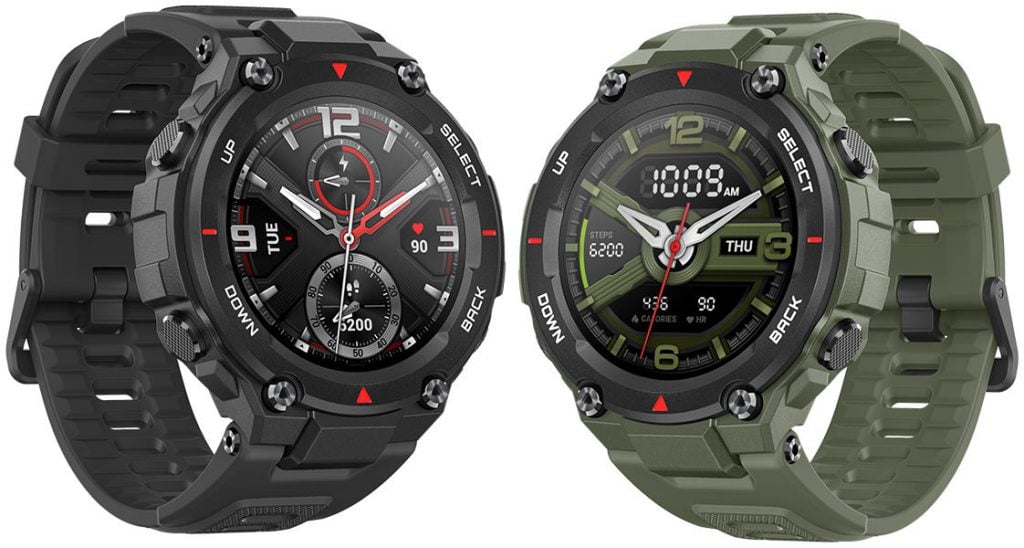
As expected, at its CES 2020 event, Amazfit launched its heavily teased Amazfit T-Rex smartwatch. The rugged smart wearable device has passed 12 regulations of the military-standard (MIL-STD-810G) quality test and can withstand extreme heat and cold, is resistant against corrosion, moisture resistance and has a durable body.

The Amazfit T-Rex also comes with heat resistance of 70℃, resistance to severe cold of minus 40℃, has passed 240-hour damp heat test, and 96-hour acid-alkali test.

Amazfit T-Rex

Coming to the specifications, the smartwatch features a 1.3-inch AMOLED screen with an “always on display” function. It offers 360 x 360 pixels screen resolution and is protected by a layer of Corning Gorilla Glass 3 on top.

Along with the optical heart rate monitor (PPG), the device also comes with 3-Axis Acceleration Sensor, Geomagnetic Sensor, and Ambient Light Sensor. For connectivity, it comes with Bluetooth 5.0 LE and GPS + GLONASS and is compatible with Android 5.0 devices or later and iOS 10.0 or later.

The smartwatch features 14 sports modes, has 5ATM water resistant design, is equipped with BioTracker PPG optical sensor for all-day heart rate monitoring and provides rapid heart rate alerts. The device is powered by a 390mAh battery which is claimed to offer up to 20 days of battery life on a single charge.

The Amazfit T-Rex comes in five color options — Black, Ash, Camouflage, Green, and Khakhi, and is priced at $139.99. The company has revealed that it will go on sale in the United States from this month. The device is priced at 799 yuan (approximately $115) and is already available for purchase in China.

You can find more CES2020 coverage here.


Realme UI beta testing for Realme X2 smartphone announced by the company

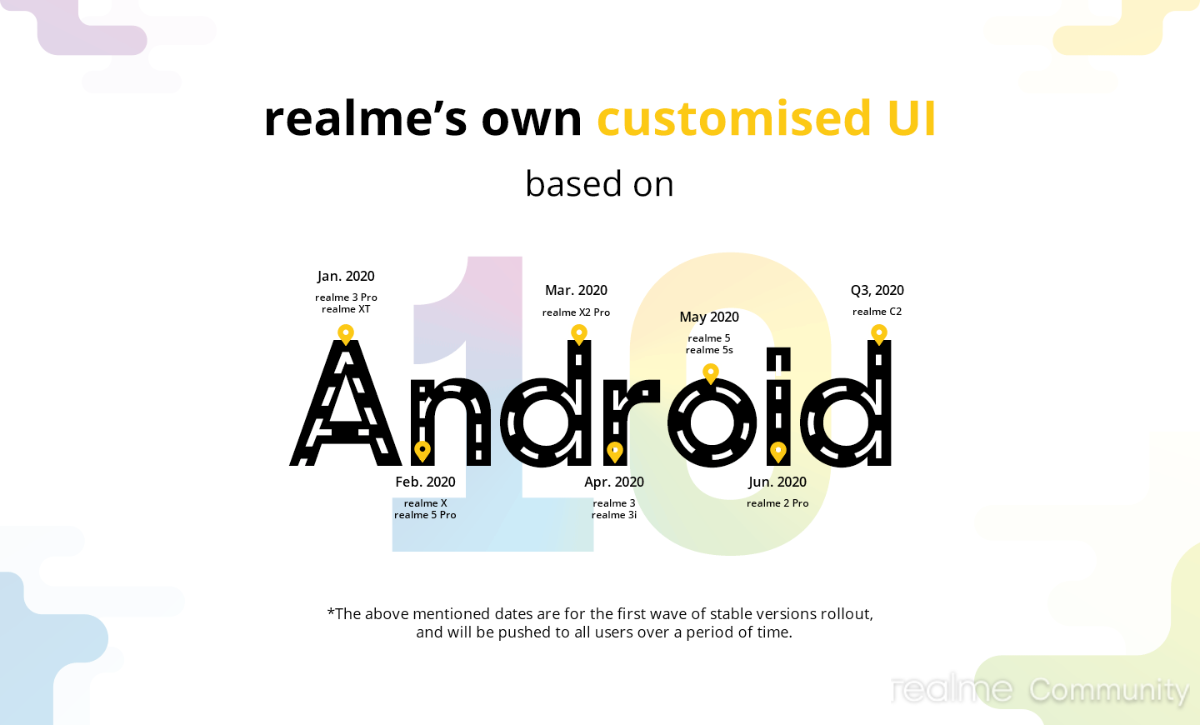
A couple of months ago, in October last year, Realme India CEO Madhav Sheth had confirmed the existence of Realme UI claiming that the new interface will offer near-stock Android experience.

After lots of speculations about the UI, the company finally announced the Realme UI rollout schedule in November and shared a few images, giving us a look at what could be coming with the new interface.

Realme UI Roadmap

While the company had started recruiting beta testers for the Realme UI for the users of Realme XT and X2 Pro smartphones in November, new reports indicate that the testing for the users of Realme X2 has also kicked-off. The company is looking for testers who have experience in beta testing of software and reporting bugs.

Making the announcement on Realme Community, the company says that the program is open for Realme X2 users only and users are expected to sign an NDA (non-disclosure agreement) with the company and are supposed to provide own AADHAR card or other identification proofs. It mentions that the deadline for applying for Realme UI beta testing is 27th January, and selected users will be notified by 1st February.

For those who are unaware, the Realme UI is a customised version of the newly launched ColorOS 7 from Oppo. Till now, Realme smartphones were powered by ColorOS but going forward, Realme UI, based on ColorOS, will power its devices.

Recently, Realme announced that the company will now start showing recommendations to promote apps and commercial links in the Phone Manager app and Security Check page after installing new apps. However, the company has also added that it will provide an option to turn off content recommendation with a single-click.

(Source)

Apple iPhone 9 / SE 2 renders appear to reveal its compact design

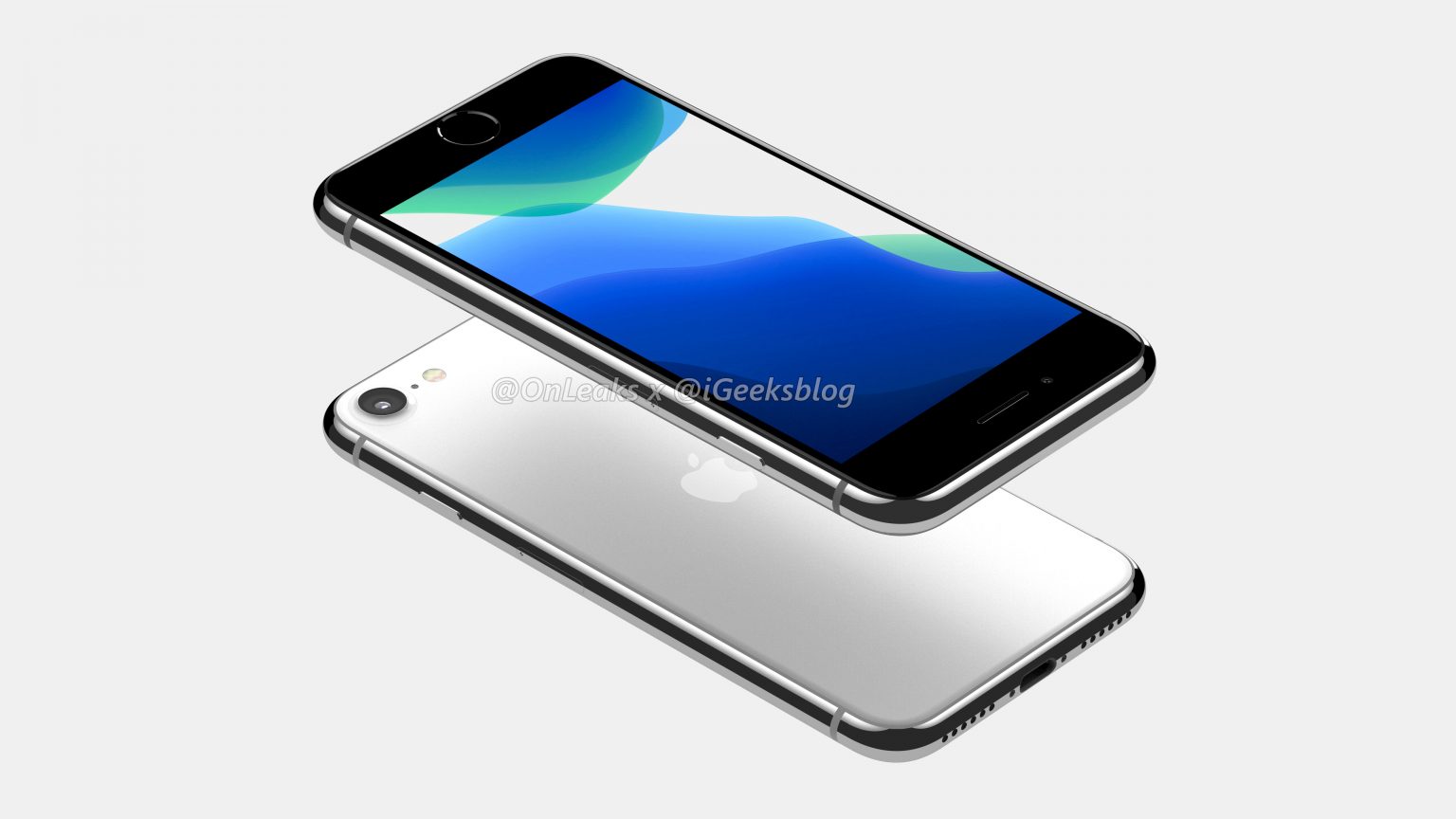
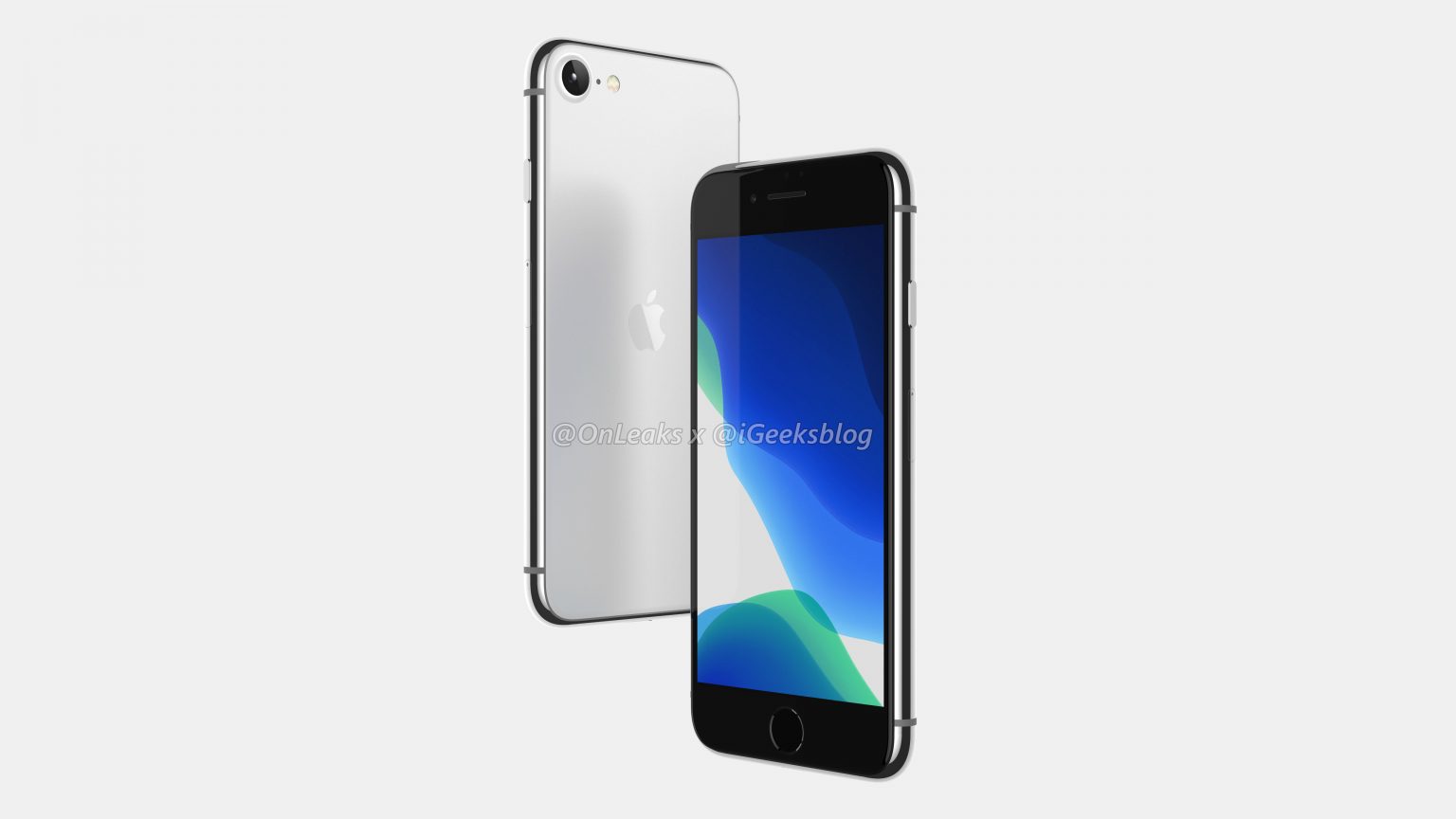
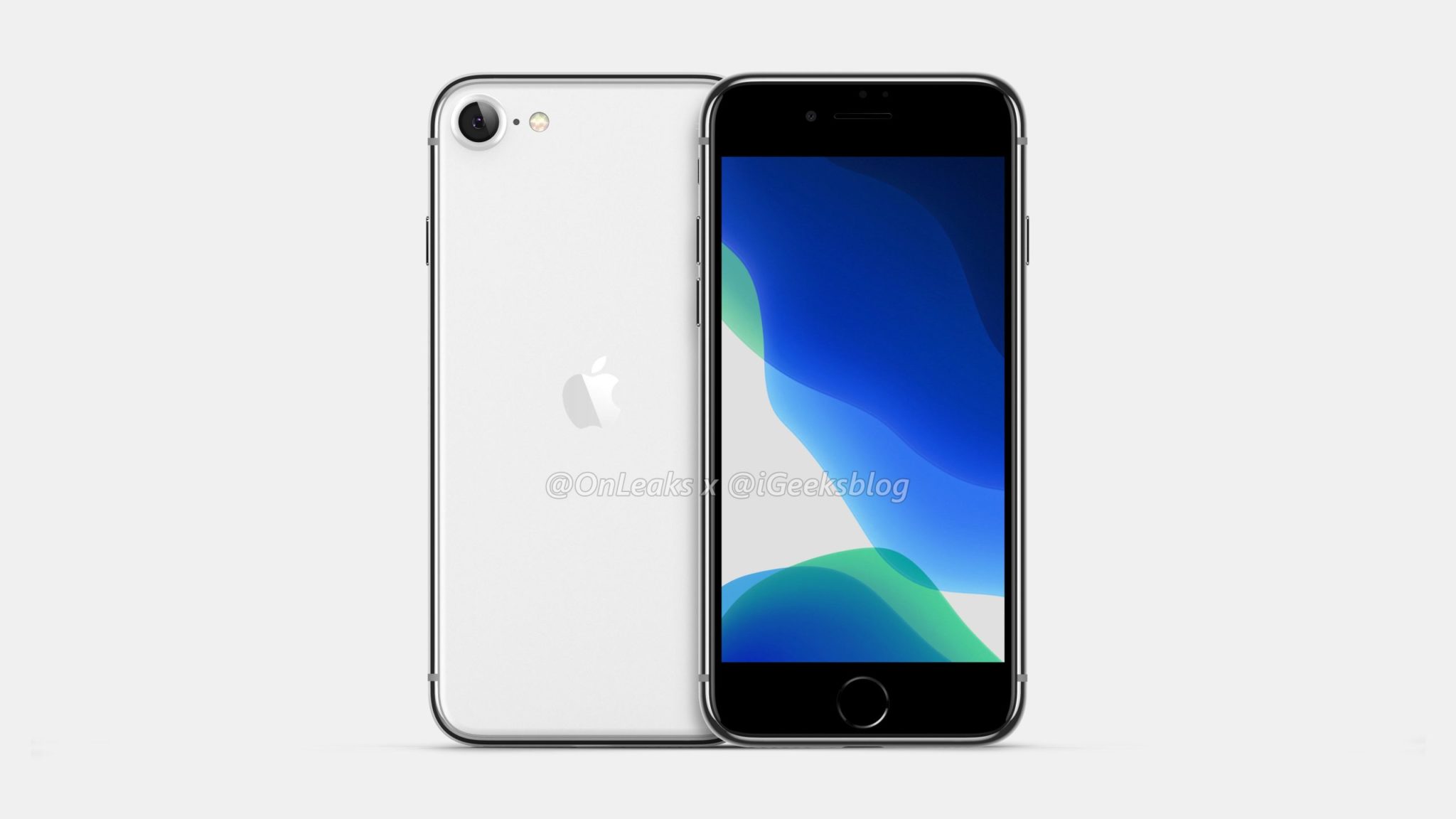
In 2017, Apple had skipped the iPhone 9 moniker to launch iPhone X alongside iPhone 8 and iPhone 8 Plus smartphones. A new report that surfaced few days into the New Year had revealed that Apple may launch the iPhone 9 series smartphone this year. The lineup is expected to include iPhone 9 and iPhone 9 Plus. It is said that the iPhone 9 could be arriving as the spiritual successor for the 4-inch iPhone SE phone from 2016. Reputed leakster and industry expert @OnLeaks has partnered with Geeksblog to bring the CAD renders of the rumored iPhone 9.

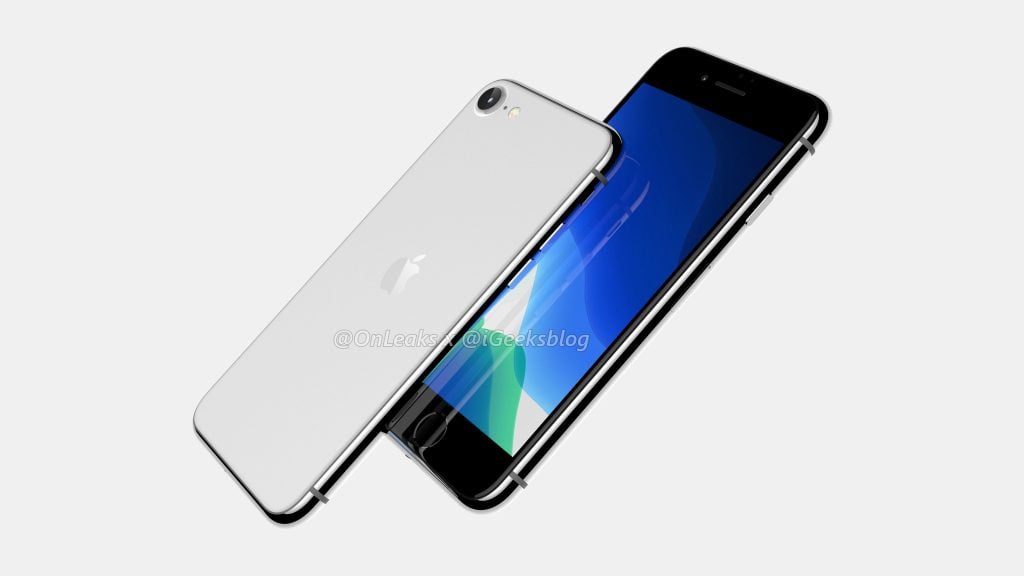
iPhone 9 renders

The iPhone 9 is expected to measure around 138.5 x 67.4 x 7.8mm. At the camera bump, its thickness may increase to 8.6mm. The renders of the smartphone show that it has thick bezels above and below its 4.7-inch display. Instead of the super Retina XDR OLED displays found on the new iPhones, the iPhone 9 may feature a Liquid Retina LCD screen.

The iPhone 9 is likely to offer an aspect ratio of 16:9. The chin of the device features the good old Touch ID sensor. This suggests that the smartphone won’t be equipped with the advanced Face ID biometric recognition feature.

The right edge of the iPhone 9 has a power button. The volume rocker and an alert slider can be found on the left side of the device. A Lightning port can be seen positioned between the two external speakers on the bottom edge of the smartphone.

The smartphone is expected to be equipped with frosted glass on its rear that will allow it look different from the iPhone 8. At the top left corner of the rear shell is a single camera with LED flash. The company’s logo can be seen at the center of its back panel.

iPhone 9 specifications and price (Rumored)

The iPhone 9 is likely to be driven by the Apple A13 Bionic chipset which fuels the iPhone 11 series. The SoC could be coupled with 3 GB of RAM. It may arrive in 64 GB and 128 GB storage editions. The iPhone 9 may boot to iOS 13. The iPhone 9 may arrive with an attractive price tag of $399 for it base model and it could be available in colors like silver, space gray and red.

A recent leak stated that a 5.5-inch or a 6.1-inch iPhone 9 Plus also exists. It could be priced at $499.

Rumors surrounding the iPhone 9 have claimed that Apple will carry out its mass production as soon as next month. This suggest that the Cupertino company could be announcing the iPhone 9 series in March this year.

Would you be interested in purchasing the small sized iPhone 9? Share us your thoughts by posting you comments below.


(source)

Samsung Galaxy XCover Pro full specifications and pricing leaked

Recent reports have claimed that Samsung will be launching a new phone called Galaxy XCover Pro in the near future. The XCover lineup includes rugged smartphones with budget-friendly pricing. A fresh report on Winfuture.de has revealed the full specifications and pricing of the XCover Pro which indicates that its launch is close at hand.

Samsung Galaxy XCover Pro specifications

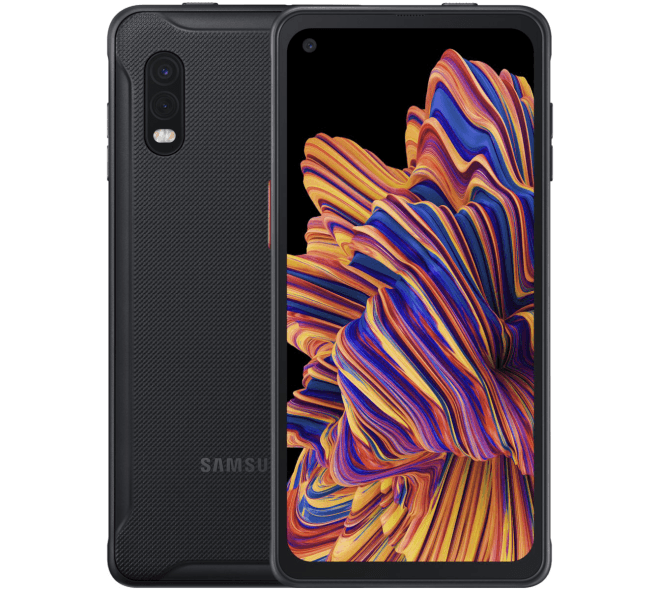
The Galaxy XCover Pro (SM-G715F model number) is an IP68 certified device with a thick polycarbonate chassis which safeguards it from dust, water and impacts. The thickness of the smartphone is around 10nmm and it weighs over 200 grams. The XCover Pro is blessed with a trendy punch-hole display of 6.3 inches. The LCD panel offers 20:9 aspect ratio and it produces full HD+ resolution of 1080 x 2400 pixels. Compared to other XCover series phone, the upcoming XCover Pro has slimmer bezels around the display.

The Exynos 9611 chipset that features a 2.0GHz octa-core processor powers the Galaxy XCover Pro. The SoC is supported by 4 GB of RAM. The native storage of the device is 64 GB. The publication has claimed that it is not clear whether the smartphone is equipped with a microSD card slot.

Samsung Galaxy XCover Pro

The display punch-hole houses a 13-megapixel selfie camera. The rear side of the device features a vertical dual camera setup along with an LED flash. The setup includes a main lens of 25-megapixel and an 8-megapixel wide-angle sensor. The aperture sizes of these cameras are not known yet. The One UI 2.0 based Android 10 OS comes preinstalled on the smartphone.

The Galaxy XCover Pro comes with a user-replaceable battery of 4,020mAh capacity. With USB-C onboard, the smartphone is likely to carry support for rapid charging. The handset also features Bluetooth 5.0 and NFC. There is a “Push to Talk” button on the Galaxy XCover Pro for quick messages. The smartphone is equipped with a side-facing fingerprint sensor which is integrated with the power button.

Samsung Galaxy XCover Pro price

The exact pricing of the Galaxy XCover Pro is not known. However, it is expected to arrive in Europe with a pricing of under 500 euros. It is expected to hit the European markets by early February.


(source)

OnePlus Concept One phone with electrochromic glass to hide rear cameras announced at CES 2020
After building the hype around the Concept One smartphone, OnePlus has finally announced it at the Consumer Electronics Show (CES) 2020. A recent teaser had suggested that the Concept One is a product built by OnePlus in collaboration with McLaren that is well-known for making supercars. Some rumors had claimed that it could be a foldable device from the company, but the concept model appears like a regular smartphone from the front and it sports a leather rear with invisible triple cameras on the rear. Being a concept model, the company may never sell OnePlus Concept One smartphone.

OnePlus Concept One
OnePlus Concept One

The OnePlus Concept One looks like the OnePlus 7T Pro as it features a notch-less display and a pop-up selfie camera. The only two major features of the Concept One is its color-shifting glass technology for the triple cameras and its leather rear.

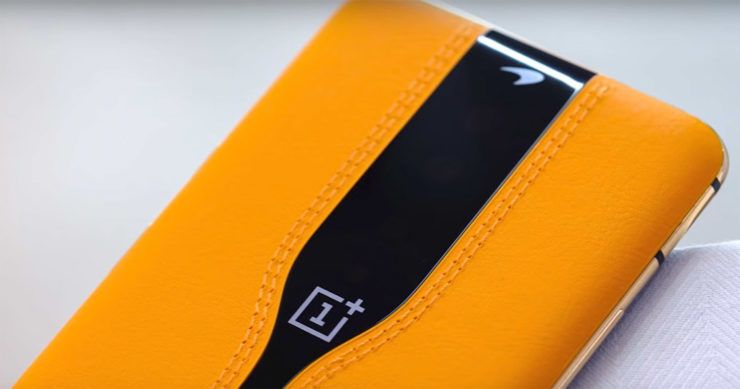
The rear design of the Concept One is inspired by McLaren 720S Spider sports car. The backside of the device features Papaya Orange stitched leather and it features an aluminum alloy frame. The latter is built with a new vapor deposition process which allows to sport a shiny gold finish.

Above the OnePlus logo on the rear, there is a vertical triple camera system that is neatly tucked under an electrochromic glass. When a current is applied to glass, it can swiftly change from opaque to transparent. This special type of glass is used for sunroofs of some luxury cars, airplane windows and also for buildings where it used as a walls and windows.

On the OnePlus Concept One, the triple camera setup remains invisible under the electrochromic glass. However, when the camera is turned on, the three sensors become instantly visible. When the camera app is closed, the triple cameras again become invisible. According to the company, it takes only 0.7 seconds for the glass to transition from transparent to opaque or vice versa. As it can be seen in the official video, the electrochromic glass only covers the triple cameras, while the rest is covered by stitched leather.

The other good thing about this technology is that the glass can also become semi-transparent. In this state, it can act as a neutral density filter that can assist in capturing better shots in very bright sunlight. OnePlus claims that the Concept One make use of the most advanced electrochromic ever manufactured. It comprises of two 0.1mm glass panels between which is the organic material. The combined thickness of both glass is only 0.35mm and it uses negligible power to function.

Flagship phones these days come with four to five rear mounted cameras. A phone with too many cameras on its rear may appear less appealing. With the technology that was showcased by OnePlus on the Concept One, the multiple lenses of the phone can remain invisible.

According to OnePlus CEO and founder Pete Lau, “This concept phone is a significant experiment into the future form of smartphones. OnePlus started this initiative with the goal of bringing the “burdenless” user experience to the next level. The invisible camera stands as a new form of camera design, one that spares the user from the compromises of current camera layouts.”

What’s your take on the OnePlus Concept One? Share us your views by posting your comments below.

Checkout this link for more news from CES 2020


Buy Xiaomi Mi Band 4 Smart Bracelet for Just $25.99 from Gearbest [Coupon]

Marketed as the long-rumored Mi Band 3 successor, the Mi Band 4 was launched in China on June 11th last year. The Chinese electronics giant’s latest smart bracelet boasts newfangled features and upgraded hardware.

Xiaomi Mi Band 4 smartwatch
Xiaomi’s Mi Band 4 is already a hit in China

More importantly, the international version of the Xiaomi Mi Band 4 smart bracelet has gone up for sale carrying a considerably lowered price through Gearbest. We will shed light on the aforesaid discount and also show how you can save more money at checkout without breaking a sweat.

The international version of Mi Band 4 comes in a black color option and would normally set you back $78.95 on both online, as well as offline stores. As part of its ongoing Flash Sale, the popular Chinese e-tailer is now offering the coveted smart bracelet for a reduced price of just $29.99.
As mentioned earlier, we will now show how you can extend this already staggering 62 percent discount. For an extra $4 off, all you need to do is to apply coupon code GBBAND4MI before you press the ‘Place Your Order’ button.
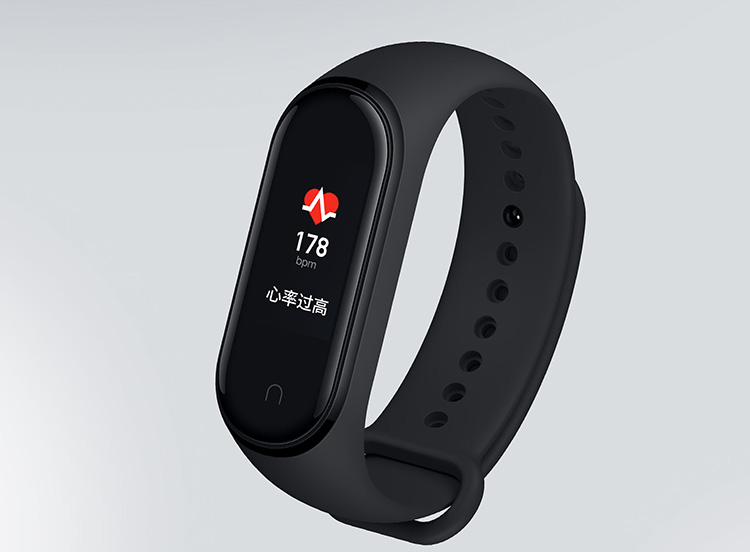
Thanks to the coupon, you can purchase the Mi Band 4 for an unbeatable price of only $25.99 only through Gearbest. The irresistible Mi Band 4 features an AMOLED color screen, and a 39.9% bigger display with a 2.5D scratch-resistant tempered glass on top.

It is a perfect workout and adventure activity companion for fitness enthusiasts and those who participate in outdoor activities such as trekking, dirt biking, hiking, etc. It comes with a pedometer and sleep monitor that helps you lead a healthier lifestyle and enables you to achieve your fitness goals.

Xiaomi Mi Band 4The Xiaomi Mi Band 4 offers an array of easy-to-respond custom dials that help you express your mood. Furthermore, the smart bracelet uses Bluetooth 5.0 BLE technology to offer faster and more stable connectivity speeds.

The smart bracelet comes with a 5ATM water-resistant rating (up to 50 meters). It also features a 0.95 inch AMOLED color display with 120 x 240 pixels resolution and is backed by a 135mAh battery that offers 20 days of battery life on a single charge.

The Mi Band 4 is compatible with Android4.4, iOS9.0 or above and also supports Alipay offline payment. If you are interested in knowing more about the Xiaomi Mi Band 4 Smart Bracelet or simply place your order, simply follow this link. With over a whopping 4000 pieces sold at the time of writing, the flash sale will come to an end in 22 days.

More Deals and Coupons