MediaTek is branching out. Today the company introduced its first chip built specifically for a new kind of AI-focused laptop, kicking off a dedicated series aimed at thin, capable machines that mix mobile-style efficiency with traditional laptop power.
The chip is called the Dimensity CX C10 Max, the first in MediaTek’s new Dimensity CX “Computing Experience” lineup. It’s made on TSMC’s 3nm process and is designed for Googlebook devices, Google’s upcoming flagship laptops that blend Android and ChromeOS with deep Gemini AI integration.
These machines will come from partners like Acer, ASUS, Dell, HP, and Lenovo, and they’re promising up to 10 years of software support, solid on-device AI features, and smooth Android app compatibility.
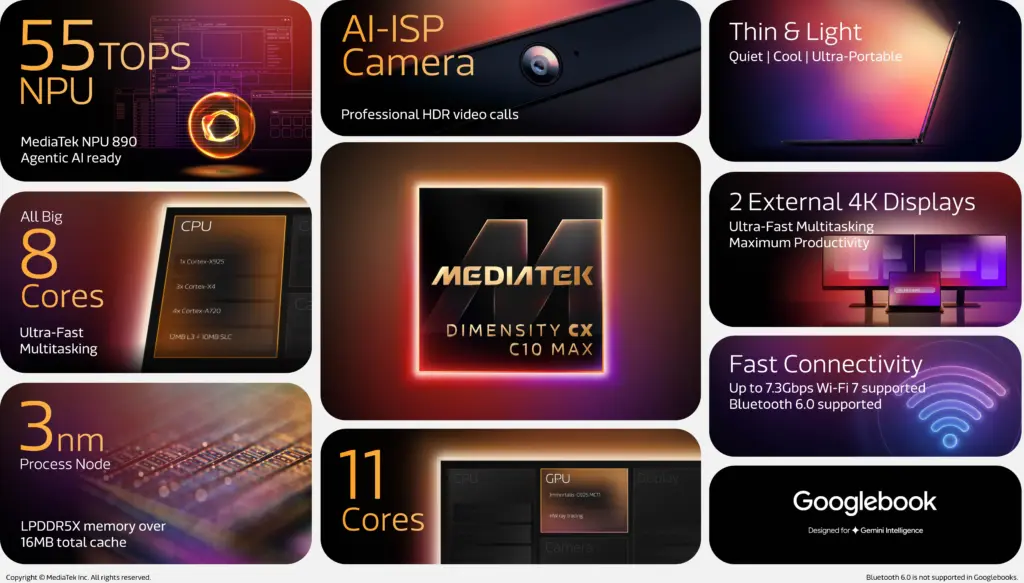
Under the hood, the Dimensity CX C10 Max uses an eight-core “all-big” CPU setup: one Cortex-X925, three Cortex-X4s, and four Cortex-A720s, plus 12MB of L3 cache and 10MB of system-level cache. Graphics come from an 11-core Immortalis-G925 GPU. For AI work, it packs MediaTek’s eighth-generation NPU that can hit up to 55 TOPS, so features like contextual help and local file summarization can run on-device without constantly hitting the cloud.
It also includes the Imagiq 1090 image signal processor, which supports cameras up to 32MP and is tuned for good video calls, HDR, and smooth zoom. Connectivity covers 7.3Gbps Wi-Fi 7 and Bluetooth 6.0. Memory goes up to LPDDR5X-9600, storage is UFS 4.0, and the chip supports three PCIe Gen4 lanes, one full-featured USB 5Gbps port, two eUSB2v2 ports, and three 4K video outputs for multi-monitor setups.
MediaTek is pitching this as a power-efficient option that should help manufacturers build thinner, lighter, and possibly even fanless laptops with strong all-day battery life. It’s already lined up to power an upcoming Lenovo Googlebook and will sit alongside Intel and Qualcomm chips in the first wave of these devices.
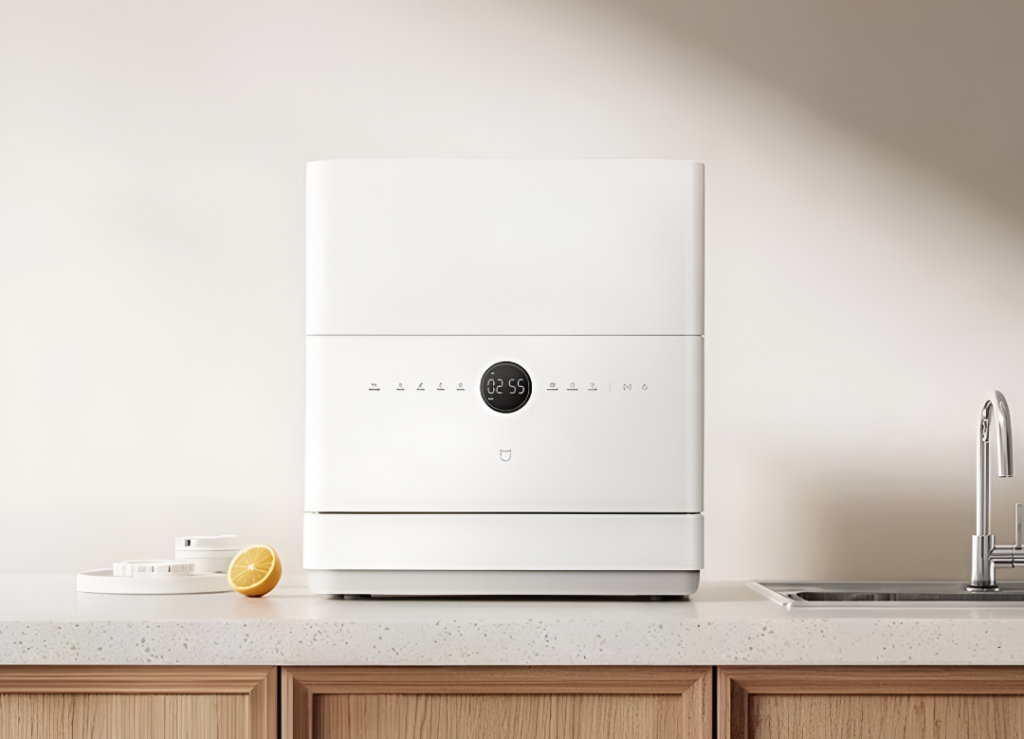
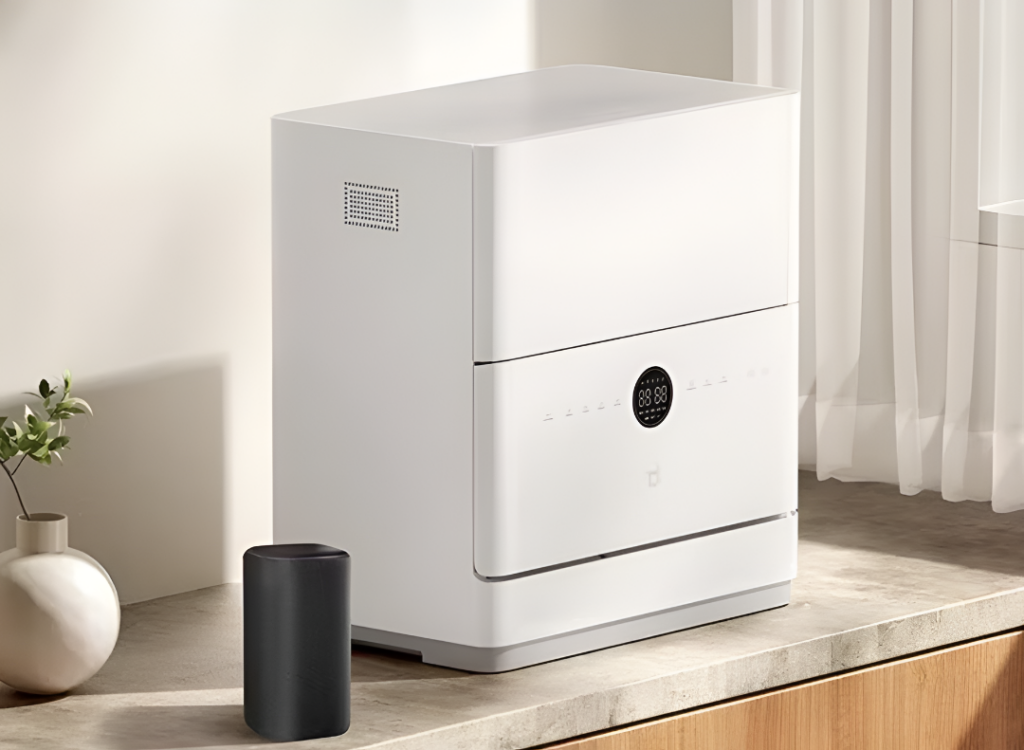
Xiaomi has launched a new compact dishwasher in China, called the Mijia Smart Countertop Dishwasher 5-Set. The appliance is priced at 1,998 yuan ($298) on JD.com and is designed for smaller kitchens where installing a conventional built-in dishwasher may not be practical.
The unit is built specifically for countertop use, measuring 550 x 598 x 350mm and weighing 18.5kg. To keep the footprint manageable, Xiaomi opted for a magnetic folding door that limits the total depth to 600mm when fully opened.
Despite the relatively slim profile, it has a five-place setting capacity, which the company says is adequate for households of two to five people. The interior space can accommodate standard tableware alongside cookware, including frying pans up to 30cm in diameter and 24cm soup pots.
For washing, the dishwasher features a multi-directional spray system with four sets of spray arms and 34 water jets. The system delivers an outlet pressure of up to 30kPa to clean dishes from multiple angles. It also comes with an optical water-quality sensor that works with AI algorithms to detect the level of dirt within 10 seconds.
Based on the results, the dishwasher can automatically select a suitable washing program from its eight available modes. It also features an intelligent water-softening system that helps reduce limescale buildup and residue on dishes.
For sanitization, the dishwasher uses a high-temperature wash cycle that reaches up to 75°C. It also comes with a PTC hot-air drying system that delivers air at temperatures of up to 80°C to keep dishes dry after washing.
Xiaomi positions the dishwasher as a five-in-one appliance that can also double as a storage cabinet for clean dishes. It features a UV storage mode with active air circulation that helps keep tableware dry and fresh for up to 240 hours (10 days). The storage duration can be adjusted in 24-hour increments through the Mijia app.
The dishwasher meets China’s updated Level 1 water-efficiency standard. In Eco Wash mode, a single cycle uses 8 liters of water and 0.282kWh of electricity. As with most Xiaomi appliances, it integrates into the company’s smart home ecosystem. It supports HyperOS Connect, enabling remote control, cycle scheduling, and progress monitoring via the Mijia app, along with voice commands through compatible Xiaomi smart speakers.
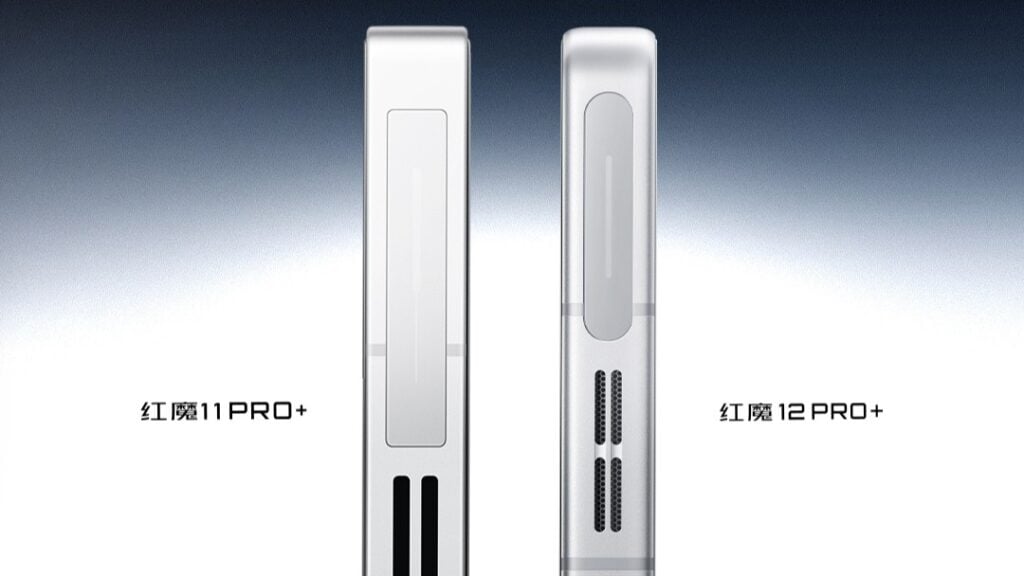
Red Magic has started teasing its next high-end gaming phone, the Red Magic 12 Pro+. They’re positioning the new model as a noticeable step forward in comfort and refinement, with the official reveal confirmed for next month.
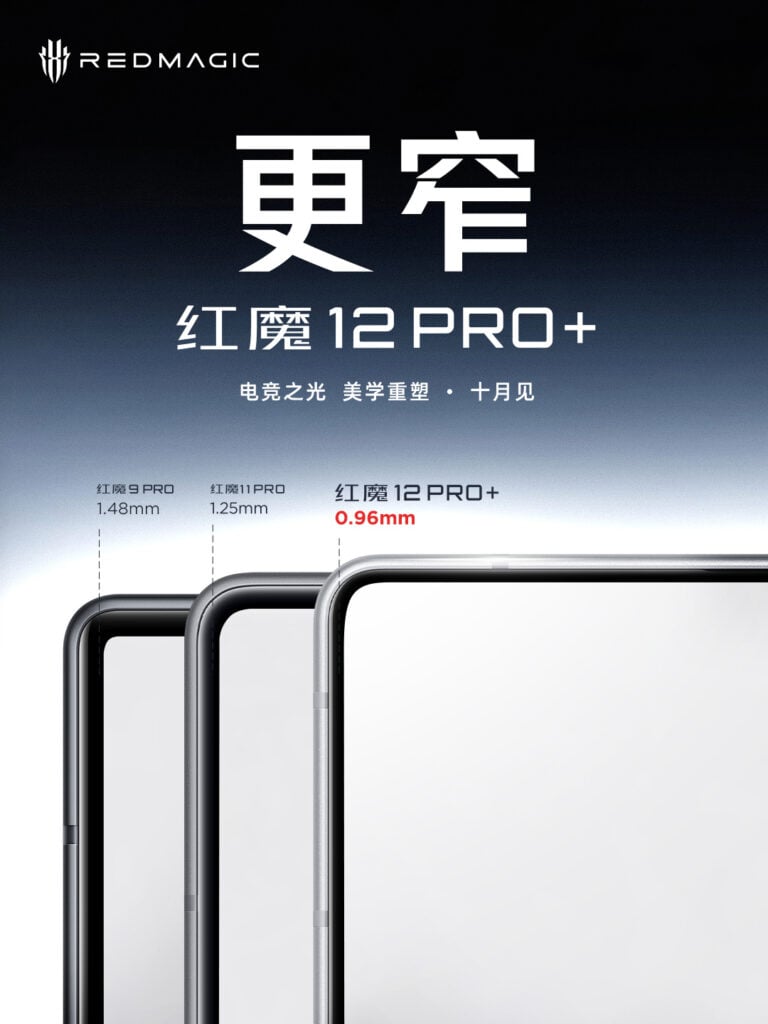
The company calls it “the best-feeling Red Magic flagship to date,” saying it’s lighter, thinner, narrower, and more rounded than what came before. The early images show tighter screen bezels and softer, rounded edges. The bezel has been trimmed from 1.25 mm down to 0.96 mm, which should make the display feel a bit more immersive.
Jiang Chao, General Manager of Red Magic Gaming Phones, summed up the intent pretty clearly: this is a phone built for gamers. It can handle heavy loads, the cooling is meant for long sessions, it’s lighter and thinner in the hand, the design is distinctive, the front is a pure under-display screen with no holes, and the day-to-day software experience is meant to feel smooth. The under-display camera remains a core part of that clean-front approach.
Full specs aren’t out yet, but the heavy emphasis on ergonomics seems aimed at feedback from earlier models that leaned hard into performance and cooling while feeling a bit less comfortable for everyday use. The thinner, lighter body and rounded edges are meant to make long gaming sessions (and regular use) more pleasant without giving up sustained power and heat management.
With an October launch, the 12 Pro+ is set to be one of the earlier phones showing off the next wave of gaming-focused hardware. Exact release date, full specs, pricing, and colors should come closer to the official launch. For now, the teaser makes it clear Red Magic is trying to balance its usual performance-first approach with more attention to how the phone actually feels day to day.
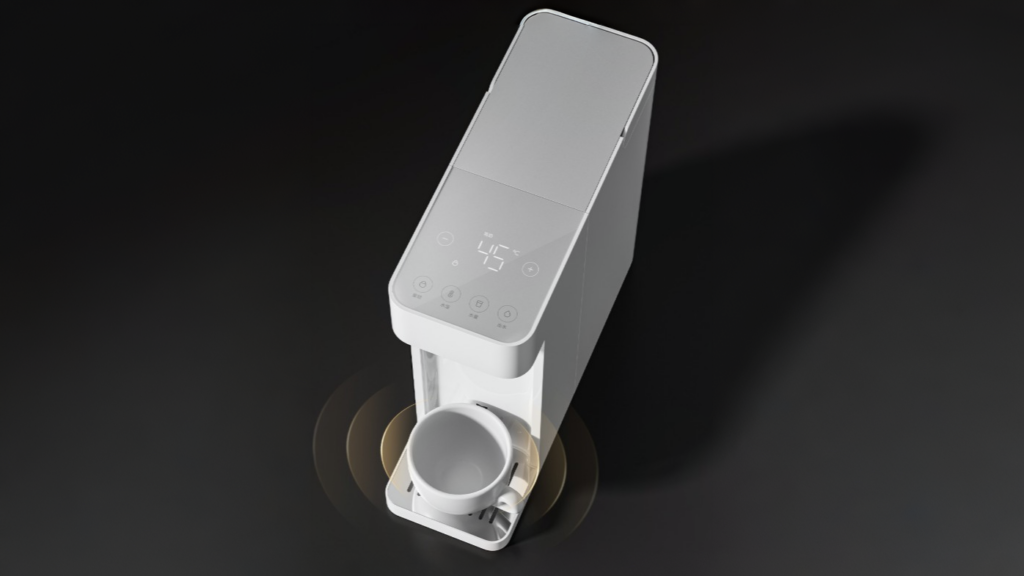
Xiaomi has added another practical gadget to its Mijia lineup: the Mijia Instant Hot Water Dispenser Pro. It’s built for the small daily tasks, making tea or coffee. It’s heading to Chinese shelves soon at a pretty accessible price.
The dispenser is priced at 399 yuan (~$60) and goes on sale on September 28. The parts that touch the water (tank liner, heating element, and main water pathways) are all made from food-grade stainless steel. It can start pouring hot water in about three seconds, and under normal conditions the water inside the heating element hits a full 100°C, so you’re getting actual boiling water rather than just “hot.”
You can also fine-tune the temperature if you want something more specific. The removable 2.8L tank can be filled by hand or hooked up with a flexible hose to bottled water or a purified water source. Xiaomi recommends using pure or filtered drinking water only.
A few nice everyday touches: the LED display wakes up automatically when you put a cup on the base, and it has an intelligent self-cleaning mode that flushes residual water from the pipes and shows the progress on screen to help avoid secondary contamination. Specs-wise, the model (MSYSJ04MH) runs on 220V, pulls 2100W, weighs about 2.45 kg, and measures a compact 312 × 106 × 280 mm. In the box you get the main unit, water tank, drip tray, and manual.
Between the near-instant heating, useful temperature presets, stainless-steel build, and self-cleaning feature, this looks like a straightforward upgrade for anyone who wants hot water quickly on demand.
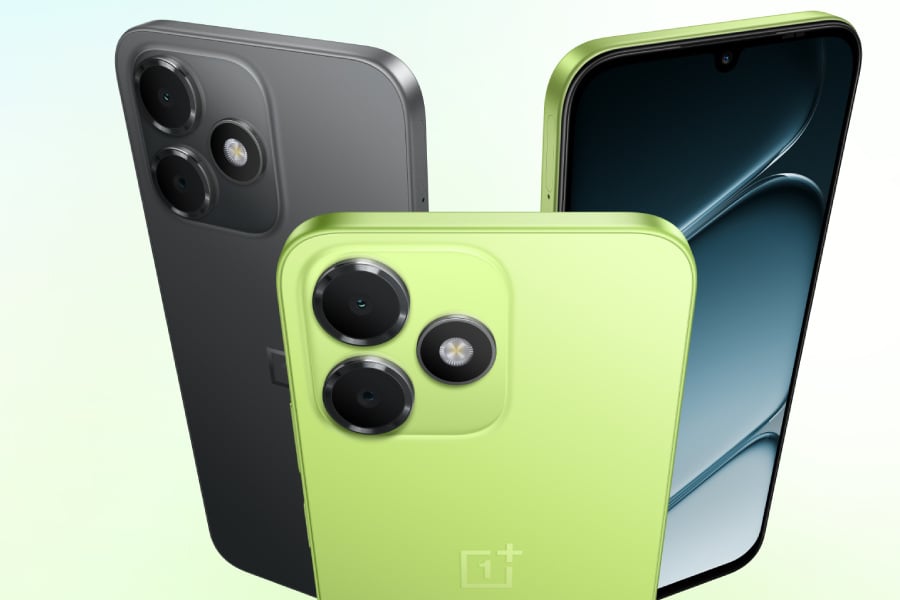
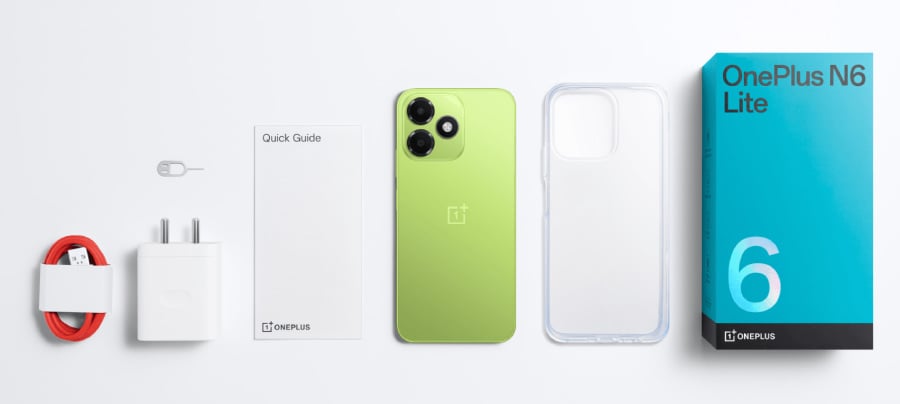
OnePlus just launched the N6 Lite in India, and it’s cheaper than everything else in the N-series lineup. But the price tag isn’t the interesting part; it’s on the inside. The N6 Lite 4G is powered by a Unisoc T7250 chipset, something that has never shown up in a OnePlus phone before.
Here’s a bit of context. OnePlus has been making phones since 2014, and in that entire run, it’s preferred Qualcomm for its flagships and, starting with theNord 2 5G in 2021, MediaTek for its mid-rangers. Unisoc, the chip maker best known for powering budget phones from ZTE and other Chinese OEMs, was never in the mix. The N6 Lite breaks that streak.
And it’s not hard to figure out why. OnePlus has been sharing R&D, supply chain, and software resources with its parent company Oppo under the BBK Electronics umbrella, and that alignment shows up directly in this phone’s silicon.
OnePlus Nord N6 Lite 4G
Back in April, Oppo’s global A6c 4G switched from the Snapdragon 685 it shipped with in China to a Unisoc T7250. It also landed with almost the exact spec sheet you’re now seeing on the N6 Lite: 6.75-inch HD+ LCD at 120Hz, 900 nits HBM, 7,000mAh battery, 15W charging, and IP64 durability.
That is to say, the OnePlus N6 Lite 4G is essentially a rebadge, and the shared chipset shows how tightly OnePlus and Oppo are running their entry-level playbooks together these days.
OnePlus N6 Lite 4G Specifications
As for what you’re actually getting, the N6 Lite runs the T7250 alongside 4GB of RAM (with LPDDR4X) and 64GB of UFS 2.2 storage. The display is a 6.75-inch HD+ LCD panel with a 120Hz refresh rate and 900 nits peak brightness in HBM mode.
You get a 13MP OV13B10 sensor on the back and a 5MP shooter up front for photos and video duties. And the phone is powered by a 7,000mAh cell with 15W wired charging.
You still get a few things OnePlus has been quietly bringing back into its cheaper phones, like a 3.5mm headphone jack and a side-mounted fingerprint reader. There’s no NFC or stereo speakers here, and connectivity tops out at Wi-Fi 5 and Bluetooth 5.2.
The phone runs Android 16 with OxygenOS 16 on top and carries an IP64 rating, along with the MIL-STD-810H durability testing OnePlus has applied across its N-series so far.
On pricing, the N6 Lite starts at Rs 16,999 for the 4GB+64GB configuration. Colors are Midnight Hype and Neo Green.
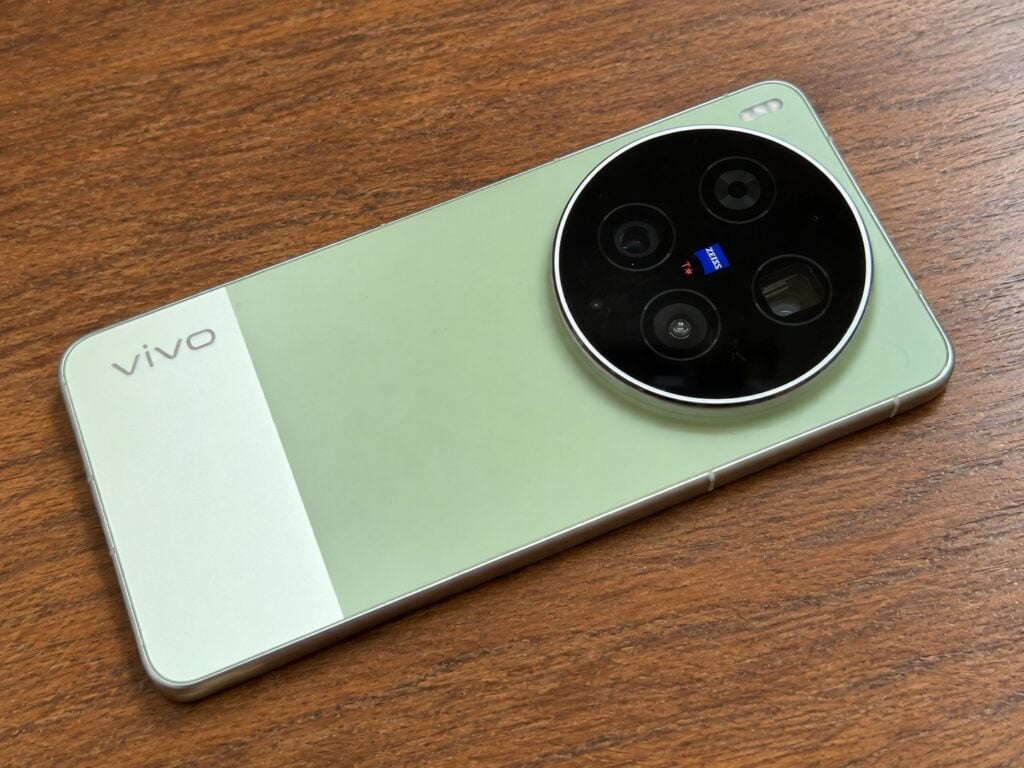
Yesterday, Vivo held a major launch event in China to unveil the Vivo X500, X500 Pro, and X500 Pro Max. While reports suggest the brand could add the X500e, X500 FE, and X500 Ultra to the lineup, only the latter has received an official launch timeframe so far. Vivo has now revealed when we can expect the X500 Ultra to arrive.
Vivo X500 Ultra launch timeframe
Vivo X300 Ultra
Huang Tao, Vice President and Vice President of Product at Vivo, revealed during the post-conference session following the Vivo X500 series launch that the company plans to launch the Vivo X500 Ultra by March or April next year.
There is currently no official confirmation regarding the X500e or X500 FE. The X500 Ultra, meanwhile, is expected to sit above the existing X500 series models and serve as the lineup’s most camera-focused offering.
Vivo X500 Ultra: What to expect?
Like the X300 Ultra, the Vivo X500 Ultra is expected to focus heavily on photography and content creation. A July leak from tipster Digital Chat Station claimed that Vivo was testing three different 200-megapixel telephoto sensors for the phone, with 1/1.12-inch, 1/1.3-inch, and 1/1.4-inch options.
The largest 1/1.12-inch sensor would represent a more aggressive approach to telephoto photography, while the 1/1.3-inch and 1/1.4-inch sensors were reportedly being considered as more balanced options. It remains unclear which sensor Vivo will ultimately choose for the retail device.
The flagship is also said to be testing two different 35mm main camera configurations. One option combines a 50-megapixel 1/1.28-inch LOFIC sensor with optical image stabilization and a micro-gimbal lens system offering a wide stabilization angle, while the other uses a 200-megapixel 1/1.12-inch LOFIC sensor.
The existing X500 series models are powered by Dimensity 9600-series chipsets, but the Ultra model could take a different route. It is rumored to feature Qualcomm’s Snapdragon 8 Elite Gen 6 Pro, potentially giving it a notable performance advantage over the other models in the lineup.
While Vivo has now confirmed the X500 Ultra’s China launch timeframe, there is currently no clarity on whether the flagship will also be released globally. More details should emerge as the launch window approaches.
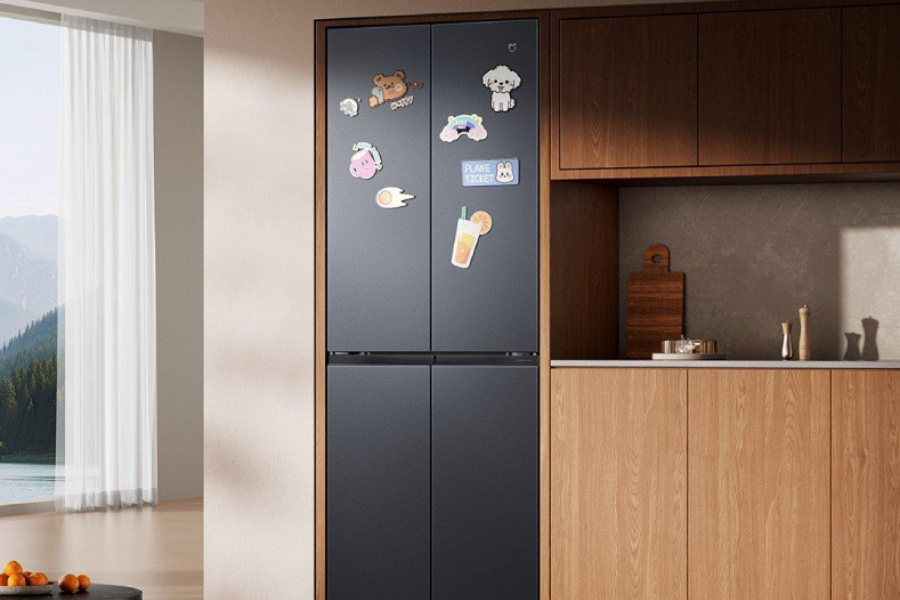
Xiaomi has added another refrigerator to its Mijia home appliance lineup. Called the Mijia Refrigerator 425L, it is now available to order on Xiaomi Youpin in China for 2,699 yuan (around $380).
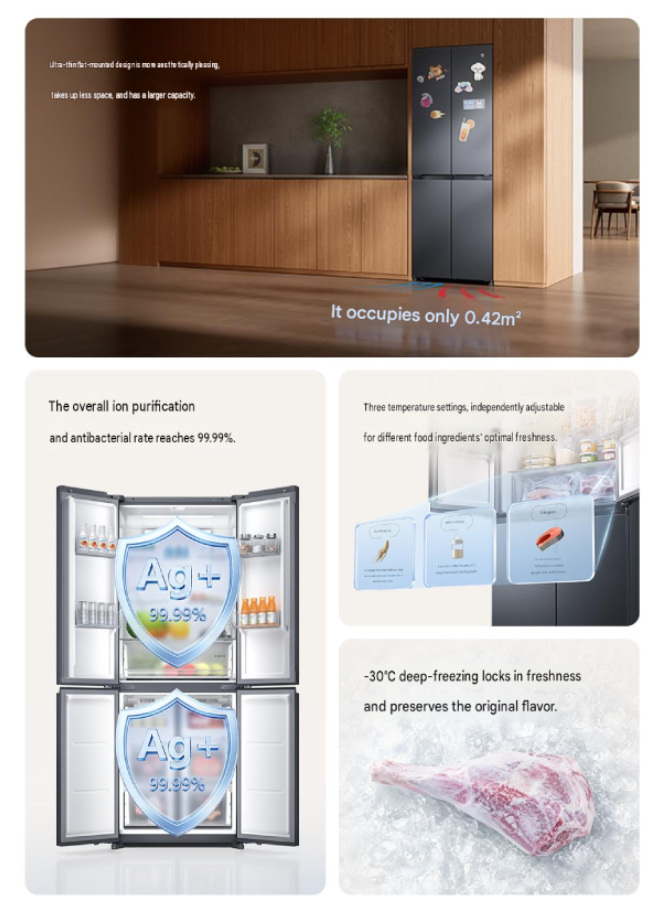
The refrigerator offers 425 liters of storage spread across 14 compartments. This includes 215L of refrigeration space, 155L for freezing, and a 55L variable-temperature zone that can be adjusted based on what you want to store.
The flexible section is one of the refrigerator’s main features. In Dry Goods mode, it can be used to store items such as cordyceps, bird’s nest, supplements, and cosmetics. Baby & Maternity mode keeps the temperature at 4°C for storing breast milk. You can also set the compartment to 0°C to keep fish fresh for several extra days without freezing it. For longer-term storage, the freezer can reach temperatures as low as -30°C.
Xiaomi has also focused on making the refrigerator easier to fit into modern kitchens. It measures 59.7cm in depth, 70.2cm in width, and 185cm in height, taking up around 0.42 square meters of floor space.
The refrigerator is designed to sit close to kitchen cabinets, with just a 4mm gap on the sides. Despite the tight fit, the doors can still open up to 90° when the refrigerator is placed against a wall. The heat is released from the bottom instead of the rear, which helps with the flush-fitting design.
Ion purification and antibacterial protection
For food storage, the refrigerator uses a full-area ion purification system combined with an Ag+ silver ion module. Xiaomi claims the system can provide a 99.99% antibacterial effect against E. coli and Staphylococcus aureus. The company also says the system can prevent mold growth.
The exterior uses a black feather rock metal panel, which Xiaomi has previously used on Mijia refrigerators, including the 536L model launched a few years ago. The surface has a soft finish designed to resist fingerprints and is also magnetic, allowing users to attach magnets directly to the refrigerator.
The Mijia Refrigerator 425L has China’s first-class energy efficiency rating and uses an inverter compressor. Xiaomi says it consumes around 0.82 kWh of electricity over 24 hours while producing as little as 34dB of noise.
Smart features are handled through Xiaomi’s Surge Smart Connect system and the Xiaomi Home app. Users can manage the refrigerator remotely, track stored food, and control it using Xiao Ai voice commands.
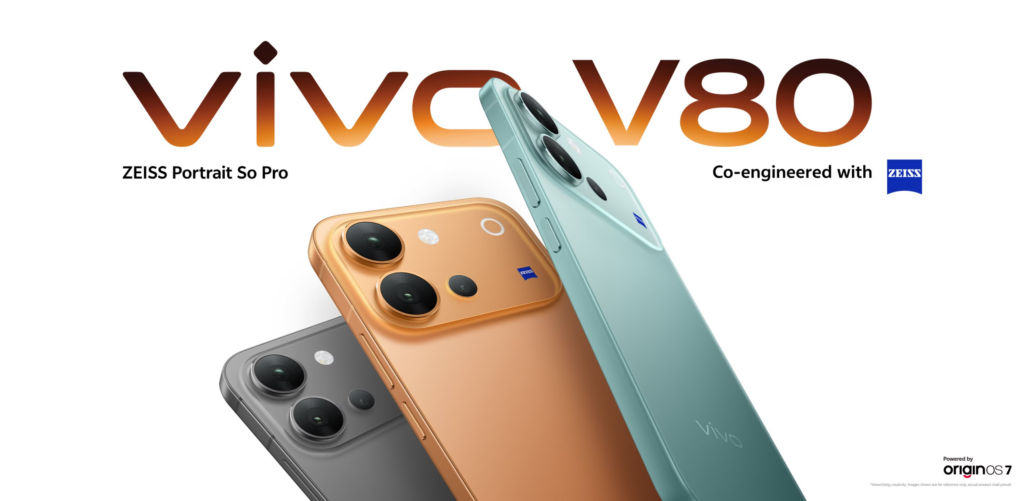
Vivo has been teasing the arrival of the Vivo V80 in India for the past few days, and it has finally confirmed the launch date. The phone is set to arrive on October 6, bringing a camera-focused experience and several notable upgrades over its predecessor. Here is everything Vivo has revealed about the upcoming V-series smartphone so far.
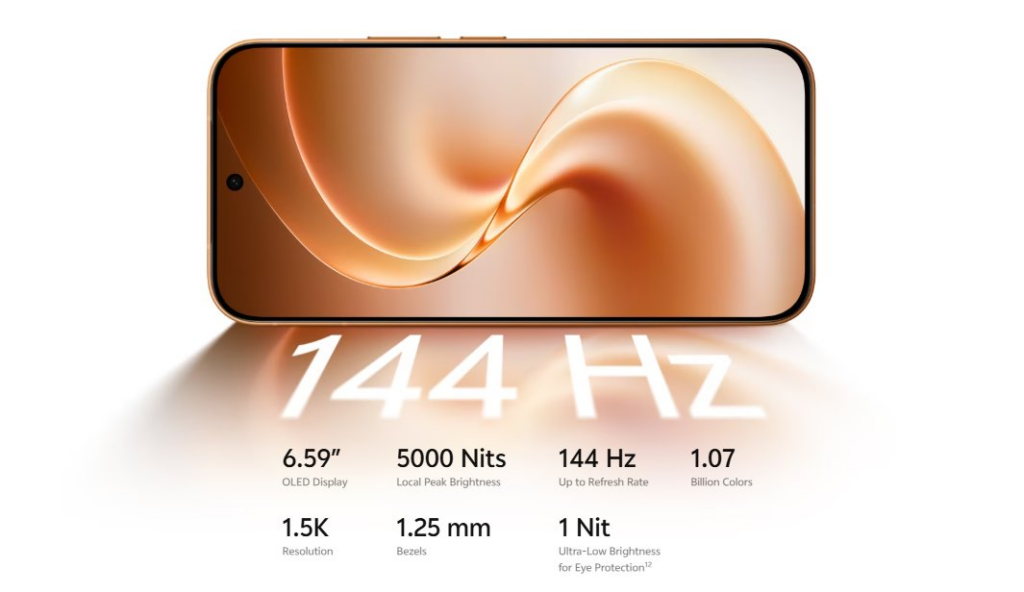
The Vivo V80 features a 6.59-inch 1.5K OLED display with a 144Hz refresh rate, 5,000 nits of local peak brightness, support for 1.07 billion colors, and a minimum brightness of just 1 nit. The display is designed to offer a smooth experience while maintaining visibility across different lighting conditions.
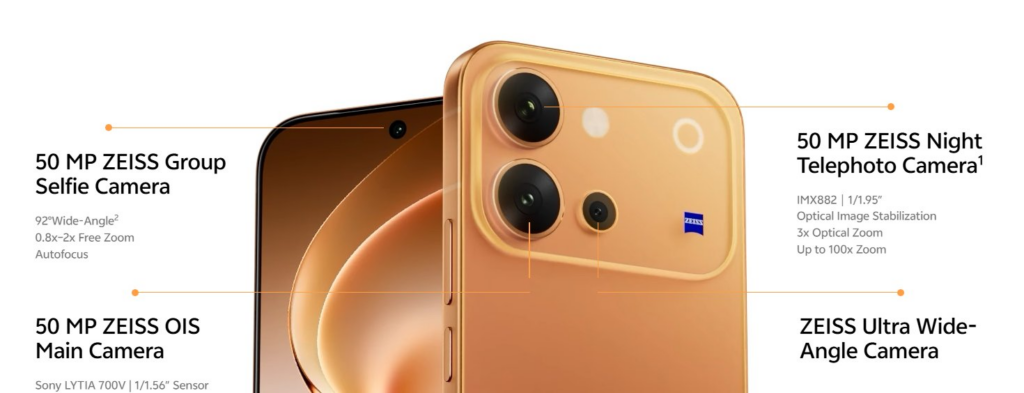
Photography continues to remain a major focus, with the Vivo V80 featuring a 50-megapixel Sony LYT-700V primary camera with OIS, an ultra-wide ZEISS lens, and a 50-megapixel Sony IMX8822 periscope telephoto camera and a 50-megapixel ZEISS Group Selfie camera with a 92-degree FOV and autofocus support. The phone supports OIS, 4K video recording at 60fps, and ZEISS 85mm and 100mm portrait modes. It will also allow users to record 4K cinematic videos.
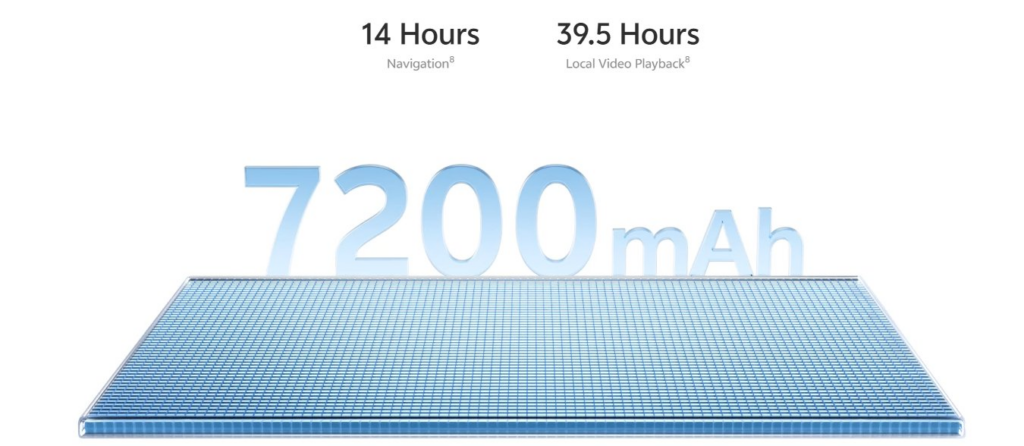
The Vivo V80 houses a 7,200mAh battery, making it the largest ever on a V-series phone. It supports 90W FlashCharge, while Vivo claims up to 14 hours of navigation and up to 39.5 hours of local video playback.
The Vivo V80 will run OriginOS 7 and comes with features including Pet Pals, StickIt, Wiggle Theme, and Snap Notes. Vivo is also promising long-term support with up to six years of security updates. The phone will be offered in Sunrise Anthem, Horizon Blue, and Stellar Black color options.
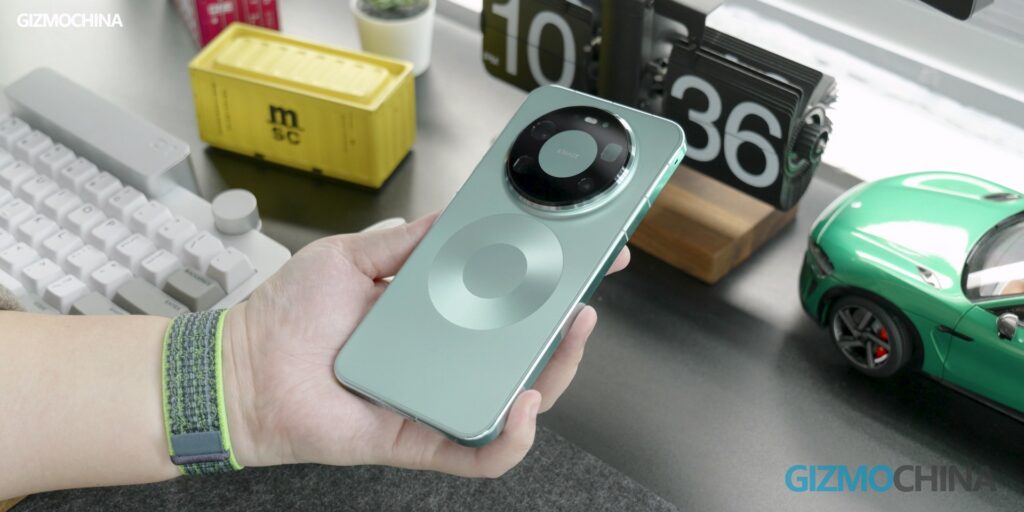
Huawei is getting ready for its biggest smartphone launch of 2026. The Mate 90 series is likely to launch in China in the last week of September, around two months earlier than the Mate 80 and Mate 70 series. This puts Huawei’s new flagship lineup in the same launch month as Apple’s latest iPhones, and most of us probably know why.
Huawei Mate 80
The Mate 90 series is expected to include four models: the standard Mate 90, Mate 90 Pro, Mate 90 Pro Max, and Mate 90 RS Ultimate Design. Huawei has not confirmed the full lineup yet, but several tipsters have shared similar details, giving us a good idea of what to expect.
The biggest change could be inside the phone. Huawei is expected to use the new Kirin 9050 chip based on a technology called LogicFolding. It is part of a wider design approach Huawei refers to as the Tau scaling law.
Instead of relying only on traditional transistor shrinking, the technology stacks logic circuits vertically. This allows Huawei to fit more computing power into the same space without depending on the most advanced chip-making processes.
Huawei has already shared some details about the technology. Compared with last year’s Kirin 9030 Pro, transistor density is said to increase by 53.5%, reaching around 238 million transistors per square millimeter. The chip area is also reportedly about one-third smaller, while power consumption at the same performance level drops by more than 40%.
The different Mate 90 models are expected to use different versions of the chip. The Mate 90 and Mate 90 Pro could get earlier versions, while the Mate 90 Pro Max and Mate 90 RS Ultimate Design are tipped to use the full Kirin 9050 Pro.
The same chip is already used in the Mate XT 2 tri-fold, which launched earlier this month. Huawei claimed a 42% performance improvement over the previous generation, including a 24% increase in single-core performance and a 52% gain in multi-core performance.
2. Display
The display could be one of the more familiar parts of the Mate 90 series. All four models are expected to use a 6.9-inch flat OLED panel with Huawei’s dual-layer tandem OLED technology.
This setup uses two emissive layers to improve brightness while keeping power consumption under control. Huawei first used the technology on last year’s Mate 80 RS Ultimate Design, but it is reportedly bringing it to the entire Mate 90 lineup this time.
A recent leak also points to a 1.5K resolution and an LTPO backplane, which would allow the refresh rate to adjust depending on what’s happening on the screen. The display is also expected to have large, rounded corners, giving it a softer look instead of sharp 90-degree corners.
The front design could remain largely unchanged, with the Mate 90 series reportedly keeping the three-hole punch cutout used on the Mate 80 series.
3. Huawei Mate 90
The standard Mate 90 will be the entry point into the lineup. Its rear camera setup is expected to include a 50MP main camera, a 40MP ultrawide camera, and a 50MP telephoto camera. A smaller multispectral sensor is also expected to help with color accuracy.
Charging is reportedly limited to 66W, making it the slowest-charging model in the series. The phone is expected to come in black, white, green, and pink. Its dimensions are tipped at around 162.1 x 75.5 x 7.85mm, which should make it fairly manageable despite the large 6.9-inch display.
4. Huawei Mate 90 Pro
The Mate 90 Pro is expected to bring a noticeable upgrade in both charging and cameras. It will reportedly support 100W charging, while the main camera is tipped to use a large sensor with a variable aperture.
A variable aperture can help the camera adjust how much light enters the lens, which can be useful in low-light photography and when controlling depth of field.
The Pro model could also feature two periscope telephoto cameras. Having two separate periscope lenses would give the phone different optical zoom ranges instead of relying on a single telephoto camera.
Battery capacity is expected to be between 6,800mAh and 7,000mAh across the Pro-tier models. That’s considerably larger than the roughly 5,400mAh battery reportedly used in the iPhone 18 Pro Max.
5. Huawei Mate 90 Pro Max
The Mate 90 Pro Max is expected to have a large 1-inch-type main sensor alongside two periscope telephoto cameras. One of them could support up to 10x optical zoom.
Huawei could also change the camera design. The Pro Max is tipped to use a square camera module instead of the circular camera housing found on the Mate 80 Pro Max.
The fingerprint scanner could remain on the side, however. Leaks suggest Huawei is not moving to an ultrasonic under-display fingerprint sensor on this model, despite the technology becoming more common on competing flagship phones.
The Pro Max is also expected to feature the Kirin 9050 Pro, a 6.9-inch dual-layer OLED display, and Wi-Fi 7.
6. Huawei Mate 90 RS Ultimate Design
The Mate 90 RS Ultimate Design will sit at the top of the lineup. Huawei’s RS models usually focus heavily on camera hardware and premium materials, and the Mate 90 RS is expected to follow the same approach.
It is tipped to feature two periscope telephoto cameras and the same Kirin 9050 Pro chip as the Pro Max. Premium materials and higher-end finishes are also expected to set it apart from the other models.
The RS could also offer the fastest charging speeds in the series, along with more exclusive color options aimed at buyers looking for a more premium design.
7. Software: HarmonyOS 7
HarmonyOS 7
All four Mate 90 models are expected to run HarmonyOS 7 out of the box. Huawei introduced the new software earlier this month alongside the Mate XT 2.
One of the biggest changes is Huawei’s focus on what it calls the “agent era.” The company’s Xiaoyi AI assistant is being turned into a system-level agent that can handle multi-step tasks instead of simply responding to individual questions.
HarmonyOS 7 also brings a redesigned interface with new lighting and motion effects, along with deeper AI features across the system. Huawei says the update also includes performance improvements that can lead to faster app launches and better battery efficiency when combined with the new Kirin chip.
Since HarmonyOS 7 has already debuted on the Mate XT 2, the Mate 90 series should launch with a more established version of the software rather than being the first devices to receive it.
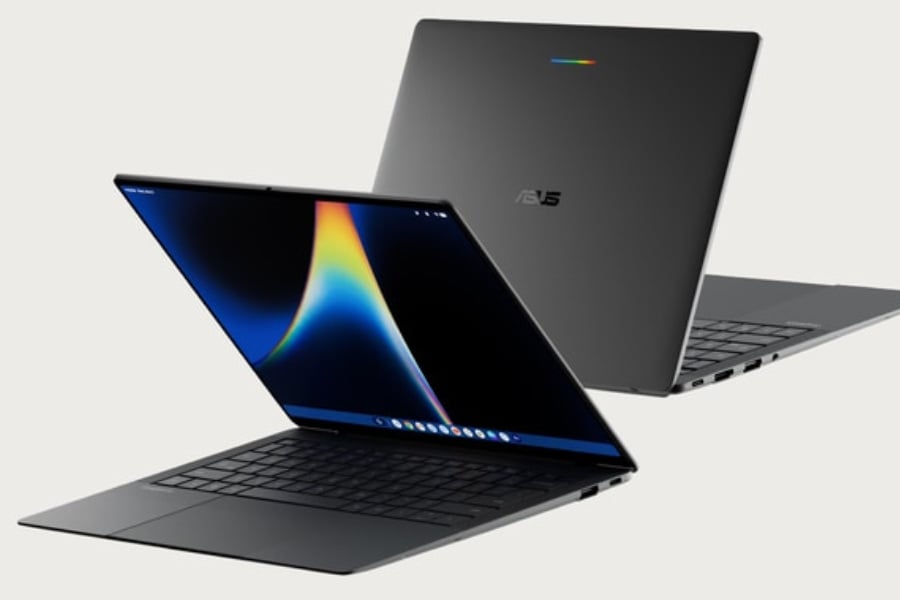
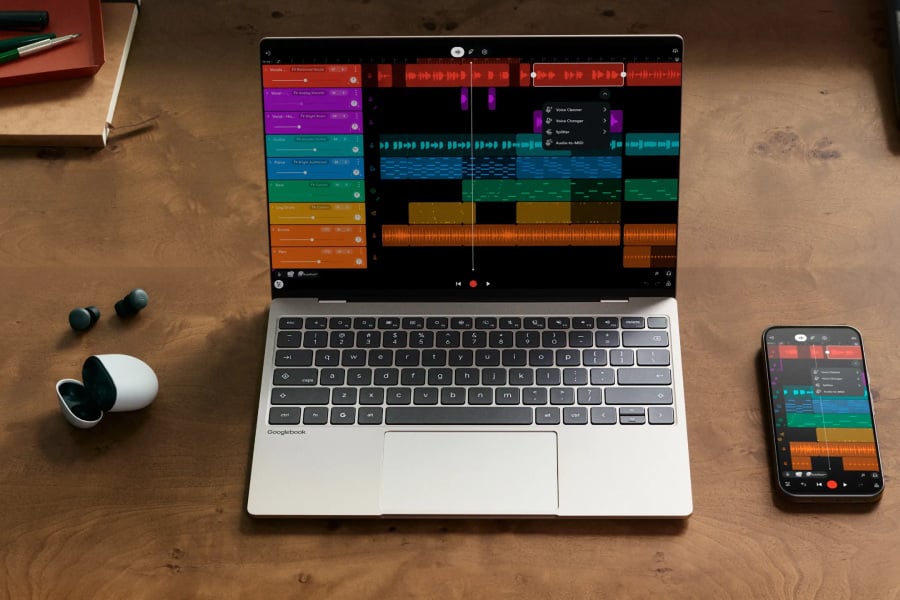
Acer, ASUS, Dell, HP, and Lenovo each have a model, with prices ranging from $899 to $1,299. The lineup includes everything from a 2-in-1 to a 15.3-inch laptop, giving buyers several hardware options.
Every Googlebook comes with a 12-month Google AI Pro subscription and 5TB of cloud storage. Buyers also get three months of YouTube Premium, Photoshop, and CapCut. Google says Googlebooks will receive system updates for up to 10 years.
Googlebook hardware
The Acer Googlebook 14 is the only 2-in-1 in the launch lineup and starts at $899. Acer has already warned that the launch price could increase if memory shortages continue to raise component costs. It has a 14-inch 2.8K OLED touchscreen, Intel Core Ultra 5 or Ultra 7 processors, and up to 16 hours of claimed battery life.
The ASUS Googlebook 14 costs $1,299. It has the most ports among the launch models and weighs just 1.0kg, making it the lightest option in the lineup.
Dell’s XPS Googlebook uses a Snapdragon X Elite processor and closely follows the design of the XPS 13, including its glow finish. Connectivity is limited to two USB-C ports.
HP also uses the Snapdragon X Elite and offers up to 1TB of storage, which is the largest storage option among the launch models. It also supports both face and fingerprint unlocking.
One of the main features is Magic Pointer. When you move the cursor over something on the screen, Gemini can offer suggestions based on what you’re viewing. You can then follow up and open a chat window for more help.
Google is also using its smaller on-device Gemini Nano v3 model for file searches. Instead of sending files to the cloud, the model can summarize content locally on the laptop. Google has been using a similar on-device approach on phones such as the OnePlus 13.
Android integration is another major part of Googlebook OS. Users can run Android phone apps directly on the laptop, transfer files and photos between devices without going through the cloud, and continue tasks across devices.
Google executive Sameer Samat has said the platform is primarily aimed at Android users rather than people looking to move away from MacBooks. Google also plans to add iPhone connectivity in the future, although it has not provided a timeline yet.
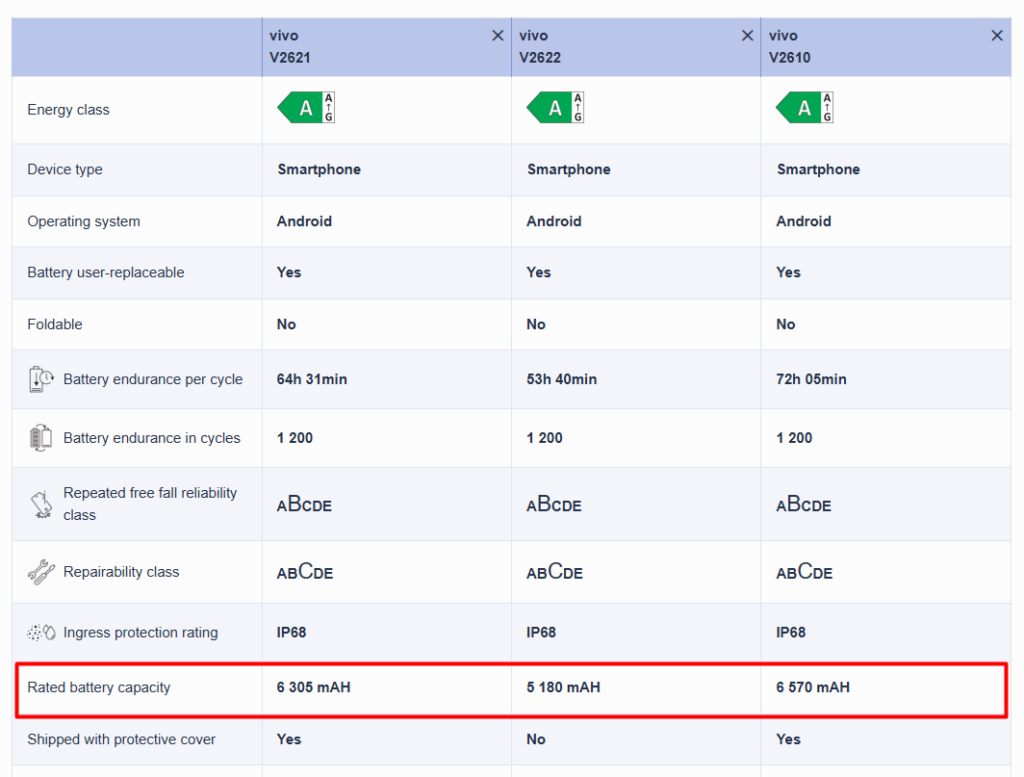
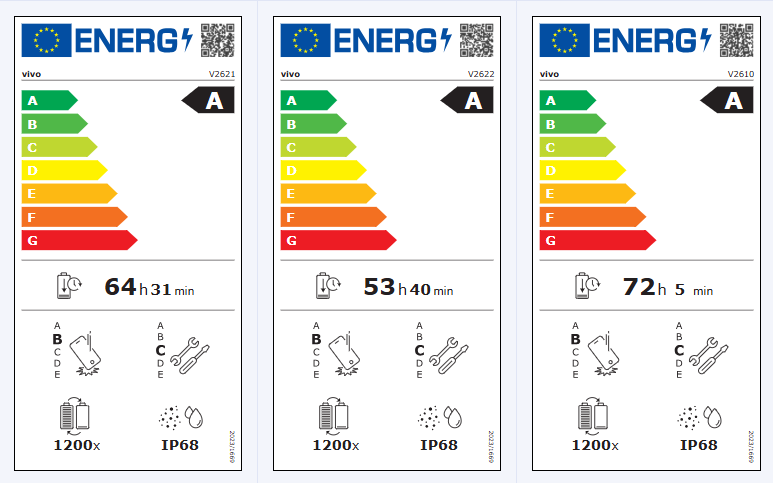
Vivo has just launched the Vivo X500, X500 Pro, and Vivo X500 Pro Max in China. There are speculations that the global launch may happen in November or December. Ahead of the global rollout, three X500 series model entries have emerged on the EPREL (European Product Registry for Energy Labelling) database, revealing battery capacities that appear smaller than those of their Chinese counterparts.
Global Vivo X500 series’ battery sizes revealed
Global Vivo X500 series battery sizes
The EPREL listings identify the Vivo V2621, V2622, and V2610, with their rated battery capacities listed at 6,305mAh, 5,180mAh, and 6,570mAh, respectively. As per the previously seen certification listings,, the V2621 is believed to be the global Vivo X500 Pro, while the V2610 corresponds to the Vivo X500 Pro Max.
There’s a possibility that the V2621 could have a typical capacity of around 6,510mAh. This means that the Vivo X500 Pro’s global edition could offer the same battery size as its Chinese edition.
On the other hand, the Vivo X500 Pro Max’s (V2610) global version could pack a 6,800mAh in typical capacity. In comparison, its Chinese edition houses a bigger 8,000mAh battery.
Vivo X500 Pro IMEI listing
The V2622 is more difficult to identify. An IMEI database listing refers to the V2622 as the Vivo X500 Pro. Its battery size suggests that it could potentially be the global Vivo X500, although previously seen certifications have revealed that the V2619 model number for the global X500. Therefore, the final marketing name of the V2622 remains unclear, and further certifications or listings should provide more clarity.
Nevertheless, the Vivo X2622 EPERL listing suggests that its typical battery size could be around 5,300mAh. To put into context, the X500’s Chinese edition has a 7,500mAh capacity.
The EPREL listings also reveal several other details about the three models. All three are listed as Android smartphones with an A energy-efficiency rating, non-foldable designs and IP68 ingress protection. Their battery endurance per cycle is rated at 64 hours 31 minutes for the V2621, 53 hours 40 minutes for the V2622, and 72 hours 5 minutes for the V2610, giving us an additional indication of how the global variants may differ.
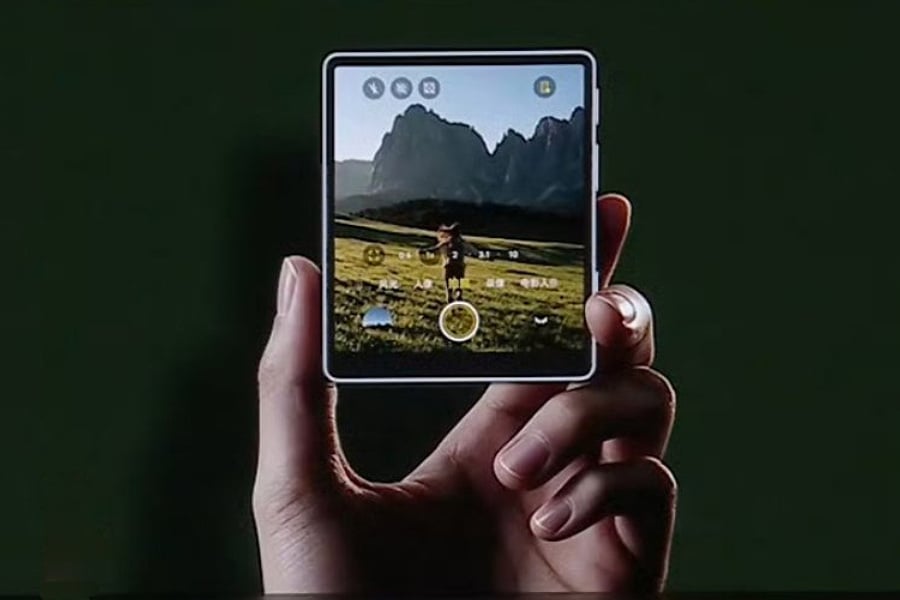
TheXiaomi 17 Pro series has its whole identity built around the rear screen, and its successor is following in its footsteps. The Vivo X500 series, which launched yesterday, skips that hardware entirely. But for folks who want it, the company has a workaround: a clip-on accessory called the Vivo Camera Screen.
Vivo unveiled the Camera Screen alongside the X500 series, pricing it at 699 yuan (~ $105), with a first-sale discount bringing it down to 599 yuan (~ $90). You’ll be able to buy it starting September 24, and it works across the entire X500 lineup.
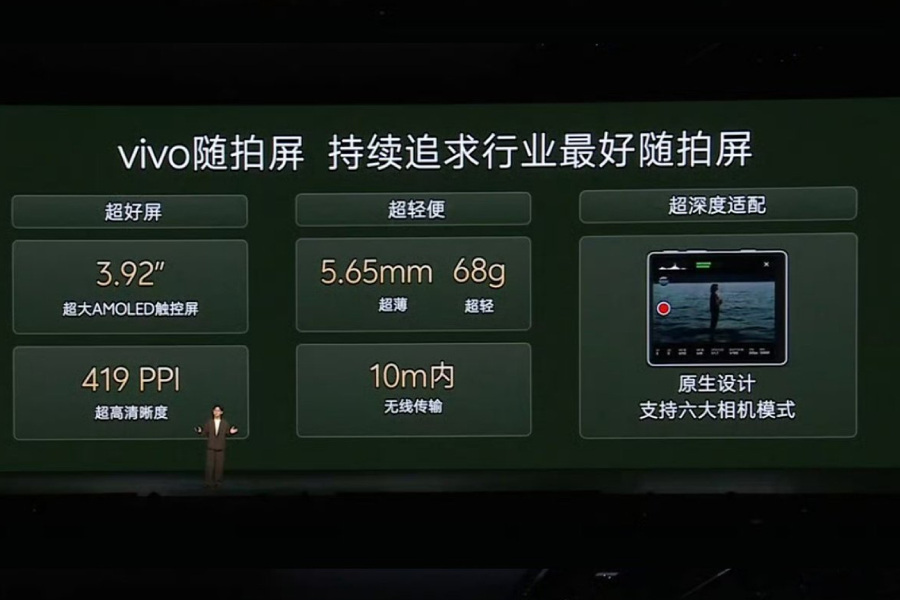
The screen itself is a 3.92-inch AMOLED touchscreen running at 419 PPI. The body is slim too, measuring 5.65mm and weighing 68g. The accessory connects wirelessly and has a working range of up to 10m.
Magnetic attachment means you snap it on and off without cases or adapters getting in the way. Vivo built six camera modes into the Camera Screen, covering short-video capture, audio recording, unboxing-style product shots, and shots from awkward angles where you can’t easily see your phone’s main display.
What’s thoughtful is that Vivo has adapted the software to mimic the phone’s native camera interface, so switching modes should feel right at home.
The approach here is different from what Xiaomi did with the 18 Pro. Xiaomi committed to a rear panel as a fixed part of the phone, wired in from the factory and running its own set of interactive features. Vivo went the other direction, keeping the X500 series itself unchanged and offering the display as something you buy separately if you actually want it.
Whether that’s the better call depends on what you use your phone for. If you rarely shoot selfies or vlogs with the rear camera, you save nothing by paying for hardware built into every unit, as Xiaomi’s buyers do. If you do shoot that way often, an accessory you can leave off most of the time and pay extra for only when you need it might make more sense than a screen permanently welded to your camera module.
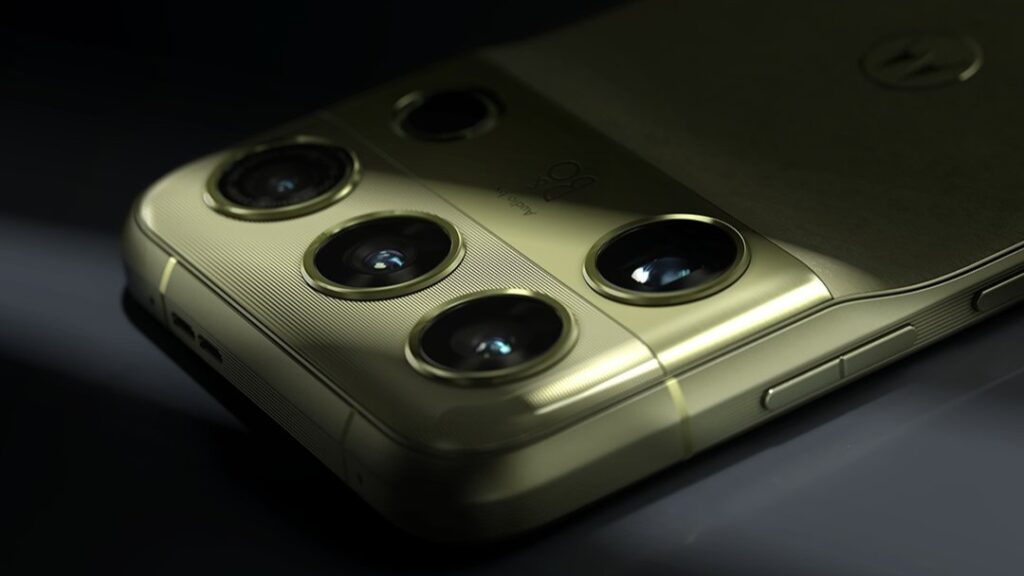
Motorola just dropped a first look at the rear of its upcoming high-end phone, and it’s hard to miss. The company is set to formally introduce the device later today at the Snapdragon Summit, and from what they’ve shown so far, they’re leaning hard into distinctive design, cameras, and sound.
This is the Motorola Signature 27, the follow-up to the original Signature that launched in India back in January. The teaser images show a big, asymmetric camera island that takes up a serious chunk of the back. It’s not the usual neat square module or stacked vertical setup you see on most flagships. This one looks deliberately different.
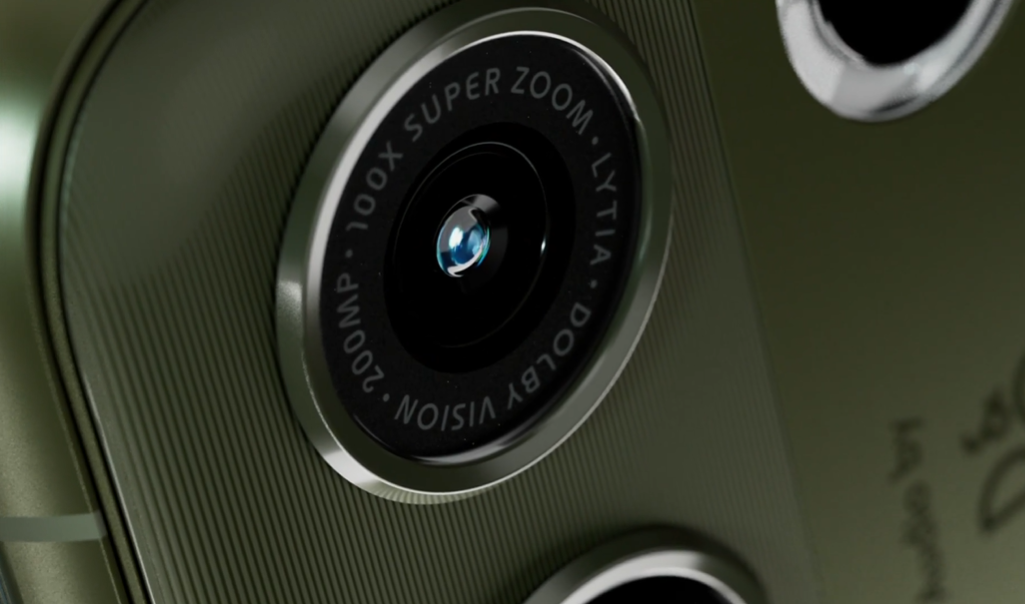
Motorola has already teased a few camera details. A teaser video on the Motorola US X account showed 200MP resolution, 100x “SUPER ZOOM,” a Sony LYTIA sensor, and Dolby Vision support. Sony’s LYTIA-branded 200MP sensor is the LYTIA 901 (LYT-901), which measures 1/1.12″. It’s notably larger than the 1/1.3″ 200MP ISOCELL HP2 used in the Galaxy S26 Ultra. Pair that big sensor with the unusual camera housing, and it’s pretty clear photography is going to be a major focus.
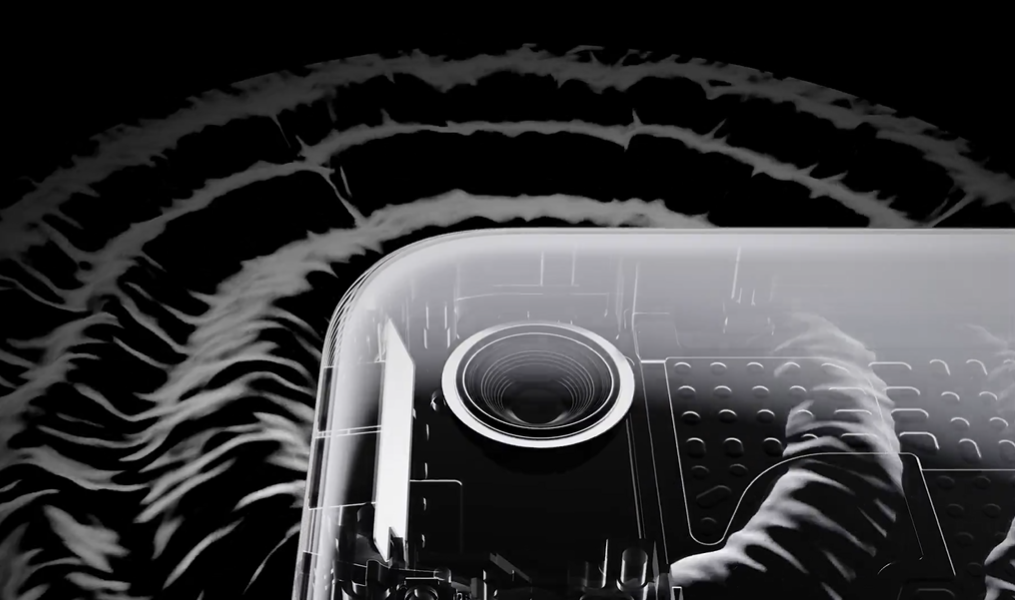
They’re also announcing a global audio partnership with Bang & Olufsen. For the first time, Motorola’s premium phones will carry “Audio by Bang & Olufsen” branding. Full details on the speakers and tuning are still under wraps, but the expectation is better sound for media, calls, and everything in between.
For context, the original Motorola Signature had a 6.8″ 1.5K LTPO AMOLED display with a 165Hz refresh rate, Snapdragon 8 Gen 5, up to 16GB of RAM and 1TB of storage, a 50MP triple rear camera setup plus a 50MP front camera that can shoot 8K Dolby Vision at 30fps, and a 5,200mAh battery with 90W wired and 10W wireless charging.
The Signature 27 is launching today (September 22) in the US and Europe, while India is still marked as “coming soon”. Full details on the hardware, features, and rollout should come during today’s Snapdragon Summit presentation, where we’ll finally see how much it actually moves the needle beyond the current Signature.
Xiaomi is rolling out the global HyperOS 4 beta update to the second batch of devices. It includes several high-end smartphones from the Xiaomi 17T and Xiaomi 15 series.
Unfortunately, the beta program isn’t available in all global regions. It’s currently limited to the global and EEA variants. But it could soon expand to more markets in the coming weeks.
Second batch of HyperOS 4 global beta rollout
Xiaomi 15
Global: OS4.0.0.7.XOCMIXM
EEA: OS4.0.0.9.XOCEUXM
Xiaomi 15 Ultra
Global: OS4.0.0.6.XOAMIXM
EEA: OS4.0.0.6.XOAEUXM
Xiaomi 17T
EEA: OS4.0.0.7.XPTEUXM
Xiaomi 17T Pro
EEA: OS4.0.0.6.XPSEUXM
The update is rolling out to eligible Xiaomi users who have previously joined the beta program. You can follow this guide to become a HyperOS beta tester.
The earlier announcement from Xiaomi reveals two batches of HyperOS 4 beta devices, and all of them are now running the beta update.
The brand hasn’t announced if the beta program will expand to more devices. In China, the stable rollout is already live for several high-end devices, with more scheduled to receive updates later this month. So, it appears Xiaomi may be focusing less on bringing the global beta to more devices and more on kicking off the stable rollout instead.
We’ll find out soon once the brand announces the rollout schedule for the global HyperOS 4 build. We’ll update you when that happens in the Xiaomi section on this website.
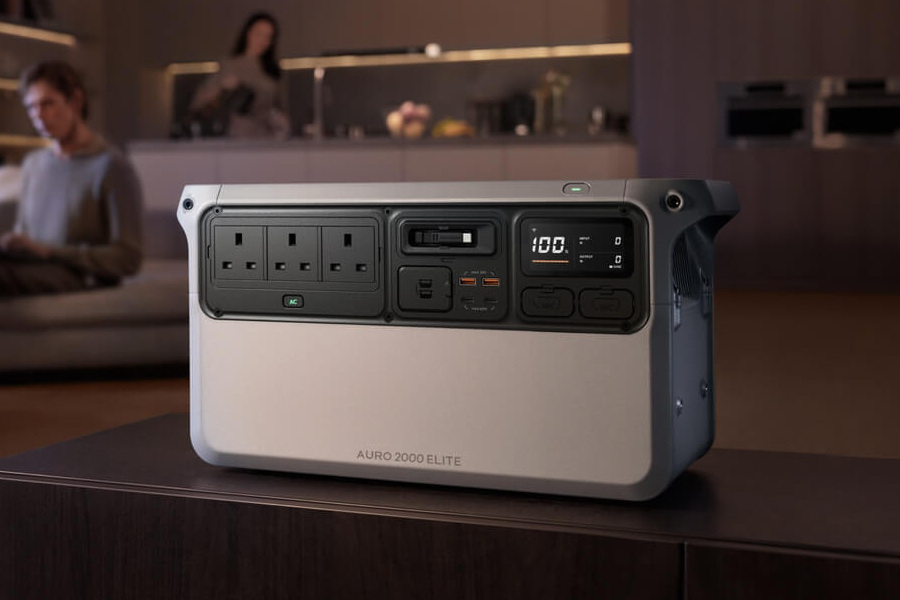
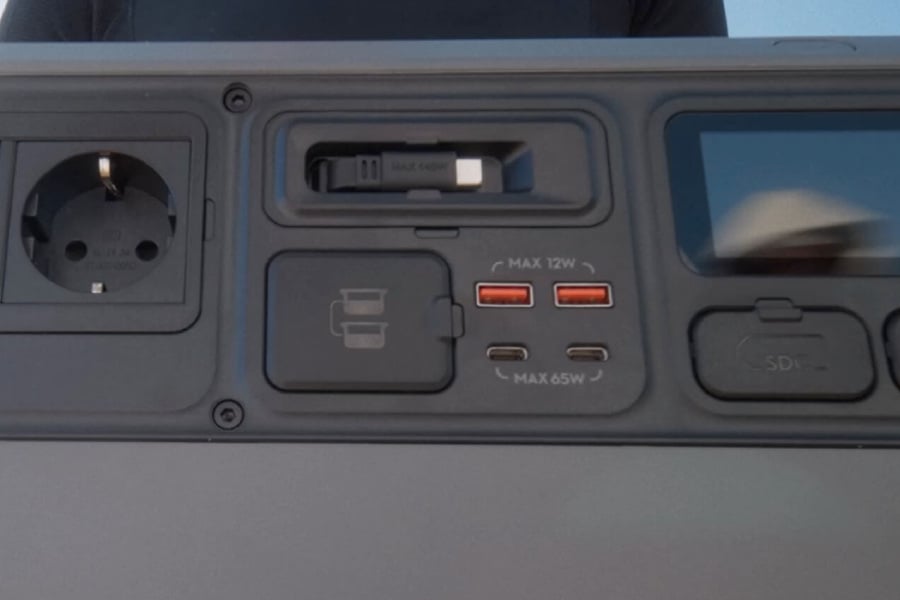
DJI has released the Power Auro 2000 Elite in China, starting at 4,799 yuan (~$715). The new outdoor power station has a 2kWh capacity and joins DJI’s existing Power lineup, which began in 2023 with the Power 1000 and Power 500.
The Power Auro 2000 Elite uses lithium iron phosphate (LiFePO4) batteries and has passed a needle penetration test. DJI says the battery can retain more than 80% of its original capacity after 4,000 charge and discharge cycles.
DJI has also trimmed the size down significantly: compared with the standard DJI Power 2000, the new unit is 24% smaller by volume and 14% lighter. Every port sits on a single side, and the body supports multiple placement angles, so you’re not stuck picking one orientation for it.
2,000W output
The Power Auro 2000 Elite can provide a continuous output of up to 2,000W and can handle appliances rated at up to 2,200W.
DJI has also made some changes to how the power station handles lower-power devices. When running appliances that use between 100W and 400W, the unit reduces internal power loss. This allows more of the stored energy to be used by connected devices.
The charging setup gives you several ways to refill the battery, whether you’re at home, in a car, or outdoors. It has a built-in 600W car charging module, so it can connect directly to a car battery without requiring an additional charging device. It also includes a 600W MPPT module for direct charging from solar panels.
Both SDC ports can be used at the same time, providing up to 1,200W of combined input. DJI says this can charge the power station fully in around 2.7 hours.
AC charging is even faster. The unit supports up to 2,000W of input, taking the battery from 0% to 80% in about 60 minutes and reaching a full charge in around 75 minutes.
Built-in 140W USB-C cable
You also get a built-in 140W USB-C retractable cable with PD 3.1 support, similar to what DJI packed into its 140W GaN charger earlier this year. If that cable gets damaged, you can swap the module instead of sending the whole unit in for repair.
The Power Auro 2000 Elite can also work as a UPS during power outages. DJI says it can switch between power paths in as little as 0.01 seconds, enough to keep desktop computers and even aquariums running without interruption during an outage. Under light loads, DJI rates operating noise at under 30 decibels.
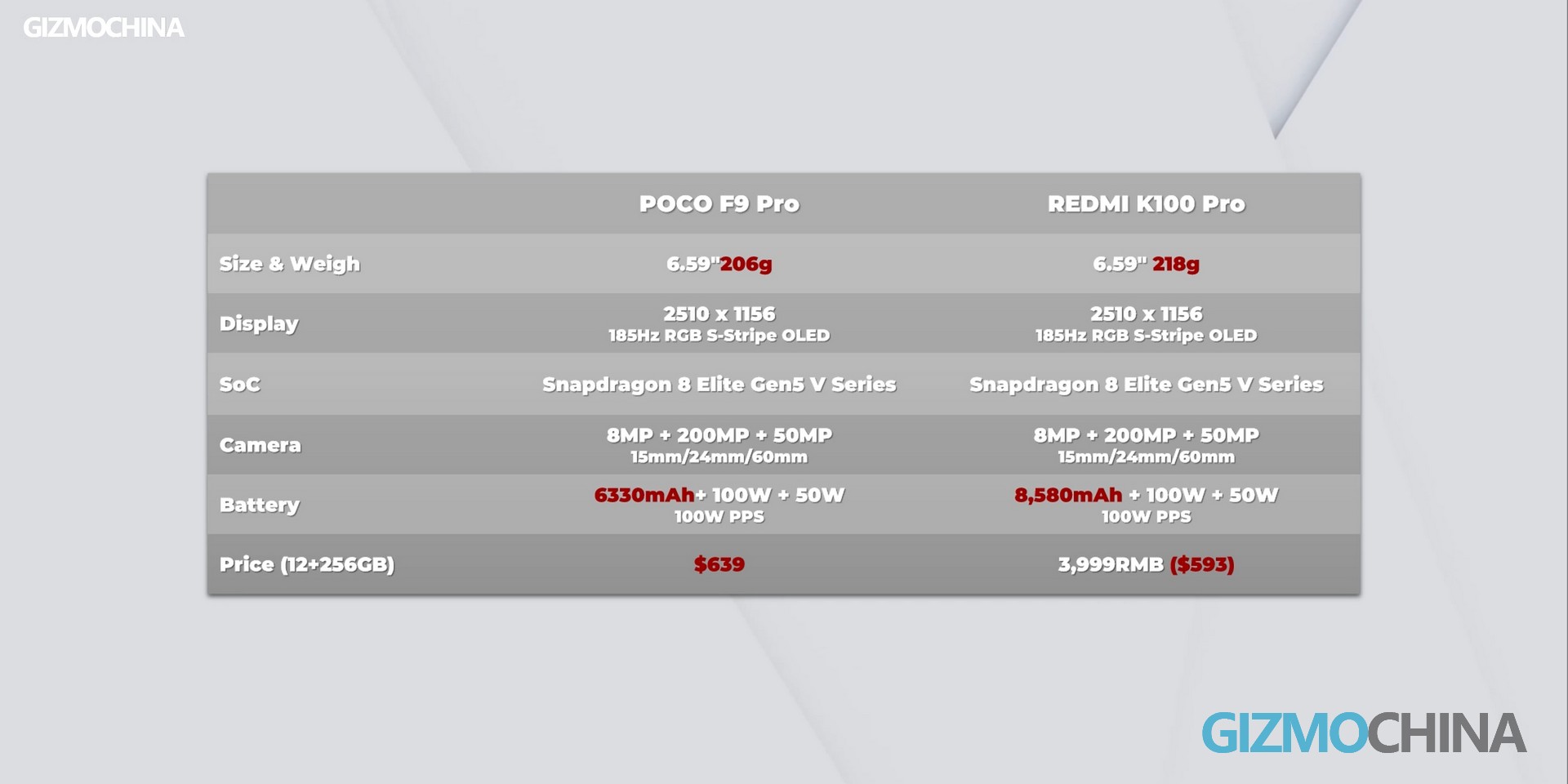
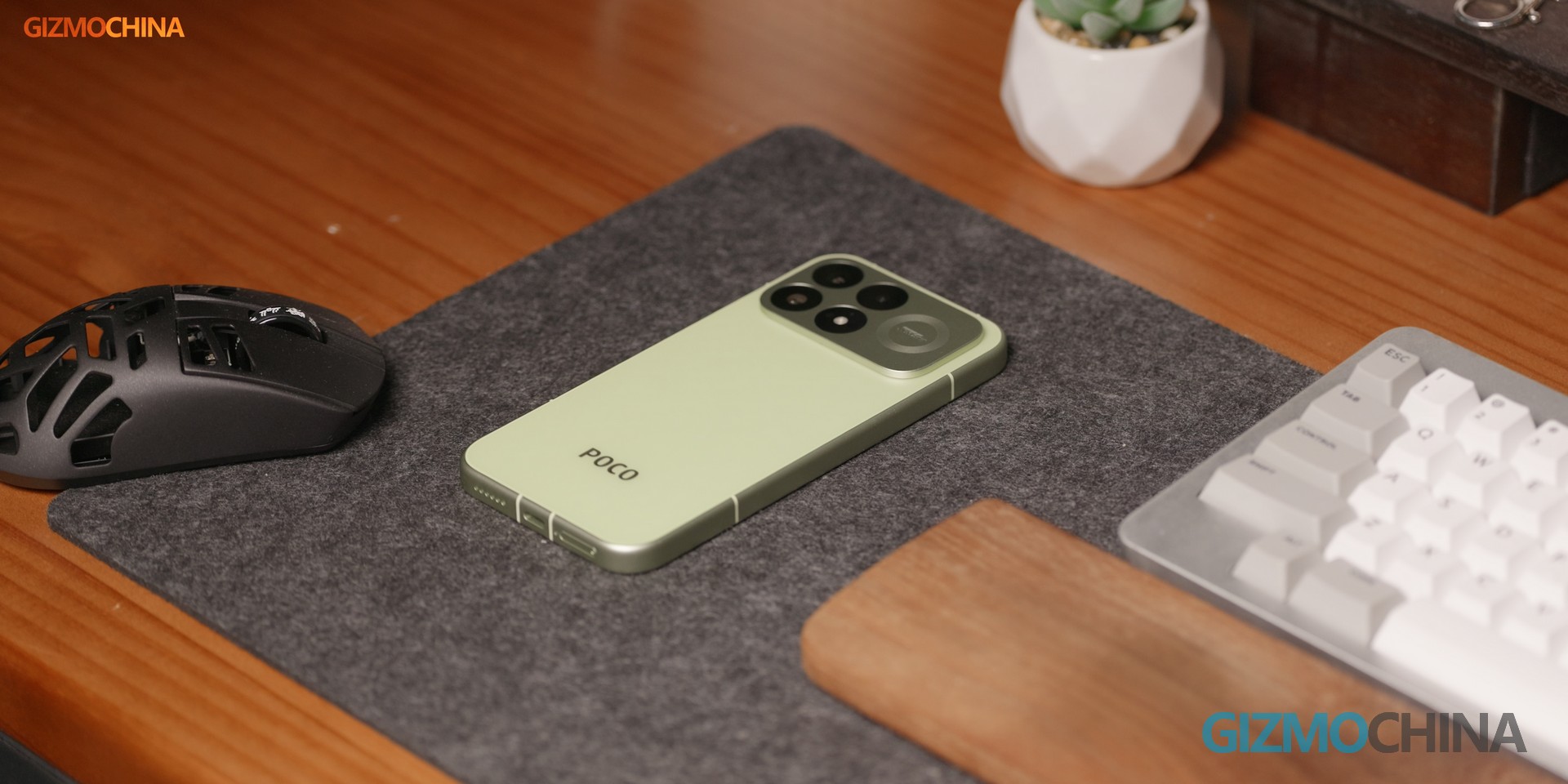
The POCO F9 Pro and F9 Ultra have finally made their global debut, bringing flagship-level hardware to international markets. At their core, these two phones are essentially the global counterparts of the Redmi K100 Pro and K100 Pro Max, sharing the same core chipset, display technology, and camera hardware. There are, however, some differences for global users.
The most noticeable one is the smaller battery capacity. So while the performance remains very much in flagship territory, battery life can vary depending on the market and usage conditions. After spending some time with the POCO F9 Pro, here’s what stands out.
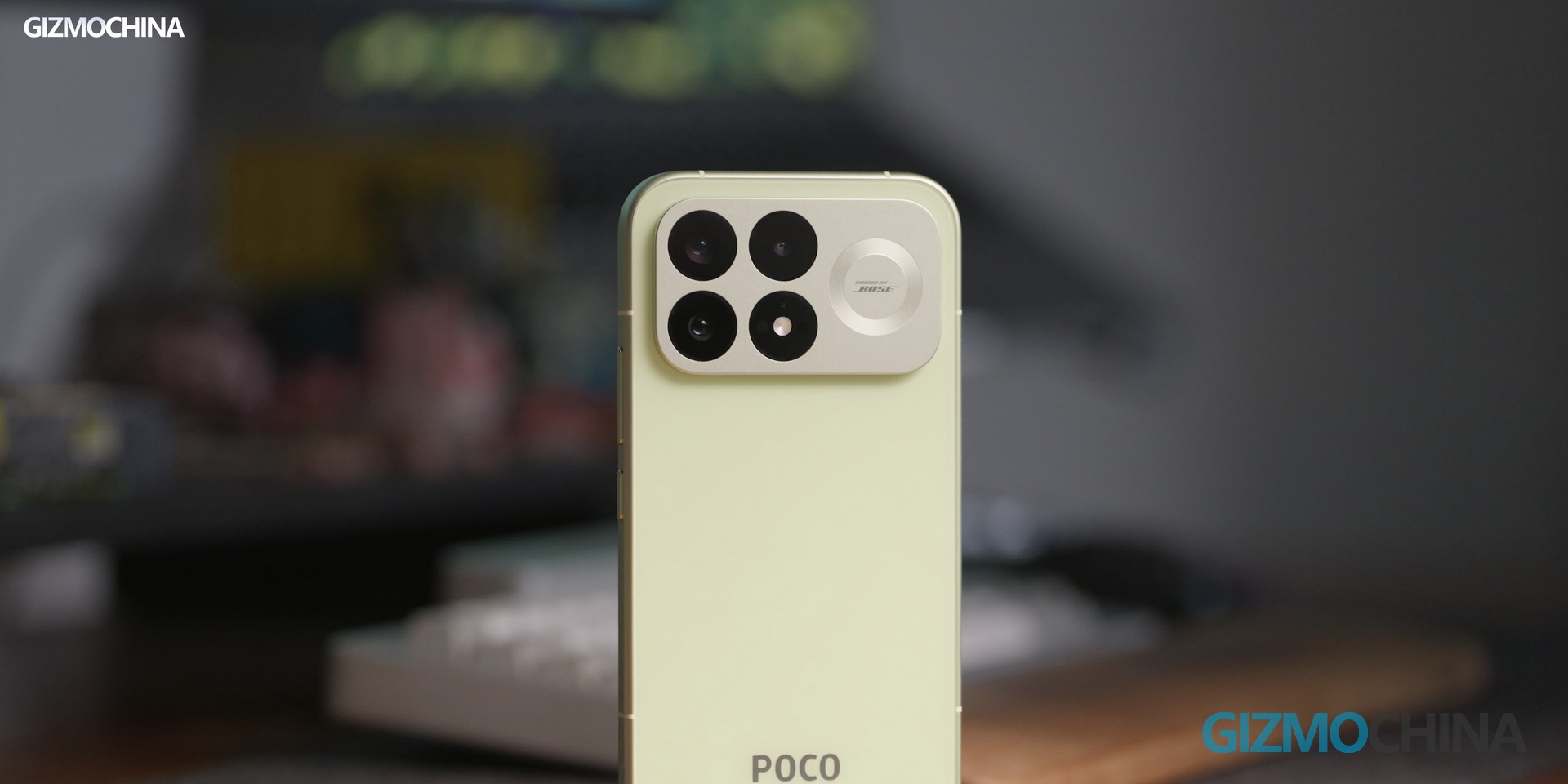
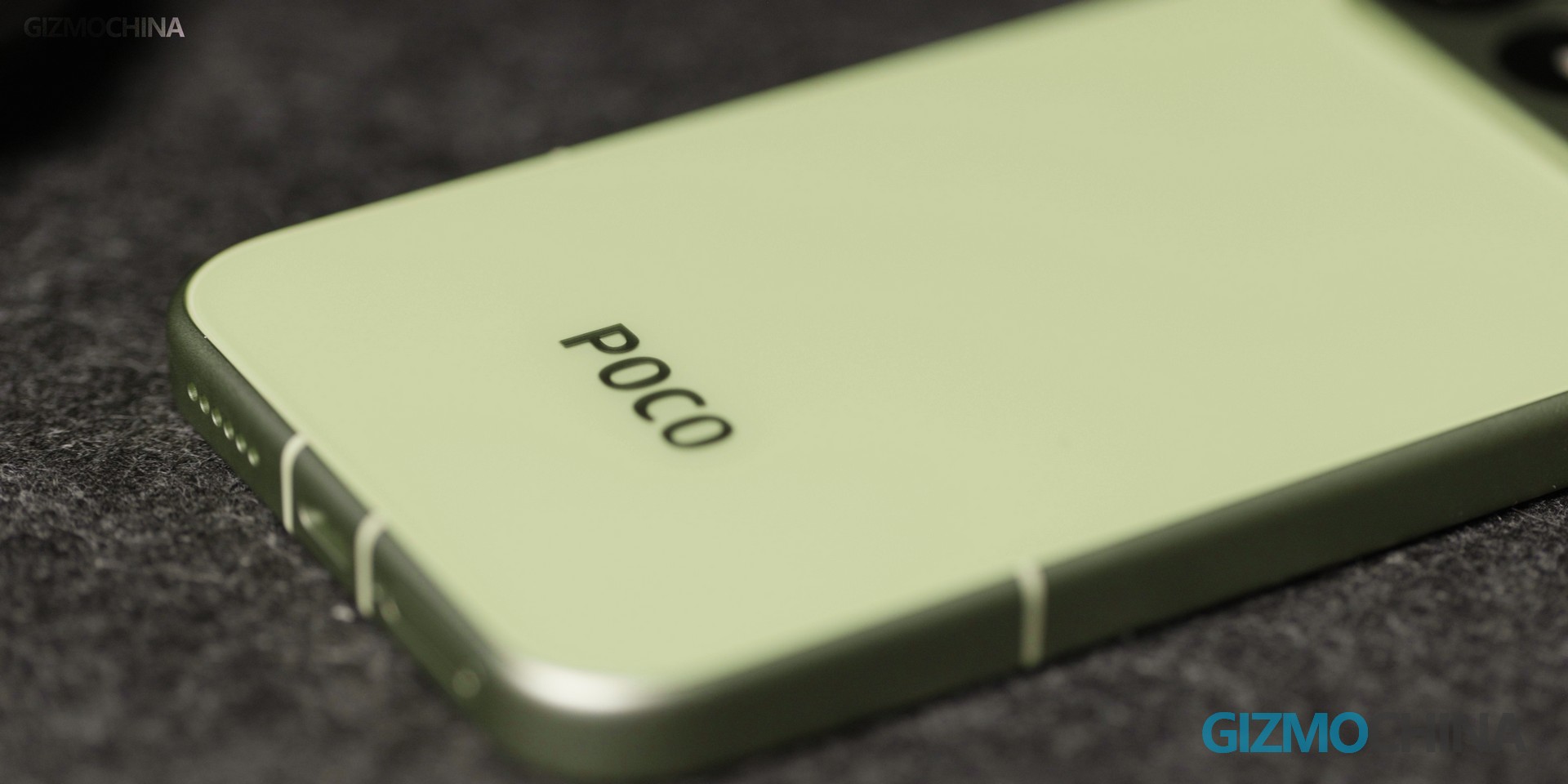
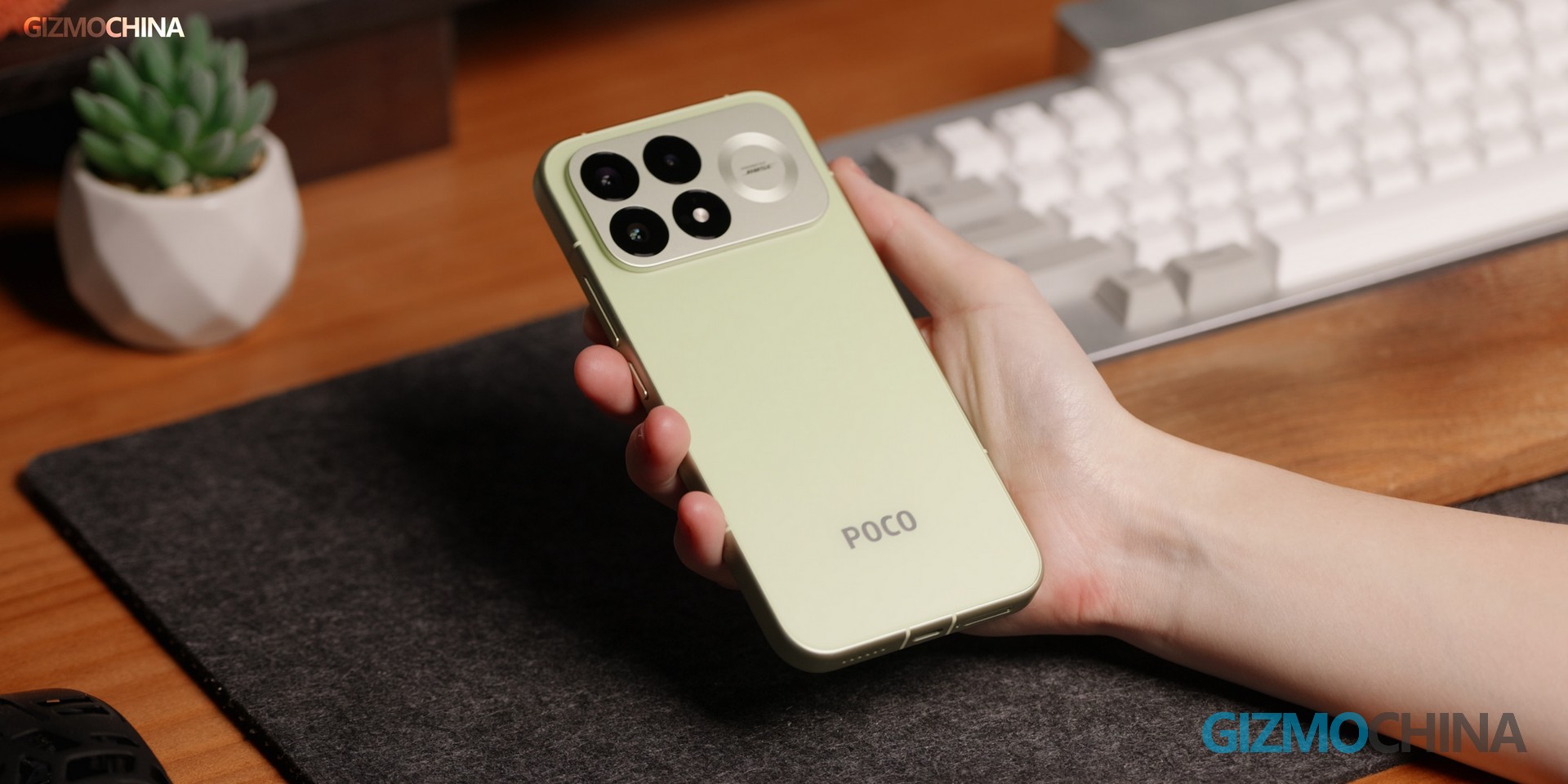
The POCO F9 Pro comes in three colors: Black, White, and Aurora Green. The Aurora Green version is easily the most distinctive of the three, thanks to a fluorescent treatment on the rear panel that glows in the dark. It’s not an especially bright glow, and that’s probably a good thing. Instead, it creates a subtle effect that’s just noticeable when the lights go out. It’s a small detail, but it gives the phone some personality without making the design feel gimmicky.
The camera module sits in the upper-left corner, following a fairly familiar layout. Right beside it, you’ll find the iconic BOSE logo, adding another visual detail to the otherwise clean rear panel. In the hand, the F9 Pro feels solid and comfortable. It’s definitely an eye-catching phone, but it doesn’t go too far with the styling.
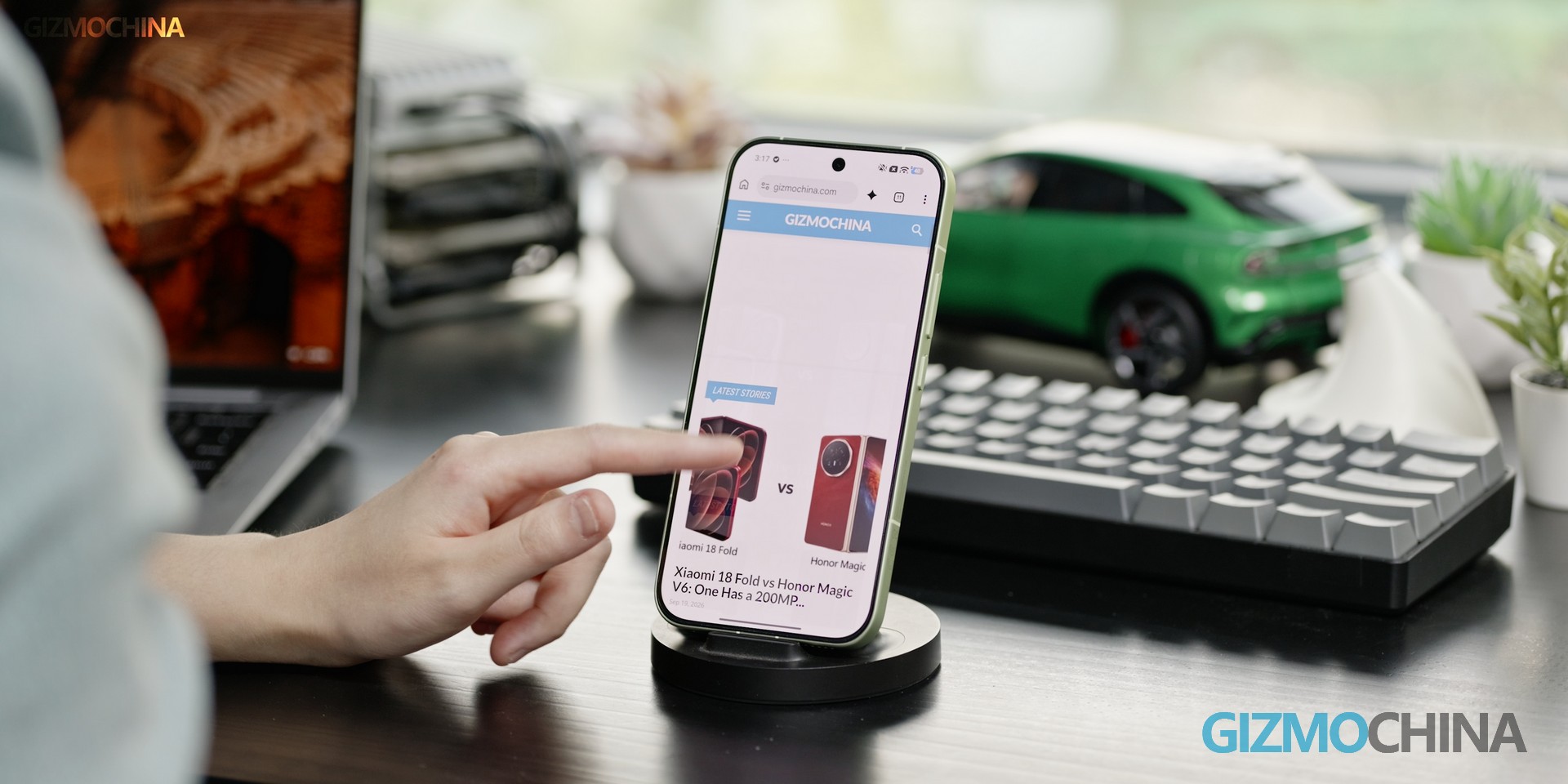
The F9 Pro features a large, high-quality display that’s particularly impressive when it comes to smoothness. Scrolling through social media, browsing the web, and navigating menus all feel incredibly fluid. Colors are vibrant without looking excessively saturated, so images and videos still retain a relatively natural appearance. What I particularly appreciate is how comfortable the display is during extended use. After spending several hours reading and watching videos, I didn’t experience the kind of eye strain that can sometimes come with prolonged screen time.
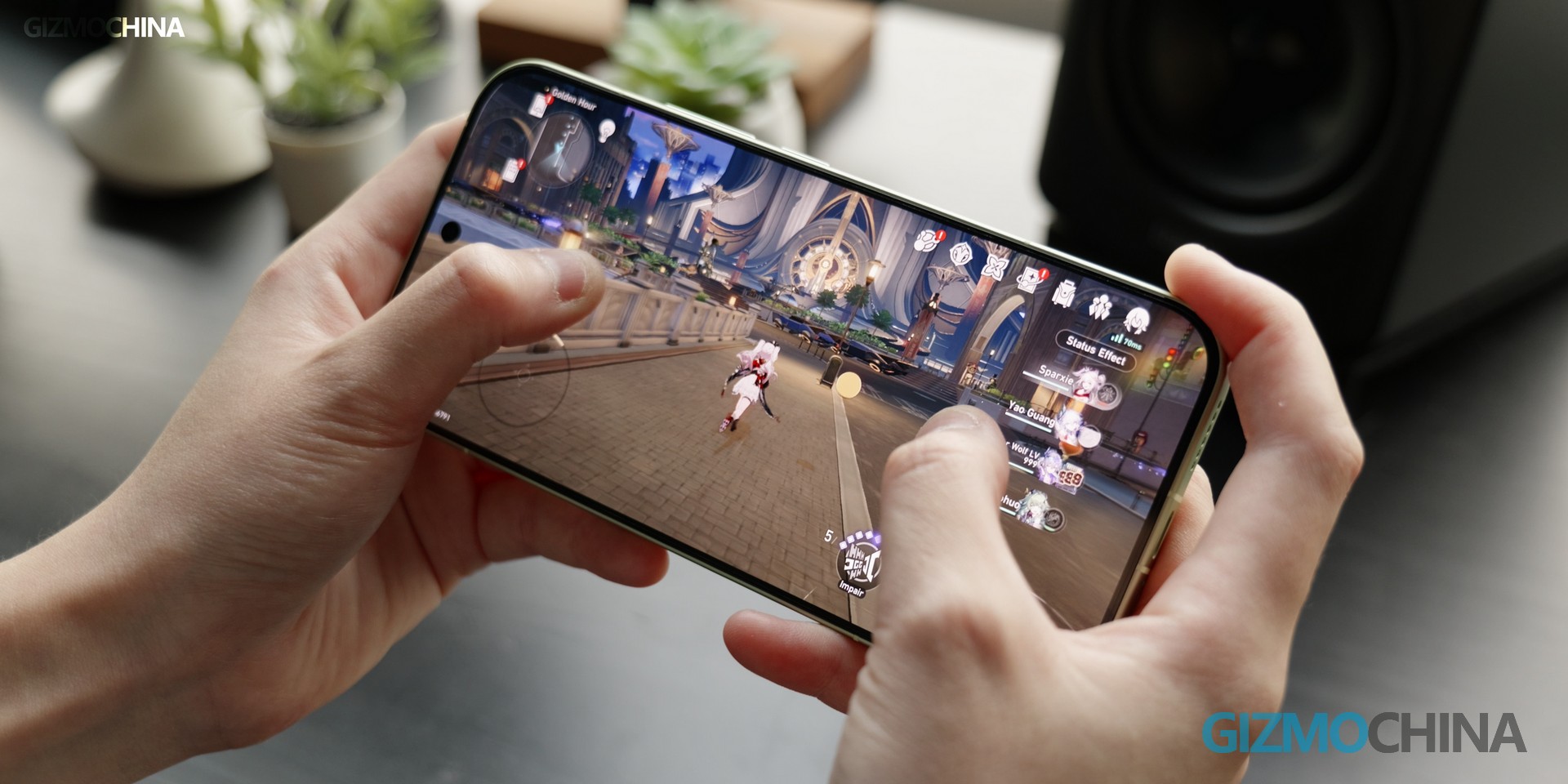
Gaming is where the display really shines. Everything feels responsive and fluid, and once you’ve spent enough time with a high-refresh-rate panel like this, going back to a standard display can feel noticeably less enjoyable. It isn’t the brightest smartphone display I’ve ever tested, but outdoor visibility is still good enough for everyday use. The slim bezels and punch-hole camera also keep distractions to a minimum, allowing the screen to remain the main focus.
Performance
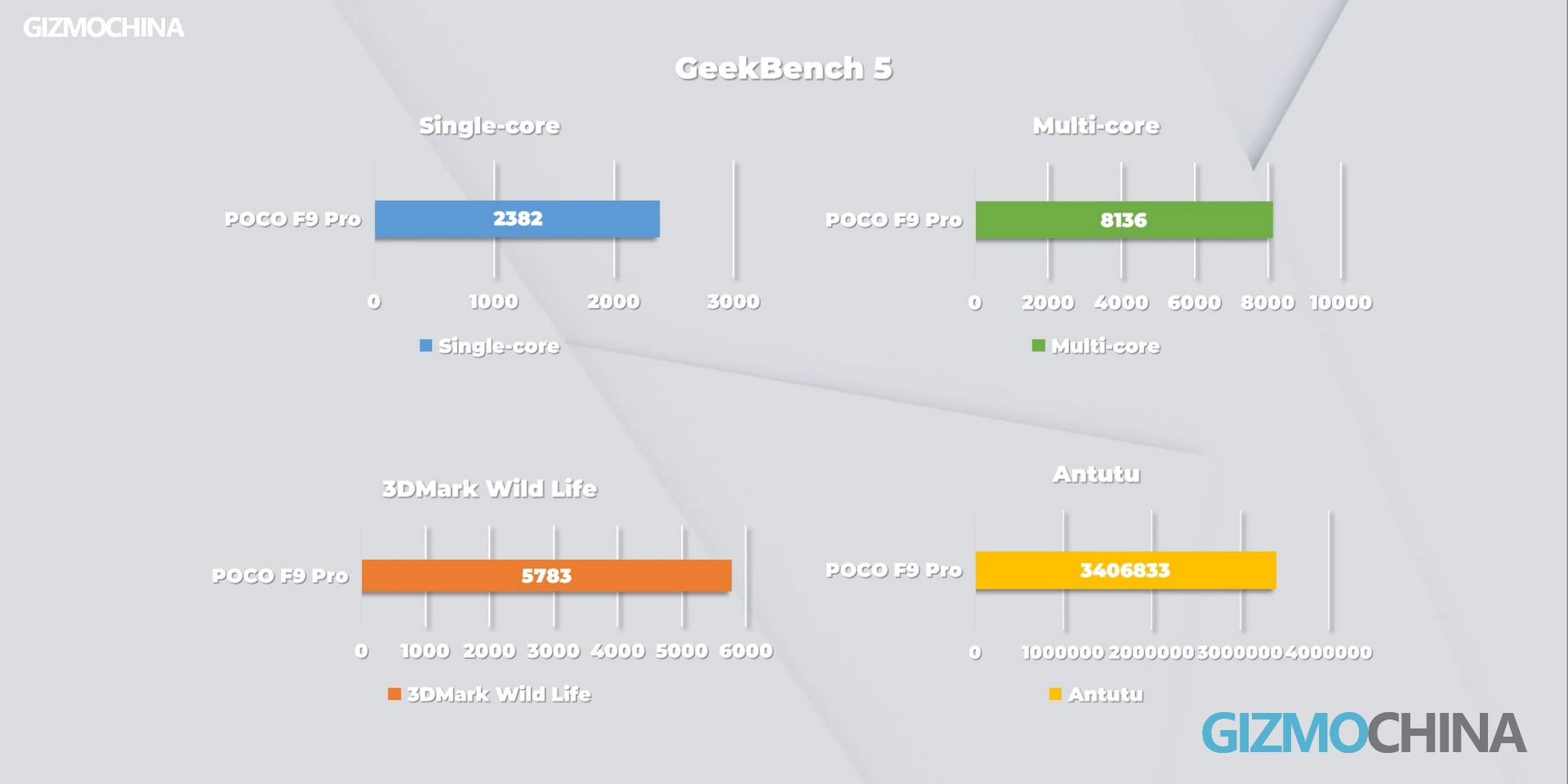
On paper, the F9 Pro delivers flagship-level performance, and the benchmark results reflect that. Single-core performance is excellent, which helps explain why everyday tasks feel so responsive. Multi-core performance is also strong, making multitasking and demanding applications easy to handle. The 3DMark score is impressive, although it isn’t the highest we’ve seen from a flagship smartphone. AnTuTu performance is similarly competitive, placing the F9 Pro firmly among the more powerful phones of its generation. But benchmarks only tell part of the story. Real-world performance is what matters most.
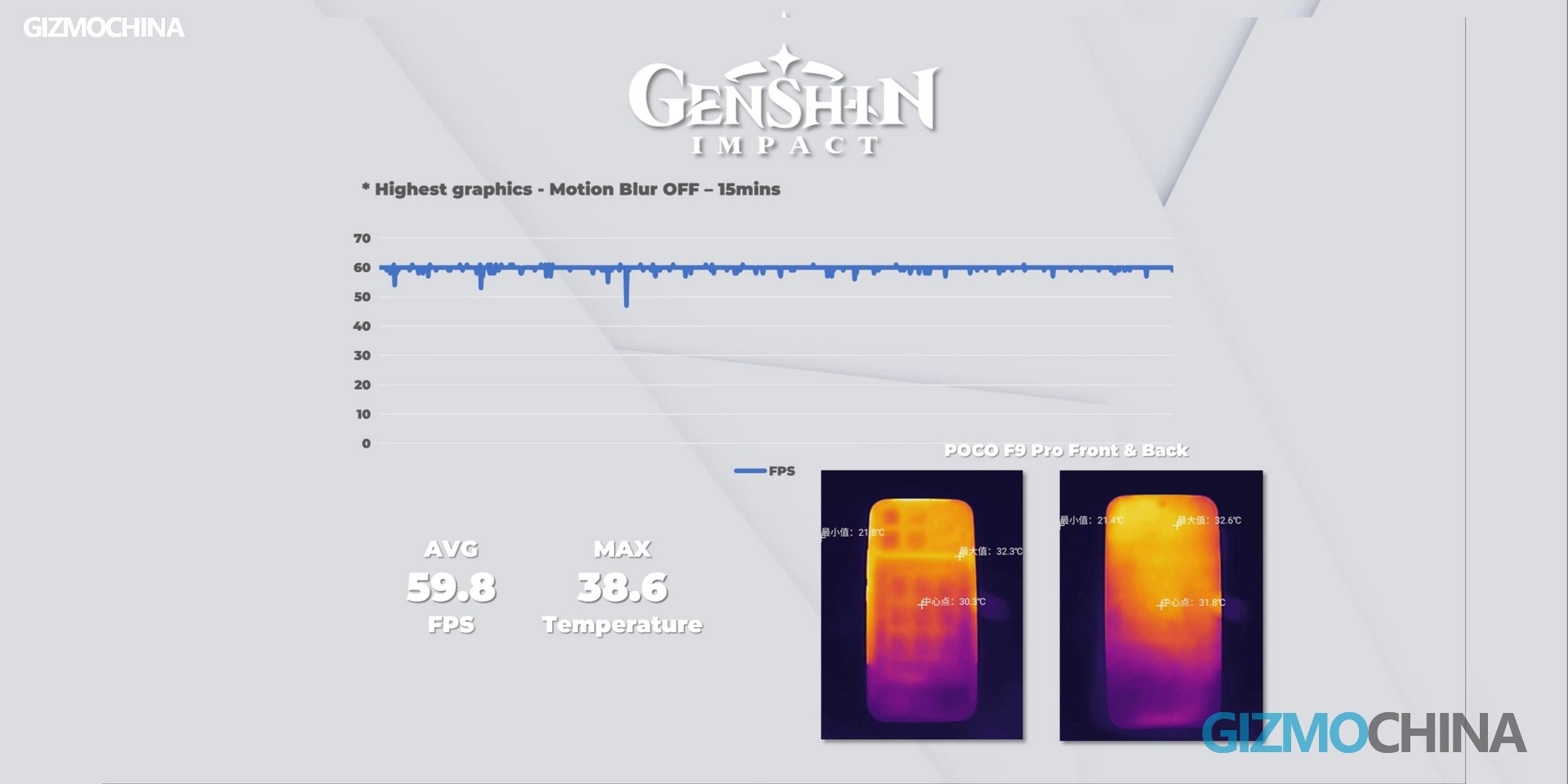
Genshin Impact
We ran Genshin Impact at maximum settings for 15 minutes. Throughout the test, the frame rate stayed very close to 60fps, with only a few minor dips that were barely noticeable during gameplay. Heat was also handled reasonably well. Instead of creating obvious hot spots, the temperature was distributed across the front and rear of the phone, keeping the device relatively comfortable to hold. Overall, the F9 Pro delivered stable and consistent performance throughout the test.
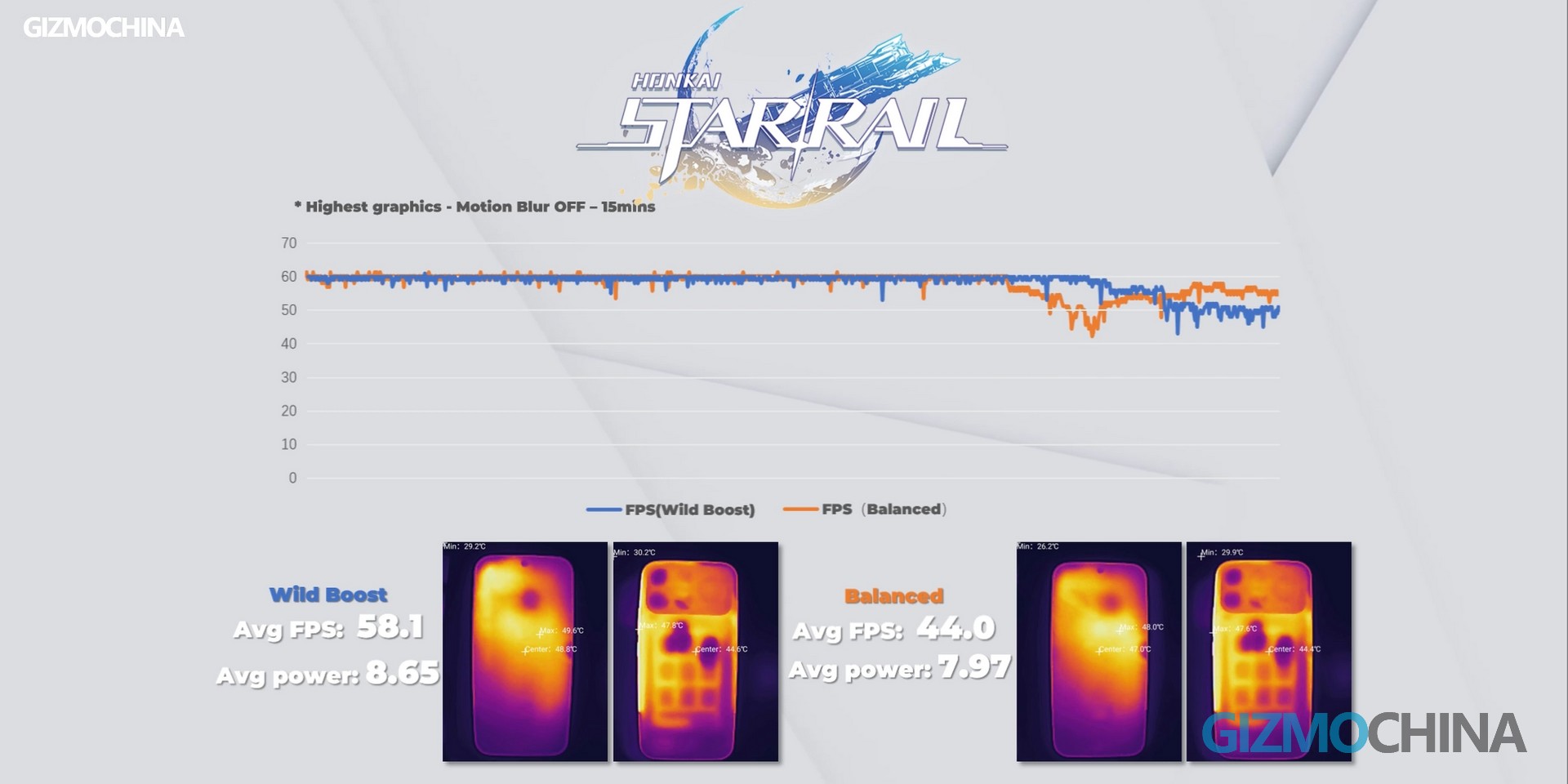
Honkai: Star Rail
Honkai: Star Rail tells a slightly different story. In Wild Boost mode, performance remains high, and gameplay is smooth, but the phone also consumes more power and generates more heat. Switching to Balanced mode reduces performance noticeably, but interestingly, the temperature doesn’t improve by much. Essentially, you’re giving up some gaming performance for a small improvement in battery efficiency rather than a significantly cooler phone. If your priority is smooth gameplay, Wild Boost mode is the more suitable option. Just expect the phone to become noticeably warm during longer sessions.
Cameras
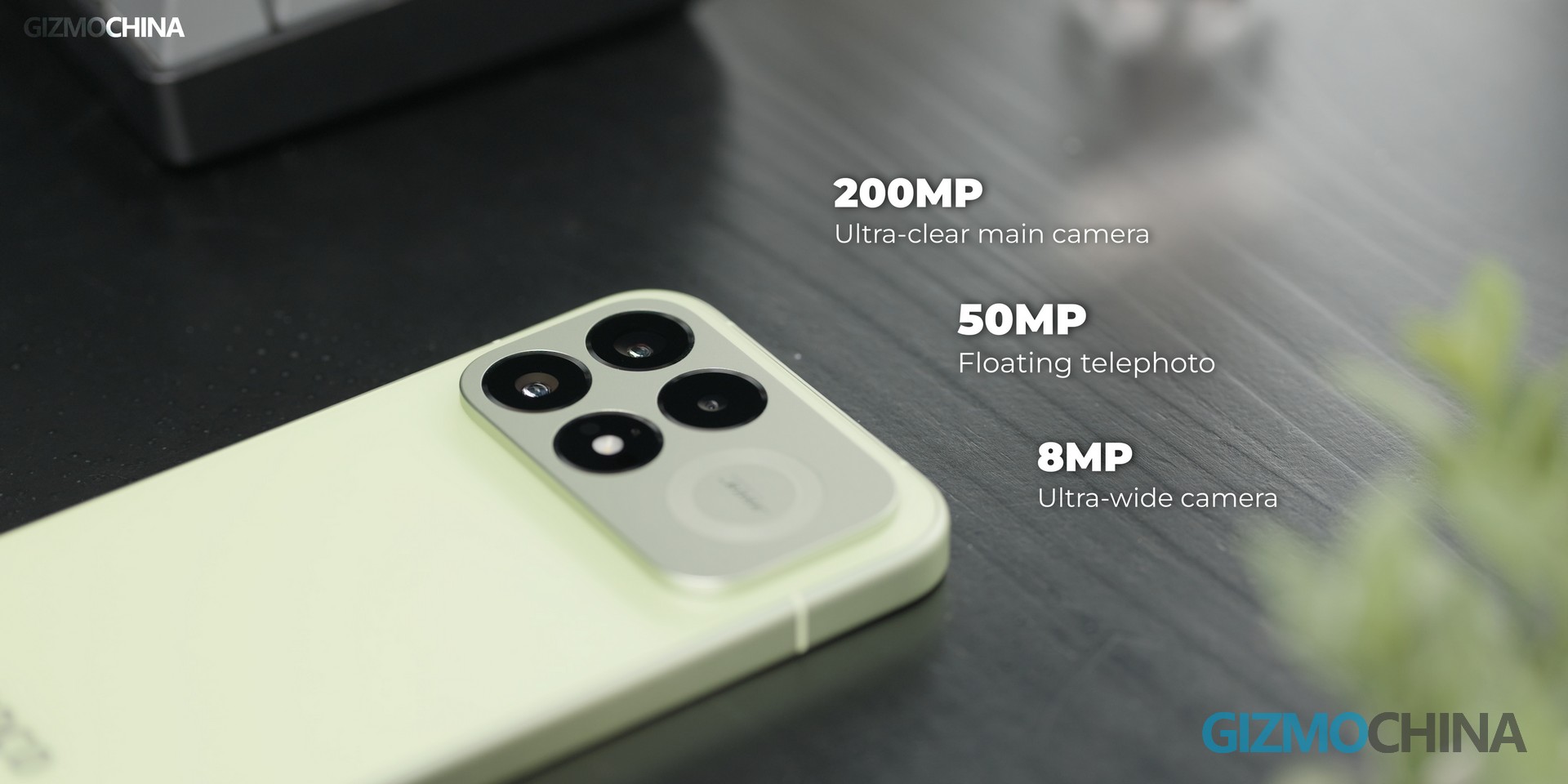
Around the back, the F9 Pro features a triple-camera system consisting of a main camera, an ultra-wide camera, and a telephoto camera. In good lighting conditions, the main camera produces sharp and detailed images with relatively natural-looking colors. Photos generally have plenty of detail without pushing saturation too aggressively.
The ultra-wide camera is useful when you need to capture a larger scene, although there’s some noticeable loss of detail toward the edges of the frame. Low-light performance is decent. It isn’t class-leading, but it remains perfectly usable for everyday photography. There’s also a macro camera for close-up shots. It’s fun to experiment with, but after the first few attempts, I found myself rarely using it. For most people, the main and ultra-wide cameras will probably handle the majority of everyday photography needs.
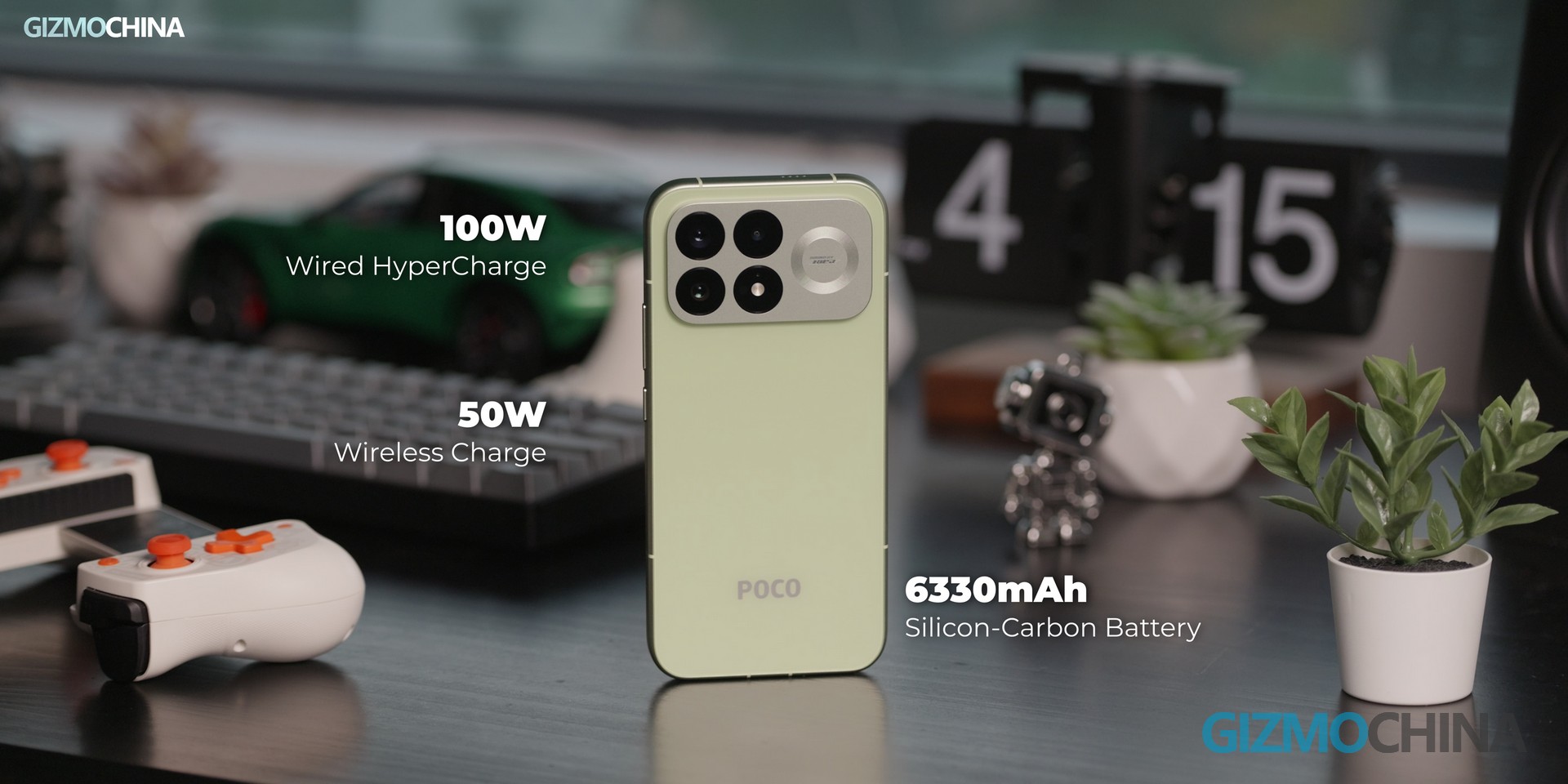
Battery life has been solid during my time with the F9 Pro. With a mixture of gaming, video streaming, browsing, and everyday tasks, the phone can comfortably get through a full day without constantly making you think about where the next charger is coming from. Charging is another strong point. When the battery does run low, the charging speed makes it easy to top up quickly. Plug it in, grab a coffee, and by the time you’re back, there’s already a substantial amount of power available. Of course, battery performance will vary depending on how heavily you use the phone, particularly when gaming at maximum settings.
After spending some time with the POCO F9 Pro, the biggest takeaway is how well-rounded the overall package feels. The display is smooth and comfortable for long periods of use. Performance is firmly in flagship territory; gaming is generally stable; the cameras are capable enough for everyday photography, and battery life is reliable enough to get through a full day. Then there are the little details. The glow-in-the-dark Aurora Green back gives the phone some character, while the BOSE branding adds a distinctive touch to the design.
The F9 Pro isn’t trying to completely reinvent the smartphone. Instead, it focuses on getting the fundamentals right—and for the most part, it succeeds. If you’re upgrading from a phone that’s two or three years old, the difference should be immediately noticeable, particularly in display smoothness and overall performance. For someone already using a recent flagship, however, the upgrade may feel less dramatic. The F9 Pro is more about delivering a strong, dependable overall experience than introducing something radically new. All things considered, the POCO F9 Pro is a well-rounded smartphone that combines flagship-class performance, a smooth display, capable cameras, solid battery life, and a distinctive design into a compelling package.
Huawei’s FreeBuds Neo are one of the most comfortable pairs of budget ANC earbuds you can buy right now. The lightweight design, effective noise cancellation for commutes, and a genuinely attractive Sakura Pink colorway make them a compelling option for anyone who wants dependable everyday earbuds without spending flagship money.
Pros
Exceptionally light and comfortable for extended wear
Effective ANC in daily commutes and high-traffic scenarios
Gorgeous Sakura Pink color option
LDAC support at this price point is a rarity
Cons
Slight initial ear pressure when first putting them on (with ANC on)
Case lacks wireless charging
Design and Fit: Light as a Feather
The first thing you notice about the FreeBuds Neo is just how little they weigh. Each earbud weighs about 4.8g, while the charging case tips the scales at just 31.4g. For context, that’s noticeably lighter than the AirPods Pro 3, which weigh in at 5.55g per bud.
Huawei clearly put serious engineering effort into the ergonomics here. The company analyzed 150 different ear contour profiles and over 10,000 ear samples to optimize the insertion angle and surface curves. The result is a fit that distributes pressure evenly across the ear, meaning you can wear these for hours without that nagging soreness that plagues so many in-ear designs.
The short-stem design isn’t just for looks either. By keeping the stem to about 23mm, Huawei improved weight distribution so the earbuds feel balanced rather than hanging downward like some longer-stem competitors. Even during more vigorous movement, they stay anchored.
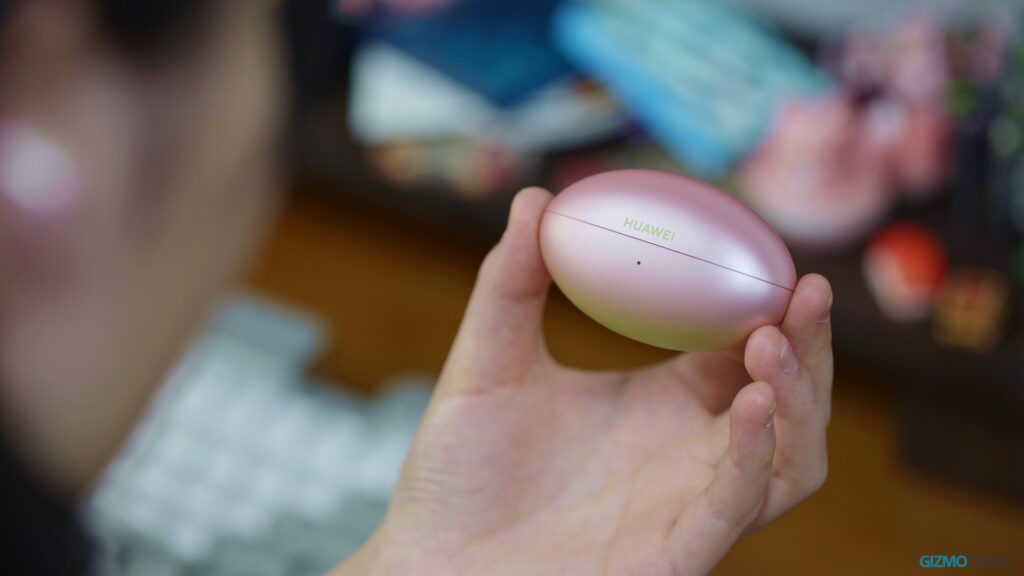
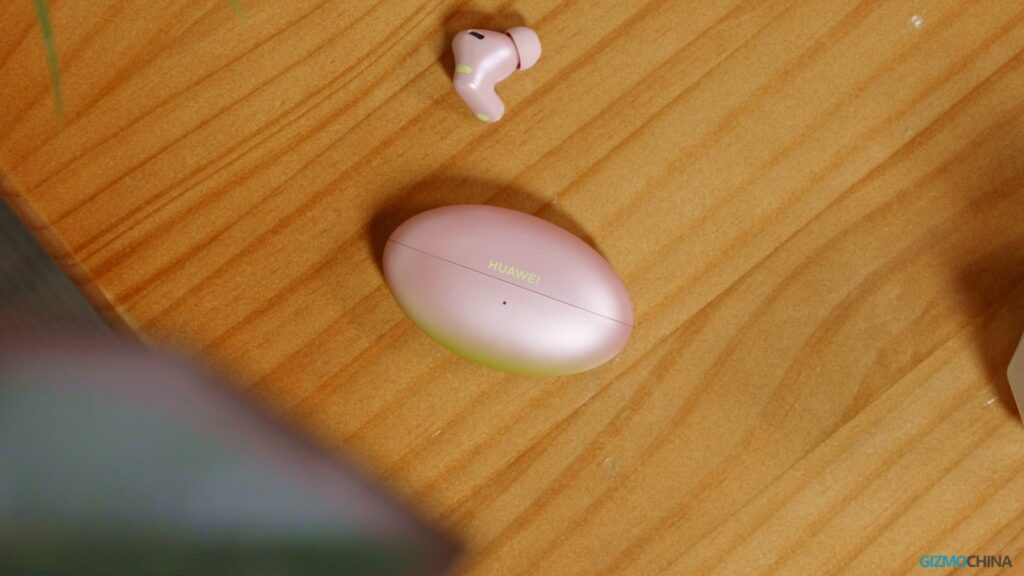
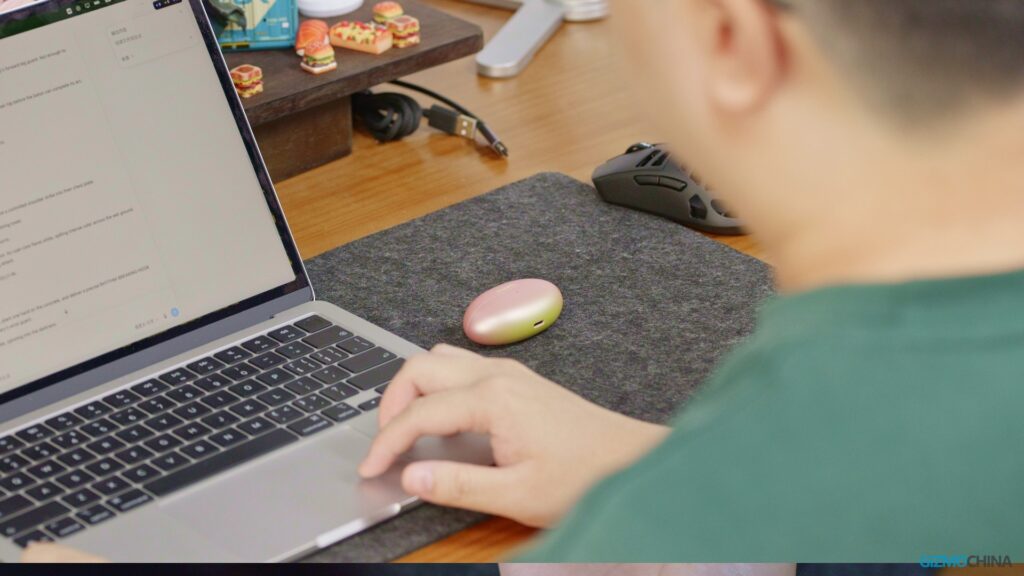
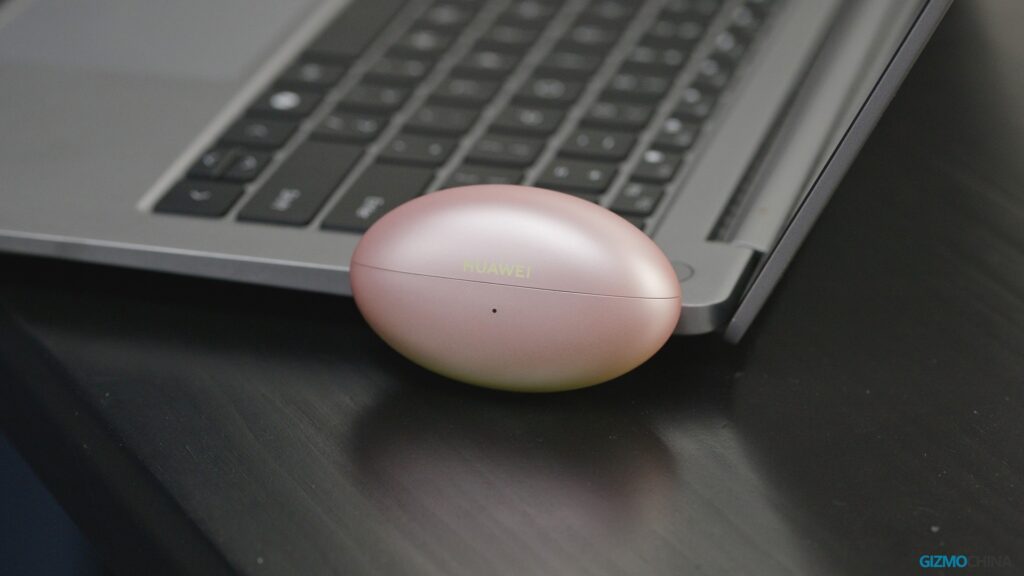
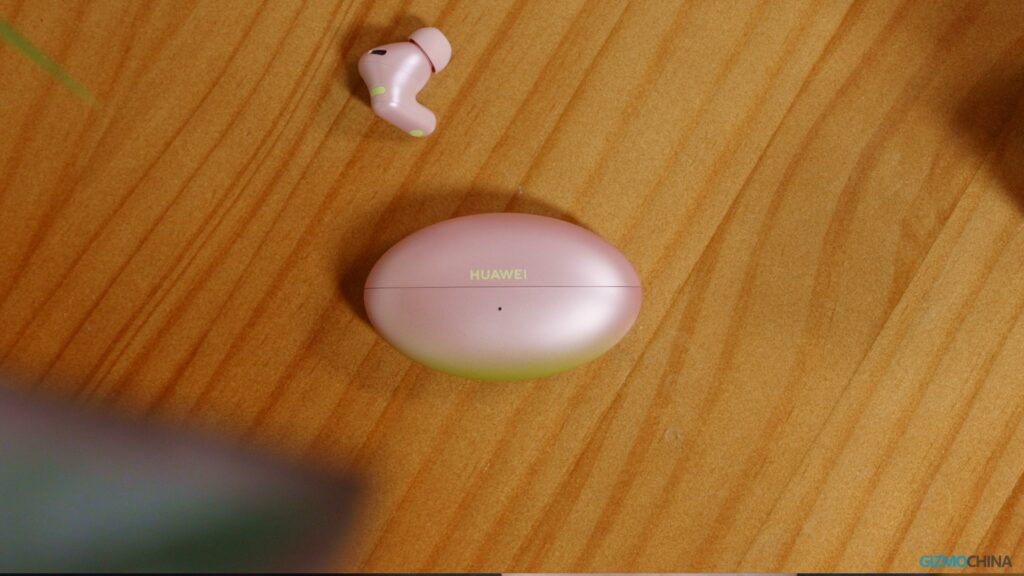
In terms of the overall build, the FreeBuds Neo feel solid for the price. The case has a distinctive elongated oval shape — almost like a small American football — that sits comfortably in the palm and slips easily into a pocket without adding bulk.
ANC: Effective Where It Matters
Now, the noise cancellation experience. This is where the FreeBuds Neo genuinely surprised me.
Huawei packs a dual-channel noise cancellation architecture into these buds, powered by a third-gen audio chip that can sample ambient noise up to 400,000 times per second with a processing latency of just 8 microseconds. On paper, that translates to up to 30dB of average noise reduction across the full frequency range.
In practice, the ANC handles the daily grind very well. During my commute — a mix of subway rumble, traffic noise, and the general chaos of a busy city — the FreeBuds Neo did a solid job of softening the low-frequency engine drone and the higher-pitched chatter that usually seeps through. The adaptive algorithm adjusts the cancellation strength in real time, so you don’t have to fiddle with settings when you move from a quiet office to a packed train platform.
The one thing to note is the initial ear pressure. When you first put them in and activate ANC, there’s a distinct feeling of pressure in your ear canal. It’s not uncomfortable exactly, but it’s noticeable — like the sensation you get when a plane is descending. The good news is that this fades within a few minutes as your ears adjust. Once you’re past that initial phase, the experience is actually excellent. The pressure sensation is a common trade-off with ANC earbuds, and Huawei has at least managed to keep it mild compared to some more aggressive implementations.
For calls, Huawei includes three microphones plus a bone conduction sensor. The company claims clear voice pickup even in environments with up to 95dB of background noise or wind speeds of 9 m/s. I didn’t test it in a hurricane, but in normal windy conditions and busy streets, call quality held up well.
Sound Quality and Features
The FreeBuds Neo use an 11mm multi-magnet dynamic driver with a frequency response range of 20Hz to 40,000Hz. They support LDAC at up to 990kbps, which is genuinely impressive at this price point. If you’re using a Huawei device, you can push that even further to 2.3Mbps via the L2HC 4.0 codec.
Sound signature leans toward a pleasant, well-rounded tuning rather than a hyper-analytical one. Bass has enough presence to keep commutes engaging without overwhelming mids, and vocals come through clearly. The 360-degree spatial audio with head tracking adds a nice sense of immersion for movies and games, though it’s more of a bonus than a must-have feature.
Battery life is solid. You get 6.5 hours with ANC on, or 10 hours with it off. With the case, that extends to 24 hours with ANC and 40 hours without. The earbuds are also IP55-rated for dust and water resistance, so sweat during workouts won’t be an issue.
Bluetooth 6.0 support and dual-device connectivity round out the feature set, meaning you can switch between your laptop and phone without going through Bluetooth settings every time.
The Sakura Pink Factor
I tested the Nebula Pink (Sakura Pink) variant, and it’s easily the standout color in the lineup. The case features a soft pink base with a muted metallic sheen that fades into a pale light green at the bottom — a gradient effect that gives it far more personality than the flat, single-tone finishes you see on most budget earbuds.
For female users in particular, this colorway hits a sweet spot. It’s warm and approachable without being loud. The pastel tones don’t scream for attention the way a stark white pair might, which makes them feel more like a subtle accessory than a piece of tech hardware. If you’re someone who wants your earbuds to blend naturally with your daily look rather than stand out as an obvious gadget, the Sakura Pink is a great choice.
The other options — Stellar Silver, Ice White, and Starry Black — are far more conventional, so if you want something with a bit more character, pink is the way to go.
Advice?
At €109 (roughly $120) as an introductory price, the FreeBuds Neo sit in a competitive mid-range bracket. They’re not trying to beat the FreeBuds Pro series on raw ANC performance or audio fidelity. Personally, I don’t agree that a higher number necessarily leads to a better active noise-canceling experience.
What they do instead is nail the fundamentals: they’re comfortable enough to forget you’re wearing them, they cancel noise effectively in the situations that matter most, and they look good doing it. Just a friendly reminder: the earbuds are really lightweight and tiny, so you should pay better attention to them, making sure they’re still in your ears. I haven’t lost a single one yet, and so far, they seem to stay in place pretty well.
The initial ear pressure is worth mentioning, but it’s a temporary sensation that most users will adapt to quickly. If you want a pair of everyday earbuds that disappear into your routine — in the best possible way — the FreeBuds Neo are easy to recommend. And if you’re drawn to the Sakura Pink, you won’t be disappointed.
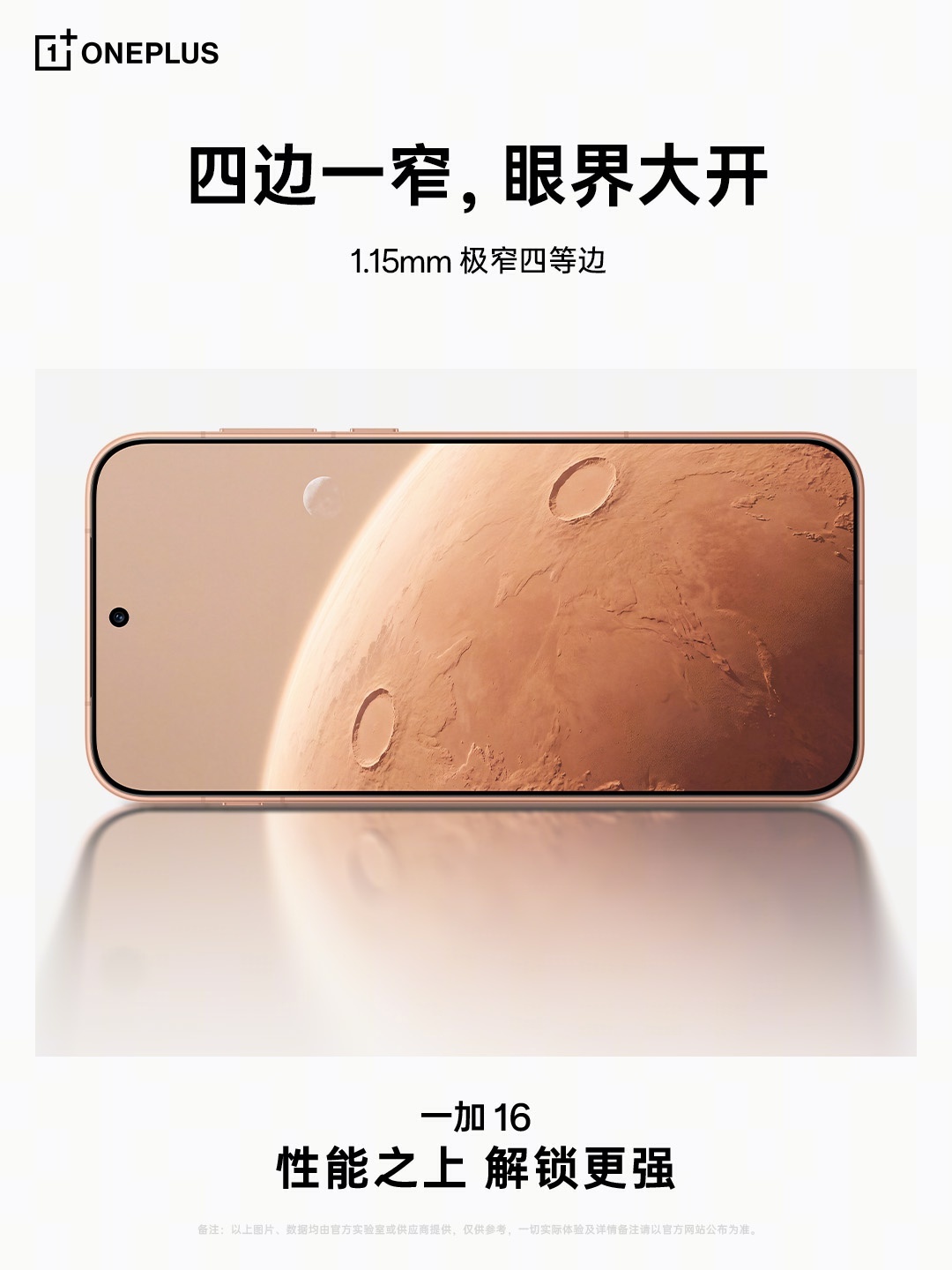
OnePlus has started revealing details about the OnePlus 16 ahead of its expected launch in October in China. Recently, the brand shared official images, color options, and memory configurations for the upcoming flagship. Now, OnePlus China President Li Jie Louis has revealed more about the phone’s design and usability.
OnePlus 16 design details revealed
According to Li Jie Louis, the OnePlus 16 is being designed around a combination of performance, appearance, and everyday ergonomics. The flagship will feature extremely narrow bezels on all four sides, giving the front a cleaner appearance while increasing the immersive feel of the display. The flat-screen approach is paired with carefully rounded corners to make the phone more comfortable to hold during regular use.
The company is also paying attention to how the phone feels in different scenarios. Li Jie says the larger-radius corners help maintain the visual appeal of a flat display while improving comfort in the hand. This should be particularly noticeable during extended scrolling and when holding the phone horizontally for gaming.
Another notable addition is a dedicated shortcut key that can be customized with up to nine different functions. OnePlus says users will be able to assign commonly used actions such as muting the phone, activating the flashlight, or starting a recording, making them accessible with a single press. The approach is aimed at reducing the number of steps required for frequently used functions, especially when operating the phone with one hand.
The OnePlus 16 will also feature a metal camera deco and a metal middle frame, reinforcing its premium design direction. These details come alongside earlier announcements surrounding the flagship, including its debut with ColorOS 17 and support for a global 165Hz refresh rate.
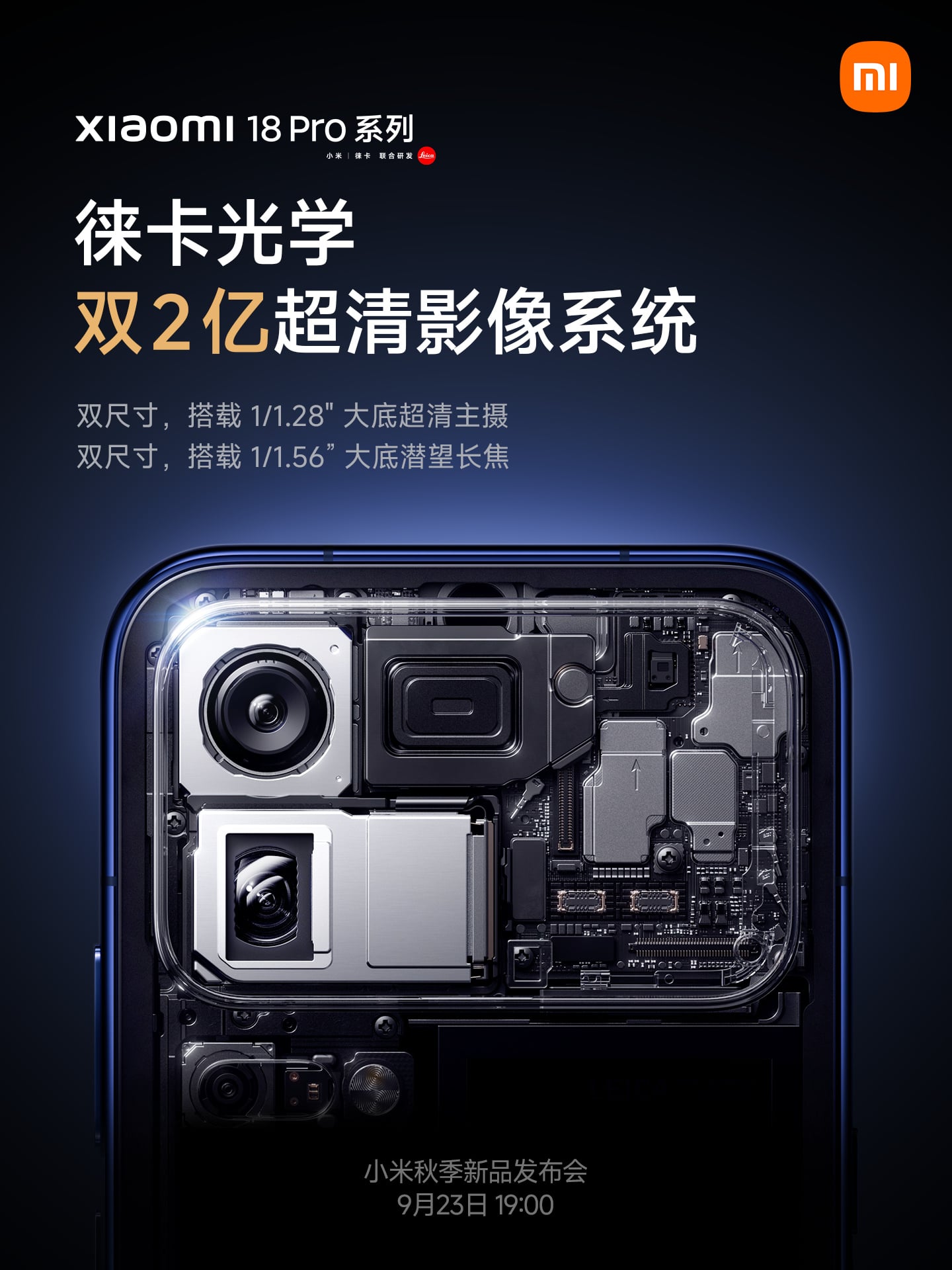
Xiaomi is gearing up to unveil the Xiaomi 18 Pro and 18 Pro Max, its next-generation flagship smartphones, tomorrow. The company has already confirmed several key details ahead of the launch. Its latest announcement puts the focus firmly on the camera system.
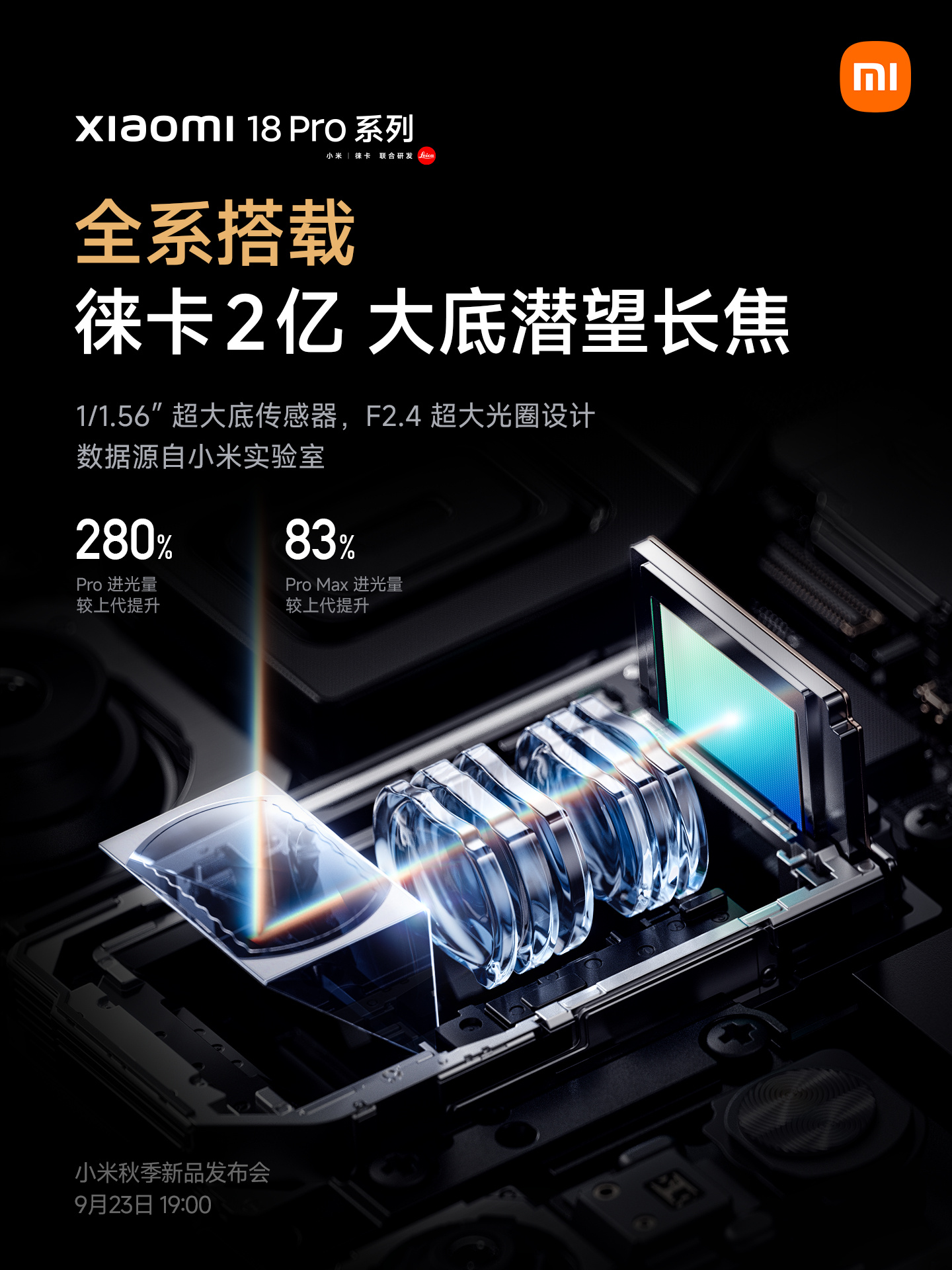
The Xiaomi 18 Pro series will debut with a Leica dual 200-megapixel imaging system, combining a high-resolution main camera with a periscope telephoto sensor. Xiaomi has confirmed that the main camera uses a large 1/1.28-inch sensor, while the periscope telephoto camera features a 1/1.56-inch sensor. This gives both cameras considerably more sensor area than typical high-resolution smartphone cameras.
The 200-megapixel periscope telephoto camera also features an f/2.4 aperture and a native 75mm focal length. It supports 3.2x optical zoom and up to 12.8x lossless zoom, while a floating dual-lens focusing system allows the telephoto camera to focus as close as 12cm for macro photography.
Xiaomi says the light intake of the telephoto camera has increased by 280% on the Xiaomi 18 Pro compared with its predecessor, while the Xiaomi 18 Pro Max delivers an 83% increase.
Beyond the cameras, the Xiaomi 18 Pro series will feature a new Super Pixel Display 2.0 with an M11 light-emitting system. The bezels have been reduced to just 0.99mm, down from 1.18mm on the previous generation, while the increased corner curvature is designed to give the phones a more rounded appearance.
Xiaomi has also confirmed hardware-level privacy protection that can be enabled for app notifications, floating windows, split-screen content and lock-screen notifications. A customizable AI button can reportedly activate system-wide privacy protection with a single press.
The Xiaomi 18 Pro and 18 Pro Max will use different versions of the flagship chipset, with the Pro getting the Snapdragon 8 Elite Gen 6 and the Pro Max receiving the sixth Snapdragon 8 Elite Gen 6. These devices will be powered by 7,000mAh and 8,500mAh batteries, respectively. Both devices will support 100W wired and 50W wireless charging.
Vivo has launched the Buds Clip, its first pair of clip-on open-ear earbuds, alongside the new X500 smartphone series. The standard version carries a promotional price of 599 yuan ($89), down from its regular price of 699 yuan ($104). Vivo is also offering a wireless charging version for 699 yuan ($104), which will normally retail for 799 yuan ($119).
Like other clip-on earbuds that have hit the market recently, the Buds Clip are designed to leave your ear canal completely unblocked. They attach to the edge of your ear using a flexible memory titanium alloy bridge. They are quite light at 5.2 grams per earbud.
The earbuds feature a symmetrical design, which means there is no dedicated left or right earbud. You can simply clip them onto either ear, and they automatically adjust the stereo channels based on how they are worn. They come in black, along with white and purple color options that feature a textured, pearlescent finish.
For audio, the earbuds use 12mm drivers. Because open-ear designs naturally let sound leak out, Vivo included an anti-leakage mode that relies on directional audio to keep your music or podcasts pointed directly at your ear canal.
There is also an adaptive volume feature that shifts the audio levels depending on how loud your environment is, plus a standard 10-band equalizer to adjust the mix. For phone calls, the Buds Clip use two microphones and a bone-conduction sensor to separate your voice from background noise.
In terms of battery life, the earbuds last up to 10 hours per charge, while the charging case increases the total runtime to 42 hours. They also support fast charging, delivering three hours of playback in 10 minutes, and come with an IP55 rating for protection against dust and water.
You control the earbuds via a touch area on the outside of the casing, which supports taps for playing or pausing and sliding gestures for volume. They can connect to three devices at once via Bluetooth.
However, as is common with mobile hardware, some of the more advanced software features are locked to the company’s own ecosystem. If you want to use the built-in real-time translation or get AI-generated transit notifications, you will need to pair them with a compatible Vivo or iQOO phone.
In related news, Vivo has recently launched the Watch 6 with a sapphire crystal, a 1.47-inch AMOLED display, eSIM support, and up to 21 days of battery life.
For more daily updates, please visit our News Section.
We use cookies on our website to give you the most relevant experience by remembering your preferences and repeat visits. By clicking “Accept”, you consent to the use of ALL the cookies.
This website uses cookies to improve your experience while you navigate through the website. Out of these, the cookies that are categorized as necessary are stored on your browser as they are essential for the working of basic functionalities of the website. We also use third-party cookies that help us analyze and understand how you use this website. These cookies will be stored in your browser only with your consent. You also have the option to opt-out of these cookies. But opting out of some of these cookies may affect your browsing experience.
Necessary cookies are absolutely essential for the website to function properly. This category only includes cookies that ensures basic functionalities and security features of the website. These cookies do not store any personal information.
Any cookies that may not be particularly necessary for the website to function and is used specifically to collect user personal data via analytics, ads, other embedded contents are termed as non-necessary cookies. It is mandatory to procure user consent prior to running these cookies on your website.