Vivo X Fold 6 is the company’s current best foldable, launched in China this June, and followed by a global release in September. We won’t see its successor until next year, but initial industry leaks about the Vivo X Fold 7 may have started surfacing online.
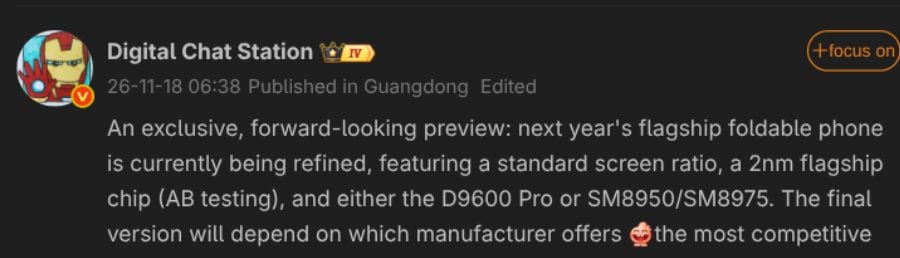
Tipster Digital Chat Station from Weibo shared today that Vivo’s next-year flagship foldable is currently in development with a standard aspect ratio of 20:9. Vivo doesn’t seem to be intending to change the form factor of its main foldable lineup to a wider design like Samsung’s Z Fold 8 or Apple’s iPhone Duo.
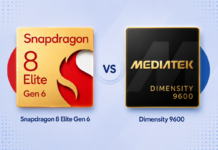
Comparison
MediaTek launched the Dimensity 9600 Pro and the 9600M, but not the regular Dimensity 9600.
What Vivo apparently hasn’t decided yet is the chipset. The company is said to be considering a 2nm Android flagship chip, but is torn between MediaTek’s Dimensity 9600 Pro and Qualcomm’s Snapdragon 8 Elite Gen 6 series.DCS says the decision will depend on which chip makers offer a more competitive price.
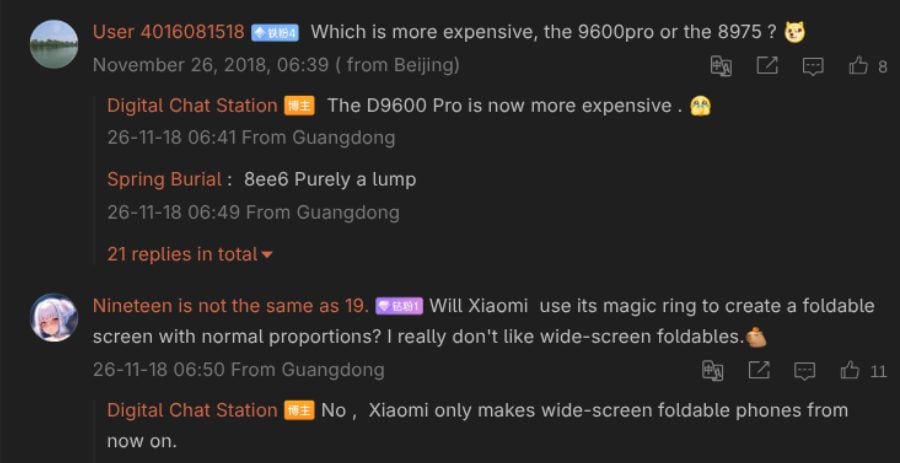
Dimensity 9600 Pro is apparently more expensive
There are a few extra details the tipster shared in the comments section of the post. One of them is the claim that the Dimensity 9600 Pro is more expensive than the Snapdragon 8 Elite Extreme Gen 6.
Our September report, citing Taiwanese outlet Tai Pao, revealed that the Dimensity 9600 Pro is priced at $220, a new high for MediaTek’s top-tier SoC. Qualcomm’s competing Snapdragon 8 Elite Extreme Gen 6 is said to cost even more, at around $300 per chip. If that report is to be trusted, the Dimensity 9600 Pro might now cost more than $300.
Another claim is that Xiaomi will only be making wide-screen foldables going forward. The current Xiaomi 18 Fold is already a wide foldable, so there are no surprises there. More recently, a wide-screen phone from Xiaomi came to light with a 6.3- to 6.4-inch display, suggesting Xiaomi is actively working in this category.
Xiaomi is rolling out the 41mm version of its Watch S5 to international markets following its initial launch in China this past September. The smartwatch is now available in Europe for €229.90 and in the UK for £169.99, offering a standard set of fitness tracking features and a brighter screen.
Xiaomi Watch S5 41mm Specifications
The Watch S5 41mm is a relatively compact device, measuring 41.4mm across and 9.9mm thick, with a weight of 36 grams without the strap. The casing is made of stainless steel and uses a floating lug design that the company says is meant to improve how the watch sits on the wrist.
It comes in three variants: standard Black and Light Blue options that include fluororubber bands, and a Ceramic White version that adds a ceramic bezel and a leather strap.
Comparison
The Xiaomi Watch 5 runs Wear OS 6 with Google Gemini.
The display is a 1.32-inch AMOLED screen with a 466 x 466 resolution and a 60Hz refresh rate. The main hardware update here is the brightness. While the standard high-brightness mode tops out at 1,500 nits, the screen can reach a peak brightness of 3,000 nits, which should help with visibility in direct sunlight.
Inside, Xiaomi has updated its sensor array. The watch uses a new three-sensor system for tracking heart rate, blood oxygen levels, and stress. It also includes a temperature sensor with a stated margin of error of ±0.1°C. Xiaomi is using this temperature data for menstrual cycle tracking, and the watch comes with three months of advanced cycle predictions powered by a partnership with the Clue app.
For fitness tracking, the Watch S5 supports over 150 sports modes and comes with a 5ATM water resistance rating. It also features built-in GNSS with support for five satellite systems and offline map navigation. Additionally, the watch supports Bluetooth heart rate broadcasting, allowing cyclists to share real-time heart rate data with compatible cycling computers and third-party fitness apps.
The watch runs on Xiaomi’s HyperOS 4, which includes standard smartwatch features like notification mirroring, a built-in microphone and speaker for calls, and global NFC support for contactless payments via Google Pay and Xiaomi Pay.
It is powered by a 590mAh battery. Xiaomi estimates up to 14 days of battery life under light usage, eight days with normal use, and about five days if you leave the always-on display enabled.
In related news, Xiaomi has also launched the Smart Band 11 globally with a 1.72-inch AMOLED display and heart rate tracking, alongside its first clip-on earbuds featuring 11mm drivers and up to 38 hours of battery life.
Xiaomi has announced the global rollout of the Smart Band 11, bringing the fitness tracker to international markets following its initial release in China this past September. The wearable is priced at €59.90 in Europe and £49.99 in the UK, keeping it in the typical price bracket for the company’s line of budget-focused fitness bands.
The hardware centers around a 1.72-inch AMOLED touchscreen. Xiaomi has reduced the bezel width to 2.0mm and included a 60Hz refresh rate, which brings the display in line with standard smartphone screens for standard scrolling and navigation. The screen is capable of reaching a peak brightness of 2000 nits, which is designed to keep the interface readable outdoors in direct sunlight.
In terms of physical footprint, the standard Smart Band 11 is 9.99mm thick and weighs 15.58 grams without the strap attached. It features an aluminum alloy frame and comes in four colors: Midnight Black, Glacier Silver, Mystic Rose, and Moon Gold. Xiaomi is also offering two alternative builds this year: a Unibody Edition made from a seamless piece of aluminum, and a Ceramic Edition that uses a white ceramic frame and weighs slightly more at 21.45 grams.
For health and fitness tracking, the device uses an updated dual-LED, dual-photodiode sensor module. It handles standard daily metrics like continuous heart rate, blood oxygen (SpO2), and stress monitoring, alongside sleep tracking and menstrual cycle logging.
The band supports over 150 sports modes and comes with a 5ATM water resistance rating. It also introduces Bluetooth heart rate broadcasting, which allows users to share heart rate data with third-party apps and cycling computers. Swimmers also get a dedicated underwater heart rate tracking feature.
The band connects to phones via Bluetooth 5.4 and integrates with both Android and iOS devices through the Mi Fitness app. It includes basic smartwatch functions like notification syncing, a remote camera shutter, and a remote control feature for navigating presentations or short-form video feeds.
For power, the band packs a 233mAh battery that offers up to 21 days of battery life under ideal conditions. However, Xiaomi claims around 10 days of battery life with typical daily use, while enabling the always-on display reduces that figure to six days. The device supports magnetic charging and takes approximately 90 minutes to fully recharge using the included cable.
Samsung’s next mid-range Galaxy A phone seems to be moving along. A fresh firmware leak points to the Galaxy A38 getting closer to launch in a few key markets.
Tipster Mohammed Khatri spotted the build A386BXXU0AZK3 on Samsung’s servers, and it’s listed for both Europe and the United States. That usually means the company is testing regional versions and getting the software ready. It also lines up with the model numbers that popped up earlier in the GSMA IMEI database: SM-A386B/DS for the global variant and SM-A386U for the US one.
The A38 first appeared in certification databases back in October, so this isn’t coming completely out of nowhere. Leaks since then have given us a pretty clear picture of the camera setup: a 50MP main sensor with optical image stabilization, an 8MP ultrawide, a 5MP macro lens, and a 12MP selfie camera. That’s the same combination the Galaxy A37 used.
The more interesting part is the battery. A recent leak points to a rated capacity of around 5,882mAh, which Samsung will almost certainly market as 6,000mAh. That’s a solid jump, roughly 20% bigger than the A37’s 5,000mAh cell.
Everything else is still up in the air. We don’t have confirmed details on the processor, display, RAM and storage options, or charging speeds yet. Samsung hasn’t said a word about the phone officially, and there’s no solid launch window. Looking at how the A-series usually rolls out, a March or April 2027 debut feels realistic, possibly alongside the Galaxy A58.
Firmware showing up doesn’t mean the phone is about to drop tomorrow, but it is a clear sign that development is progressing. More hardware details and pricing should start leaking as testing continues and additional certifications surface in the next few weeks.
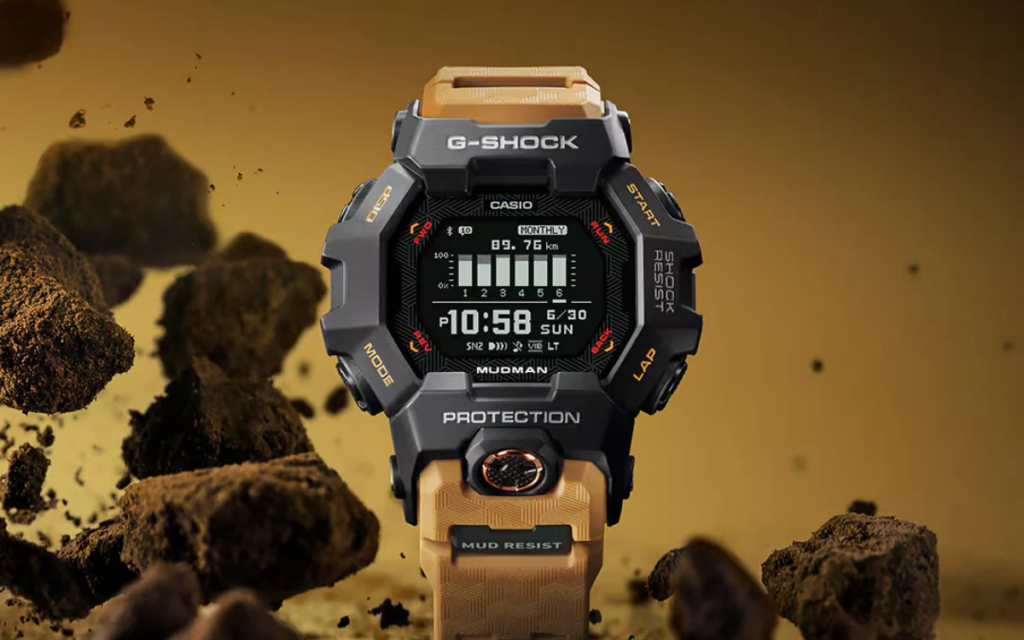
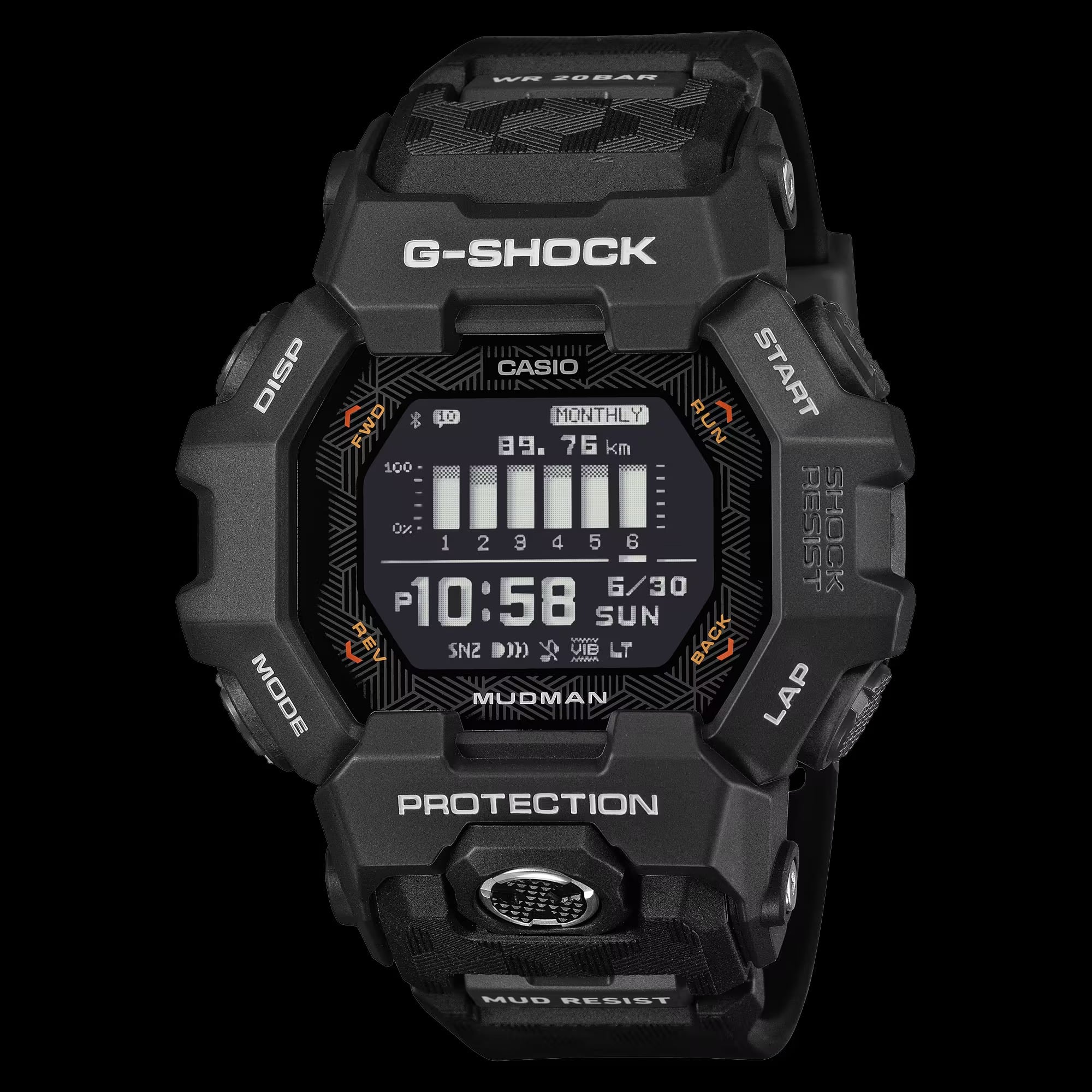
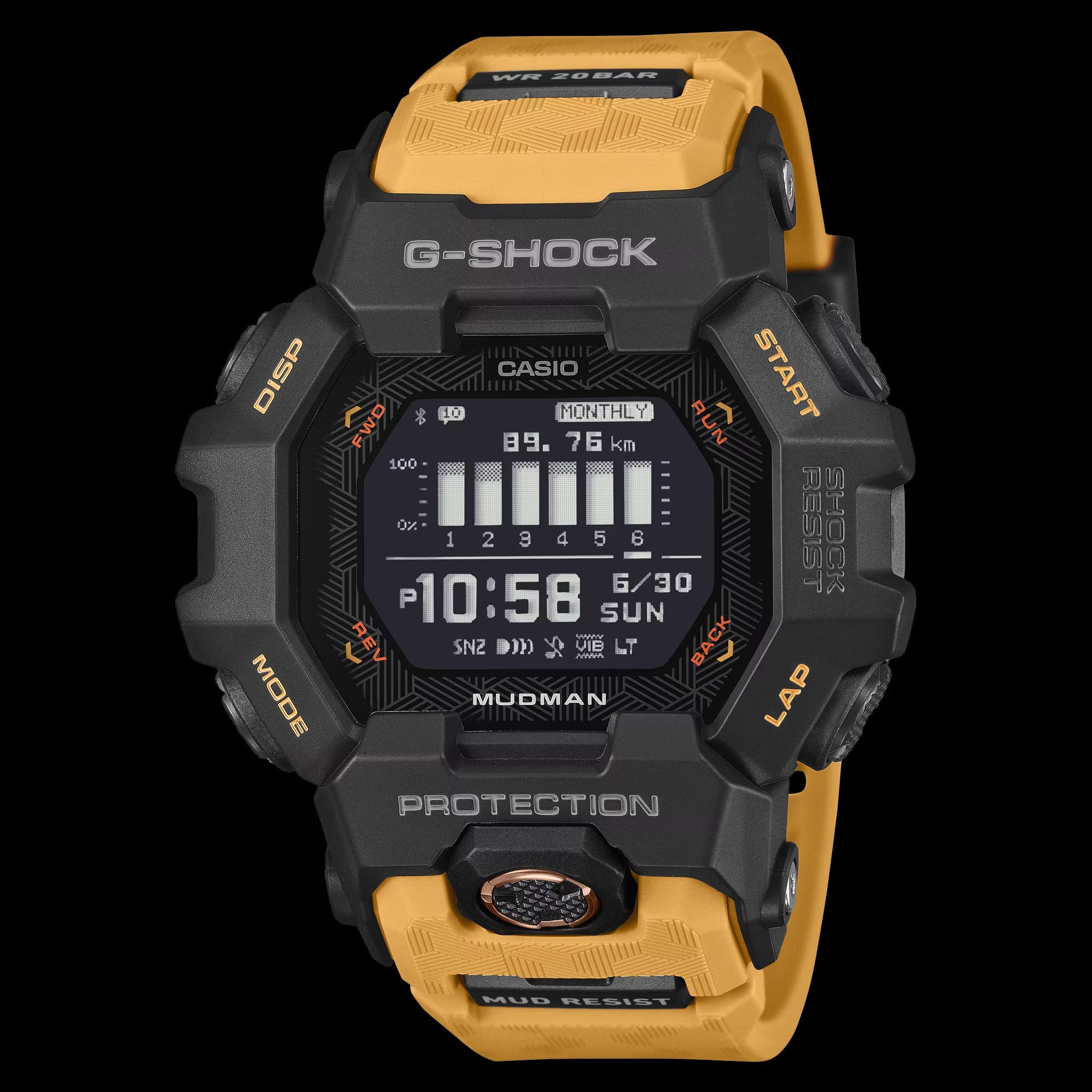
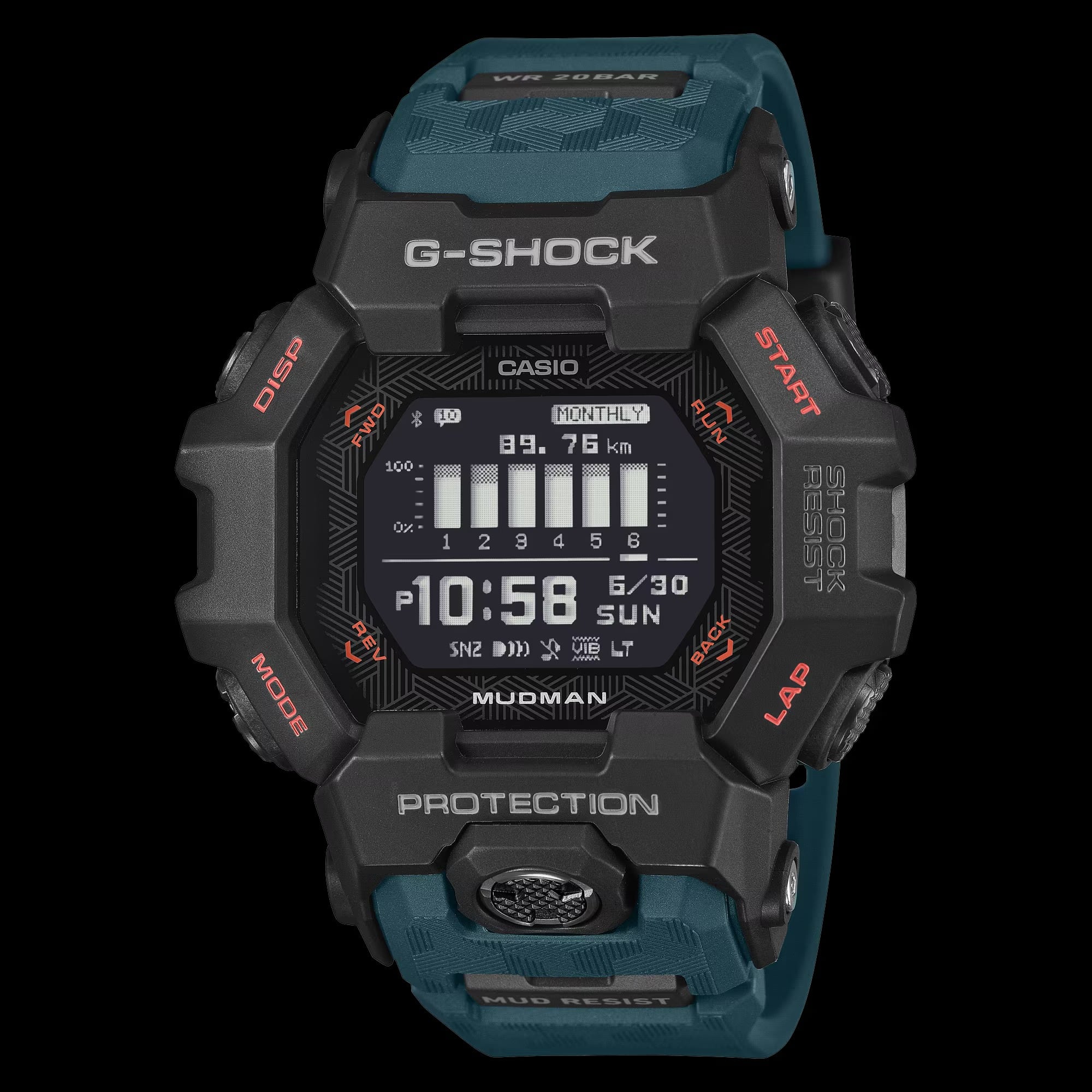
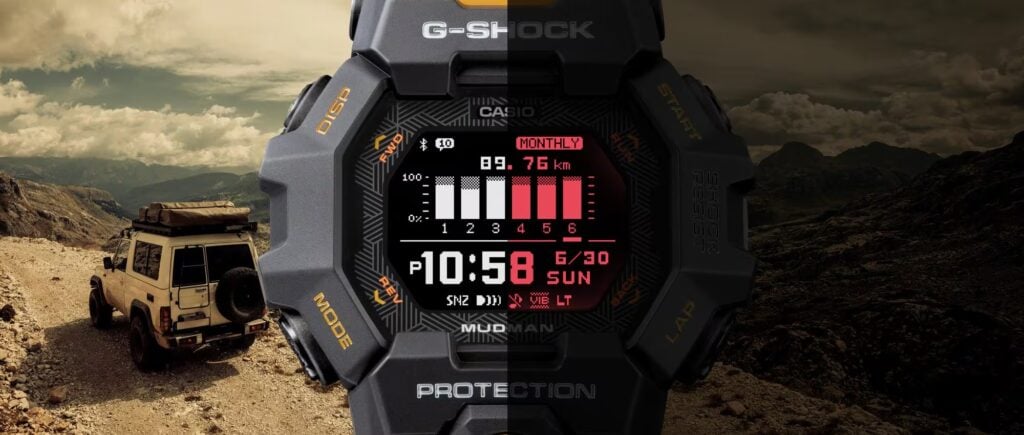
Casio is bringing its latest batch of G-Shock Mudman watches to the US. The GDG-B100 series, which initially launched in Japan last month, has been listed on the Casio US website for $250 and is slated to go on sale later this month.
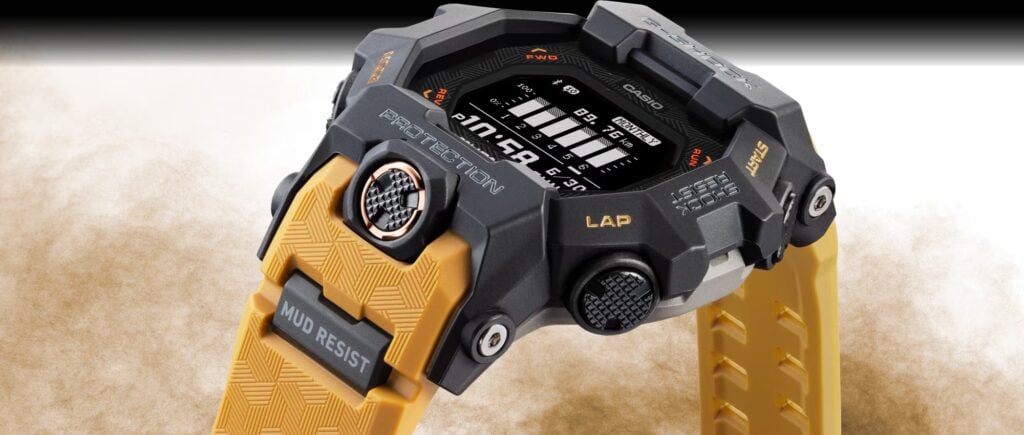
The release includes three models: the standard black GDG-B100-1, the GDG-B100-1A3, and the GDG-B100-1A5, which are identical in terms of hardware and just offer different color options.
As the Mudman name suggests, the main focus here is physical durability, specifically against dirt and debris. The watch uses a bumper guard design that places the main case between a front bezel and a back bumper to take the brunt of any impacts.
The internal case is made from carbon fiber-reinforced resin to keep it stiff, and Casio put gaskets around the button shafts to stop mud and dust from getting inside. The outer parts, like the bezel and strap, are made from bio-based resin. It is a very large watch, coming in at 63.6 x 49.6 x 16.2 mm, but because it is mostly resin, it only weighs 66 grams.
For the screen, Casio is using a Memory-in-Pixel (MIP) LCD. If you have used older digital watches, you will probably notice that MIP panels have much better contrast and are easier to read when you are outside in the sun. For checking the time in the dark, there is a red LED backlight.
When it comes to tech features, the GDG-B100 sits somewhere between a regular digital watch and a basic fitness band. It does not have a touchscreen, a heart rate monitor, or its own GPS. Instead, it has a built-in accelerometer to count your steps and uses Bluetooth to connect to the Casio Watches app on your phone.
If you bring your phone on a run, the watch can use the phone’s GPS to track your distance, speed, and pace. After doing this a few times, the watch gets better at estimating your distance when you leave your phone at home.
The Bluetooth connection also lets the watch vibrate when you get calls, emails, or app notifications on your phone, and it keeps the time synced automatically.
Because it skips the heavy operating system and power-hungry sensors of a full smartwatch, it runs on a standard CR2032 coin battery. You do not have to plug it in every night; Casio says the battery should last around two years, depending on how often it vibrates for notifications.
Casio has announced the DW6900SP26-6, a new G-Shock watch created in collaboration with the US streetwear and sneaker retailer Sneaker Politics. Priced at $180, the watch is currently listed on Casio’s US website and is expected to be available for purchase later this month.
Rather than a standard color swap, the design of the DW6900SP26-6 is specifically themed around the Gulf Coast oyster industry. The company says that the watch is a tribute to both the regional culinary staple and the ecological practice of using recycled oyster shells as a natural building material to combat coastal erosion in Louisiana.
Visually, this translates to a semi-transparent purple resin case and band. The dial features iridescent blue and purple detailing designed to mimic the interior of an oyster shell, along with Sneaker Politics branding on the watch face. The classic 6900-series dial layout remains unchanged, but pressing the front-mounted G button activates a deep purple LED backlight to match the exterior hardware.
Internally, the DW6900SP26-6 retains the standard technical specifications of the G-Shock 6900 line. The watch measures 53.2 x 50 x 18.7 mm and weighs 67 grams. It features Casio’s standard shock-resistant construction, 200 meters of water resistance, and a mineral glass display.
The watch is powered by a CR2016 battery, which Casio estimates will provide roughly five years of battery life. Standard digital functions are all present, including a 1/100-second stopwatch, a 24-hour countdown timer, a multi-function alarm, a full auto-calendar, and a flash alert system that triggers the backlight for alarms and hourly time signals.
The collaboration also includes a few physical extras. The stainless steel case back features a custom engraving marking the 20th anniversary of Sneaker Politics, a boutique that started in Lafayette, Louisiana, in 2006 and has since expanded to seven locations across Louisiana, Texas, and Colorado.
The packaging leans heavily into the nautical theme: the watch ships inside a custom oyster net box and rests on a pearl-shaped inner pillow.
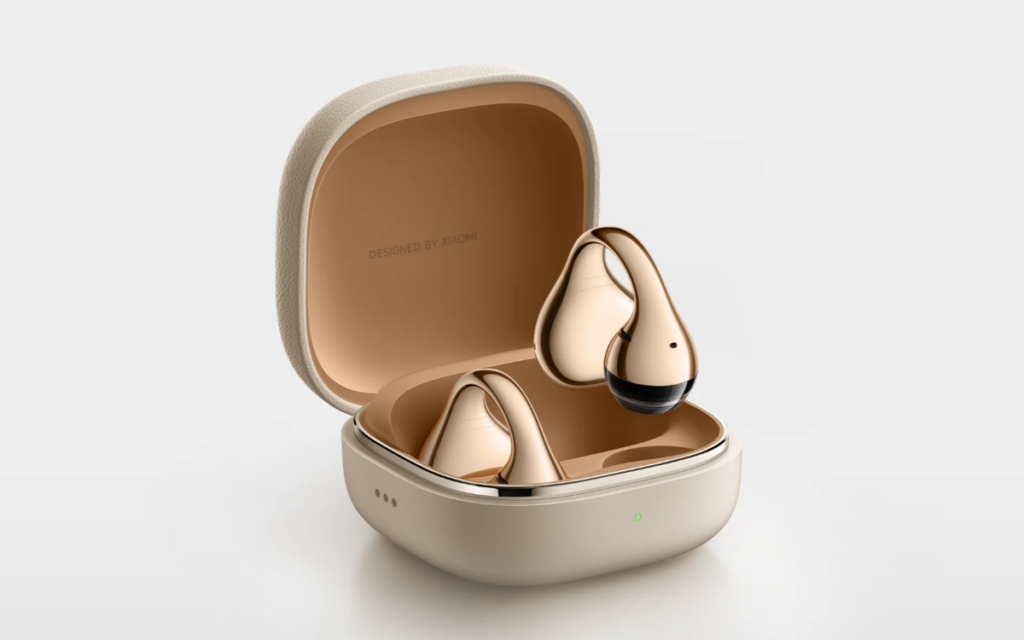
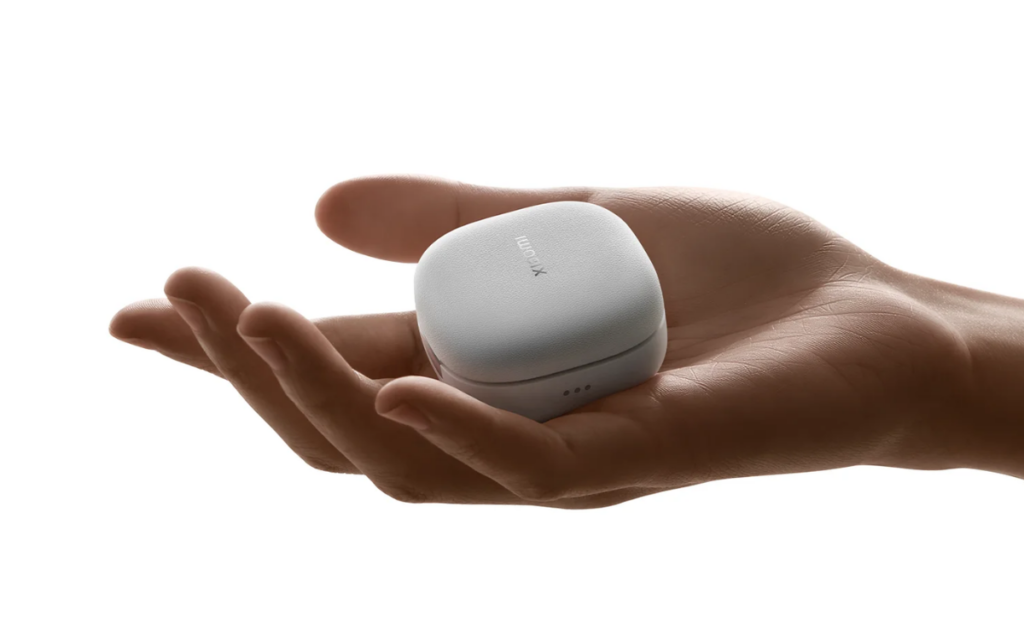
Xiaomi is expanding its audio lineup with the global release of the Xiaomi Clip, a pair of open-ear, clip-on wireless earbuds. First introduced in China earlier this year, the earbuds are now available in Europe for €149.90 and the UK for £109.99. They enter a growing market of open-ear audio devices designed for people who want to maintain situational awareness while listening to music or taking calls.
Instead of sitting inside the ear canal or using silicone tips, the Xiaomi Clip attaches to the outer ear. Each earbud weighs 5.5 grams and uses a memory titanium wire bridge to clamp onto the ear. The asymmetrical design is meant to distribute pressure evenly so the earbuds remain comfortable during long periods of wear. The charging case has a vegan leather exterior, and the earbuds feature a partially transparent housing that shows off the internal components.
For audio, the Clip uses an 11mm dynamic driver. It supports the LHDC 5.0 codec, which allows for higher-resolution audio playback if you are connected to a compatible device. Because open-ear earbuds typically struggle with sound leakage, Xiaomi is using a directional sound system. The 4mm sound outlet is angled directly toward the ear canal, and the driver produces antiphase sound waves to cancel out audio that escapes, which helps keep your listening private.
For voice calls, the earbuds rely on a four-microphone setup. This includes a bone-conduction Voice Pickup Unit (VPU) designed to separate the user’s voice from background noise and wind.
Battery life is rated at up to nine hours on a single charge when using the standard AAC codec, with the charging case bringing the total to 38 hours. If you switch to the higher-quality LHDC 5.0 codec, battery life drops to six hours for the earbuds and 25 hours total. The case charges via USB-C, and a 10-minute charge provides roughly 3.5 hours of playback.
The earbuds come with IP57 dust and water resistance, Bluetooth 5.4, multipoint connectivity for pairing with two devices, and Apple Find My support for easy tracking. They also feature built-in audio and call recording, which you can activate by tapping the earbuds or charging case.
The Xiaomi Clip is available in four colors: Graphite Black, Frost Purple, Pearl White, and Sand Gold.
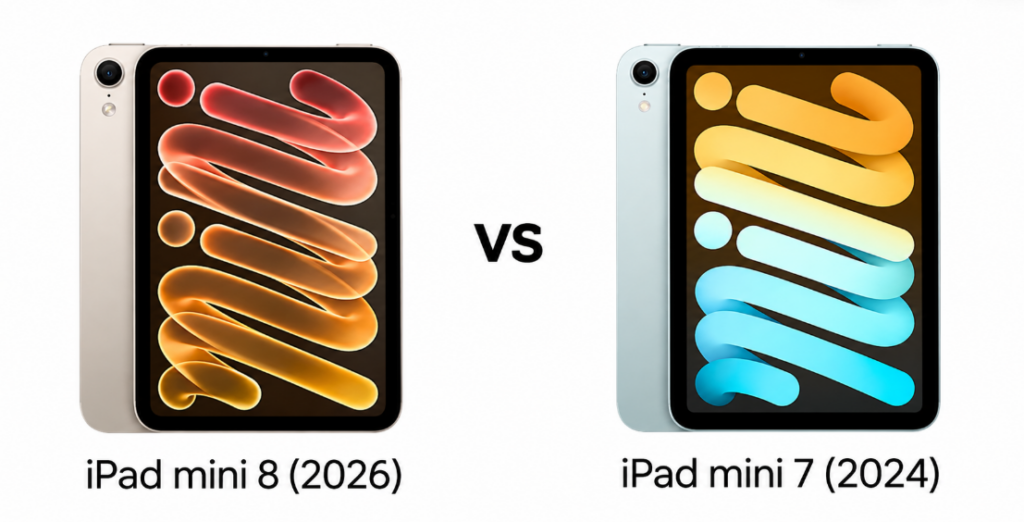
Apple’s iPad mini lineup is designed for users who want a powerful tablet without carrying a full-sized device. The iPad mini 8 (2026) takes that formula further with an OLED display, a faster A20 Pro chipset, more RAM, and a thinner design. However, these upgrades also bring a considerably higher price than the iPad mini 7 (2024). While the older model remains a capable compact tablet, the newer generation aims to deliver a more premium experience. Here’s how the two compare.
Disclaimer: Specs are based on available data. Actual performance may vary. Verify details from official sources before buying.
2. Design and Display
Build Quality
The iPad mini 8 brings a more refined design, measuring 195.3 x 132.6 x 5.4 mm and weighing 255g for the Wi-Fi variant. In comparison, the iPad mini 7 measures 195.4 x 134.8 x 6.3 mm and weighs 293g. This makes the newer tablet noticeably thinner and lighter, improving portability and comfort during extended use. Both feature glass fronts, aluminum backs, and aluminum frames, but the mini 8 adds IP67 dust and water resistance, offering better protection against accidental spills and immersion.
Display & Multimedia
The display is arguably the biggest upgrade. The mini 8 features an 8.5-inch Super Retina XDR OLED panel with a 120Hz refresh rate and brightness reaching 1200 nits in HBM mode. The mini 7, meanwhile, uses an 8.3-inch Liquid Retina IPS LCD with 500 nits of typical brightness. The OLED panel delivers deeper blacks, stronger contrast, and more vibrant visuals, while the higher refresh rate makes scrolling and animations smoother. Both offer similar pixel densities for sharp text and images.
Verdict
The iPad mini 8 wins comfortably with its OLED technology, smoother refresh rate, higher brightness, slimmer body, and IP67 protection. It offers a more premium experience overall.
3. Performance and Software
Processor & UI Smoothness
The iPad mini 8 upgrades to Apple’s A20 Pro chipset built on a 2nm process, replacing the A17 Pro inside the mini 7. The newer processor is expected to deliver stronger performance and improved efficiency, particularly in demanding applications. Graphics also receive an upgrade, with a seven-core Apple GPU compared with the five-core GPU in the previous generation. Memory increases from 8GB to 12GB, giving the mini 8 more headroom for demanding workloads and background applications.
Productivity & Multitasking
Both tablets run iPadOS 27.2, providing access to the same current software experience. However, the mini 8’s newer chipset and additional RAM give it an advantage when handling creative applications, editing tasks, and multitasking. Users who frequently switch between applications or work with larger files should benefit from the upgraded hardware. The mini 7 is still more than capable of everyday activities such as browsing, document editing, streaming, and digital note-taking.
Verdict
The iPad mini 8 is the stronger performer, thanks to its A20 Pro chipset, upgraded GPU, and additional 4GB of RAM. The mini 7 remains capable, but the newer model offers more performance headroom and better long-term potential.
4. Battery and Accessories
Battery Life
Interestingly, the iPad mini 8 comes with a 4900mAh battery, slightly smaller than the 5078mAh unit inside the mini 7. However, battery capacity alone does not determine endurance. The newer A20 Pro chipset’s 2nm manufacturing process could improve power efficiency, although its brighter 120Hz OLED display may also consume additional power depending on usage. The mini 8 supports wired charging and can reach 50% in 30 minutes. Actual battery endurance will depend on screen brightness, applications, and connectivity.
Both tablets support stylus input, making them useful for handwritten notes, sketches, annotations, and creative work. Their compact form factors also make them convenient companions to other Apple devices. The mini 8 introduces an optional nano-texture display glass configuration, available with the 512GB model. This should appeal to users who work under bright lighting or prefer reduced screen reflections. Both tablets use USB-C connectivity and lack a traditional 3.5mm headphone jack.
Verdict
Neither tablet delivers a clear battery advantage on paper. The mini 7 has a larger battery, while the mini 8 brings newer hardware and a faster charging specification. The nano-texture option gives the newer model an additional advantage for certain users.
5. Camera & Media
Rear and Front Camera
Both tablets feature a 12MP f/1.8 rear camera with autofocus, making them suitable for document scanning, casual photography, and everyday video recording. They also support HDR, panorama, and 4K recording at up to 60fps. The flash systems differ slightly, with the mini 8 featuring a multi-focus LED flash and the mini 7 using a quad-LED dual-tone flash.
The front camera also retains a 12MP ultrawide sensor with a 122-degree field of view. However, the mini 8 uses an f/2.0 aperture, compared with f/2.4 on the mini 7. This gives the newer tablet a potential advantage in low-light selfies and video calls.
Video & Audio Quality
Both support 1080p front-camera recording at up to 60fps with gyro-EIS stabilization. Audio is where the two take different approaches. The mini 7 features conventional stereo speakers, whereas the mini 8 uses stereo audio through Acoustic Display technology. This makes the newer tablet’s multimedia setup more distinctive.
Verdict
The camera upgrades are relatively modest, but the mini 8 benefits from a wider front-camera aperture and a different audio system. Neither tablet is designed to replace a dedicated camera, but both offer capable multimedia features.
6. Pricing
The iPad mini 8 carries an approximate price of $700 (₹83,000), compared with around $600 (₹50,000) for the iPad mini 7. The difference is particularly significant in India, where the newer model costs approximately ₹33,000 more.
The higher price brings several meaningful upgrades, including an OLED display, 120Hz refresh rate, A20 Pro chipset, 12GB RAM, IP67 protection, Wi-Fi 7, and Bluetooth 6.0. These improvements make the mini 8 a more advanced tablet, especially for users who want premium display quality and stronger hardware.
However, the mini 7 remains a sensible option for everyday use. Its A17 Pro processor, sharp LCD display, stylus support, and compact design are still sufficient for browsing, reading, streaming, and productivity tasks.
Verdict
The iPad mini 7 offers considerably better value for money, particularly at its approximate Indian price. The mini 8 justifies its premium through substantial hardware improvements, but those upgrades may not be necessary for every buyer.
The iPad mini 8 stands out with its 8.5-inch OLED display, 120Hz refresh rate, A20 Pro chipset, 12GB RAM, IP67 protection, and optional nano-texture glass. Its thinner and lighter construction also makes it more comfortable to carry around. These improvements collectively make it a more premium compact tablet.
The iPad mini 7, on the other hand, retains its appeal through its lower price, capable A17 Pro chipset, and larger battery capacity. It continues to deliver the essential features expected from a compact iPad without demanding a substantial investment.
Verdict
The iPad mini 8 is clearly the better tablet, but should iPad mini 7 owners upgrade? Not necessarily. The OLED display, 120Hz refresh rate, and A20 Pro chipset are major improvements, but the mini 7 remains capable for everyday use. Unless these upgrades are essential, existing owners are better off holding on to their tablets. For new buyers, however, the mini 8 is the better choice.
Disclaimer: Prices, specifications, and availability may vary by region and retailer. Recommendations in this article are based on editorial opinion, feature-based value, and market positioning at the time of writing. Readers are advised to do their own research before making a purchase.
AOC has launched its new Q27P4C 27-inch monitor in China, designed for everyday productivity and casual gaming. The monitor is now available on JD.com for 1,499 yuan (approximately $224).
The monitor features a 27-inch IPS panel with a 2560 × 1440 resolution, a 16:9 aspect ratio, and a 120Hz refresh rate. It also offers 350 nits of peak brightness, a 1500:1 static contrast ratio, and 8-bit color depth.
It covers 99% of the sRGB and 90% of the DCI-P3 color gamuts. AOC also included a few gaming-specific settings, like a 1ms MPRT response time and a dynamic crosshair, though the hardware is clearly built with productivity in mind.
For connectivity, the AOC Q27P4C features a USB-C port with DisplayPort Alt Mode, data transfer, and 96W power delivery for single-cable laptop connectivity. It also includes a secondary USB-C upstream port, a 15W USB-C downstream port, three USB-A 3.2 Gen 1 ports, DisplayPort 1.4, and HDMI 2.1 TMDS.
The monitor features a built-in KVM switch for controlling two computers with a single keyboard and mouse. It also supports Picture-by-Picture (PBP) and Picture-in-Picture (PIP) modes, along with an orientation sensor that automatically rotates screen content using AOC’s i-Menu software on Windows.
Physically, the monitor features an adjustable stand with 150mm height adjustment, tilt, pivot, and swivel support. It also comes with an integrated phone holder, cable management, and dual 2W speakers. For eye comfort, it includes DC dimming and TÜV Rheinland-certified low blue light technology.
Huawei Enjoy 100 Pro Max and Honor X60 Pro take different approaches to the affordable smartphone market. One prioritizes a massive battery, a newer platform, and premium display features, while the other focuses on camera resolution, faster charging, and a more familiar Android experience. Here’s how they compare across the features that matter most.
Disclaimer: Specs are based on available data. Actual performance may vary. Verify details from official sources before buying.
2. Design and Display
Build and Feel
The Huawei Enjoy 100 Pro Max features a glass front, plastic frame, and aluminum back, giving it a more premium material combination. It also carries an IP65 rating for dust and water resistance and can survive drops from up to 1.8m. The Honor X60 Pro uses a glass front and plastic back, with waterproof protection and drop resistance up to 2m. Honor’s construction offers better drop protection, while Huawei’s aluminum back feels like a more premium choice.
Display Quality
Both smartphones feature AMOLED-based displays with 120Hz refresh rates and support 1 billion colors. However, Huawei takes the lead with an OLED panel capable of reaching 8,000 nits peak brightness under specific video playback conditions. The Honor X60 Pro offers up to 3,000 nits peak brightness. Huawei also provides aluminosilicate glass protection, while Honor relies on tempered glass. Overall, Huawei delivers the more impressive display experience, particularly for outdoor visibility.
Verdict
The Huawei Enjoy 100 Pro Max wins this round with its brighter OLED panel, premium rear construction, and IP65 protection. Honor counters with better drop resistance.
3. Specifications Including Battery
Performance
The Huawei Enjoy 100 Pro Max runs HarmonyOS 7.0 and uses either the Kirin 8020A or Kirin 8020 chipset. The Honor X60 Pro relies on the Snapdragon 6 Gen 1 with Android 14 and MagicOS 8. Huawei benefits from a newer software platform and more recent connectivity standards, although its chipset’s real-world performance requires further testing. Honor offers a familiar Android-based experience, which may appeal to users who prefer Google’s ecosystem and established app compatibility.
Battery capacity is a major advantage for Huawei. Its 8,800mAh silicon-carbon battery comfortably exceeds the Honor X60 Pro’s 6,600mAh unit, potentially offering considerably longer endurance between charges. However, Honor compensates with 66W wired charging, compared with Huawei’s 40W support. Both phones also support 5W reverse wired charging. Huawei is the more appealing option for heavy users who prioritize battery life, while Honor makes more sense for those who want shorter charging sessions.
Verdict
The Huawei Enjoy 100 Pro Max wins through its substantially larger battery and newer connectivity. However, Honor’s Snapdragon platform and faster charging remain practical advantages.
4. Camera
Main and Secondary Lenses
The Honor X60 Pro features a 108MP main camera with an f/1.8 aperture, PDAF, and a relatively large sensor. Huawei takes a simpler approach with a 50MP main camera, also featuring an f/1.8 aperture and PDAF. Both phones use single rear cameras, so neither offers dedicated ultrawide or telephoto versatility. Honor has the advantage on paper with its higher-resolution sensor, making it the more interesting option for users who prioritize detailed photography. However, megapixel count alone does not determine image quality.
Selfie Camera
Both smartphones feature an 8MP front-facing camera with an f/2.0 aperture. However, Huawei offers a notable advantage in video recording, supporting 4K recording alongside gyro-EIS. The Honor X60 Pro is limited to 1080p selfie videos at 30fps. This makes Huawei a more capable choice for users who frequently record front-camera videos or create social media content. Despite identical camera resolutions, Huawei provides greater recording flexibility.
Verdict
The Honor X60 Pro takes the rear-camera advantage with its 108MP sensor, but Huawei wins overall camera versatility through 4K selfie recording and gyro-EIS support.
5. Pricing
The Huawei Enjoy 100 Pro Max is priced around $280 / ₹28,000, positioning it above the Honor X60 Pro, which is priced around $210 / ₹17,700. The difference is considerable, especially for budget-conscious buyers. Huawei commands a premium for its larger battery, upgraded display capabilities, newer connectivity, and premium rear construction. Honor, meanwhile, offers a more affordable package with a higher-resolution main camera and faster wired charging.
Verdict
The Honor X60 Pro wins on affordability and overall value. Huawei justifies its higher price with better display technology, battery capacity, and connectivity.
Disclaimer: Prices are approximate and may vary based on country, region, launch timing, and applicable taxes. Always check whether the listed price is for a China unit or a global/international variant when purchasing.
6. Conclusion
Both smartphones bring something distinctive to the table. The Huawei Enjoy 100 Pro Max stands out with its massive silicon-carbon battery, 8,000-nit peak brightness claim, Wi-Fi 7, Bluetooth 6.0, NFC, infrared port, and BDS satellite messaging support in China. It also offers 4K selfie video recording and IP65 protection.
The Honor X60 Pro counters with a 108MP main camera, 66W fast charging, Snapdragon 6 Gen 1 chipset, and a more affordable price. Its satellite connectivity support is another notable addition. Huawei feels like the more ambitious device, while Honor focuses on delivering practical features at a lower cost.
Verdict
Huawei Enjoy 100 Pro Max is the overall winner for its superior display, significantly larger battery, modern connectivity, and additional features. However, the Honor X60 Pro remains the better value-for-money choice for budget-conscious buyers.
Disclaimer: Prices, specifications, and availability may vary by region and retailer. Recommendations in this article are based on editorial opinion, feature-based value, and market positioning at the time of writing. Readers are advised to do their own research before making a purchase.
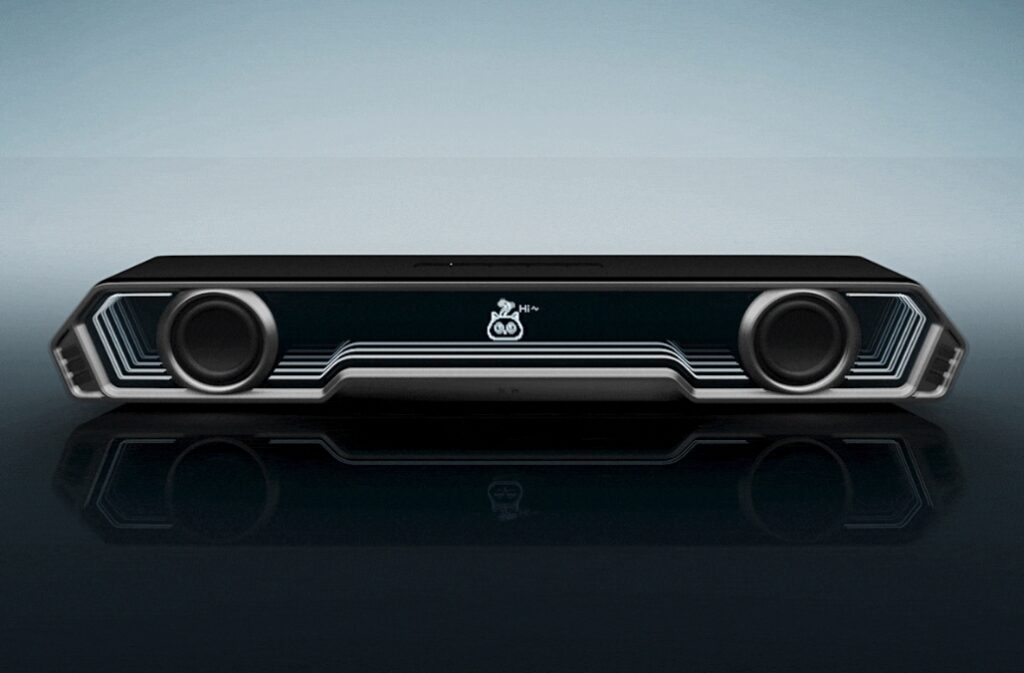
Edifier has recently launched a new desktop speaker in China called the Huazai Halo PixelBar AI. It costs 699 yuan ($104) and is currently available on JD.com. Rather than just being a standard audio device, it is designed to sit under a computer monitor and combine a few different desk accessories into a single unit, including a customizable screen and smart speaker capabilities.
Edifier Huazai Halo PixelBar AI Specs
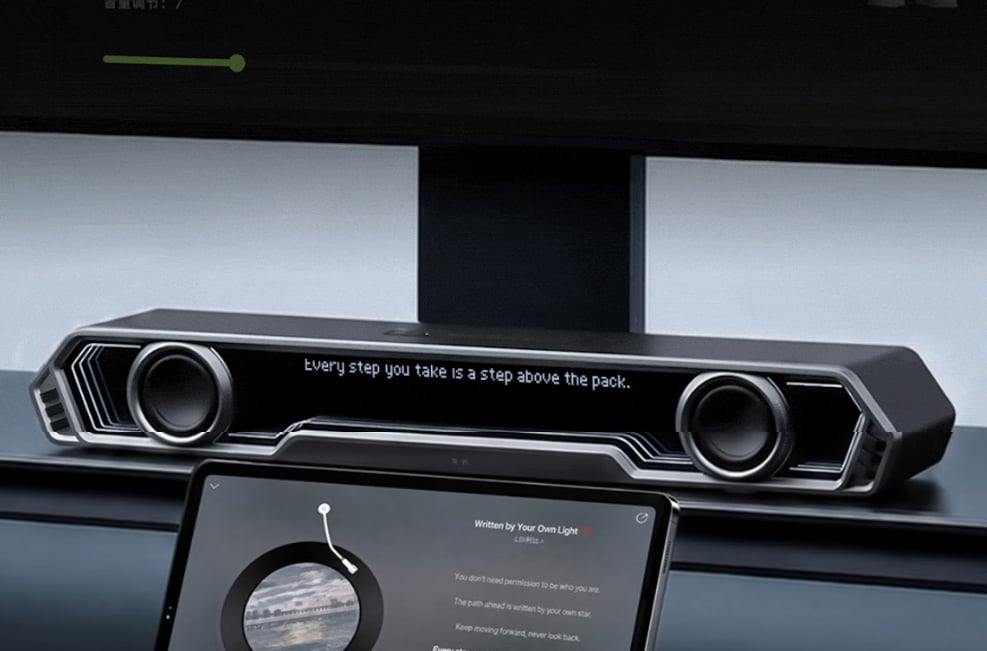
The soundbar measures about 493mm wide and comes in either black or white. The front face is split into three sections: speaker grilles on the left and right, and a pixel screen positioned right in the middle. This screen is the most noticeable feature of the device.
You can use it to show real-time lyrics while playing music, display a digital clock, or run a Pomodoro timer while you work. It can also pass through PC notifications, weather updates, and custom pixel art. There is also some RGB lighting built into the chassis, which supports the usual 16.8 million colors and can be adjusted using Edifier’s PC software or mobile app.
On the audio side, the speaker houses two 52mm full-range drivers and a pair of bass reflex ports. It runs on a Class D amplifier, putting out 15W of continuous power with a 30W peak, which is fairly standard for a desktop speaker of this size.
The AI part of the product name comes from a built-in voice assistant powered by the Doubao large language model. It works like most smart speakers, allowing you to ask for the weather, set reminders, or control your music. It connects directly to QQ Music over Wi-Fi, so you can ask it to play specific songs or artists.
The device uses dual microphones with echo cancellation to pick up your voice, and it supports offline commands for basic functions like changing the volume or turning the device off. There is also a voice-changing feature if you want to alter how you sound on voice calls.
For connectivity, the speaker supports Bluetooth 6.0, USB audio, and 2.4GHz Wi-Fi. If you prefer not to use the voice controls or the companion app, there are physical buttons on the top of the speaker to handle volume, playback, lighting, and muting the microphone.
In related news, Apple has recently launched the HomePod Mini 2 with Siri AI, a glowing display, and smarter home controls, while Portronics has introduced the AuraTrio modular Bluetooth speaker with two detachable satellite speakers and Auracast support.
Xiaomi‘s latest flagship phones are finally heading outside China. The Xiaomi 18 Pro and Xiaomi 18 Pro Max made their global debut today with a secondary display on the rear camera module and 200MP cameras.
The rear screen does more than show notifications or serve as a selfie viewfinder. Xiaomi is also letting users create small apps using AI prompts, opening up some interesting possibilities for this otherwise unusual feature.
Xiaomi first introduced a rear display on its phone with the Mi 11 Ultra in 2021, before shelving the idea until the Xiaomi 17 Pro series brought it back last year. However, those phones never made it outside China. The new lineup is the first time in five years that Xiaomi is bringing its rear-screen flagships to international markets.
The small color touchscreen sits alongside the rear cameras and can show the clock, notifications, and supported applications. It also doubles as a viewfinder, letting users frame selfies with the main camera instead of relying on the front-facing shooter.
Speaking of which, both have a Leica-developed triple-camera system with a 200MP main camera, a 200MP periscope telephoto camera, and a 50MP ultra-wide camera.
The telephoto camera has a 75mm equivalent focal length and supports 3.2x optical zoom. It can also deliver up to 12.8x lossless zoom and take macro photos from as close as 12cm. The Xiaomi 18 Pro Max gets an additional camera upgrade through LOFIC technology on its main sensor, which helps capture a wider dynamic range in challenging lighting conditions.
There’s more to the rear screen this time, though. Users can create personalized apps by entering simple text prompts, thanks to AI. The examples Xiaomi showed are a card that generates compliments with a tap, or a small fruit-slicing game. The idea is to let users turn their own ideas into interactive tools for the secondary display without having to build an app from scratch.
And not to forget, the 18 Pro Max has a 2.9″ display while the standard Pro has a slightly smaller 2.7″ screen. Both are LTPO AMOLED panels with a 1-120Hz refresh rate and Corning Gorilla Glass Victus 2 protection.
The front display also has a nifty feature of its own. Both phones have hardware-level Privacy Display technology that blocks the screen view from an angle other than direct eyesight.
Fortunately, you can enable or disable the feature, per your needs. The front camera can also detect someone looking over their shoulder and send an alert through vibration or Xiaomi’s HyperIsland interface.
The Xiaomi 18 Pro is built around a 6.4-inch display and runs on Qualcomm’s Snapdragon 8 Elite Gen 6, while the larger 18 Pro Max gets a 6.9-inch screen and the more powerful Snapdragon 8 Elite Extreme Gen 6. Both use Xiaomi’s M11 display panels, support refresh rates of up to 120Hz and reach a claimed peak brightness of 4,000 nits.
Global models get smaller batteries
The devices differ from Chinese counterparts in terms of battery. The Xiaomi 18 Pro launched in China with a 7,000mAh battery, while the Pro Max packs an 8,500mAh unit. Both Chinese models support 100W wired and 50W wireless charging.
The international versions have smaller batteries. Xiaomi says the 18 Pro has a 6,000mAh battery while the Pro Max features 7,050mAh. Likewise, the Pro supports 90W wired charging and the Pro Max gets 100W. Both support 50W wireless charging.
The phones come in four colors: White, Black, Cosmic Blue, and Velvet Red, at a hefty price tag. The Xiaomi 18 Pro starts at EUR 1399, while the Pro Max has a starting price of EUR 1599.
Samsung’s latest book-style foldable is sitting at one of its best prices yet as early Black Friday deals heat up. If you’ve been eyeing a high-end foldable, the Galaxy Z Fold 8 just got a lot more approachable.
Right now the unlocked 256GB model is going for about $1,550 on Amazon (and matching or close at Best Buy). That’s $350 off the usual $1,900-ish list price, and it’s one of the lowest straight cash prices we’ve seen for it so far. The deal covers the main colors like Graphite and Lavender. Step up to the 512GB version and you’re looking at around $1,750. These are the clean no-trade-in prices, so what you see is what you pay.
Samsung and the big retailers are spreading the discounts around. The Fold 8 Ultra is available in the $1,750 range at some places for the base config, while the more compact Galaxy Z Flip 8 is sitting at $999.
Quick look at the two Fold 8 models
The regular Galaxy Z Fold 8 is the new wider, shorter design. It has a 5.5-inch cover screen that’s actually useful for everyday stuff. Open it up and you get a 7.6-inch inner display with a more square 4:3 aspect ratio, which is great for reading and multitasking. It weighs just 201g, runs on the “Snapdragon 8 Elite Gen 5 for Galaxy”, has a 4,800mAh battery, and a dual 50MP camera setup (wide + ultrawide, with 2x in-sensor zoom). No dedicated telephoto lens.
The Z Fold 8 Ultra is the more traditional tall-and-narrow Fold with a 6.5-inch cover screen and an 8-inch inner screen. It’s a bit heavier at 215g, but it packs a stronger camera system: 200MP main sensor, 50MP ultrawide, and a proper 10MP 3x telephoto. Battery is also larger at 5,000mAh. Same processor and software as the regular Fold 8.
Because these are limited-time holiday offers, prices and availability can change fast. Check the current listings on Amazon and Samsung’s store (and keep an eye on any trade-in bonuses) if you’re ready to jump on one.
Black Friday is a good opportunity to pick up new tech at lower prices, and Giztop has several offers worth a look this year. Its ongoing sale covers smartphones, tablets, earbuds and other electronics from brands such as Xiaomi, OnePlus, OPPO and more. Selected products are discounted by up to 33%, and shoppers can also use a promotional code for additional savings.
The OPPO Find N5 Global leads this selection with a $600 reduction. Those looking for a more affordable smartphone can consider the Redmi Turbo 4 or iQOO Neo 10 Pro, while the Xiaomi Pad 7 Pro makes an interesting option for tablet buyers.
Black Friday Coupon and Flash Sale Offers
Giztop is adding another layer of savings with two promotional codes:
BF2026: Offers up to $100 off and is valid until November 30, 2026.
H2026: Offers up to $100 off under a separate Flash Sale promotion, with validity until December 31, 2026.
The coupon discount depends on the applicable promotion and should be checked at checkout before completing an order.
Where to Shop and What to Know Before Ordering
All the offers are available through the Giztop Clearance Sale. The section includes brand-new products alongside almost-new and used devices, so check the deals mentioned on each prouct before purchasing.
Giztop also offers international shipping, with express delivery available at an additional cost. This makes it easier to surprise loved ones in different parts of the world with a tech gift this holiday season.
Samsung is in the final stretch of the One UI 9.0 rollout. At the same time, the software team is actively working on the next iteration — One UI 9.5. The underlying OS will be the same, Android 17, but the update will reportedly offer several exciting features, including a new ripple animation, new Galaxy AI tools, and a bunch of improvements.
There is no change in Android version, but that doesn’t mean all Galaxy devices running One UI 9.0 automatically become eligible for the upcoming One UI 9.5. So, we’ve curated a list of Galaxy devices that are eligible for the One UI 9.5 update based on the company’s update policy and rollout history.
This isn’t an official list. Our team has prepared this based on the previous rollout and the latest update policy. So, there are chances of some changes. We’ll update the list as soon as an official announcement is made.
Remember to keep visiting our Samsung section for fresh details.
Samsung’s next flagship series after the Galaxy S27 series might bring back a camera feature a lot of enthusiasts have been hoping to see again for years. A recent tip suggests variable aperture hardware could return on the higher-end models in the Galaxy S28 lineup, which would give users more flexible control over light and depth of field in everyday shots.
According to leaker Yogesh Brar, variable aperture “could be making a comeback” with the Galaxy S28 Pro and Galaxy S28 Ultra. The wording is careful, and there’s no extra detail yet on the aperture range, sensor specs, or whether the regular S28 would get it too. These phones aren’t expected until early 2028, so a lot can still change.
This wouldn’t be Samsung’s first try with the technology. The company added a dual-aperture system (switching between f/1.5 and f/2.4) on the Galaxy S9 and S9+ back in 2018, and carried a similar setup into the S10 series. It was later dropped as Samsung leaned harder into computational photography.
Rumors of a return floated around before the Galaxy S26 Ultra and again for the S27 series, but an August report said Samsung had put the idea on hold for the S27 lineup because of higher manufacturing costs and the extra thickness the mechanism would add.
Interest seems to have picked up again partly because of what others are doing. Apple introduced a true variable aperture on the iPhone 18 Pro and Pro Max this year, with four selectable stops from f/1.48 to f/4.0 on the main camera. That move, plus reports of other manufacturers looking into it, may have put more pressure on Samsung to revisit the idea.
Variable aperture lets a camera open wider for better low-light performance and shallower depth of field, or stop down for sharper results across the frame and better control in bright light, things software alone can’t fully match.
Huawei has kept its wearable lineup moving this year, launching the Watch 6 as a light everyday smartwatch and sending the Watch GT 7 Pro out as a longer-lasting sports model, with the Watch D3 covering blood pressure tracking. A new leak now points to another watch in that family, this time with a name that hints at a much slimmer design.
Huawei Watch Air leaks with a thin titanium design
Huawei Watch Air
A leaked promotional poster circulating on Weibo, shared by tipster IceUniverse, shows a slim silver watch with a rounded rectangular case, narrow bezels, a large textured crown, and a second button on the same side. Two slim openings sit on the opposite edge, and a thin metal mesh strap completes the look in the image, which also shows a watch face reading 10:08. The poster is not an official Huawei reveal, so the design could still change.
According to Weibo tipster Fixed Focus Digital, the Huawei Watch Air is a new series with a high-gloss titanium unibody, used here for the first time, that measures about 6.9mm thick. That would make it noticeably slimmer than the Watch 6, which is 10.2mm thick, and the Watch D3, which measures 11.3mm. The same tip says the watch will come in black, silver, and gold.
Fixed Focus Digital also says the Watch Air uses a high-silicon stacked battery with an irregular shape, a silicon content of over 10%, and an energy density increase of about 6%. The tipster puts battery life at around five days, though Huawei has not confirmed that figure.
Health tracking is said to be on par with the Watch 6, while sports features are described as a match for the Watch GT 7 Pro. The rounded rectangular case also sits closer to Huawei’s Watch Fit 5 than to its round flagships, which would fit a thinner everyday watch. Huawei has not confirmed a launch date or the rest of the specifications, so these details should be treated as a leak for now.
Redmi recently launched the K100 series phones in China, including the K100, K100 Pro, and K100 Pro Max. The brand is likely to shift its focus to the Turbo 6 series, a set of mid-range, performance-driven phones. Their arrival looks on track, as one of the alleged Turbo 6 series phones has now received radio certification in China.
Redmi Turbo 6 bags radio certification
Xiaomi M407CF SRRC radio certification listing
A Xiaomi phone listed as model M407CF has received radio certification in China. The SRRC certificate, issued on November 16, 2026 to Xiaomi Communications Technology Co., confirms support for wireless connections such as 5G, Wi-Fi, and Bluetooth, and it is valid for five years. That radio approval is a standard step before launch, though it is not an official announcement.
Several reliable Chinese tipsters have already claimed this could be a Redmi Turbo 6 series phone. Tipster Ximitime previously listed M407CF among model numbers tied to the Redmi Turbo 6. The device still has to clear other certifications such as 3C and MIIT, which may take a couple of weeks.
Speculation is also growing that Xiaomi may launch the Redmi Note 18 series next month, and the Redmi Turbo 6 series may break cover in January. The lineup is expected to include the Redmi Turbo 6 and the Redmi Turbo 6 Max, which are likely to be rebranded as the Poco X9 Pro and Poco X9 Pro Max globally.
Redmi Turbo 6 series specifications (rumored)
Recent tips have sketched out more of the Max model. Digital Chat Station has tipped the Redmi Turbo 6 Max with a roughly 7-inch 2K flat display, an estimated 185Hz refresh rate, and LIPO packaging for bezels of around 1mm, along with an 11,000mAh (40.72Wh) battery that would be the largest yet on a Xiaomi phone.
The same tipster had earlier pointed to MediaTek’s Dimensity 9500s for the Max model, while tipster Smart Pikachu has described a Dimensity 8-series chip, possibly the Dimensity 8600, for the standard Redmi Turbo 6. Other tips mention a metal middle frame, IP68 and IP69 ratings, and an ultrasonic in-display fingerprint sensor. Xiaomi has not confirmed the phones or these specifications, so they should be treated as rumors for now.
Xiaomi has had a busy stretch with its numbered flagship series, first putting the standard Xiaomi 18 up for blind orders in China and then lining up the Xiaomi 18 Pro models for a global launch in Paris today. The vanilla model is still expected later, but a new set of real-life photos now offers a first look at the phone itself.
Xiaomi 18 shows up at APEC, design
Xiaomi 18
Photos shared by Weibo user Referline show Xiaomi CEO Lei Jun seated at the 2026 APEC CEO Summit this afternoon, November 17, casually holding a white phone. The main color is white, with an integrated all-black camera deco. It is somewhat a return to the Xiaomi 15 design, and the person sharing the photos added that it looks great.
A closer crop of the same photo has been AI-mastered to show the white body and all-black camera module more clearly. This close-up is an AI-enhanced version of the original image, not a separate official render.
Xiaomi 18 (AI-mastered image)
Xiaomi 18 specifications (rumored)
Earlier leaks, including tips from Digital Chat Station, point to a 6.4-inch flat 1.5K M11 display and a 2nm Snapdragon 8 Elite Gen 6 chip. The camera is rumored to be a triple setup with a 200-megapixel 1/1.28-inch main sensor, a 50-megapixel ultra-wide, and a 200-megapixel 3x telephoto. Those reports also tip a 7,200mAh battery with 100W wired and wireless charging, plus HyperOS 4 based on Android 17.
Digital Chat Station has also described a 2nm mid-size model that is likely the Xiaomi 18, with a top configuration rumored to include 16GB of RAM and 1TB of storage. An earlier tip from the same account listed white among five rumored colors, along with a square camera module in the upper left corner. Xiaomi has not confirmed any of those details.
The standard Xiaomi 18 is still expected to launch in China in December, after the Pro series arrived earlier and a 3C certification for model M261DB showed 100W charging. A global variant has also shown up in certification listings, but Xiaomi has not confirmed a date or a worldwide launch for the vanilla model.
Samsung might be working on a smarter way for Galaxy users to stay plugged into their games without having to open them all the time. Early software finds suggest a new system-level feature is coming in One UI 9.5 that could pull important gaming stuff into the everyday Samsung apps people already use.
According to SamMobile, who dug into some development screens and code, the feature is called PlayOn Agent. It’s like an AI companion that sits between individual games and One UI’s built-in tools. Instead of locking chats, friend lists, events, rewards, and account details inside each game, PlayOn Agent is designed to surface that info where you’re already spending time.
Another useful part seems to be messaging. In-game chats with friends and teammates could show up right in the Samsung Messages app. That means you could read and reply to messages or even coordinate something like a raid without launching the game itself.
Contacts get a similar treatment. Gaming friends would apparently get their own PlayOn section inside the Samsung Contacts app, keeping them separate from regular phone contacts. Reports also mention things like online status, friend requests, and guild info becoming easier to check through this system.
Now Brief is another place it could show up. The feature might push useful game updates such as upcoming events, daily missions, limited-time login bonuses, special rewards as cards and widgets on the lock screen and home screen.
If you juggle multiple accounts or characters across different titles, PlayOn Agent is expected to offer a central hub. From one spot you could manage different profiles and pick which character or account is active for each game.
This fits into Samsung’s bigger push toward agent-style AI tools in One UI 9.5, and it builds on the existing Gaming Hub by creating tighter links between games and the rest of the phone. That said, Samsung hasn’t officially announced PlayOn Agent yet. There’s no confirmation on which games will support it, which devices will get it, or when it might actually arrive. Everything so far comes from early software findings, so details could still change.
We use cookies on our website to give you the most relevant experience by remembering your preferences and repeat visits. By clicking “Accept”, you consent to the use of ALL the cookies.
This website uses cookies to improve your experience while you navigate through the website. Out of these, the cookies that are categorized as necessary are stored on your browser as they are essential for the working of basic functionalities of the website. We also use third-party cookies that help us analyze and understand how you use this website. These cookies will be stored in your browser only with your consent. You also have the option to opt-out of these cookies. But opting out of some of these cookies may affect your browsing experience.
Necessary cookies are absolutely essential for the website to function properly. This category only includes cookies that ensures basic functionalities and security features of the website. These cookies do not store any personal information.
Any cookies that may not be particularly necessary for the website to function and is used specifically to collect user personal data via analytics, ads, other embedded contents are termed as non-necessary cookies. It is mandatory to procure user consent prior to running these cookies on your website.